
Clear High Expectations for Student Learning Setting the
- Slides: 13
Clear & High Expectations for Student Learning Setting the Context for the Instructional Priorities Model http: //bit. ly/37 a. O 9 GF
PD Objectives ➔Outline the scope and sequence of the instructional priorities model ➔Identify ways to utilize classroom routines as levers for increasing the presence of clear and high expectations in our classrooms
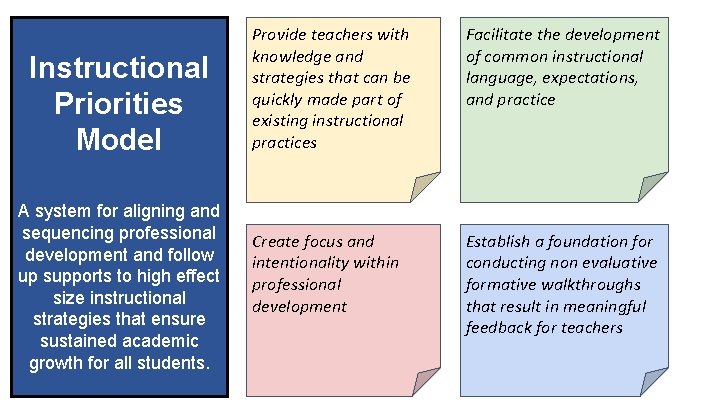
Instructional Priorities Model A system for aligning and sequencing professional development and follow up supports to high effect size instructional strategies that ensure sustained academic growth for all students. Provide teachers with knowledge and strategies that can be quickly made part of existing instructional practices Facilitate the development of common instructional language, expectations, and practice Create focus and intentionality within professional development Establish a foundation for conducting non evaluative formative walkthroughs that result in meaningful feedback for teachers
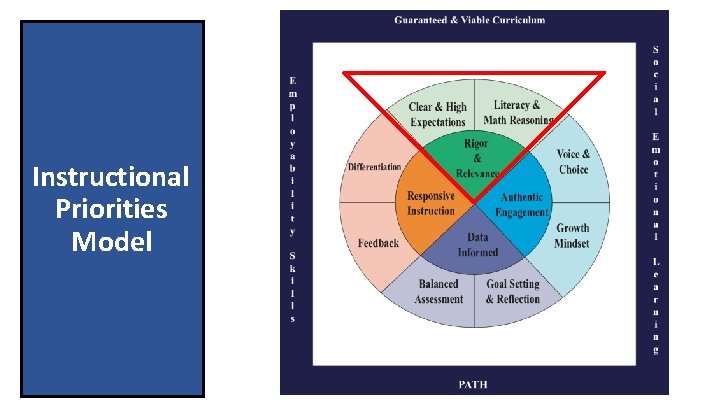
Instructional Priorities Model
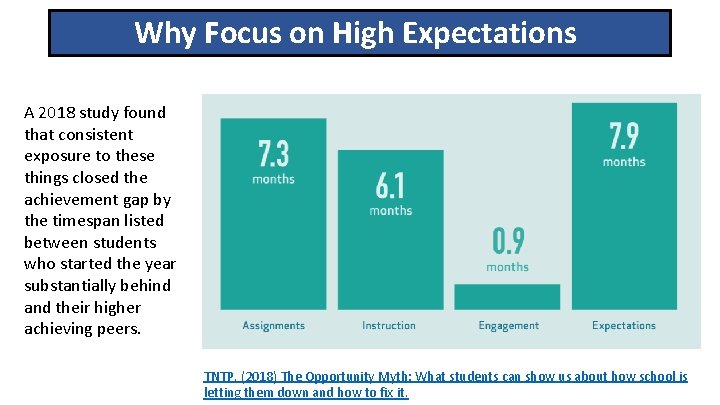
Why Focus on High Expectations A 2018 study found that consistent exposure to these things closed the achievement gap by the timespan listed between students who started the year substantially behind and their higher achieving peers. TNTP. (2018) The Opportunity Myth: What students can show us about how school is letting them down and how to fix it.
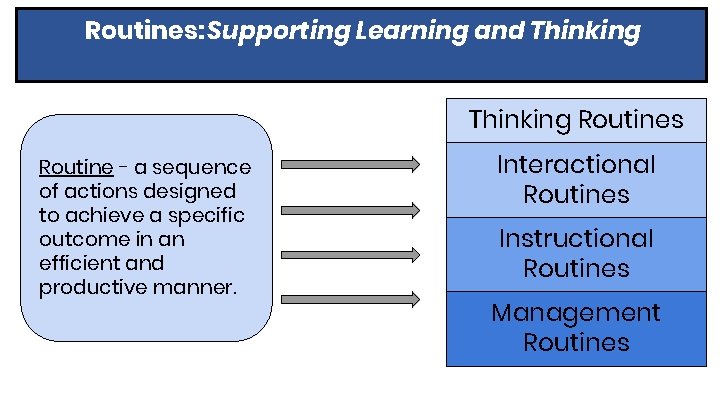
Routines: Supporting Learning and Thinking Routines Routine - a sequence of actions designed to achieve a specific outcome in an efficient and productive manner. Interactional Routines Instructional Routines Management Routines
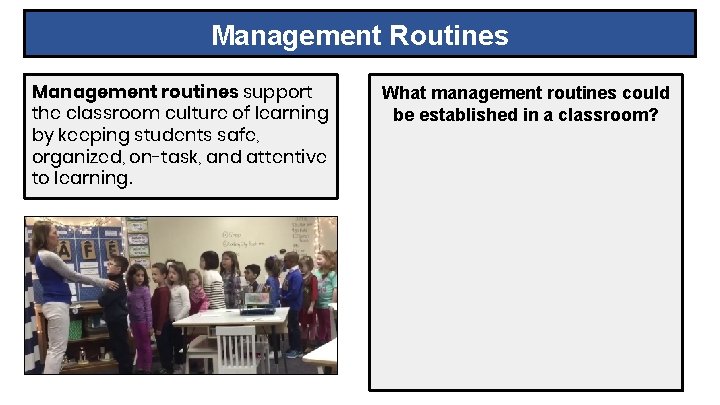
Management Routines Management routines support the classroom culture of learning by keeping students safe, organized, on-task, and attentive to learning. What management routines could be established in a classroom?
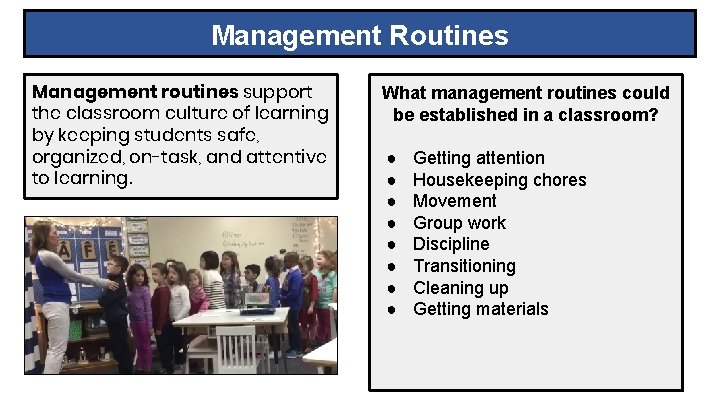
Management Routines Management routines support the classroom culture of learning by keeping students safe, organized, on-task, and attentive to learning. What management routines could be established in a classroom? ● ● ● ● Getting attention Housekeeping chores Movement Group work Discipline Transitioning Cleaning up Getting materials
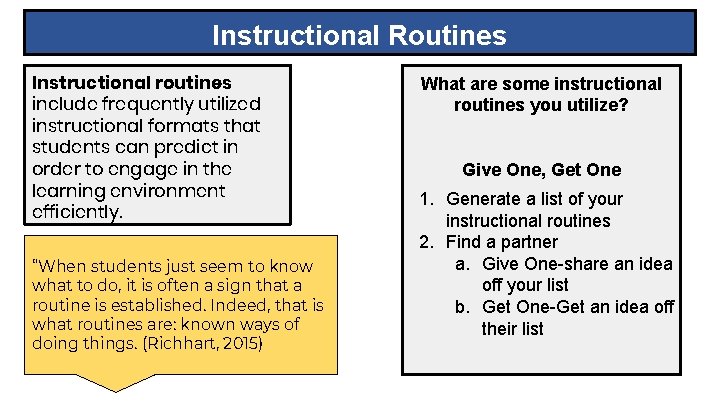
Instructional Routines Instructional routines include frequently utilized instructional formats that students can predict in order to engage in the learning environment efficiently. “When students just seem to know what to do, it is often a sign that a routine is established. Indeed, that is what routines are: known ways of doing things. (Richhart, 2015) What are some instructional routines you utilize? Give One, Get One 1. Generate a list of your instructional routines 2. Find a partner a. Give One-share an idea off your list b. Get One-Get an idea off their list
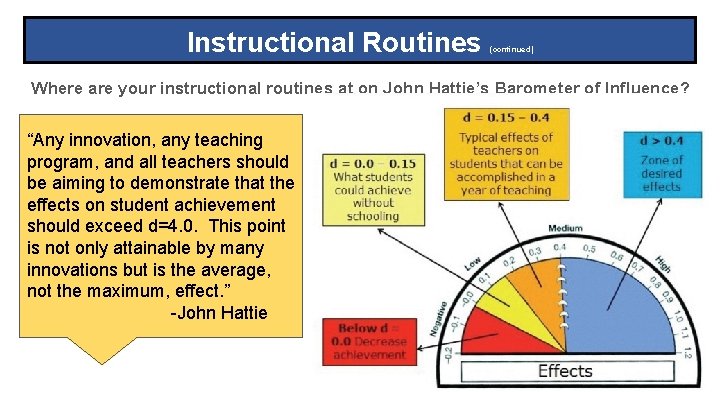
Instructional Routines (continued) Where are your instructional routines at on John Hattie’s Barometer of Influence? “Any innovation, any teaching program, and all teachers should be aiming to demonstrate that the effects on student achievement should exceed d=4. 0. This point is not only attainable by many innovations but is the average, not the maximum, effect. ” -John Hattie
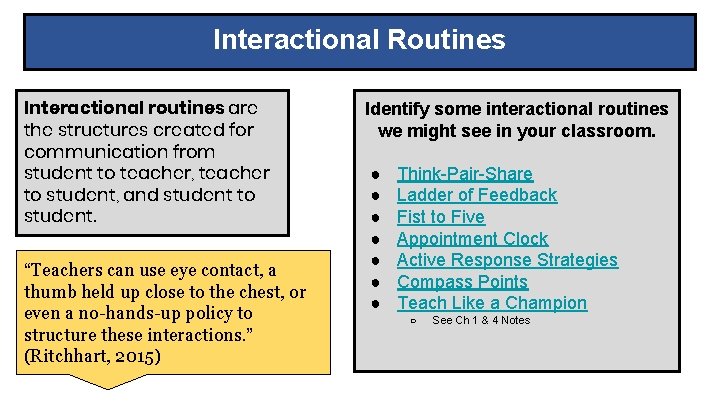
Interactional Routines Interactional routines are the structures created for communication from student to teacher, teacher to student, and student to student. “Teachers can use eye contact, a thumb held up close to the chest, or even a no-hands-up policy to structure these interactions. ” (Ritchhart, 2015) Identify some interactional routines we might see in your classroom. ● ● ● ● Think-Pair-Share Ladder of Feedback Fist to Five Appointment Clock Active Response Strategies Compass Points Teach Like a Champion ○ See Ch 1 & 4 Notes
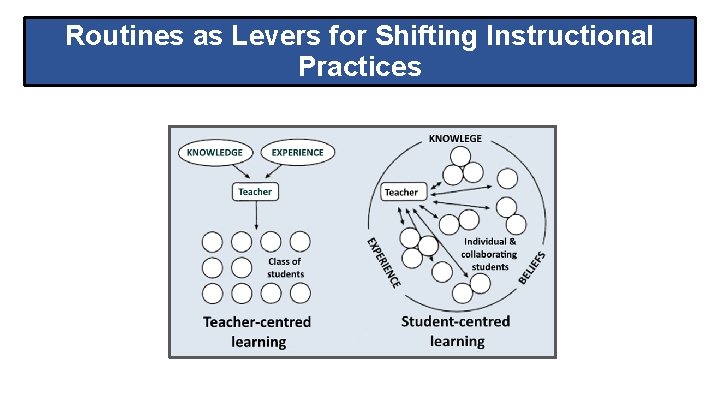
Routines as Levers for Shifting Instructional Practices
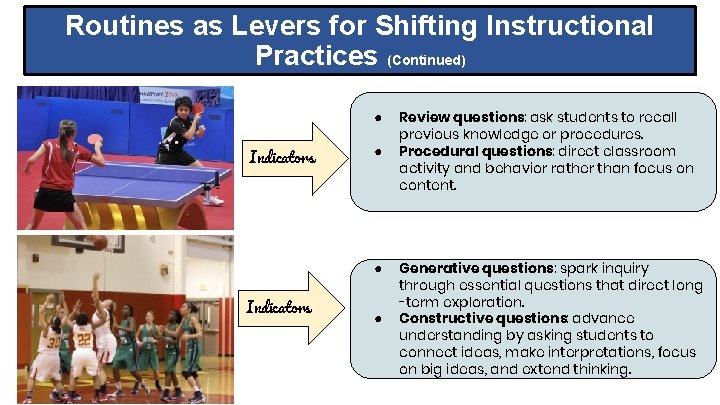
Routines as Levers for Shifting Instructional Practices (Continued) ● Indicators ● Review questions: ask students to recall previous knowledge or procedures. Procedural questions: direct classroom activity and behavior rather than focus on content. Generative questions: spark inquiry through essential questions that direct long -term exploration. Constructive questions: advance understanding by asking students to connect ideas, make interpretations, focus on big ideas, and extend thinking.