
Cleaning and Sanitizing 177 Cleaning is the process
- Slides: 20
Cleaning and Sanitizing 177
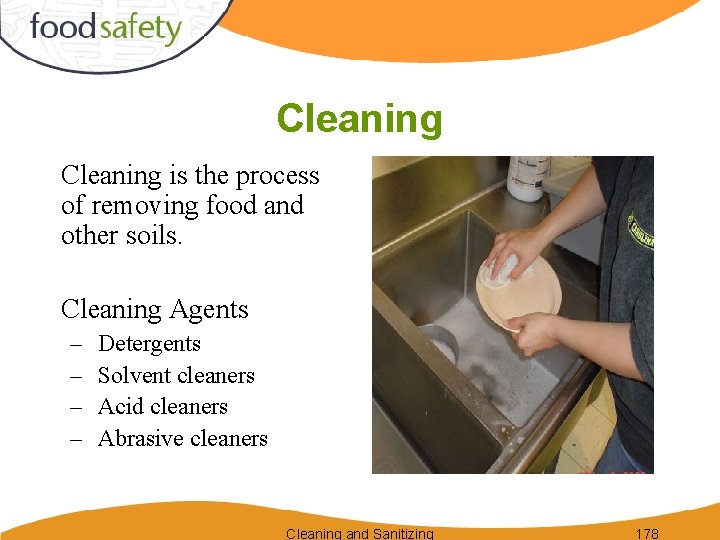
Cleaning is the process of removing food and other soils. Cleaning Agents – – Detergents Solvent cleaners Acid cleaners Abrasive cleaners Cleaning and Sanitizing 178
Sanitizing • Sanitizing is the process of reducing the number of microorganisms that are on a properly cleaned surface to a safe level. • A safe level is 99. 999% reduction of the number of disease microorganisms that are of public health importance. • Sanitizing agents only work on properly cleaned and rinsed surfaces. Cleaning and Sanitizing 179
Methods for Sanitizing Heat – Hot water – 170 o. F or 180 o. F – Steam Chemicals – Chlorine – 50 ppm – Quaternary Ammonia – 200 ppm – Iodine – 12. 5 ppm Cleaning and Sanitizing 180
Activity Sanitizing Preparation Cleaning and Sanitizing 181
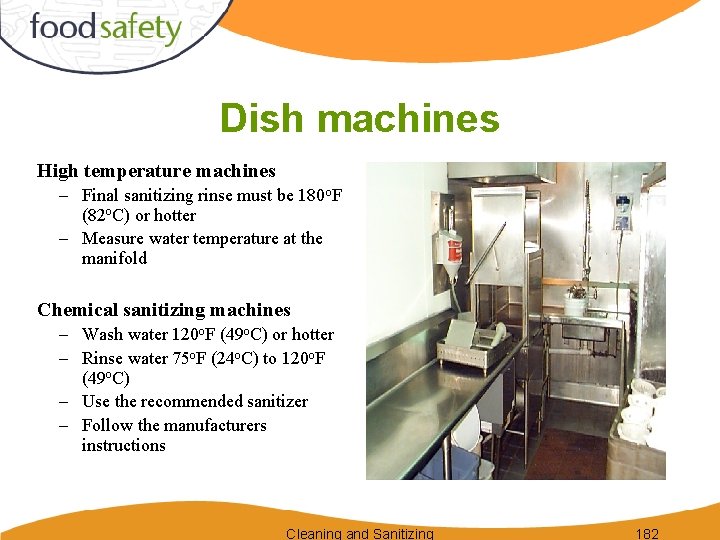
Dish machines High temperature machines – Final sanitizing rinse must be 180 o. F (82 o. C) or hotter – Measure water temperature at the manifold Chemical sanitizing machines – Wash water 120 o. F (49 o. C) or hotter – Rinse water 75 o. F (24 o. C) to 120 o. F (49 o. C) – Use the recommended sanitizer – Follow the manufacturers instructions Cleaning and Sanitizing 182
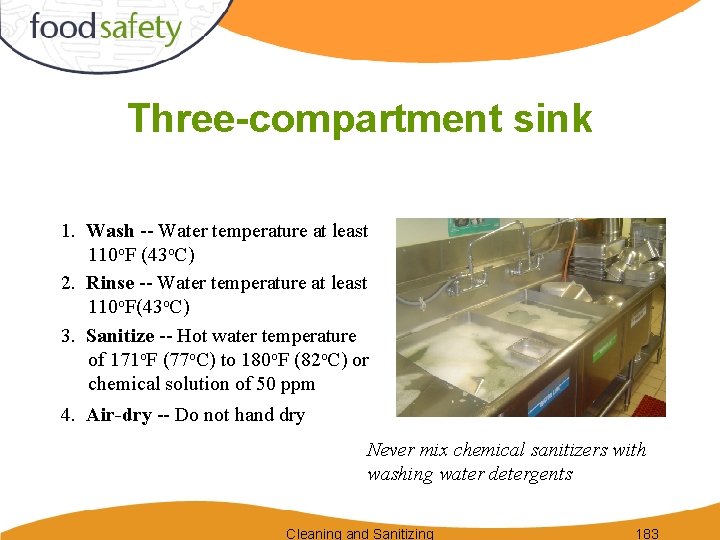
Three-compartment sink 1. Wash -- Water temperature at least 110 o. F (43 o. C) 2. Rinse -- Water temperature at least 110 o. F(43 o. C) 3. Sanitize -- Hot water temperature of 171 o. F (77 o. C) to 180 o. F (82 o. C) or chemical solution of 50 ppm 4. Air-dry -- Do not hand dry Never mix chemical sanitizers with washing water detergents Cleaning and Sanitizing 183
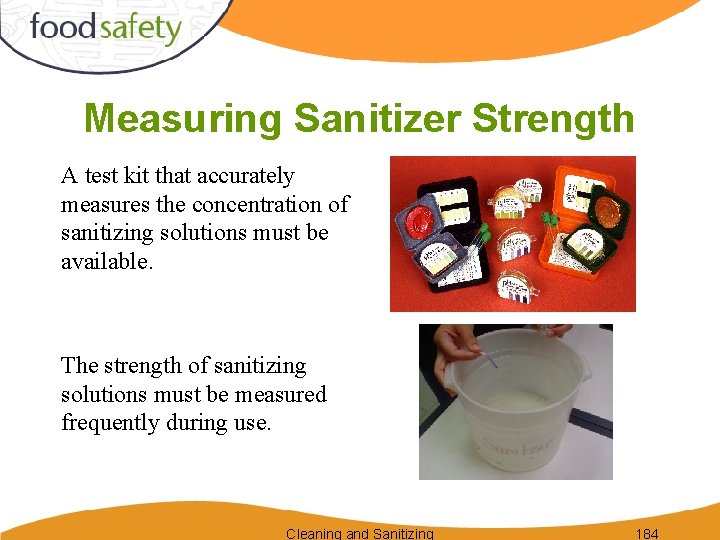
Measuring Sanitizer Strength A test kit that accurately measures the concentration of sanitizing solutions must be available. The strength of sanitizing solutions must be measured frequently during use. Cleaning and Sanitizing 184
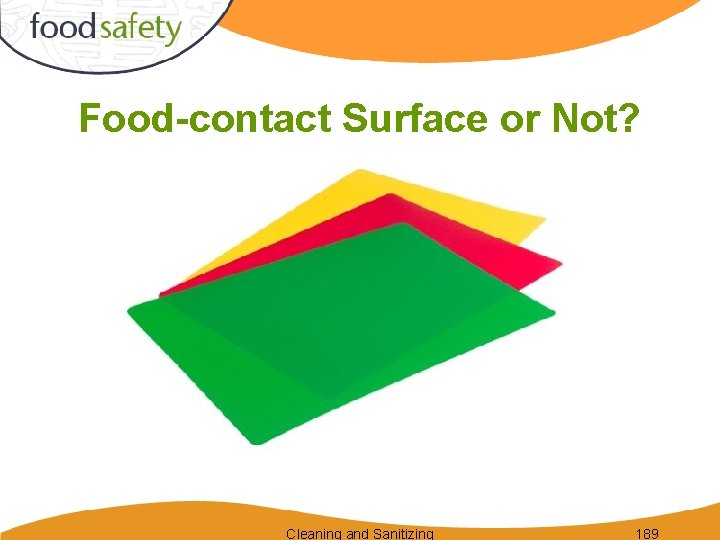
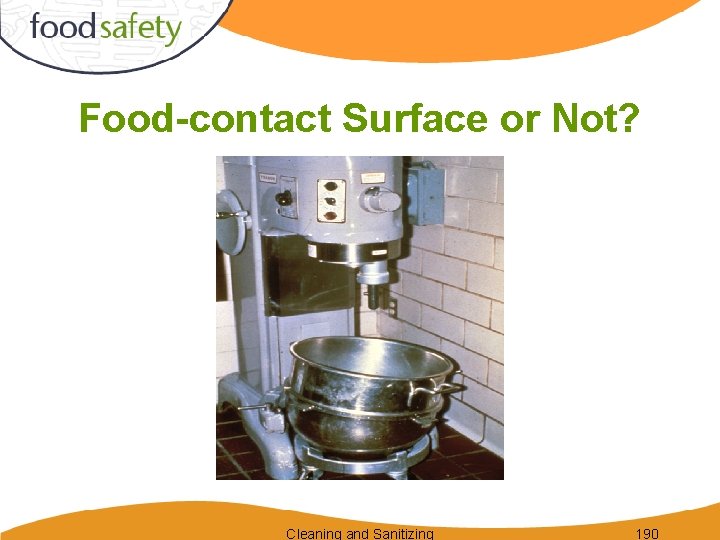
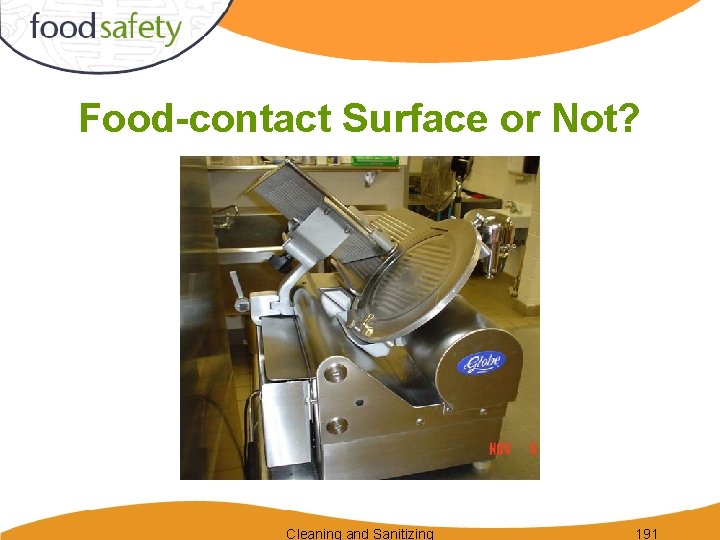
Food-Contact Surface A food-contact surface is: – a surface that food normally touches or – a surface where food might drain, drip, or splash into a food or onto a surface that normally touches food Examples: – Utensils, cutting boards, slicers, countertops, storage bins, baking sheets, refrigerator shelves Cleaning and Sanitizing 185
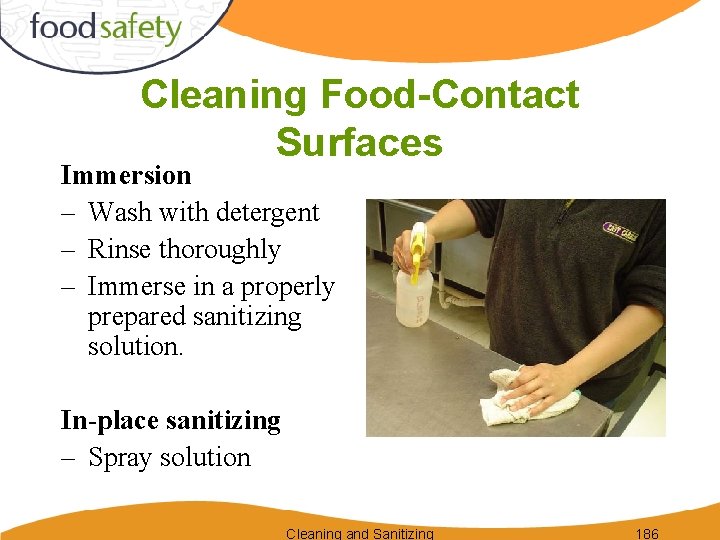
Cleaning Food-Contact Surfaces Immersion – Wash with detergent – Rinse thoroughly – Immerse in a properly prepared sanitizing solution. In-place sanitizing – Spray solution Cleaning and Sanitizing 186
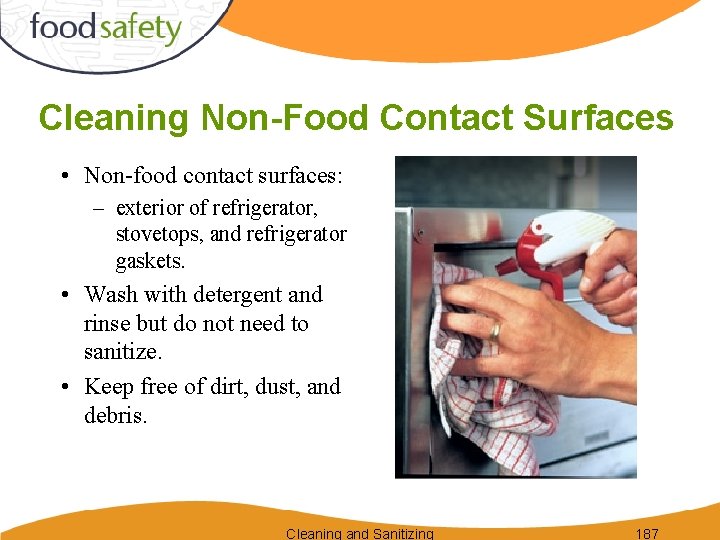
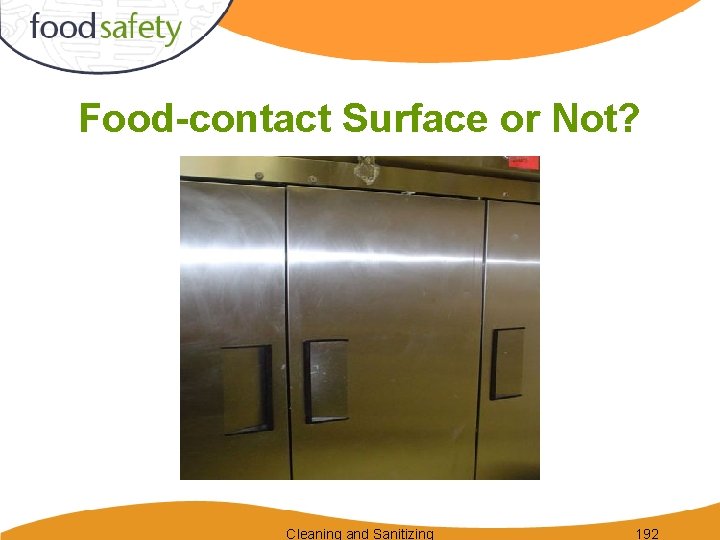
Cleaning Non-Food Contact Surfaces • Non-food contact surfaces: – exterior of refrigerator, stovetops, and refrigerator gaskets. • Wash with detergent and rinse but do not need to sanitize. • Keep free of dirt, dust, and debris. Cleaning and Sanitizing 187
Activity Food-contact Surface or Not? Cleaning and Sanitizing 188
Food-contact Surface or Not? Cleaning and Sanitizing 189
Food-contact Surface or Not? Cleaning and Sanitizing 190
Food-contact Surface or Not? Cleaning and Sanitizing 191
Food-contact Surface or Not? Cleaning and Sanitizing 192
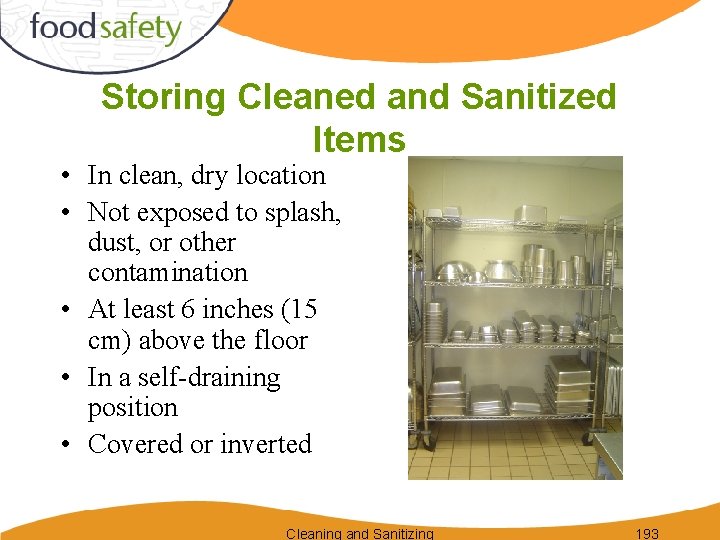
Storing Cleaned and Sanitized Items • In clean, dry location • Not exposed to splash, dust, or other contamination • At least 6 inches (15 cm) above the floor • In a self-draining position • Covered or inverted Cleaning and Sanitizing 193
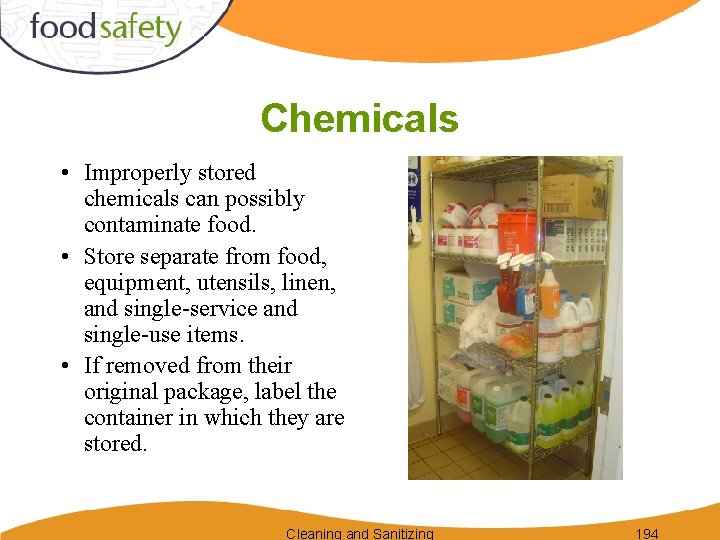
Chemicals • Improperly stored chemicals can possibly contaminate food. • Store separate from food, equipment, utensils, linen, and single-service and single-use items. • If removed from their original package, label the container in which they are stored. Cleaning and Sanitizing 194
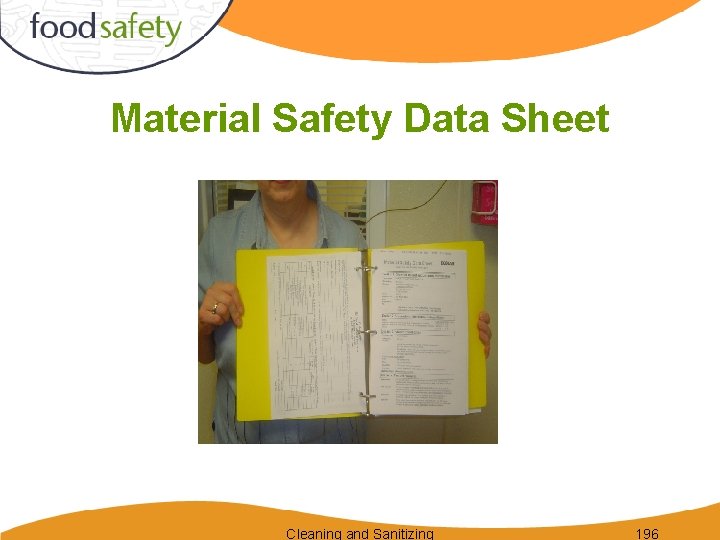
Material Safety Data Sheets • OSHA requires a Material Safety Data Sheet (MSDS) for all chemicals. • On every MSDS, be familiar with the following sections: – – – – 4. 0 Fire and explosion data 5. 0 Reactivity data 6. 0 Spill or leak procedures 7. 0 Health hazard data 8. 0 First aid 9. 0 Protective measures 10. 0 Additional information/precautions Cleaning and Sanitizing 195
Material Safety Data Sheet Cleaning and Sanitizing 196