
Cleaner More Efficient Methanol Engines For Sustainable Transportation
Cleaner, More Efficient Methanol Engines For Sustainable Transportation* Leslie Bromberg** and Daniel Cohn# **MIT Plasma Science and Fusion Center and Sloan Automotive Laboratory #MIT Energy Initiative Methanol Engine Advancement for Sustainable Transportation Reykjavik, Iceland February 23 -24, 2016 * Supported by the Arthur Samberg Energy Innovation Fund, by US Department of Energy, and by Fuel Freedom Foundation
ENGINES THAT OPTIMIZE ADVANTAGES OF METHANOL • Sustainable lower cost – Fuel savings from higher efficiency engines enabled by special properties of methanol – Lower cost engines as alternative to diesel engines for clean heavy duty trucks • Potential for reduced greenhouse gas emissions • Reduced urban air pollution (large reduction relative to present diesel engines in China)

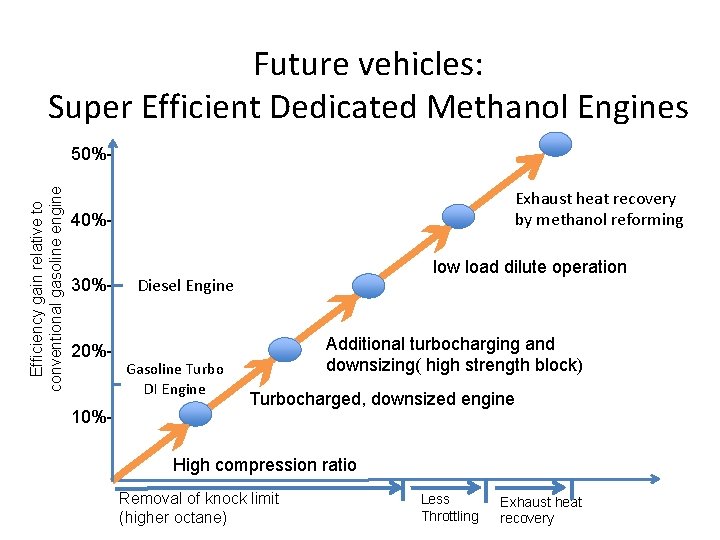
Increased Efficiency Using Methanol 1. Limited availability of methanol: – Octane-on-demand for engines that are mainly powered by gasoline – can provide around 30% greater efficiency than naturally aspirated gasoline engine • comparable to diesel!! 2. Engines entirely powered by methanol – can provide up to 50% greater efficiency than a naturally aspirated gasoline engine
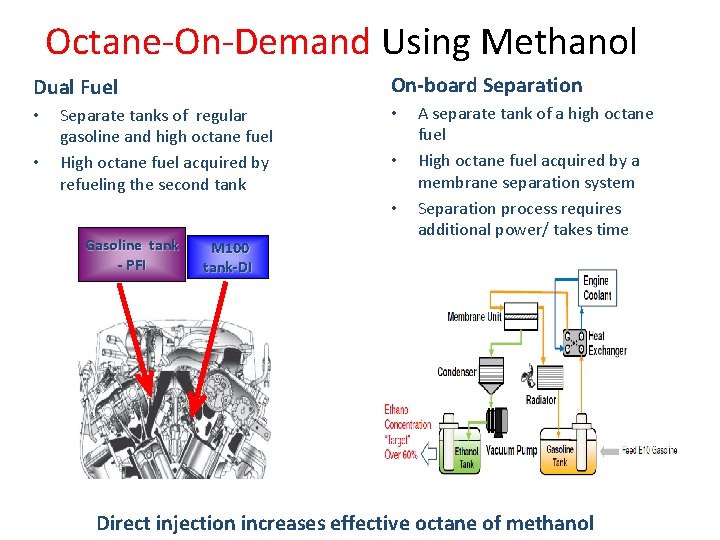
Octane-On-Demand Using Methanol On-board Separation Dual Fuel • • Separate tanks of regular gasoline and high octane fuel High octane fuel acquired by refueling the second tank • • • Gasoline tank - PFI M 100 tank-DI A separate tank of a high octane fuel High octane fuel acquired by a membrane separation system Separation process requires additional power/ takes time Direct injection increases effective octane of methanol

Octane On-Demand Using Methanol • Small amount of methanol introduced into the cylinder increases the efficiency of a much larger amount of gasoline by preventing knock at high load – higher compression ratio and downsizing – 1 gallon of methanol replaces 4 gallons of gasoline • Methanol supplied by – separate tank, externally filled – by onboard separation of methanol/gasoline blends • On-demand octane boosting can increase efficiency by around 30% relative to aspirated gasoline engines; this efficiency gain is comparable to that of a diesel engine • Greenhouse gas can be reduced both by the increase in efficiency gain and by the use of renewable methanol
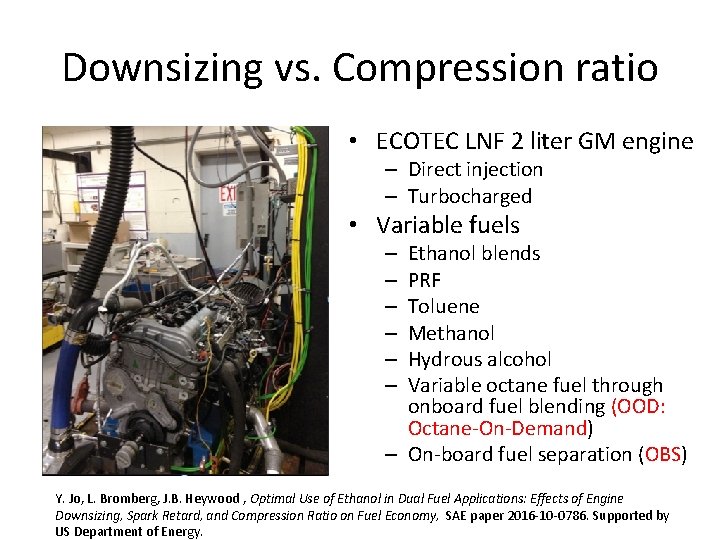
Downsizing vs. Compression ratio • ECOTEC LNF 2 liter GM engine – Direct injection – Turbocharged • Variable fuels Ethanol blends PRF Toluene Methanol Hydrous alcohol Variable octane fuel through onboard fuel blending (OOD: Octane-On-Demand) – On-board fuel separation (OBS) – – – Y. Jo, L. Bromberg, J. B. Heywood , Optimal Use of Ethanol in Dual Fuel Applications: Effects of Engine Downsizing, Spark Retard, and Compression Ratio on Fuel Economy, SAE paper 2016 -10 -0786. Supported by US Department of Energy.
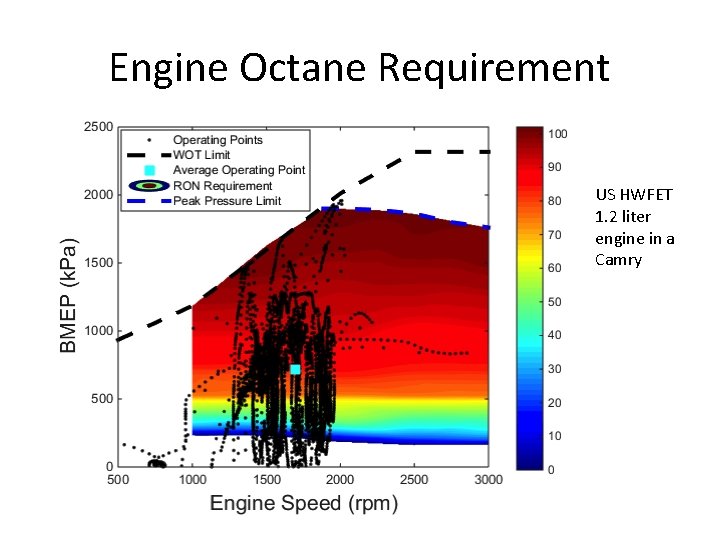
Engine Octane Requirement US HWFET 1. 2 liter engine in a Camry
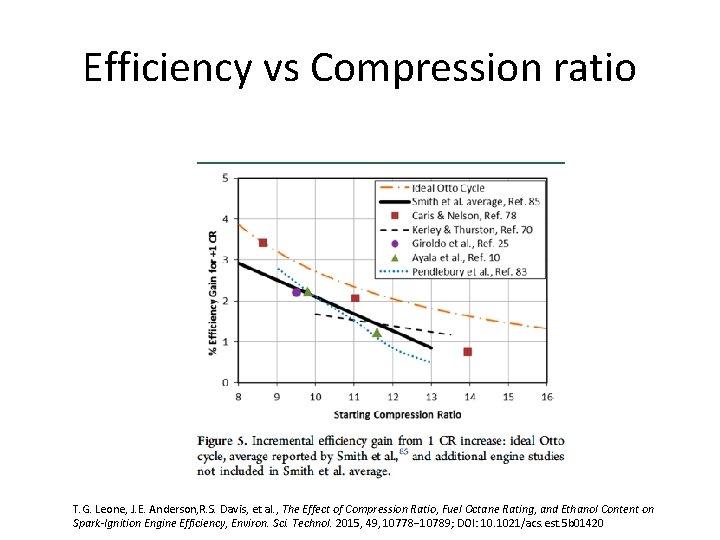
Efficiency vs Compression ratio T. G. Leone, J. E. Anderson, R. S. Davis, et al. , The Effect of Compression Ratio, Fuel Octane Rating, and Ethanol Content on Spark-Ignition Engine Efficiency, Environ. Sci. Technol. 2015, 49, 10778− 10789; DOI: 10. 1021/acs. est. 5 b 01420
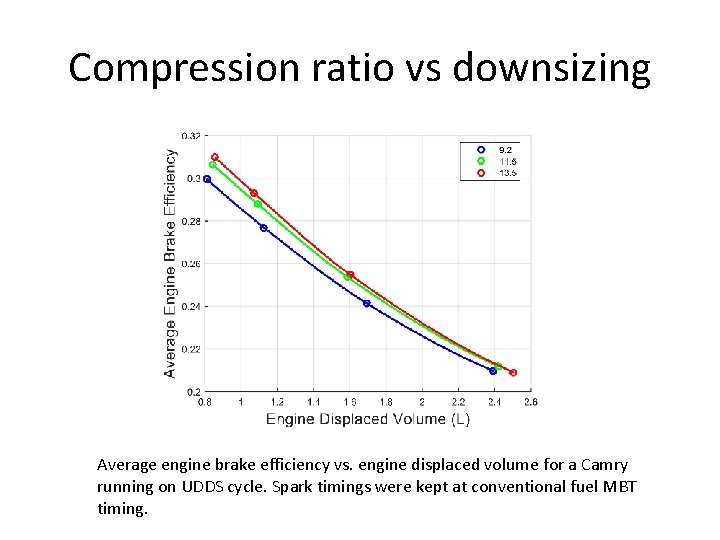
Compression ratio vs downsizing Average engine brake efficiency vs. engine displaced volume for a Camry running on UDDS cycle. Spark timings were kept at conventional fuel MBT timing.
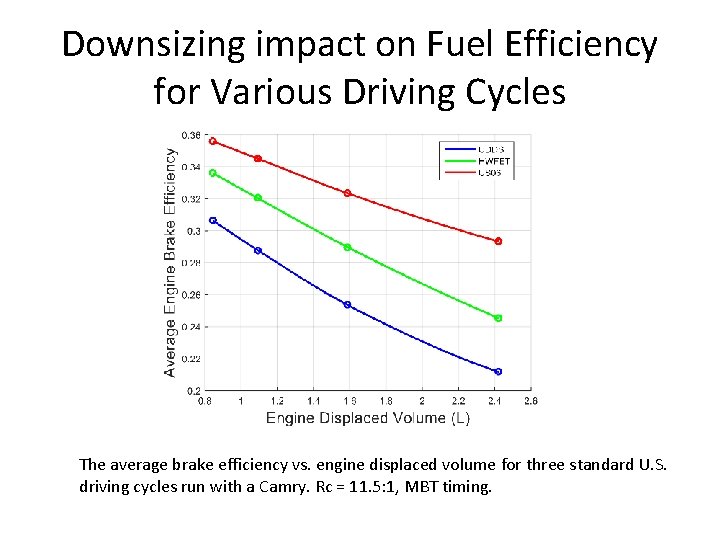
Downsizing impact on Fuel Efficiency for Various Driving Cycles The average brake efficiency vs. engine displaced volume for three standard U. S. driving cycles run with a Camry. Rc = 11. 5: 1, MBT timing.
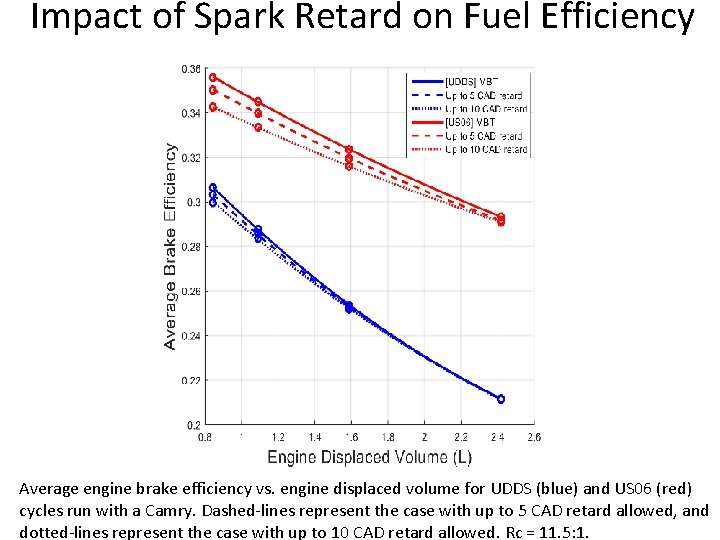
Impact of Spark Retard on Fuel Efficiency Average engine brake efficiency vs. engine displaced volume for UDDS (blue) and US 06 (red) cycles run with a Camry. Dashed-lines represent the case with up to 5 CAD retard allowed, and dotted-lines represent the case with up to 10 CAD retard allowed. Rc = 11. 5: 1.
Methanol eliminates knock limit Ultimate possibilities? • Compression ratio • Impact of increasing compression ratio decreases above ~ 11. 5 – Peak pressure continues to increase • Downsizing • Efficiency improvement up to about 300 cm 3 per cylinder (? ) • ~ 1 liter engine, 3 cylinders, may be practical limit
Future vehicles: Super Efficient Dedicated Methanol Engines Efficiency gain relative to conventional gasoline engine 50%Exhaust heat recovery by methanol reforming 40%- 30%- 20%- 10%- low load dilute operation Diesel Engine Gasoline Turbo DI Engine Additional turbocharging and downsizing( high strength block) Turbocharged, downsized engine High compression ratio Removal of knock limit (higher octane) Less Throttling Exhaust heat recovery
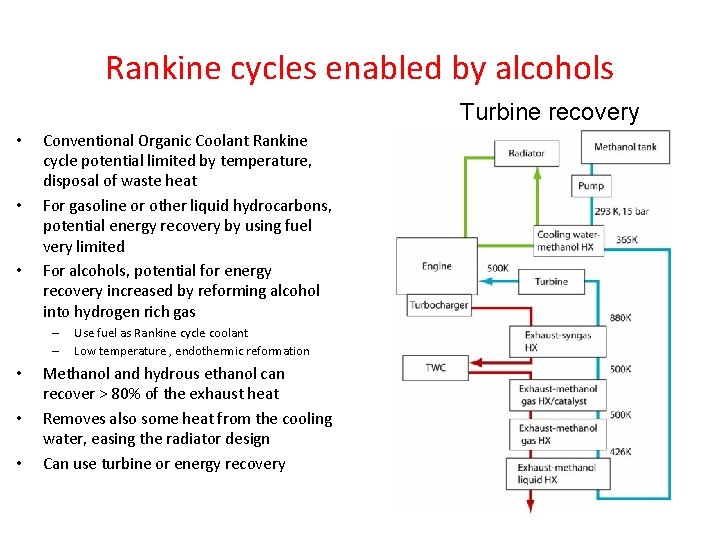
Rankine cycles enabled by alcohols Turbine recovery • • • Conventional Organic Coolant Rankine cycle potential limited by temperature, disposal of waste heat For gasoline or other liquid hydrocarbons, potential energy recovery by using fuel very limited For alcohols, potential for energy recovery increased by reforming alcohol into hydrogen rich gas – – • • • Use fuel as Rankine cycle coolant Low temperature , endothermic reformation Methanol and hydrous ethanol can recover > 80% of the exhaust heat Removes also some heat from the cooling water, easing the radiator design Can use turbine or energy recovery
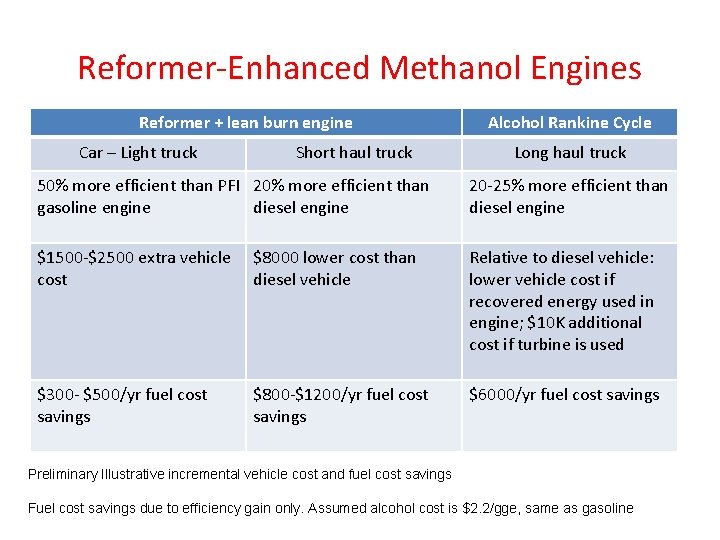
Reformer-Enhanced Methanol Engines Reformer + lean burn engine Car – Light truck Short haul truck Alcohol Rankine Cycle Long haul truck 50% more efficient than PFI 20% more efficient than gasoline engine diesel engine 20 -25% more efficient than diesel engine $1500 -$2500 extra vehicle cost $8000 lower cost than diesel vehicle Relative to diesel vehicle: lower vehicle cost if recovered energy used in engine; $10 K additional cost if turbine is used $300 - $500/yr fuel cost savings $800 -$1200/yr fuel cost savings $6000/yr fuel cost savings Preliminary Illustrative incremental vehicle cost and fuel cost savings Fuel cost savings due to efficiency gain only. Assumed alcohol cost is $2. 2/gge, same as gasoline
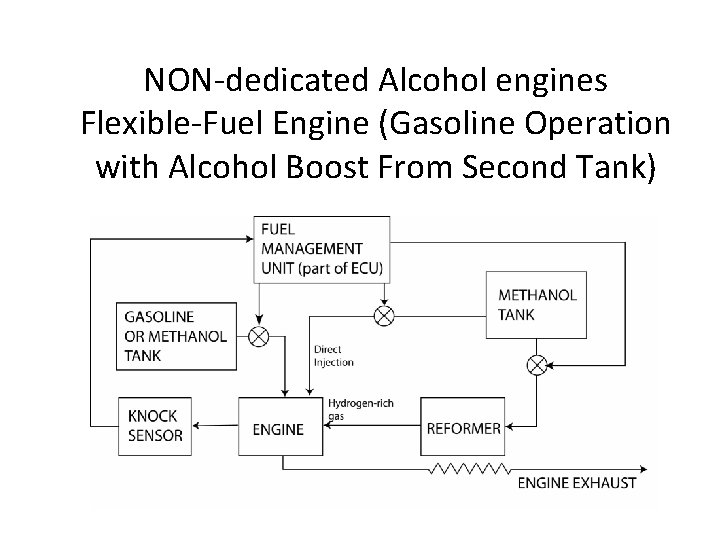
NON-dedicated Alcohol engines Flexible-Fuel Engine (Gasoline Operation with Alcohol Boost From Second Tank)
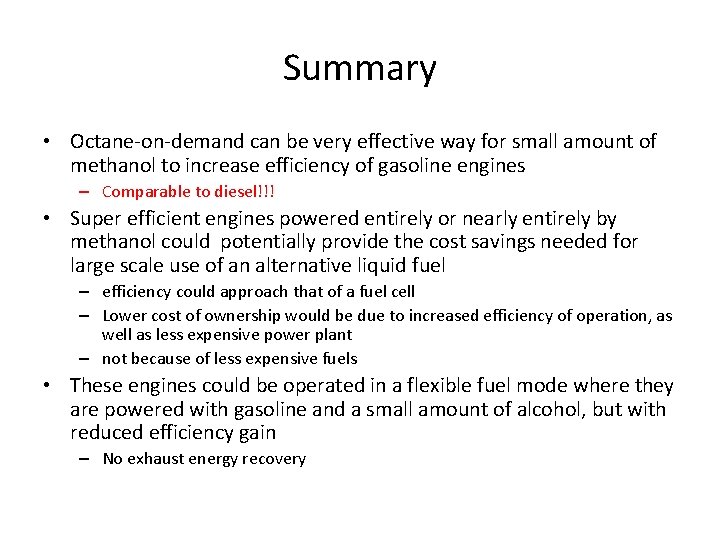
Summary • Octane-on-demand can be very effective way for small amount of methanol to increase efficiency of gasoline engines – Comparable to diesel!!! • Super efficient engines powered entirely or nearly entirely by methanol could potentially provide the cost savings needed for large scale use of an alternative liquid fuel – efficiency could approach that of a fuel cell – Lower cost of ownership would be due to increased efficiency of operation, as well as less expensive power plant – not because of less expensive fuels • These engines could be operated in a flexible fuel mode where they are powered with gasoline and a small amount of alcohol, but with reduced efficiency gain – No exhaust energy recovery

Extra Slides
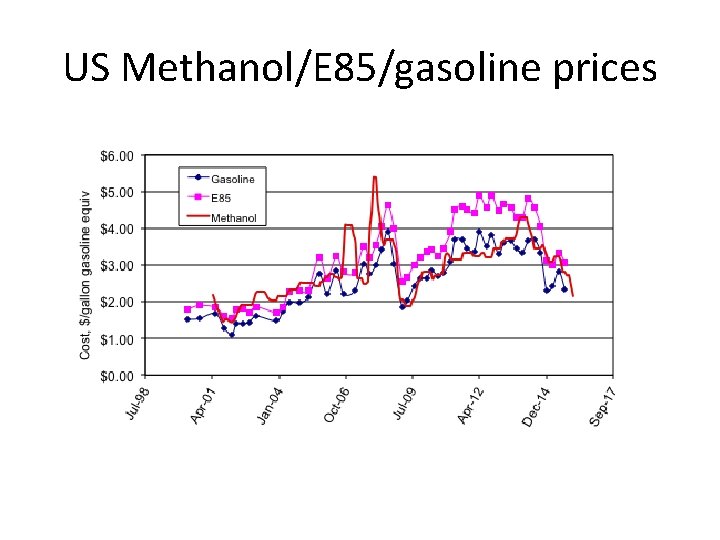
US Methanol/E 85/gasoline prices
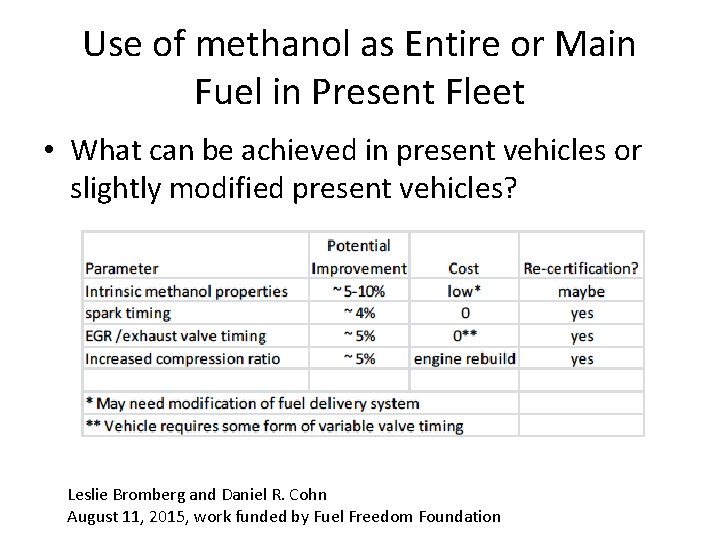
Use of methanol as Entire or Main Fuel in Present Fleet • What can be achieved in present vehicles or slightly modified present vehicles? Leslie Bromberg and Daniel R. Cohn August 11, 2015, work funded by Fuel Freedom Foundation
Renewable Methanol • CO 2 and renewable electricity • Biomass sources
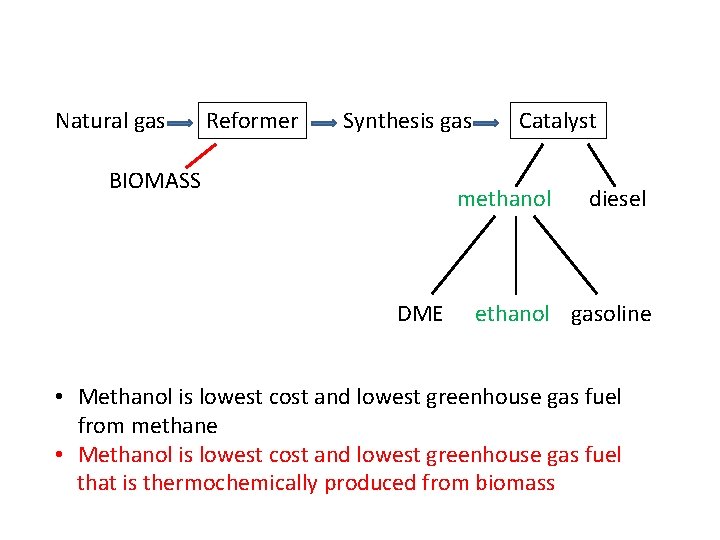
Natural gas Reformer Synthesis gas BIOMASS Catalyst methanol DME diesel ethanol gasoline • Methanol is lowest cost and lowest greenhouse gas fuel from methane • Methanol is lowest cost and lowest greenhouse gas fuel that is thermochemically produced from biomass
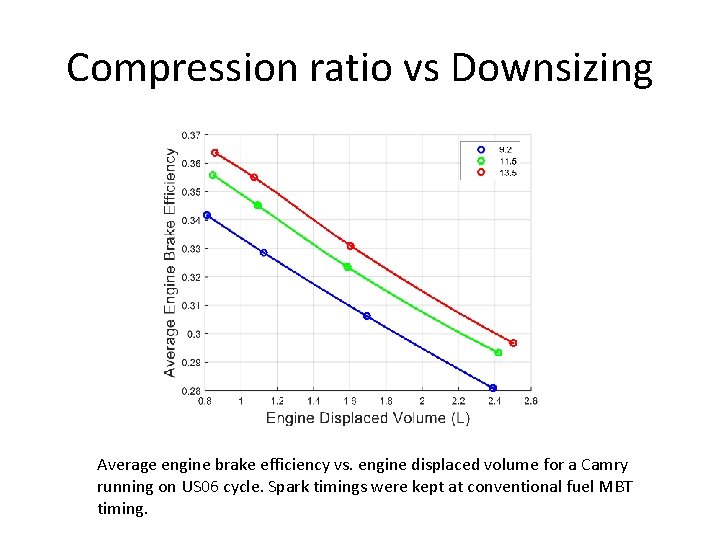
Compression ratio vs Downsizing Average engine brake efficiency vs. engine displaced volume for a Camry running on US 06 cycle. Spark timings were kept at conventional fuel MBT timing.
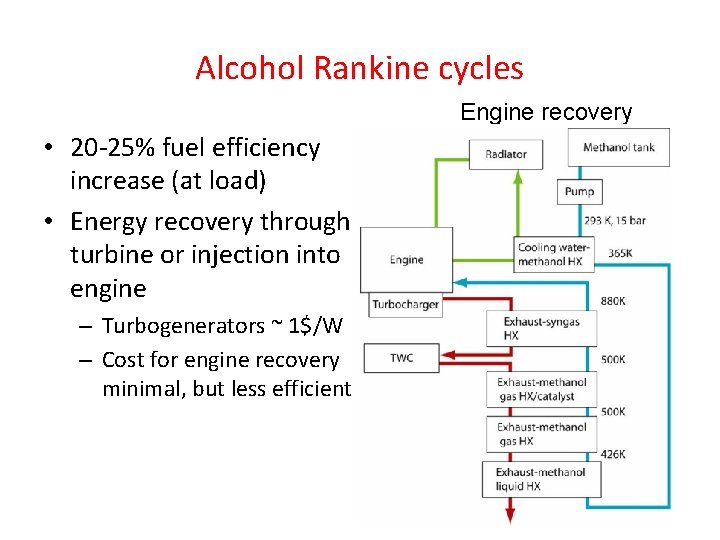
Alcohol Rankine cycles Engine recovery • 20 -25% fuel efficiency increase (at load) • Energy recovery through turbine or injection into engine – Turbogenerators ~ 1$/W – Cost for engine recovery minimal, but less efficient
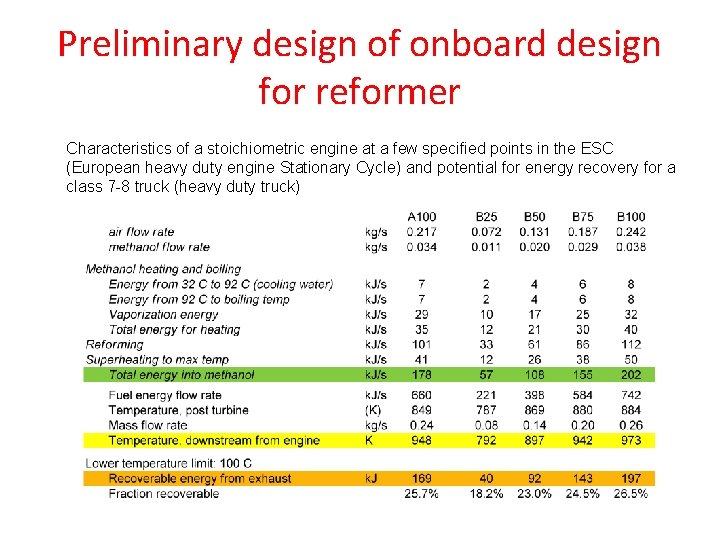
Preliminary design of onboard design for reformer Characteristics of a stoichiometric engine at a few specified points in the ESC (European heavy duty engine Stationary Cycle) and potential for energy recovery for a class 7 -8 truck (heavy duty truck)
Heat Exchanger Technology • Reformer enabled by new compact heat exchanger • Use of metallic foams for improved heat transfer to gas – Microchannel approach developes boundary layers (due to laminar flow) that limit heat transfer • Break microchannels to prevent boundary layers • Continuing to break microchannels, end up with open cell porous geometry – Open cell porous metals commercially available
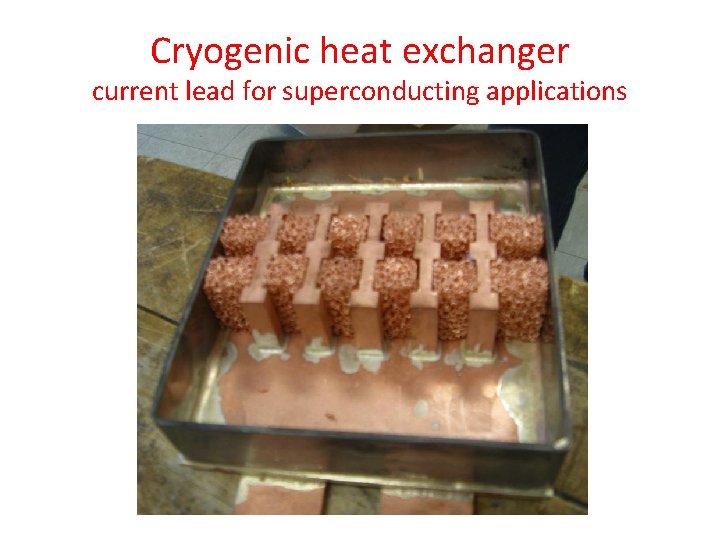
Cryogenic heat exchanger current lead for superconducting applications
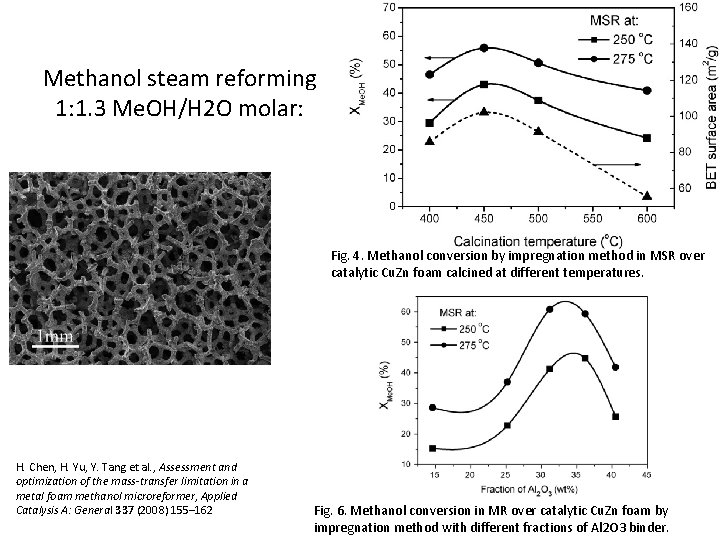
Methanol steam reforming 1: 1. 3 Me. OH/H 2 O molar: Fig. 4. Methanol conversion by impregnation method in MSR over catalytic Cu. Zn foam calcined at different temperatures. H. Chen, H. Yu, Y. Tang et al. , Assessment and optimization of the mass-transfer limitation in a metal foam methanol microreformer, Applied Catalysis A: General 337 (2008) 155– 162 Fig. 6. Methanol conversion in MR over catalytic Cu. Zn foam by impregnation method with different fractions of Al 2 O 3 binder.
- Slides: 28