
Clean Water Begins in Your Home Tips for
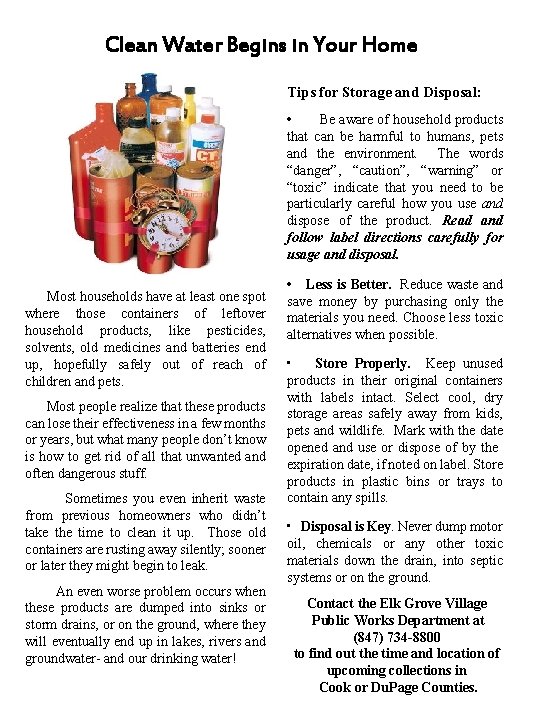
Clean Water Begins in Your Home Tips for Storage and Disposal: • Be aware of household products that can be harmful to humans, pets and the environment. The words “danger”, “caution”, “warning” or “toxic” indicate that you need to be particularly careful how you use and dispose of the product. Read and follow label directions carefully for usage and disposal. Most households have at least one spot where those containers of leftover household products, like pesticides, solvents, old medicines and batteries end up, hopefully safely out of reach of children and pets. Most people realize that these products can lose their effectiveness in a few months or years, but what many people don’t know is how to get rid of all that unwanted and often dangerous stuff. Sometimes you even inherit waste from previous homeowners who didn’t take the time to clean it up. Those old containers are rusting away silently; sooner or later they might begin to leak. An even worse problem occurs when these products are dumped into sinks or storm drains, or on the ground, where they will eventually end up in lakes, rivers and groundwater- and our drinking water! • Less is Better. Reduce waste and save money by purchasing only the materials you need. Choose less toxic alternatives when possible. • Store Properly. Keep unused products in their original containers with labels intact. Select cool, dry storage areas safely away from kids, pets and wildlife. Mark with the date opened and use or dispose of by the expiration date, if noted on label. Store products in plastic bins or trays to contain any spills. • Disposal is Key. Never dump motor oil, chemicals or any other toxic materials down the drain, into septic systems or on the ground. Contact the Elk Grove Village Public Works Department at (847) 734 -8800 to find out the time and location of upcoming collections in Cook or Du. Page Counties.
- Slides: 1