
CLEAN WATER ACT AND MUNICIPAL STORMWATER CALI FORNIA
- Slides: 12
CLEAN WATER ACT AND MUNICIPAL STORMWATER CALI FORNIA ST ORMWATER WORKS HOP David W. Smith, Manager NPDES Permits Section EPA/Region 9
Clean Water Act Water quality goals, Discharge permits, Funding Permitting required for most point sources, including municipal, industrial, and construction stormwater Performance and outcome-based requirements Most states authorized to run permit programs Municipalities principally responsible for urban runoff CWA AND NPDES OVERVIEW
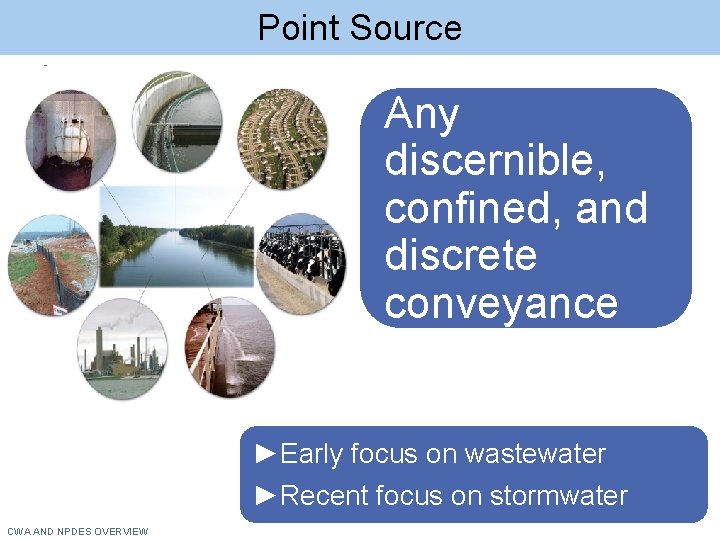
Point Source Any discernible, confined, and discrete conveyance ►Early focus on wastewater ►Recent focus on stormwater CWA AND NPDES OVERVIEW
NPDES PERMIT TYPES Individual: - One permit for one facility - ~ 47, 000 individual permits nationally Group: Covers group of permittees (e. g. L. A. municipal stormwater permit covers 80+ communities) General: - On permit applies to a class of dischargers (e. g. construction sites greater than 1 acre) - ~650, 000 facilities covered nationally
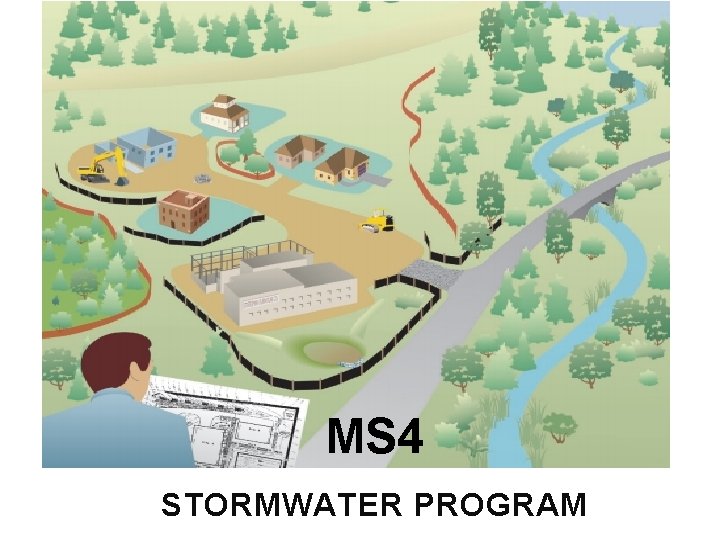
MS 4 STORMWATER PROGRAM
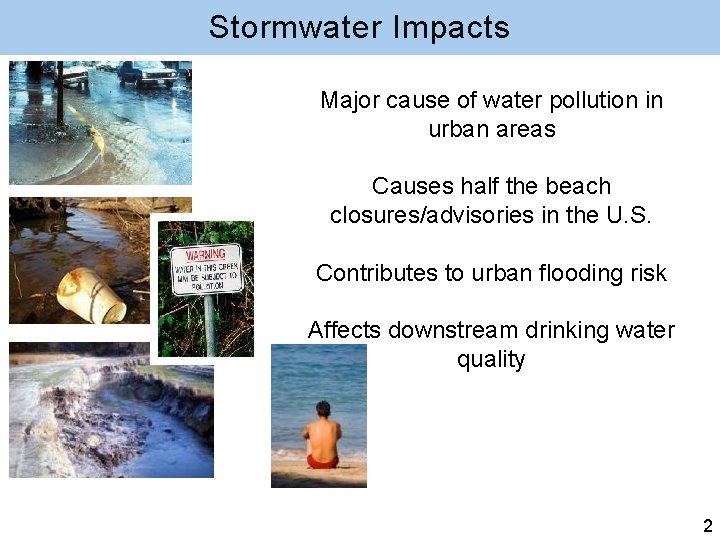
Stormwater Impacts Major cause of water pollution in urban areas Causes half the beach closures/advisories in the U. S. Contributes to urban flooding risk Affects downstream drinking water quality 2
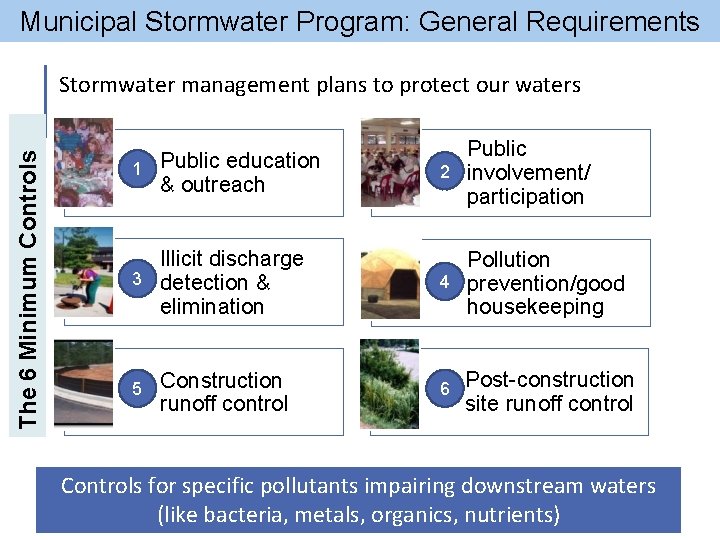
Municipal Stormwater Program: General Requirements The 6 Minimum Controls Stormwater management plans to protect our waters 1 Public education & outreach Public 2 involvement/ participation Illicit discharge 3 detection & elimination Pollution 4 prevention/good housekeeping 5 Construction runoff control 6 Post-construction site runoff control Controls for specific pollutants impairing downstream waters 7 (like bacteria, metals, organics, nutrients)
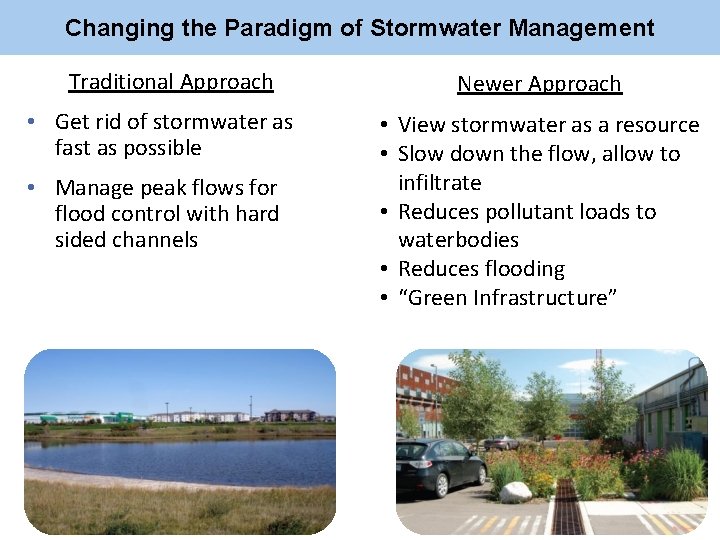
Changing the Paradigm of Stormwater Management Traditional Approach • Get rid of stormwater as fast as possible • Manage peak flows for flood control with hard sided channels Newer Approach • View stormwater as a resource • Slow down the flow, allow to infiltrate • Reduces pollutant loads to waterbodies • Reduces flooding • “Green Infrastructure” 8
TOTAL MAXIMUM DAILY LOADS (TMDLS) AND PERMITS - Pollutant control plans to restore water quality - Evaluate pollutant sources and allocate responsibilities for controls - Guides permit requirements and nonpoint controls - 1000’s of TMDLs developed nationally since 1990 - Now being incorporated in stormwater permits
NEW DIRECTIONS IN STORMWATER PERMITS Water Quality Based Requirements - Based on TMDLs, other WQ concerns Clearer, More Enforceable Requirements Alternative Compliance Paths - Robust long term control plans in exchange for long-term schedules, enforcement shield Performance-Based Requirements - Rainfall capture as surrogate for pollutant removal Improved Monitoring and Tracking
CWA RELATIONSHIP TO STATE REQUIREMENTS - California’s Porter-Cologne Act preceded and aligns closely to Clean Water Act - Porter-Cologne creates stronger authorities to address nonpoint sources, ground water quality - State procedural requirements are complex and time-consuming - State and Regional Boards share NPDES implementation authority in CA
Thank You! David W. Smith. David. W@epa. gov Websites: • Stormwater • Green Infrastructure www. epa. gov/npdes/stormwater www. epa. gov/greeninfrastructure Listserv: • Greenstreams: To join greenstream, an EPA listserv featuring updates on green infrastructure publications, training, and funding opportunities, send an email to join-greenstream@lists. epa. gov