
ClassroomBased Assessments a catalyst for change NAPD conference
Classroom-Based Assessments – a catalyst for change NAPD conference Kilkenny 2019
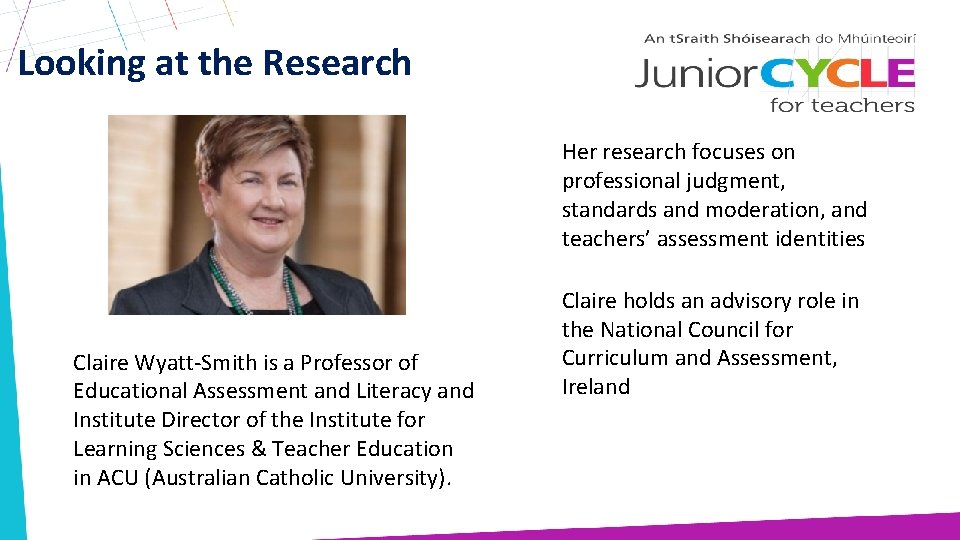
Looking at the Research Her research focuses on professional judgment, standards and moderation, and teachers’ assessment identities Claire Wyatt-Smith is a Professor of Educational Assessment and Literacy and Institute Director of the Institute for Learning Sciences & Teacher Education in ACU (Australian Catholic University). Claire holds an advisory role in the National Council for Curriculum and Assessment, Ireland
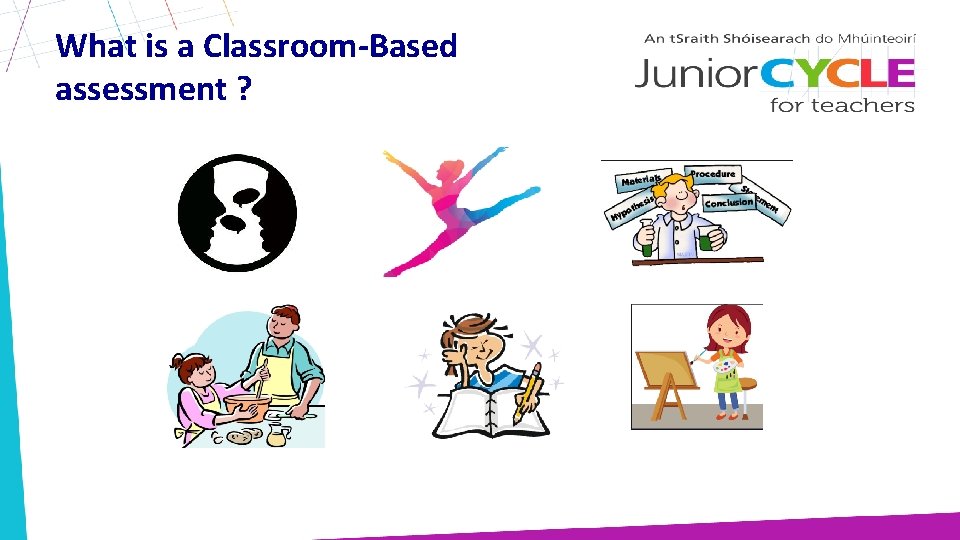
What is a Classroom-Based assessment ?
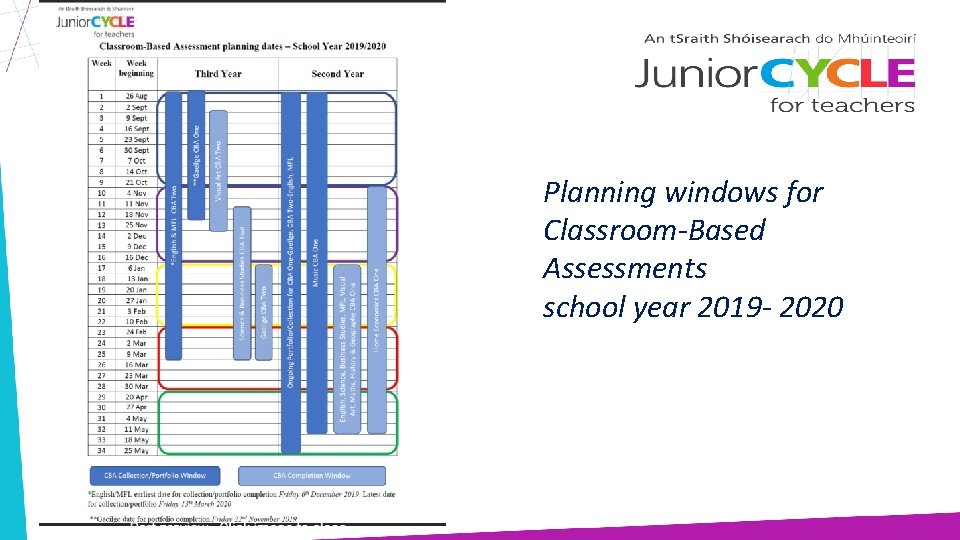
Planning windows for Classroom-Based Assessments school year 2019 - 2020
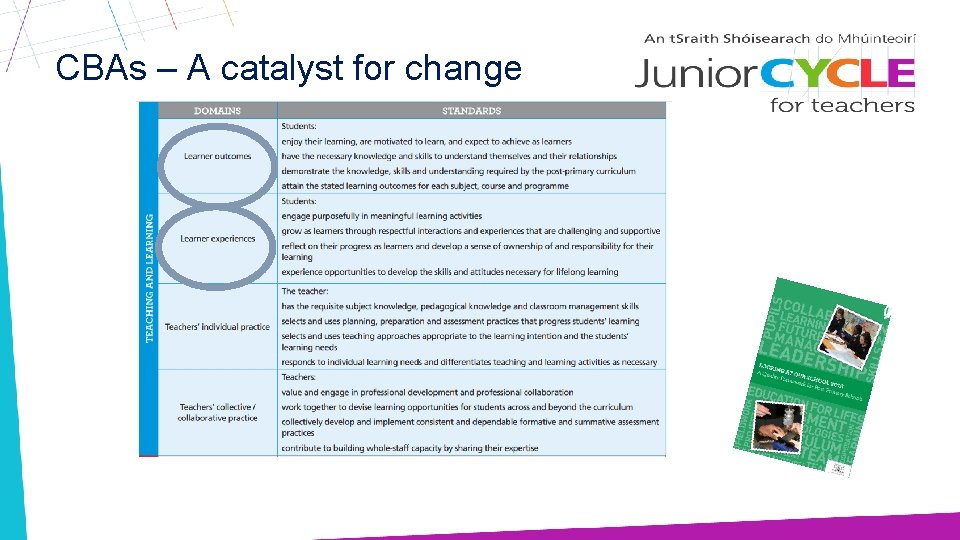
CBAs – A catalyst for change
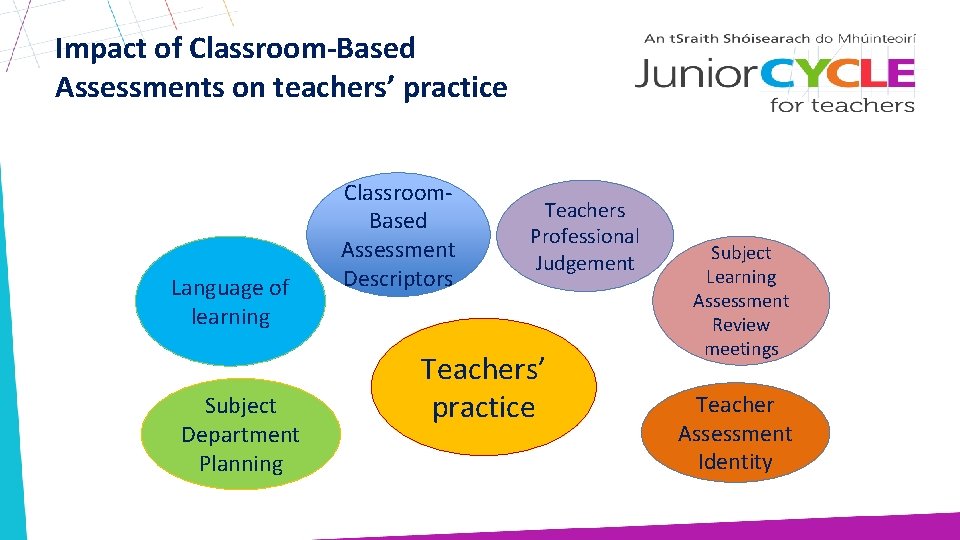
Impact of Classroom-Based Assessments on teachers’ practice Language of learning Subject Department Planning Classroom. Based Assessment Descriptors Teachers Professional Judgement Teachers’ practice Subject Learning Assessment Review meetings Teacher Assessment Identity
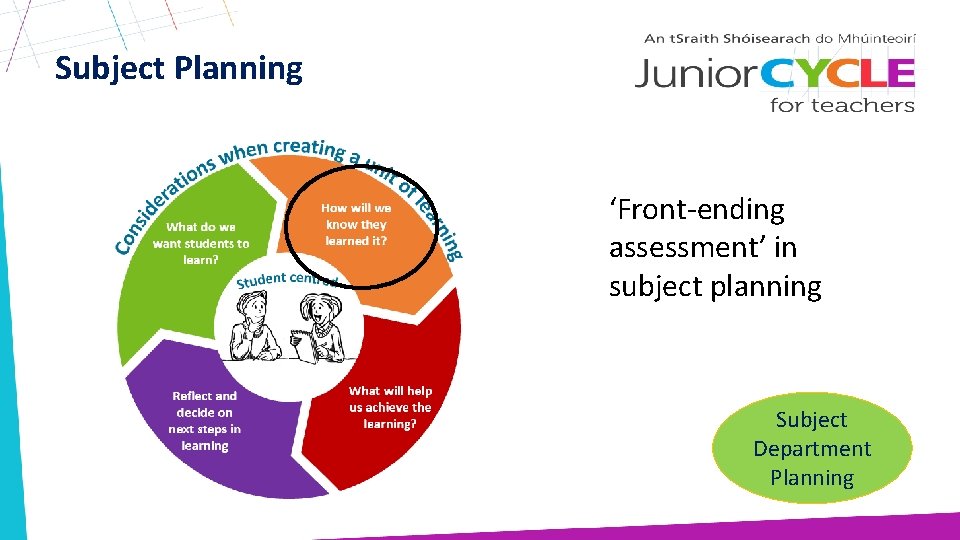
Subject Planning ‘Front-ending assessment’ in subject planning Subject Department Planning
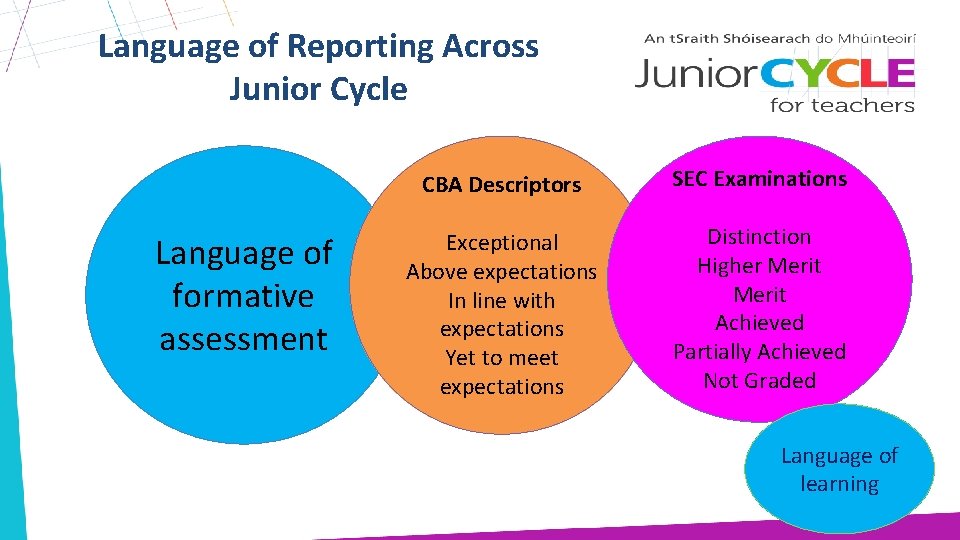
Language of Reporting Across Junior Cycle Language of formative assessment CBA Descriptors SEC Examinations Exceptional Above expectations In line with expectations Yet to meet expectations Distinction Higher Merit Achieved Partially Achieved Not Graded Language of learning
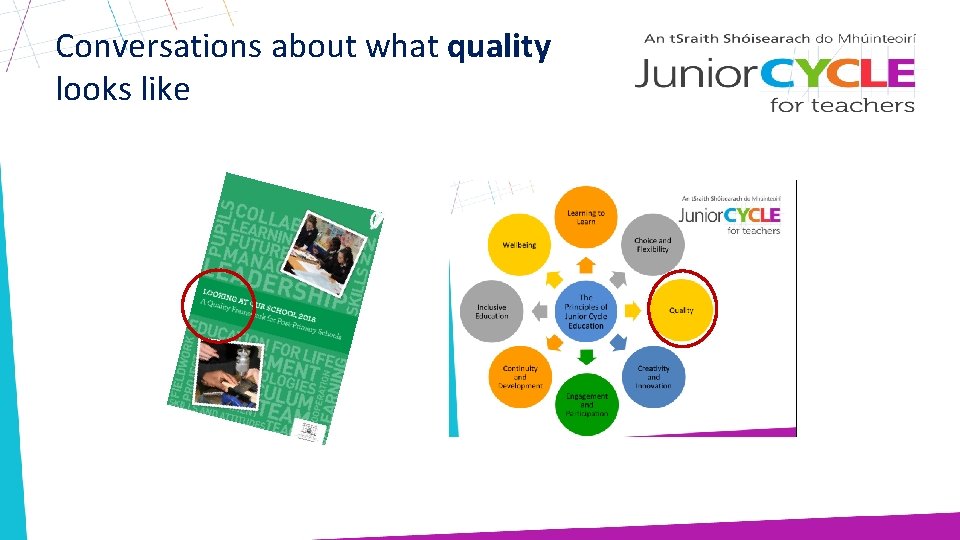
Conversations about what quality looks like
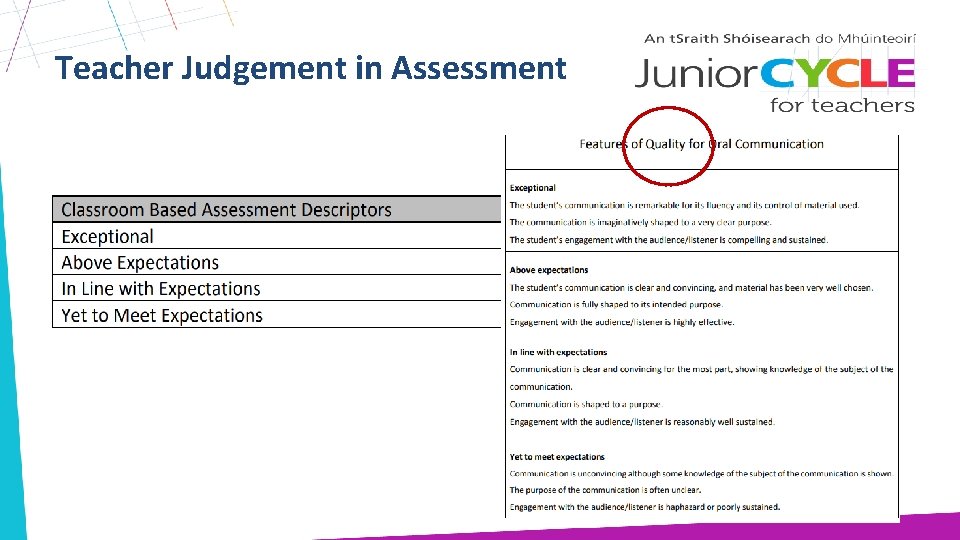
Teacher Judgement in Assessment
Subject Learning Assessment Review meeting ‘On balance Judgement’ Teachers Professional Judgement
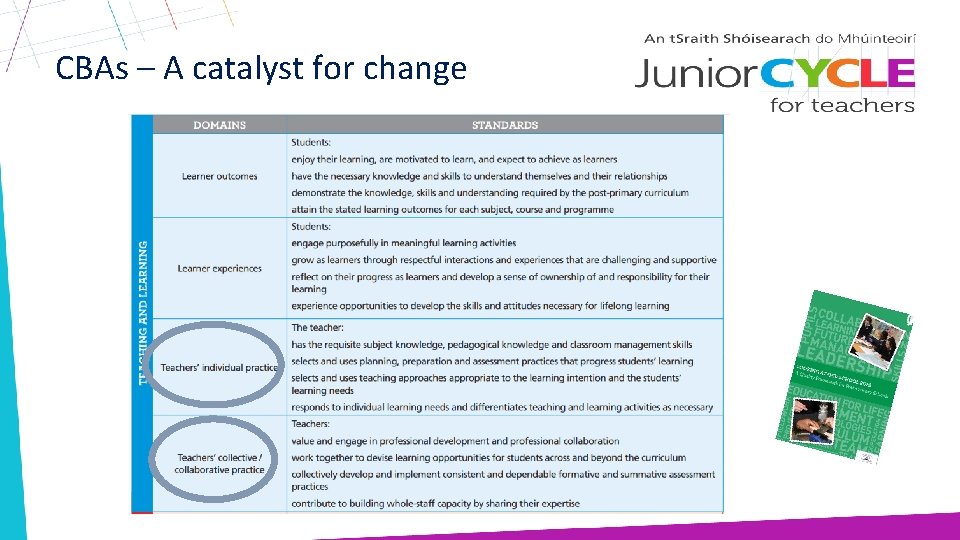
CBAs – A catalyst for change
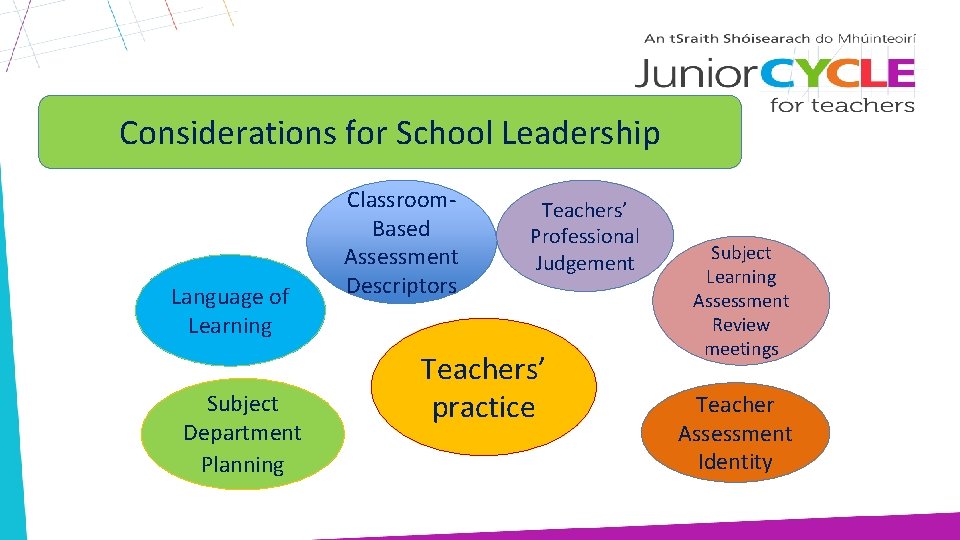
Considerations for School Leadership Language of Learning Subject Department Planning Classroom. Based Assessment Descriptors Teachers’ Professional Judgement Teachers’ practice Subject Learning Assessment Review meetings Teacher Assessment Identity
Leading and managing change Achieving real change, educational change that is deep and lasting, takes time. This is because most real change involves changing the way teaching and learning happens or changing the culture of schools as places of learning and organisations – changing the way things are done! p. 14
Circular 0055/2019 In this context, the Classroom-Based Assessments will substitute for other assessments currently undertaken in the school such as in-house examinations. Schools should examine their own assessment policies and must plan for the replacement of in-house examinations with Classroom-Based Assessments for students, where relevant. p. 15
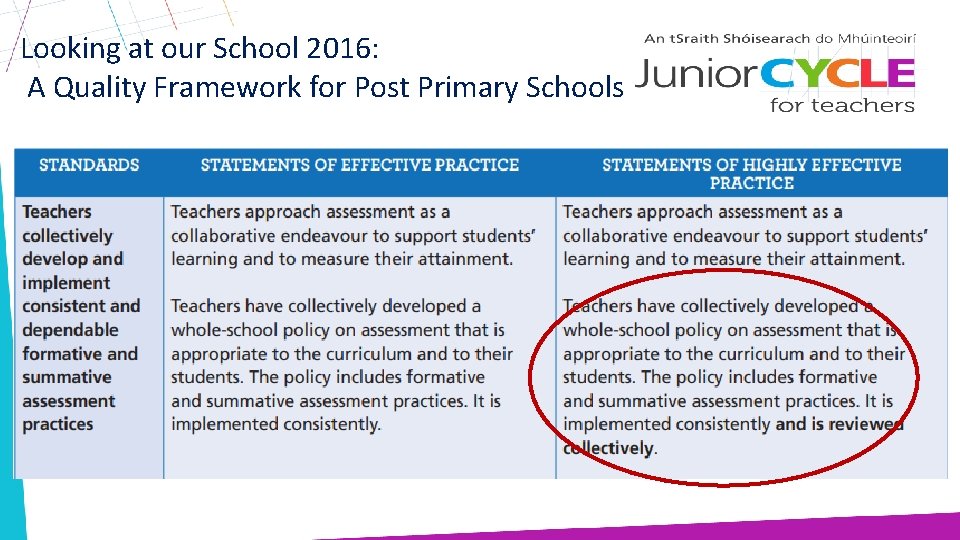
Looking at our School 2016: A Quality Framework for Post Primary Schools
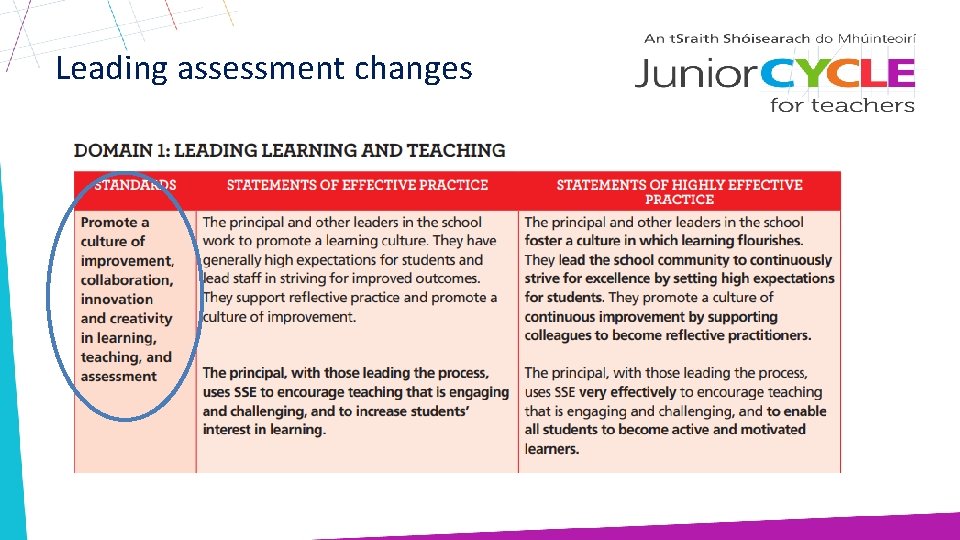
Leading assessment changes
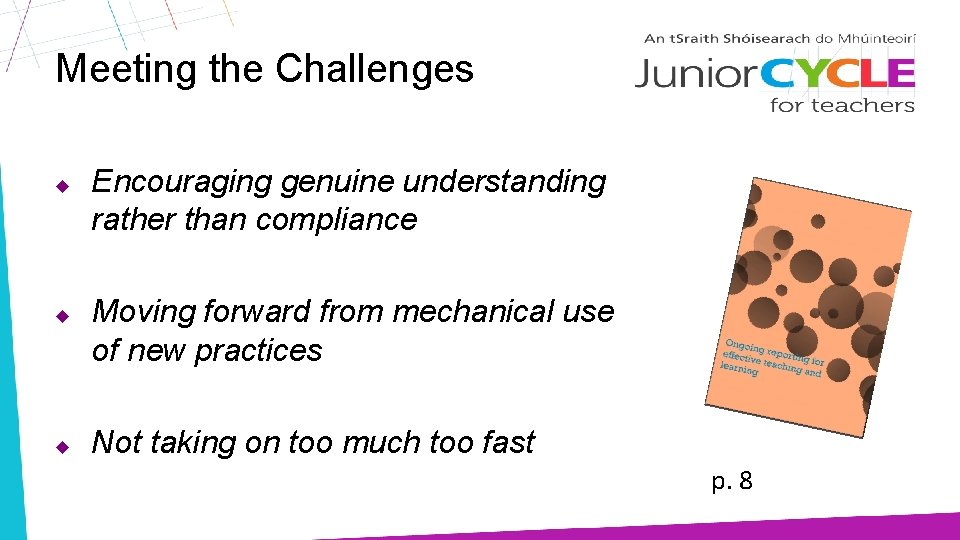
Meeting the Challenges u u u Encouraging genuine understanding rather than compliance Moving forward from mechanical use of new practices Not taking on too much too fast p. 8
Considerations for School Leadership u u To support teacher’s to collaboratively plan using learning outcomes To value the importance of supporting teacher’s professional judgement developed through collaborative practice with colleagues To continue to embed the language of learning in the classroom consistently across the school To reconfigure the schools assessment and reporting procedures and calendar
Leading and managing change u u Achieving real change, educational change that is deep and lasting, takes time. This is because most real change involves changing the way teaching and learning happens or changing the culture of schools as places of learning and organisations – changing the way things are done! Realising this kind of profound change involves professionals grappling with fundamental beliefs, dispositions and habits and altering practice on the basis of experience.
Autumn 2019 Leadership and Management of the Wellbeing Programme in the Junior Cycle Curriculum 44 workshops www. jctregistration. ie 5 th November – 10 th December Examine the implications of Circular 0055/2019 for the school’s wellbeing programme Develop the concept of authentic consultation in curriculum planning Explore collaborative planning for an effective wellbeing programme

- Slides: 22