
Classroom Management Part 2 Lesson Planning for a
- Slides: 11
Classroom Management Part 2: Lesson Planning for a Productive Classroom Marla Yoshida TEFL Professional Seminar UCI Extension • International Programs http: //teachesl. pbworks. com
Smart lesson planning helps keep students on task and motivated.
Get students engaged and keep them engaged. • Make sure everyone has something they’re supposed to be doing all the time. • Students who are engaged and busy don’t get bored easily and don’t have time to goof off. • That means they stay on task and learn better.
Build accountability into every activity. • Be sure students have to produce something verifiable. • Give listeners something to do to keep them attentive. • Use “Teach your partner” or “Think, pair, and share. ”
Teach routines. For example. . . • Use bellwork to start the class without wasting time. • For younger students, use songs to establish routines. • What routines do you use in your classroom?
Change activities often. • Depending on the age of your students, you might have 4 -6 separate divisions or activities in 50 minutes of class time (or even more for very young students). • Use a combination of quiet and busy activities, individual and pair work, teacher talk (a little bit) and student production (a lot).
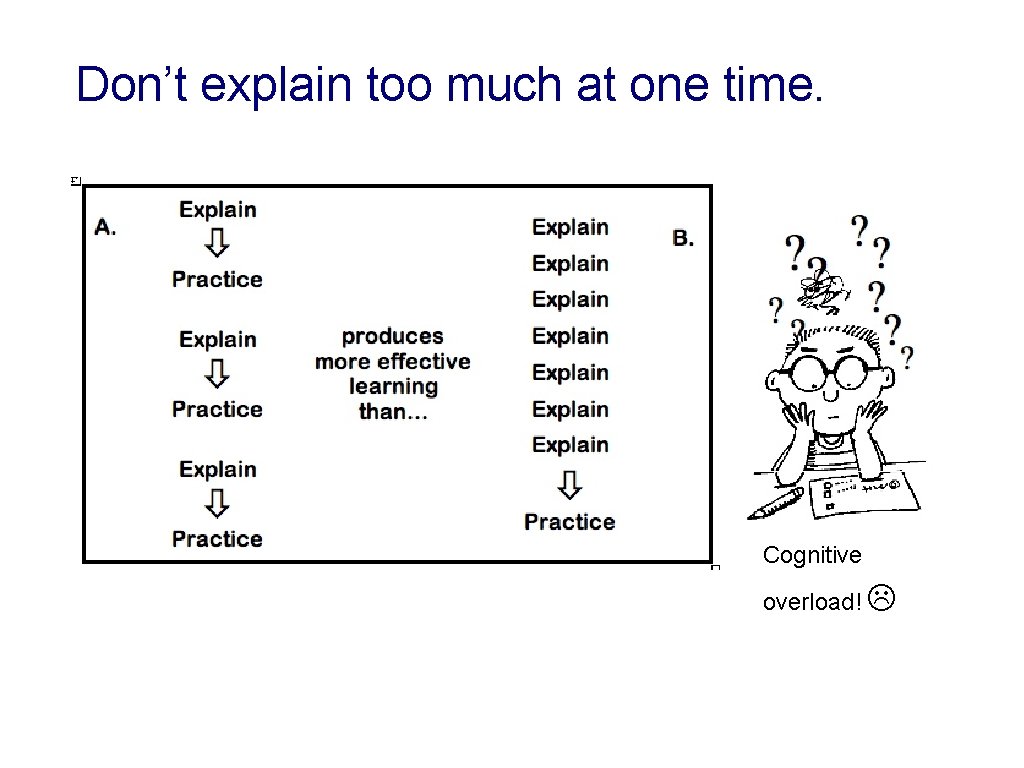
Don’t explain too much at one time. Cognitive overload! L
When you’re calling on students. . . • Use unpredictable ways of choosing who’s next. • Give everyone an equal chance to participate. • Some ways to choose students at random. . . • Write students’ names on cards or popsicle sticks. Choose one. • Close your eyes and point at one of the names on your roll sheet. • Choose a student to go first, and let that student choose the next one, and so on.
Create an English-rich environment. • Use classroom English and expect students to use it too. • Introduce classroom English from the first day. • Prepare a list of expressions to use in class. • Introduce only a few expressions at a time. Review and practice every day. • Remind students to use English. Praise them.
Sometimes you may still prefer to use the students’ native language. • Be sure you think about why you use L 1 or L 2 in a particular situation. • Greeting students • Presenting the agenda for the day’s work • Introducing or explaining grammar • Explaining new vocabulary words • Giving instructions for activities or homework • Giving praise • Summarizing what the class has learned today • Other lesson elements?
In summary. . . • Careful lesson planning keeps students engaged, motivated, and on task. This makes classroom management much easier.