
Classroom Management Group Contingency Plan Concordia University Texas
- Slides: 15
Classroom Management: Group Contingency Plan Concordia University Texas EDAD 5351 Karen Deleon Dr. Wendy Schulze
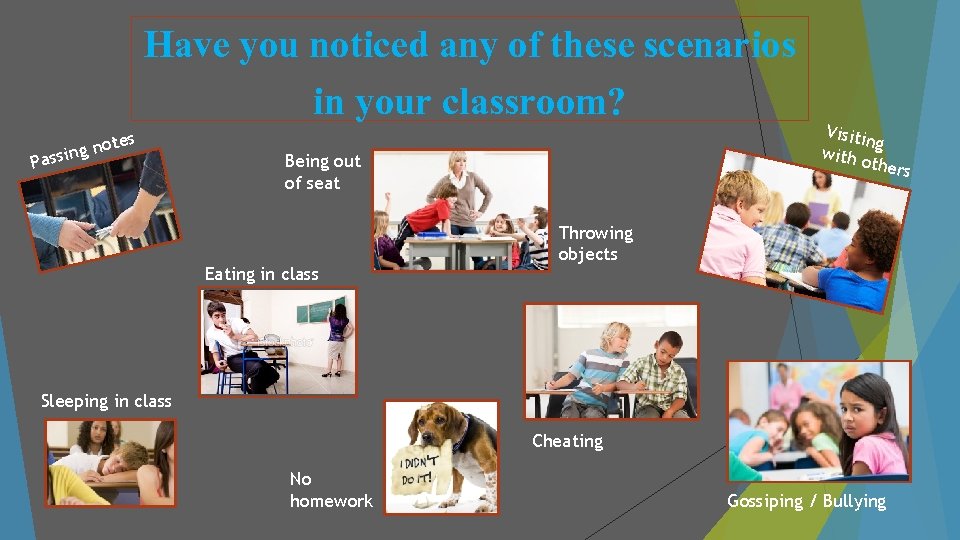
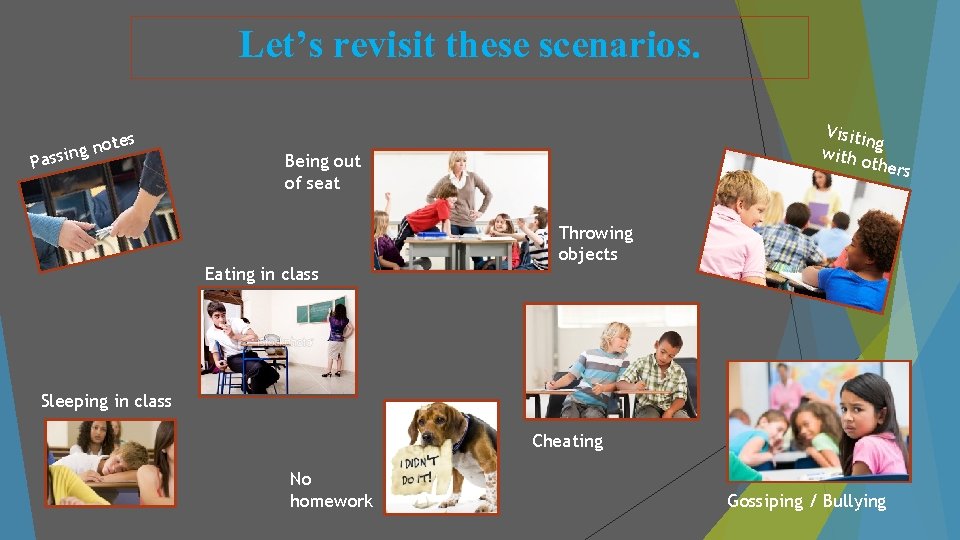
otes n g n si Have you noticed any of these scenarios in your classroom? Pas Being out of seat Eating in class Visitin g with other s Throwing objects Sleeping in class Cheating No homework Gossiping / Bullying
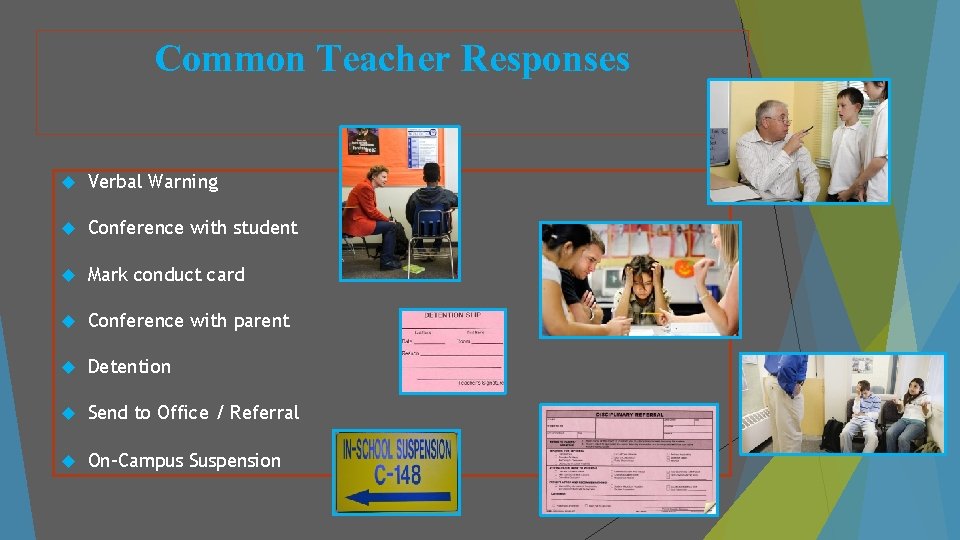
Common Teacher Responses Verbal Warning Conference with student Mark conduct card Conference with parent Detention Send to Office / Referral On-Campus Suspension
Alternative Behavior Plan: Group Contingency Class-wide Function-Based Intervention Teams (CW-FIT)
Class-wide Function-Based Intervention Teams Benefits: Adaptable to match the needs of the classroom Supports all students in the classroom Allows for individual student-specific modifications within classwide intervention Provides verbal praise and points to teams exhibiting the desired behaviors at prechosen intervals. Rewards teams that have met the predetermined point goal at the end of the game session.
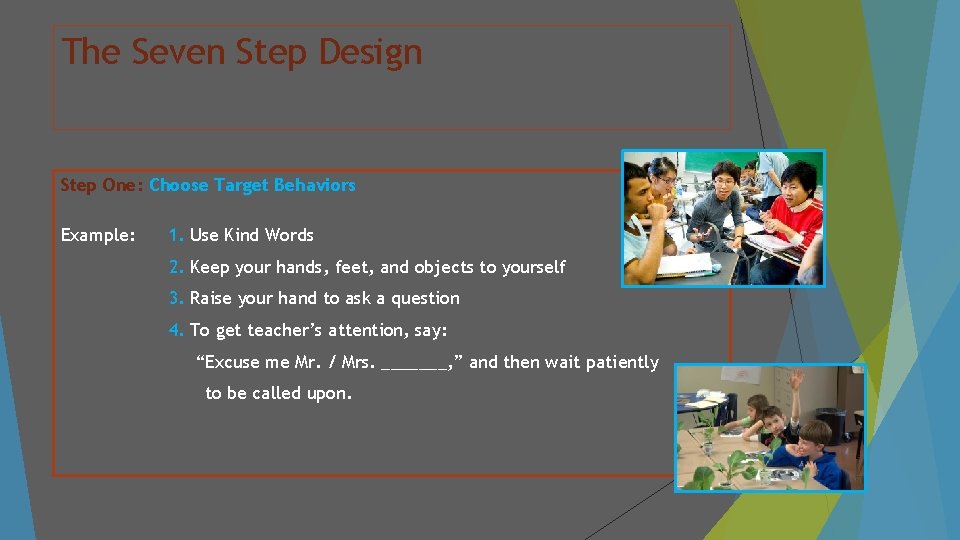
The Seven Step Design Step One: Choose Target Behaviors Example: 1. Use Kind Words 2. Keep your hands, feet, and objects to yourself 3. Raise your hand to ask a question 4. To get teacher’s attention, say: “Excuse me Mr. / Mrs. _______, ” and then wait patiently to be called upon.
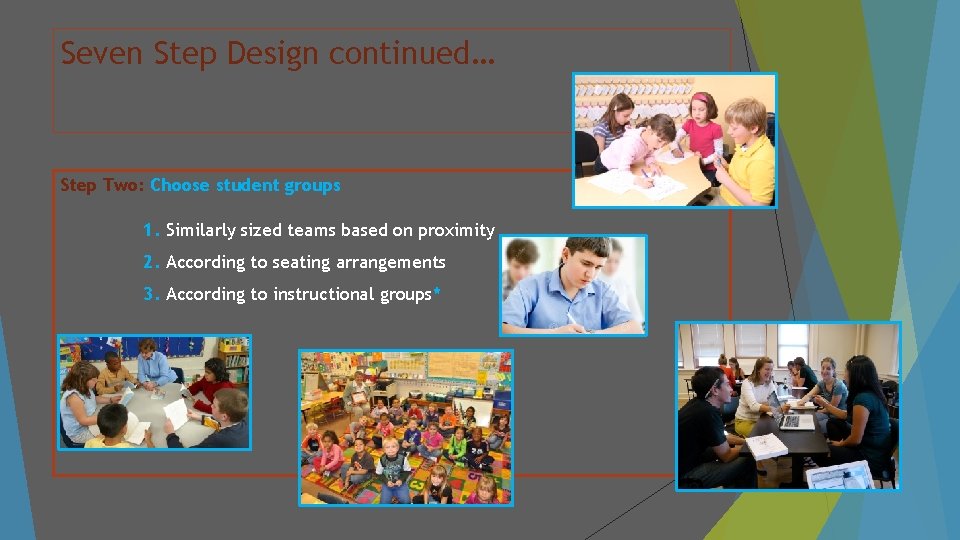
Seven Step Design continued… Step Two: Choose student groups 1. Similarly sized teams based on proximity 2. According to seating arrangements 3. According to instructional groups*
Seven Step Design continued… Step Three: 3 Ways to Determine How Groups (Teams) Earn Points 1. Interdependently = Everyone in group must exhibit desired behavior for team to earn points. 2. Dependently = Only certain members (even if one 1 person) of the team must exhibit desired behavior for team to earn points. 3. Independently* = Individual students must exhibit desired behavior to earn points.
Seven Step Design continued… Step Four: Decide how you will award points 1. Response Reward System = teams earn points when they exhibit desired behaviors. 2. Response Cost System = teams lose points for exhibiting undesired behaviors.
Seven Step Design continued… Step Five: Choose who awards the points 1. The teacher monitors 2. Student groups / teams self-monitor
Seven Step Design continued… Step Six: 3 Component to Determine a Schedule 1. Length of Contingency = Has a specific start and end time 2. Frequency of Awarding Points* 3. When Students Access Their Reward = Immediate is preferred
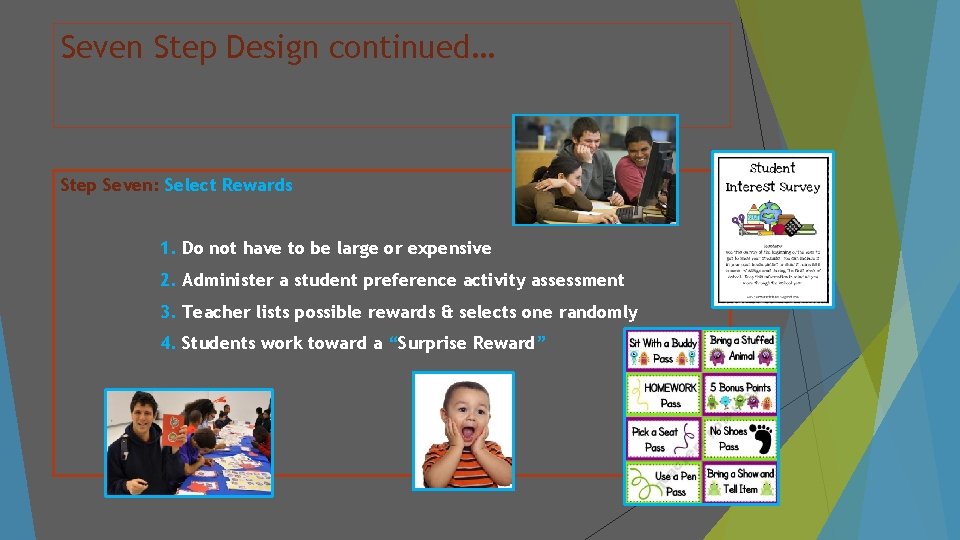
Seven Step Design continued… Step Seven: Select Rewards 1. Do not have to be large or expensive 2. Administer a student preference activity assessment 3. Teacher lists possible rewards & selects one randomly 4. Students work toward a “Surprise Reward”
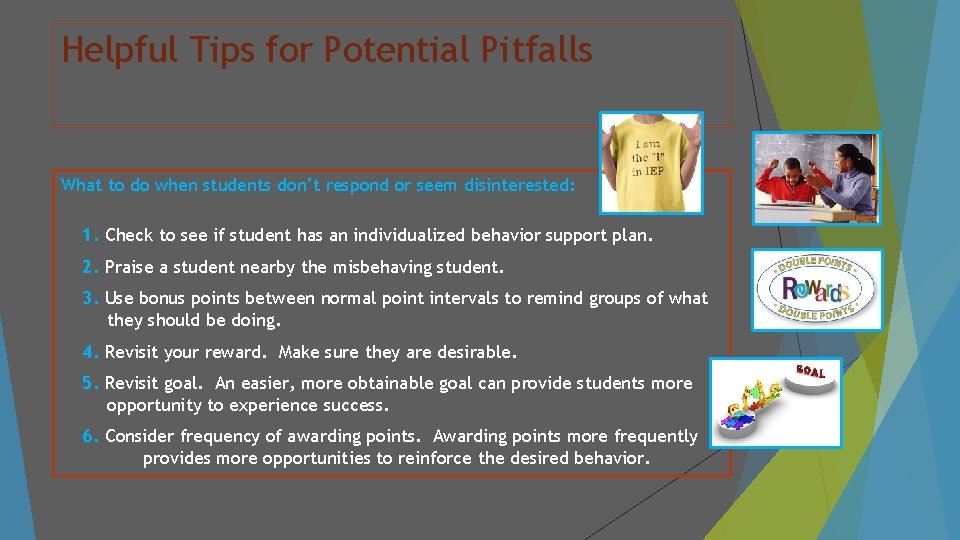
Helpful Tips for Potential Pitfalls What to do when students don’t respond or seem disinterested: 1. Check to see if student has an individualized behavior support plan. 2. Praise a student nearby the misbehaving student. 3. Use bonus points between normal point intervals to remind groups of what they should be doing. 4. Revisit your reward. Make sure they are desirable. 5. Revisit goal. An easier, more obtainable goal can provide students more opportunity to experience success. 6. Consider frequency of awarding points. Awarding points more frequently provides more opportunities to reinforce the desired behavior.
Let’s revisit these scenarios. otes n g n si Pas Visitin g with other s Being out of seat Eating in class Throwing objects Sleeping in class Cheating No homework Gossiping / Bullying
Reference Chow, J. C. , & Gilmour, A. F. (2016). Designing and Implementing Group Contingencies in the Classroom: A teacher’s Guide. TEACHING Exceptional Children, 48(3), 137 -143. Retrieved from http: //dx. doi. org. webpro. ctx. edu/10. 1177/0040059915618197