
Classroom Management 1 Creating an environment conducive to
- Slides: 20
Classroom Management 1
Creating an environment conducive to learning • What is the number one concern for new teachers? • What can derail a wellplanned lesson faster than any other factor? • What is a top factor in student achievement?
Arranging the Classroom • Minimizing distractions – Traffic patterns – Doorways – Materials • Facilitating teacher-student interactions – Students close to teacher • Facilitating (or not) student interactions – What message are you sending? • Surveying the entire class
Types of Room Arrangements What is the message? • Rows • Tables • U-shape • others
Classroom Climate • Overall psychological atmosphere of the classroom. – Safe and secure – Learning a high priority – Willing to take risks, make mistakes – Willing to laugh
Forming and Maintaining Productive Teacher-Student Relationships • Show you care about education and about the students. • Communicate high, realistic expectations and support student accomplishment. • Include students in decision making and evaluations of their work. • Acknowledge “bad days” and don’t hold it against them.
Establish a Businesslike, Nonthreatening Atmosphere • “I’m not mean, I just mean business. ” • We are in school to get certain things accomplished. • Hold students accountable for achieving instructional objectives. • Admonish them for their misbehavior but not hold it against them.
Communicating Messages about School Subject Matter • Meaningful, authentic activities. • Focus on improvement. • Positive attitude
Giving Students a Sense of Control • Give notice of upcoming assignments and activities. • Create regular routines. • Allow students to set some of their own deadlines. • Provide opportunities for students to make choices.
Promoting a Sense of Community and Belongingness • Not too much competitition – Use “coopetition” • Teacher and students have common goals. • Students believe they are an important and valued member of the classroom. • How can you foster this attitude?
Setting Limits • Establish initial rules and procedures. – Follow through on consequences of noncompliance. • Present rules and procedures as information. • Review existing rules and procedures – Community circles • Acknowledge students’ feelings • Enforce rules consistently and equitably.
Activities that Keep Students on Task • Keeping students productively engaged • Choosing tasks at an appropriate level • Providing structure • Planning for transitions – routines
• Monitoring what students are doing – Withitness • Modifying instructional strategies – Excitement – How can I make the instruction more engaging? • Taking individual and developmental differences into account.
Dealing with Misbehaviors • What is Misbehavior? – Action that has the potential to disrupt students’ learning and planned classroom activities. • How do we handle misbehavior effectively in the classroom?
Ignoring behavior is the best option when: • Behavior is a rare occurrence and likely won’t be repeated. • Behavior is unlikely to spread to other students. • It is an unusual circumstance. • Behavior is typical for age. • The natural consequence is an adequate deterrent. • Behavior is not serious enough to affect classroom learning.
Cueing • Use of signals to indicate that a certain behavior is desired or that a certain behavior should stop. – State what should be done. • Be more direct with younger students – Turn off lights – Audible signals – Others?
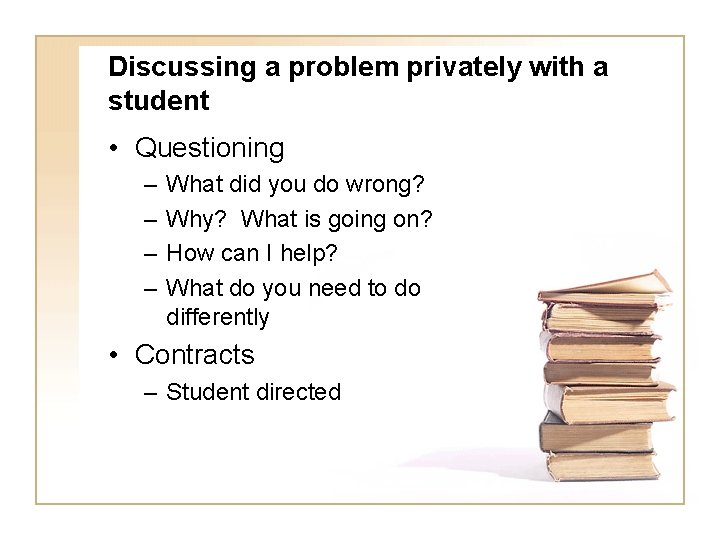
Discussing a problem privately with a student • Questioning – – What did you do wrong? Why? What is going on? How can I help? What do you need to do differently • Contracts – Student directed
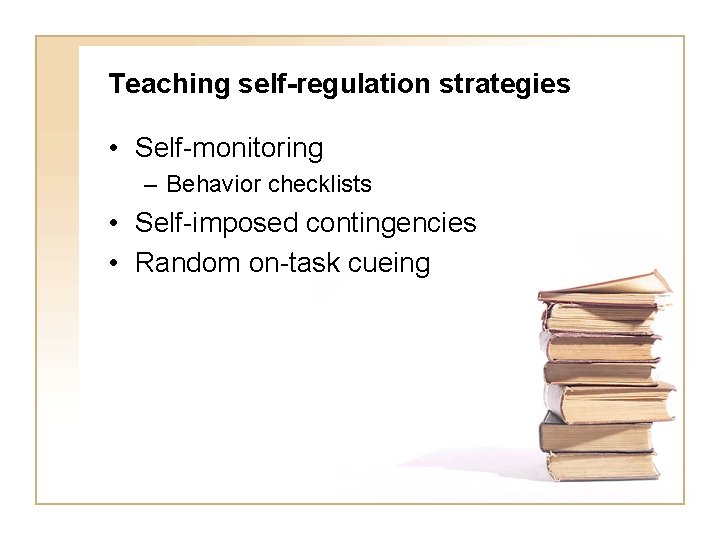
Teaching self-regulation strategies • Self-monitoring – Behavior checklists • Self-imposed contingencies • Random on-task cueing
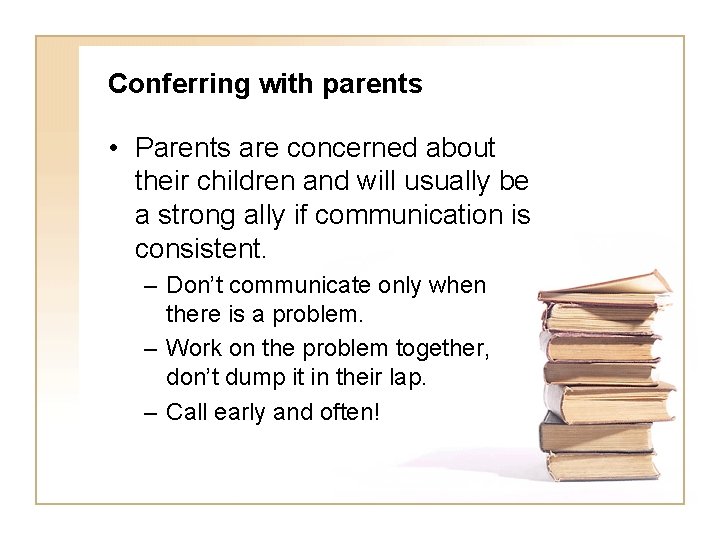
Conferring with parents • Parents are concerned about their children and will usually be a strong ally if communication is consistent. – Don’t communicate only when there is a problem. – Work on the problem together, don’t dump it in their lap. – Call early and often!
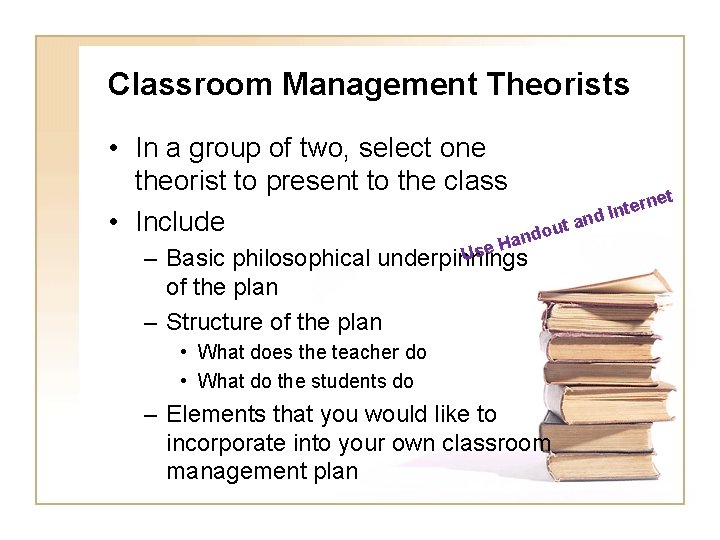
Classroom Management Theorists • In a group of two, select one theorist to present to the class • Include et ut ando e. H s U underpinnings – Basic philosophical of the plan – Structure of the plan • What does the teacher do • What do the students do – Elements that you would like to incorporate into your own classroom management plan an ern d Int