
Classroom Introduction to Portable Fire Extinguishers with special

Classroom Introduction to “Portable Fire Extinguishers” with special attention to Motor Carrier Considerations for the Waste Industry 10/7/2020 Fairfax County DPWES Solid Waste Management Program - Fire. Safety 1
1 OBJECTIVES: After this training you should be able to: • IDENTIFY causes of trash truck fires • APPLY immediate action steps • EVALUATE when it is safe to fight an “early-stage” vehicle fire, and; • APPLY the “P. A. S. S. method to operate your portable extinguisher. 10/7/2020 DPWES - Fire. Safety 2
Trash Truck fires usually start in one of three places: 2 • CAB – Electrical shorts under dash, often caused by improperly installed (unauthorized ) accessories – Discarded cigarettes igniting trash or upholstery • ENGINE COMPARTMENT – Fuel or oil system leaks onto hot engine • Pre-trip inspection, and proper maintenance • CARGO AREA - COMPACTOR – Hot ashes discarded in household refuse – Hazardous Material reactions in collected refuse 10/7/2020 DPWES - Fire. Safety 3
3 IMMEDIATE ACTION: If vehicle catches fire during operation: • IN A SAFE LOCATION ! – PULL ENTIRELY OFF THE ROAD – Into a paved parking lot, or open field – NEVER at a gas station! • • CONTACT YOUR DISPATCHER CALL THE FIRE DEPARTMENT! 10/7/2020 DPWES - Fire. Safety 4
4 FIRE IN CAB: • TURN OFF THE IGNITION! Stops flow of current to equipment • EXIT THE CAB! Identify the source of smoke or fire • EXTINGUISH THE FIRE ONLY IF: 1) You know what is burning, and fire is small / contained. 2) Extinguisher is available and you have been trained 3) Fire Department has been called, and you can fight the fire from outside of the cabor with your back to a clear exit. 10/7/2020 DPWES - Fire. Safety 5
5 FIRE IN ENGINE COMPARTMNENT: • TURN OFF THE IGNITION! Stops flow of current to equipment • EXIT THE CAB! Identify the source of smoke or fire • DO NOT OPEN THE HOOD! (air intensifies fire!) • KEEP CREW and BYSTANDERS AWAY! 10/7/2020 DPWES - Fire. Safety 6
6 FIRE IN CARGO COMPARTMNENT • TURN OFF THE IGNITION! Stops flow of current to equipment • EXIT THE CAB! Identify the source of smoke or fire • DO NOT open cargo doors (air intensifies fire!) • KEEP CREW and BYSTANDERS AWAY! • until the Fire DPWES Department arrives - Fire. Safety 10/7/2020 7
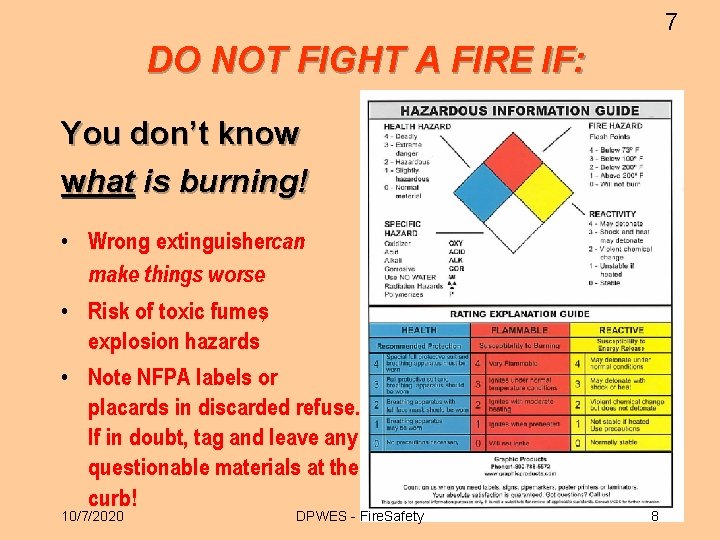
7 DO NOT FIGHT A FIRE IF: You don’t know what is burning! • Wrong extinguishercan make things worse • Risk of toxic fumes, explosion hazards • Note NFPA labels or placards in discarded refuse. If in doubt, tag and leave any questionable materials at the curb! 10/7/2020 DPWES - Fire. Safety 8
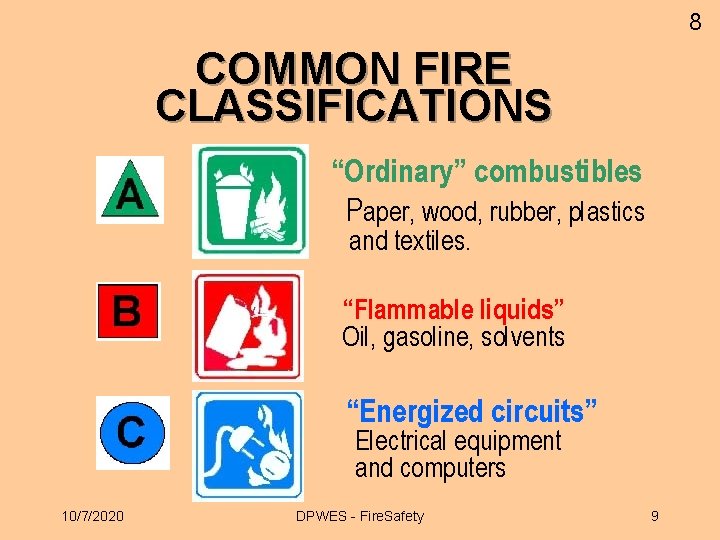
8 COMMON FIRE CLASSIFICATIONS “Ordinary” combustibles Paper, wood, rubber, plastics and textiles. “Flammable liquids” Oil, gasoline, solvents “Energized circuits” Electrical equipment and computers 10/7/2020 DPWES - Fire. Safety 9
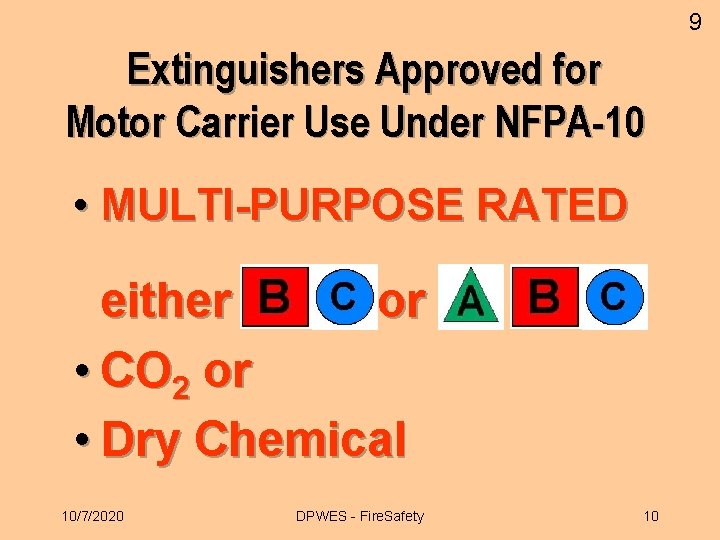
9 Extinguishers Approved for Motor Carrier Use Under NFPA-10 • MULTI-PURPOSE RATED either or • CO 2 or • Dry Chemical 10/7/2020 DPWES - Fire. Safety 10
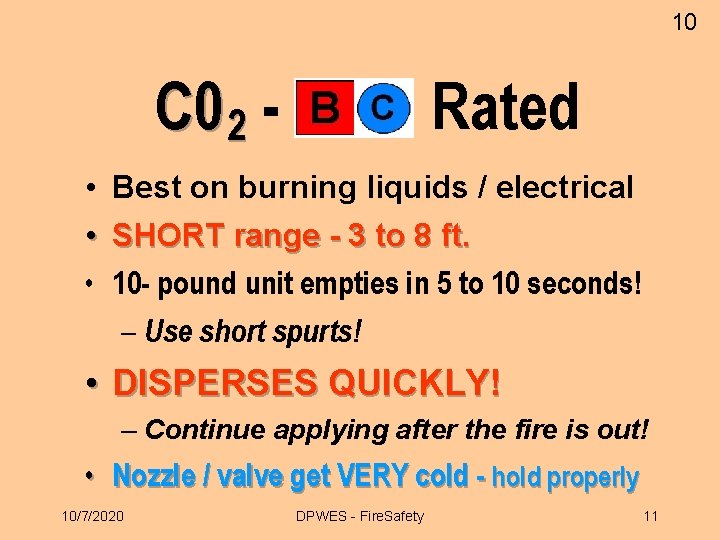
10 C 0 2 - Rated • Best on burning liquids / electrical • SHORT range - 3 to 8 ft. • 10 - pound unit empties in 5 to 10 seconds! – Use short spurts! • DISPERSES QUICKLY! – Continue applying after the fire is out! • Nozzle / valve get VERY cold - hold properly 10/7/2020 DPWES - Fire. Safety 11
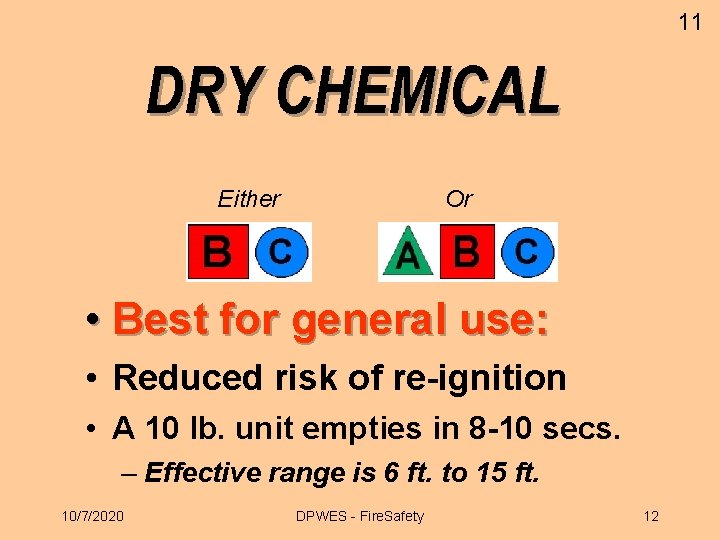
11 DRY CHEMICAL Either Or • Best for general use: • Reduced risk of re-ignition • A 10 lb. unit empties in 8 -10 secs. – Effective range is 6 ft. to 15 ft. 10/7/2020 DPWES - Fire. Safety 12
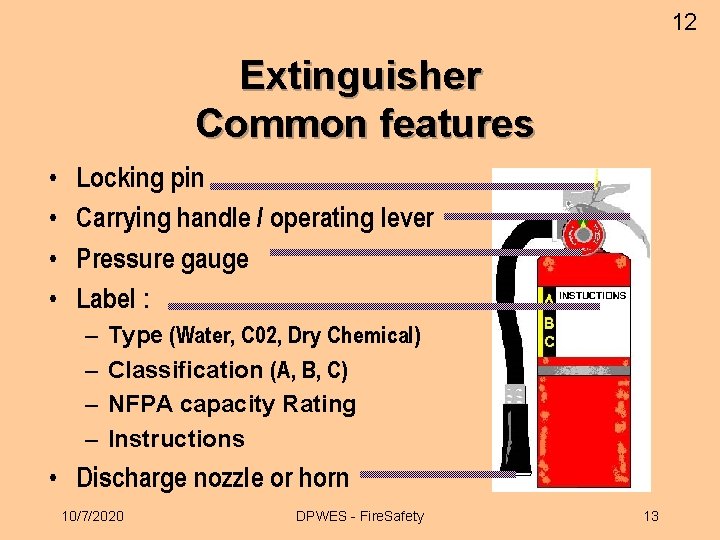
12 Extinguisher Common features • • Locking pin Carrying handle / operating lever Pressure gauge Label : – – Type (Water, C 02, Dry Chemical) Classification (A, B, C) NFPA capacity Rating Instructions • Discharge nozzle or horn 10/7/2020 DPWES - Fire. Safety 13
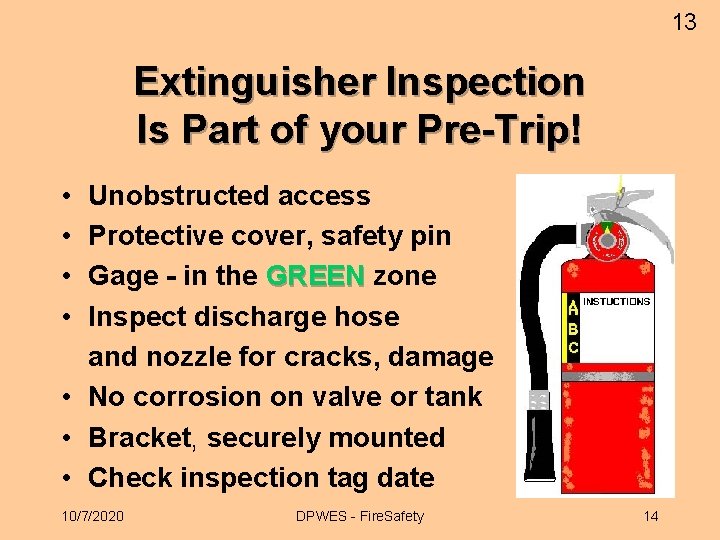
13 Extinguisher Inspection Is Part of your Pre-Trip! • • Unobstructed access Protective cover, safety pin Gage - in the GREEN zone Inspect discharge hose and nozzle for cracks, damage • No corrosion on valve or tank • Bracket, securely mounted • Check inspection tag date 10/7/2020 DPWES - Fire. Safety 14
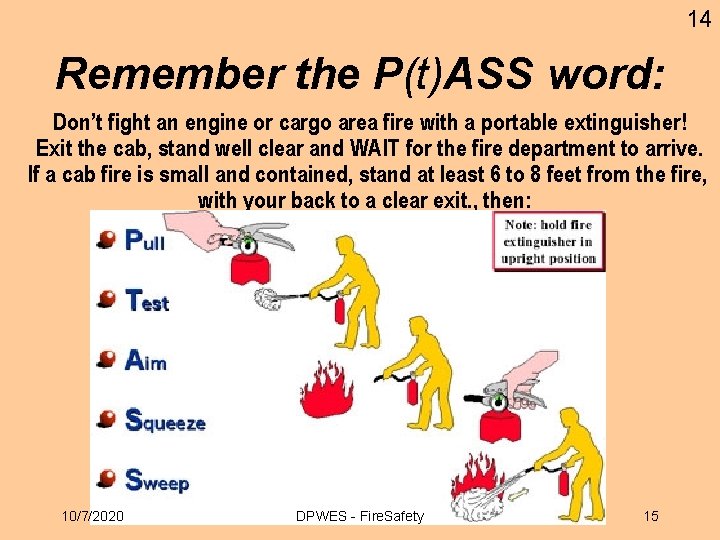
14 Remember the P(t)ASS word: Don’t fight an engine or cargo area fire with a portable extinguisher! Exit the cab, stand well clear and WAIT for the fire department to arrive. If a cab fire is small and contained, stand at least 6 to 8 feet from the fire, with your back to a clear exit. , then: 10/7/2020 DPWES - Fire. Safety 15
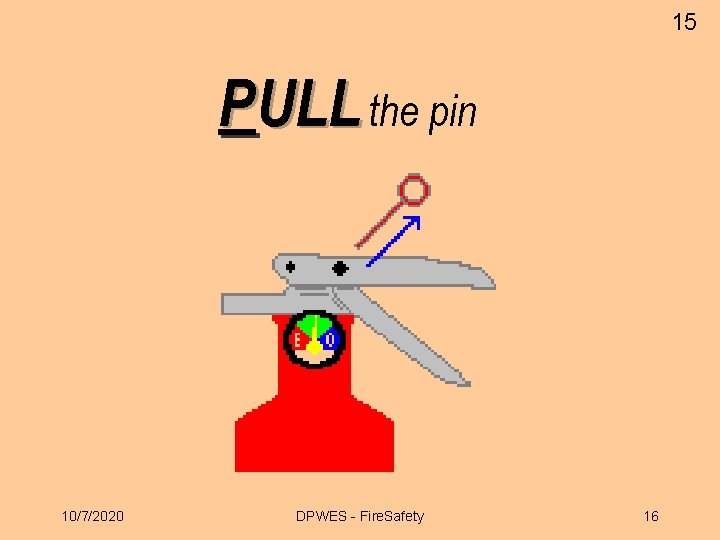
15 PULL the pin 10/7/2020 DPWES - Fire. Safety 16
16 TEST • ONLY upon your approach to the fire • Otherwise the powdered extinguishing agent may clog the nozzle if a unit is squeezed and released. 10/7/2020 DPWES - Fire. Safety 17
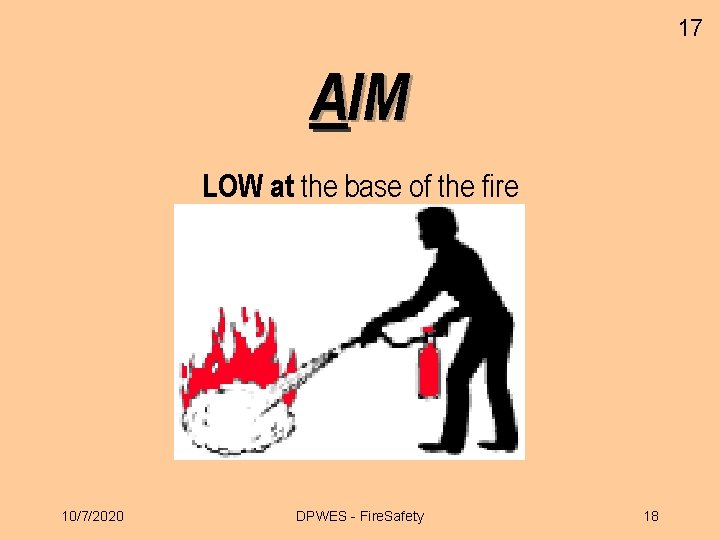
17 AIM LOW at the base of the fire 10/7/2020 DPWES - Fire. Safety 18
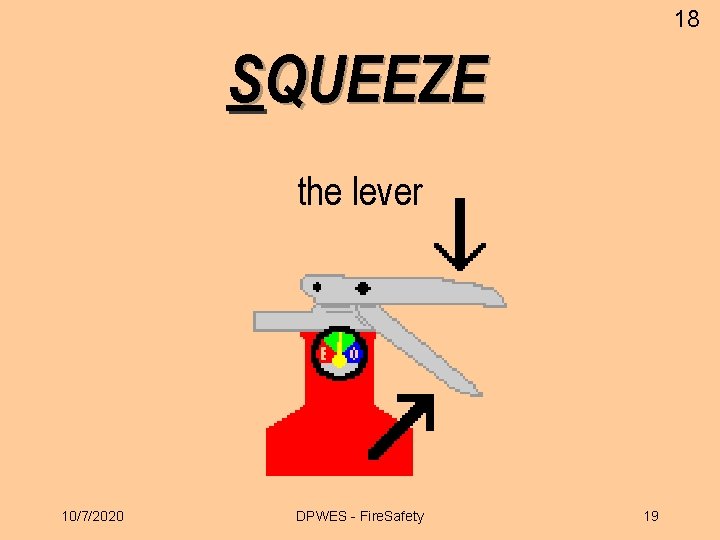
18 SQUEEZE the lever 10/7/2020 DPWES - Fire. Safety 19
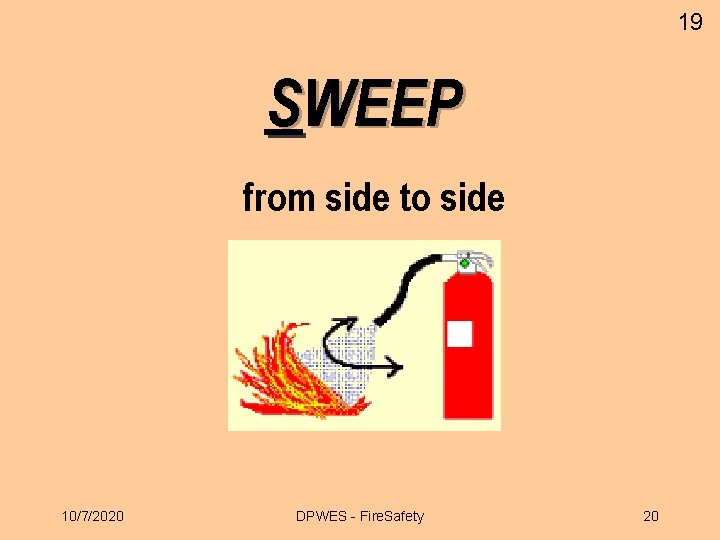
19 SWEEP from side to side 10/7/2020 DPWES - Fire. Safety 20
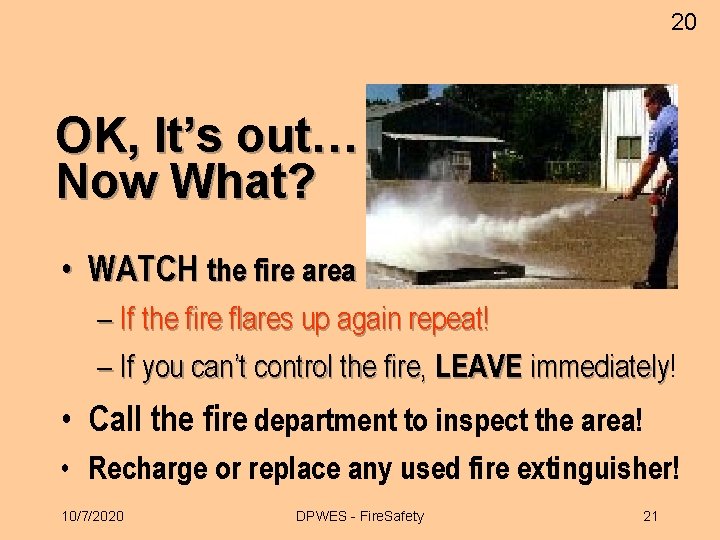
20 OK, It’s out… Now What? • WATCH the fire area – If the fire flares up again repeat! – If you can’t control the fire, LEAVE immediately! immediately • Call the fire department to inspect the area! • Recharge or replace any used fire extinguisher! 10/7/2020 DPWES - Fire. Safety 21
21 ACKNOWLEDGEMENTS: This safety training module was developed in cooperation with: the National Fire Protection Association and the Public Information and Life Safety Education Section of the Fairfax County Fire & Rescue Department 4100 Chain Bridge Road, Fairfax, VA 22020 www. co. fairfax. va. us/ps/fr/general/Piolse. htm (703) 246 -3801 or (703 -385 -4419 TTY Portions © 1995 -2000 by Dr. Robert Toreki, used by permission 10/7/2020 http: //www. ilpi. com/safety/extinguishers. html DPWES - Fire. Safety 22
- Slides: 22