
Classroom Disruption Prevention Intervention and Sanity Introduction Defining
- Slides: 23
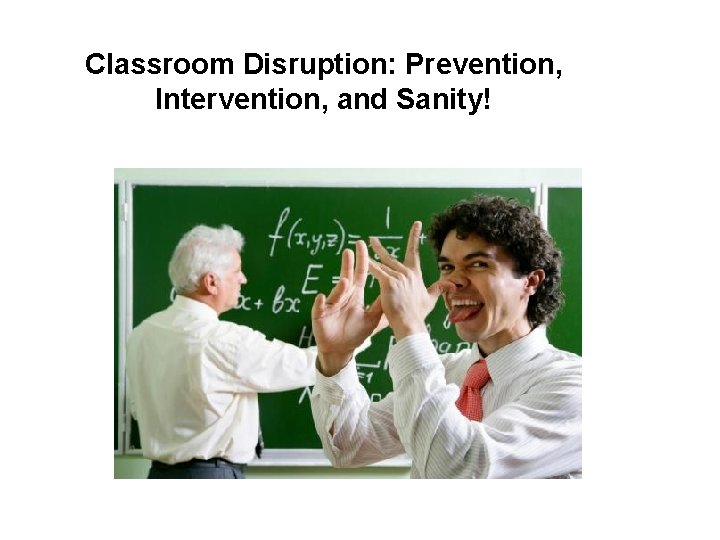
Classroom Disruption: Prevention, Intervention, and Sanity!
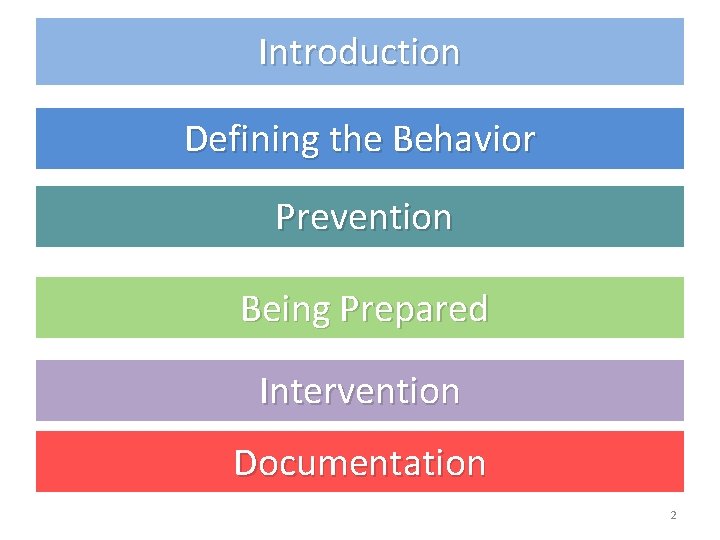
Introduction Defining the Behavior Prevention Being Prepared Intervention Documentation 2
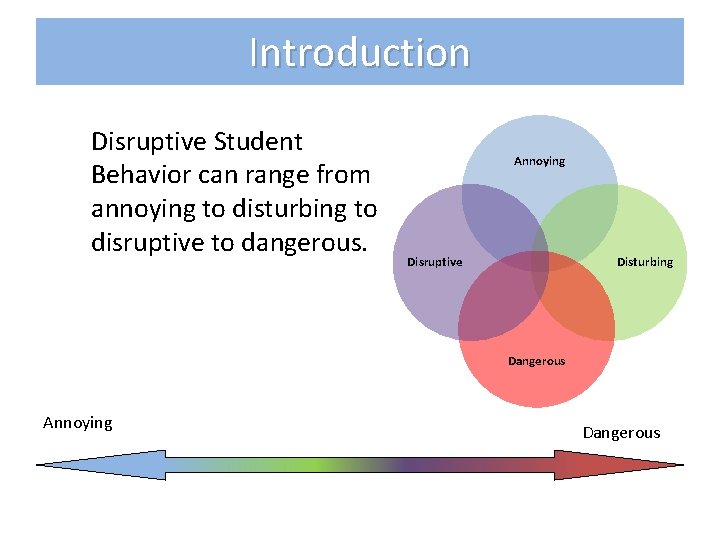
Introduction Disruptive Student Behavior can range from annoying to disturbing to disruptive to dangerous. Annoying Disruptive Disturbing Dangerous Annoying Dangerous
Introduction, cont. This workshop will help identify which behaviors are dangerous, disturbing and disruptive versus those that are simply annoying. It is important to know when a situation has reached the dangerous range so that appropriate measures can be taken. This workshop will also discuss some ideas on how to avoid a difficult situation and what to do when you find yourself in one. Faculty and Students rights will also be discussed. 4
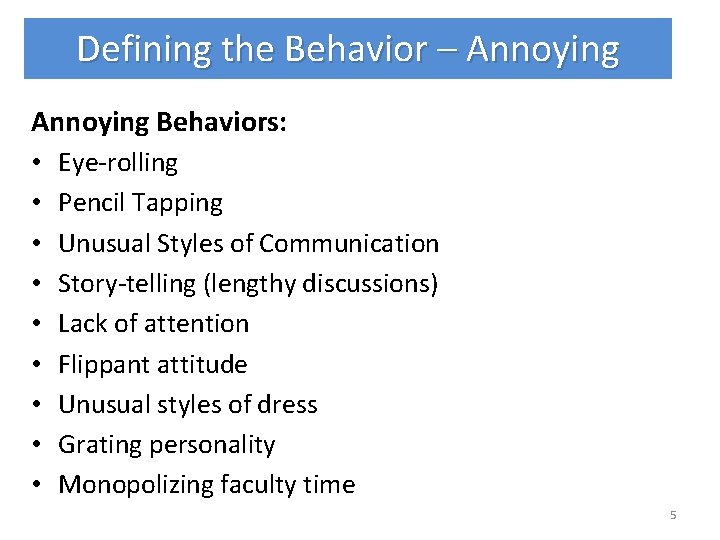
Defining the Behavior – Annoying Behaviors: • • • Eye-rolling Pencil Tapping Unusual Styles of Communication Story-telling (lengthy discussions) Lack of attention Flippant attitude Unusual styles of dress Grating personality Monopolizing faculty time 5
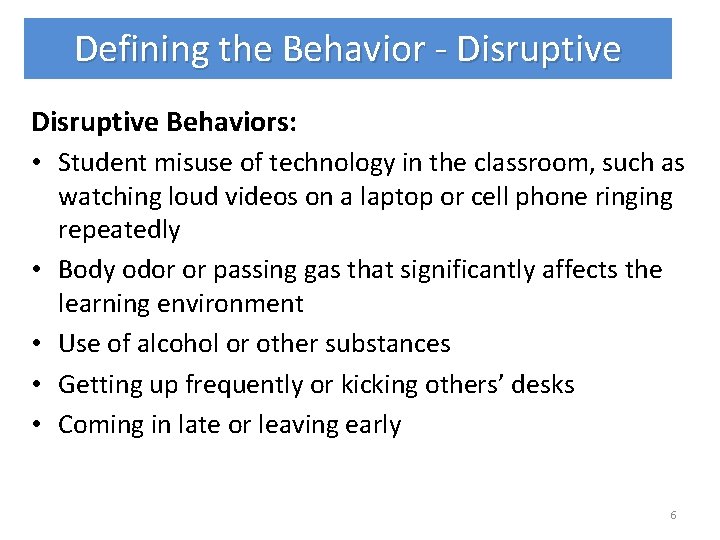
Defining the Behavior - Disruptive Behaviors: • Student misuse of technology in the classroom, such as watching loud videos on a laptop or cell phone ringing repeatedly • Body odor or passing gas that significantly affects the learning environment • Use of alcohol or other substances • Getting up frequently or kicking others’ desks • Coming in late or leaving early 6
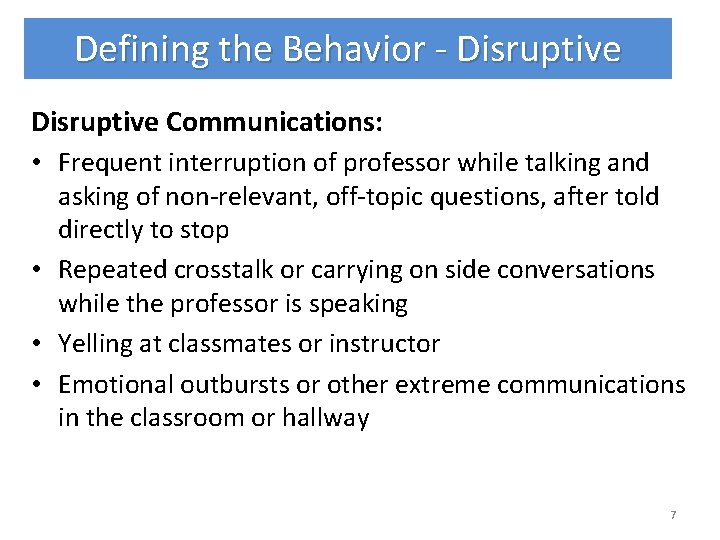
Defining the Behavior - Disruptive Communications: • Frequent interruption of professor while talking and asking of non-relevant, off-topic questions, after told directly to stop • Repeated crosstalk or carrying on side conversations while the professor is speaking • Yelling at classmates or instructor • Emotional outbursts or other extreme communications in the classroom or hallway 7
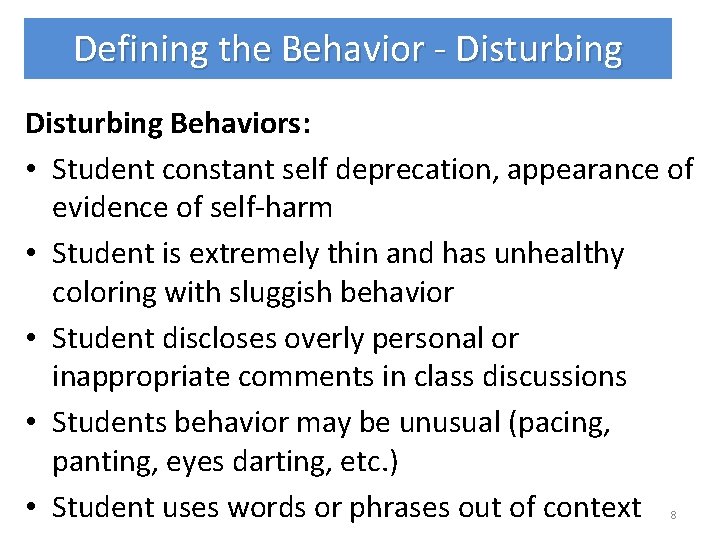
Defining the Behavior - Disturbing Behaviors: • Student constant self deprecation, appearance of evidence of self-harm • Student is extremely thin and has unhealthy coloring with sluggish behavior • Student discloses overly personal or inappropriate comments in class discussions • Students behavior may be unusual (pacing, panting, eyes darting, etc. ) • Student uses words or phrases out of context 8
Defining the Behavior- Dangerous Behaviors: • Physical assault such as pushing, shoving or punching • Throwing objects or slamming doors • Storming out of the classroom or office when upset • Direct communicated threat to professor, staff or another student such as: “I am going to kick your ass” or “If you say that again, I will end you. ” • Threatened harm to self or classmates 9
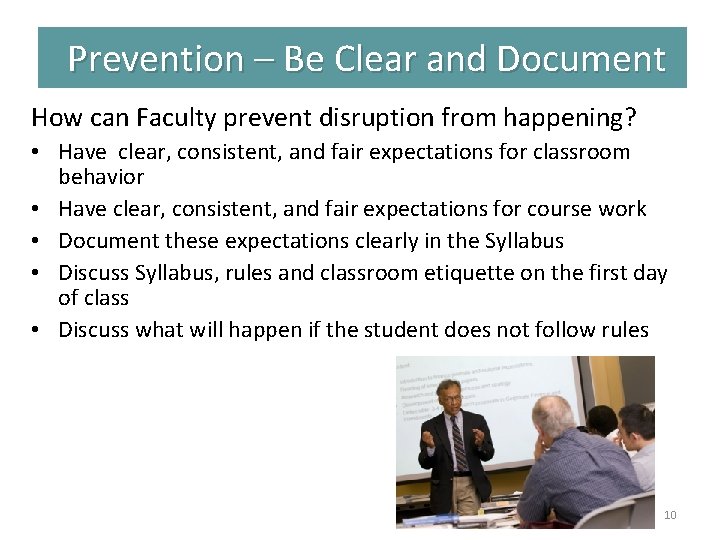
Prevention – Be Clear and Document How can Faculty prevent disruption from happening? • Have clear, consistent, and fair expectations for classroom behavior • Have clear, consistent, and fair expectations for course work • Document these expectations clearly in the Syllabus • Discuss Syllabus, rules and classroom etiquette on the first day of class • Discuss what will happen if the student does not follow rules 10
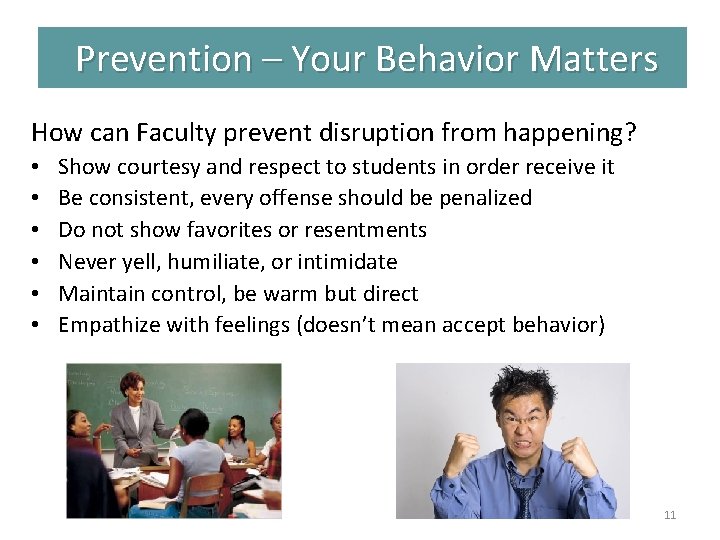
Prevention – Your Behavior Matters How can Faculty prevent disruption from happening? • • • Show courtesy and respect to students in order receive it Be consistent, every offense should be penalized Do not show favorites or resentments Never yell, humiliate, or intimidate Maintain control, be warm but direct Empathize with feelings (doesn’t mean accept behavior) 11
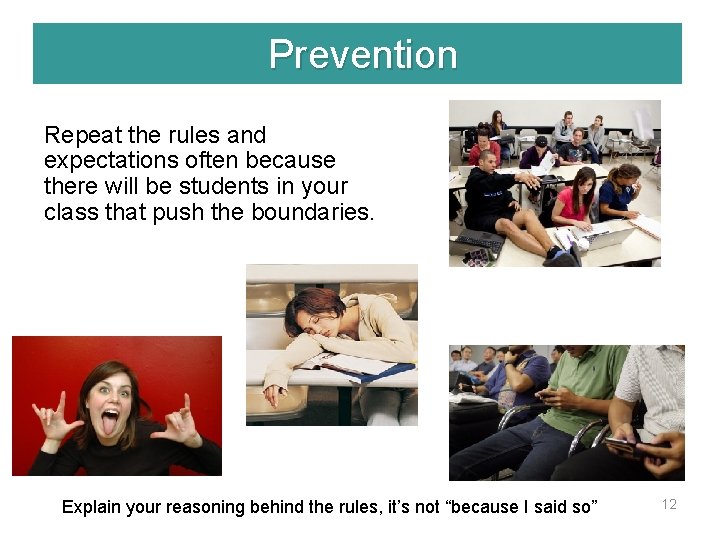
Prevention Repeat the rules and expectations often because there will be students in your class that push the boundaries. Explain your reasoning behind the rules, it’s not “because I said so” 12
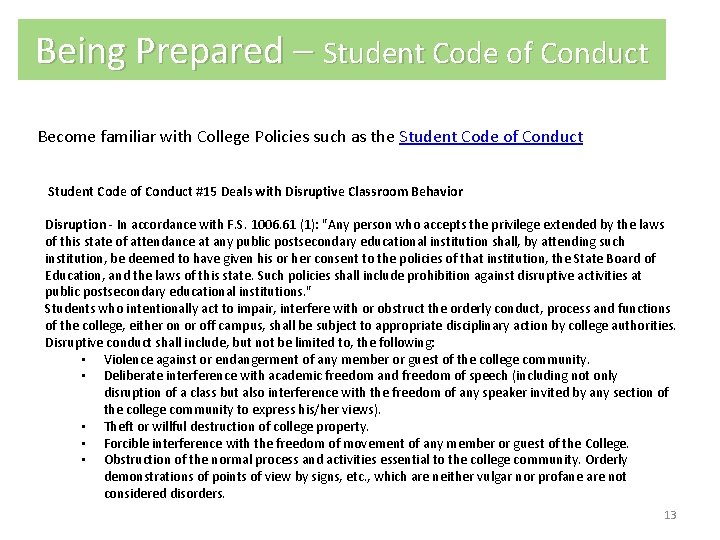
Being Prepared – Student Code of Conduct Become familiar with College Policies such as the Student Code of Conduct #15 Deals with Disruptive Classroom Behavior Disruption - In accordance with F. S. 1006. 61 (1): "Any person who accepts the privilege extended by the laws of this state of attendance at any public postsecondary educational institution shall, by attending such institution, be deemed to have given his or her consent to the policies of that institution, the State Board of Education, and the laws of this state. Such policies shall include prohibition against disruptive activities at public postsecondary educational institutions. " Students who intentionally act to impair, interfere with or obstruct the orderly conduct, process and functions of the college, either on or off campus, shall be subject to appropriate disciplinary action by college authorities. Disruptive conduct shall include, but not be limited to, the following: • Violence against or endangerment of any member or guest of the college community. • Deliberate interference with academic freedom and freedom of speech (including not only disruption of a class but also interference with the freedom of any speaker invited by any section of the college community to express his/her views). • Theft or willful destruction of college property. • Forcible interference with the freedom of movement of any member or guest of the College. • Obstruction of the normal process and activities essential to the college community. Orderly demonstrations of points of view by signs, etc. , which are neither vulgar nor profane are not considered disorders. 13
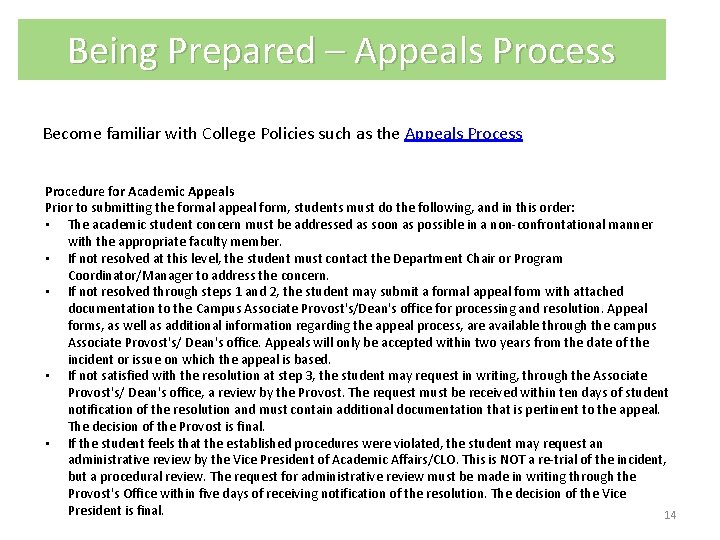
Being Prepared – Appeals Process Become familiar with College Policies such as the Appeals Process Procedure for Academic Appeals Prior to submitting the formal appeal form, students must do the following, and in this order: • The academic student concern must be addressed as soon as possible in a non-confrontational manner with the appropriate faculty member. • If not resolved at this level, the student must contact the Department Chair or Program Coordinator/Manager to address the concern. • If not resolved through steps 1 and 2, the student may submit a formal appeal form with attached documentation to the Campus Associate Provost's/Dean's office for processing and resolution. Appeal forms, as well as additional information regarding the appeal process, are available through the campus Associate Provost's/ Dean's office. Appeals will only be accepted within two years from the date of the incident or issue on which the appeal is based. • If not satisfied with the resolution at step 3, the student may request in writing, through the Associate Provost's/ Dean's office, a review by the Provost. The request must be received within ten days of student notification of the resolution and must contain additional documentation that is pertinent to the appeal. The decision of the Provost is final. • If the student feels that the established procedures were violated, the student may request an administrative review by the Vice President of Academic Affairs/CLO. This is NOT a re-trial of the incident, but a procedural review. The request for administrative review must be made in writing through the Provost's Office within five days of receiving notification of the resolution. The decision of the Vice President is final. 14
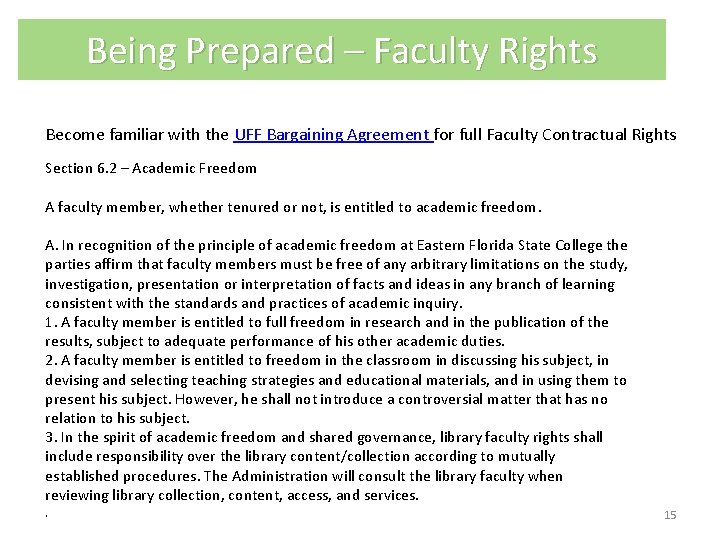
Being Prepared – Faculty Rights Become familiar with the UFF Bargaining Agreement for full Faculty Contractual Rights Section 6. 2 – Academic Freedom A faculty member, whether tenured or not, is entitled to academic freedom. A. In recognition of the principle of academic freedom at Eastern Florida State College the parties affirm that faculty members must be free of any arbitrary limitations on the study, investigation, presentation or interpretation of facts and ideas in any branch of learning consistent with the standards and practices of academic inquiry. 1. A faculty member is entitled to full freedom in research and in the publication of the results, subject to adequate performance of his other academic duties. 2. A faculty member is entitled to freedom in the classroom in discussing his subject, in devising and selecting teaching strategies and educational materials, and in using them to present his subject. However, he shall not introduce a controversial matter that has no relation to his subject. 3. In the spirit of academic freedom and shared governance, library faculty rights shall include responsibility over the library content/collection according to mutually established procedures. The Administration will consult the library faculty when reviewing library collection, content, access, and services. . 15
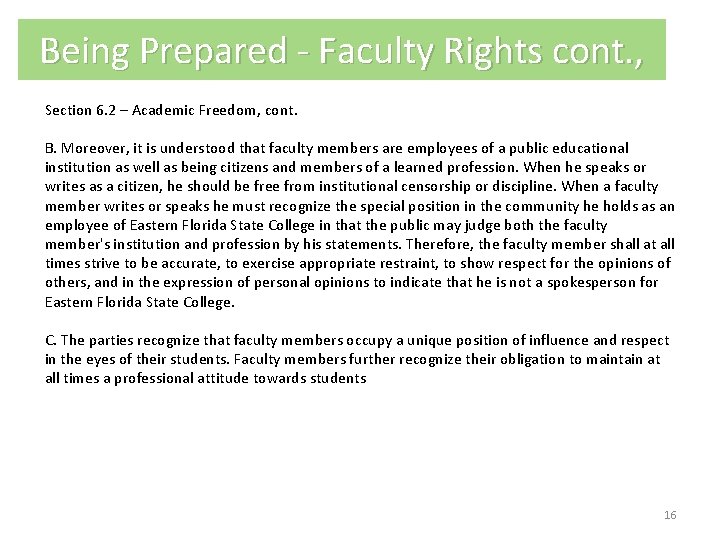
Being Prepared - Faculty Rights cont. , Section 6. 2 – Academic Freedom, cont. B. Moreover, it is understood that faculty members are employees of a public educational institution as well as being citizens and members of a learned profession. When he speaks or writes as a citizen, he should be free from institutional censorship or discipline. When a faculty member writes or speaks he must recognize the special position in the community he holds as an employee of Eastern Florida State College in that the public may judge both the faculty member's institution and profession by his statements. Therefore, the faculty member shall at all times strive to be accurate, to exercise appropriate restraint, to show respect for the opinions of others, and in the expression of personal opinions to indicate that he is not a spokesperson for Eastern Florida State College. C. The parties recognize that faculty members occupy a unique position of influence and respect in the eyes of their students. Faculty members further recognize their obligation to maintain at all times a professional attitude towards students 16
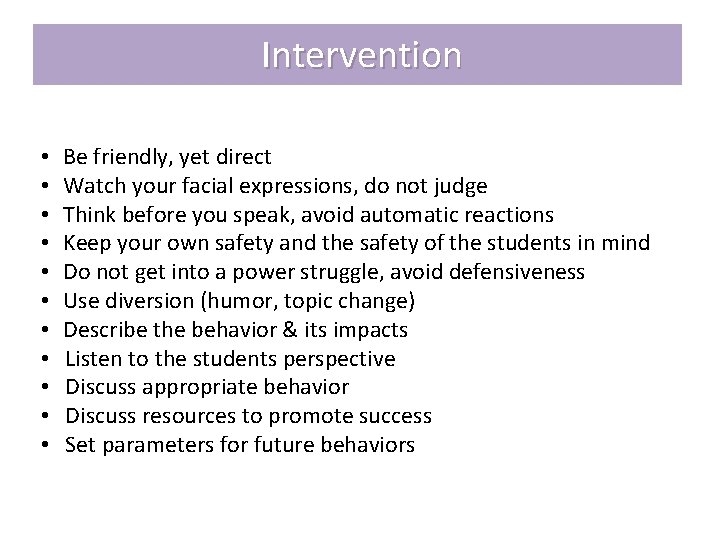
Intervention • • • Be friendly, yet direct Watch your facial expressions, do not judge Think before you speak, avoid automatic reactions Keep your own safety and the safety of the students in mind Do not get into a power struggle, avoid defensiveness Use diversion (humor, topic change) Describe the behavior & its impacts Listen to the students perspective Discuss appropriate behavior Discuss resources to promote success Set parameters for future behaviors
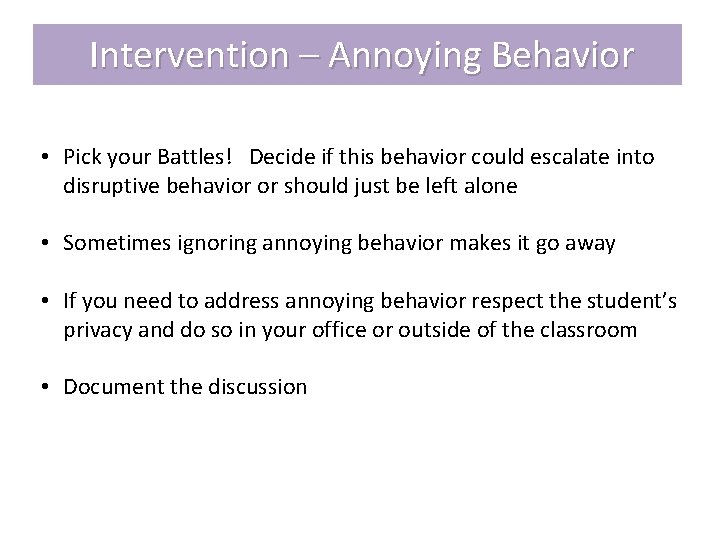
Intervention – Annoying Behavior • Pick your Battles! Decide if this behavior could escalate into disruptive behavior or should just be left alone • Sometimes ignoring annoying behavior makes it go away • If you need to address annoying behavior respect the student’s privacy and do so in your office or outside of the classroom • Document the discussion
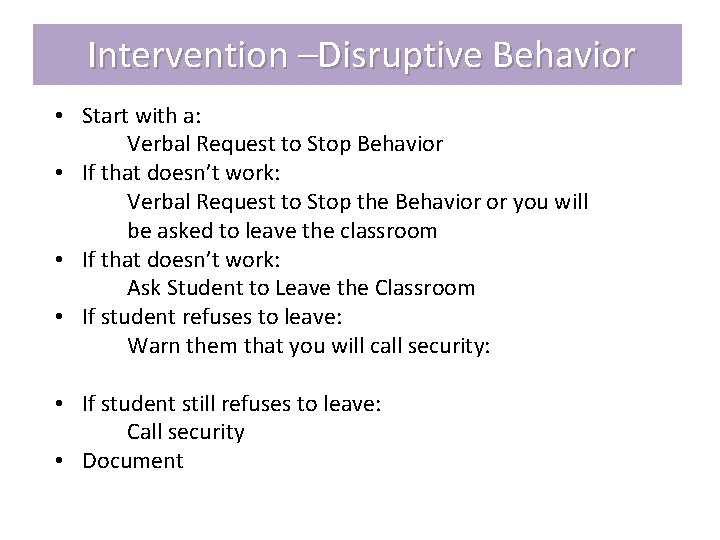
Intervention –Disruptive Behavior • Start with a: Verbal Request to Stop Behavior • If that doesn’t work: Verbal Request to Stop the Behavior or you will be asked to leave the classroom • If that doesn’t work: Ask Student to Leave the Classroom • If student refuses to leave: Warn them that you will call security: • If student still refuses to leave: Call security • Document
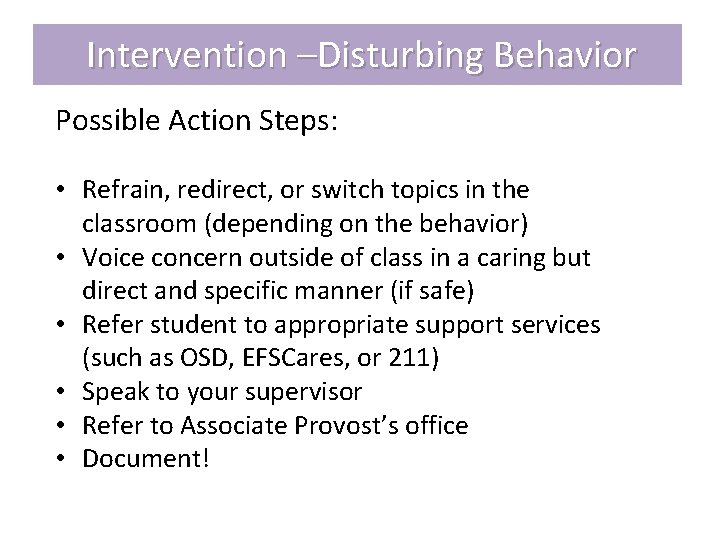
Intervention –Disturbing Behavior Possible Action Steps: • Refrain, redirect, or switch topics in the classroom (depending on the behavior) • Voice concern outside of class in a caring but direct and specific manner (if safe) • Refer student to appropriate support services (such as OSD, EFSCares, or 211) • Speak to your supervisor • Refer to Associate Provost’s office • Document!
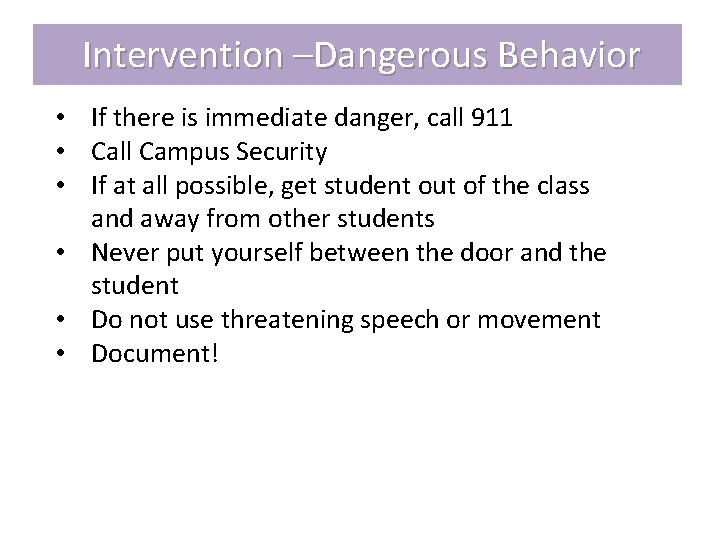
Intervention –Dangerous Behavior • If there is immediate danger, call 911 • Call Campus Security • If at all possible, get student out of the class and away from other students • Never put yourself between the door and the student • Do not use threatening speech or movement • Document!
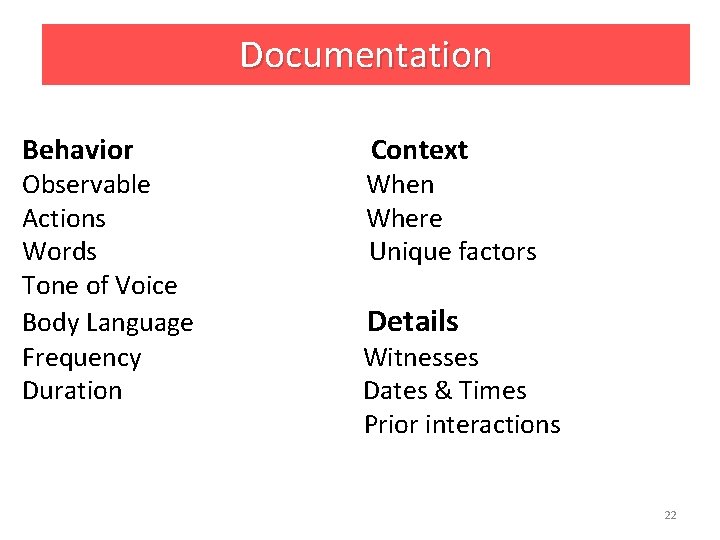
Documentation Behavior Observable Actions Words Tone of Voice Body Language Frequency Duration Context When Where Unique factors Details Witnesses Dates & Times Prior interactions 22
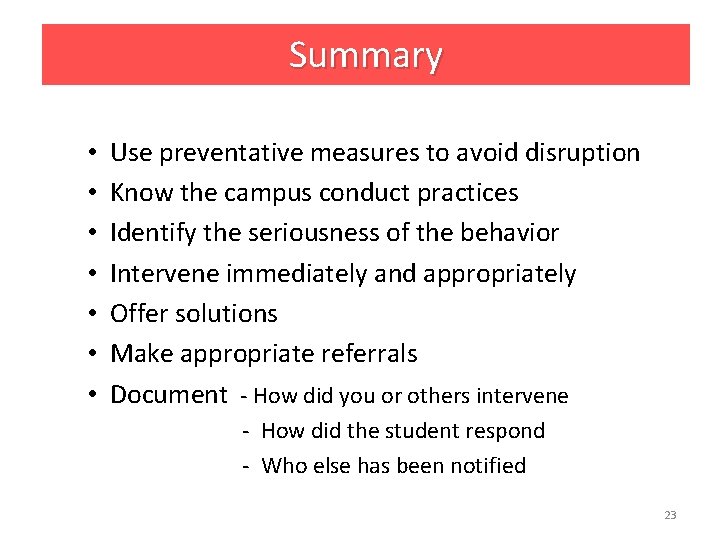
Summary • • Use preventative measures to avoid disruption Know the campus conduct practices Identify the seriousness of the behavior Intervene immediately and appropriately Offer solutions Make appropriate referrals Document - How did you or others intervene - How did the student respond - Who else has been notified 23