
CLASSROOM CIVILITY Katie Baraki MSN RN Nurse Educator
CLASSROOM CIVILITY Katie Baraki, MSN, RN Nurse Educator Huntsman Cancer Hospital
LEARNING OBJECTIVES At the end of this presentation, participants should be able to: – Define classroom incivilities and contributing factors – Describe strategies that can be employed to address classroom incivilities of students and faculty.
What is Classroom Incivilty?
UNCIVIL STUDENT BEHAVIORS Annoying, but not prohibited by the student code (thanks to Gerrie Barnett, Co. N) ü Cutting class ü Not paying attention ü Sleeping in class ü Acting bored ü Using computers not related to class ü Being unprepared ü Refusing to answer direct questions
PROHIBITED STUDENT BEHAVIORS Disruptive to learning – Disapproving groans – Arriving late, leaving early (when it disrupts others) – Holding distracting conversations – Dominating class discussions – Using cell phones or pagers during class – Public challenges to faculty credibility Unfair to learning – Demanding make-up exams, extensions • (Unfair if you give in, can also be Disruptive) – Cheating, plagiarism
OTHER PROHIBITED BEHAVIORS • Yelling • In-class accusations of faculty of being prejudicial • Verbal and physical disrespect • In-class complaints about the instructor’s behavior in derogatory terms • Threatening to give a poor evaluation • Threatening to go to the dean
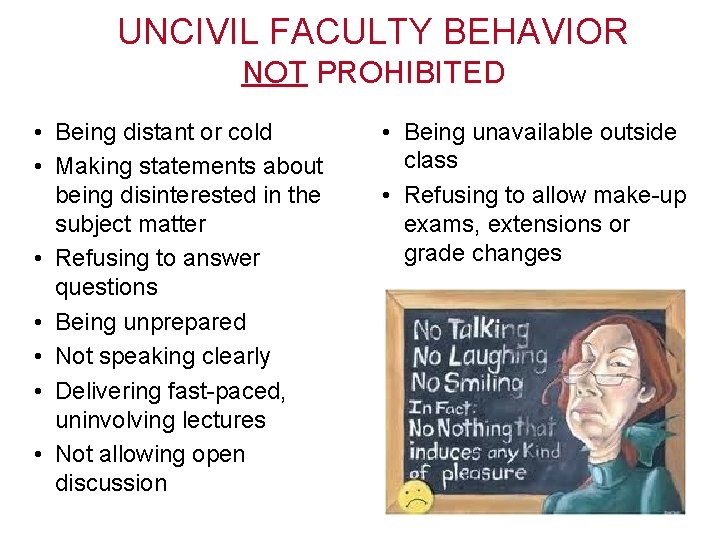
UNCIVIL FACULTY BEHAVIOR NOT PROHIBITED • Being distant or cold • Making statements about being disinterested in the subject matter • Refusing to answer questions • Being unprepared • Not speaking clearly • Delivering fast-paced, uninvolving lectures • Not allowing open discussion • Being unavailable outside class • Refusing to allow make-up exams, extensions or grade changes
UNCIVIL FACULTY BEHAVIOR: DISCOURAGED BUT NOT PROHIBITED • Deviating from the course syllabus • Straying from class topic • Arriving late for class, leaving early
UNCIVIL FACULTY BEHAVIOR: PROHIBITED BY PPM • Changing assignments or test dates without warning • Canceling class without warning • Belittling students through sarcasm, humiliation, intimidation, or profanity • Not showing up for office hours
WE WOULD ADD…. (NOT INCLUDED IN POLICIES & PROCEDURES) • Not keeping appointments • Not answering pages while in clinical area with students • Not answering phone calls • Not responding to email
BEYOND UNCIVIL AND PROHIBITED IN EVERYONE… • Taunts • Threats of harm to career or to physical person, etc. • Vulgarity • Harassing comments and actions • …vulgarity, harassment, and threats are prohibited by law (not just University code or policy violations).
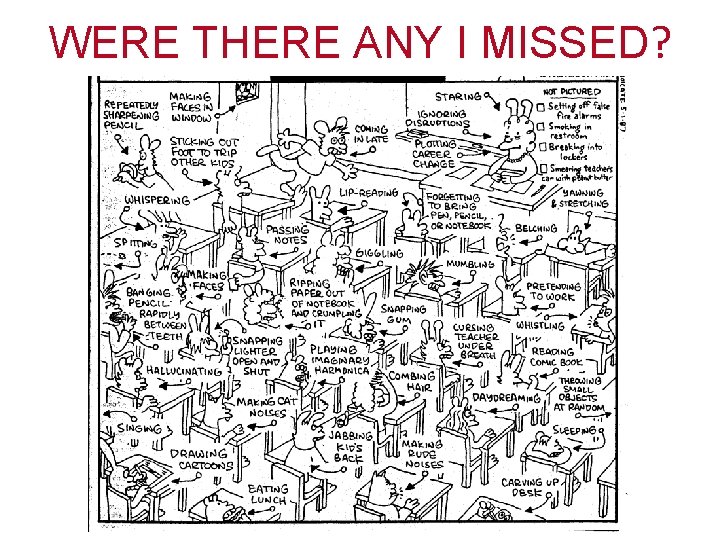
WERE THERE ANY I MISSED?
POSSIBLE CAUSES OF STUDENT INCIVILITY: STUDENT FACTORS • Developmental • Unclear regarding appropriate behaviors (“Their incivility is invisible to them”). • Weak communication and problem solving skills • Intolerance for failure • Societal • Have not been held accountable for actions. • Consumerist mentality: “I’m paying, so I own you” • Institutional instructor confidentiality but students allowed to speak openly. • Impersonal communication methods that encourage unthinking, inappropriate comments. • Substance abuse • Increased acceptance of violence in society • Unrealistic expectations: having an A average in high school for very little work.
POSSIBLE CAUSES OF STUDENT INCIVILITY: FACULTY FACTORS • • Appearing distant, cold, unapproachable, rude, condescending or uncaring. Packed, rushed presentations Unprepared, disorganized, unengaged lectures/classes Vague syllabi or frequent last minute changes • Exam questions that don’t reflect class emphasis • Unclear or inconsistent grading standards • Refusal to answer questions • Coming late to class, carrying on past end of class • Failure to look/act professionally
WHAT THE UNIVERSITY SAYS… • Faculty Rights and Responsibilities • Convene classes unless valid reason and notice given. • Perform & return evaluations in a timely manner. • Inform students at beginning of class of: • General content • Course activities • Evaluation methods • Grade scale • Schedule of meetings, topics, due dates. • Enforce the Student Code • Ensure a classroom environment conducive to learning
THREE WAYS TO GET IN DIFFICULTY • Be inconsistent – Change expectations, dates, scales at the last minute – Make exceptions some of the time – Publish in your head • Don’t address issues early because things will get better on their own • Do not have a pedagogical reason for your decision
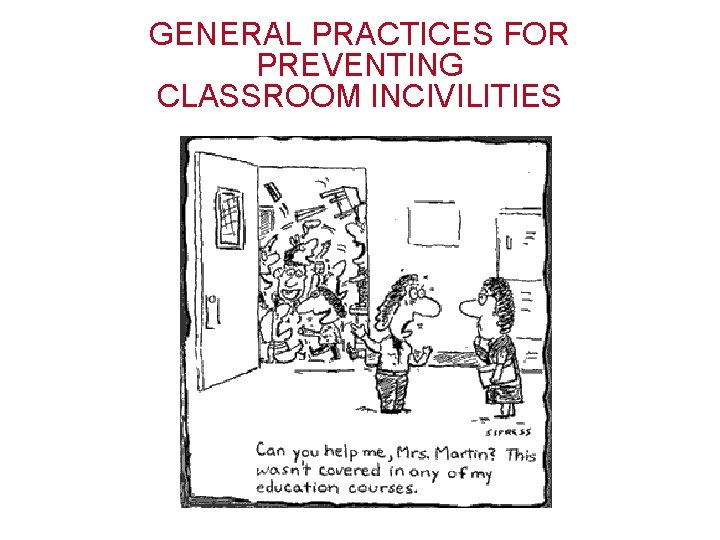
GENERAL PRACTICES FOR PREVENTING CLASSROOM INCIVILITIES
General Practices for Preventing Classroom Incivilities • First 2 class days set the stage for the semester • Spell it out in the syllabus (inserts handout) – Positive Motivators • Spell it out the first – Positive Verbal and day of class Nonverbal signals • Online = Land (Handout) • College-wide • Know your students consensus on (know names and expectations and have a realistic picture consequences of average students).
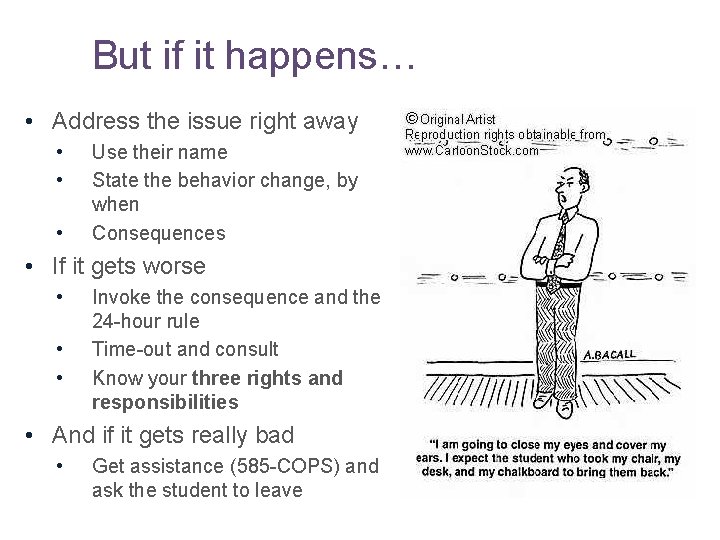
But if it happens… • Address the issue right away • • • Use their name State the behavior change, by when Consequences • If it gets worse • • • Invoke the consequence and the 24 -hour rule Time-out and consult Know your three rights and responsibilities • And if it gets really bad • Get assistance (585 -COPS) and ask the student to leave
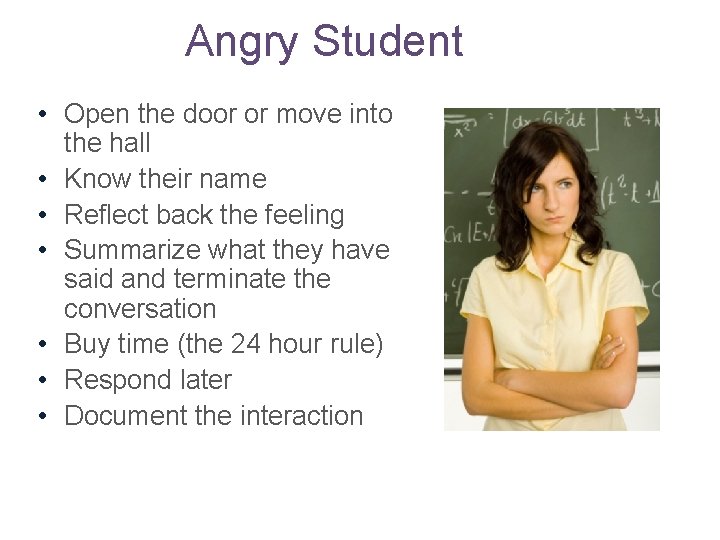
Angry Student • Open the door or move into the hall • Know their name • Reflect back the feeling • Summarize what they have said and terminate the conversation • Buy time (the 24 hour rule) • Respond later • Document the interaction
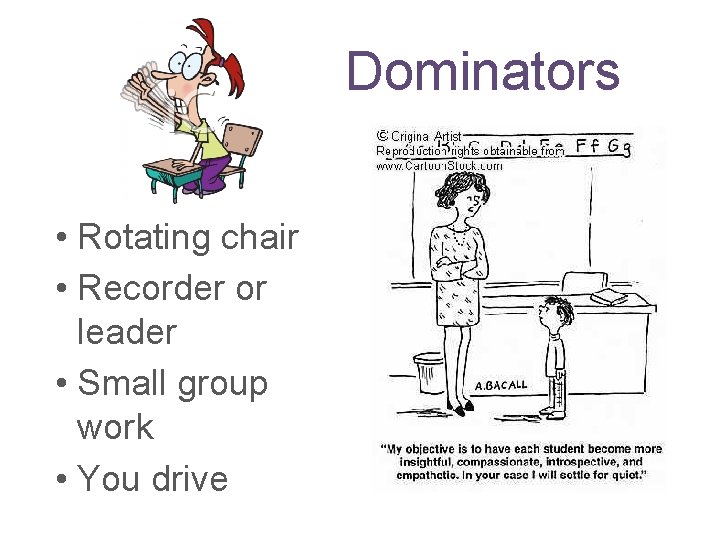
Dominators • Rotating chair • Recorder or leader • Small group work • You drive
Silent Students • Writing and reading • Randomization • Dice • Candy, dots • Small group • Ask • Address at end of each class
Inattentive talking, laptops, phones • Policy first day • • • Faculty rights and responsibilities cover you Phones, Booting laptops • Make your teaching more active • Take charge of the room layout, if possible • Can even tape off the back row • Address at end of each class
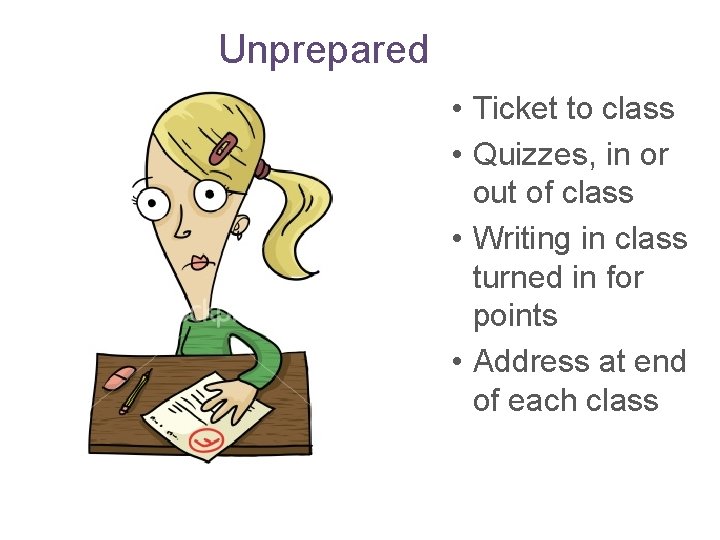
Unprepared • Ticket to class • Quizzes, in or out of class • Writing in class turned in for points • Address at end of each class
Discouraged students Bring in more advanced students
EXCUSES • Can do work early, but not late • Spell out the consequences and then… • Stay firm • Be consistent
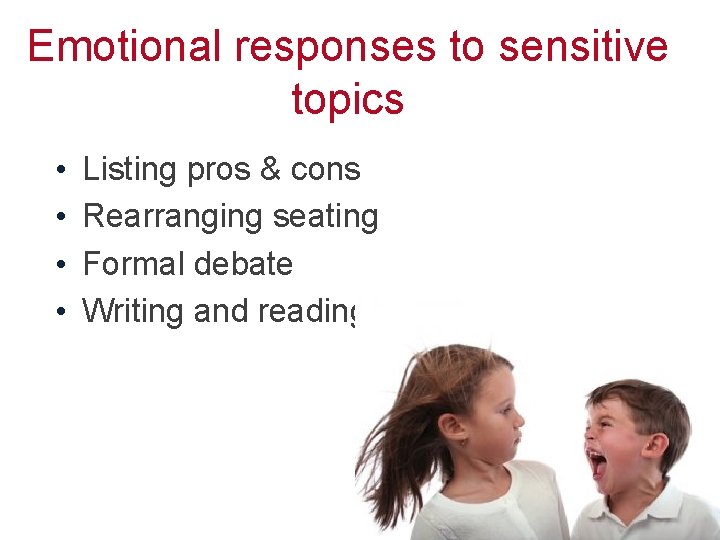
Emotional responses to sensitive topics • • Listing pros & cons Rearranging seating Formal debate Writing and reading
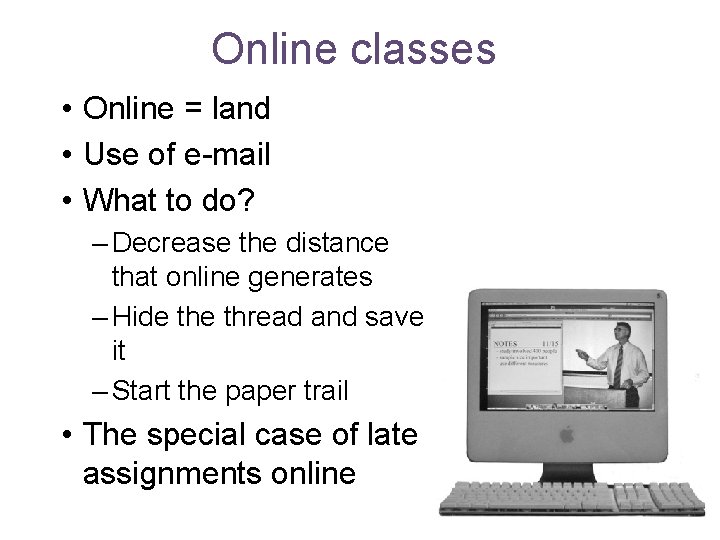
Online classes • Online = land • Use of e-mail • What to do? – Decrease the distance that online generates – Hide thread and save it – Start the paper trail • The special case of late assignments online
One Case… • You are teaching using a group activity. You walk around the room and find one student is working on an assignment for another class. • What would be a very bad way to handle this right now? • What would be two better ways to handle this? • What would be two ways to prevent this from happening in the future?
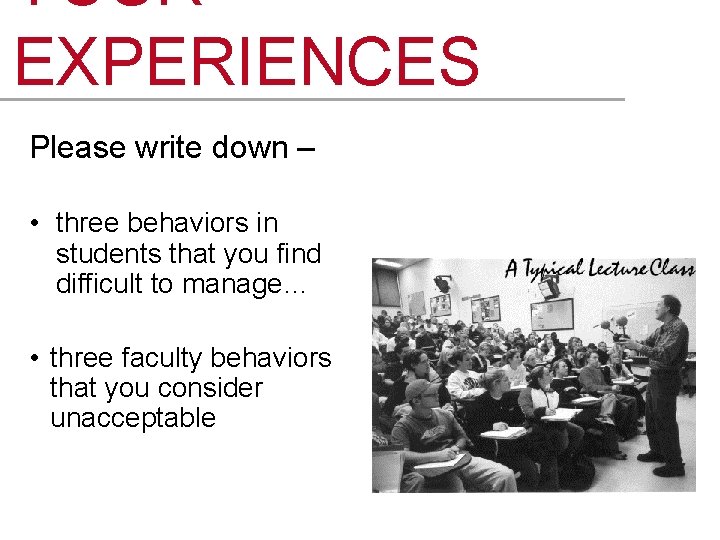
YOUR EXPERIENCES Please write down – • three behaviors in students that you find difficult to manage… • three faculty behaviors that you consider unacceptable
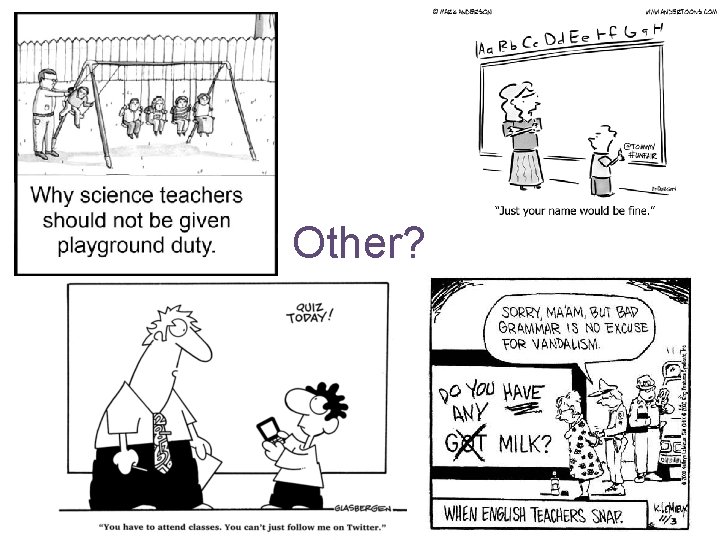
Other?
- Slides: 32