
Classifying Organisms Section 2 Why Classify Classification The
- Slides: 25
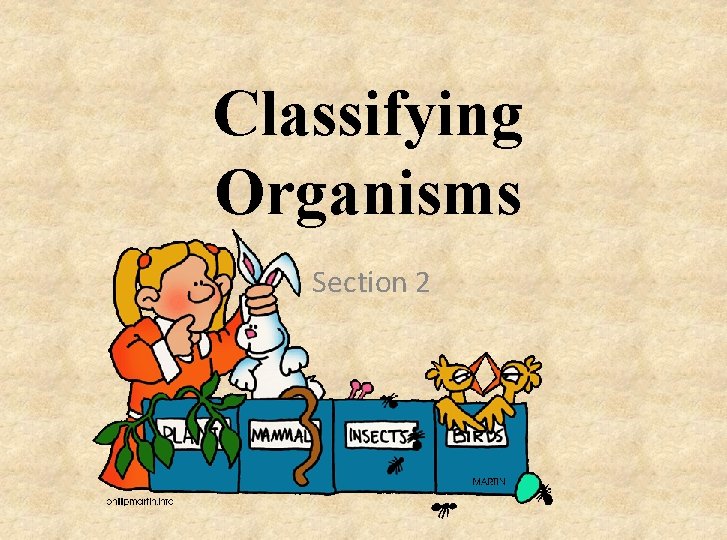
Classifying Organisms Section 2
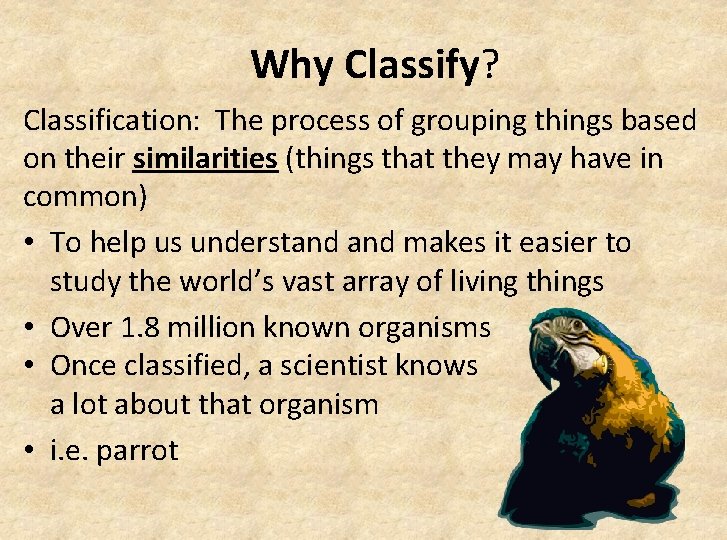
Why Classify? Classification: The process of grouping things based on their similarities (things that they may have in common) • To help us understand makes it easier to study the world’s vast array of living things • Over 1. 8 million known organisms • Once classified, a scientist knows a lot about that organism • i. e. parrot
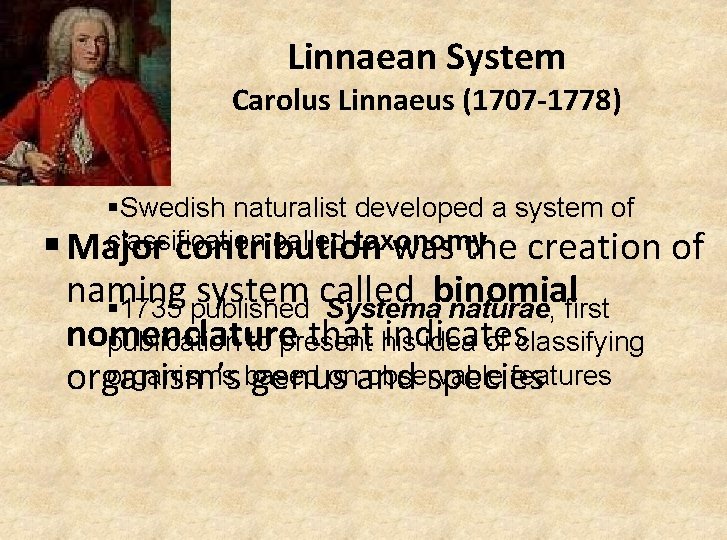
Linnaean System Carolus Linnaeus (1707 -1778) §Swedish naturalist developed a system of classification called taxonomy § Major contribution was the creation naming system called binomial § 1735 published Systema naturae, first nomenclature that his indicates publication to present idea of classifying organisms based observable features organism’s genusonand species of
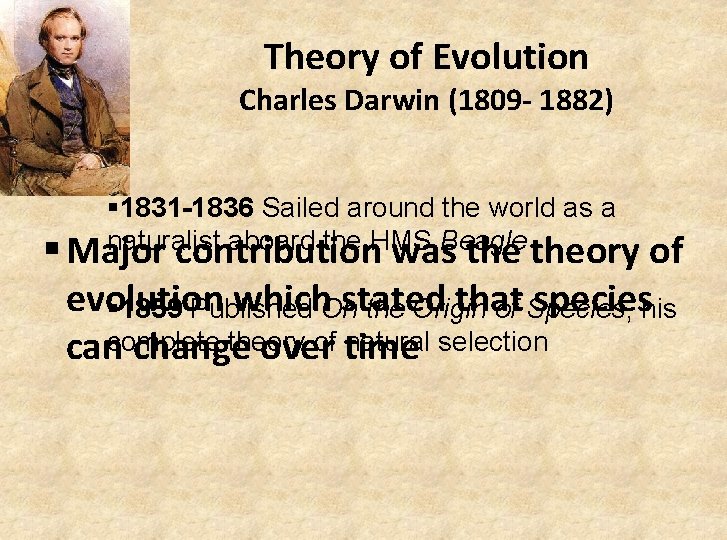
Theory of Evolution Charles Darwin (1809 - 1882) § 1831 -1836 Sailed around the world as a naturalist aboard the HMS § Major contribution was. Beagle theory of evolution which. Onstated that specieshis § 1859 Published the Origin of Species, theory of time natural selection cancomplete change over
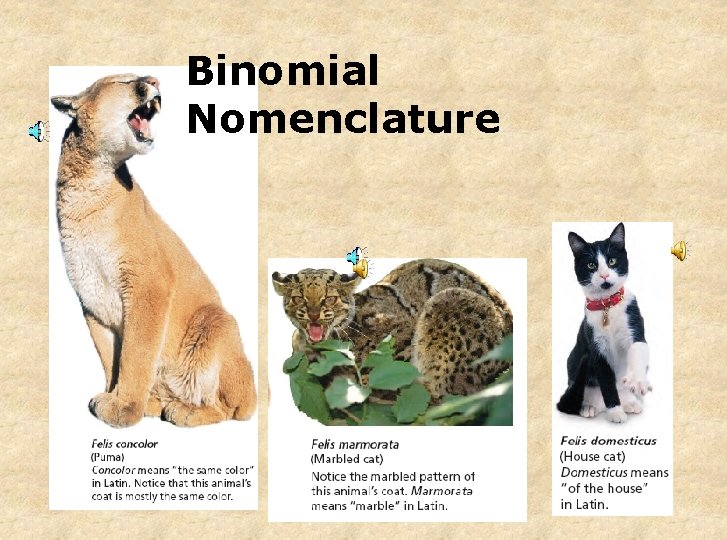
Binomial Nomenclature
The Naming Game • • Genus and species The first word in an organism’s scientific name is its Genus- classification grouping that contains similar, closely related organisms. The second word describes a distinctive feature Together, the two words indicate a unique species.
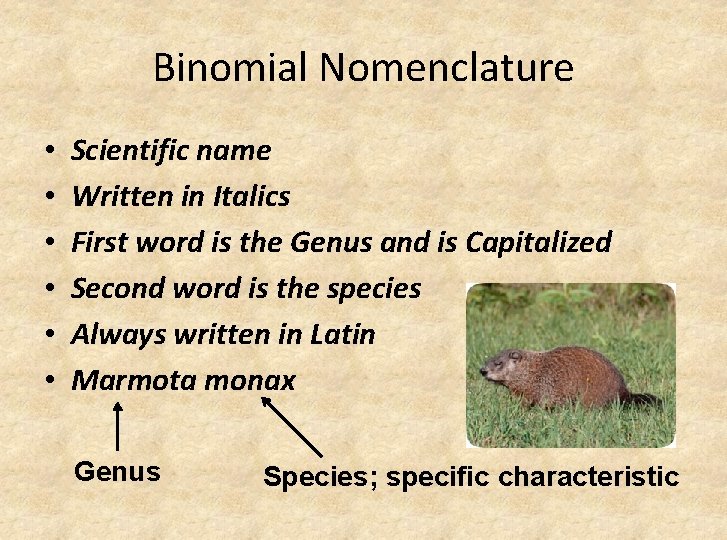
Binomial Nomenclature • • • Scientific name Written in Italics First word is the Genus and is Capitalized Second word is the species Always written in Latin Marmota monax Genus Species; specific characteristic
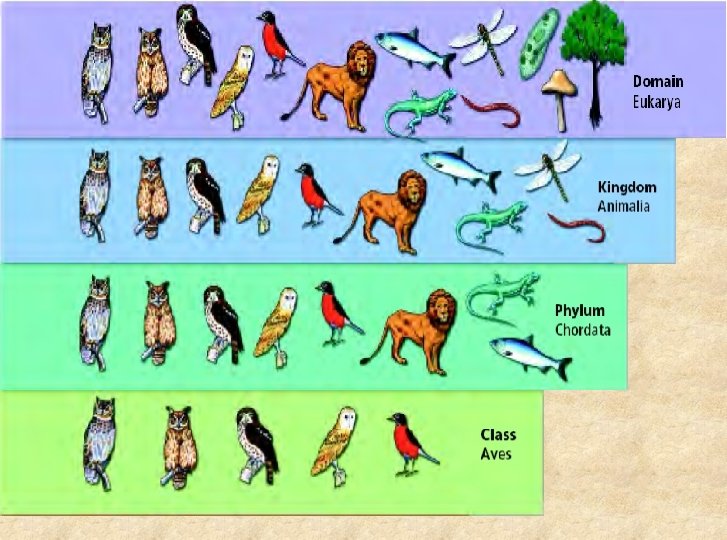
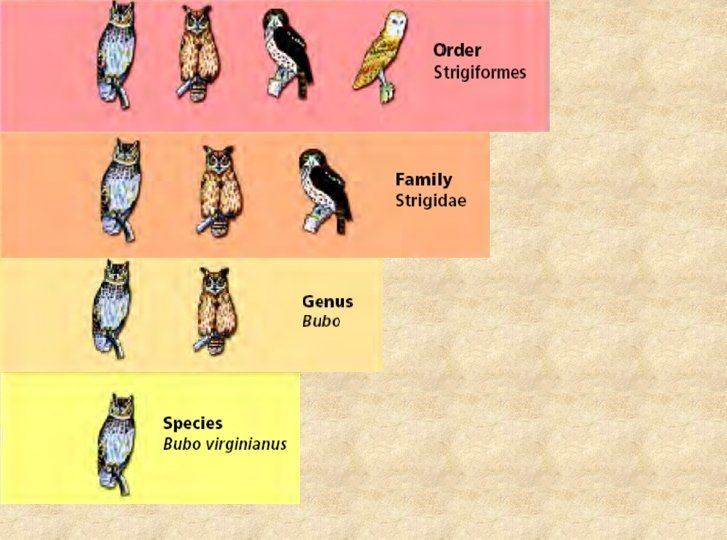
Modern System of Classification • The classifying of organisms into eight levels: Domain, Kingdom, Phyla, Class, Order, Family, Genus, and Species • Scientific name is based on binomial nomenclature • Species with similar evolutionary histories are classified more closely together.
Question What is the scientific study of how living things are classified called? TAXONOMY
Question How is a scientific name written In Italics
LEVELS OF CLASSIFICATION • Eight Levels of Classification • Organisms are grouped by their shared characteristics • First an organism is placed in a broad group, which in turn is divided into more specific groups
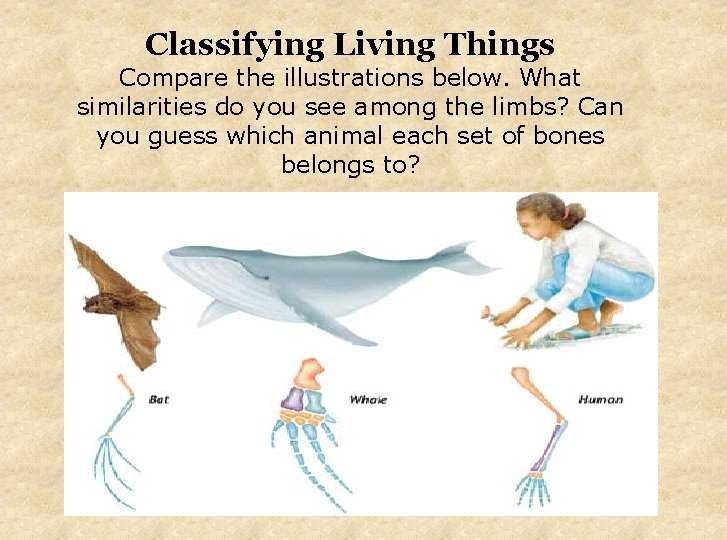
Classifying Living Things Compare the illustrations below. What similarities do you see among the limbs? Can you guess which animal each set of bones belongs to?
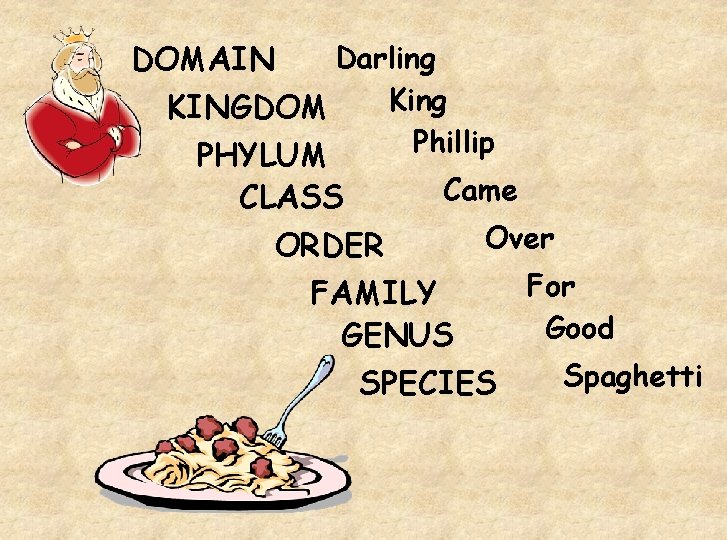
Darling DOMAIN King KINGDOM Phillip PHYLUM Came CLASS Over ORDER For FAMILY Good GENUS Spaghetti SPECIES
THREE DOMAINS of LIFE • Domain Bacteria • Domain Archaea • Domain Eukarya
Domain Bacteria • Members are prokaryotes • Are unicellular • Prokaryotes genetic material is not contained in a nucleus • Some are autotrophs while other are heterotrophs
Domain Archaea • Meaning Ancient; found in the most extreme environment(hotsprings, glaciers. . ) • Like bacteria are unicellular prokaryotes • autotrophs and heterotrophs • Own domain because have their own chemical makeup.
Domain Eukarya • Eukaryotes: organisms with cells that contain nuclei • Organism in this domain are classified in one of four kingdoms – Protists – Fungi – Plants – Animals
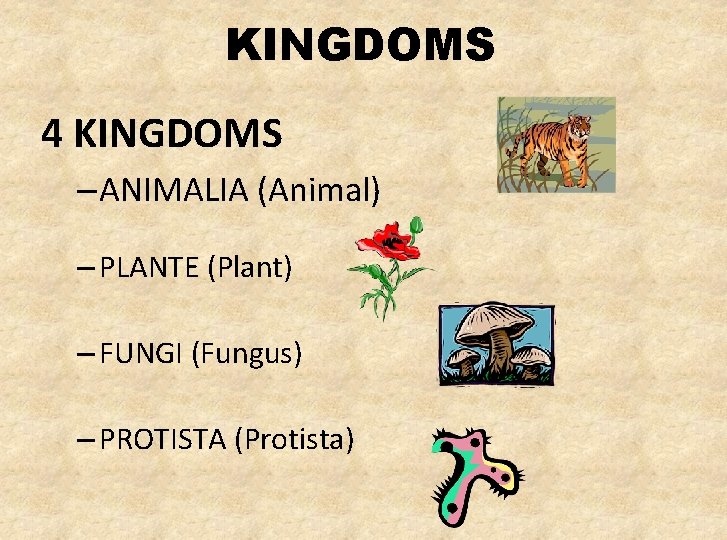
KINGDOMS 4 KINGDOMS – ANIMALIA (Animal) – PLANTE (Plant) – FUNGI (Fungus) – PROTISTA (Protista)
PROTISTA (Protist) • Odds and End Kingdom • Autotrophs & Heterotrophs • Most unicellular, but like seaweed are large multicellular organisms
FUNGI (Fungus) • All are multicellular eukaryotes • Heterotrophs • Most absorb nutrients from dead or decaying organisms
PLANTE (Plant) • All are multicellular eukaryotes • Autotrophs
ANIMALIA (Animal) • All are multicellular eukaryotes • Heterotrophs
Skill Activity • Look carefully at the organisms pictured together at the kingdom level. Make a list of the characteristics that the organisms share. • Now make two more lists of shared characteristics- one for the organisms at the class level and the other for those at the genus level. • How does the number of shared characteristics on the list change at each level?