
Classifying organisms Scientific Names Binomial nomenclature is a
Classifying organisms
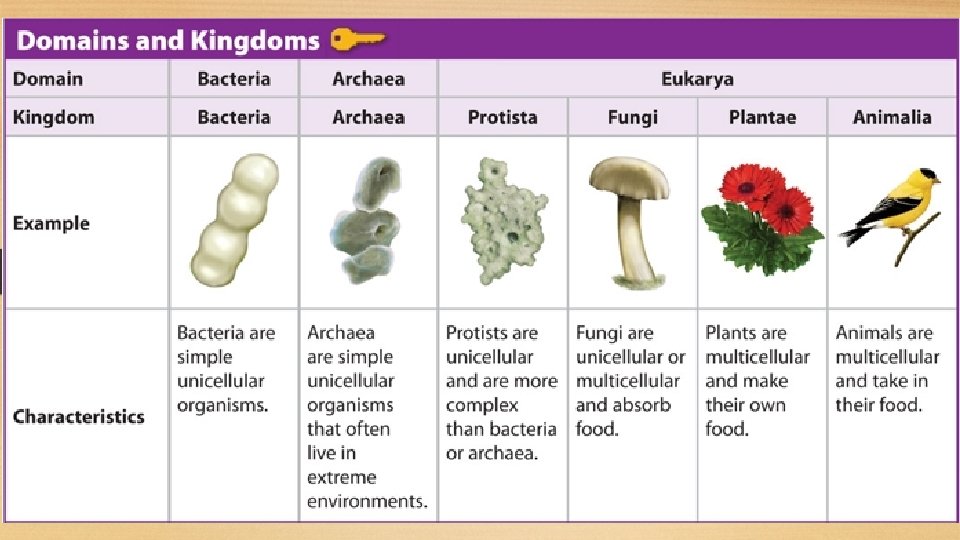

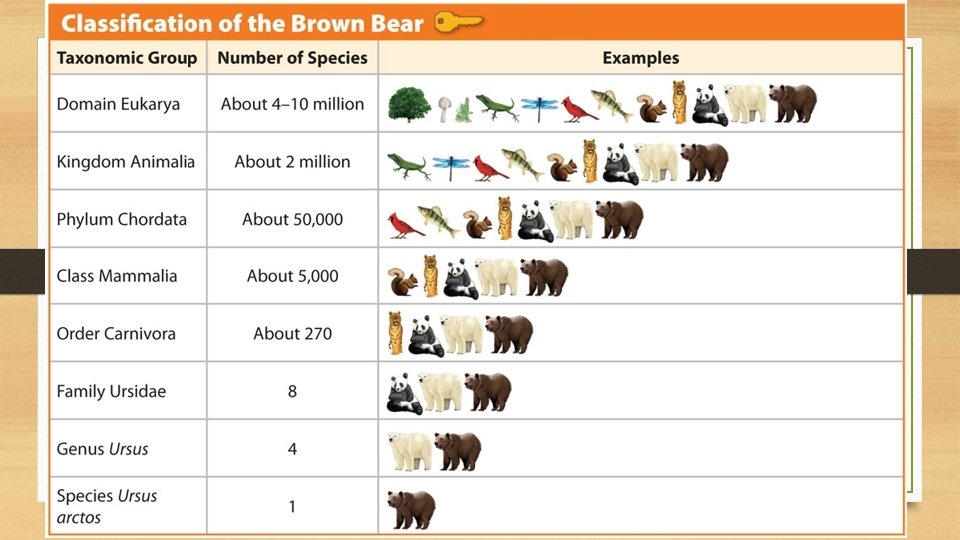
Scientific Names • Binomial nomenclature is a system for naming organisms with two-word scientific name: • A species is a group of organisms that have similar traits and are able to produce fertile offspring. • A genus is a group of similar species.
CELLS
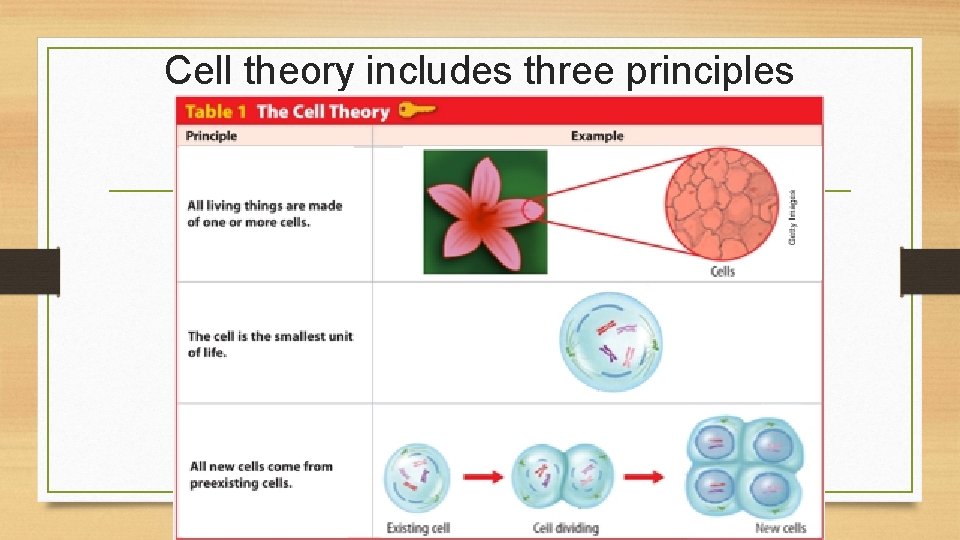
Cell theory includes three principles
Basic Cell Substances • Water • Salt • Macromolecul es Four types of macromolecules: 1. Nucleic acids 2. Proteins 3. Lipids 4. Carbohydrates
Cell Shape and Movement • Size and shape of a cell relates to its job or function. • Cells made of different structures that perform different functions that keep a cell alive.
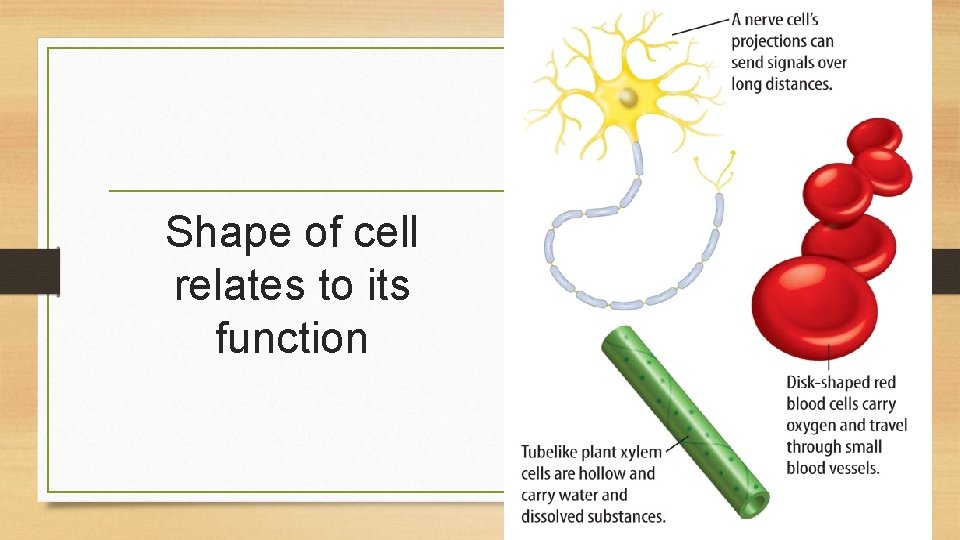
Shape of cell relates to its function
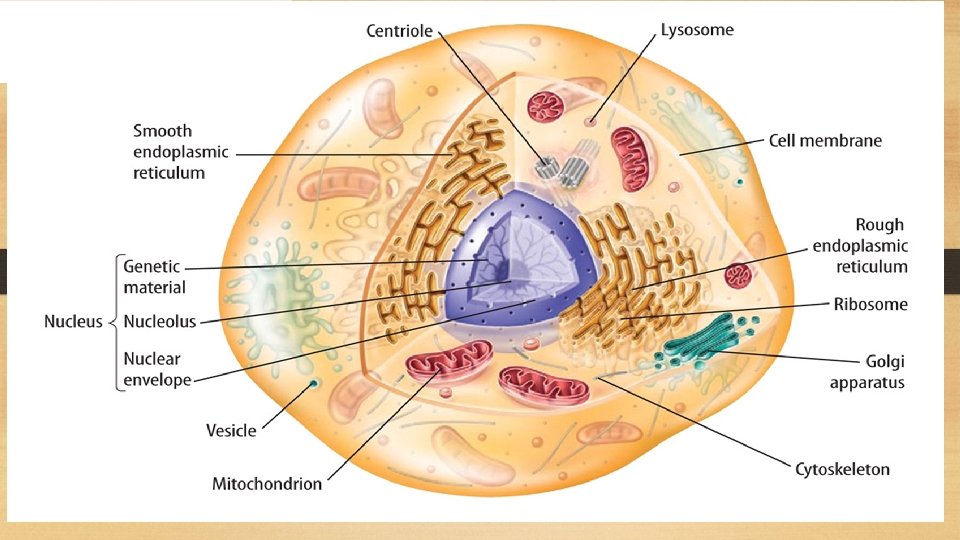
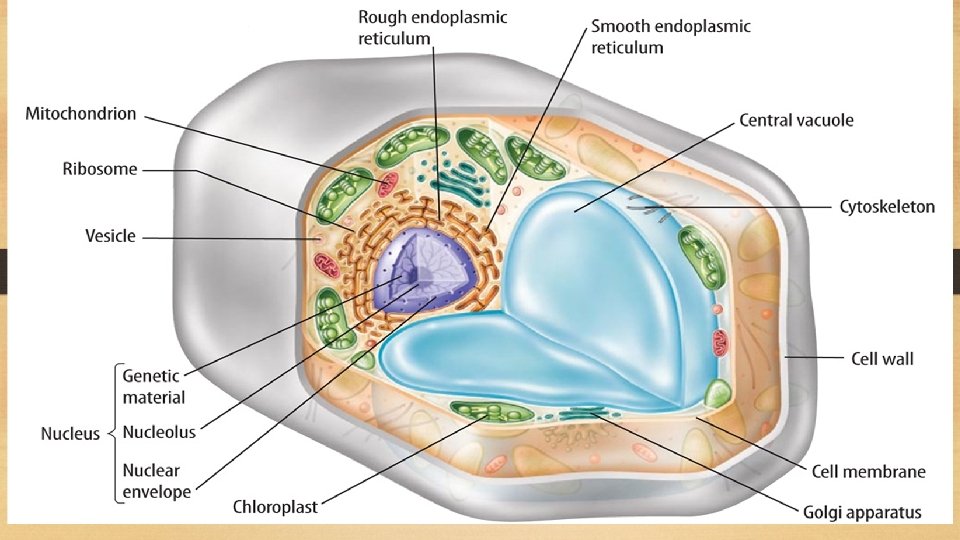
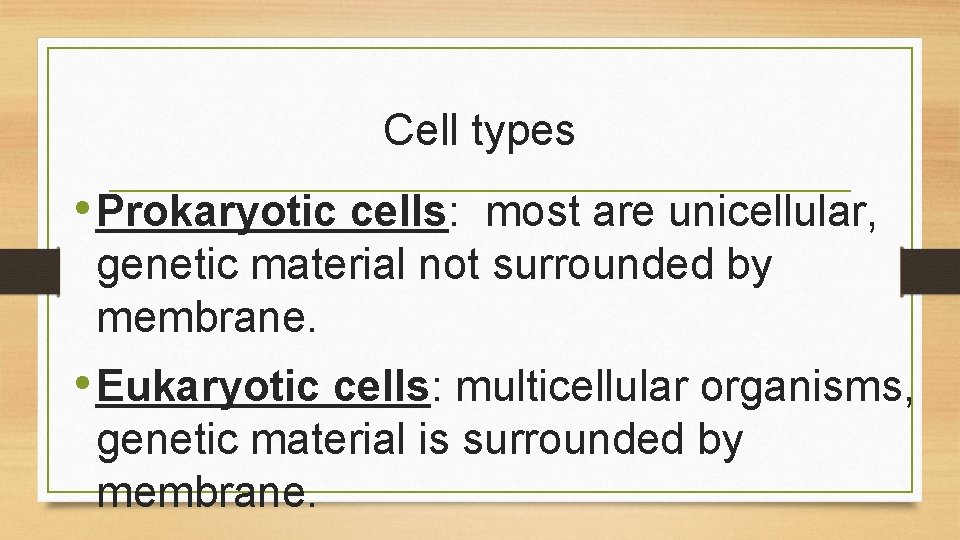
Cell types • Prokaryotic cells: most are unicellular, genetic material not surrounded by membrane. • Eukaryotic cells: multicellular organisms, genetic material is surrounded by membrane.
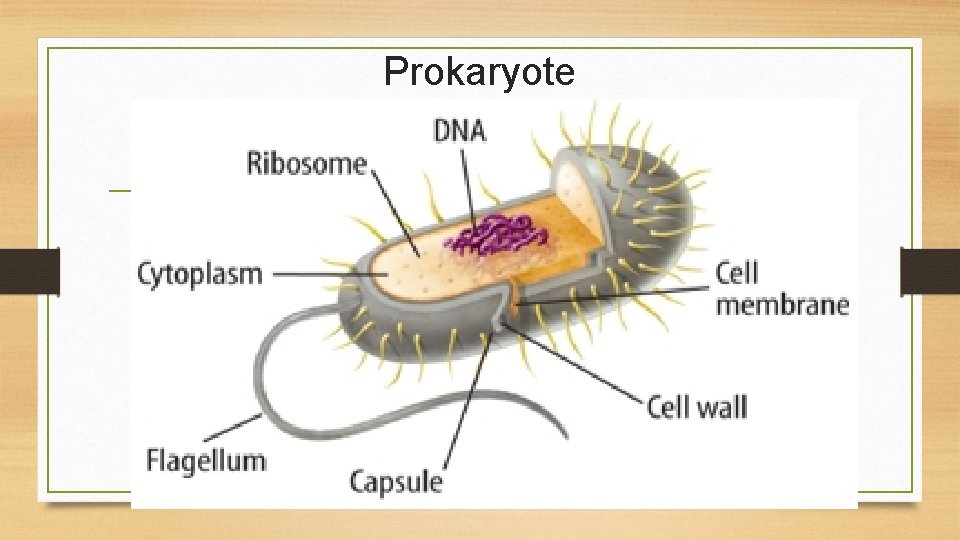
Prokaryote
Eukaryote • Multicellular organism • Membrane bound genetic information • Many membrane bound organelles with specialized functions
Nucleus • Directs cell activities and contains genetic information stored in DNA (chromosomes) • Nucleolus makes ribosomes, which make proteins • Usually the largest organelle
Manufacturing Molecules • Ribosomes • Endoplasmic reticulum
Energy Processing Molecules • Mitochondria • Chloroplasts
Processing, storing, and transporting molecules • Golgi apparatus • Vesicles • vacuoles
Moving cellular material
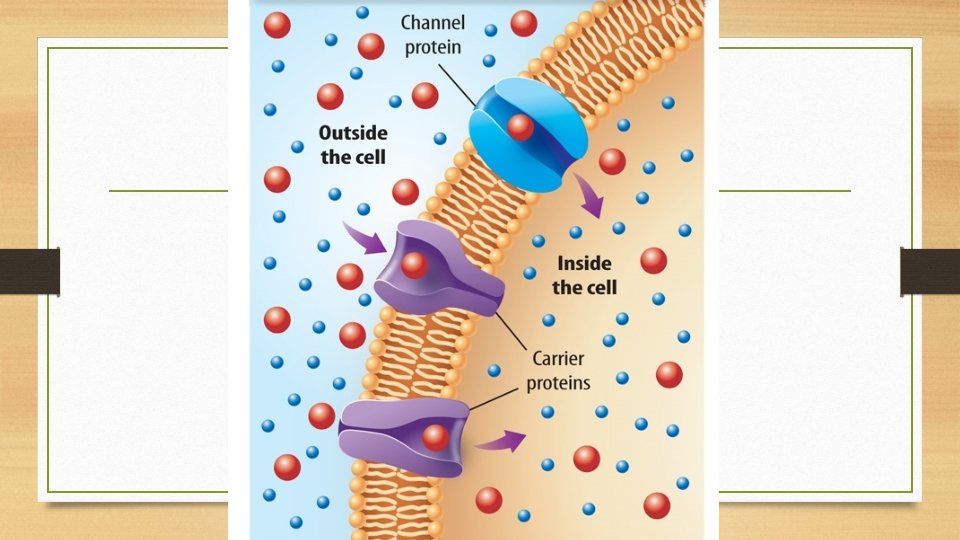
Passive transport: movement without using energy (oxygen, carbon dioxide) • Diffusion: movement from high concentration to low concentration • Osmosis: diffusion of water • Facilitated diffusion: carrier proteins, channel proteins
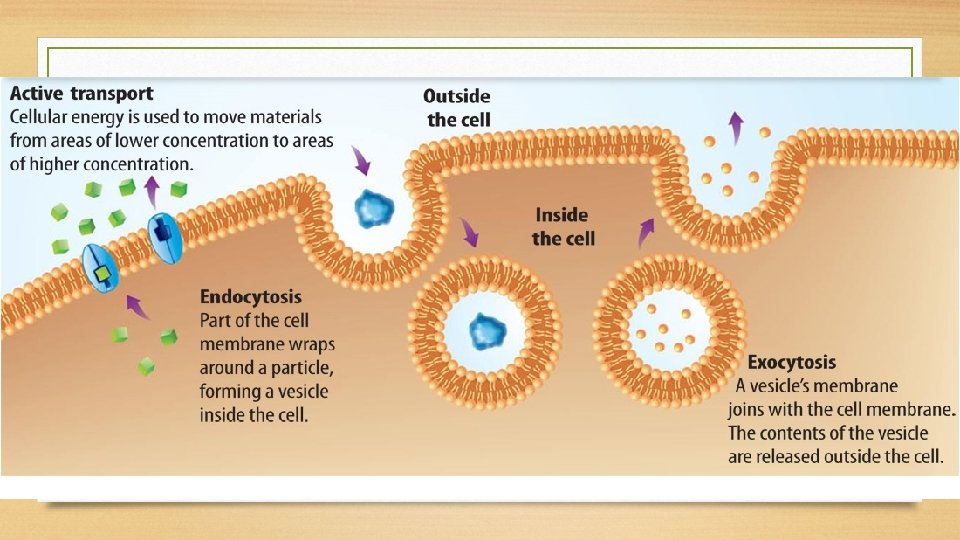
Active Transport: movement through cell membrane requiring use of energy • Cells take in nutrients from environment through carrier proteins using active transport • Endocytosis: cell takes in substance • Exocytosis: cell’s vesicles release contents outside the cell
Cells and Energy
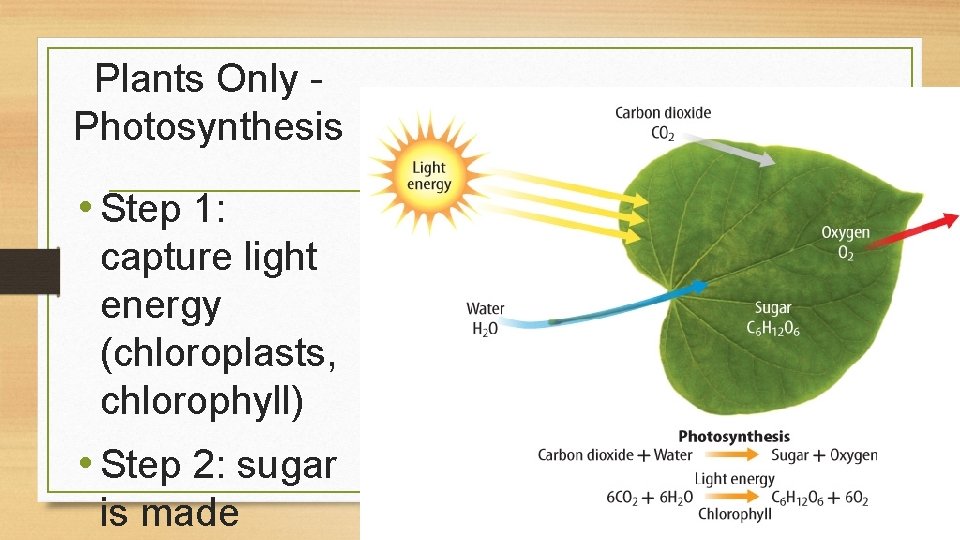
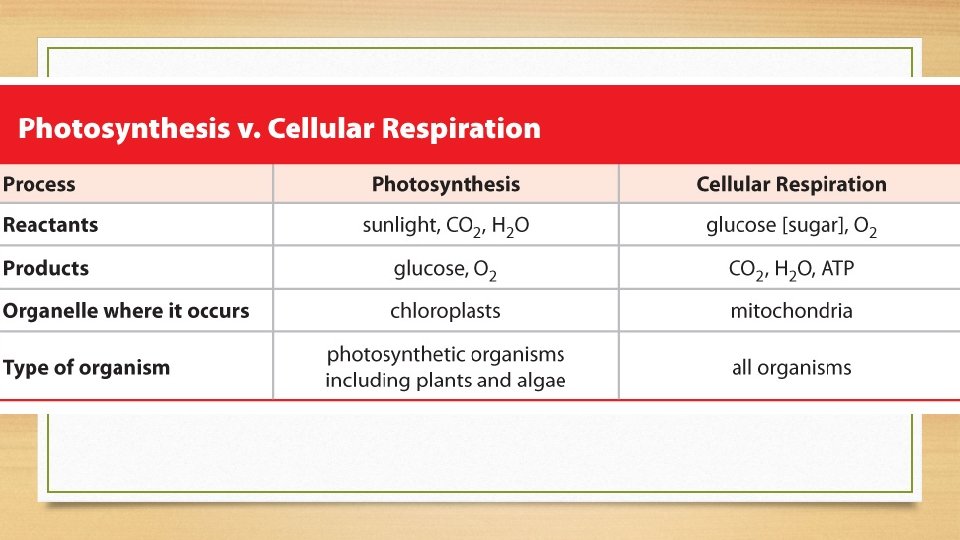
Plants Only Photosynthesis • Step 1: capture light energy (chloroplasts, chlorophyll) • Step 2: sugar is made

Plants and Animals: Cellular Respiration • Cellular respiration is a series of chemical reactions that convert the energy in food molecules into a usable form of energy called ATP. • Glycolysis, the first step in cellular respiration, is a process by which glucose is broken down into smaller molecules. It occurs in the
Cellular Respiration • The second step of cellular respiration requires oxygen and occurs in the mitochondria of eukaryotic cells. • The smaller molecules made from glucose during glycolysis are broken down. • Large amounts of ATP—usable energy—are produced. Cells use ATP to power all cellular
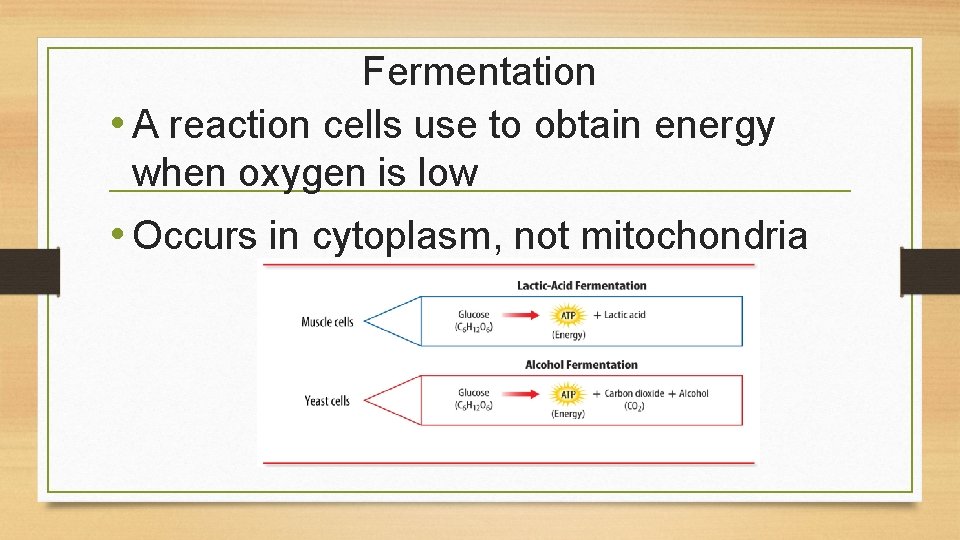
Fermentation • A reaction cells use to obtain energy when oxygen is low • Occurs in cytoplasm, not mitochondria
The Cell Cycle and Cell Division
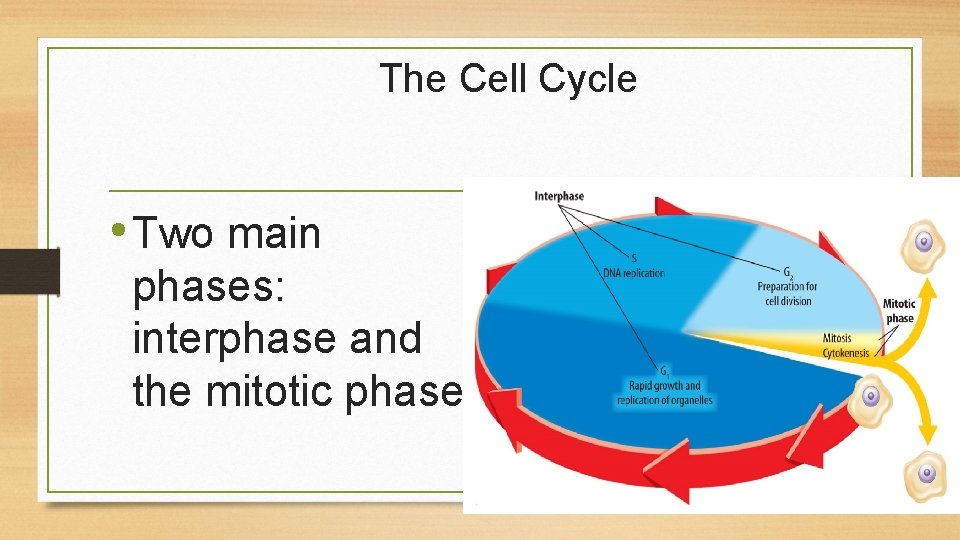
The Cell Cycle • Two main phases: interphase and the mitotic phase
Interphase: cell spends most time here • G 1 stage: cell grows, functions like normal • S stage: DNA copied, arranged into chromosomes containing sister chromatids • G 2 stage: preparing to divide, copying organelles
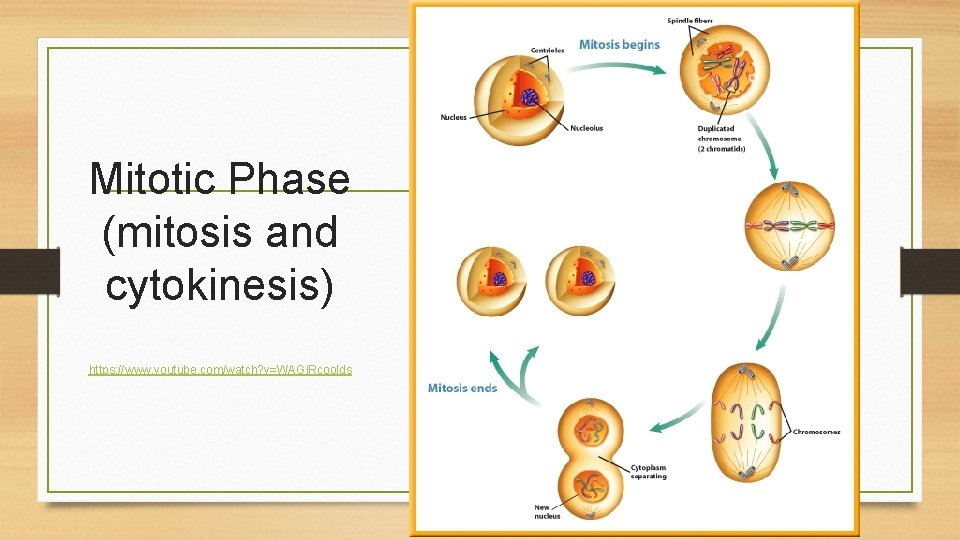
Mitotic Phase (mitosis and cytokinesis) https: //www. youtube. com/watch? v=WAGj. Rcoolds
Mitosis • PROPHASE: DNA condenses to chromosomes, nucleolus disappears, spindle fibers begin to form. • METAPHASE: chromosomes line up in middle of cell. • ANAPHASE: chromatids separate, spindle fibers shorten • TELOPHASE: two identical nuclei form
Cytokinesis • Cytoplasm divides and forms two new daughter cells.
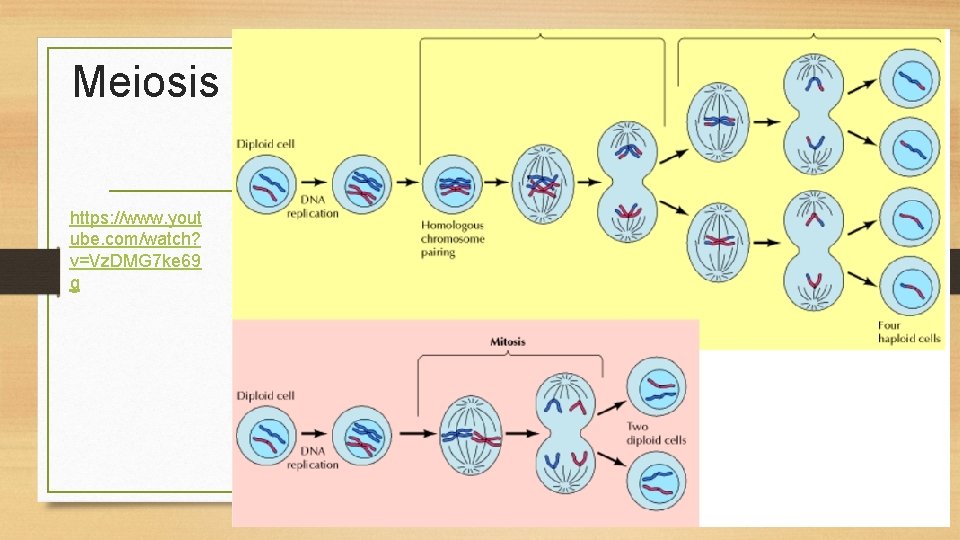
Meiosis https: //www. yout ube. com/watch? v=Vz. DMG 7 ke 69 g
Levels of Organization
Unicellular Organisms: one cell (can be prokaryote or eukaryote Multicellular Organisms: many types of eukaryotic cells
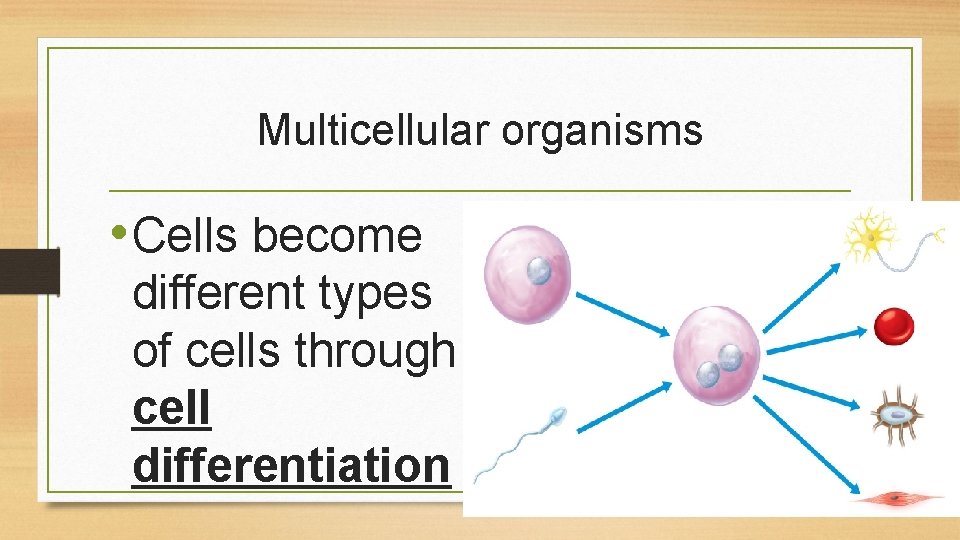
Multicellular organisms • Cells become different types of cells through cell differentiation
Multicellular organisms • Stem cells: unspecialized animal cells • Tissues: groups of similar cells, work together to carry out specific tasks • Humans have four tissue types: • Muscle, nervous, connective, epithelial • Plants have three tissues types: • Dermal, vascular, ground
Multicellular organisms • Organs: groups of different tissues working together • Organ system: groups of different organs working together • Organism: many organ systems working together to carry out all things needed to survive.
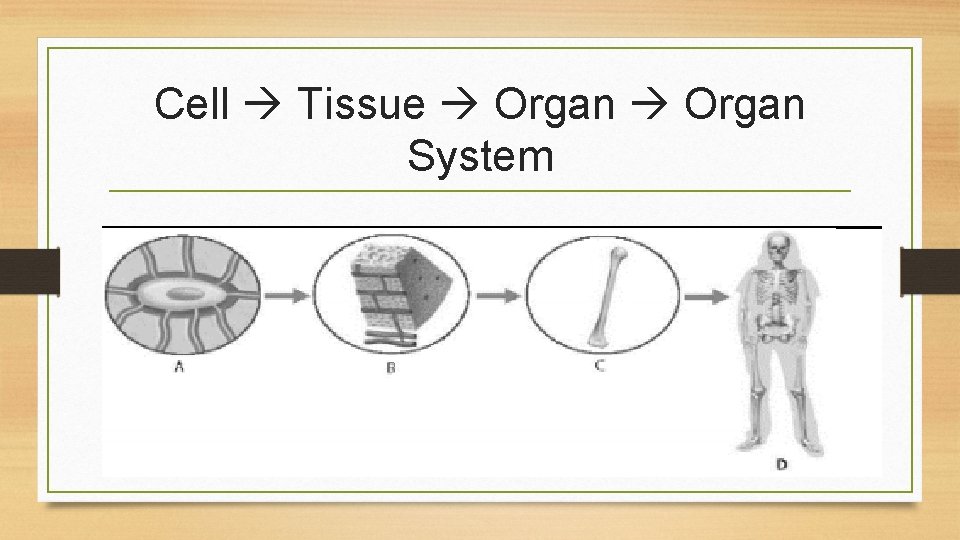
Cell Tissue Organ System
Human Body Systems
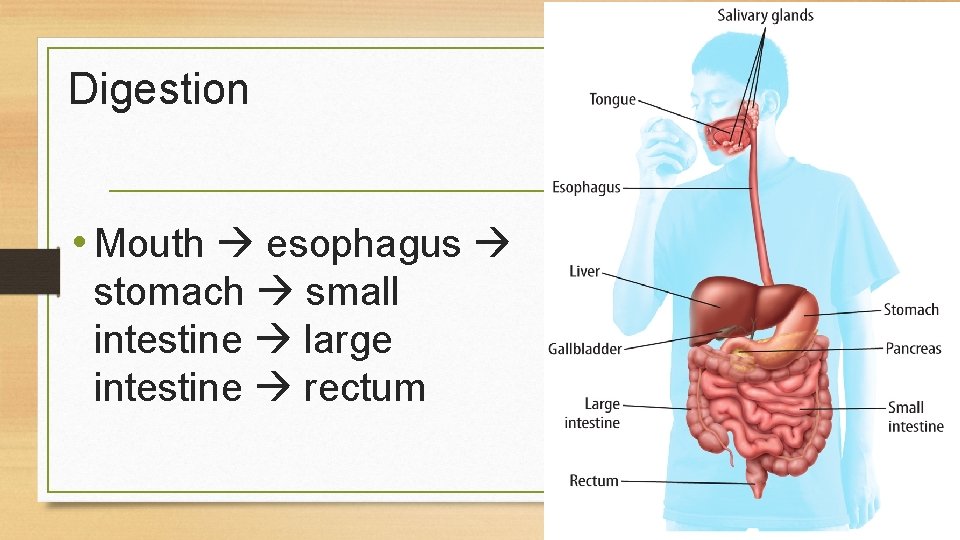
Digestion • Mouth esophagus stomach small intestine large intestine rectum
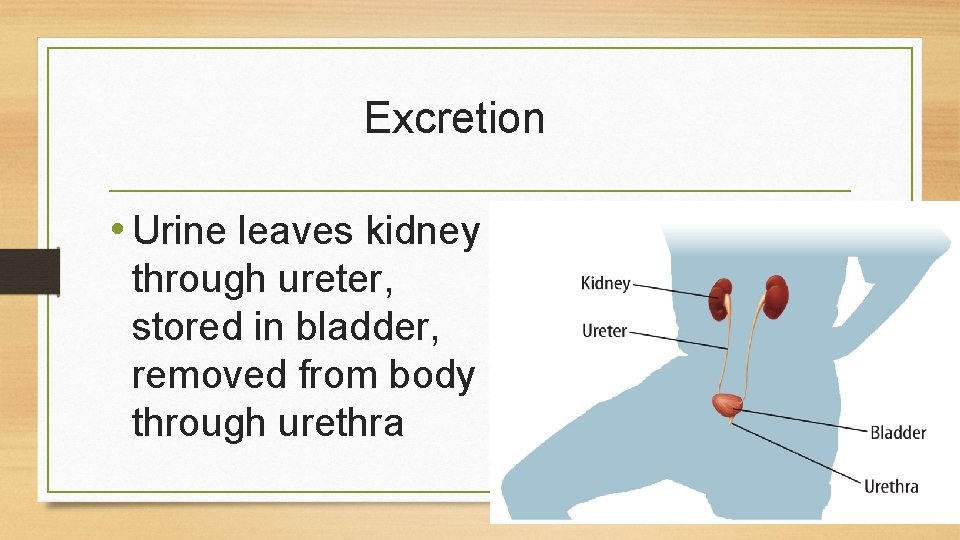
Excretion • Urine leaves kidney through ureter, stored in bladder, removed from body through urethra
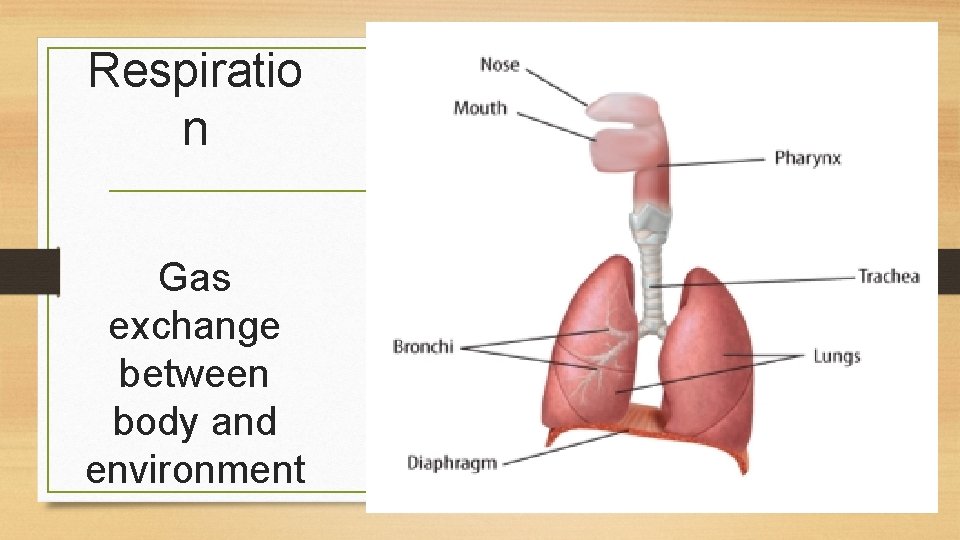
Respiratio n Gas exchange between body and environment
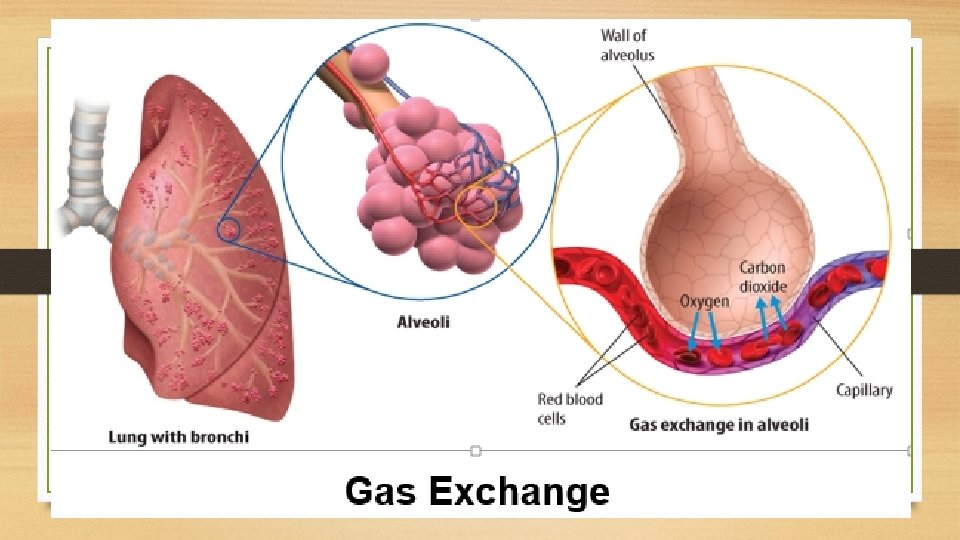
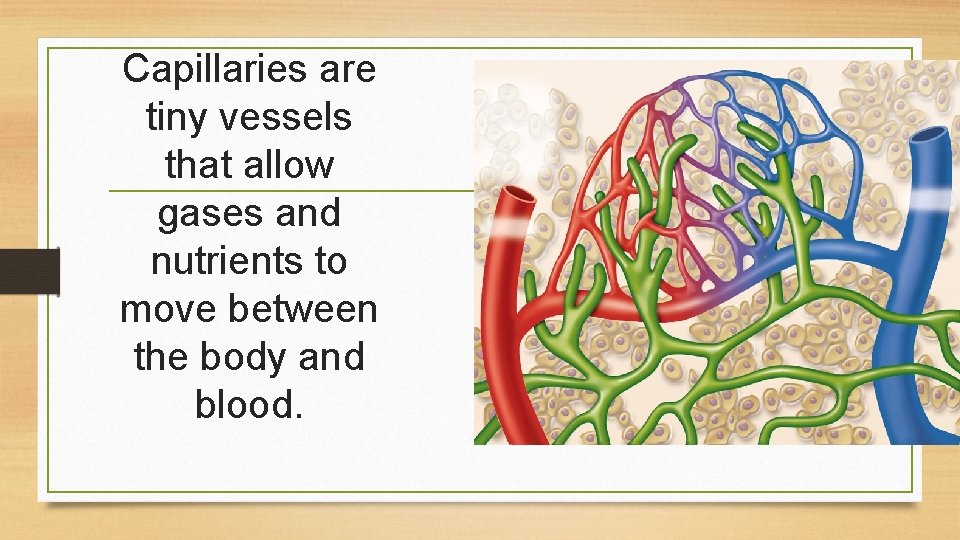
Capillaries are tiny vessels that allow gases and nutrients to move between the body and blood.
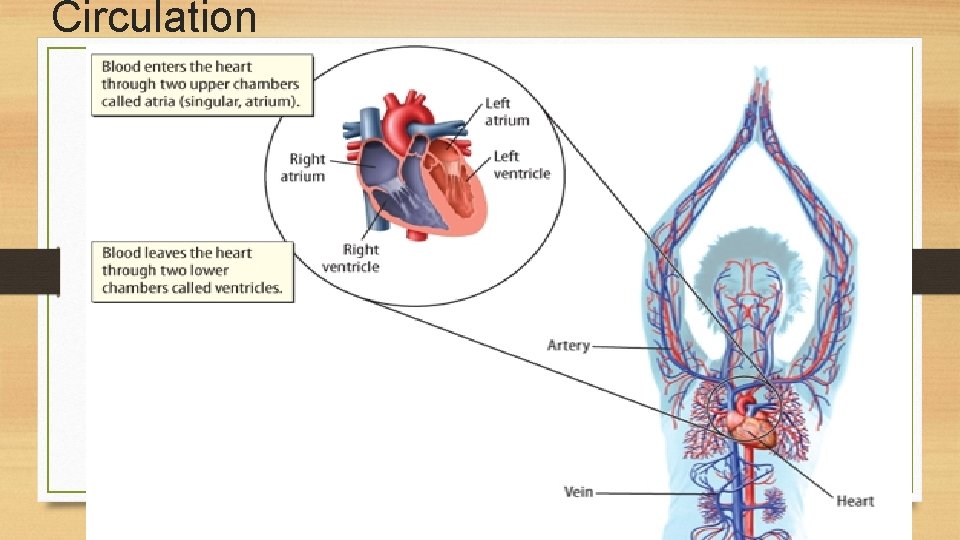
Circulation
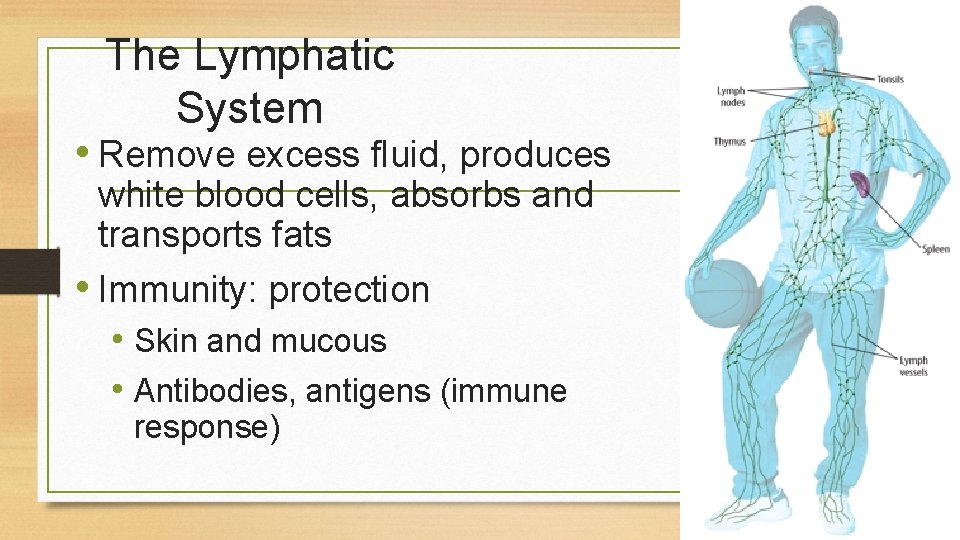
The Lymphatic System • Remove excess fluid, produces white blood cells, absorbs and transports fats • Immunity: protection • Skin and mucous • Antibodies, antigens (immune response)
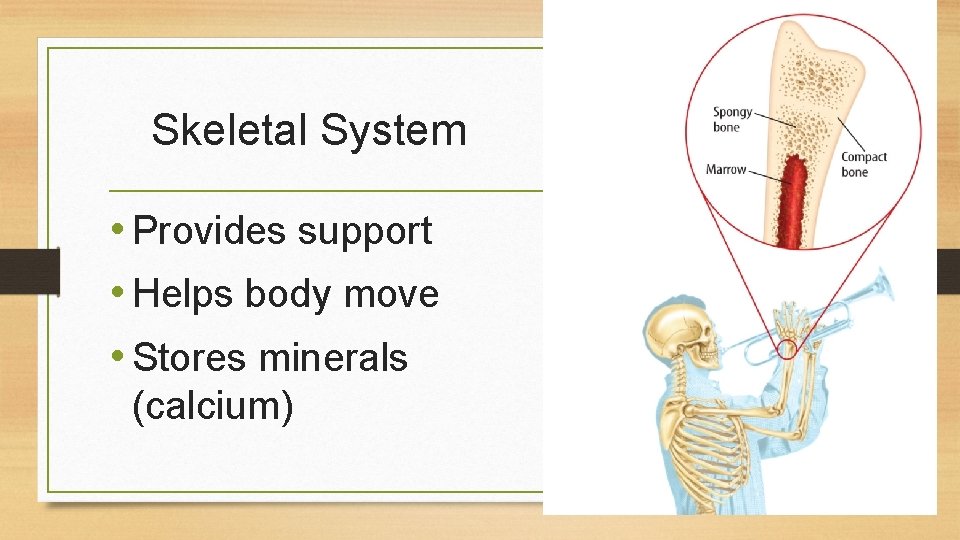
Skeletal System • Provides support • Helps body move • Stores minerals (calcium)
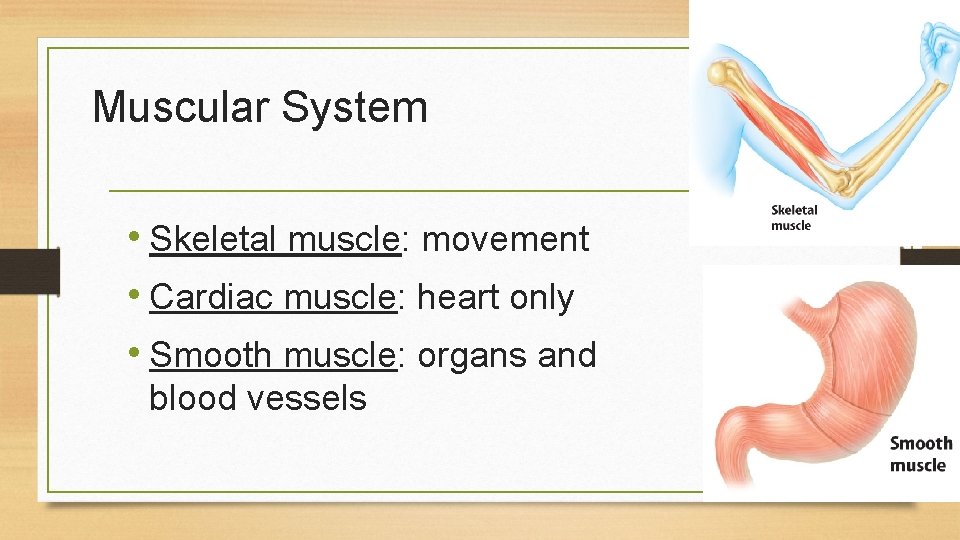
Muscular System • Skeletal muscle: movement • Cardiac muscle: heart only • Smooth muscle: organs and blood vessels
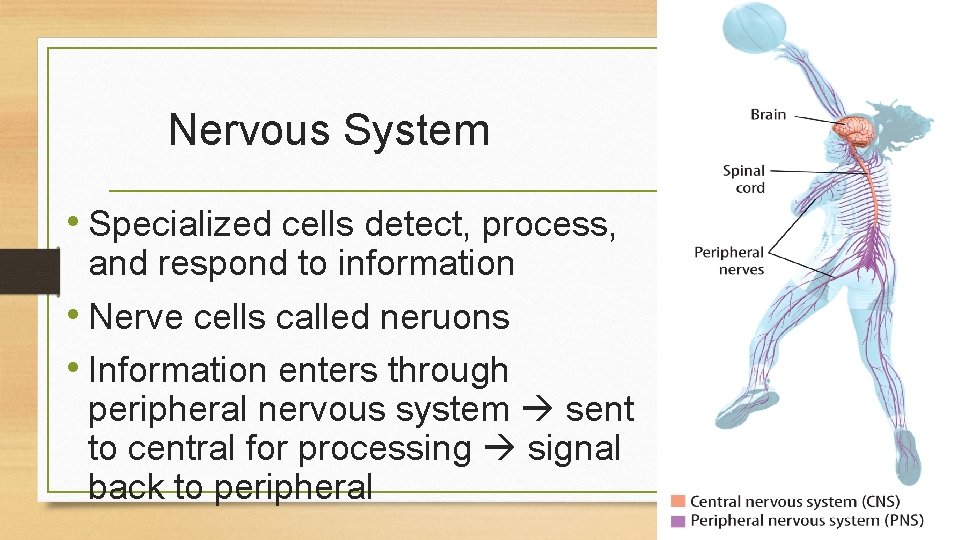
Nervous System • Specialized cells detect, process, and respond to information • Nerve cells called neruons • Information enters through peripheral nervous system sent to central for processing signal back to peripheral
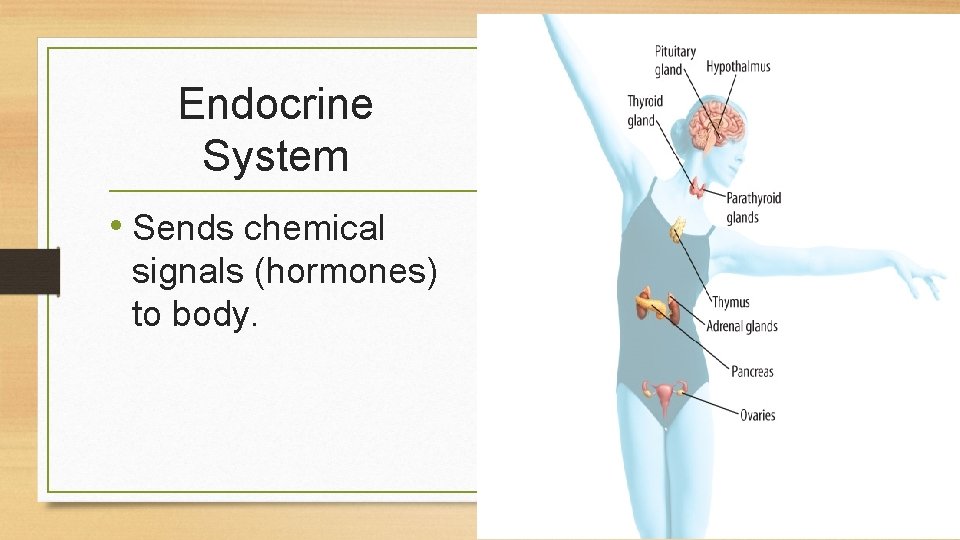
Endocrine System • Sends chemical signals (hormones) to body.
Reproductive System • Reproduction: new organisms produced • Human reproductive cells called games (sperm, ova) • Fertilization: sperm joins with an egg • Zygote embryo fetus birth
Plants
Plant Responses • Stimuli: change in environment that cause a response • Tropism: response that results in plant growth toward or away from a stimulus • Toward: positive tropism • Away: negative tropism
Environmental Stimuli Phototropism: growth toward or away from light. Thigmotropism: response to touch (tendrilsstructure that responds to touch) Gravitropism: response to gravity Photoperiodism: flowering response (long day vs short day plants
Chemical Stimuli • Plant hormones – chemical messengers • Auxins: phototropism (dark side grows longer) • Ethylene: ripening of fruit • Gibberellins: rate of cell division and elongation • Cytokinins: rate of cell division, slows aging process
Life Cycles- Matter and Energy in the Environment
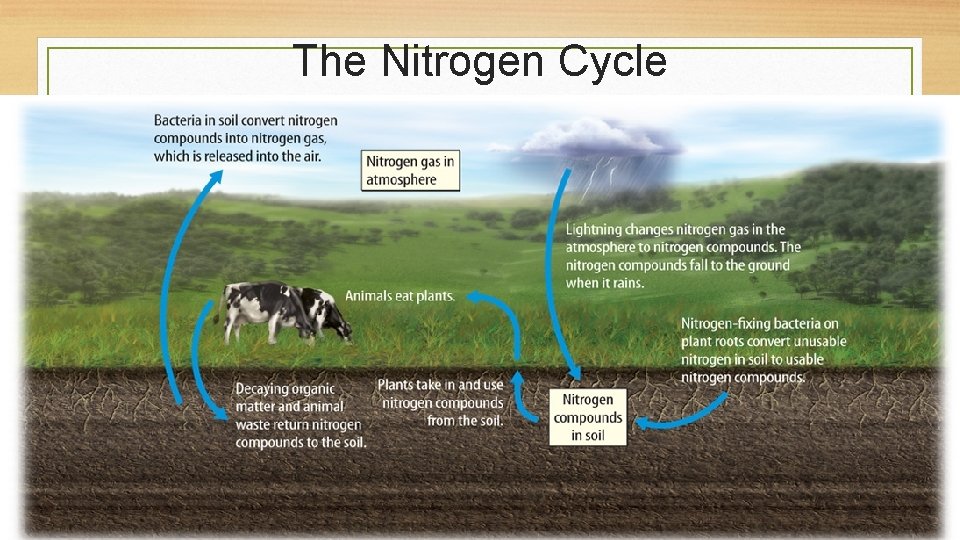
The Nitrogen Cycle
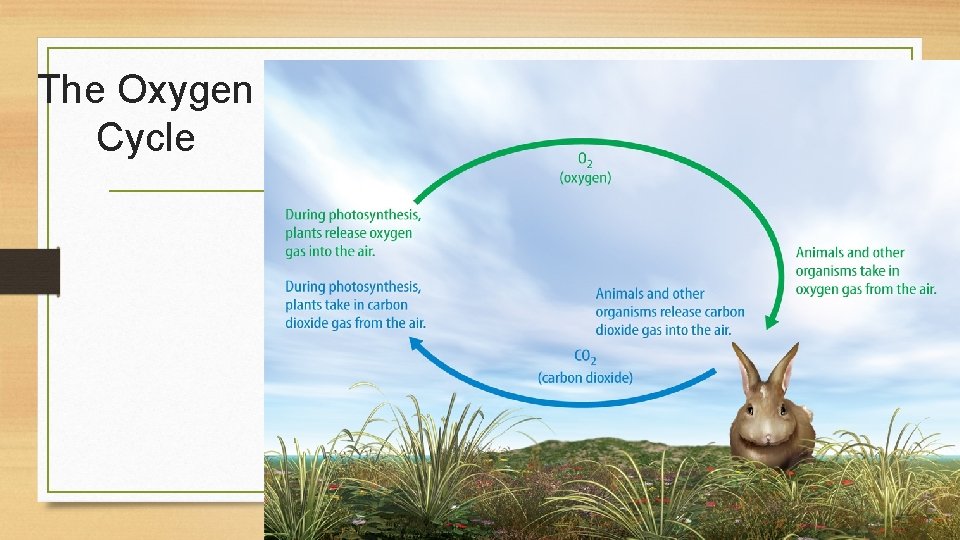
The Oxygen Cycle
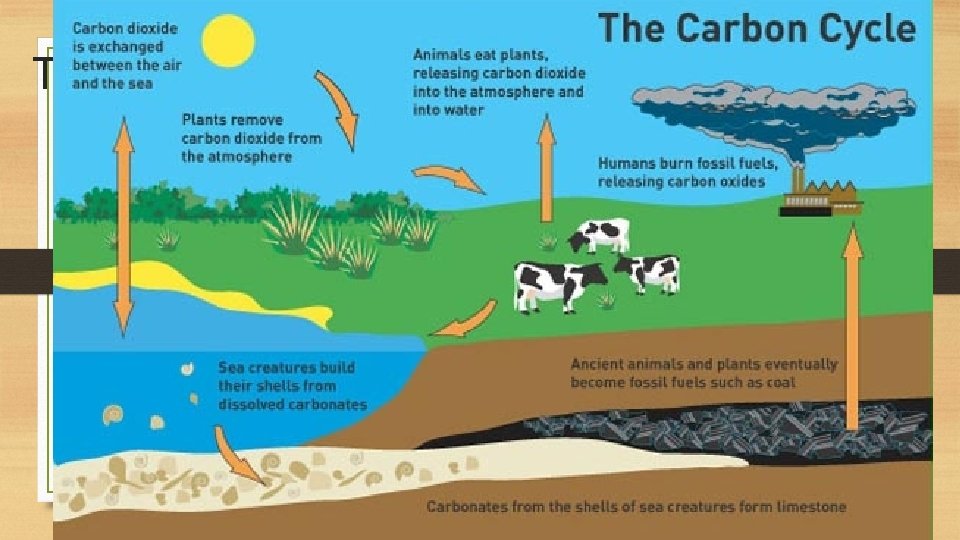
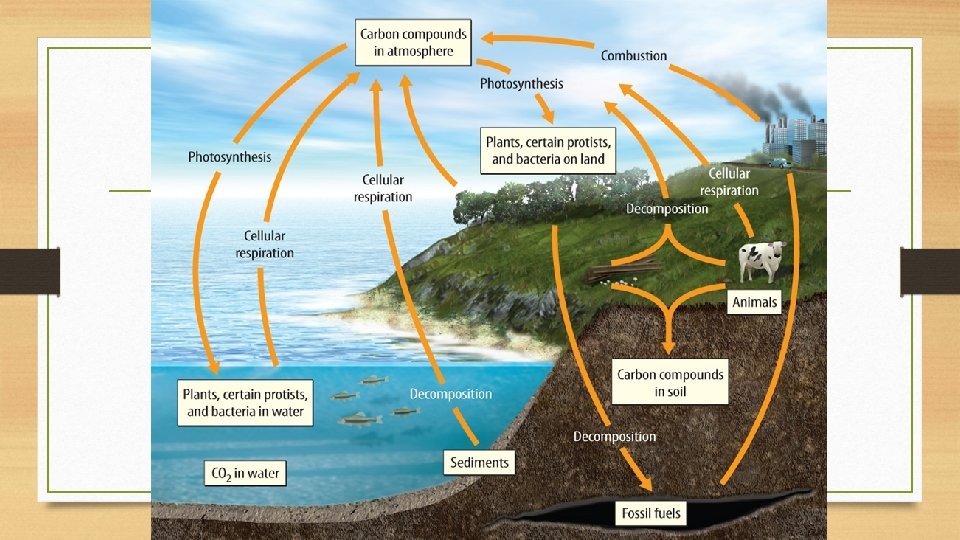
The Carbon Cycle
Energy in Ecosystems
Energy does not cycle, it flows in one direction. Usually begins with the Sun and moves from one organism to another.
Producers • Make their own food • Most are photosynthetic
Consumers • Herbivores: feed only on producers • Carnivores: eat other animals • Omnivores: eat producers and consumers • Detritivores: eating remains of organisms
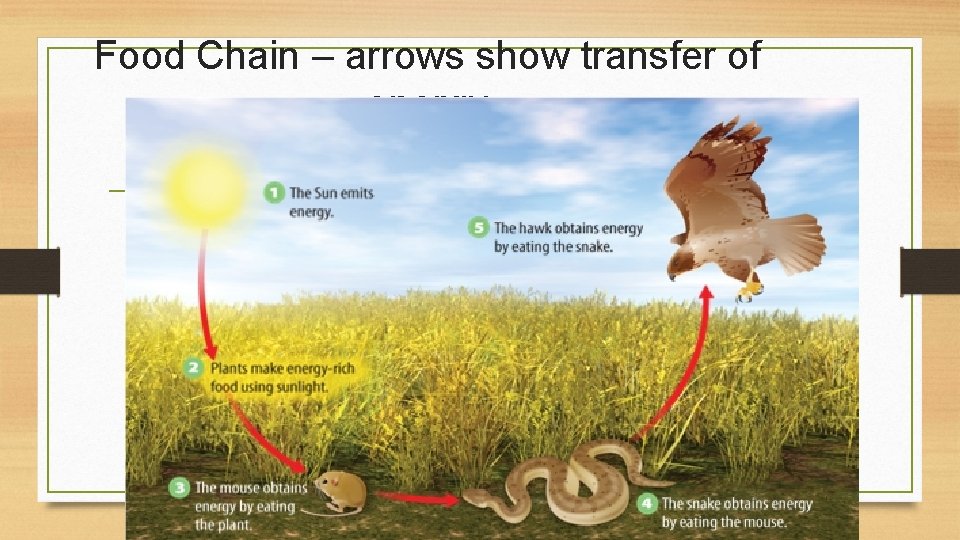
Food Chain – arrows show transfer of energy
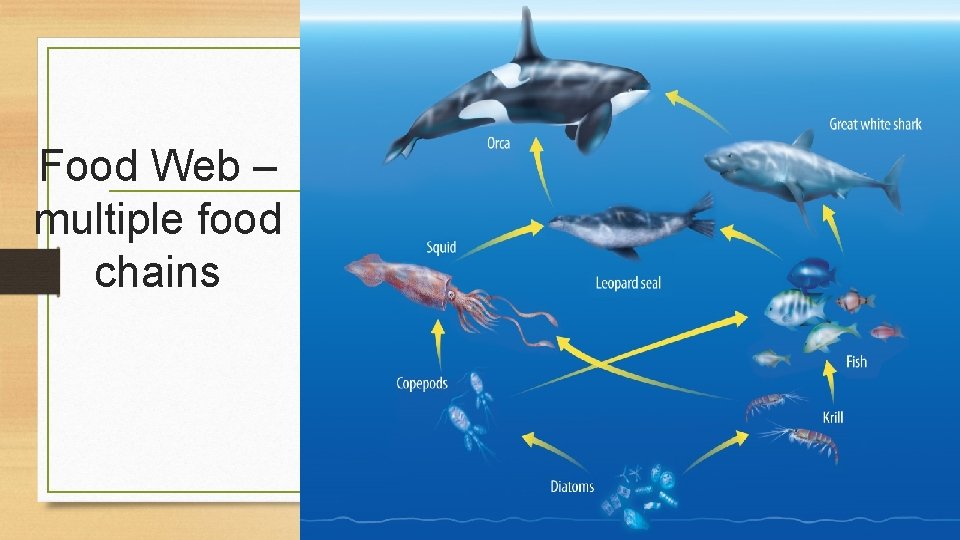
Food Web – multiple food chains
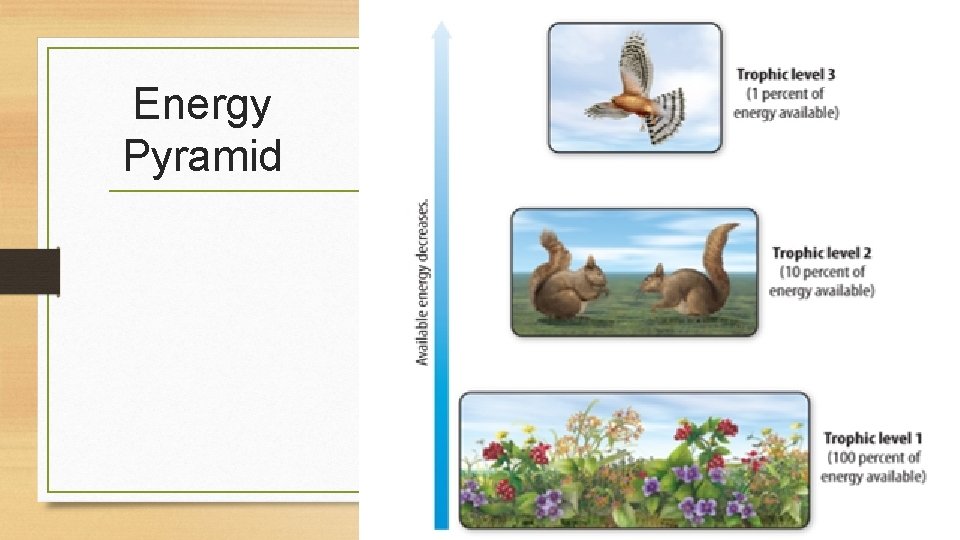
Energy Pyramid
- Slides: 71