
Classifying Organisms Classification putting things into groups based
Classifying Organisms
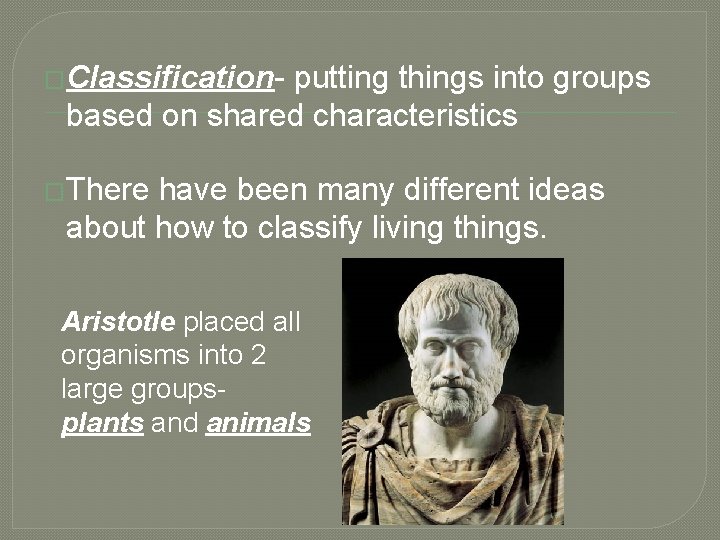
�Classification- putting things into groups based on shared characteristics �There have been many different ideas about how to classify living things. Aristotle placed all organisms into 2 large groupsplants and animals

Linnaeus’ System � Linnaeus founded modern taxonomy. � Taxonomy- the science of describing , classifying , and naming living things � Based on 7 hierarchical categories � Simplified the naming of living things by giving each species a two-part specific name “Binomial nomenclature”

Binomial Nomenclature Genus Species Felis domesticus In a scientific name, the first part of the name is the organism’s genus. Similar species are grouped into one genus. Ex: Felis The second part of the name identifies the species- a group of organisms that have similar traits and are able to produce fertile offspring.

Binomial Nomenclature Panthera tigris Panthera leo
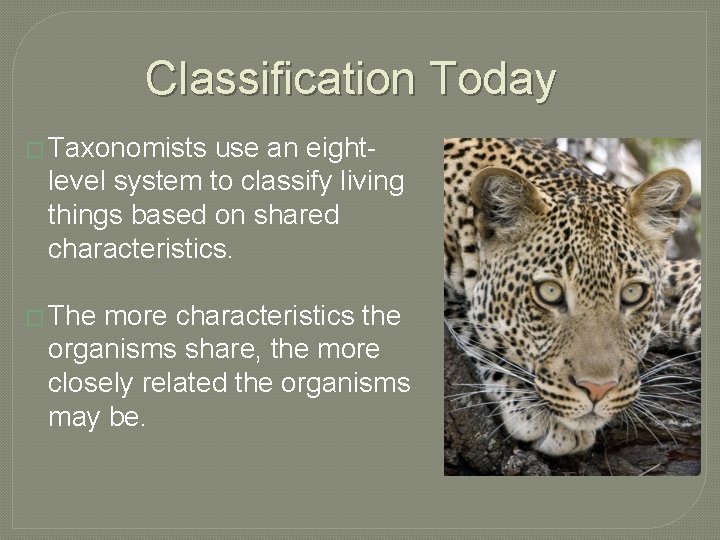
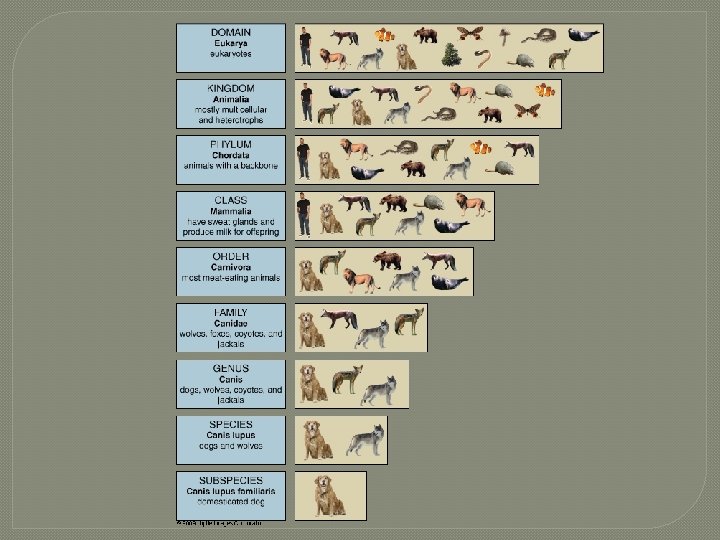
Classification Today � Taxonomists use an eightlevel system to classify living things based on shared characteristics. � The more characteristics the organisms share, the more closely related the organisms may be.
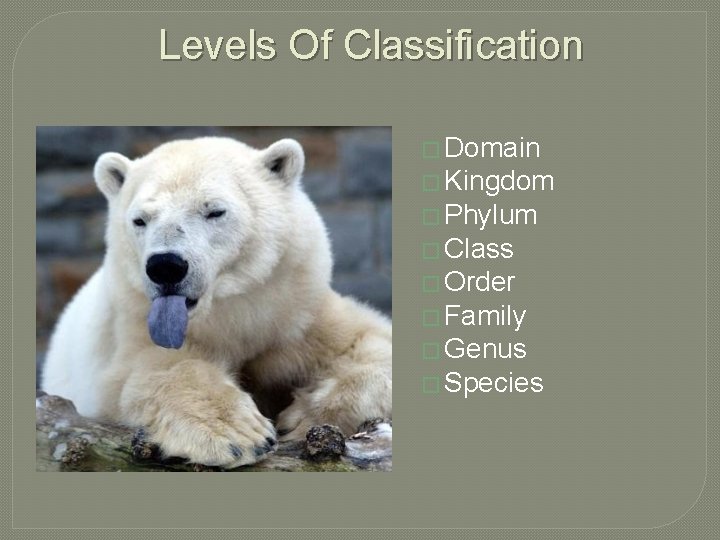
Levels Of Classification � Domain � Kingdom � Phylum � Class � Order � Family � Genus � Species
DOMAINS �Every living thing is classified into one of the 3 Domains: 1. Archea 2. Bacteria 3. Eukarya
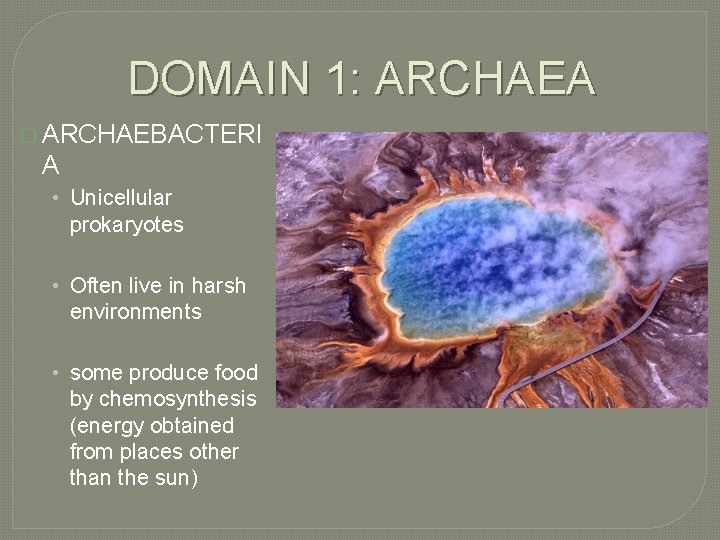
DOMAIN 1: ARCHAEA � ARCHAEBACTERI A • Unicellular prokaryotes • Often live in harsh environments • some produce food by chemosynthesis (energy obtained from places other than the sun)
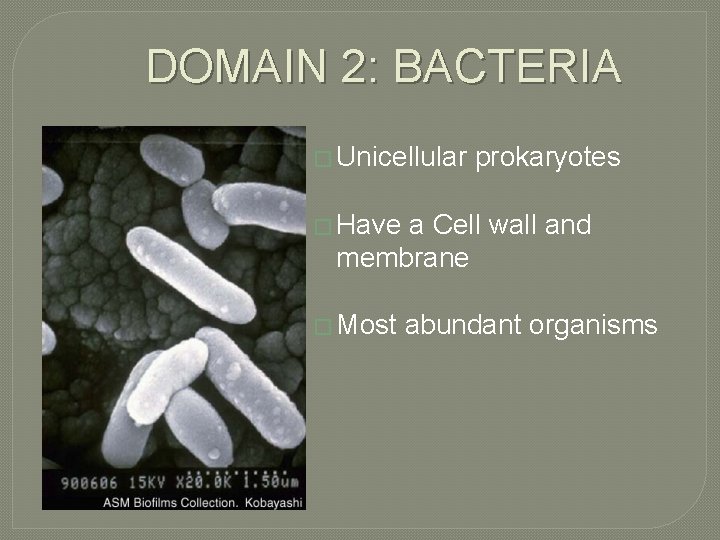
DOMAIN 2: BACTERIA � Unicellular prokaryotes � Have a Cell wall and membrane � Most abundant organisms
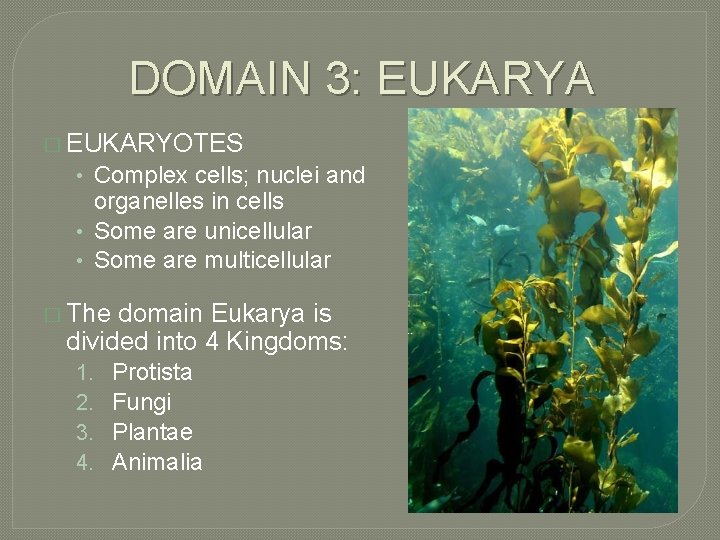
DOMAIN 3: EUKARYA � EUKARYOTES • Complex cells; nuclei and organelles in cells • Some are unicellular • Some are multicellular � The domain Eukarya is divided into 4 Kingdoms: 1. 2. 3. 4. Protista Fungi Plantae Animalia
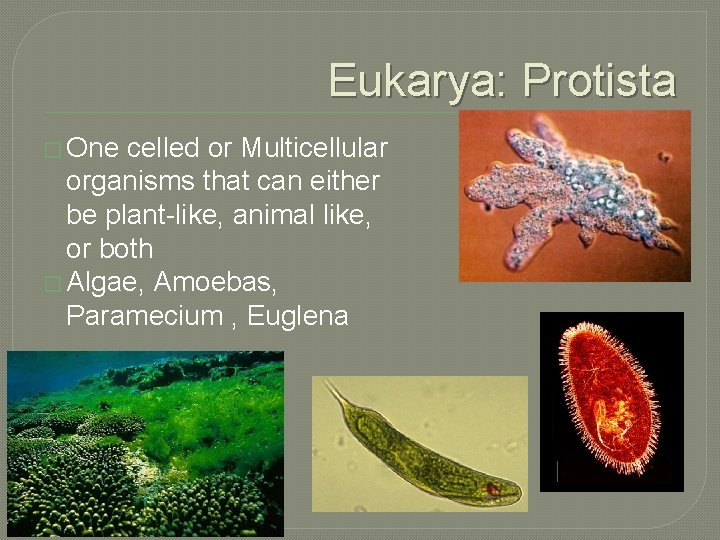
Eukarya: Protista � One celled or Multicellular organisms that can either be plant-like, animal like, or both � Algae, Amoebas, Paramecium , Euglena
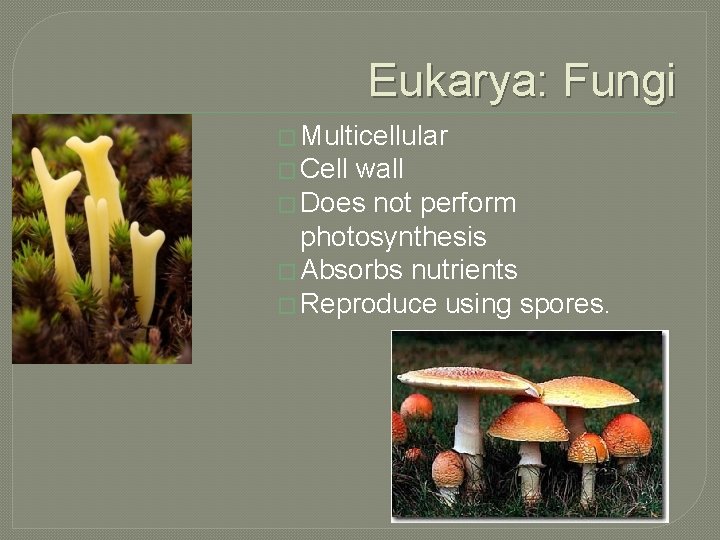
Eukarya: Fungi � Multicellular � Cell wall � Does not perform photosynthesis � Absorbs nutrients � Reproduce using spores.
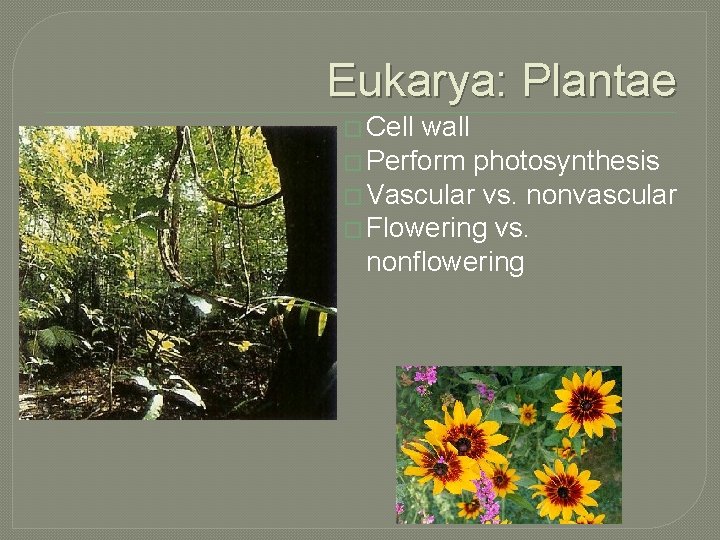
Eukarya: Plantae � Cell wall � Perform photosynthesis � Vascular vs. nonvascular � Flowering vs. nonflowering
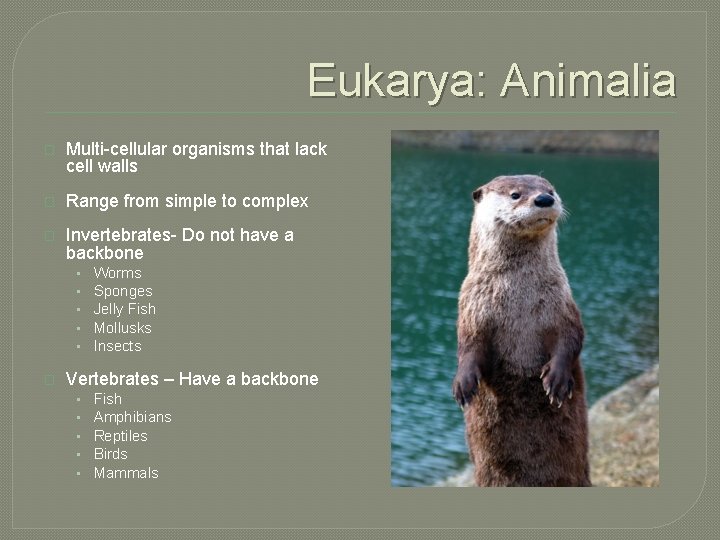
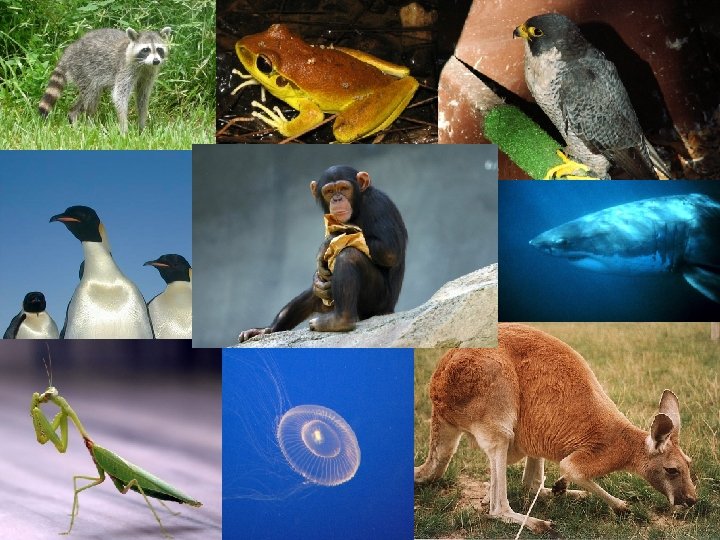
Eukarya: Animalia � Multi-cellular organisms that lack cell walls � Range from simple to complex � Invertebrates- Do not have a backbone • • • � Worms Sponges Jelly Fish Mollusks Insects Vertebrates – Have a backbone • • • Fish Amphibians Reptiles Birds Mammals

Classification Tools
Dichotomous Key �A series of descriptions arranged in pairs that can be used to identify an unknown organism � The chosen descriptions leads to another pair of descriptions or to the identification of the organism
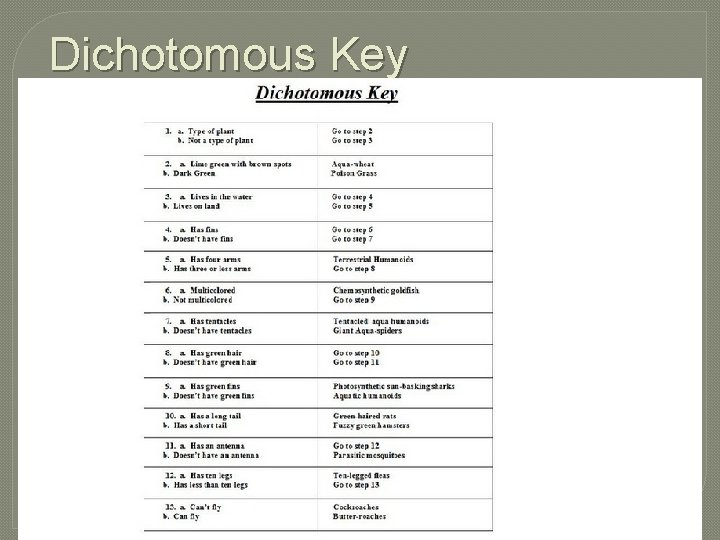
Dichotomous Key
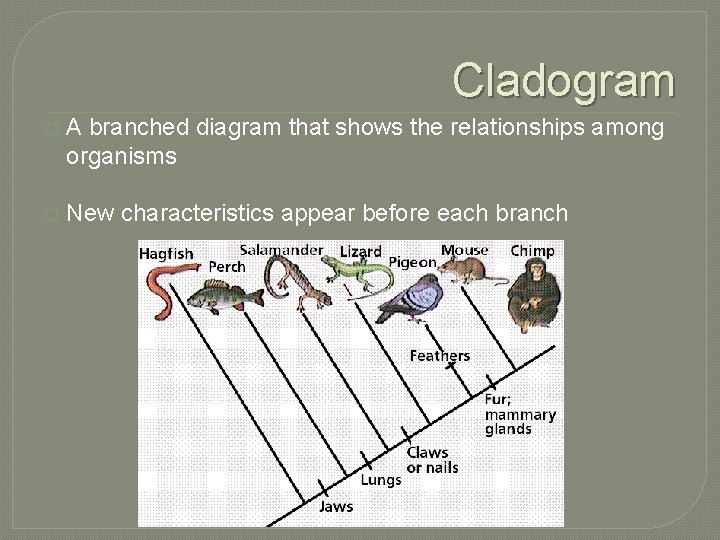
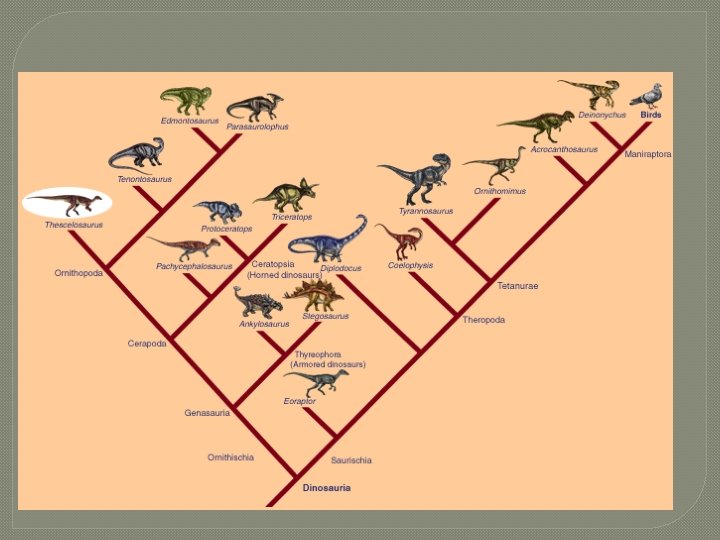
Cladogram � A branched diagram that shows the relationships among organisms � New characteristics appear before each branch
- Slides: 22