
Classifying Living Things Classification is the process of
- Slides: 10
Classifying Living Things
Classification is the process of grouping things based on their shared traits. n Biologists use classification to organize living things into groups, so that the organisms are easier to study n The scientific study of how living things are classified is called taxonomy. n
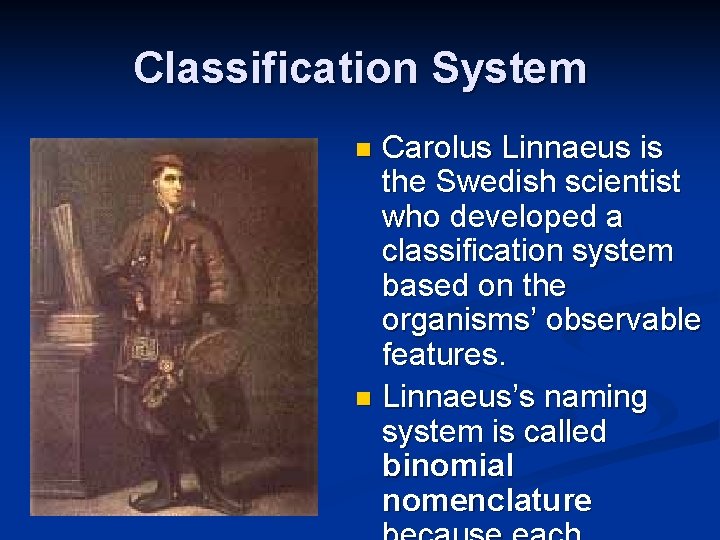
Classification System Carolus Linnaeus is the Swedish scientist who developed a classification system based on the organisms’ observable features. n Linnaeus’s naming system is called binomial nomenclature n
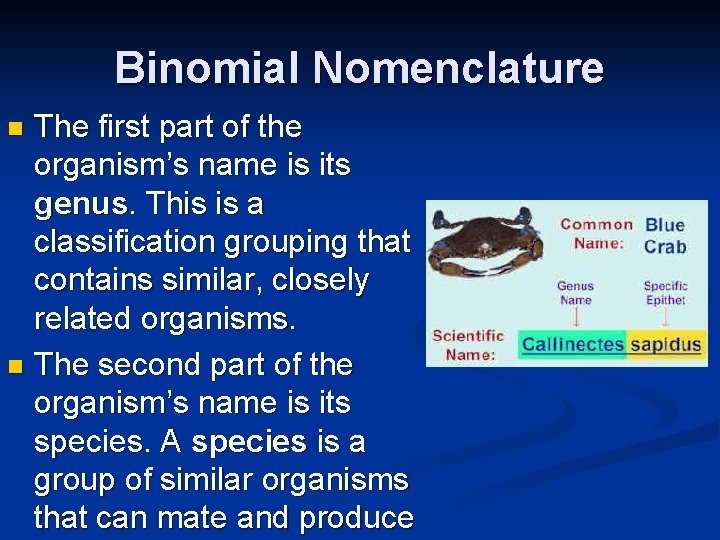
Binomial Nomenclature The first part of the organism’s name is its genus. This is a classification grouping that contains similar, closely related organisms. n The second part of the organism’s name is its species. A species is a group of similar organisms that can mate and produce n
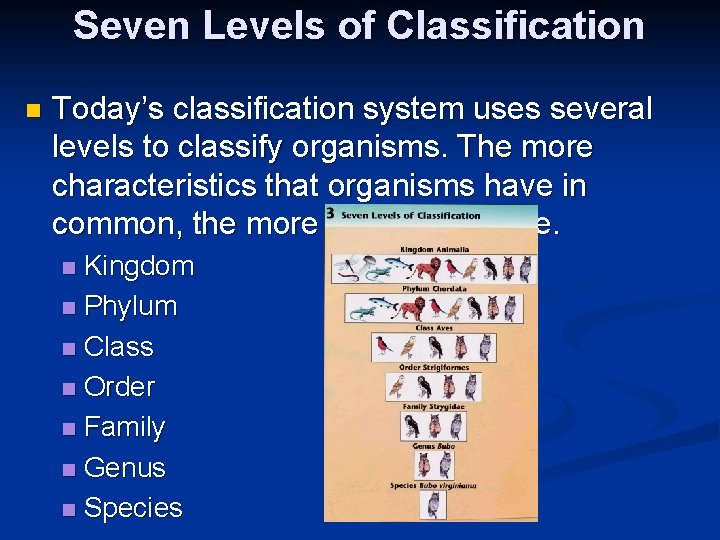
Seven Levels of Classification n Today’s classification system uses several levels to classify organisms. The more characteristics that organisms have in common, the more level they share. Kingdom n Phylum n Class n Order n Family n Genus n Species n
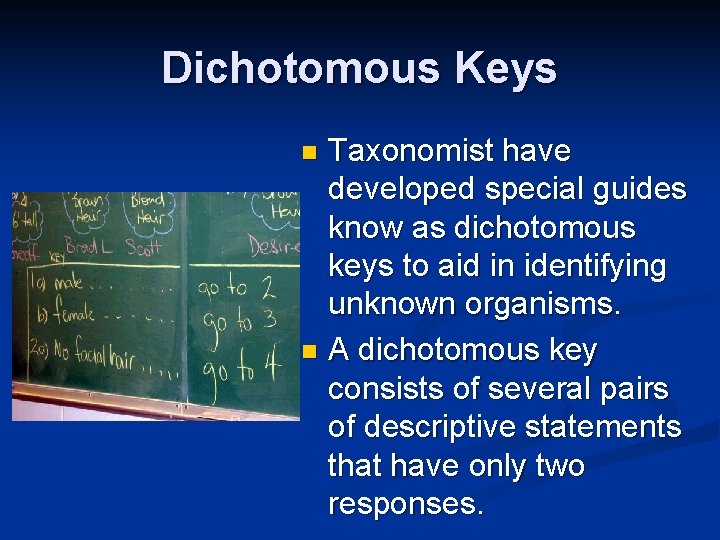
Dichotomous Keys Taxonomist have developed special guides know as dichotomous keys to aid in identifying unknown organisms. n A dichotomous key consists of several pairs of descriptive statements that have only two responses. n
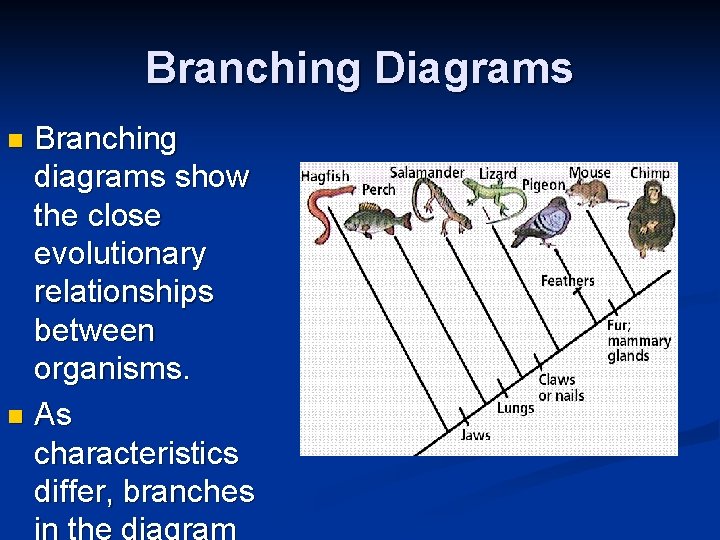
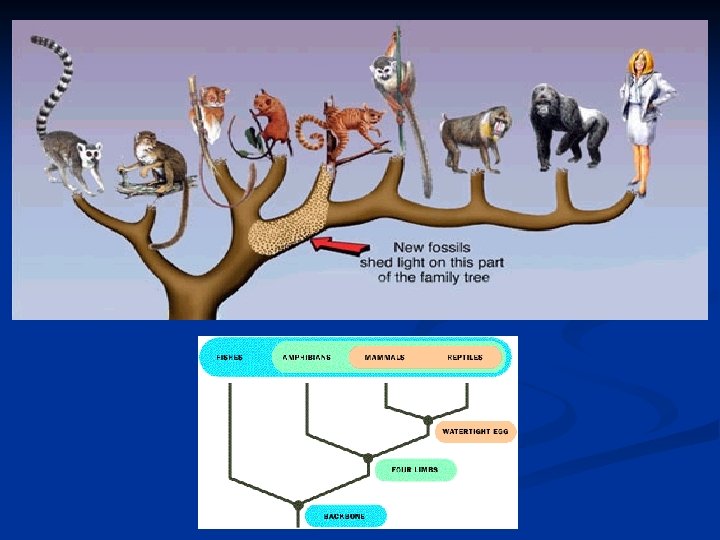
Branching Diagrams Branching diagrams show the close evolutionary relationships between organisms. n As characteristics differ, branches n
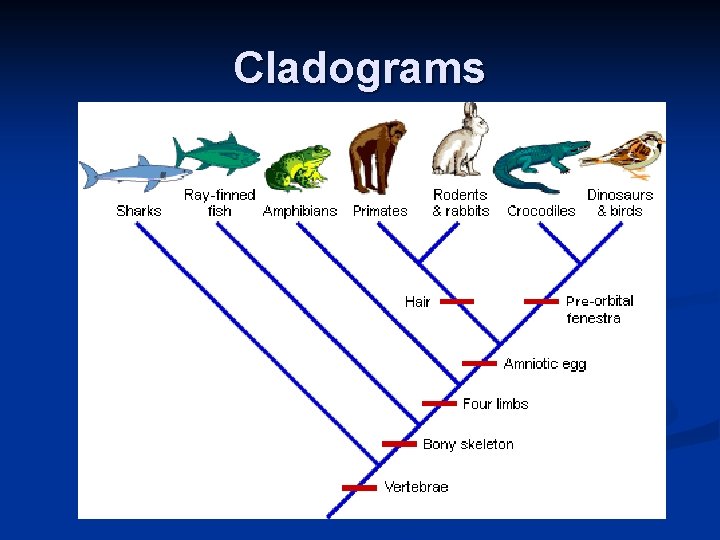
Cladograms
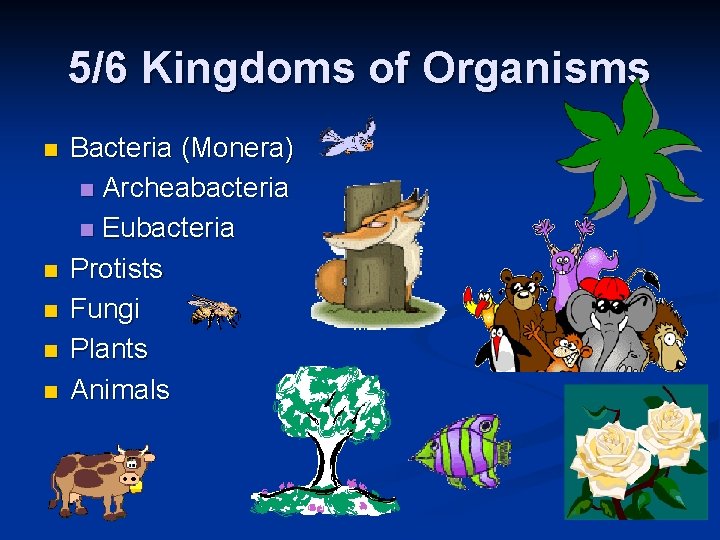
5/6 Kingdoms of Organisms n n n Bacteria (Monera) n Archeabacteria n Eubacteria Protists Fungi Plants Animals