
Classifying Living Organisms Domains and Kingdoms Carolus Linnaeus
- Slides: 30
Classifying Living Organisms Domains and Kingdoms
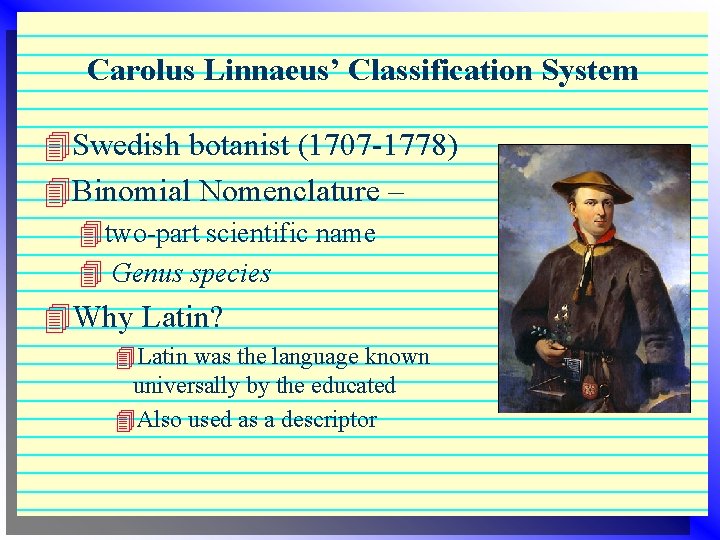
Carolus Linnaeus’ Classification System 4 Swedish botanist (1707 -1778) 4 Binomial Nomenclature – 4 two-part scientific name 4 Genus species 4 Why Latin? 4 Latin was the language known universally by the educated 4 Also used as a descriptor
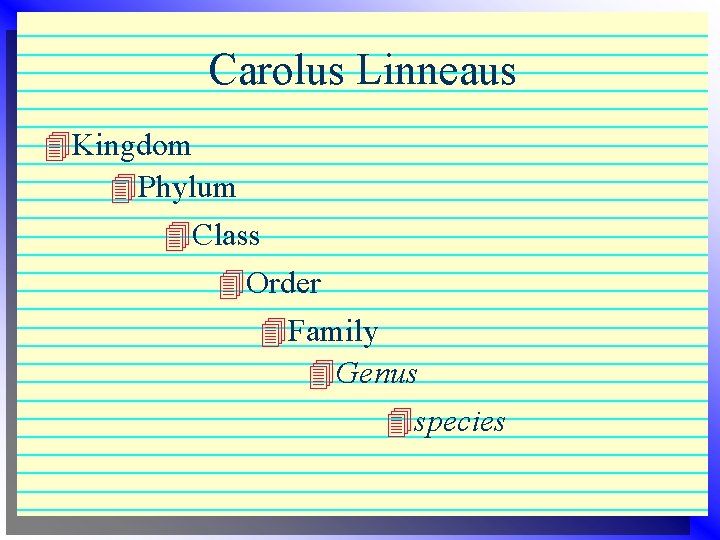
Carolus Linneaus 4 Kingdom 4 Phylum 4 Class 4 Order 4 Family 4 Genus 4 species
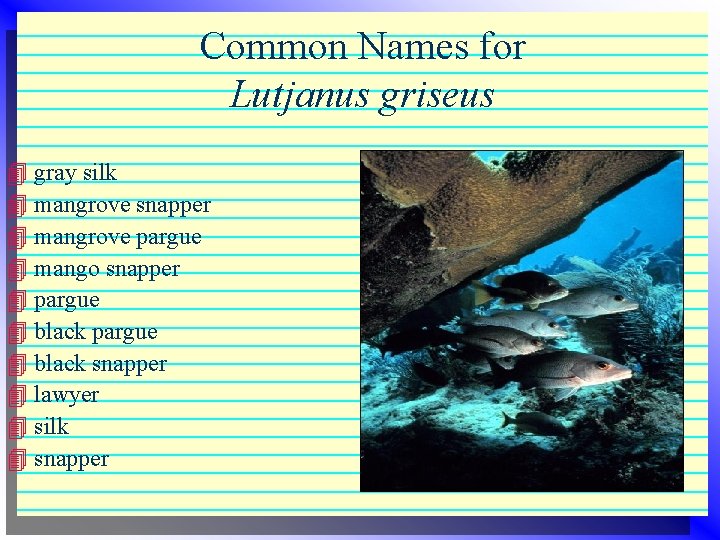
Common Names for Lutjanus griseus 4 gray silk 4 mangrove snapper 4 mangrove pargue 4 mango snapper 4 pargue 4 black snapper 4 lawyer 4 silk 4 snapper
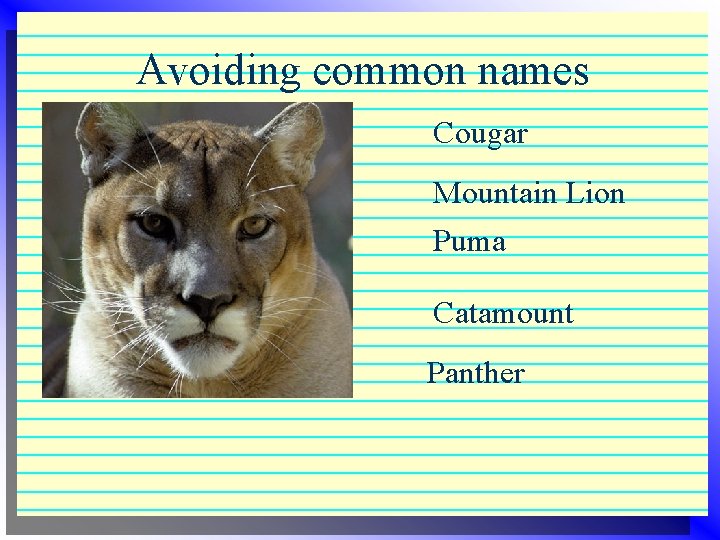
Avoiding common names 4 Cat 4 Gato 4 Koshka 4 Chien 4 kitty Cougar Mountain Lion Puma Catamount Panther
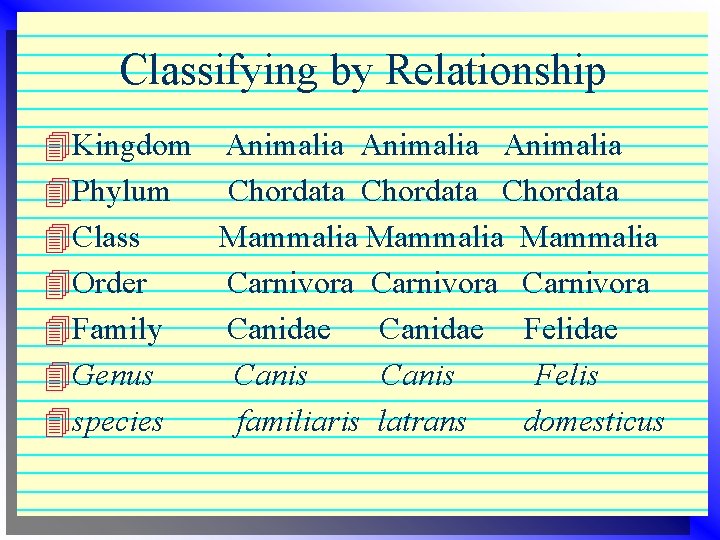
Classifying by Relationship 4 Kingdom Animalia 4 Phylum Chordata 4 Class Mammalia 4 Order Carnivora 4 Family Canidae Felidae 4 Genus Canis Felis 4 species familiaris latrans domesticus
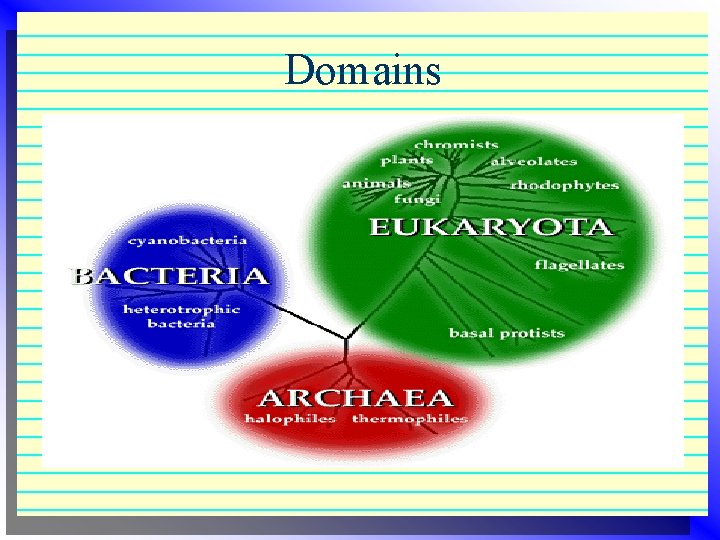
Domains
6 Kingdoms of Living Things 4 Archaebacteria 4 Eubacteria 4 Protista 4 Fungi 4 Plantae 4 Animalia
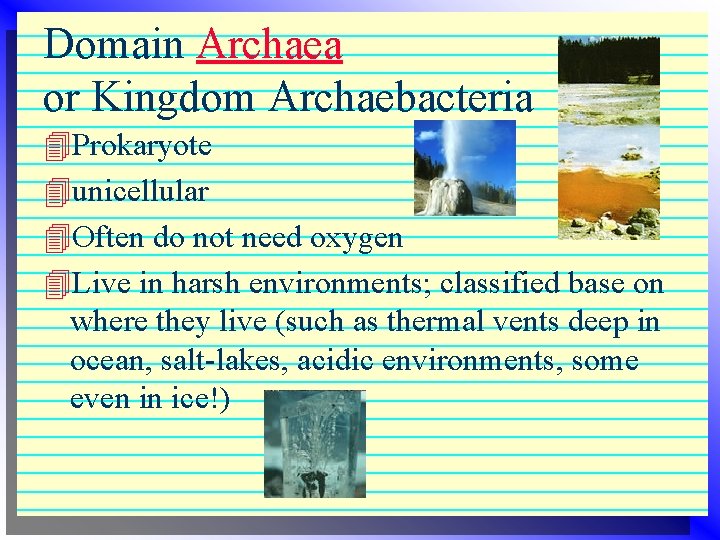
Domain Archaea or Kingdom Archaebacteria 4 Prokaryote 4 unicellular 4 Often do not need oxygen 4 Live in harsh environments; classified base on where they live (such as thermal vents deep in ocean, salt-lakes, acidic environments, some even in ice!)
Domain or Kingdom: Bacteria 4 Prokaryote 4 unicellular 4 Often do need oxygen 4 Live and feed by decomposing other cells. 4 Some can do photosynthesis. 4 Cell walls made of peptidoglycan. 4 video
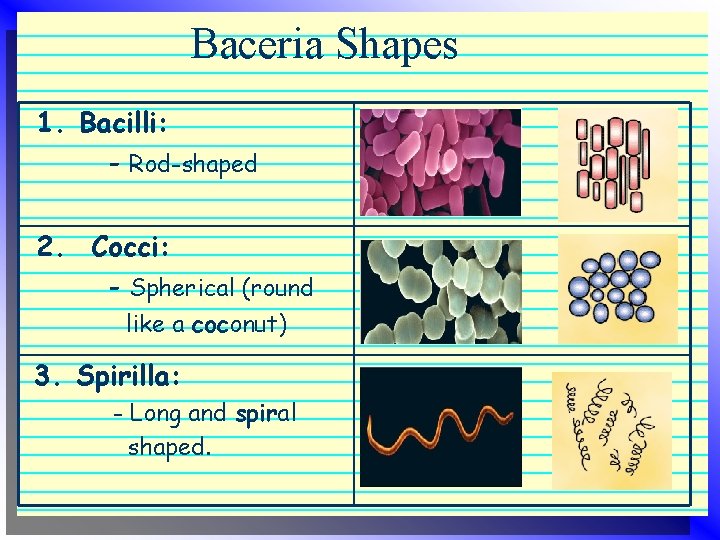
Baceria Shapes 1. Bacilli: - Rod-shaped 2. Cocci: - Spherical (round like a coconut) 3. Spirilla: - Long and spiral shaped.
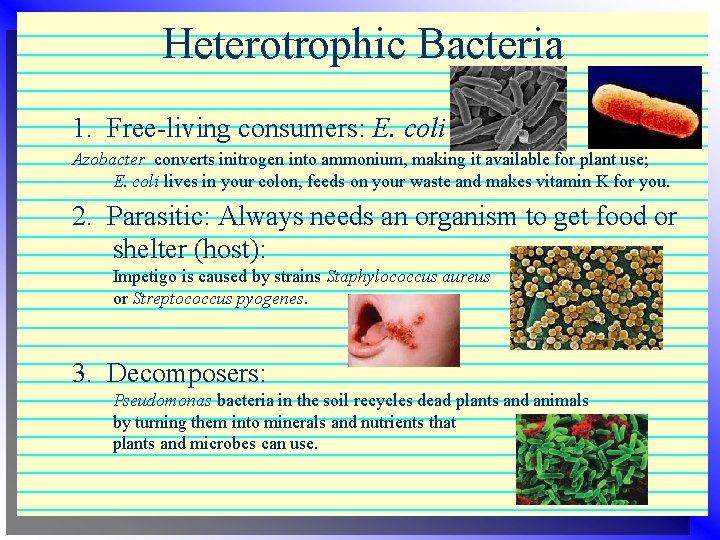
Heterotrophic Bacteria 1. Free-living consumers: E. coli Azobacter converts initrogen into ammonium, making it available for plant use; E. coli lives in your colon, feeds on your waste and makes vitamin K for you. 2. Parasitic: Always needs an organism to get food or shelter (host): Impetigo is caused by strains Staphylococcus aureus or Streptococcus pyogenes. 3. Decomposers: Pseudomonas bacteria in the soil recycles dead plants and animals by turning them into minerals and nutrients that plants and microbes can use.
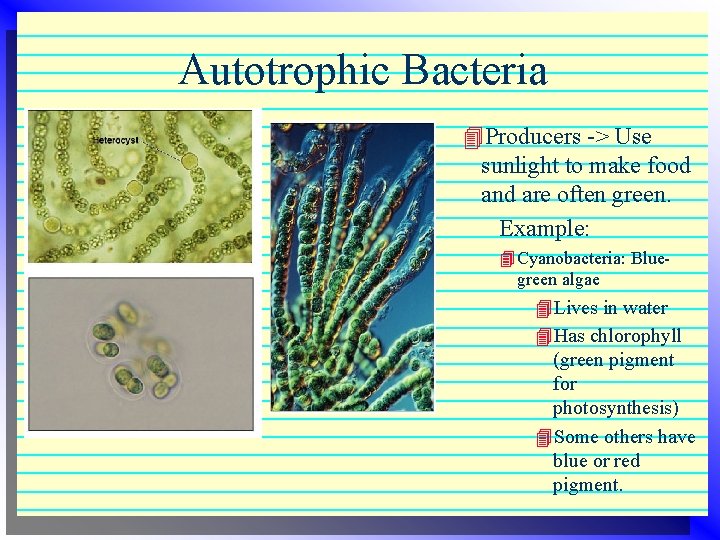
Autotrophic Bacteria 4 Producers -> Use sunlight to make food and are often green. Example: 4 Cyanobacteria: Bluegreen algae 4 Lives in water 4 Has chlorophyll (green pigment for photosynthesis) 4 Some others have blue or red pigment.
Domain Eukaryota 4 Eukaryote 4 Unicellular or multicellular 4 Includes Kingdom Animalia, Kingdom. Plantae, Kingdom Fungi and Protista.
Protist Kingdoms 4 Eukaryote 4 Unicellular 4 Heterotroph or Autotroph 4 No cell walls in Protozoa
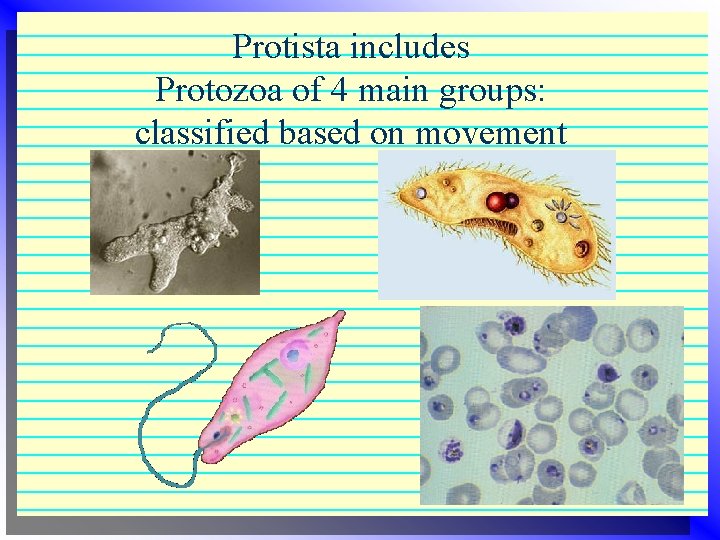
Protista includes Protozoa of 4 main groups: classified based on movement
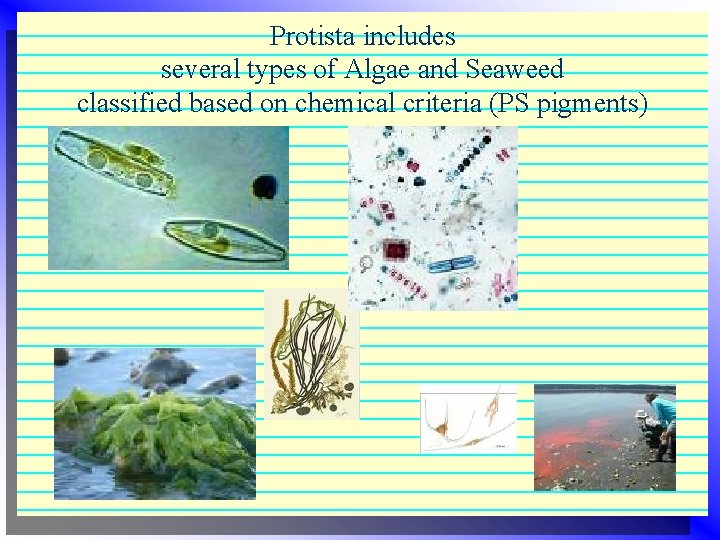
Protista includes several types of Algae and Seaweed classified based on chemical criteria (PS pigments)
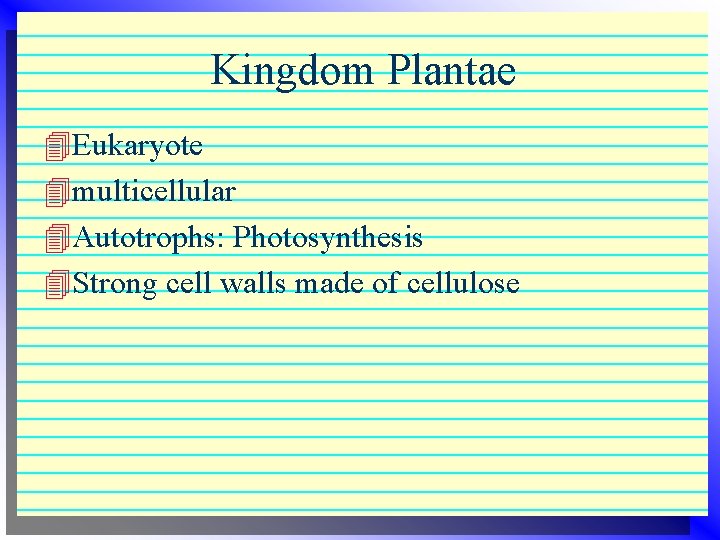
Kingdom Plantae 4 Eukaryote 4 multicellular 4 Autotrophs: Photosynthesis 4 Strong cell walls made of cellulose
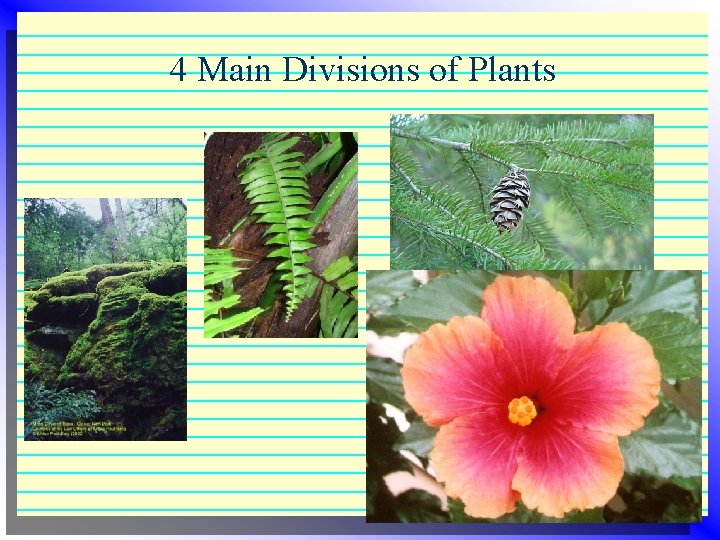
4 Main Divisions of Plants
Kingdom Fungi 4 Eukaryote 4 Multicellular or possibly unicellular 4 Heterotroph: absorb nutrients from decomposing organisms 4 Cell walls made of protein (chitin), not cellulose 4 video
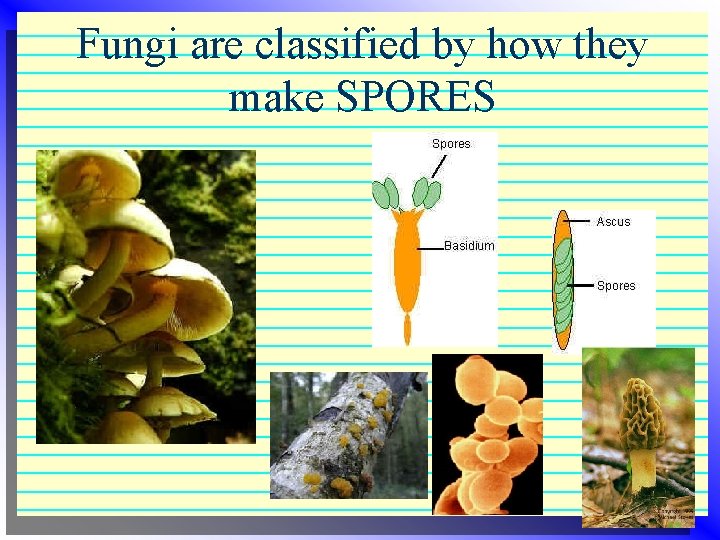
Fungi are classified by how they make SPORES
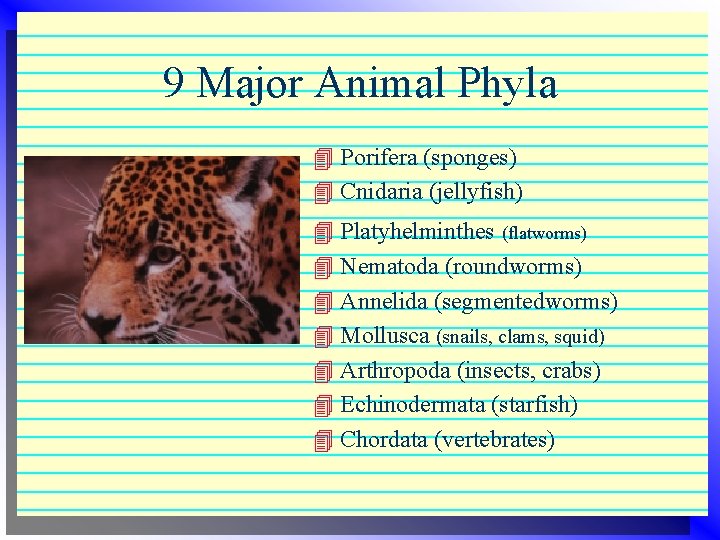
9 Major Animal Phyla 4 Porifera (sponges) 4 Cnidaria (jellyfish) 4 Platyhelminthes (flatworms) 4 Nematoda (roundworms) 4 Annelida (segmentedworms) 4 Mollusca (snails, clams, squid) 4 Arthropoda (insects, crabs) 4 Echinodermata (starfish) 4 Chordata (vertebrates)
Kingdom Animalia 4 Eukaryote 4 multicellular 4 Heterotroph: eat other organisms 4 Cells lack cell walls
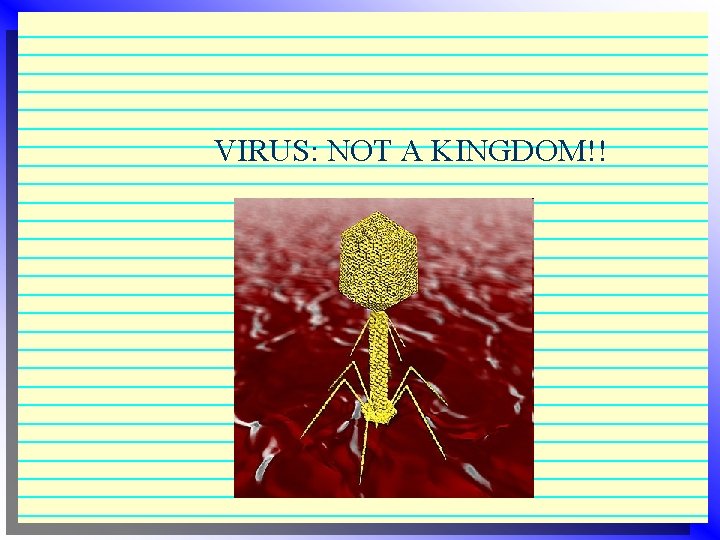
VIRUS: NOT A KINGDOM!!
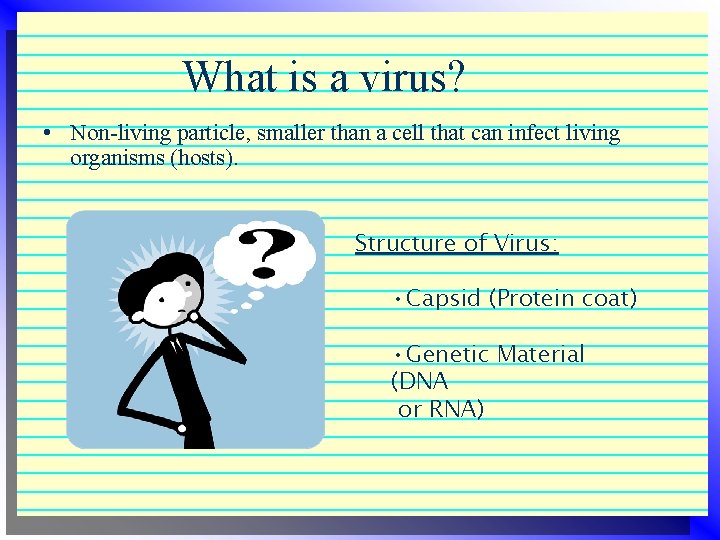
What is a virus? • Non-living particle, smaller than a cell that can infect living organisms (hosts). Structure of Virus: • Capsid (Protein coat) • Genetic Material (DNA or RNA)
How to Classify Viruses 1. By their shape 2. Type of disease they cause. 3. Kind of genetic material they have (DNA, RNA)
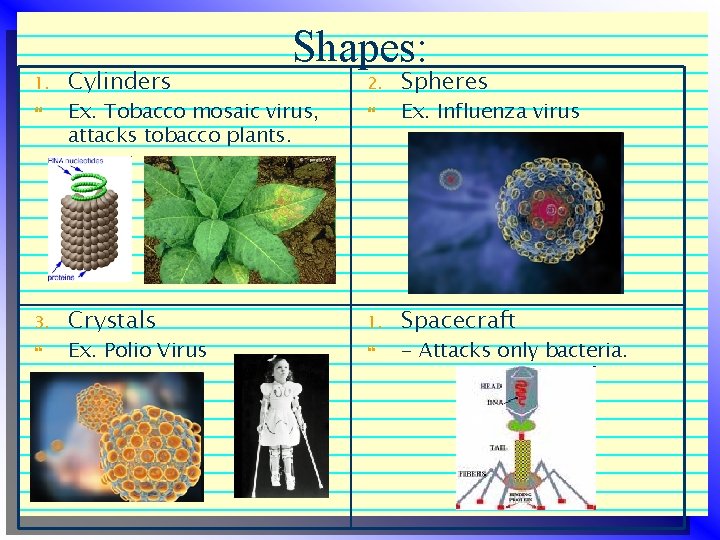
1. 3. Cylinders Shapes: Ex. Tobacco mosaic virus, attacks tobacco plants. Crystals Ex. Polio Virus 2. Spheres Ex. Influenza virus 1. Spacecraft - Attacks only bacteria.
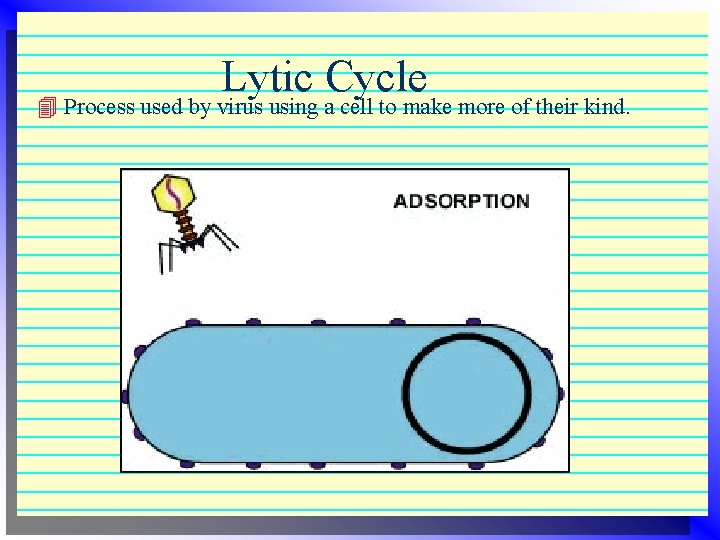
Lytic Cycle 4 Process used by virus using a cell to make more of their kind.
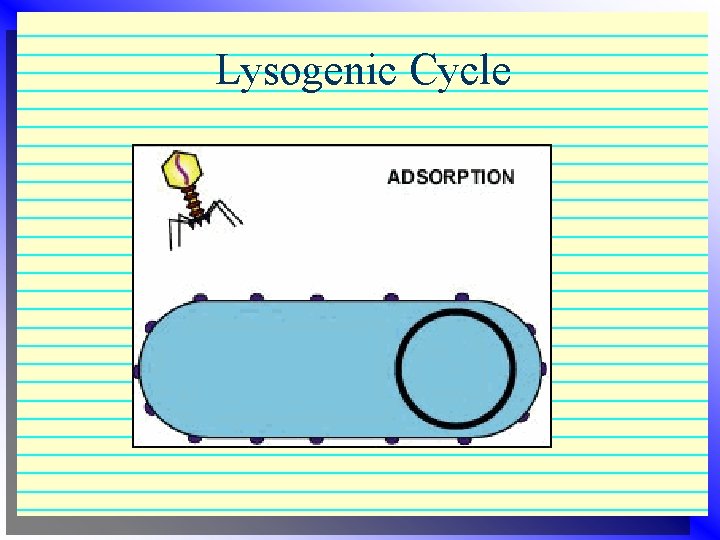
Lysogenic Cycle
Are virus alive? 4 Don’t eat, grow, or break down food. 4 They are not made of cells. 4 They need a host cell to reproduce. 4 There is no cure, only a treatment. 4 Antibiotics DO NOT kill viruses 4 Antiviral medications only stop viruses from reproducing.