
CLASSIFYING LIFE LESSON 2 CHAPTER 8 6 L



- Slides: 13
CLASSIFYING LIFE LESSON 2, CHAPTER 8
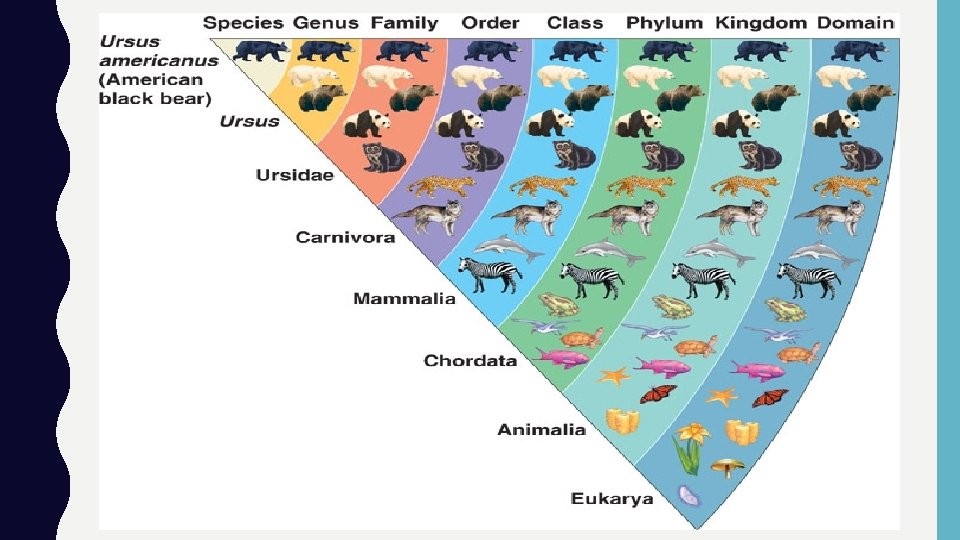
6. L. 4 A. 2 • Develop and use models to classify organisms based on the current hierarchical taxonomic structure (including the kingdoms of protists, plants, fungi, and animals).
WE WILL BE ABLE TO: • Explain why Biologists classify organisms and how they assign scientific names. • Describe how life is classified. • Explain how taxonomic keys are useful.
NEW VOCABULARY • Classification • Taxonomy • Binomial Nomenclature • Genus • Species
THINK OF A GROCERY STORE • How is this store organized? • Why might it be organized this way?
CLASSIFYING LIFE • So far, scientists have identified more than one million kinds of organisms on Earth so it is crucial to have a way to organize these organisms in a meaningful way. • Scientists use Classification ( The process of grouping things based on their similarities) to create a meaningful method of organizing life. • The scientific study of how organisms are classified is called Taxonomy. • Taxonomy is useful because once an organism is classified, a scientist knows a lot of information about that organism. – Example: if you know that a crow is classified as a bird, then you know that a crow has wings, feathers, and a beak.
THE NAMING SYSTEM OF LINNAEUS • In the 1730’s, A Swedish botanist Carolus Linnaeus devised a system of naming organisms that we still use today. • Linnaeus placed organisms in groups based on their observable features. Each organism was given a unique, two-part scientific name. This system is called Binomial nomenclature. – Bi- meaning two – Nomial- meaning names
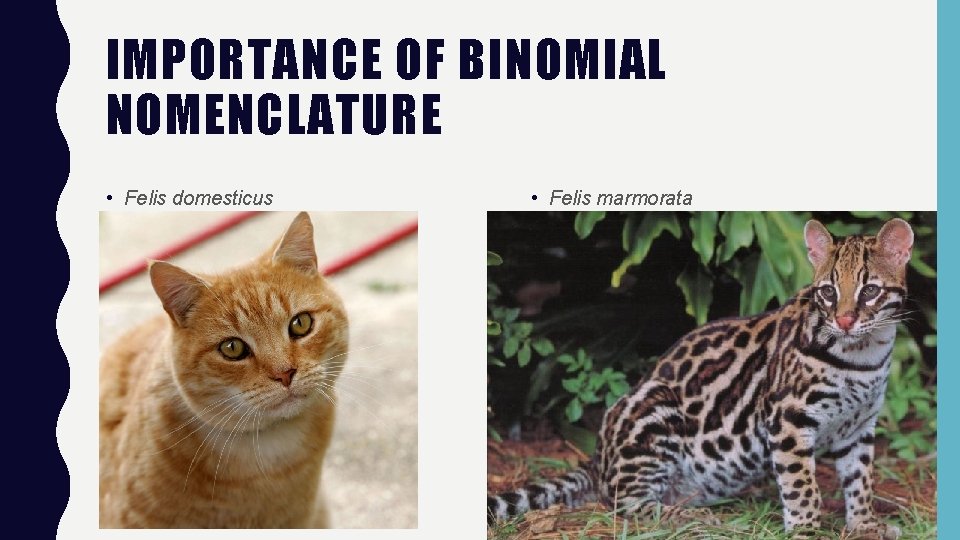
IMPORTANCE OF BINOMIAL NOMENCLATURE • Felis domesticus • Felis marmorata
BINOMIAL NOMENCLATURE • When creating an organism’s we use two words – The first is the organism's Genus ( Which is a classification grouping that contains similar, closely related organisms. – The second is the organism’s Species (Which is a group of similar organisms that can mate with each other and produce offspring that can also mate and reproduce. )
WHEN USING BINOMIAL NOMENCLATURE THERE ARE SOME RULES TO FOLLOW –The complete name is written in Italics. –Only the first letter of the first word in the scientific name is capitalized. –Use Latin words, because that was the scientific language in his time. –Example: Felis domesticus (House cat)
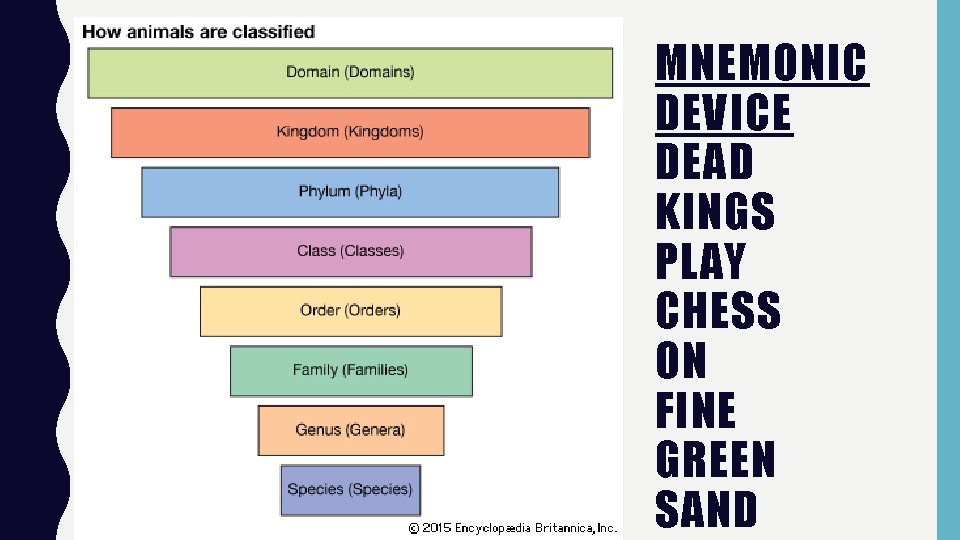
MNEMONIC DEVICE DEAD KINGS PLAY CHESS ON FINE GREEN SAND
QUESTIONS 1. What is the advantage of using scientific names instead of common names, like dog or cat? 2. How do biologists classify life? 3. Explain how taxonomic keys are used? What are the rules when using them? HOMEWORK: Create a mnemonic device for the levels of classification.