
Classifying Computational Counting Problems Pinyan Lu Shanghai University

Classifying Computational Counting Problems Pinyan Lu (陆品燕) Shanghai University of Finance and Economics
Outline n n Complexity Classes and Counting Problems Dichotomy Theorems Holographic Algorithms Approximate Counting
Outline n n Complexity Classes and Counting Problems Dichotomy Theorems Holographic Algorithms Approximate Counting
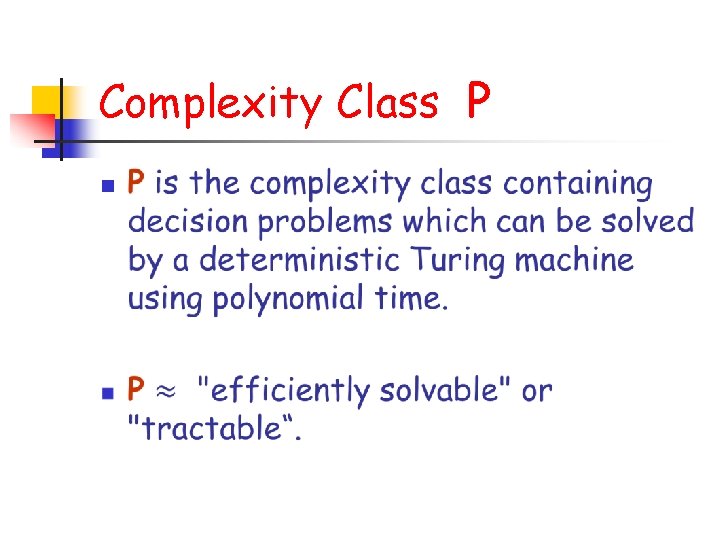
Complexity Class P n
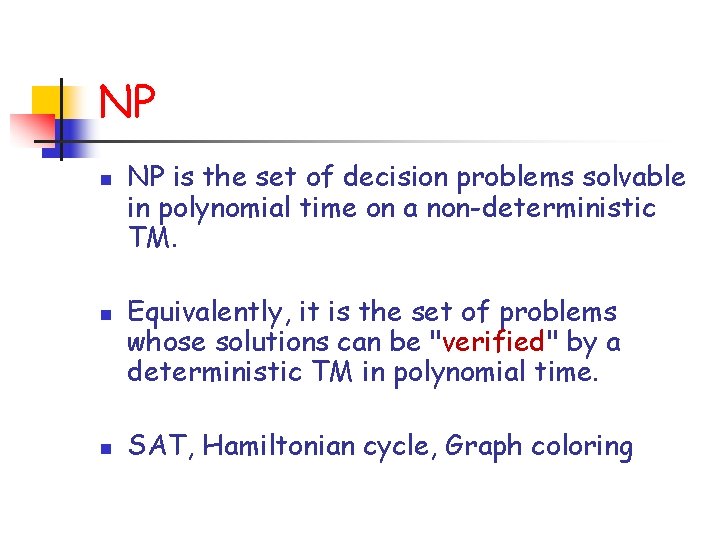
NP n n n NP is the set of decision problems solvable in polynomial time on a non-deterministic TM. Equivalently, it is the set of problems whose solutions can be "verified" by a deterministic TM in polynomial time. SAT, Hamiltonian cycle, Graph coloring
#P n n n #P is the set of counting problems associated with the decision problems in the set NP, counting number of solutions. #SAT, #Hamiltonian Cycle, #Graph Coloring. #P is at least as difficult as NP.

Complexity Classes
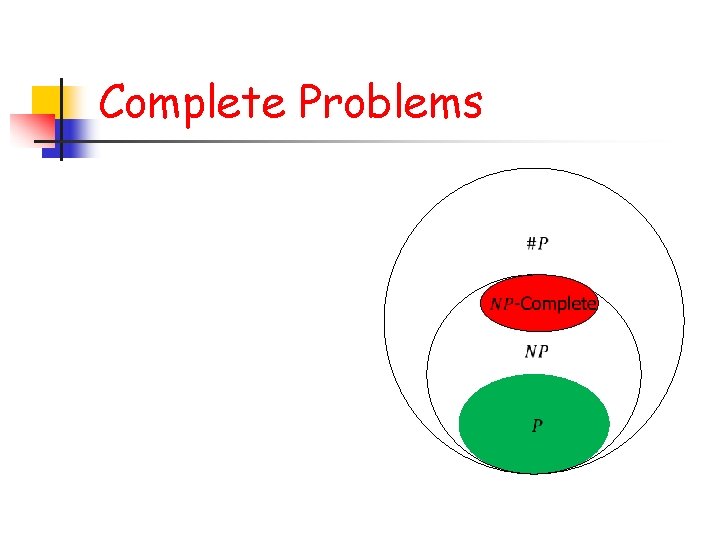
Complete Problems
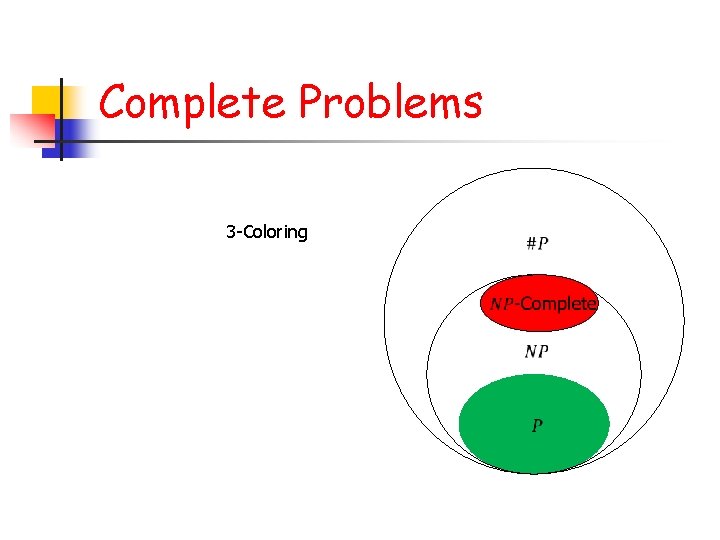
Complete Problems 3 -Coloring
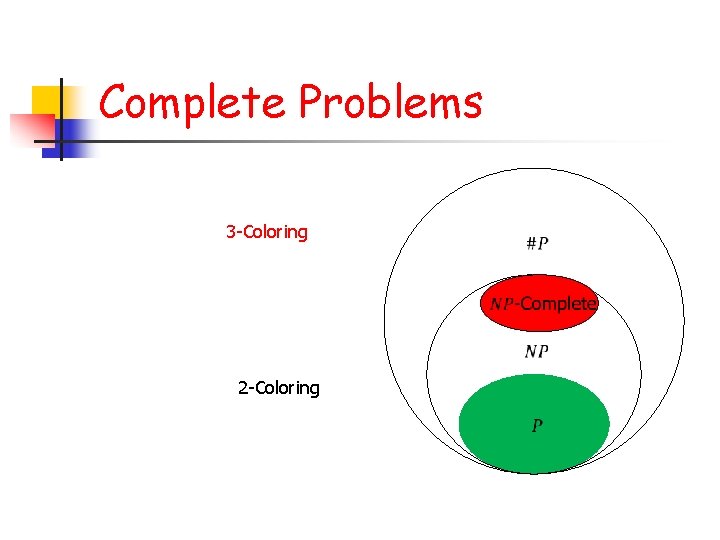
Complete Problems 3 -Coloring 2 -Coloring
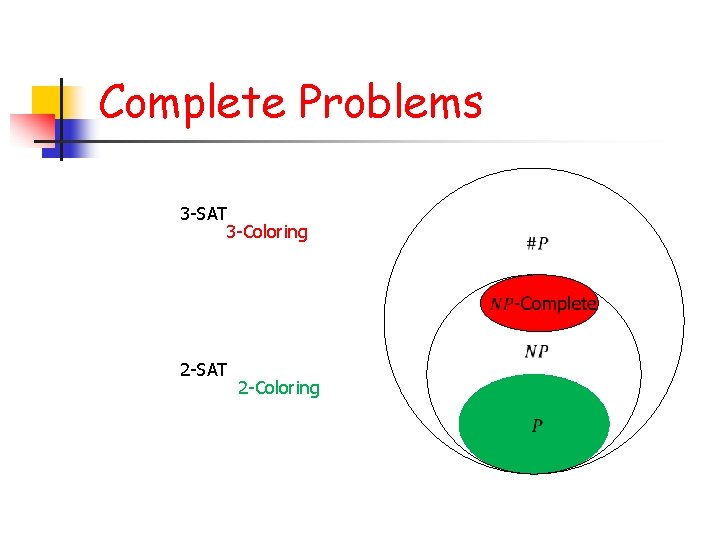
Complete Problems 3 -SAT 3 -Coloring 2 -SAT 2 -Coloring
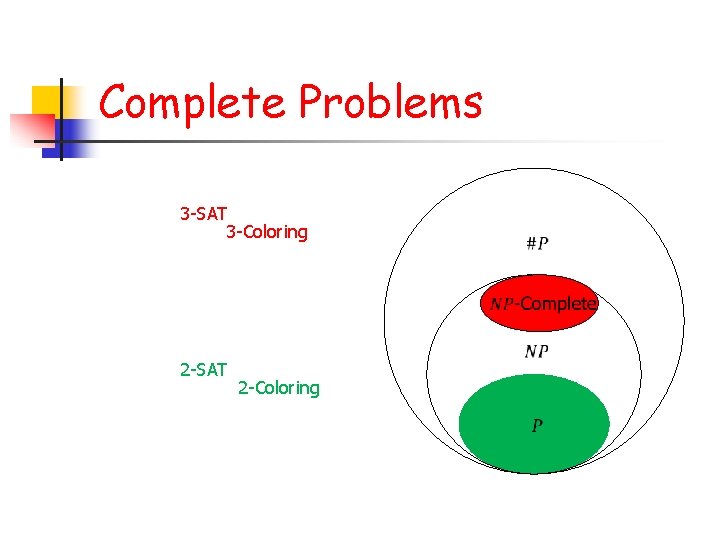
Complete Problems 3 -SAT 3 -Coloring 2 -SAT 2 -Coloring
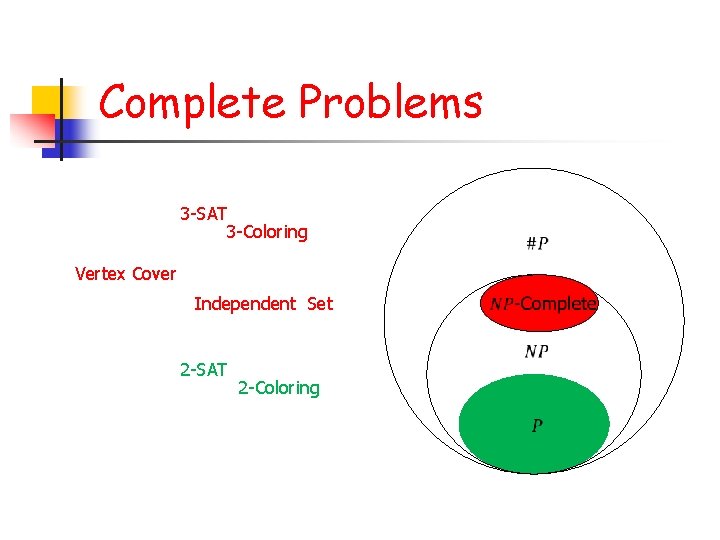
Complete Problems 3 -SAT 3 -Coloring Vertex Cover Independent Set 2 -SAT 2 -Coloring
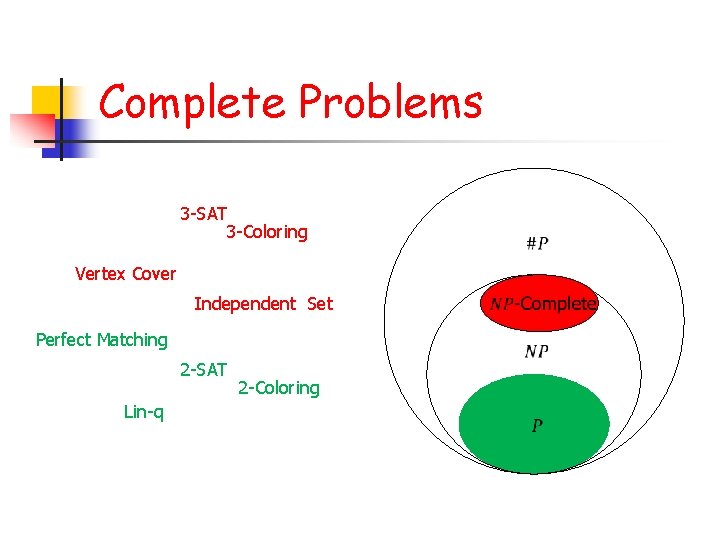
Complete Problems 3 -SAT 3 -Coloring Vertex Cover Independent Set Perfect Matching 2 -SAT Lin-q 2 -Coloring
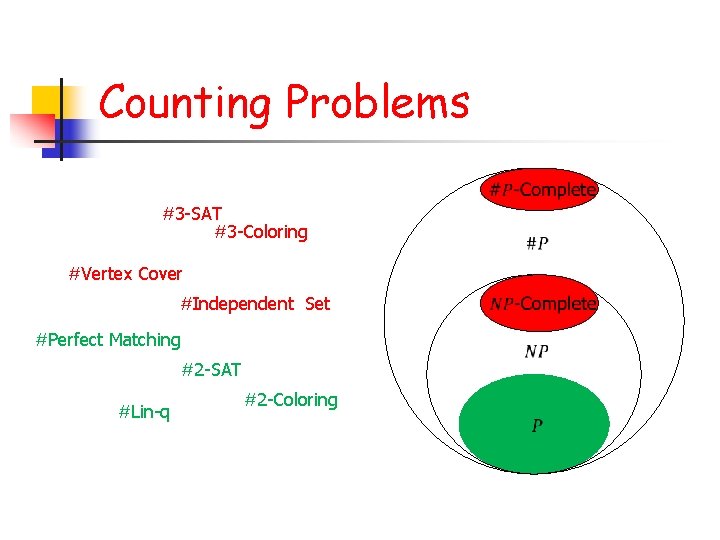
Counting Problems #3 -SAT #3 -Coloring #Vertex Cover #Independent Set #Perfect Matching #2 -SAT #Lin-q #2 -Coloring
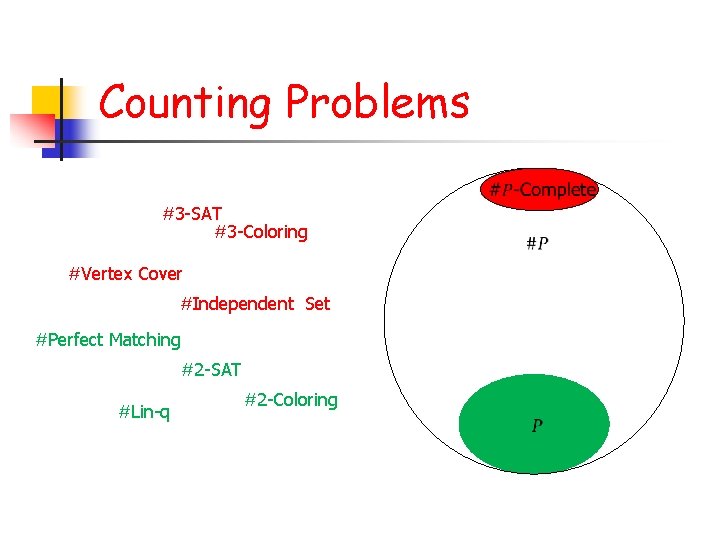
Counting Problems #3 -SAT #3 -Coloring #Vertex Cover #Independent Set #Perfect Matching #2 -SAT #Lin-q #2 -Coloring
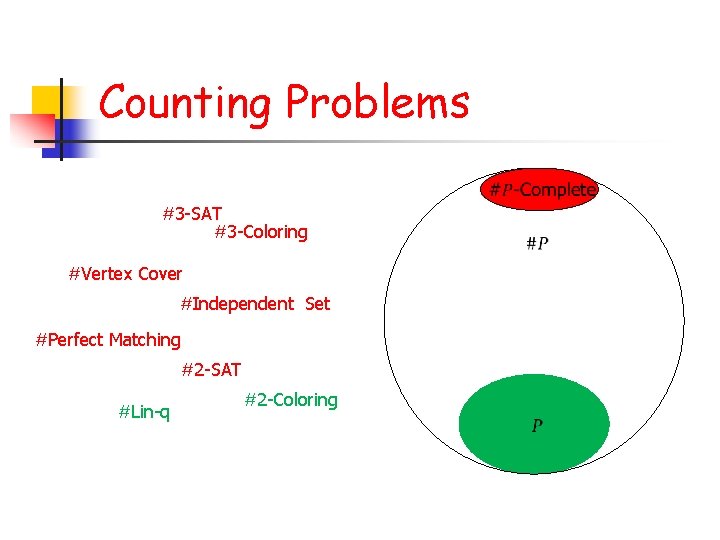
Counting Problems #3 -SAT #3 -Coloring #Vertex Cover #Independent Set #Perfect Matching #2 -SAT #Lin-q #2 -Coloring
Outline n n Complexity Classes and Counting Problems Dichotomy Theorems Holographic Algorithms Approximate Counting
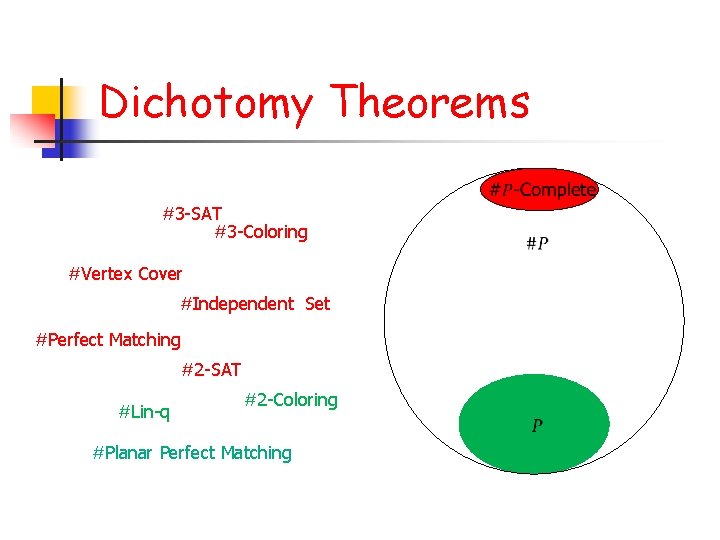
Dichotomy Theorems #3 -SAT #3 -Coloring #Vertex Cover #Independent Set #Perfect Matching #2 -SAT #Lin-q #2 -Coloring #Planar Perfect Matching
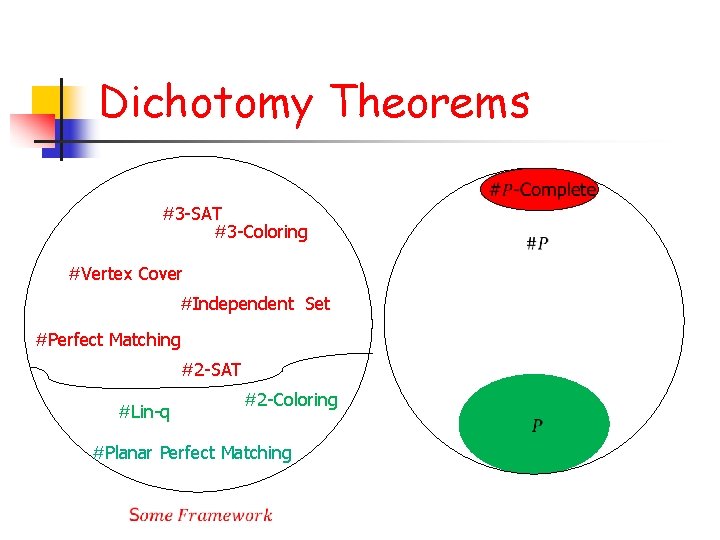
Dichotomy Theorems #3 -SAT #3 -Coloring #Vertex Cover #Independent Set #Perfect Matching #2 -SAT #Lin-q #2 -Coloring #Planar Perfect Matching
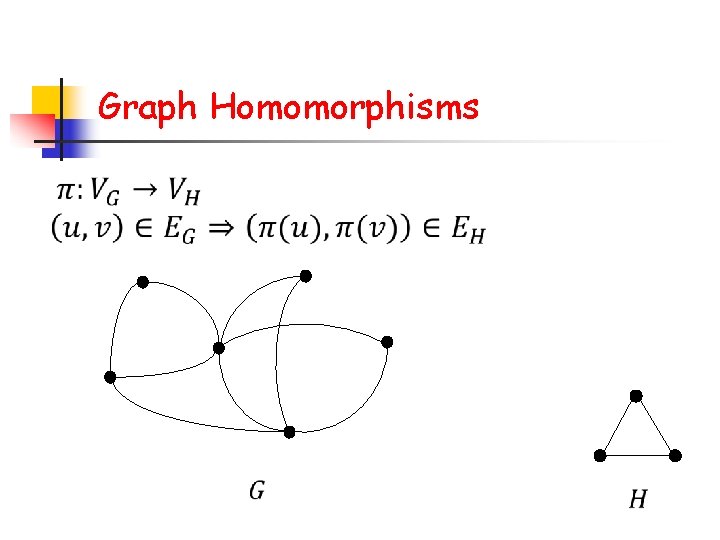
Graph Homomorphisms
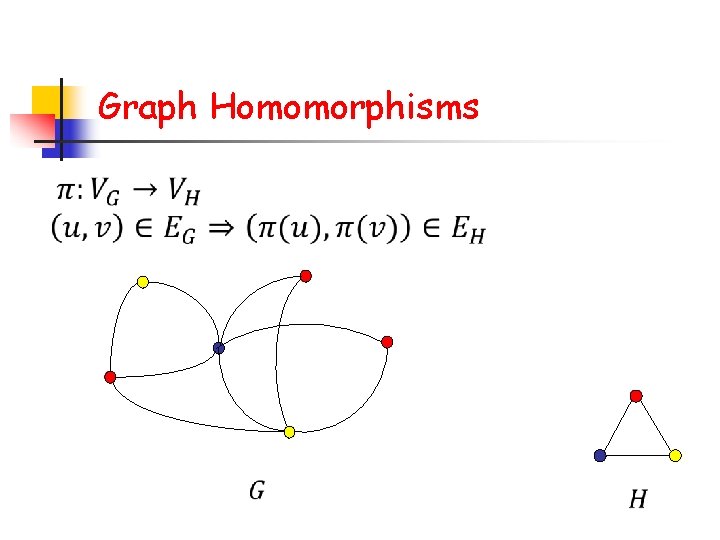
Graph Homomorphisms

Graph Homomorphisms
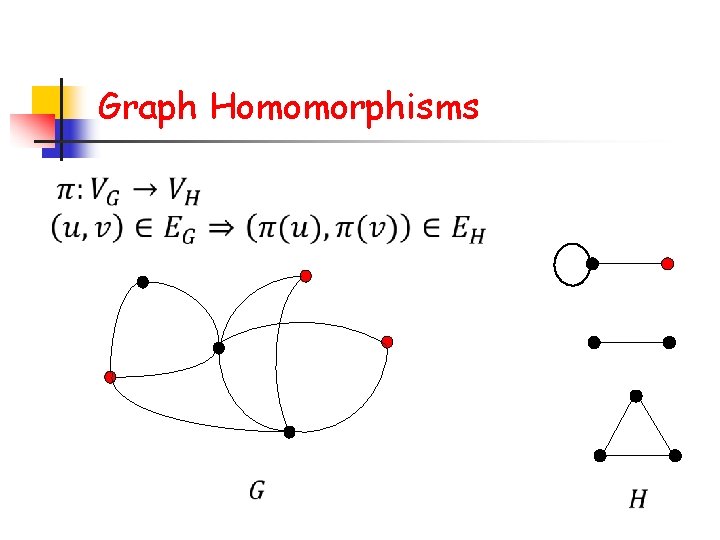
Graph Homomorphisms
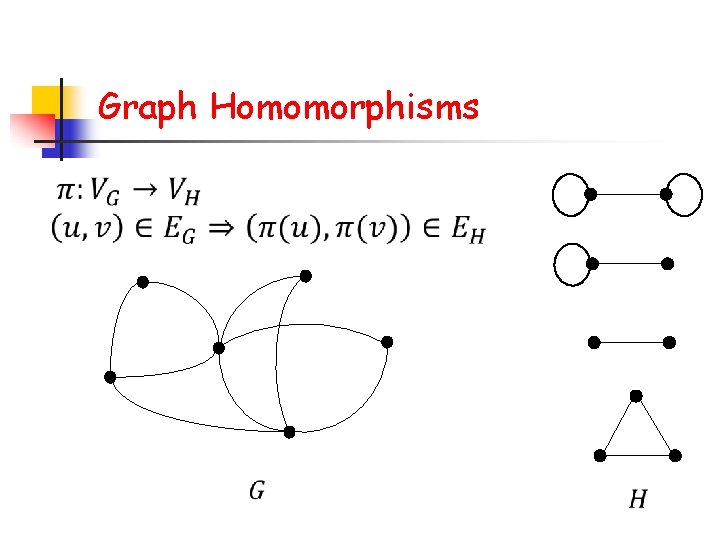
Graph Homomorphisms
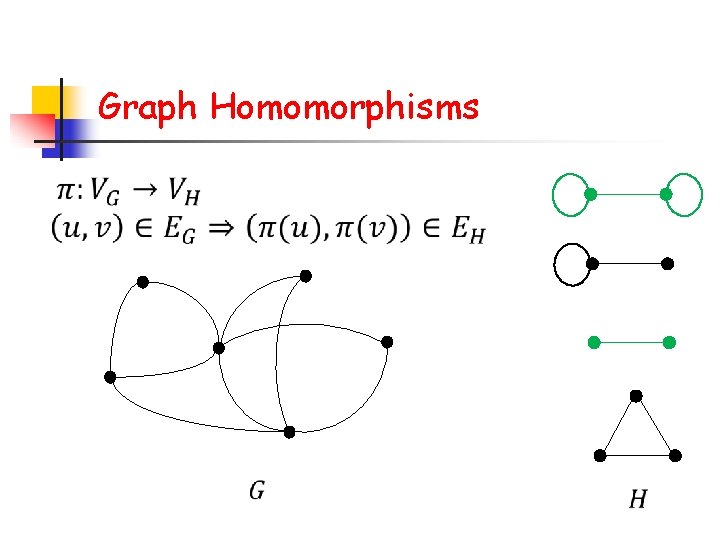
Graph Homomorphisms
![Dichotomy Theorem [Dyer, Greenhill 00] n The counting graph homomorphisms problem is n n](http://slidetodoc.com/presentation_image_h2/4c084f66f7e6e004478c58dc27a5f69d/image-27.jpg "Dichotomy Theorem [Dyer, Greenhill 00] n The counting graph homomorphisms problem is n n")
Dichotomy Theorem [Dyer, Greenhill 00] n The counting graph homomorphisms problem is n n in P if each connect component of H is either a complete graph with self-loops or a complete bipartite graph; #P-complete otherwise.
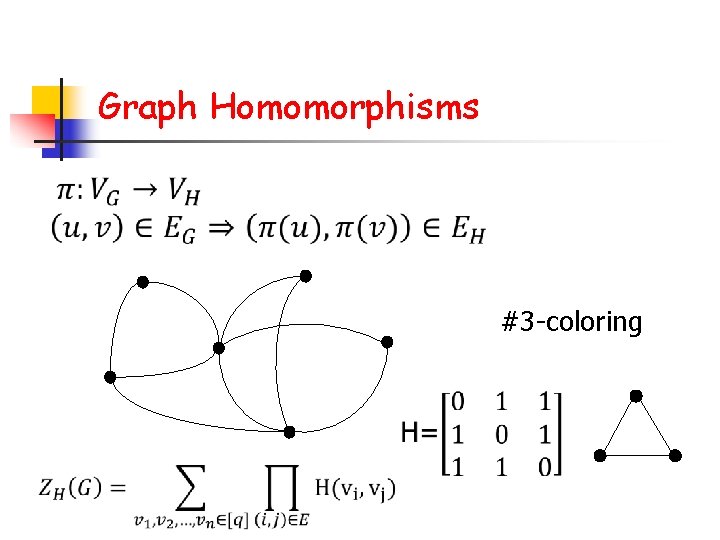
Graph Homomorphisms #3 -coloring
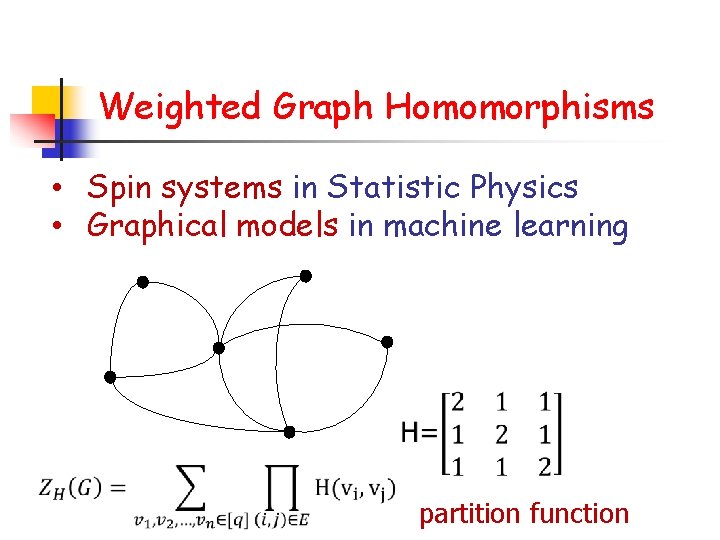
Weighted Graph Homomorphisms • Spin systems in Statistic Physics • Graphical models in machine learning partition function
![Weighted Graph Homomorphisms [Bulatov, Grohe 05] Let H be a symmetric non-negative matrix. Then](http://slidetodoc.com/presentation_image_h2/4c084f66f7e6e004478c58dc27a5f69d/image-30.jpg "Weighted Graph Homomorphisms [Bulatov, Grohe 05] Let H be a symmetric non-negative matrix. Then")
Weighted Graph Homomorphisms [Bulatov, Grohe 05] Let H be a symmetric non-negative matrix. Then it is #P-hard to compute the partition function unless each connect component of H is of rank 1 or bipartite rank 2. block-rank-one structure
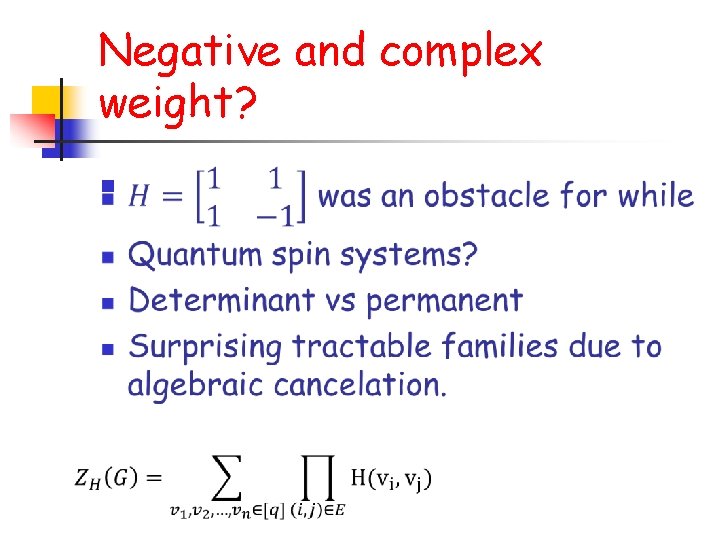
Negative and complex weight? n
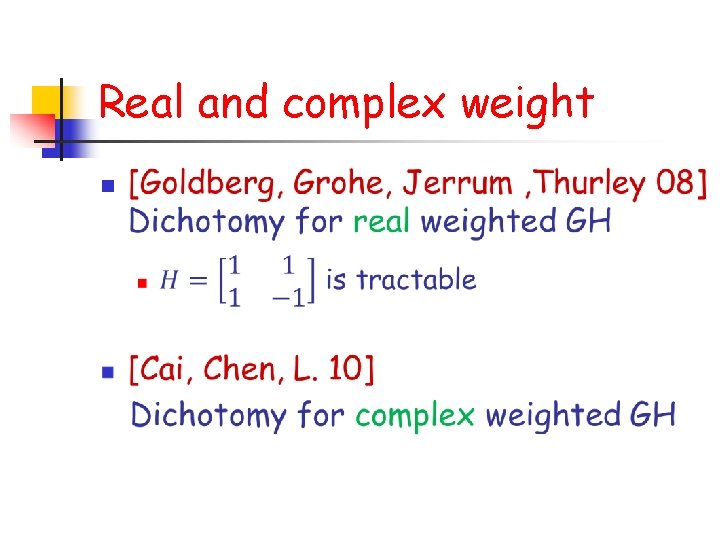
Real and complex weight n
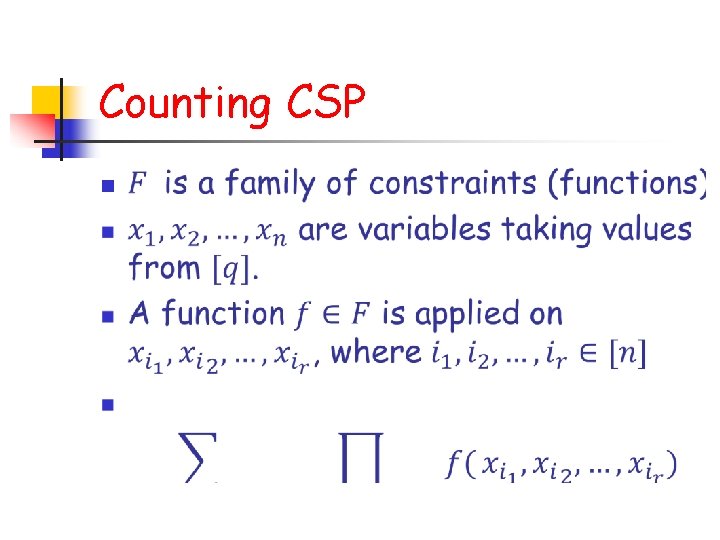
Counting CSP n
![Boolean #CSP n n [Creignou, Hermann 96] All the functions in F take values](http://slidetodoc.com/presentation_image_h2/4c084f66f7e6e004478c58dc27a5f69d/image-34.jpg "Boolean #CSP n n [Creignou, Hermann 96] All the functions in F take values")
Boolean #CSP n n [Creignou, Hermann 96] All the functions in F take values in {0, 1} (unweighted). [Dyer, Goldberg, Jerrum 07] non-negative values. [Bulatov, Dyer, Goldberg, Jalsenius, Richerby 09] real values. [Cai, L. , Xia 09] complex values.
![#CSP n n n [Bulatov 08] Unweighted case [Dyer, Richerby 10, 11] Alternative proof](http://slidetodoc.com/presentation_image_h2/4c084f66f7e6e004478c58dc27a5f69d/image-35.jpg "#CSP n n n [Bulatov 08] Unweighted case [Dyer, Richerby 10, 11] Alternative proof")
#CSP n n n [Bulatov 08] Unweighted case [Dyer, Richerby 10, 11] Alternative proof and decidable dichotomy [Cai, Chen, L. 11] Non-negative weighted functions
![Dichotomy for weighted #CSP [Cai, Chen, L. 11] The problem is #P-Hard unless any](http://slidetodoc.com/presentation_image_h2/4c084f66f7e6e004478c58dc27a5f69d/image-36.jpg "Dichotomy for weighted #CSP [Cai, Chen, L. 11] The problem is #P-Hard unless any")
Dichotomy for weighted #CSP [Cai, Chen, L. 11] The problem is #P-Hard unless any realizable function (after being viewed as a binary function) is of block-rank-1, in which case it is in P.
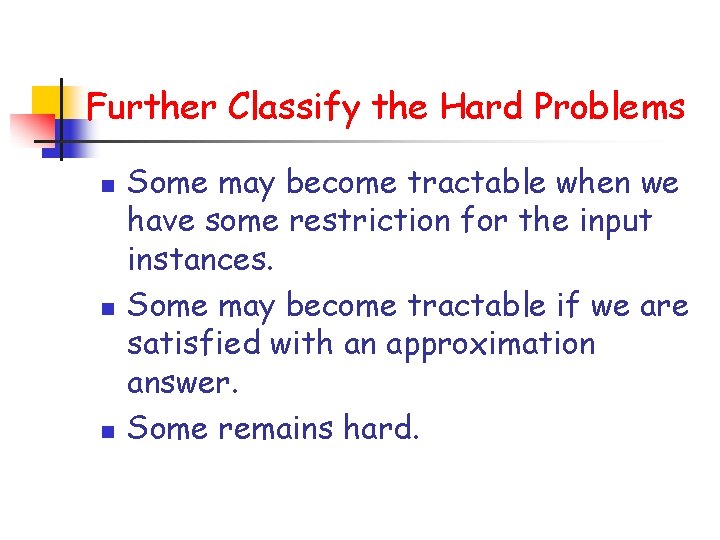
Further Classify the Hard Problems n n n Some may become tractable when we have some restriction for the input instances. Some may become tractable if we are satisfied with an approximation answer. Some remains hard.
Outline n n Complexity Classes and Counting Problems Dichotomy Theorems Holographic Algorithms Approximate Counting
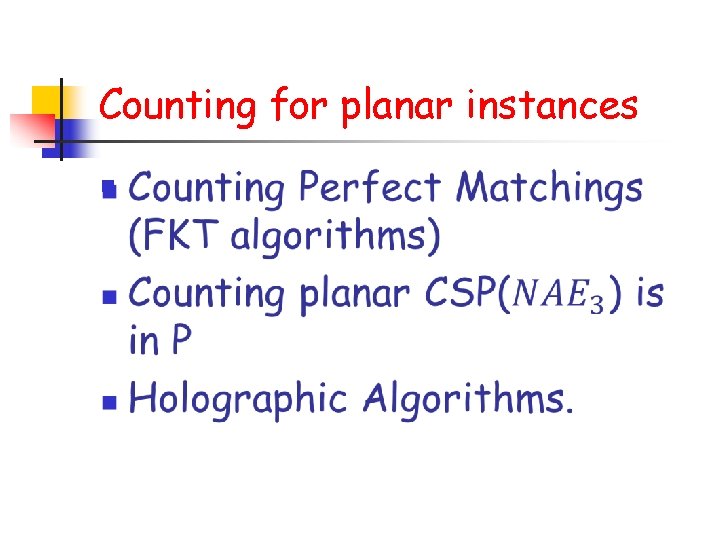
Counting for planar instances n

Holographic Algorithms by Valiant L. Valiant
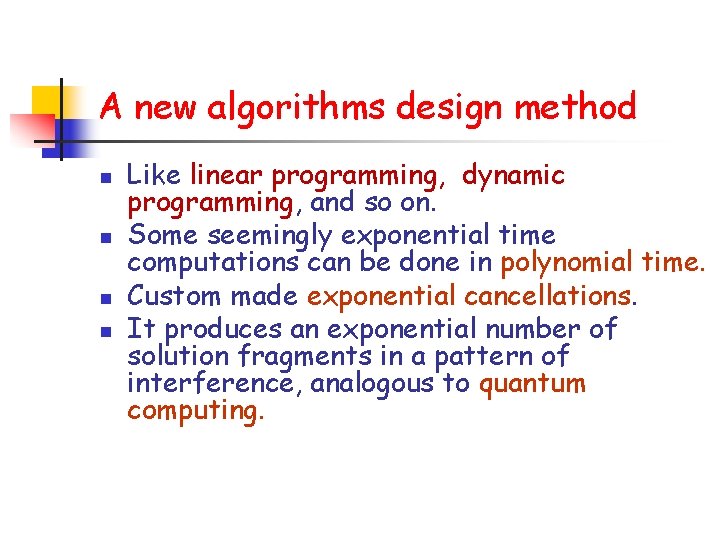
A new algorithms design method n n Like linear programming, dynamic programming, and so on. Some seemingly exponential time computations can be done in polynomial time. Custom made exponential cancellations. It produces an exponential number of solution fragments in a pattern of interference, analogous to quantum computing.
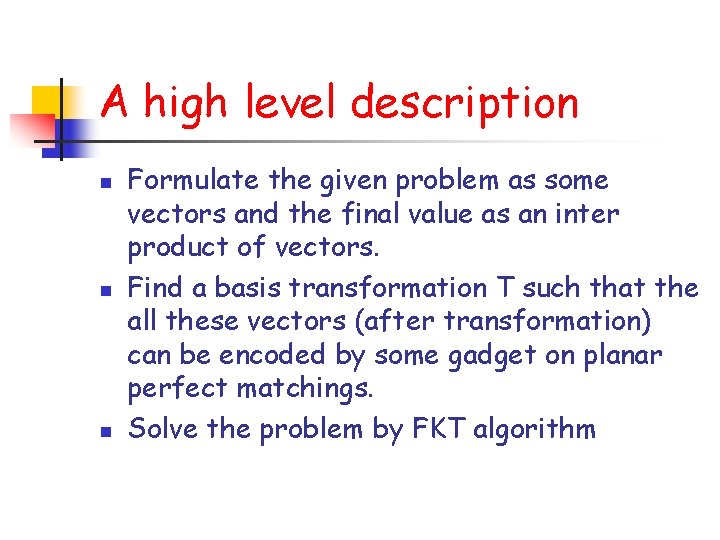
A high level description n Formulate the given problem as some vectors and the final value as an inter product of vectors. Find a basis transformation T such that the all these vectors (after transformation) can be encoded by some gadget on planar perfect matchings. Solve the problem by FKT algorithm
![Art or Science? n n “Accidental Algorithms” [Valiant @ FOCS 2006] “A strange new](http://slidetodoc.com/presentation_image_h2/4c084f66f7e6e004478c58dc27a5f69d/image-43.jpg "Art or Science? n n “Accidental Algorithms” [Valiant @ FOCS 2006] “A strange new")
Art or Science? n n “Accidental Algorithms” [Valiant @ FOCS 2006] “A strange new family of algorithms probes the boundary between easy and hard problems” [An article from American Scientist Magazine]
Infinite Search Space n n n Formulate the given problem as some vectors and the final value as an inter product of vectors. Find a basis transformation T such that the all these vectors (after transformation) can be encoded by some gadget on planar perfect matchings. Solve the problem by FKT algorithm
From Art to Science Joint with Jin-Yi Cai, we have n Matchgate Identities [@CCC 2007] n Basis Collapse Theorem [@ICALP 2007] n A general algorithm to design holographic algorithms [@STOC 2007]
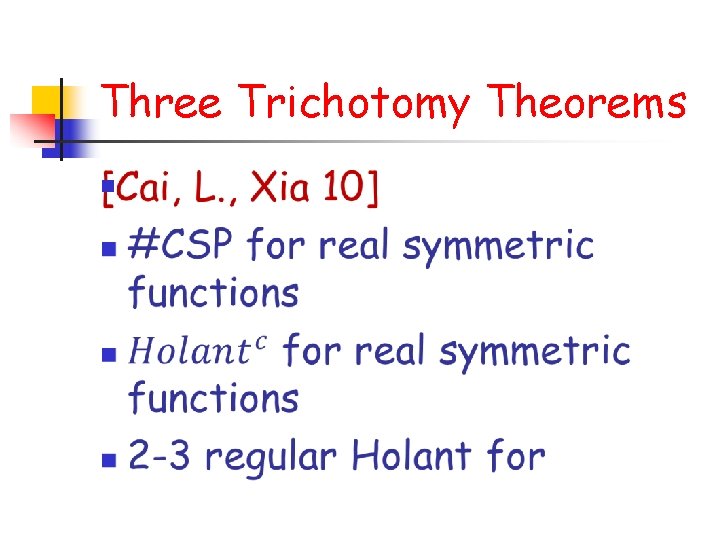
Three Trichotomy Theorems n
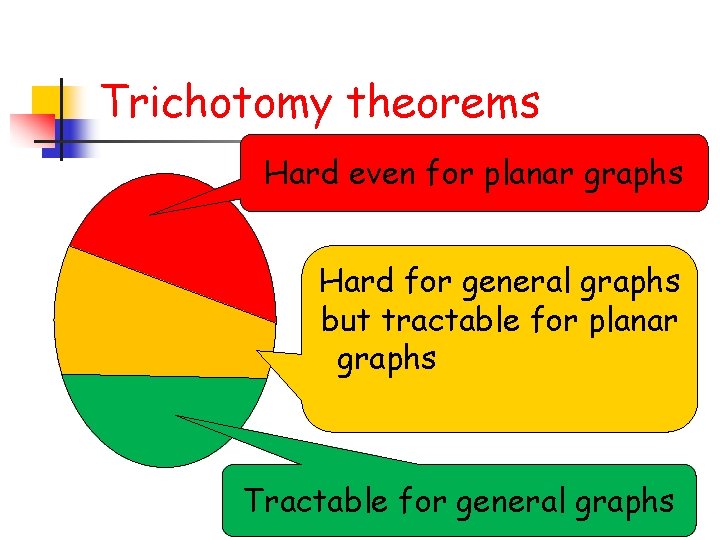
Trichotomy theorems Hard even for planar graphs Hard for general graphs but tractable for planar graphs by holographic algorithms Tractable for general graphs
Outline n n Complexity Classes and Counting Problems Dichotomy Theorems Holographic Algorithms Approximate Counting
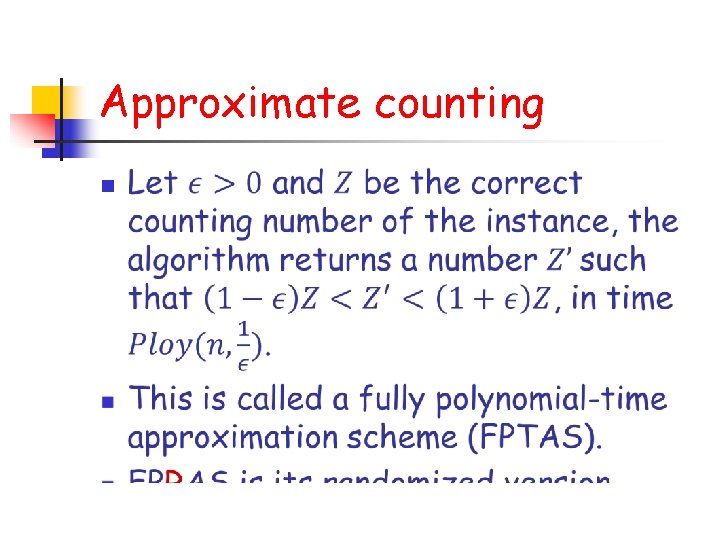
Approximate counting n
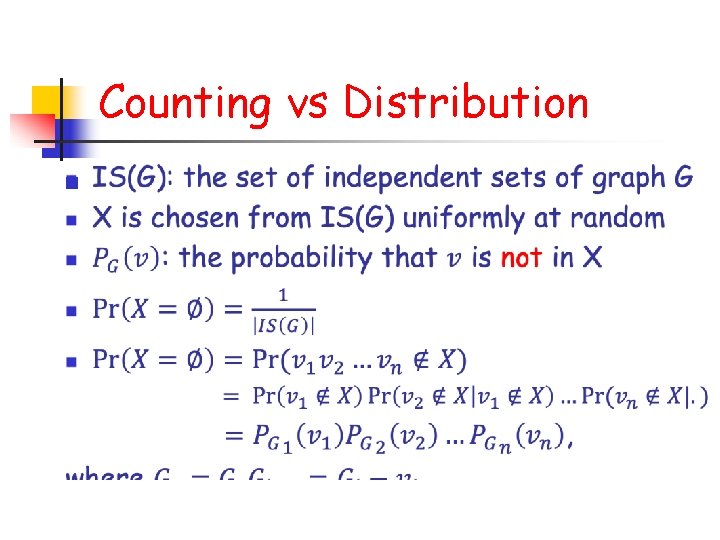
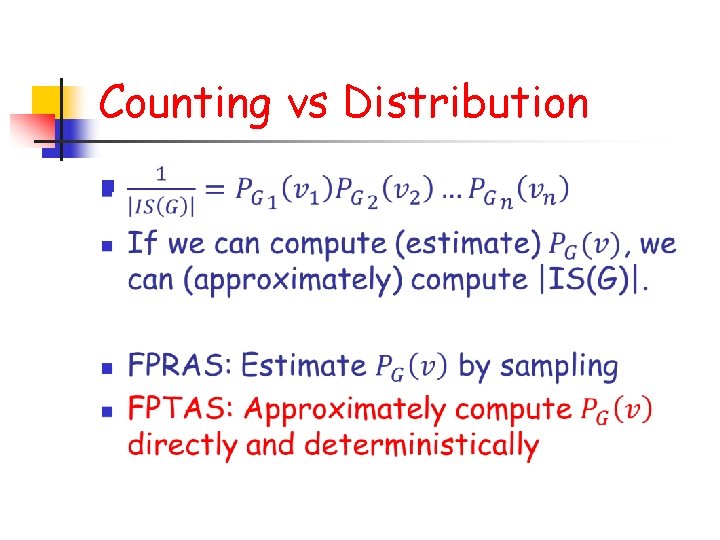
Counting vs Distribution n
Counting vs Distribution n
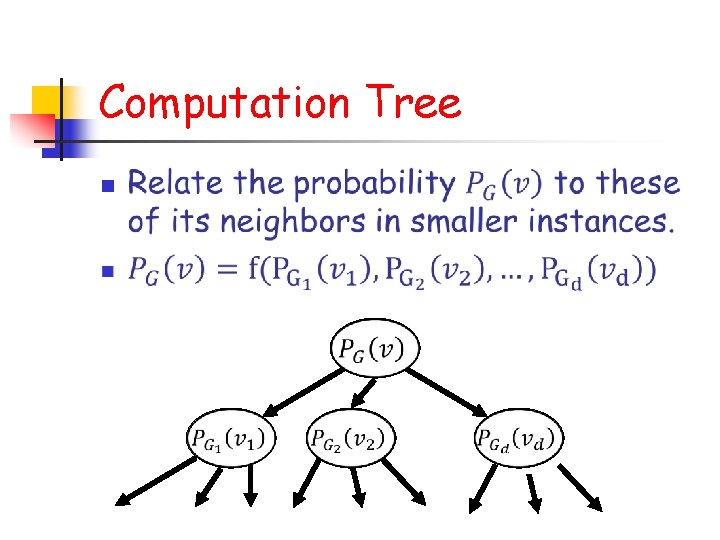
Computation Tree n
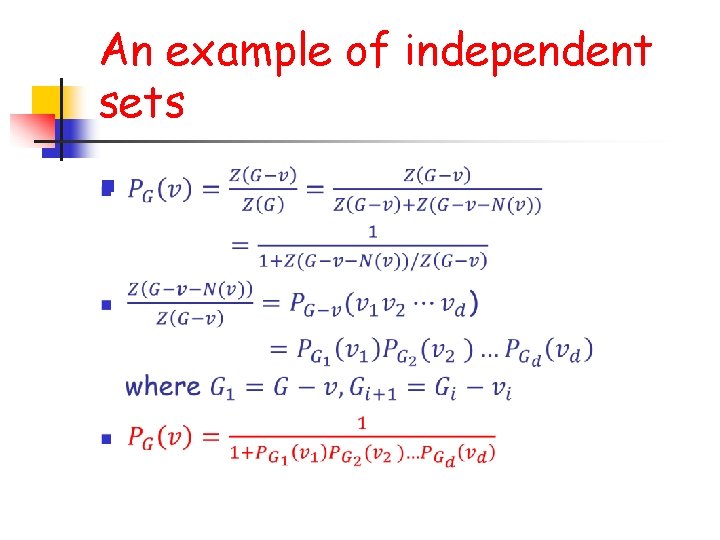
An example of independent sets n
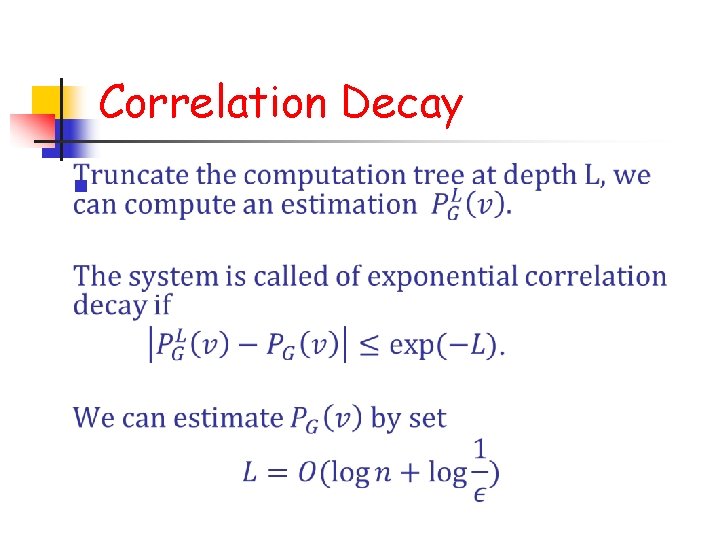
Correlation Decay n
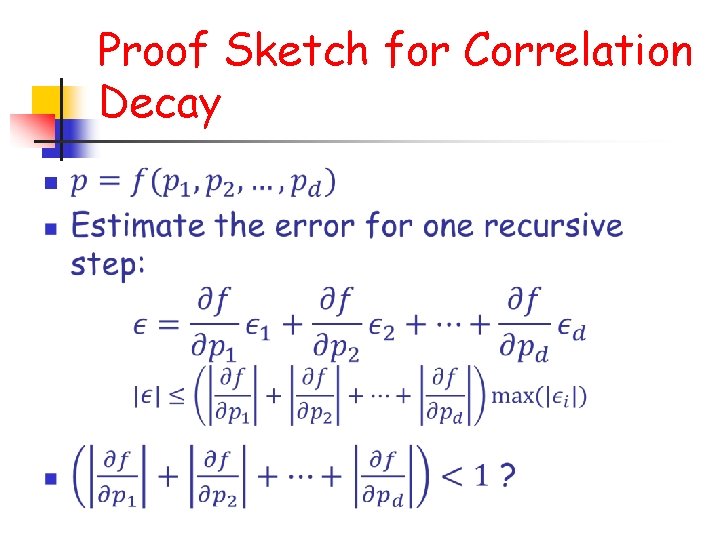
Proof Sketch for Correlation Decay n
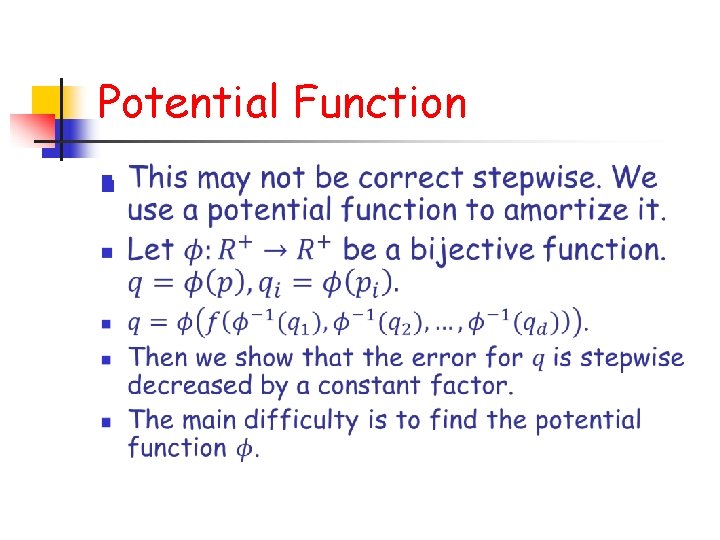
Potential Function n
Outline n n Complexity Classes and Counting Problems Dichotomy Theorems Holographic Algorithms Approximate Counting
Thank You!
- Slides: 58