
Classifying Cells Prokaryotic and Eukaryotic Cells Learning Goals



- Slides: 61
Classifying Cells Prokaryotic and Eukaryotic Cells
Learning Goals • I am able to describe the cell theory, characteristics that make up living things. • I am able to describe the structure and function of a plant and animal cell. • I am able to describe the levels of organization
Lesson Objective You will be able to differentiate between eukaryotic and prokaryotic cells.
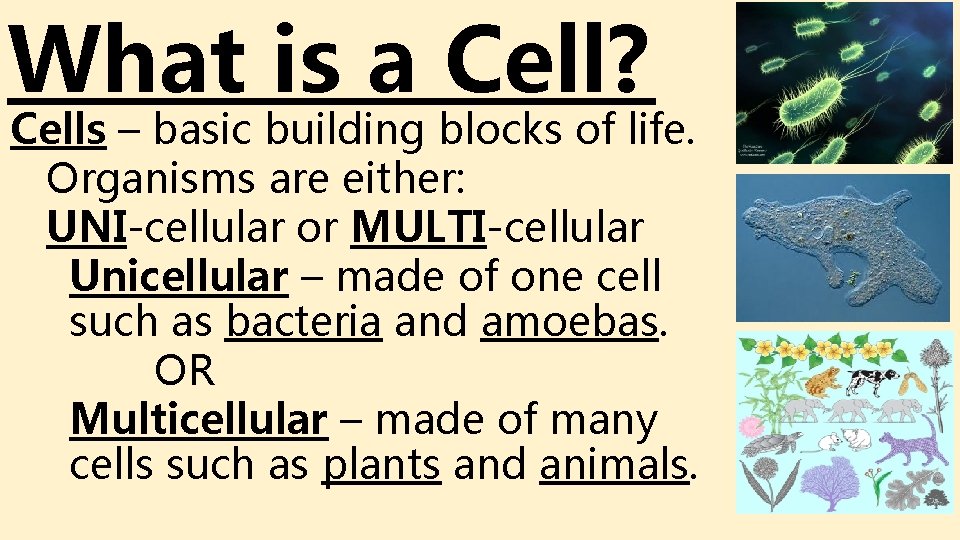
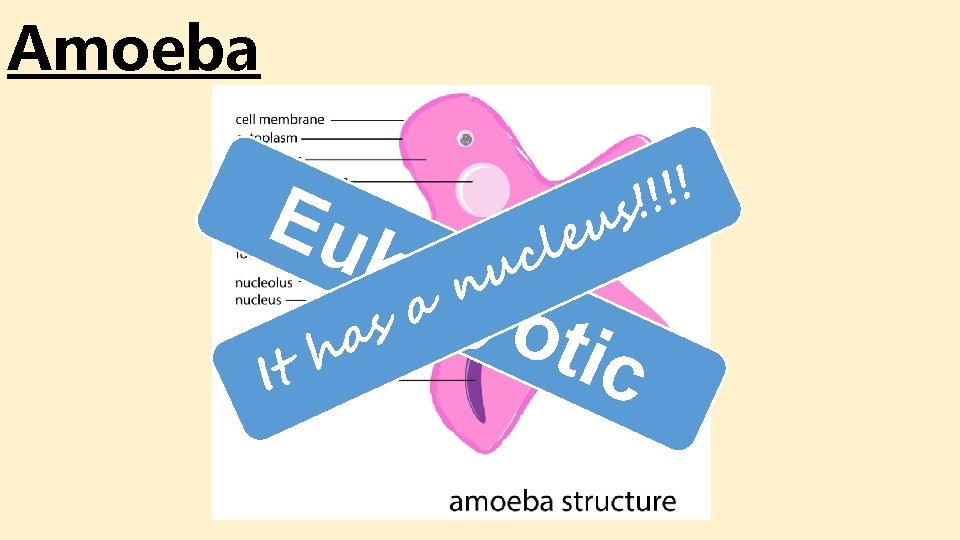
What is a Cell? Cells – basic building blocks of life. Organisms are either: UNI-cellular or MULTI-cellular Unicellular – made of one cell such as bacteria and amoebas. OR Multicellular – made of many cells such as plants and animals.
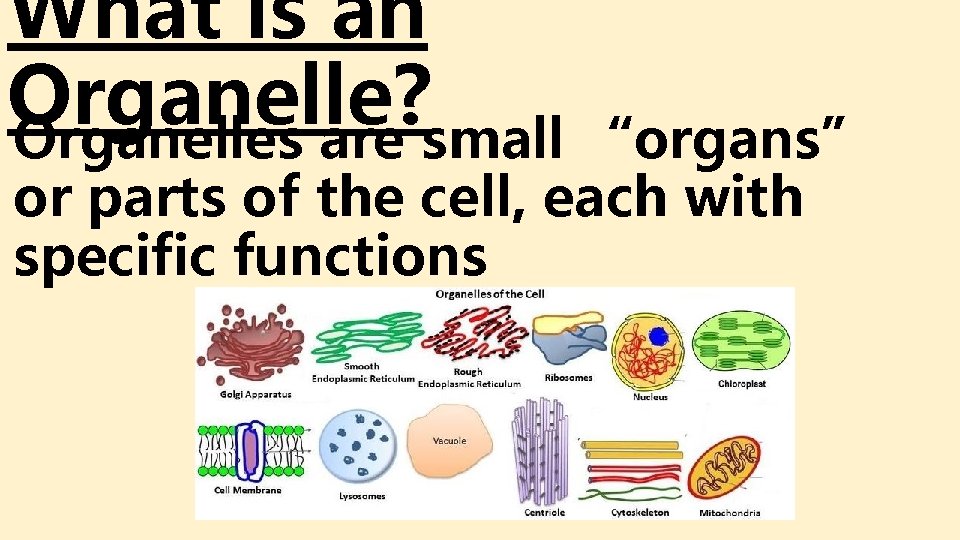
What is an Organelle? Organelles are small “organs” or parts of the cell, each with specific functions
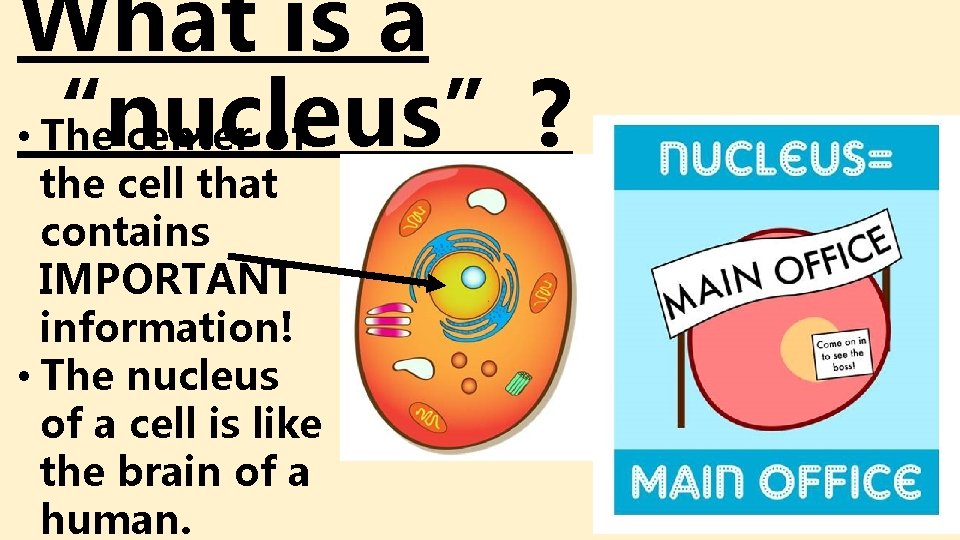
What is a • “nucleus”? The center of the cell that contains IMPORTANT information! • The nucleus of a cell is like the brain of a human.
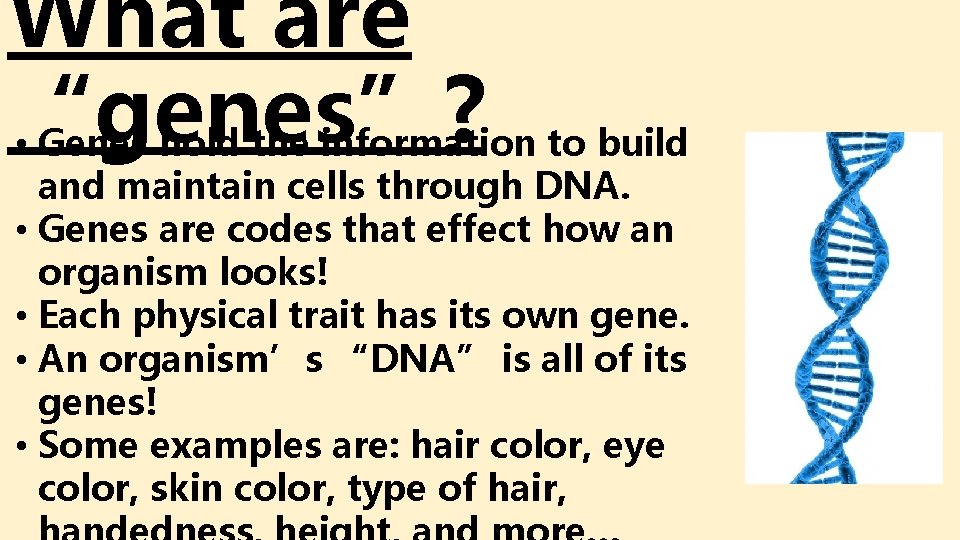
What are “genes”? • Genes hold the information to build and maintain cells through DNA. • Genes are codes that effect how an organism looks! • Each physical trait has its own gene. • An organism’s “DNA” is all of its genes! • Some examples are: hair color, eye color, skin color, type of hair,
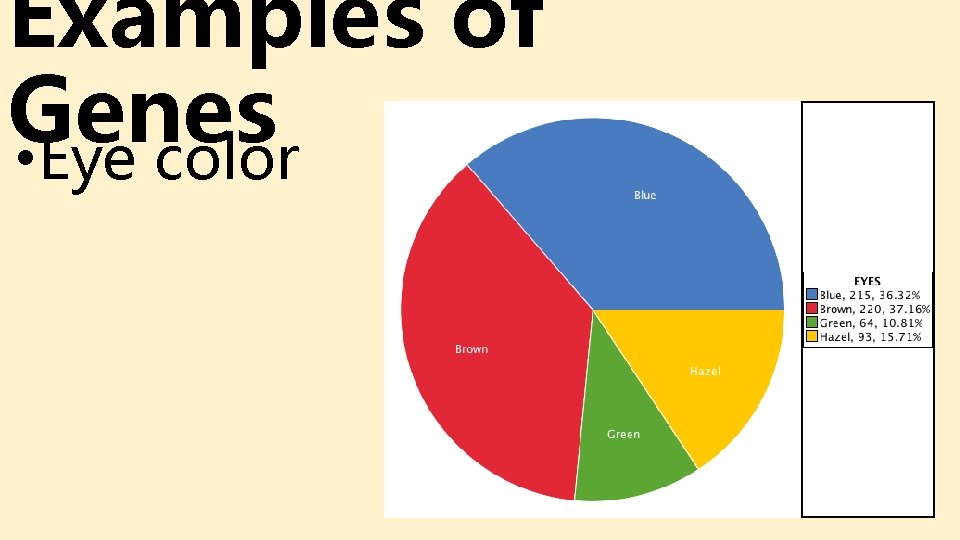
Examples of Genes • Eye color
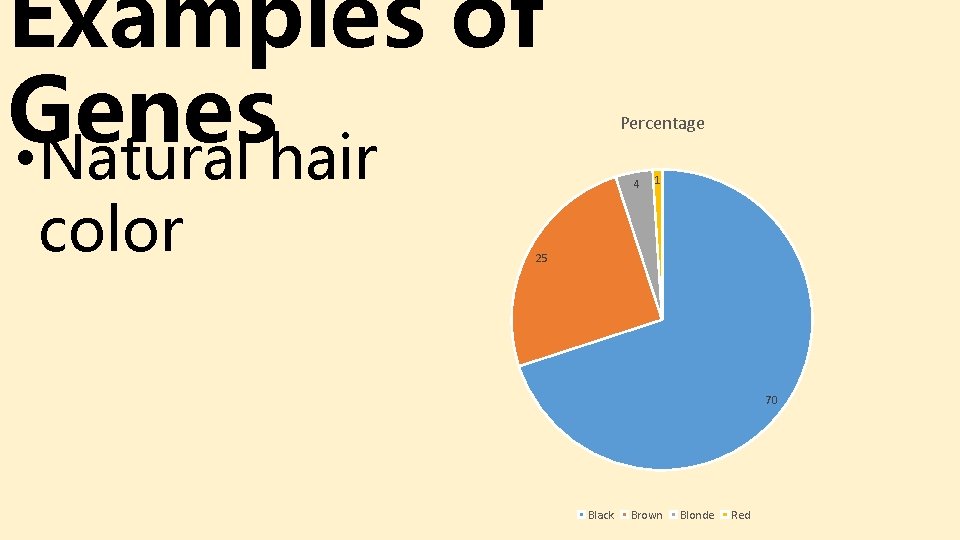
Examples of Genes • Natural hair color Percentage 4 1 25 70 Black Brown Blonde Red
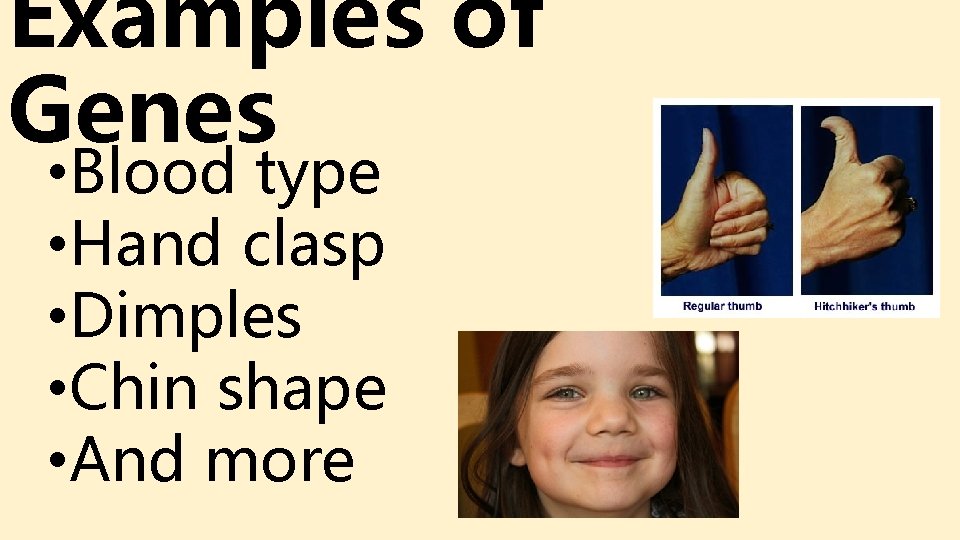
Examples of Genes • Blood type • Hand clasp • Dimples • Chin shape • And more
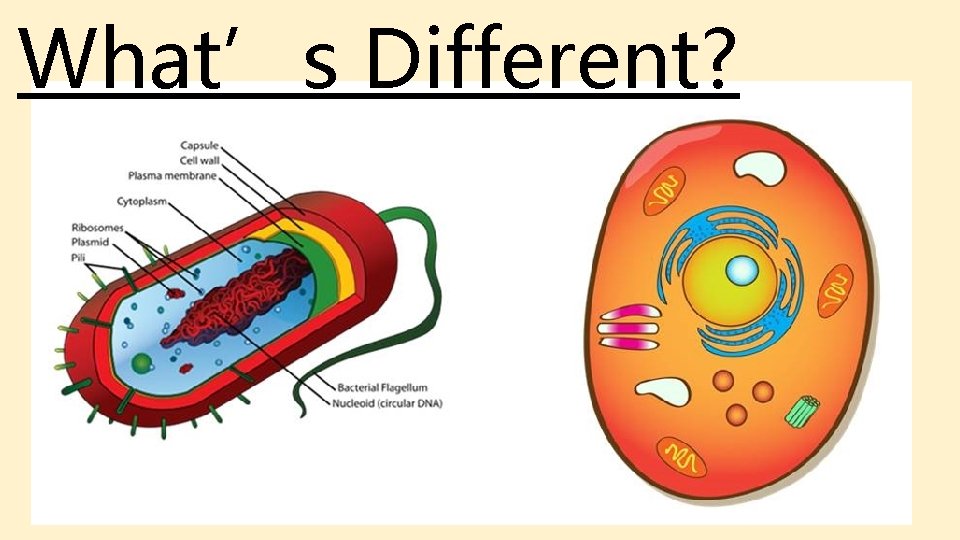
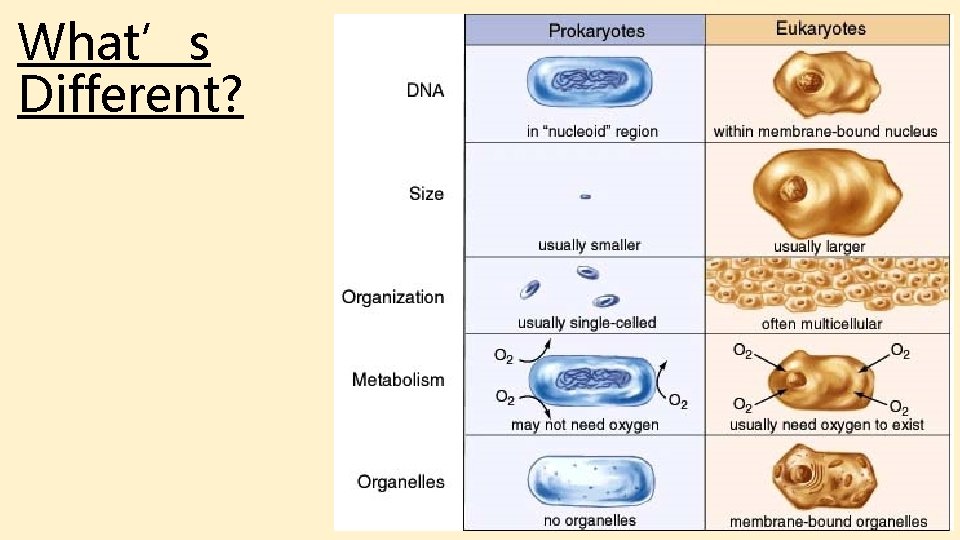
What’s Different?
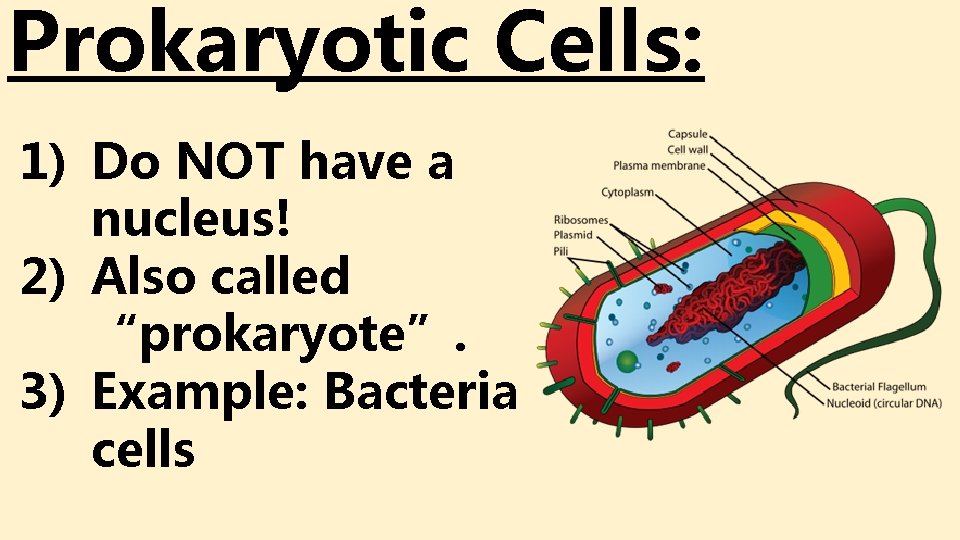
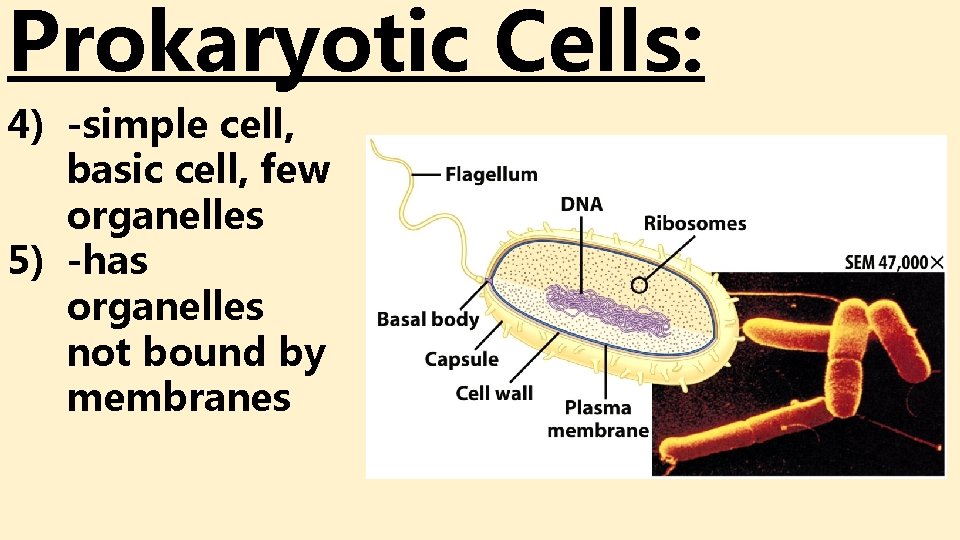
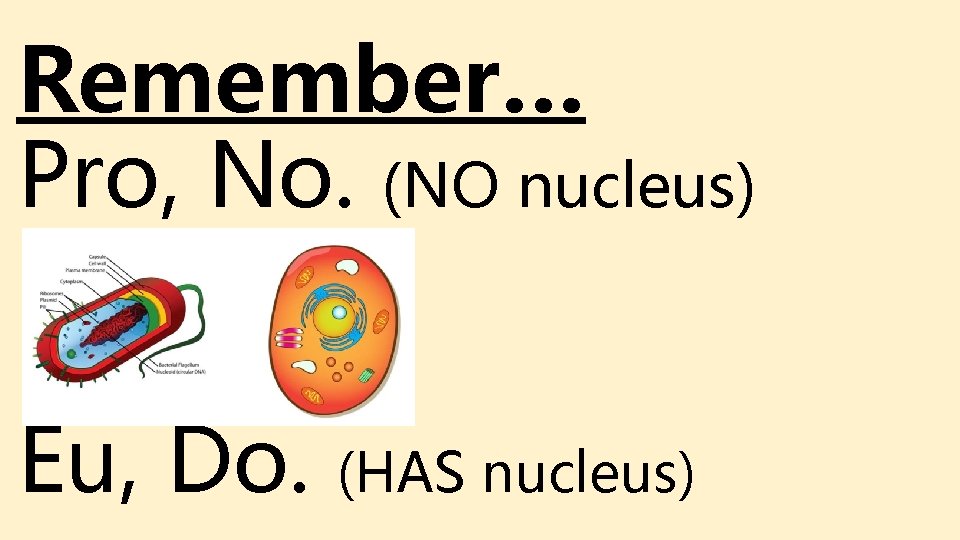
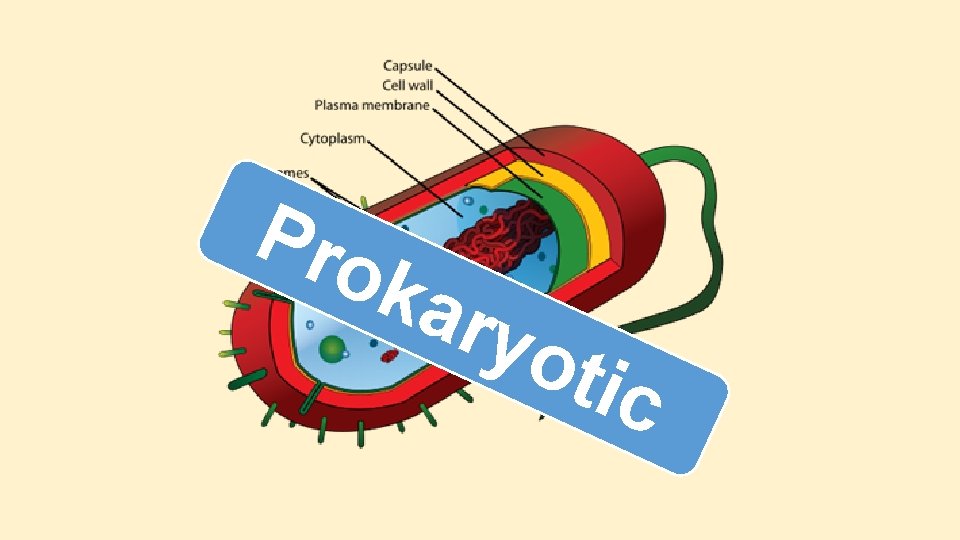
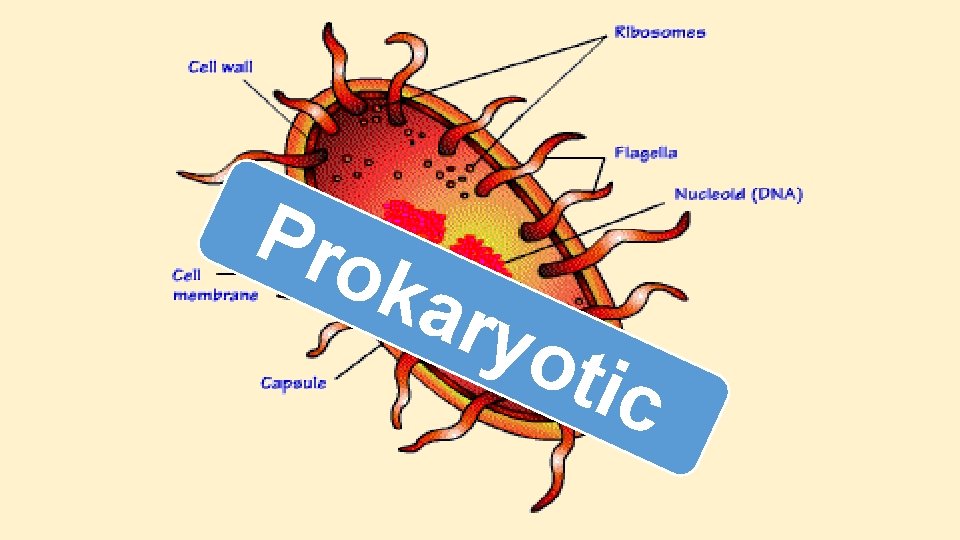
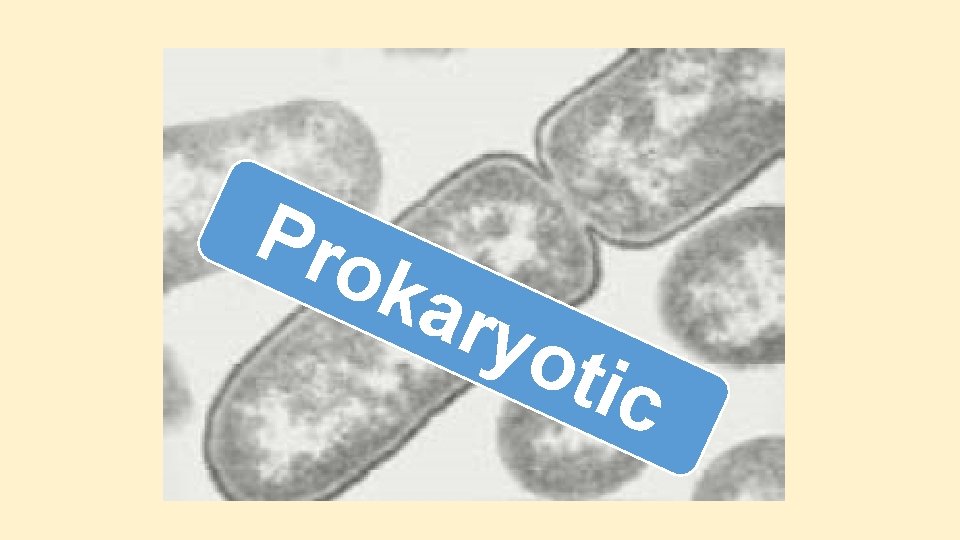
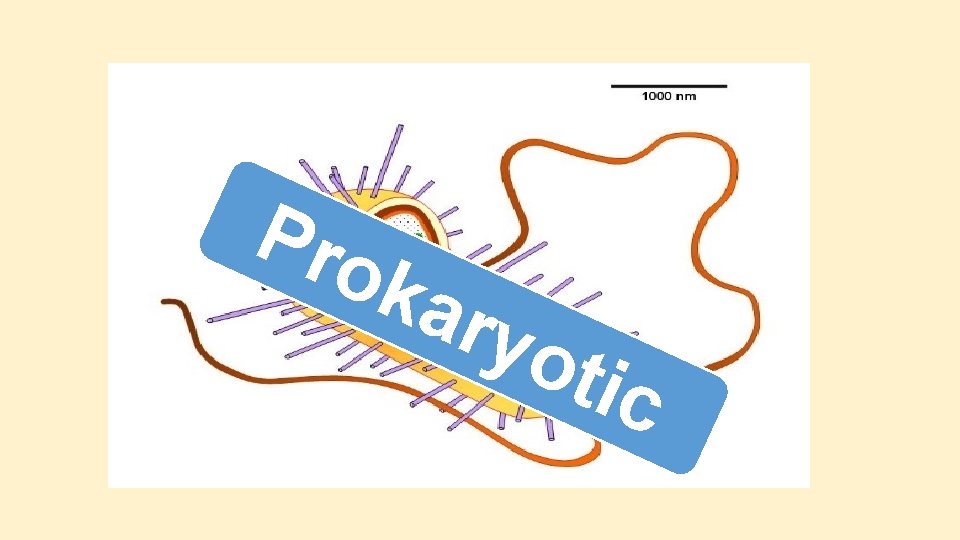
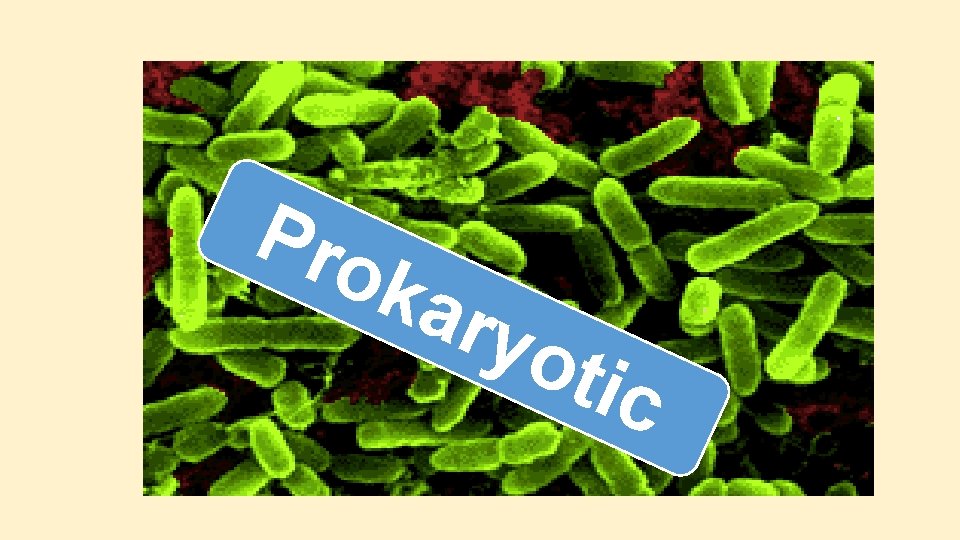
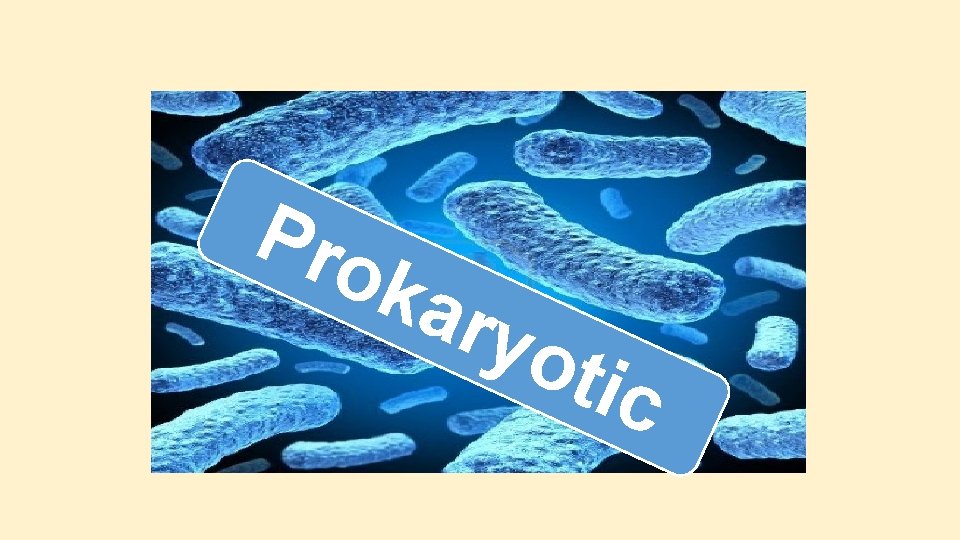
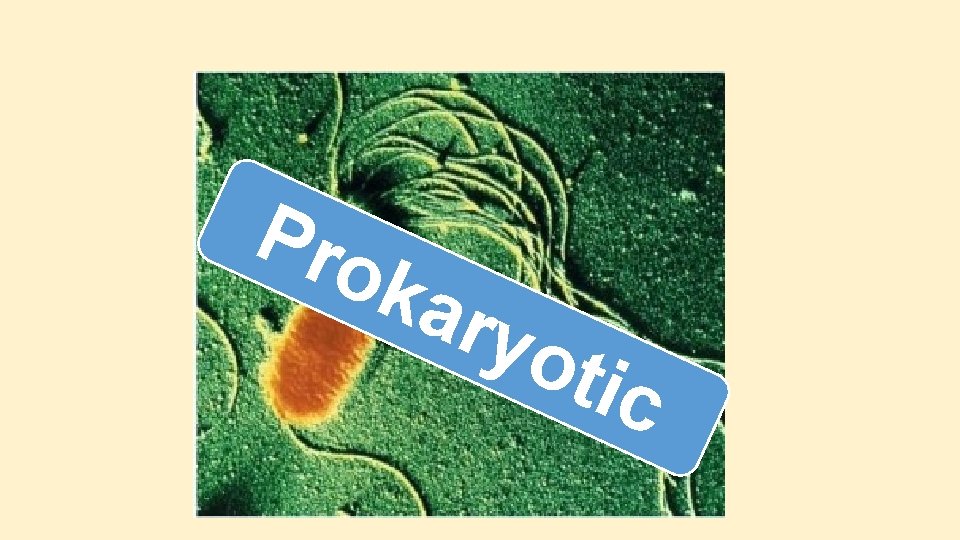
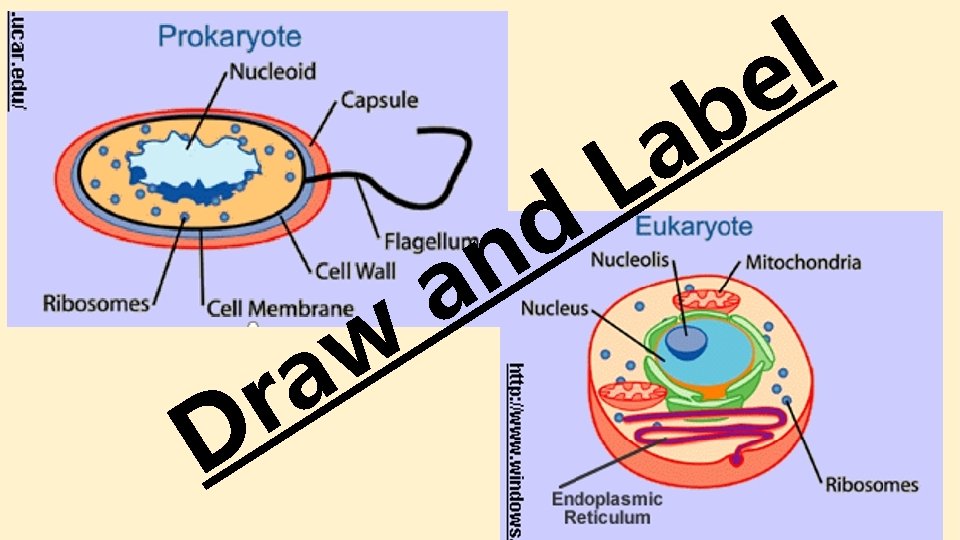
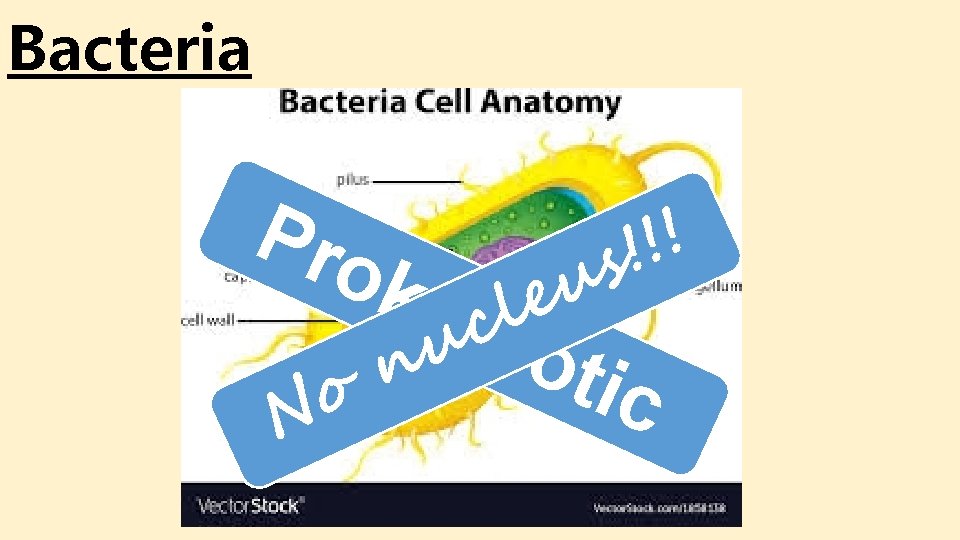
Prokaryotic Cells: 1) Do NOT have a nucleus! 2) Also called “prokaryote”. 3) Example: Bacteria cells
Prokaryotic Cells: 4) -simple cell, basic cell, few organelles 5) -has organelles not bound by membranes
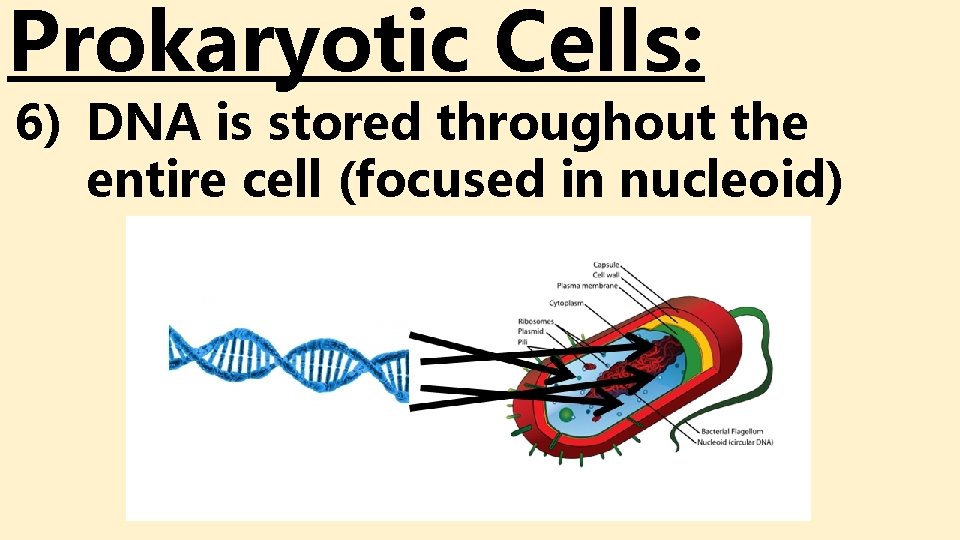
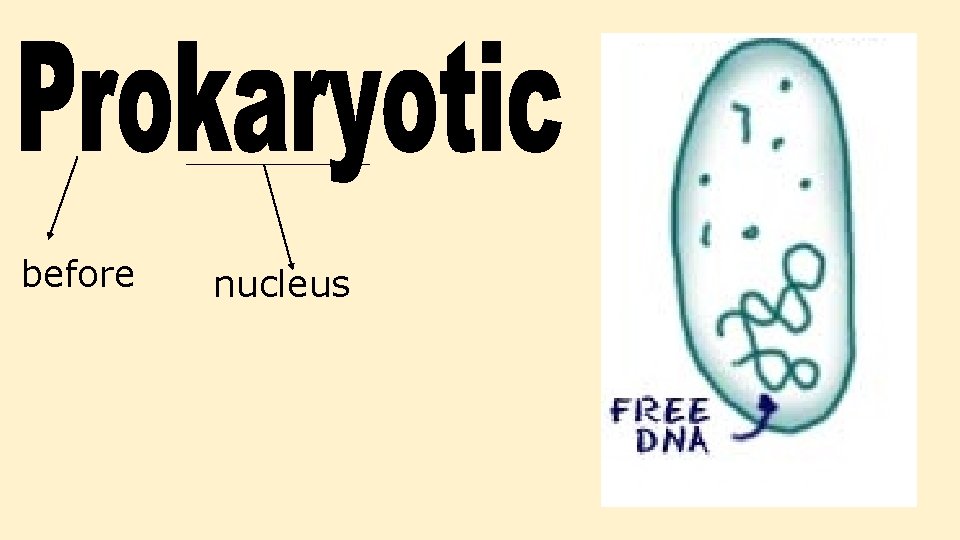
Prokaryotic Cells: 6) DNA is stored throughout the entire cell (focused in nucleoid)
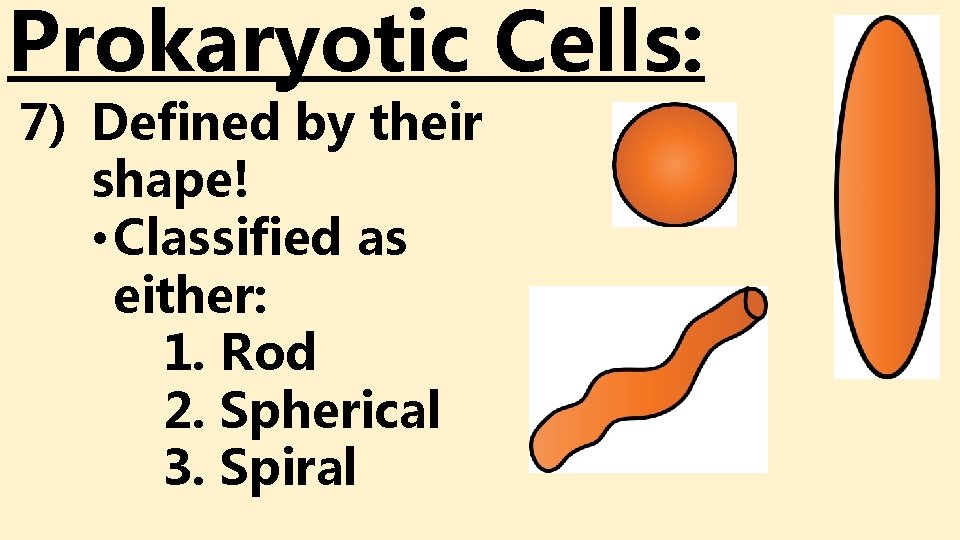
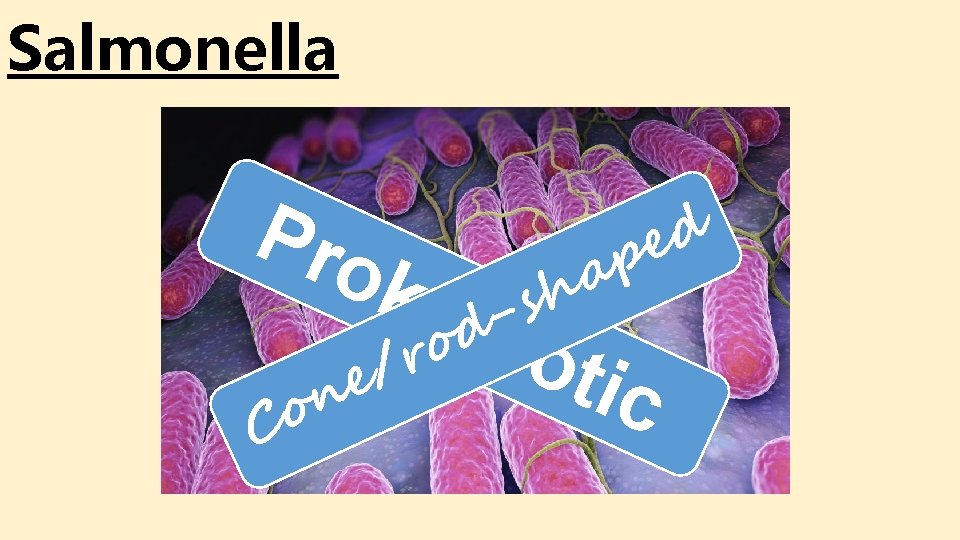
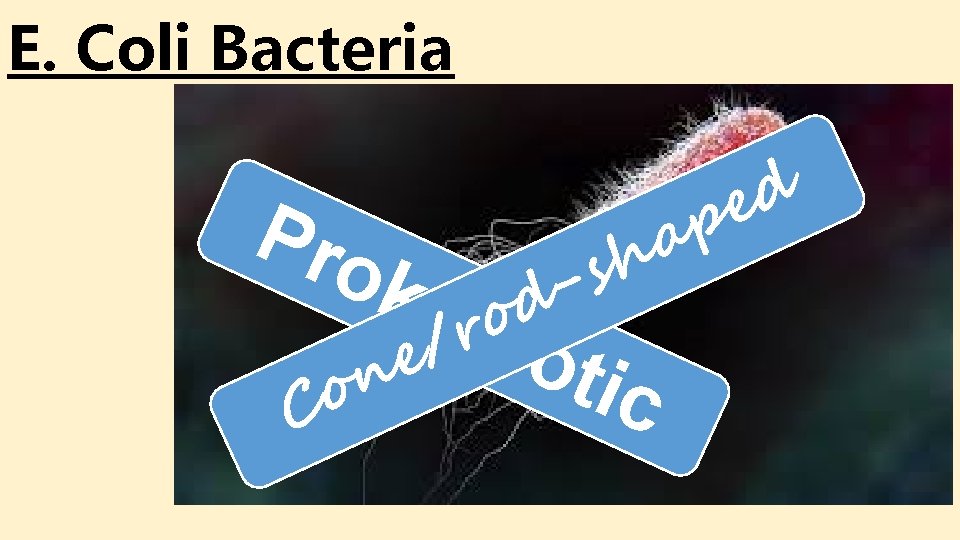
Prokaryotic Cells: 7) Defined by their shape! • Classified as either: 1. Rod 2. Spherical 3. Spiral
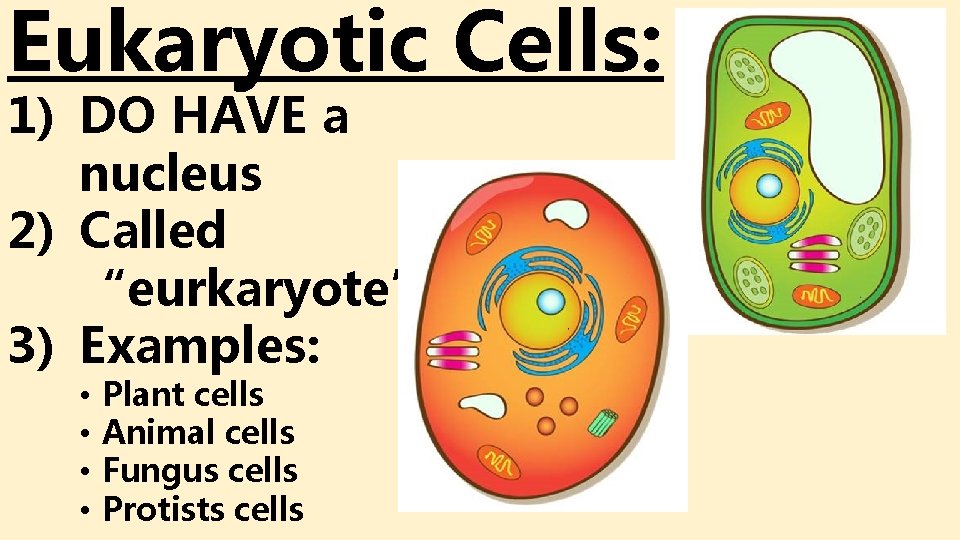
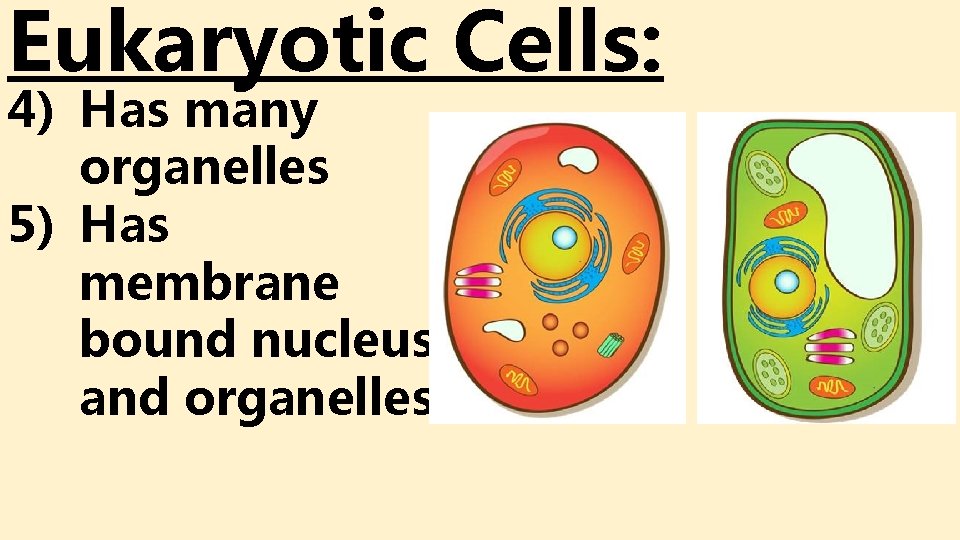
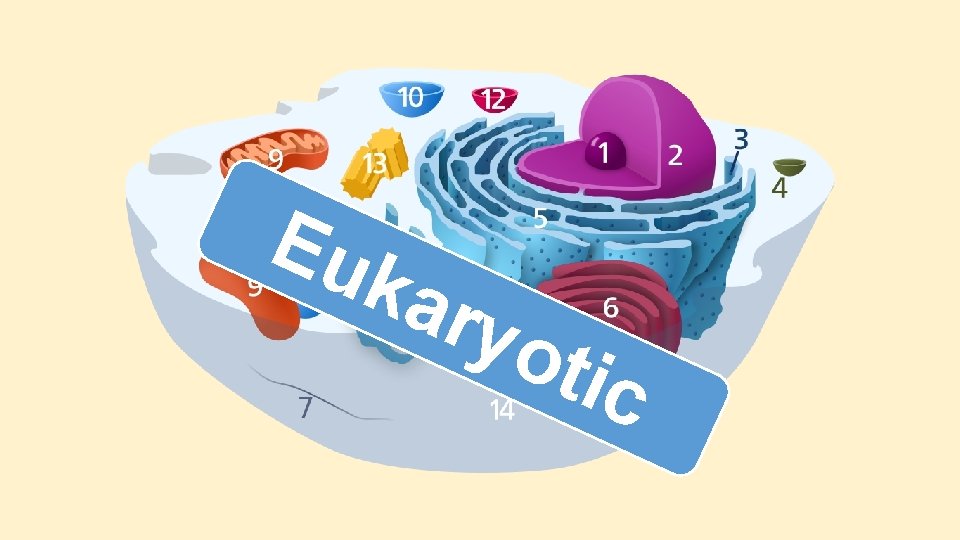
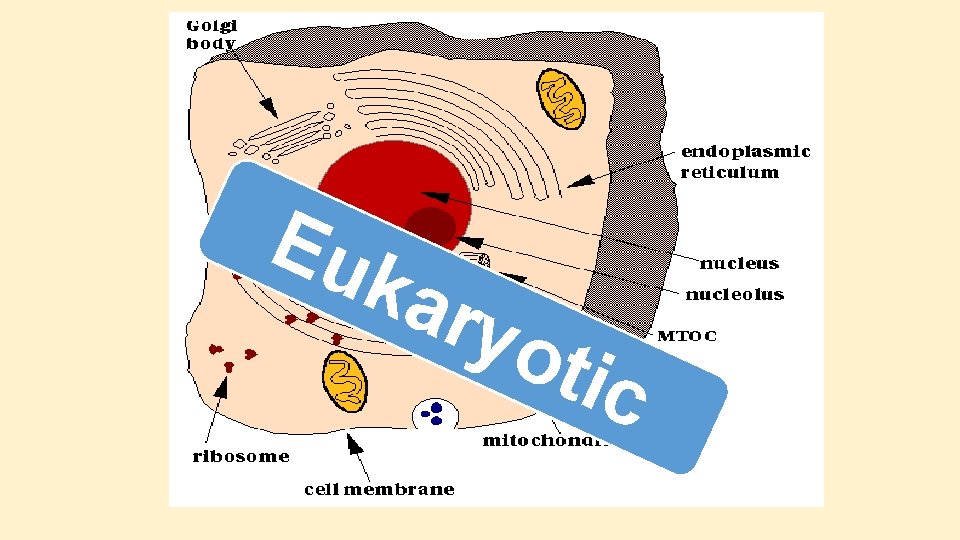
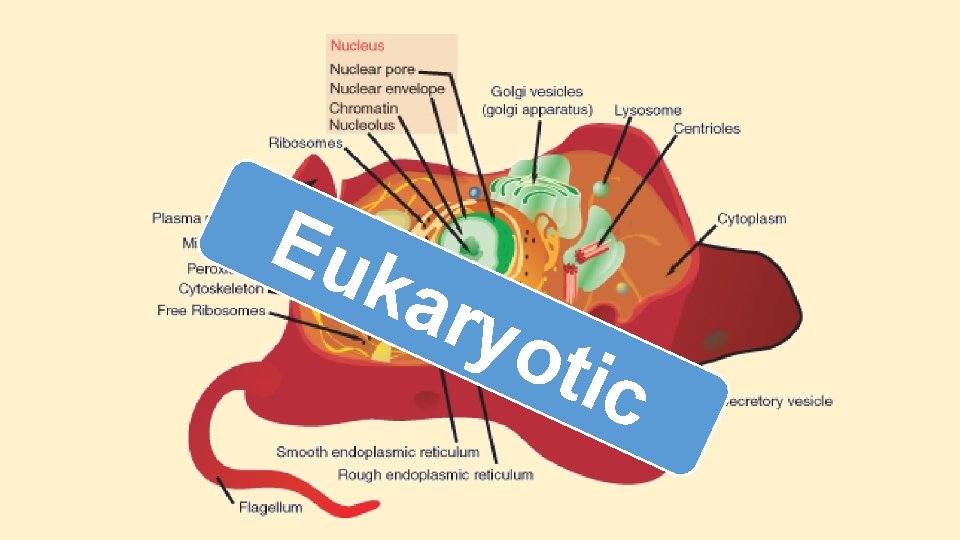
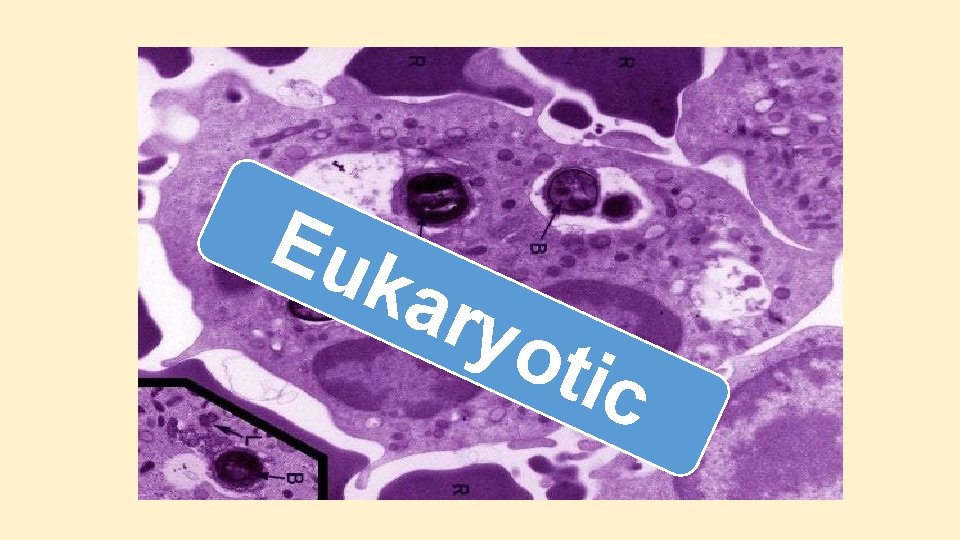
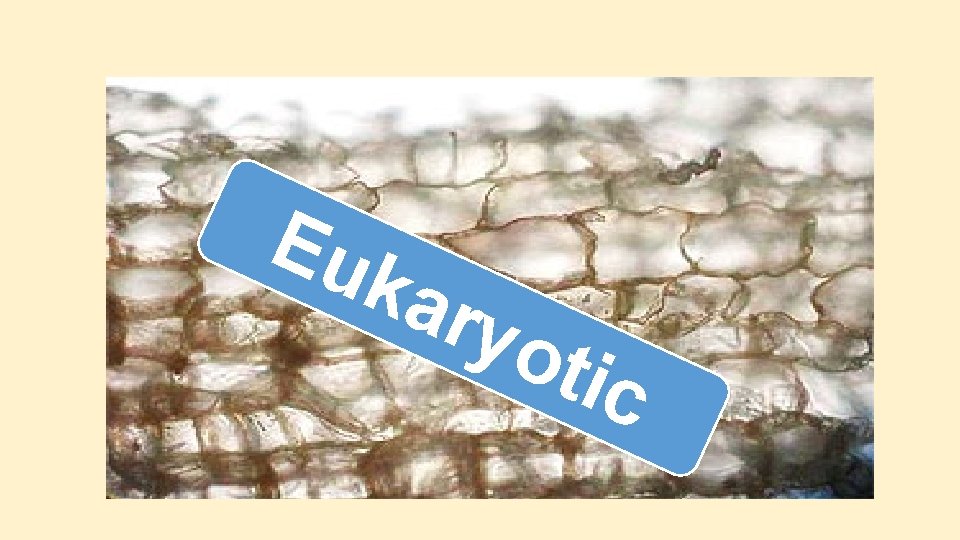
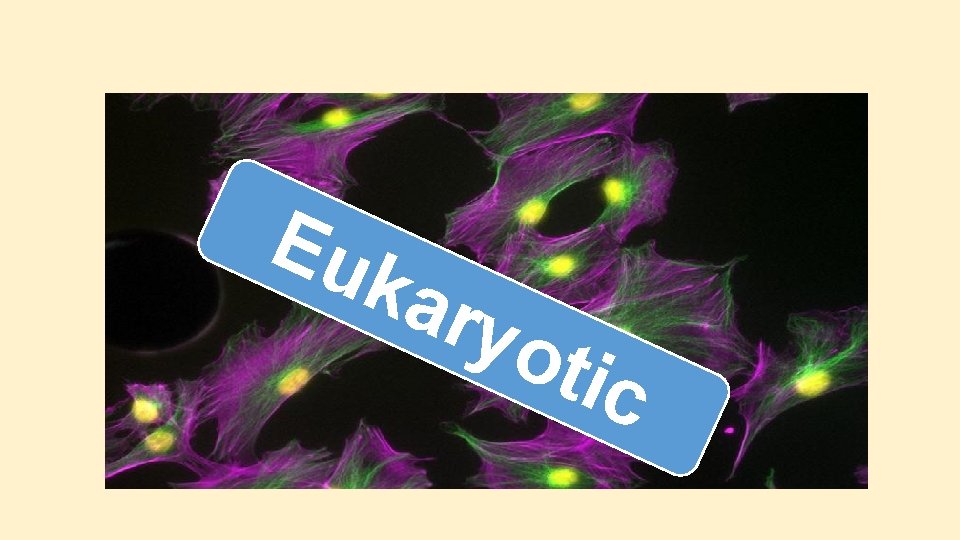
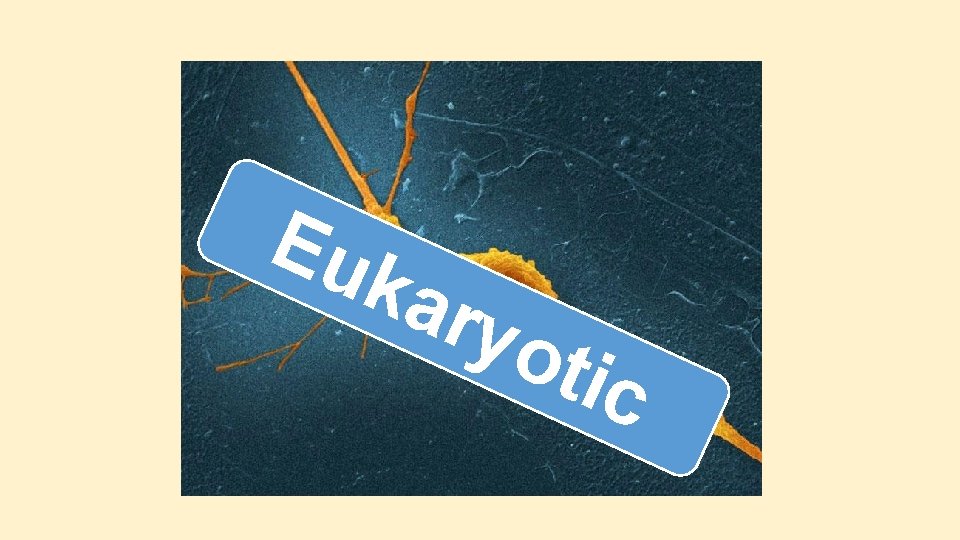
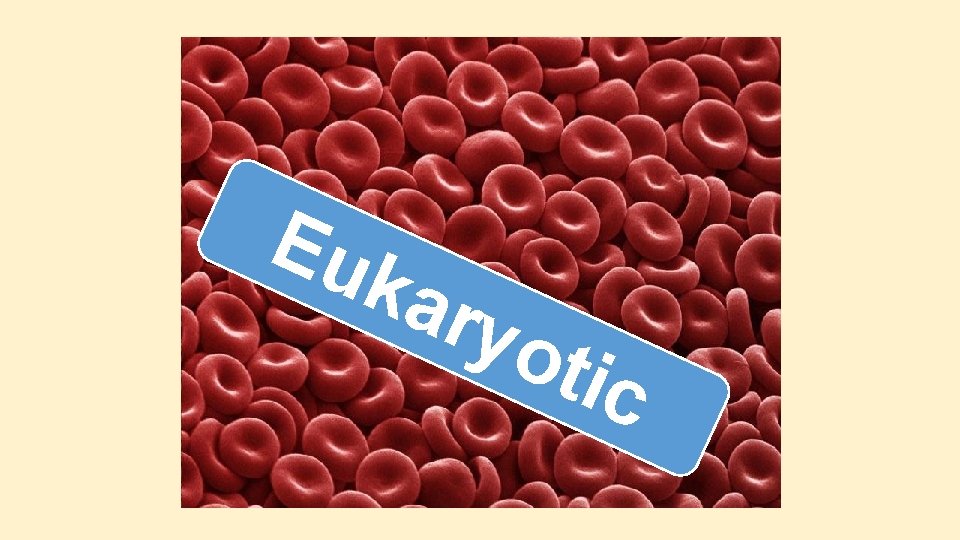
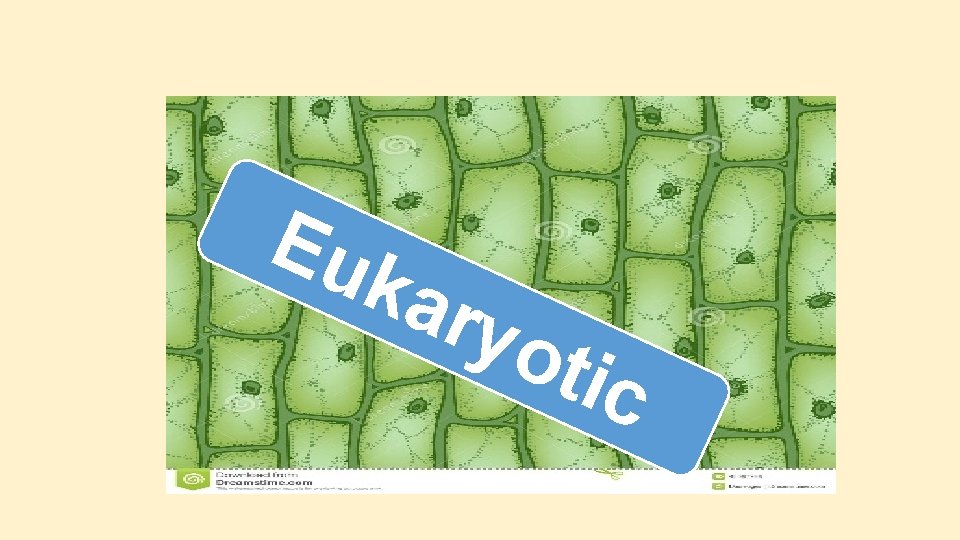
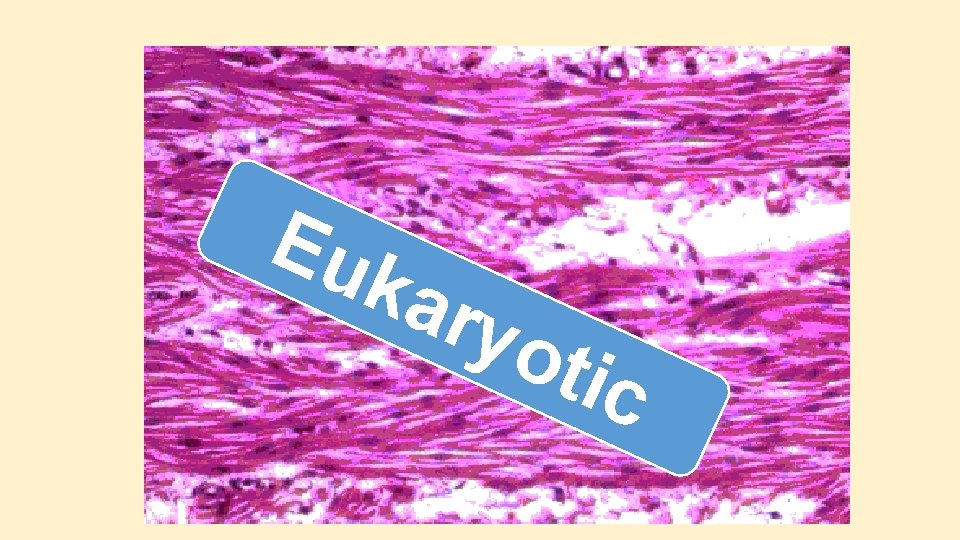
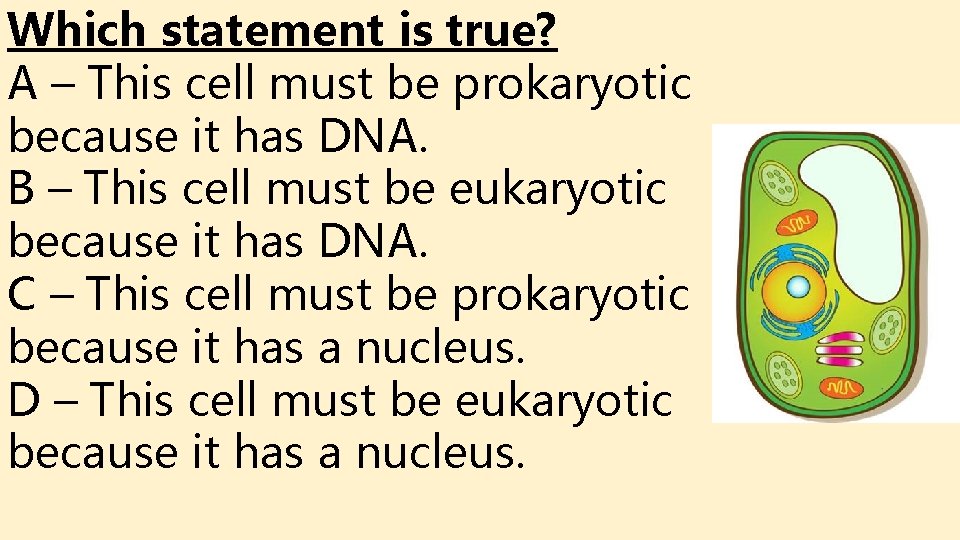
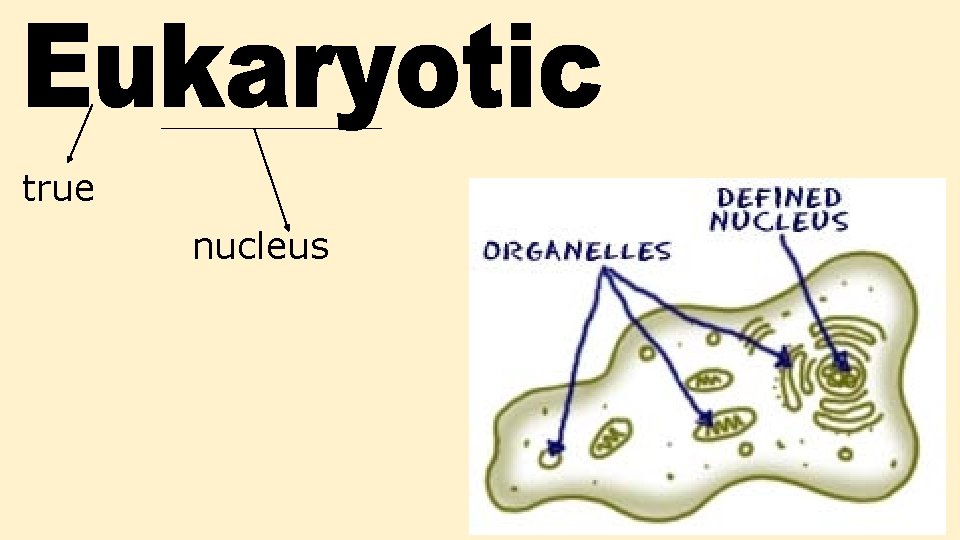
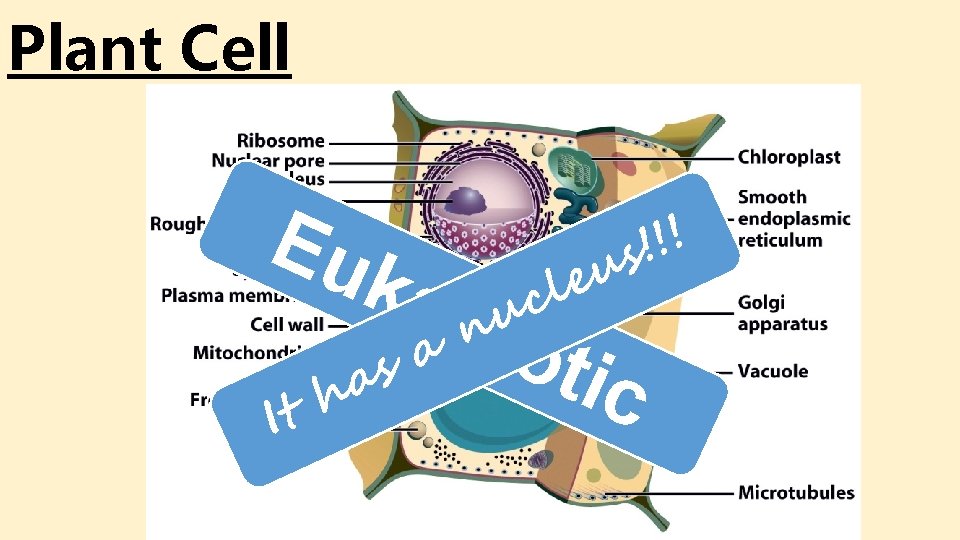
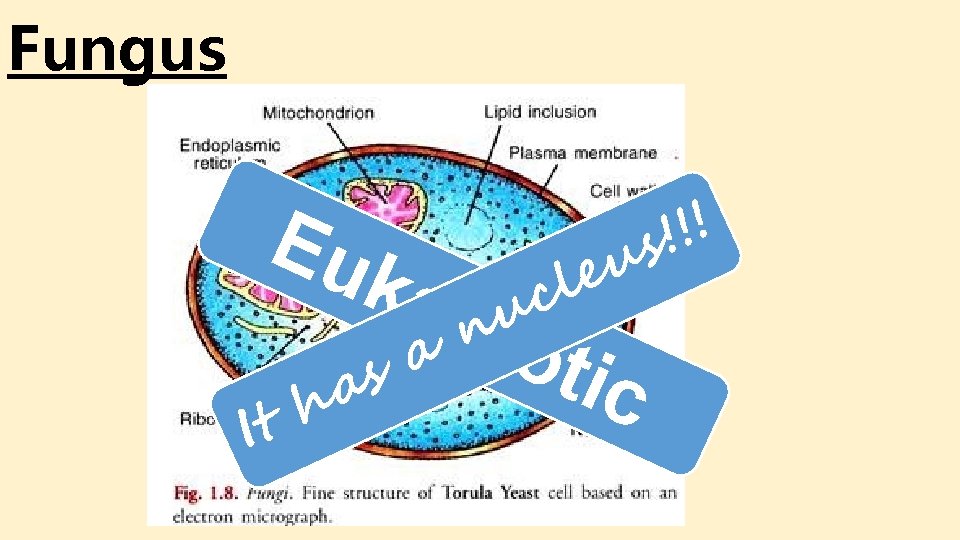
Eukaryotic Cells: 1) DO HAVE a nucleus 2) Called “eurkaryote”. 3) Examples: • • Plant cells Animal cells Fungus cells Protists cells
Eukaryotic Cells: 4) Has many organelles 5) Has membrane bound nucleus and organelles
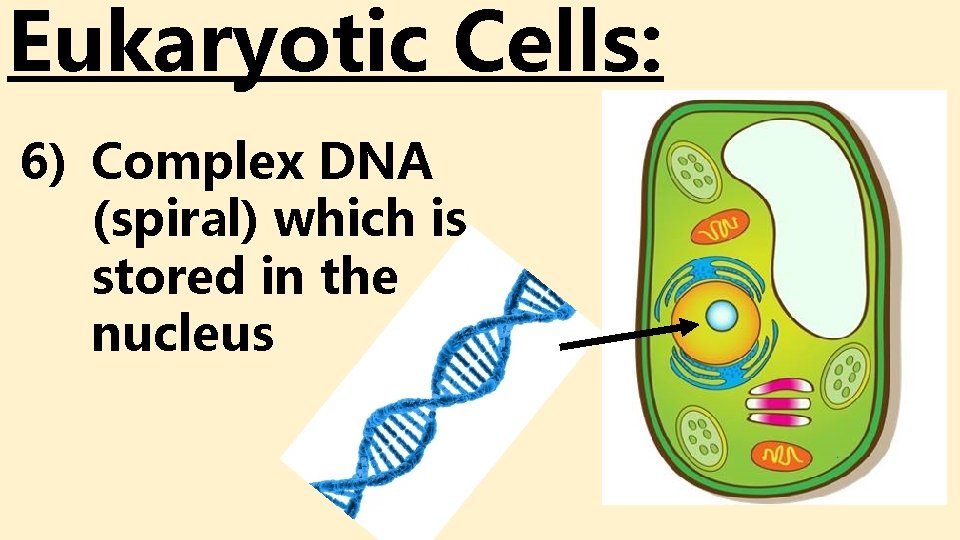
Eukaryotic Cells: 6) Complex DNA (spiral) which is stored in the nucleus
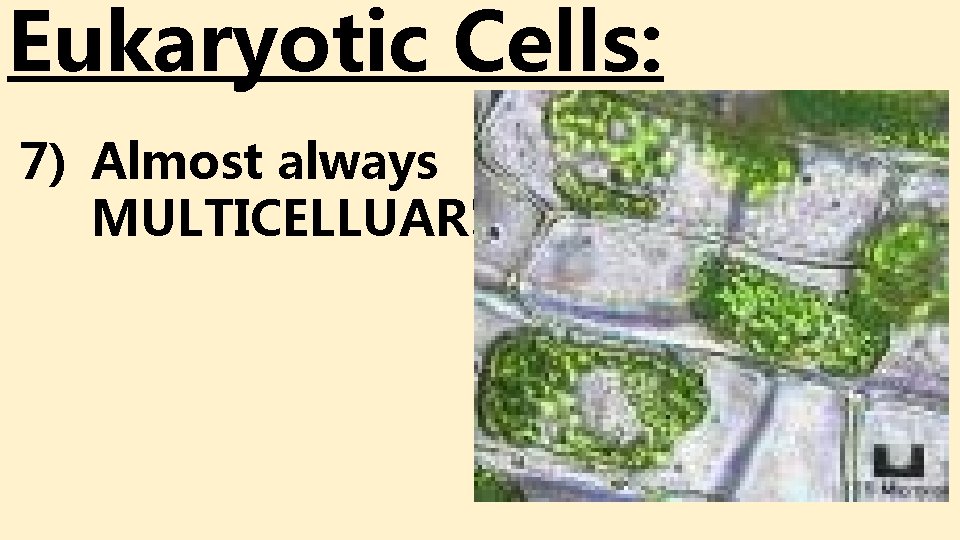
Eukaryotic Cells: 7) Almost always MULTICELLUAR!
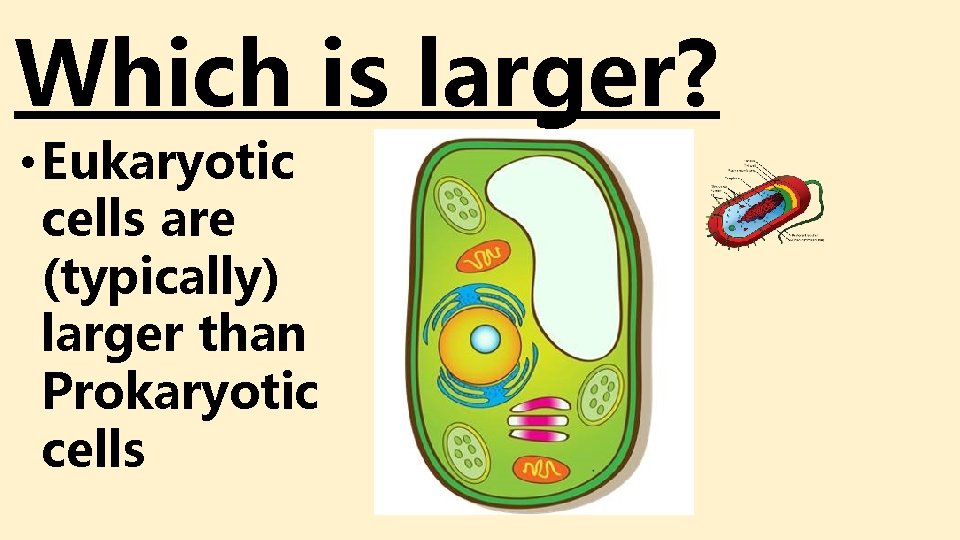
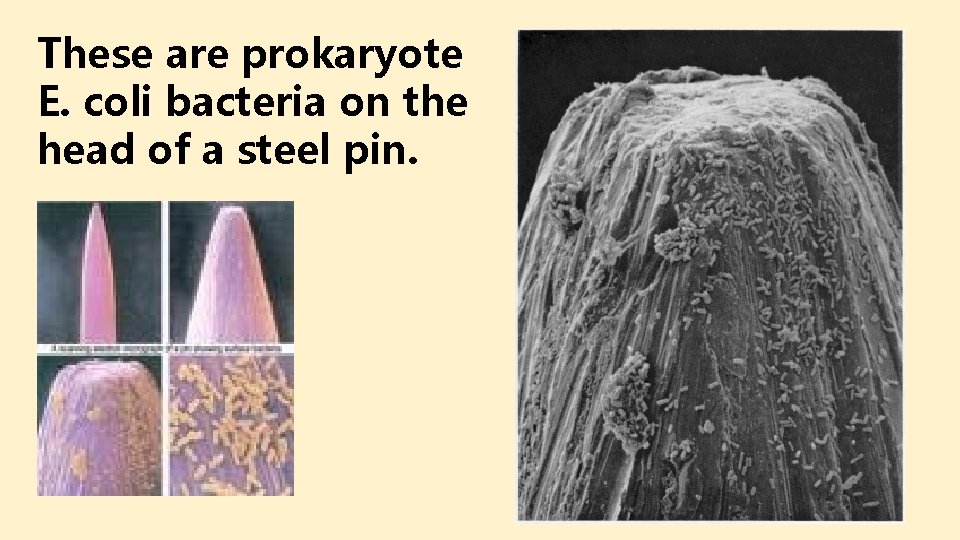
Which is larger? • Eukaryotic cells are (typically) larger than Prokaryotic cells
These are prokaryote E. coli bacteria on the head of a steel pin.
What’s Different?
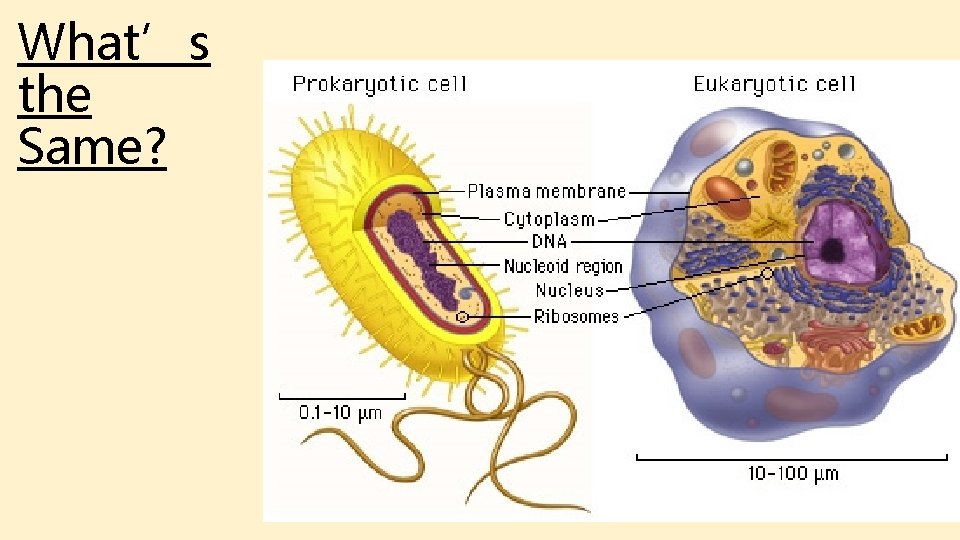
What’s the Same?
Remember… Pro, No. (NO nucleus) Eu, Do. (HAS nucleus)
Practice Time: Prokaryotic or Eukaryotic?
Eu kar yot ic
Pro kar yot ic
Eu kar yot ic
Pro kar yot ic
Eu kar yot ic
Pro kar yot ic
Eu kar yot ic
Pro kar yot ic
Eu kar yot ic
Pro kar yot ic
Eu kar yot ic
Eu kar yot ic
Pro kar yot ic
Eu kar yot ic
Pro kar yot ic
Pro kar yot ic
Eu kar yot ic
Eu kar yot ic
Which statement is true? A – This cell must be prokaryotic because it has DNA. B – This cell must be eukaryotic because it has DNA. C – This cell must be prokaryotic because it has a nucleus. D – This cell must be eukaryotic because it has a nucleus.
Which statement is false? A – Eukaryotic cells are larger than prokaryotic cells. B – Prokaryotic cells are larger than eukaryotic cells. C – Plants are made up of eukaryotic cells. D – Bacteria is prokaryotic.
l e D w a r d n a b a L
Review
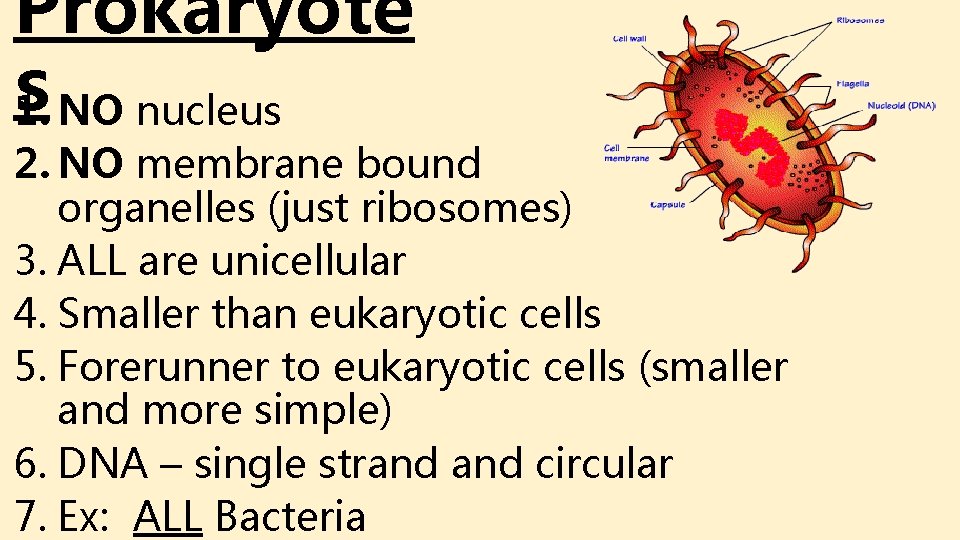
Prokaryote s 1. NO nucleus 2. NO membrane bound organelles (just ribosomes) 3. ALL are unicellular 4. Smaller than eukaryotic cells 5. Forerunner to eukaryotic cells (smaller and more simple) 6. DNA – single strand circular 7. Ex: ALL Bacteria
before nucleus
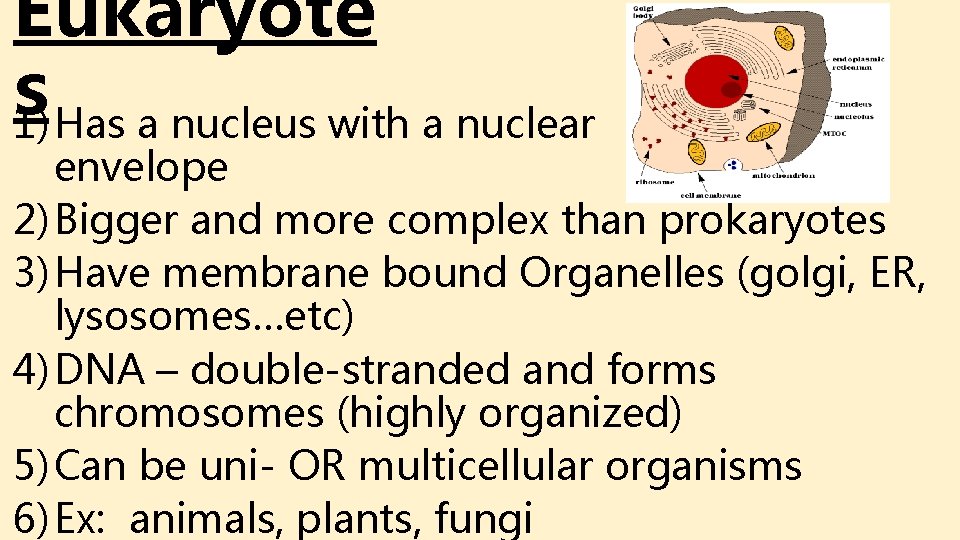
Eukaryote s 1) Has a nucleus with a nuclear envelope 2) Bigger and more complex than prokaryotes 3) Have membrane bound Organelles (golgi, ER, lysosomes…etc) 4) DNA – double-stranded and forms chromosomes (highly organized) 5) Can be uni- OR multicellular organisms 6) Ex: animals, plants, fungi
true nucleus
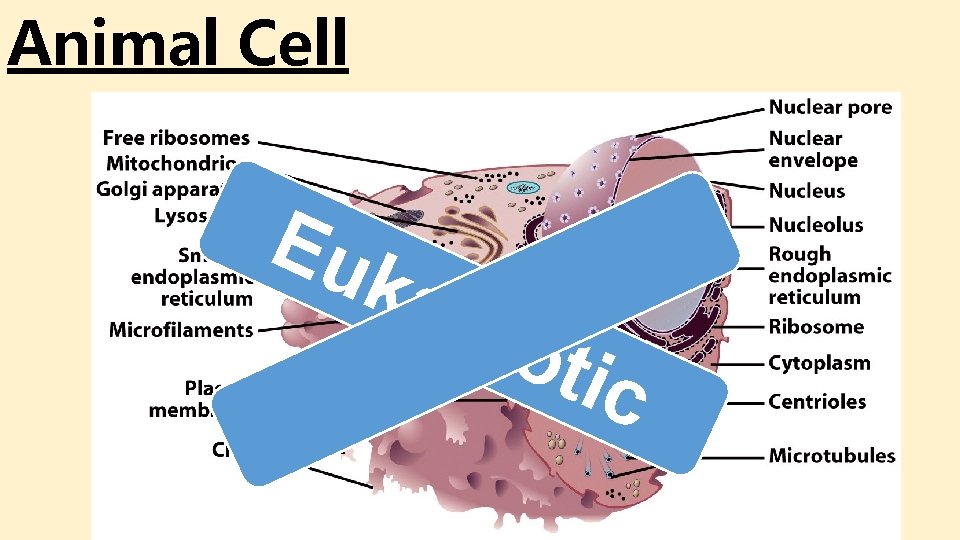
Animal Cell Eu kar yot ic
Salmonella d Pro e p a kar -sh d y o r o / t e i n c o C
Plant Cell Eu kar ! ! ! s u e l c yot u n a s a h It ic
E. Coli Bacteria Pro a h s kar odr y / o e t n i o c C d e p
Fungus Eu kar It ! ! ! s u e l c u n y o a t s i a c h
Cheek Cell s a D h t i Eu ape !!! k s h s u a e r d l y e c n o u i n t ef ic a
Amoeba Eu ka u n u e cl ryo a s a h It ! ! ! s! tic
Bacteria Pro ! ! ! s karcleu y u o n t i o c N
Videos 1) Prokaryotic vs Eukaryotic Ricochet Science Video - https: //youtu. be/RQSMCm. WB 1 s 2) Prokaryote vs Eukaryote, the Differences - https: //youtu. be/k. Gd 5 HSDo 6 g 3) Amoeba Sisters – Prokaryote vs Eukaryote (old) https: //youtu. be/ru. BAHiij 4 EA