
Classifying Animals Objective Classification is sorting out all
Classifying Animals Objective: Classification is sorting out all organisms into groups according to the similarities between them.
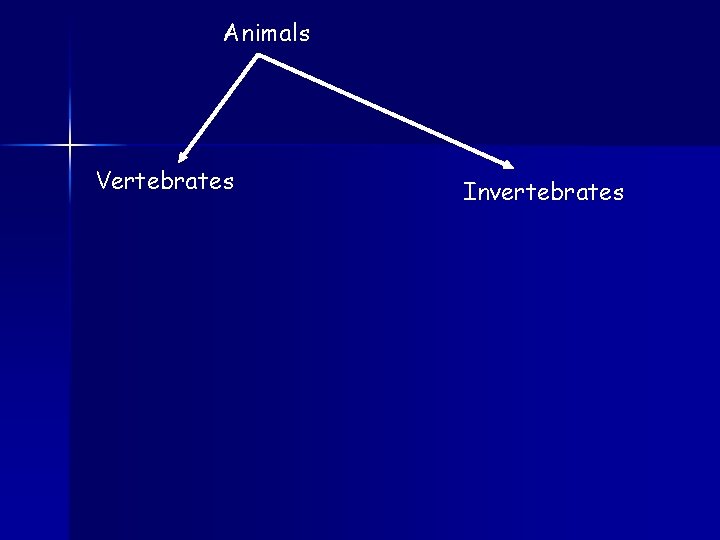
Animals Vertebrates Invertebrates
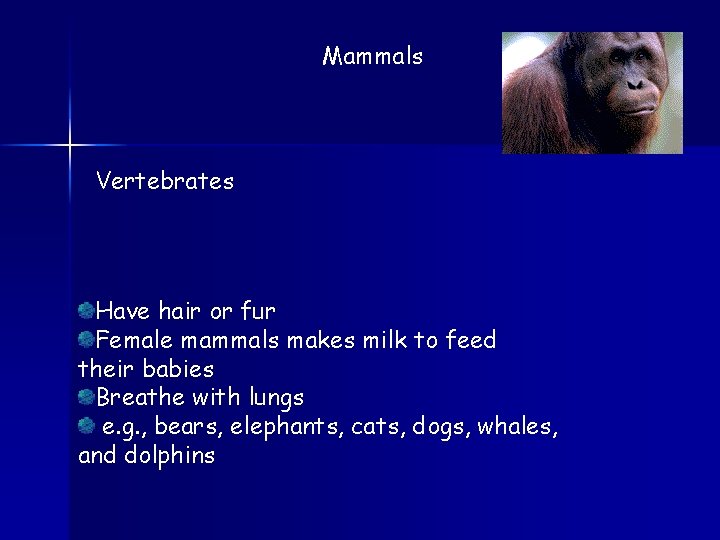
Mammals Vertebrates Have hair or fur Female mammals makes milk to feed their babies Breathe with lungs e. g. , bears, elephants, cats, dogs, whales, and dolphins
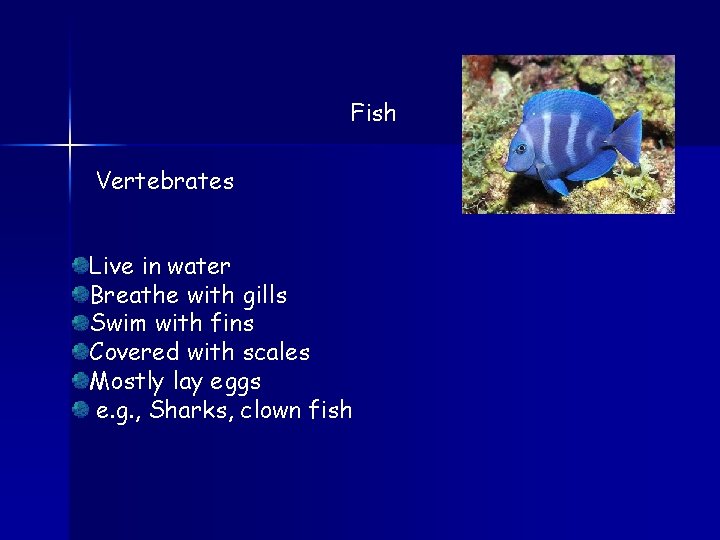
Fish Vertebrates Live in water Breathe with gills Swim with fins Covered with scales Mostly lay eggs e. g. , Sharks, clown fish
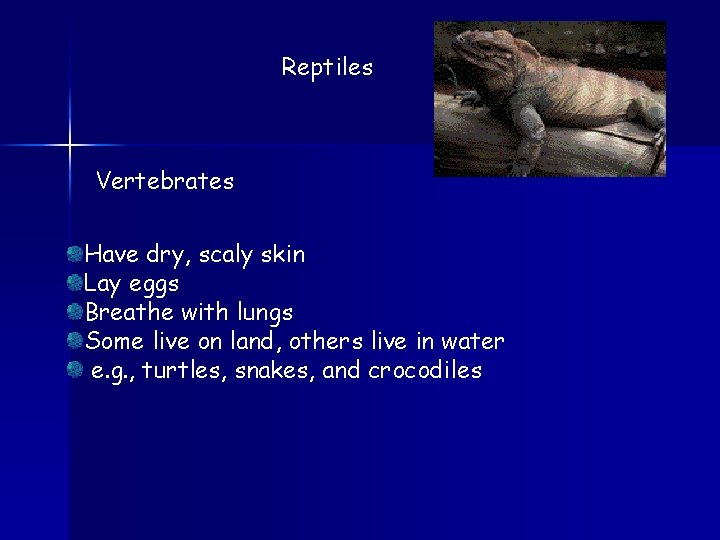
Reptiles Vertebrates Have dry, scaly skin Lay eggs Breathe with lungs Some live on land, others live in water e. g. , turtles, snakes, and crocodiles
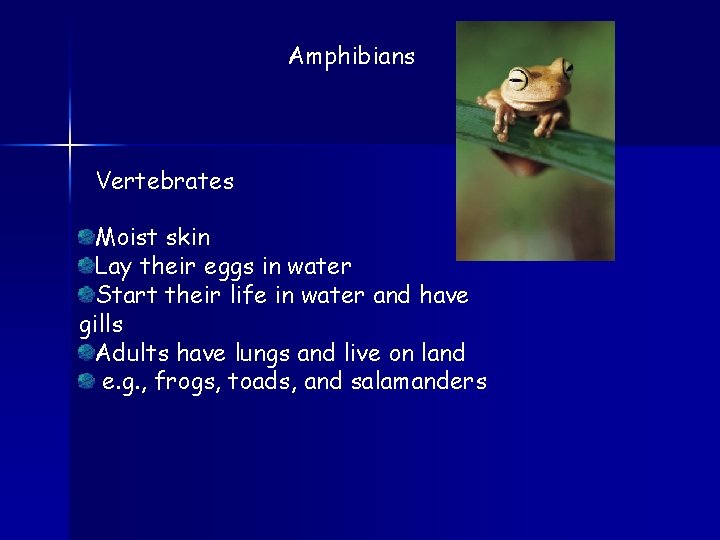
Amphibians Vertebrates Moist skin Lay their eggs in water Start their life in water and have gills Adults have lungs and live on land e. g. , frogs, toads, and salamanders
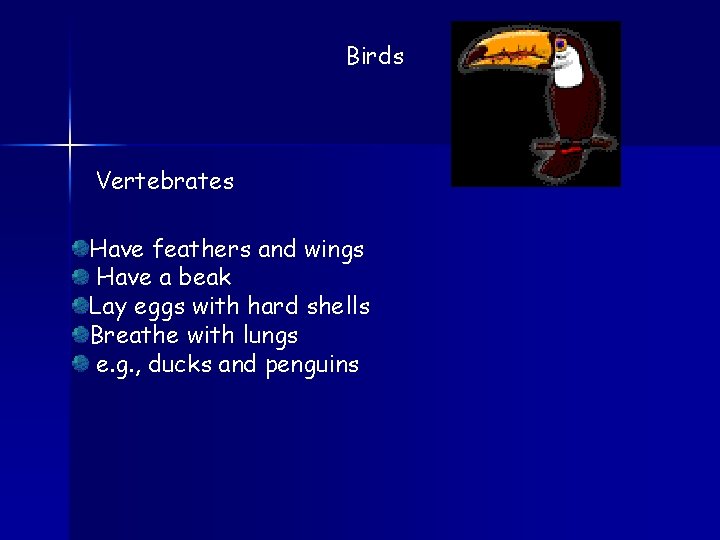
Birds Vertebrates Have feathers and wings Have a beak Lay eggs with hard shells Breathe with lungs e. g. , ducks and penguins
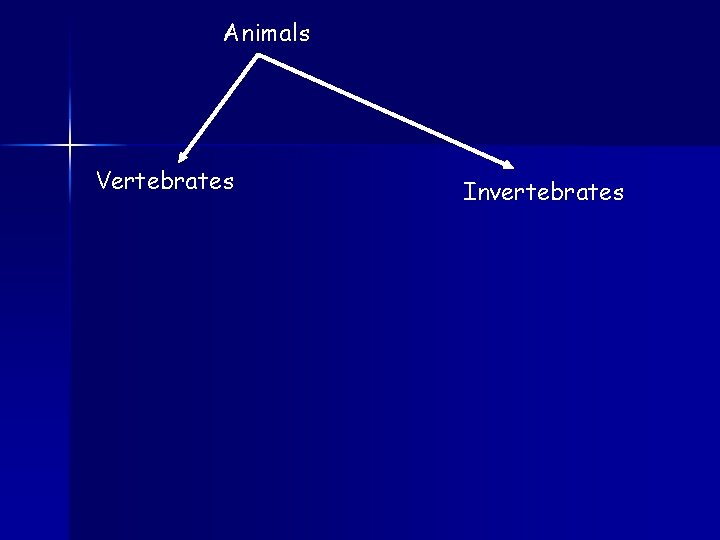
Animals Vertebrates Invertebrates
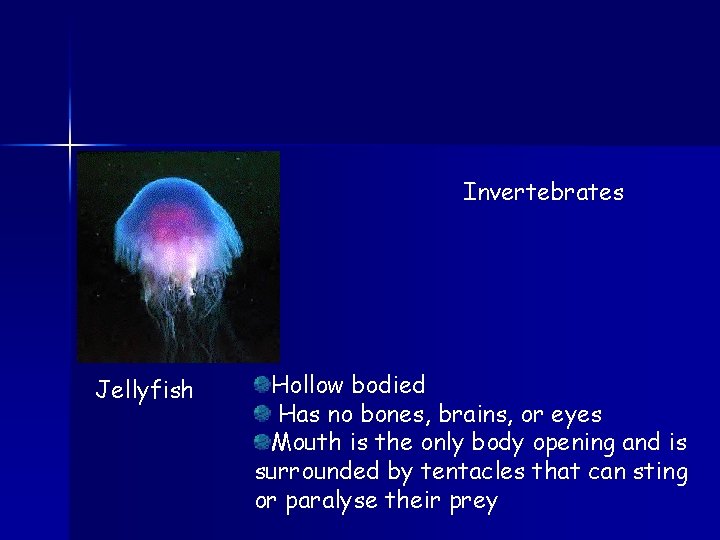
Invertebrates Jellyfish Hollow bodied Has no bones, brains, or eyes Mouth is the only body opening and is surrounded by tentacles that can sting or paralyse their prey
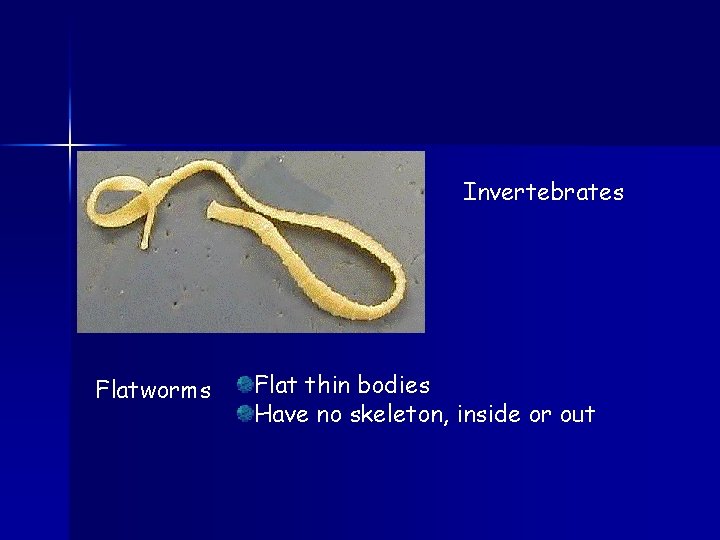
Invertebrates Flatworms Flat thin bodies Have no skeleton, inside or out
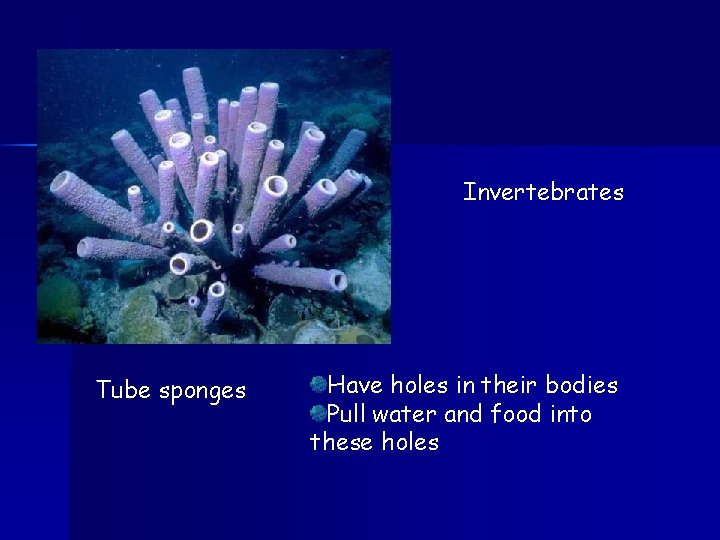
Invertebrates Tube sponges Have holes in their bodies Pull water and food into these holes
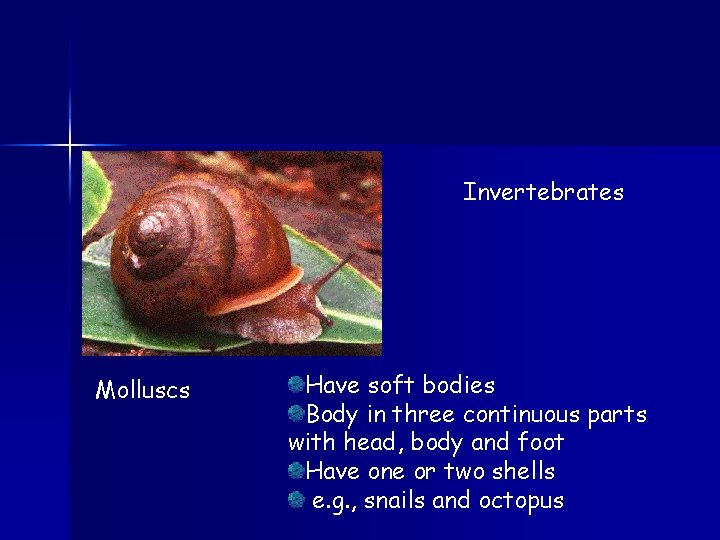
Invertebrates Molluscs Have soft bodies Body in three continuous parts with head, body and foot Have one or two shells e. g. , snails and octopus
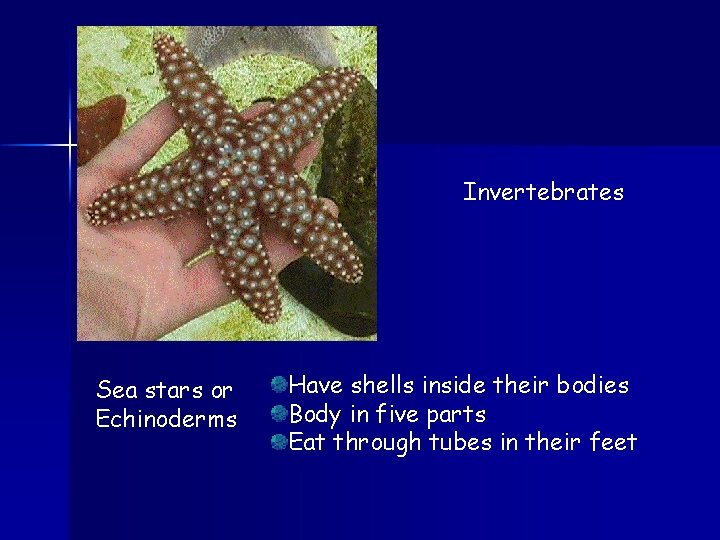
Invertebrates Sea stars or Echinoderms Have shells inside their bodies Body in five parts Eat through tubes in their feet
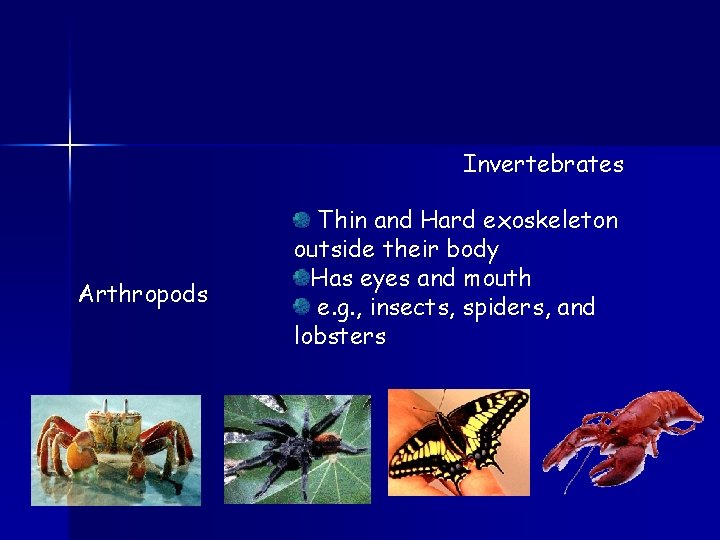
Invertebrates Arthropods Thin and Hard exoskeleton outside their body Has eyes and mouth e. g. , insects, spiders, and lobsters
- Slides: 14