
Classifying Animals Objective 4 1 Characteristics of Animals

Classifying Animals Objective 4. 1
Characteristics of Animals 1. 2. 3. 4. 5. 6. Multi-cellular Require oxygen Consume other organisms for food Able to move at some point Reproduce Divided into 2 categories § Invertebrates § vertebrates
Invertebrates Characteristics • No backbone • Largest group • Very diverse Types 1. Sponges 2. Cnidarians- jellyfish 3. Echinoderms- starfish 4. Mollusks- snails, squids 5. Worms 6. Arthropods- lobsters, spiders
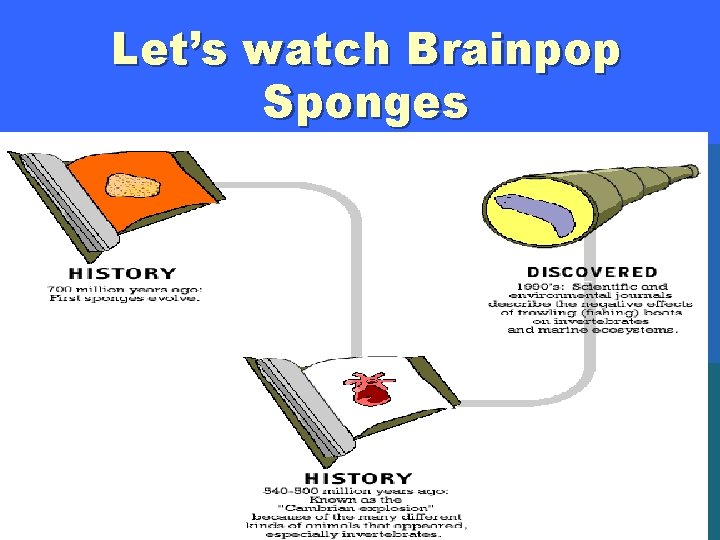
Let’s watch Brainpop Sponges
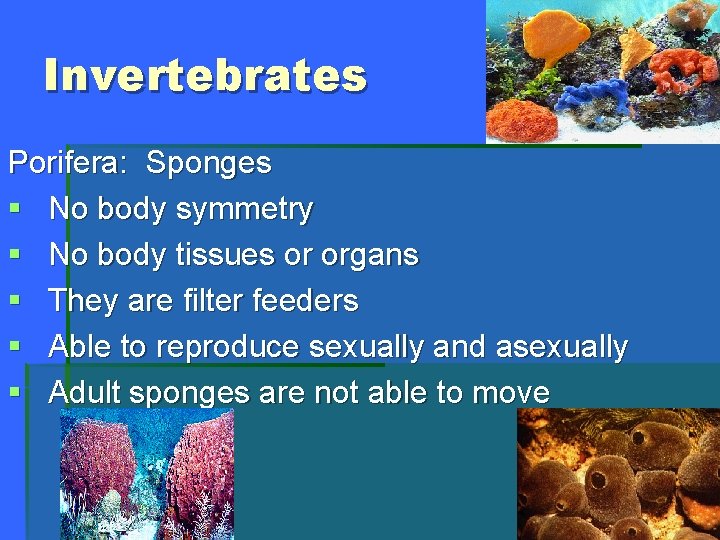
Invertebrates Porifera: Sponges § No body symmetry § No body tissues or organs § They are filter feeders § Able to reproduce sexually and asexually § Adult sponges are not able to move
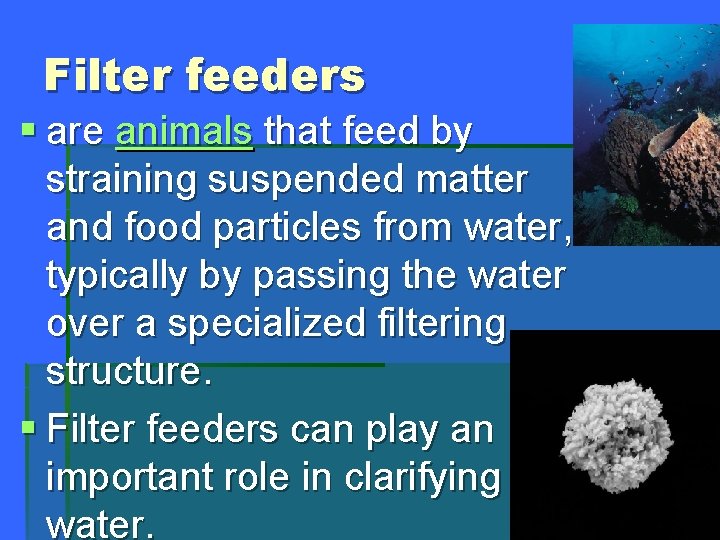
Filter feeders § are animals that feed by straining suspended matter and food particles from water, typically by passing the water over a specialized filtering structure. § Filter feeders can play an important role in clarifying water.
Cnidarians
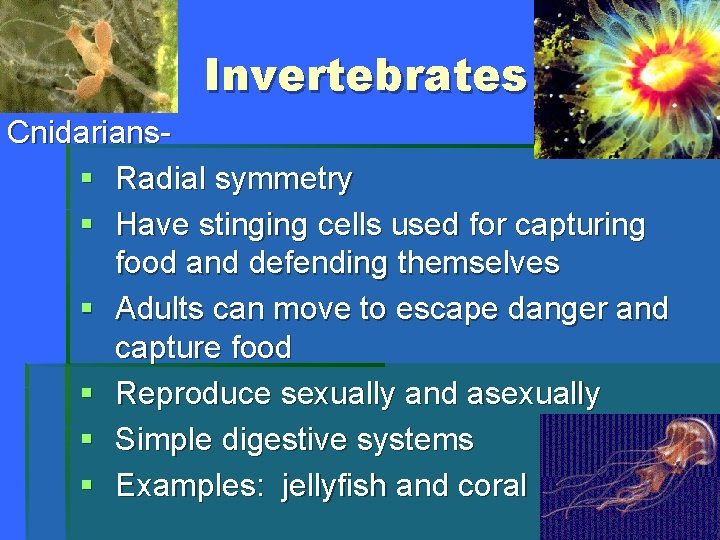
Invertebrates Cnidarians§ Radial symmetry § Have stinging cells used for capturing food and defending themselves § Adults can move to escape danger and capture food § Reproduce sexually and asexually § Simple digestive systems § Examples: jellyfish and coral
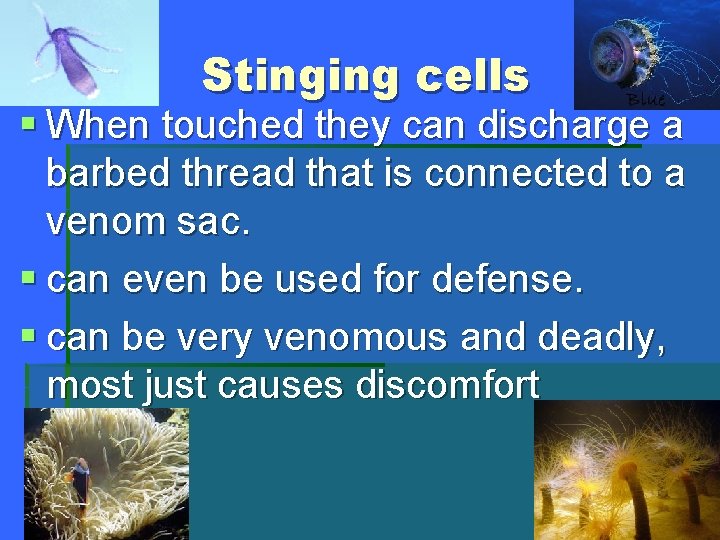
Stinging cells § When touched they can discharge a barbed thread that is connected to a venom sac. § can even be used for defense. § can be very venomous and deadly, most just causes discomfort
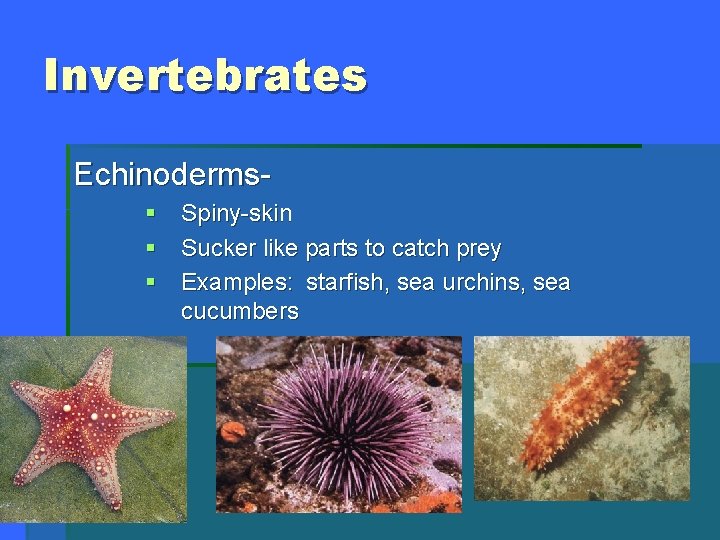
Invertebrates Echinoderms§ Spiny-skin § Sucker like parts to catch prey § Examples: starfish, sea urchins, sea cucumbers
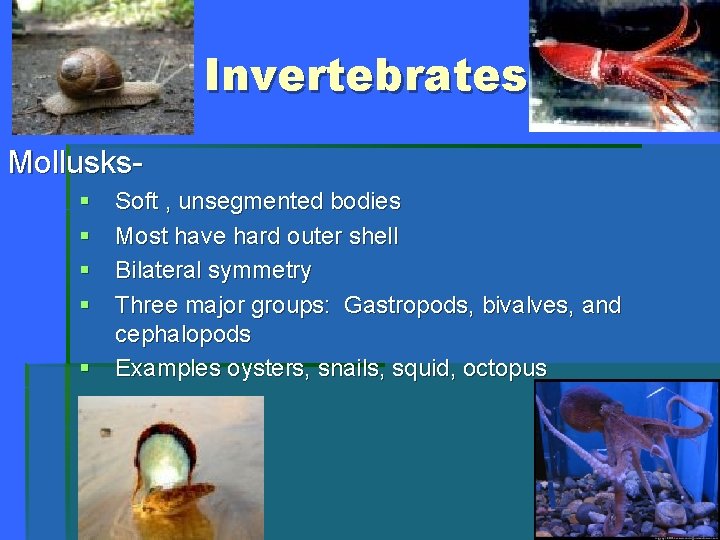
Invertebrates Mollusks§ § Soft , unsegmented bodies Most have hard outer shell Bilateral symmetry Three major groups: Gastropods, bivalves, and cephalopods § Examples oysters, snails, squid, octopus
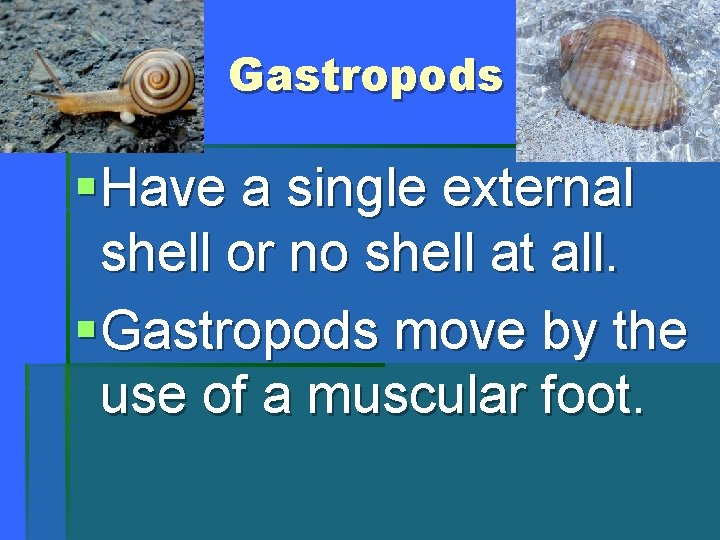
Gastropods § Have a single external shell or no shell at all. § Gastropods move by the use of a muscular foot.
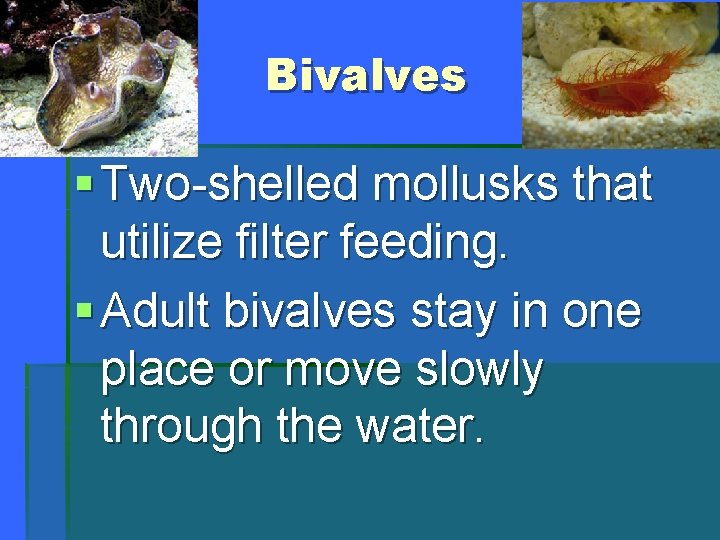
Bivalves § Two-shelled mollusks that utilize filter feeding. § Adult bivalves stay in one place or move slowly through the water.
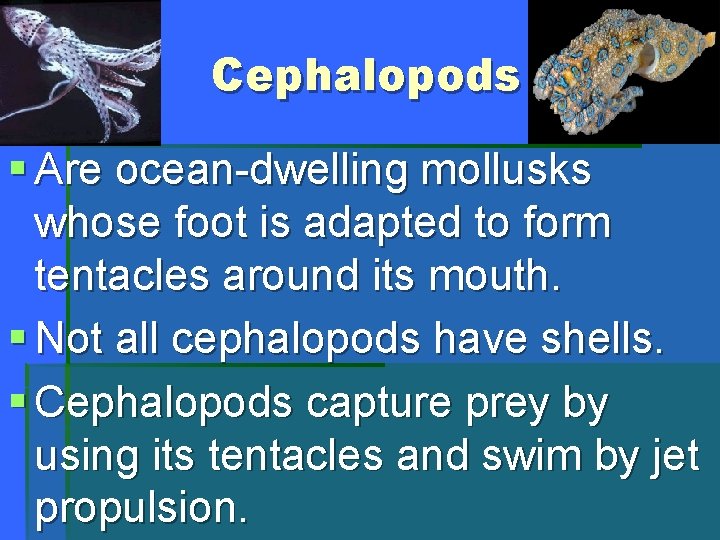
Cephalopods § Are ocean-dwelling mollusks whose foot is adapted to form tentacles around its mouth. § Not all cephalopods have shells. § Cephalopods capture prey by using its tentacles and swim by jet propulsion.
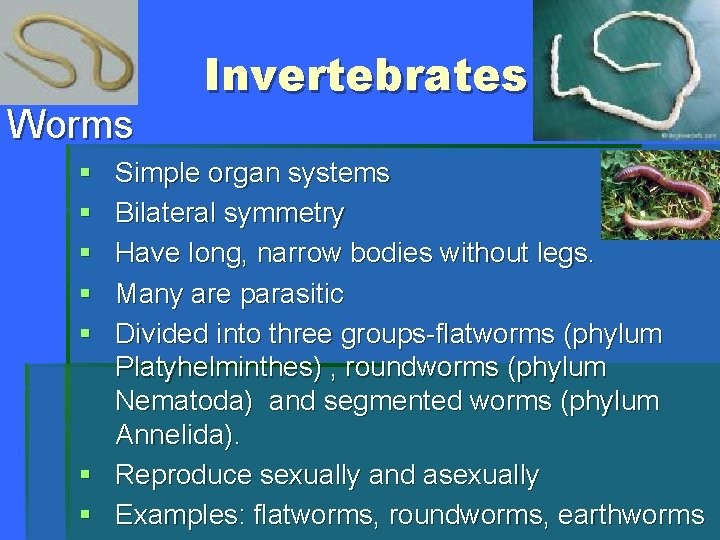
Worms § § § Invertebrates Simple organ systems Bilateral symmetry Have long, narrow bodies without legs. Many are parasitic Divided into three groups-flatworms (phylum Platyhelminthes) , roundworms (phylum Nematoda) and segmented worms (phylum Annelida). § Reproduce sexually and asexually § Examples: flatworms, roundworms, earthworms

Invertebrates Arthropods§ § § Largest group of invertebrates Jointed body parts Exoskeletons Bilateral symmetry Examples: lobsters, spiders, insects

Vertebrates § Have a backbone § Two types § Cold blooded § Warm blooded
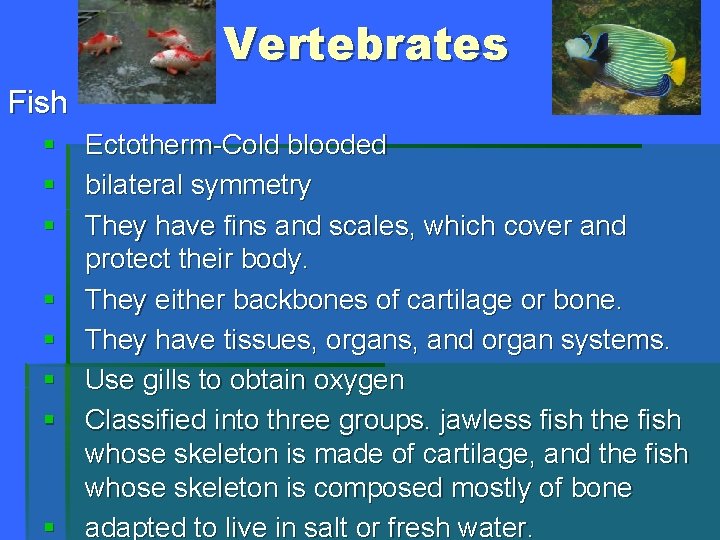
Vertebrates Fish § Ectotherm-Cold blooded § bilateral symmetry § They have fins and scales, which cover and protect their body. § They either backbones of cartilage or bone. § They have tissues, organs, and organ systems. § Use gills to obtain oxygen § Classified into three groups. jawless fish the fish whose skeleton is made of cartilage, and the fish whose skeleton is composed mostly of bone § adapted to live in salt or fresh water.
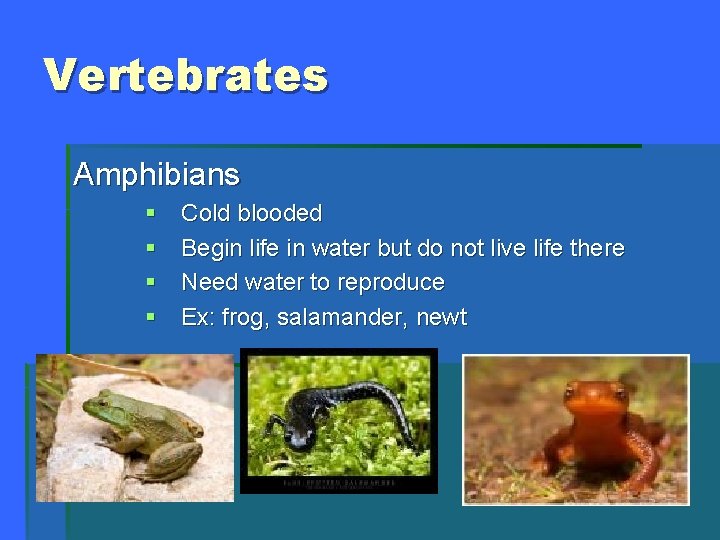
Vertebrates Amphibians § § Cold blooded Begin life in water but do not live life there Need water to reproduce Ex: frog, salamander, newt
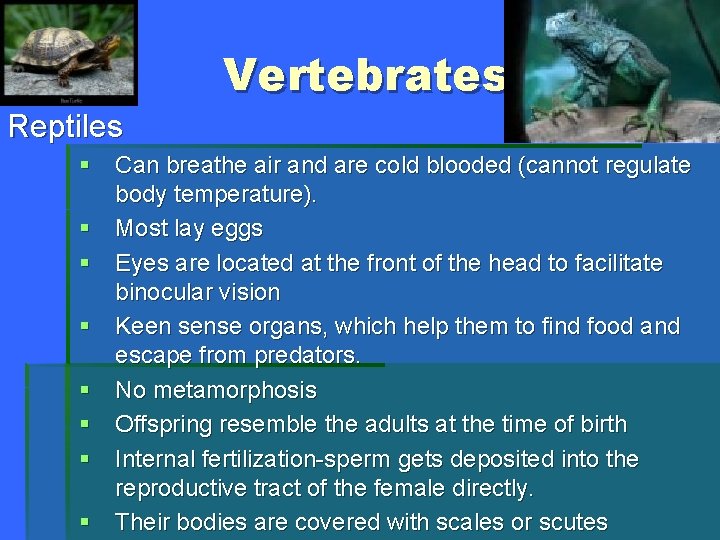
Vertebrates Reptiles § Can breathe air and are cold blooded (cannot regulate body temperature). § Most lay eggs § Eyes are located at the front of the head to facilitate binocular vision § Keen sense organs, which help them to find food and escape from predators. § No metamorphosis § Offspring resemble the adults at the time of birth § Internal fertilization-sperm gets deposited into the reproductive tract of the female directly. § Their bodies are covered with scales or scutes
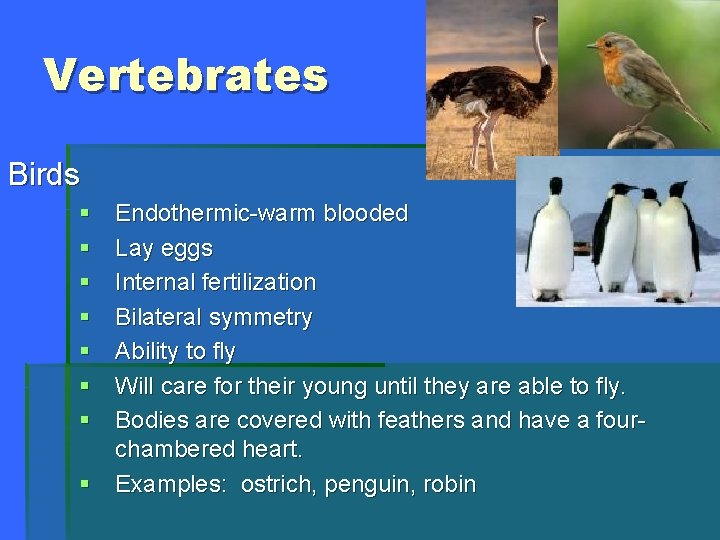
Vertebrates Birds § § § § Endothermic-warm blooded Lay eggs Internal fertilization Bilateral symmetry Ability to fly Will care for their young until they are able to fly. Bodies are covered with feathers and have a fourchambered heart. § Examples: ostrich, penguin, robin
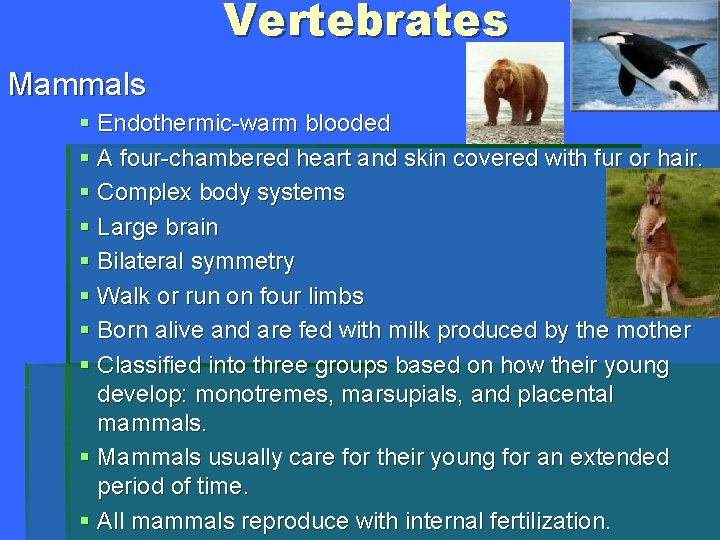
Vertebrates Mammals § Endothermic-warm blooded § A four-chambered heart and skin covered with fur or hair. § Complex body systems § Large brain § Bilateral symmetry § Walk or run on four limbs § Born alive and are fed with milk produced by the mother § Classified into three groups based on how their young develop: monotremes, marsupials, and placental mammals. § Mammals usually care for their young for an extended period of time. § All mammals reproduce with internal fertilization.
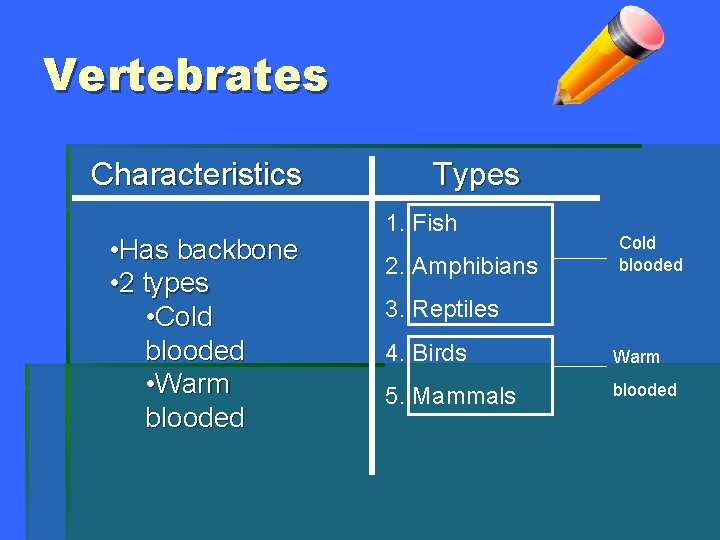
Vertebrates Characteristics • Has backbone • 2 types • Cold blooded • Warm blooded Types 1. Fish 2. Amphibians Cold blooded 3. Reptiles 4. Birds Warm 5. Mammals blooded
THE END
- Slides: 24