
Classifying and Defining Rocks Aim The students will




- Slides: 22
Classifying and Defining Rocks
Aim The students will be able to define Igneous, Sedimentary, and Metaphoric rocks. The students will be able to identify different characteristics of different rocks The students will be able to compare and contrast similarities and differences between rocks The students will be able to explain why different rocks belong in certain groups
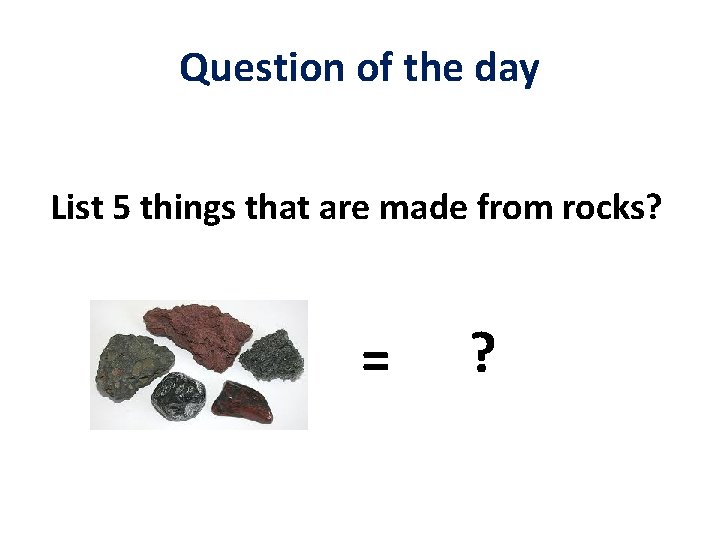
Question of the day List 5 things that are made from rocks? = ?
Mini lesson on making comparisons How to speak descriptively and make comparisons one syllable adjective = add –er two or more syllable adjective = more + adjectives that end in y with more than one syllable = add –er Examples: rougher jagged more jagged
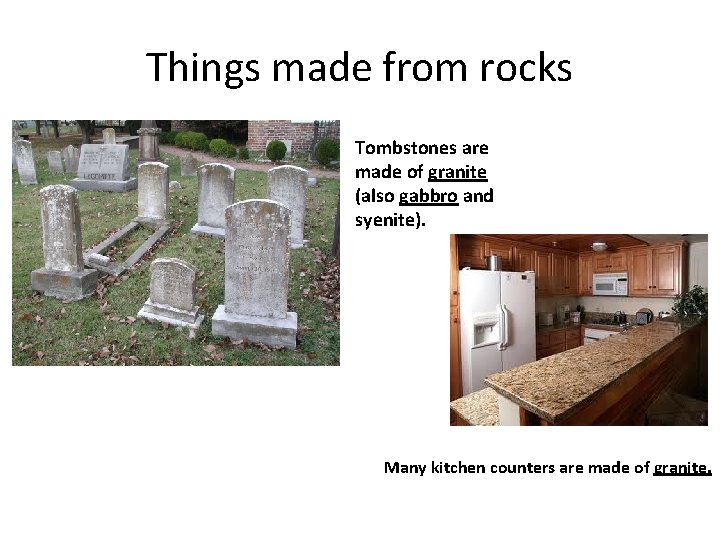
Things made from rocks Tombstones are made of granite (also gabbro and syenite). Many kitchen counters are made of granite.
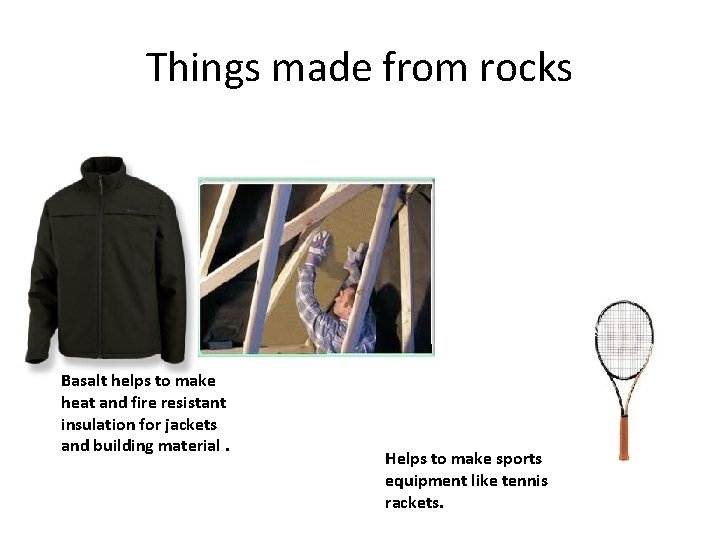
Things made from rocks Basalt helps to make heat and fire resistant insulation for jackets and building material. Helps to make sports equipment like tennis rackets.
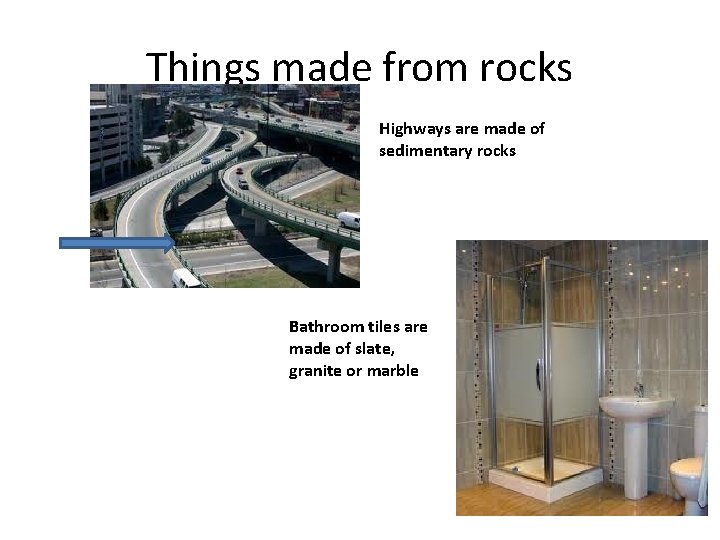
Things made from rocks Highways are made of sedimentary rocks Bathroom tiles are made of slate, granite or marble
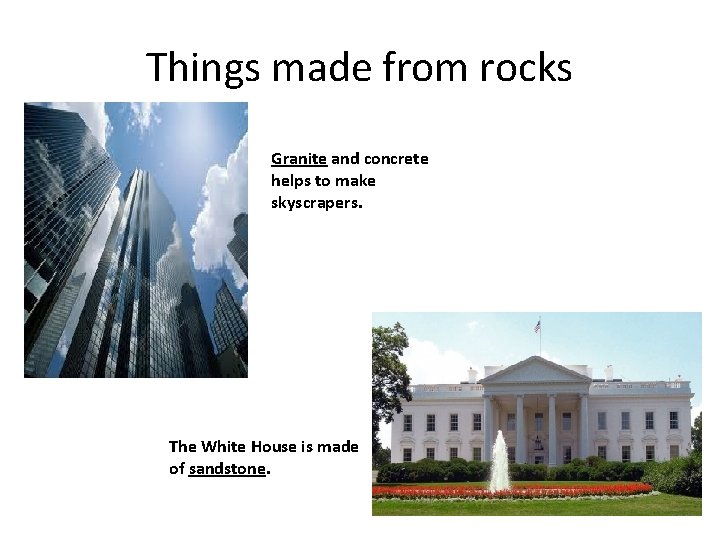
Things made from rocks Granite and concrete helps to make skyscrapers. The White House is made of sandstone.
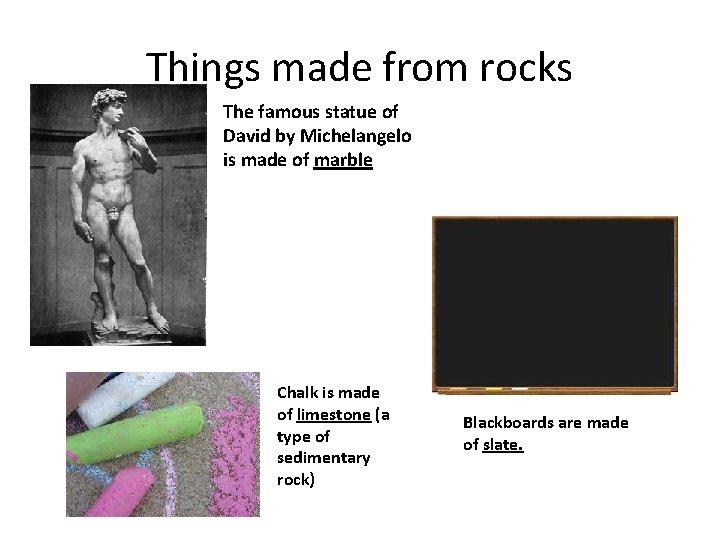
Things made from rocks The famous statue of David by Michelangelo is made of marble Chalk is made of limestone (a type of sedimentary rock) Blackboards are made of slate.
What are three main rock groups?
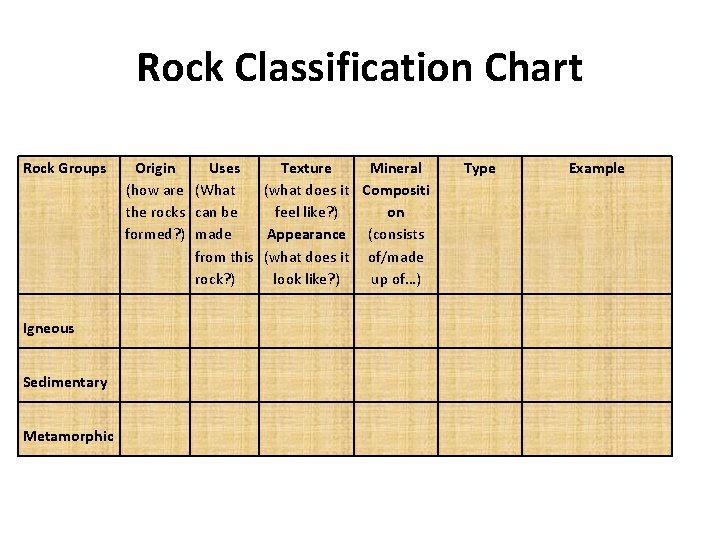
Rock Classification Chart Rock Groups Igneous Sedimentary Metamorphic Origin Uses Texture Mineral (how are (What (what does it Compositi the rocks can be feel like? ) on formed? ) made Appearance (consists from this (what does it of/made rock? ) look like? ) up of…) Type Example
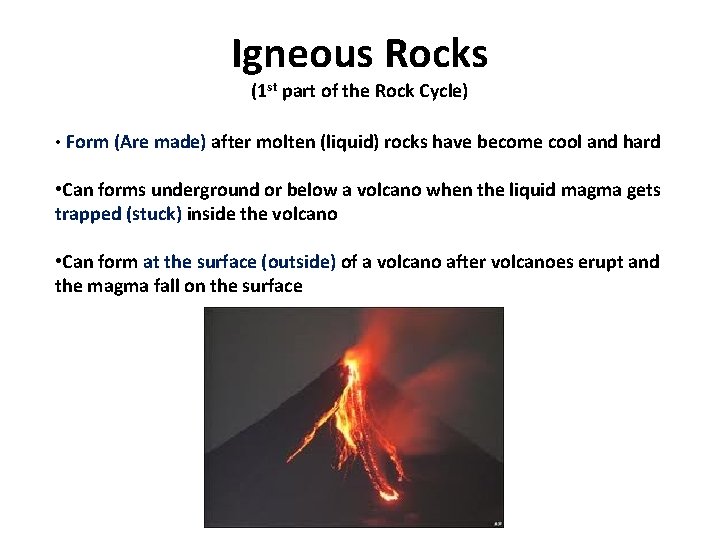
Igneous Rocks (1 st part of the Rock Cycle) • Form (Are made) after molten (liquid) rocks have become cool and hard • Can forms underground or below a volcano when the liquid magma gets trapped (stuck) inside the volcano • Can form at the surface (outside) of a volcano after volcanoes erupt and the magma fall on the surface
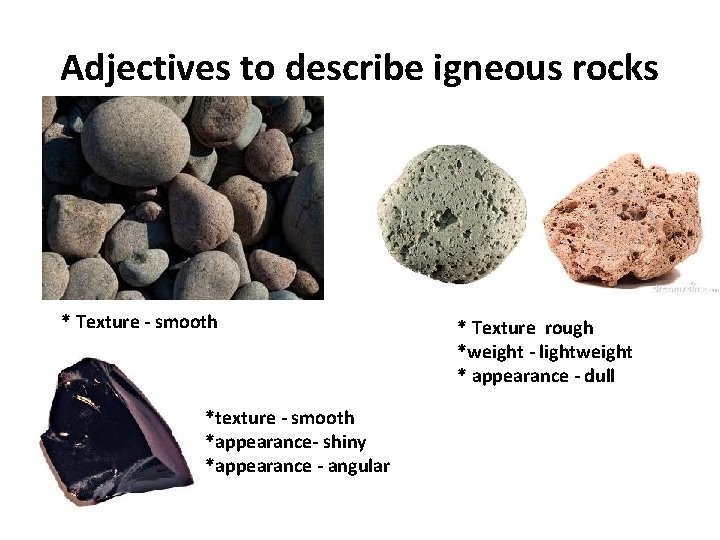
Adjectives to describe igneous rocks * Texture - smooth *texture - smooth *appearance- shiny *appearance - angular * Texture rough *weight - lightweight * appearance - dull
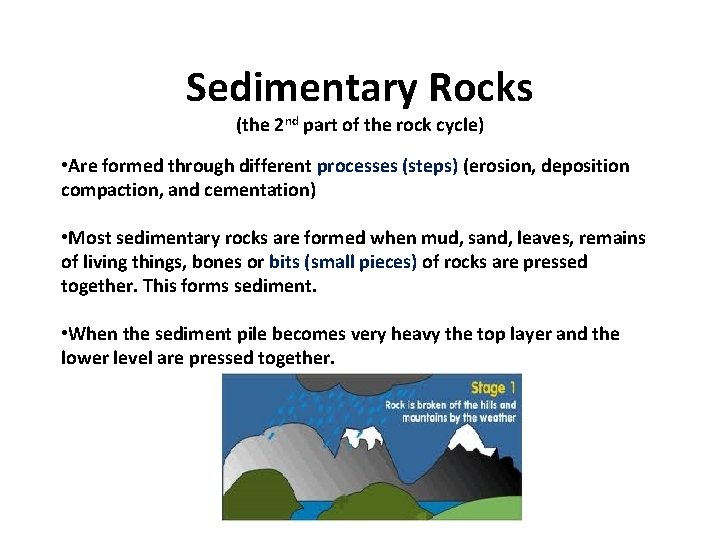
Sedimentary Rocks (the 2 nd part of the rock cycle) • Are formed through different processes (steps) (erosion, deposition compaction, and cementation) • Most sedimentary rocks are formed when mud, sand, leaves, remains of living things, bones or bits (small pieces) of rocks are pressed together. This forms sediment. • When the sediment pile becomes very heavy the top layer and the lower level are pressed together.
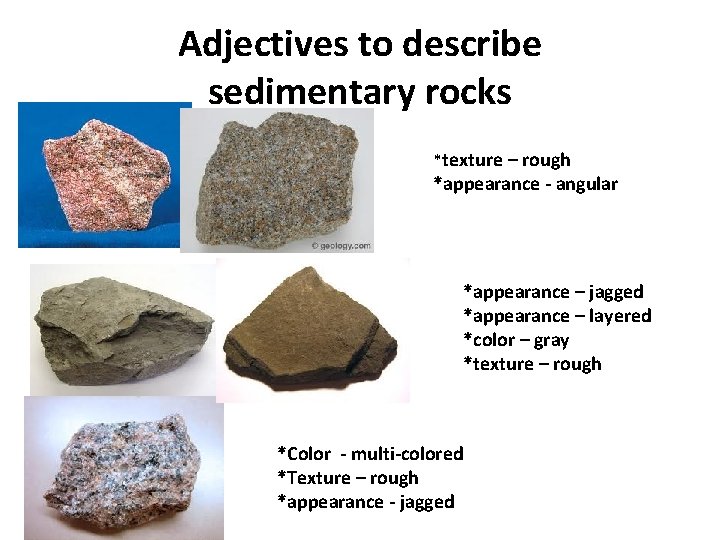
Adjectives to describe sedimentary rocks *texture – rough *appearance - angular *appearance – jagged *appearance – layered *color – gray *texture – rough *Color - multi-colored *Texture – rough *appearance - jagged
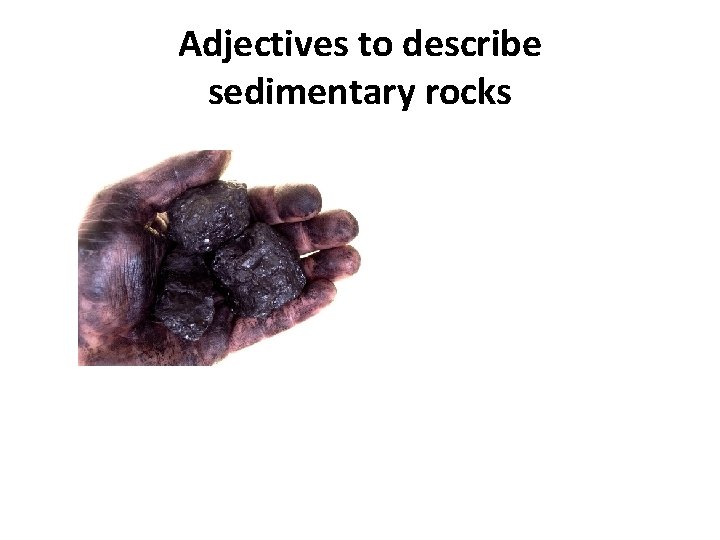
Adjectives to describe sedimentary rocks
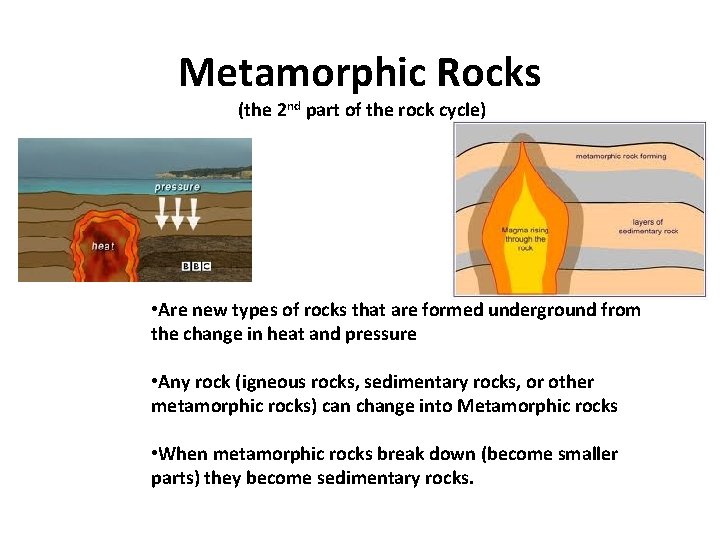
Metamorphic Rocks (the 2 nd part of the rock cycle) • Are new types of rocks that are formed underground from the change in heat and pressure • Any rock (igneous rocks, sedimentary rocks, or other metamorphic rocks) can change into Metamorphic rocks • When metamorphic rocks break down (become smaller parts) they become sedimentary rocks.
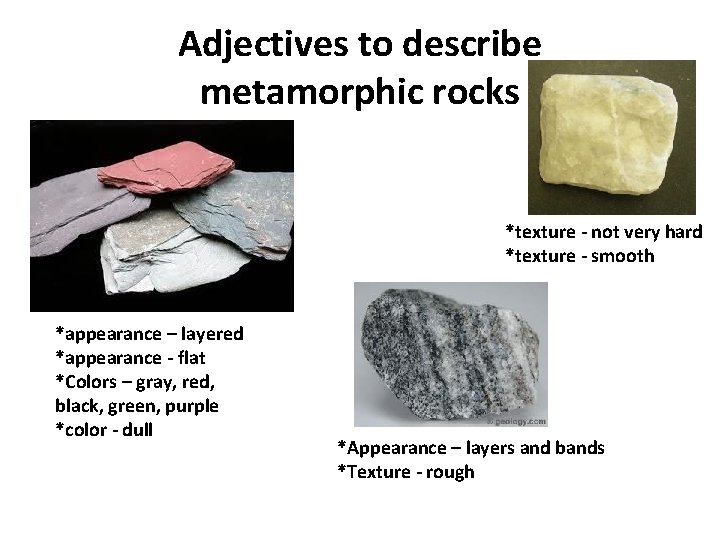
Adjectives to describe metamorphic rocks *texture - not very hard *texture - smooth *appearance – layered *appearance - flat *Colors – gray, red, black, green, purple *color - dull *Appearance – layers and bands *Texture - rough
Review Activity Read the questions. Choose the best answer. Match the question to the correct answer. Question: ………. ? ……………… Answer! ……………. .
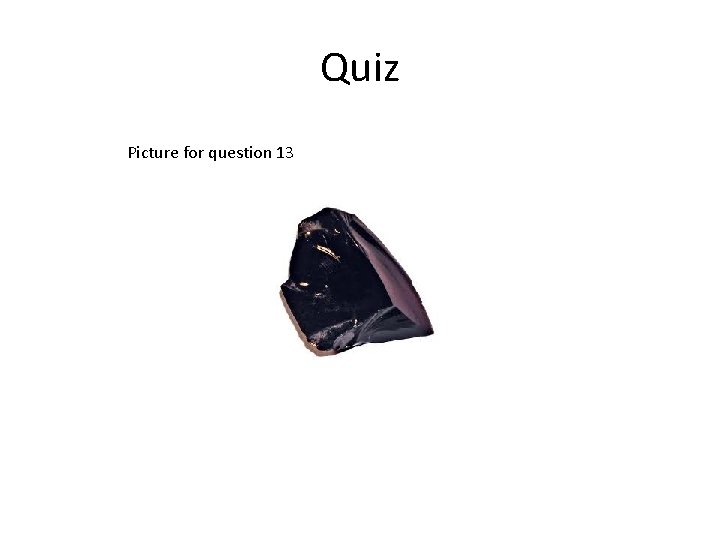
Quiz Picture for question 13
Wrap up What did you learn today?
Have a nice day!