
Classification Why Classify To study the diversity of
- Slides: 75
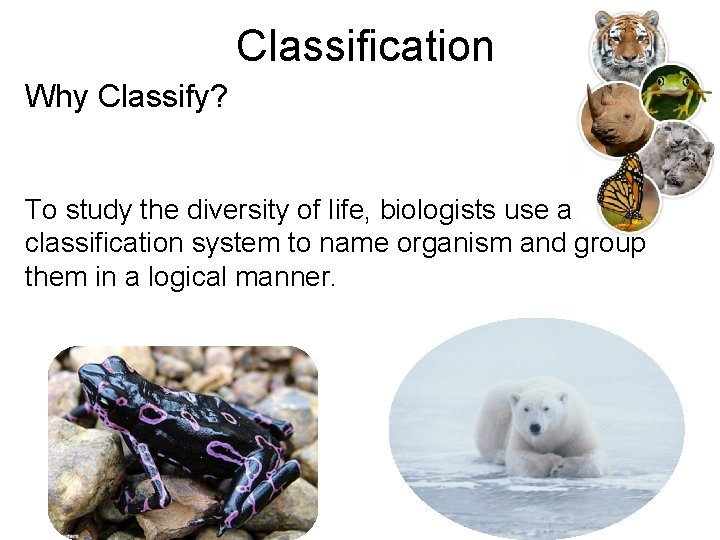
Classification Why Classify? To study the diversity of life, biologists use a classification system to name organism and group them in a logical manner.
Domains • All living organisms are divided into 3 domains and subdivided into 6 kingdoms • Domains containing prokaryotic cells – Archaea – Bacteria • Domain containing eukaryotic cells – Eukarya
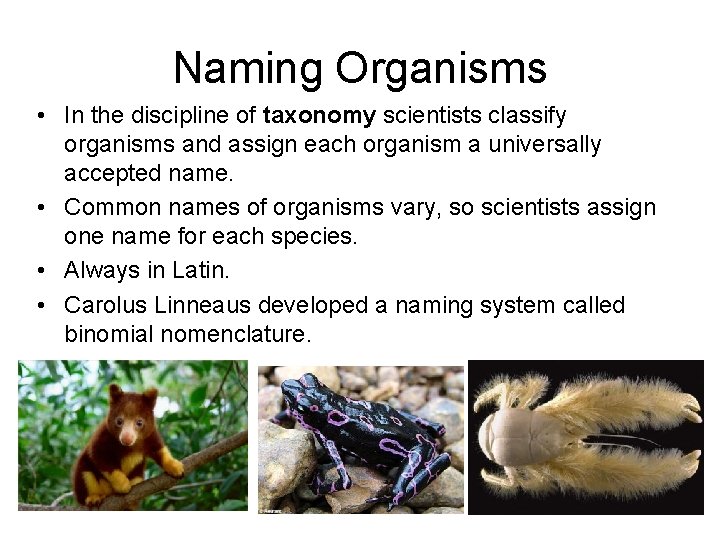
Naming Organisms • In the discipline of taxonomy scientists classify organisms and assign each organism a universally accepted name. • Common names of organisms vary, so scientists assign one name for each species. • Always in Latin. • Carolus Linneaus developed a naming system called binomial nomenclature.
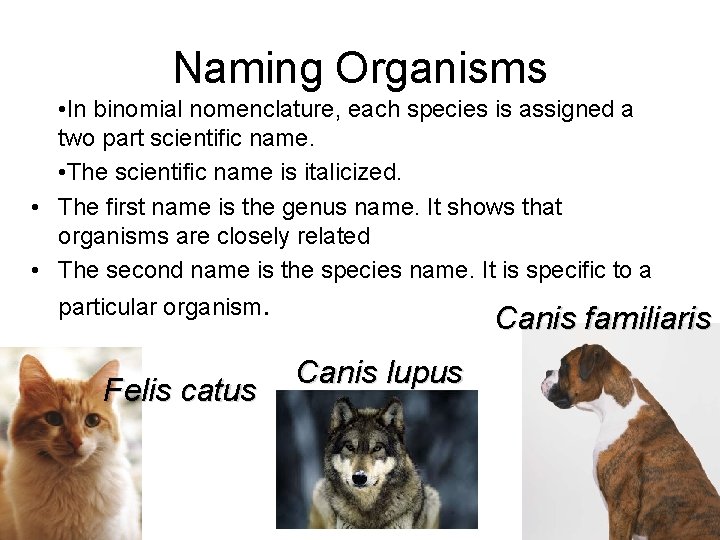
Naming Organisms • In binomial nomenclature, each species is assigned a two part scientific name. • The scientific name is italicized. • The first name is the genus name. It shows that organisms are closely related • The second name is the species name. It is specific to a particular organism. Canis familiaris Felis catus Canis lupus
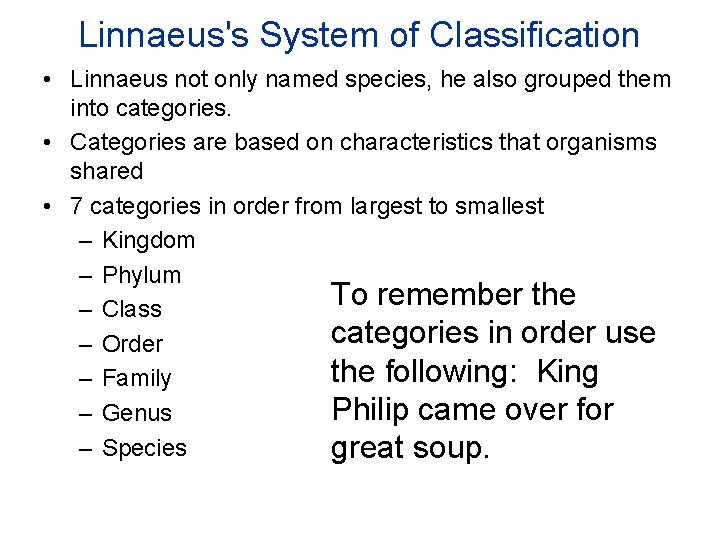
Linnaeus's System of Classification • Linnaeus not only named species, he also grouped them into categories. • Categories are based on characteristics that organisms shared • 7 categories in order from largest to smallest – Kingdom – Phylum To remember the – Class categories in order use – Order the following: King – Family Philip came over for – Genus – Species great soup.
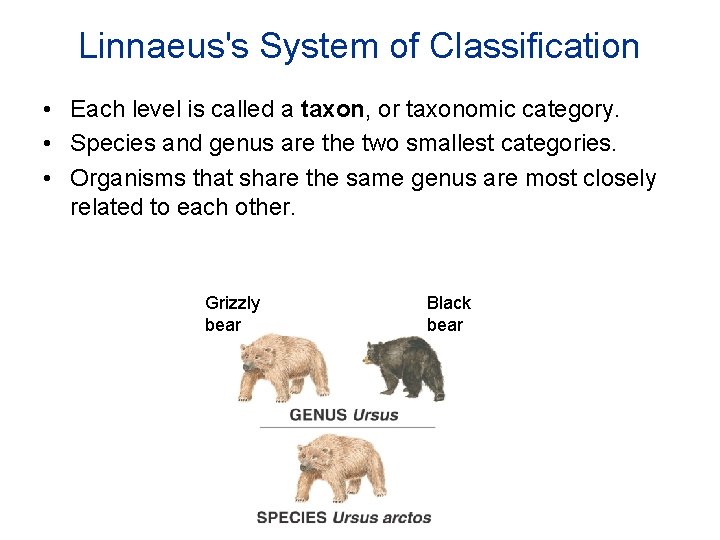
Linnaeus's System of Classification • Each level is called a taxon, or taxonomic category. • Species and genus are the two smallest categories. • Organisms that share the same genus are most closely related to each other. Grizzly bear Black bear
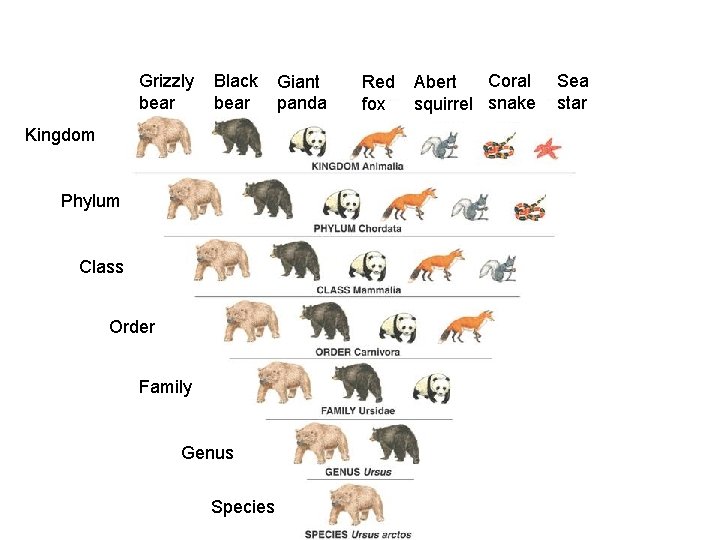
Grizzly bear Black bear Kingdom Phylum Class Order Family Genus Species Giant panda Red fox Coral Abert squirrel snake Sea star
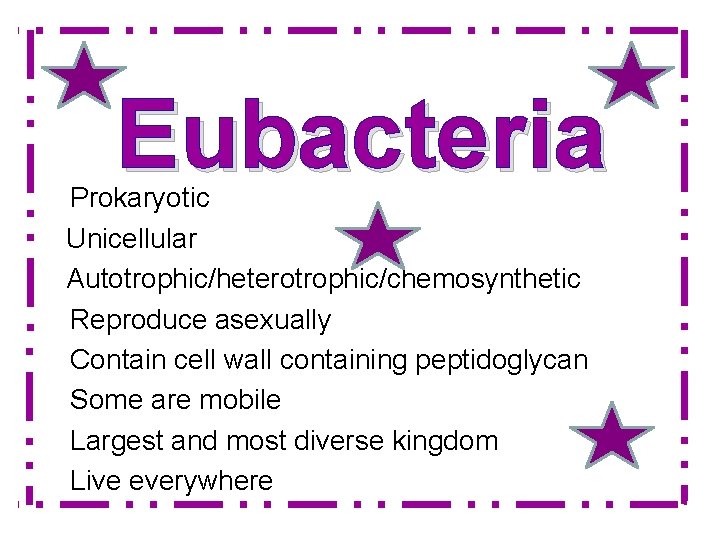
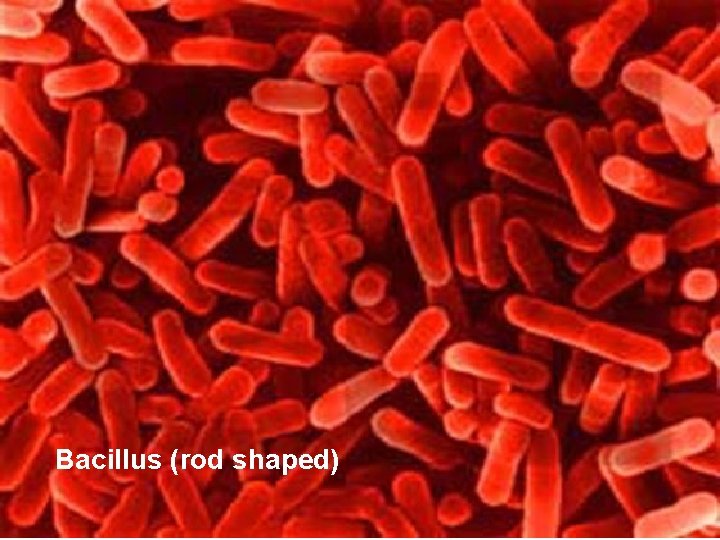
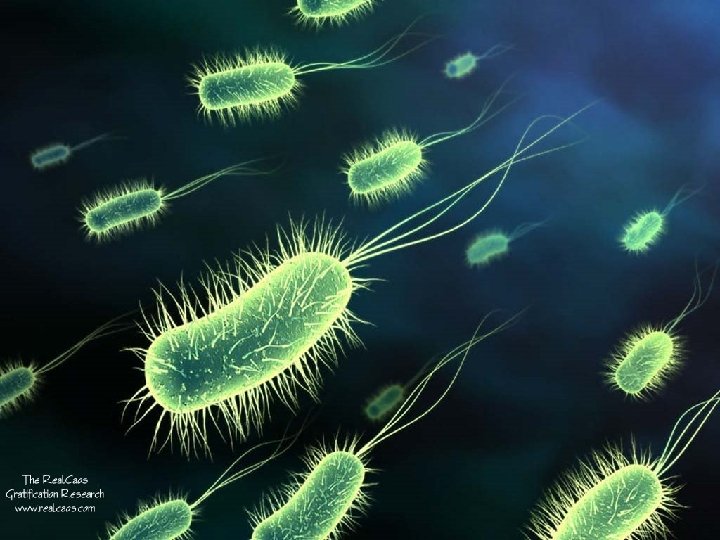
Eubacteria Prokaryotic Unicellular Autotrophic/heterotrophic/chemosynthetic Reproduce asexually Contain cell wall containing peptidoglycan Some are mobile Largest and most diverse kingdom Live everywhere
Bacteria Bacillus (rod shaped)
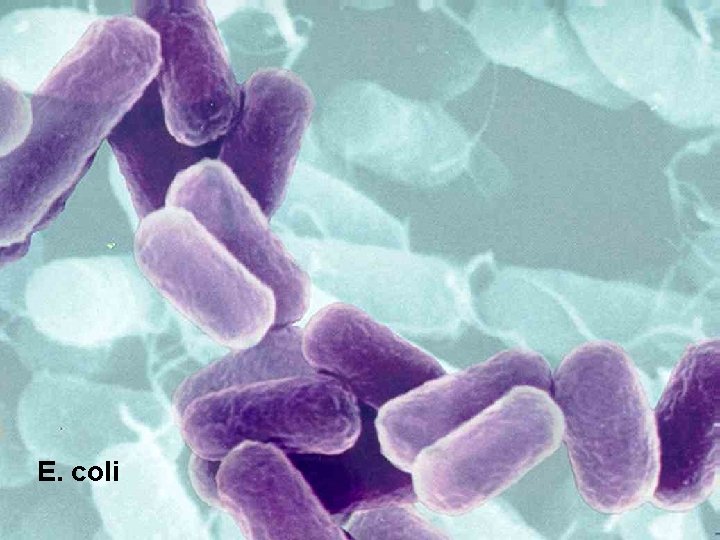
E. coli
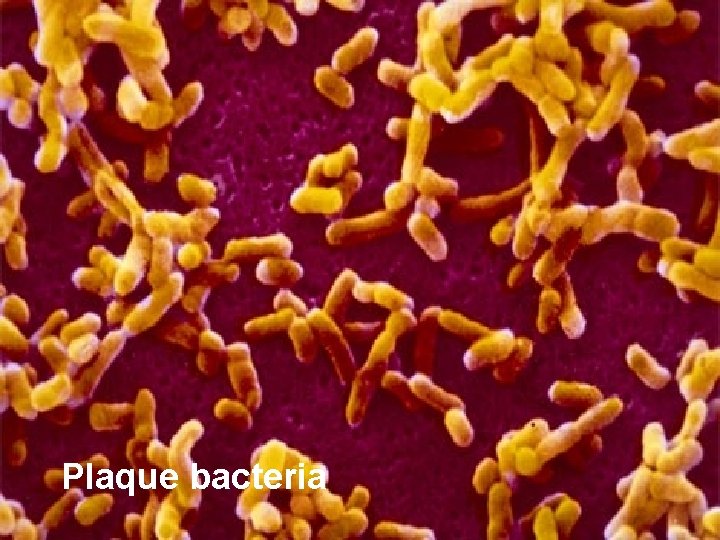
Plaque bacteria
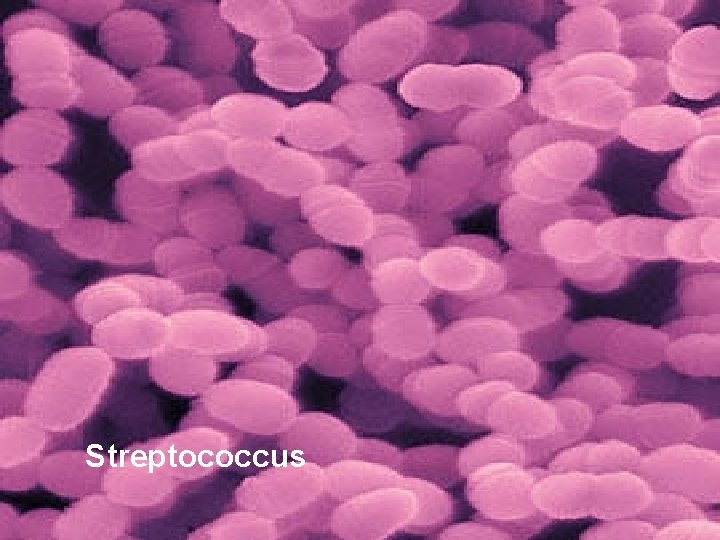
Streptococcus
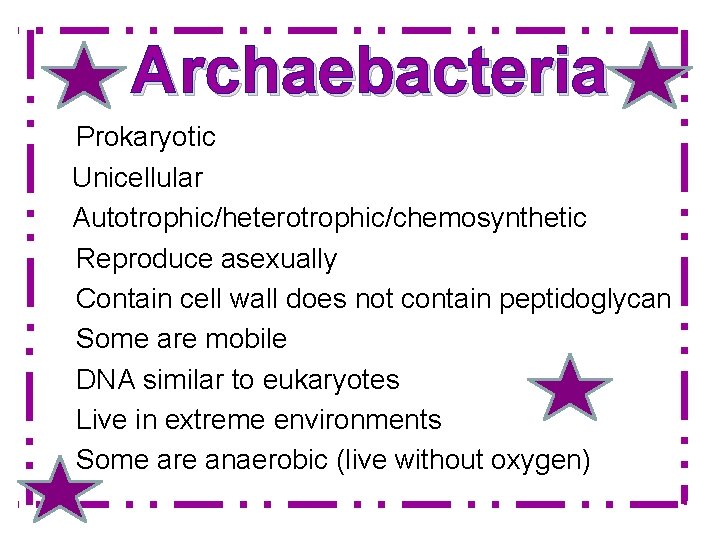
Archaebacteria Prokaryotic Unicellular Autotrophic/heterotrophic/chemosynthetic Reproduce asexually Contain cell wall does not contain peptidoglycan Some are mobile DNA similar to eukaryotes Live in extreme environments Some are anaerobic (live without oxygen)
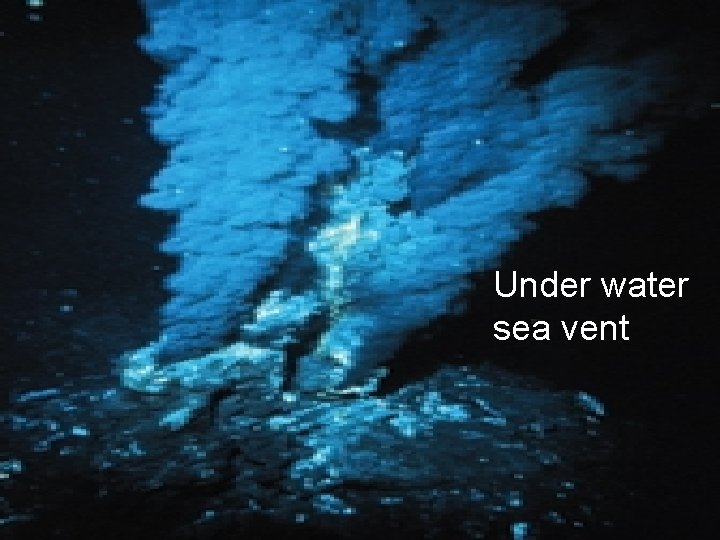
Under water sea vent
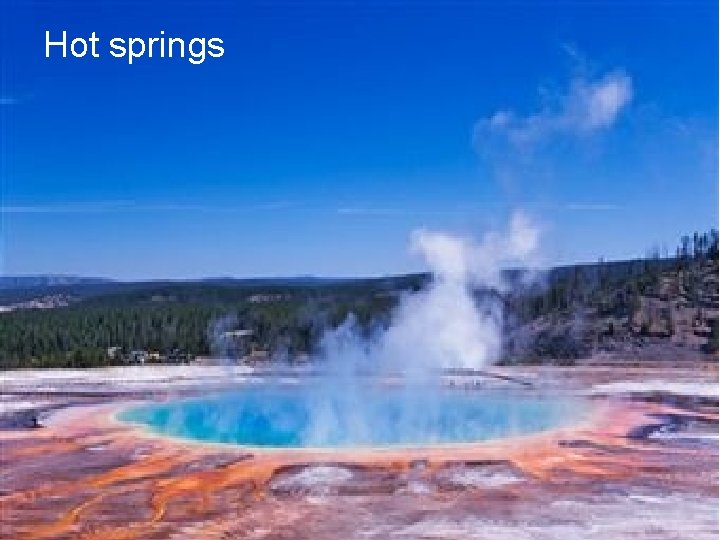
Hot springs
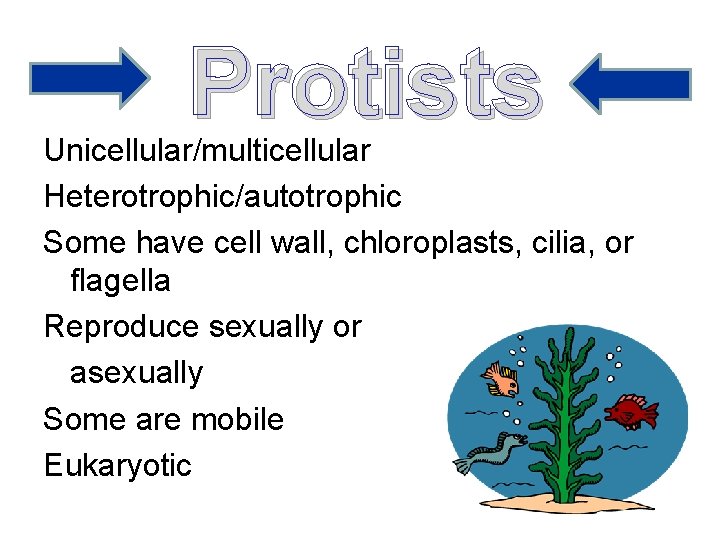
Protists Unicellular/multicellular Heterotrophic/autotrophic Some have cell wall, chloroplasts, cilia, or flagella Reproduce sexually or asexually Some are mobile Eukaryotic
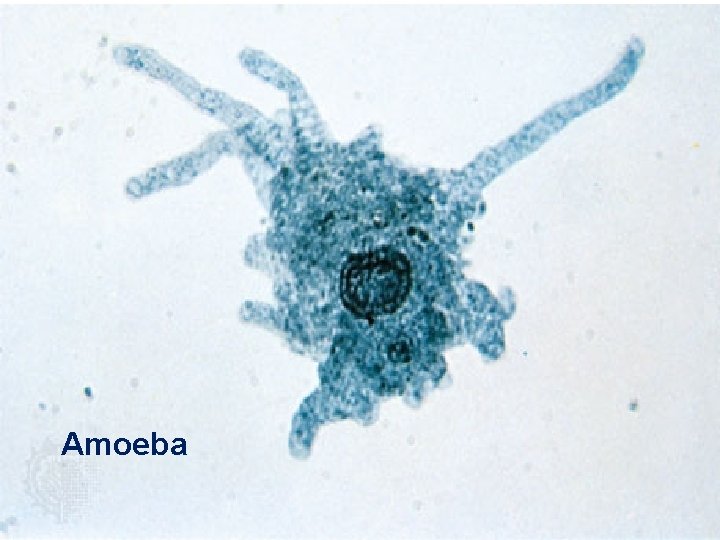
Amoeba
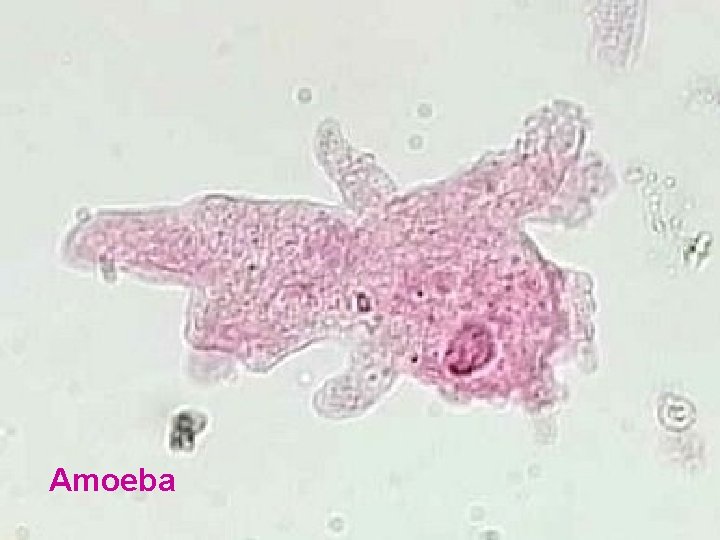
Amoeba
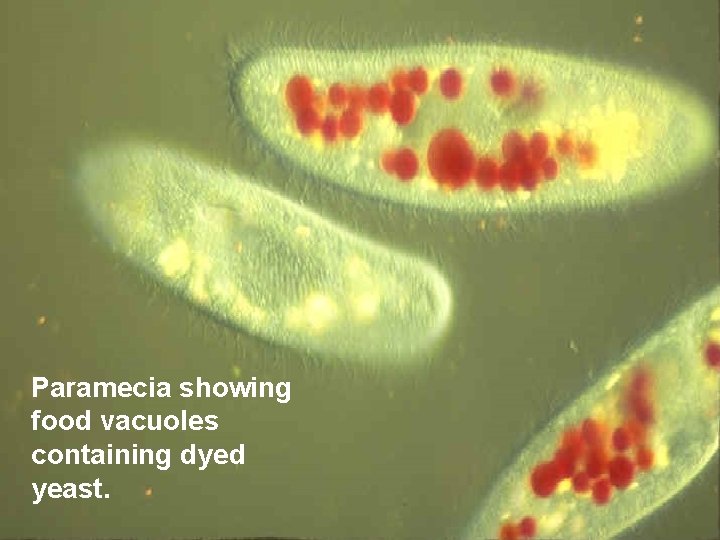
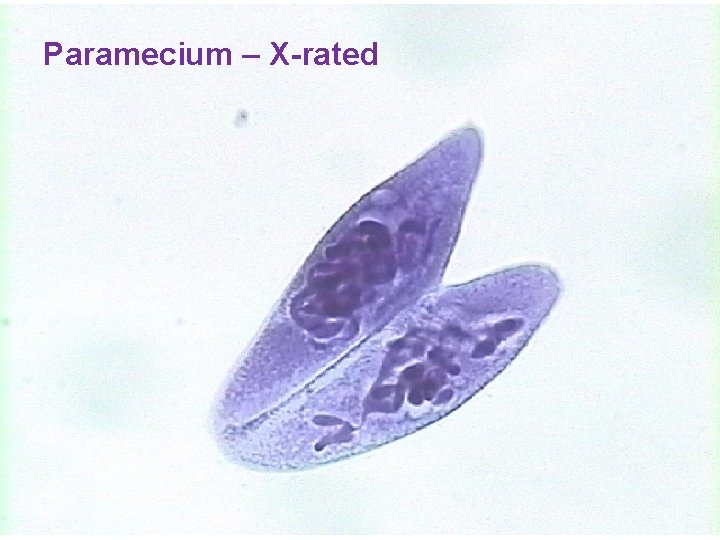
Paramecia showing food vacuoles containing dyed yeast.
Paramecium – X-rated
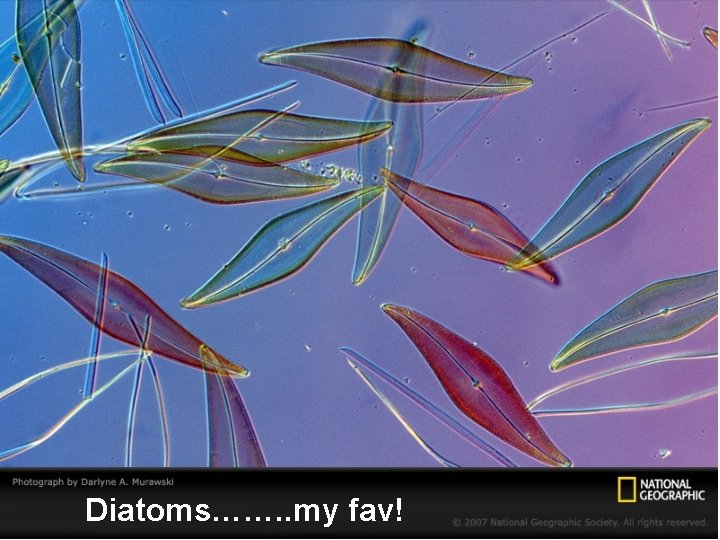
Diatoms……. . my fav!
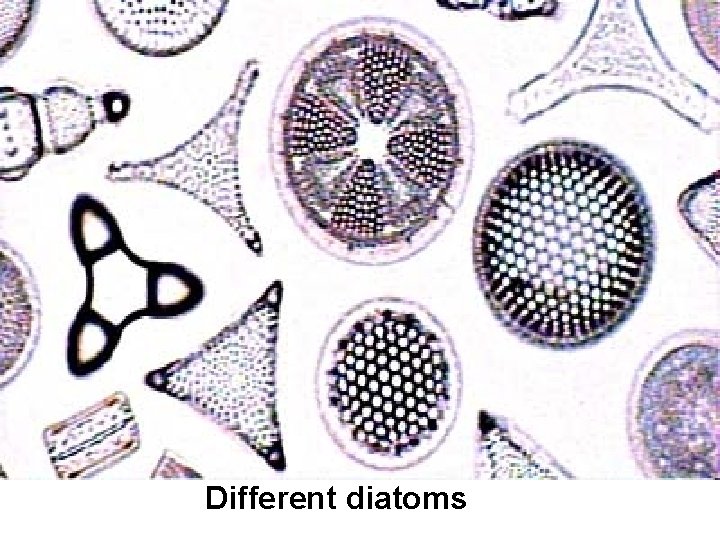
Different diatoms
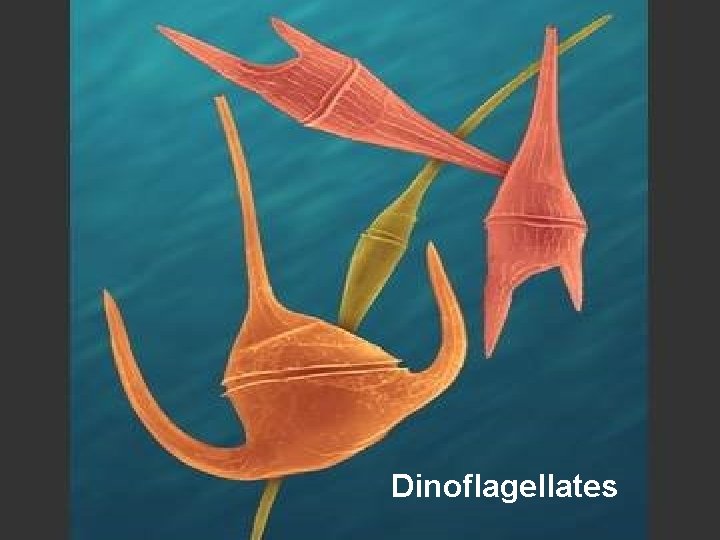
Dinoflagellates
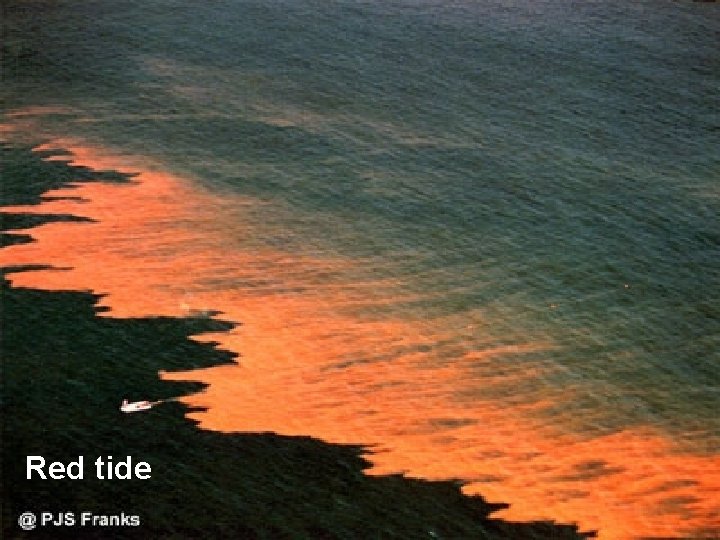
Red tide
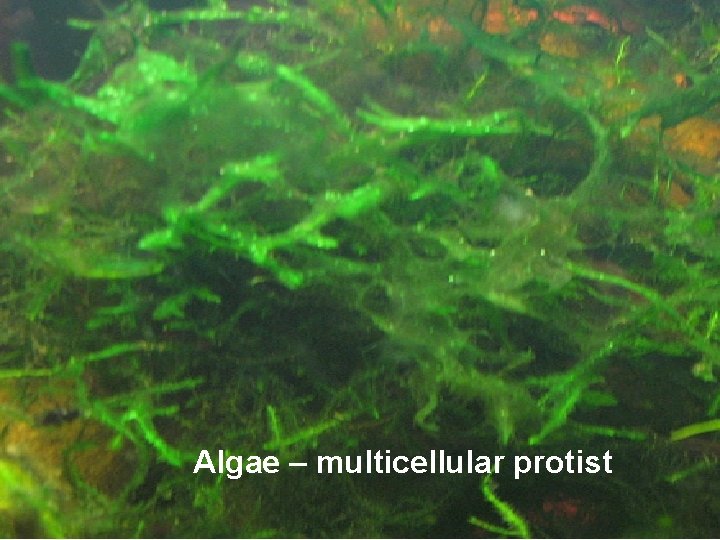
Algae – multicellular protist
Kingdom Fungi • • Unicellular/multicellular Heterotrophic Eukaryotic cells Other – Cell wall – Decomposer – Reproduce sexually or asexually – No chloroplasts – Non-mobile
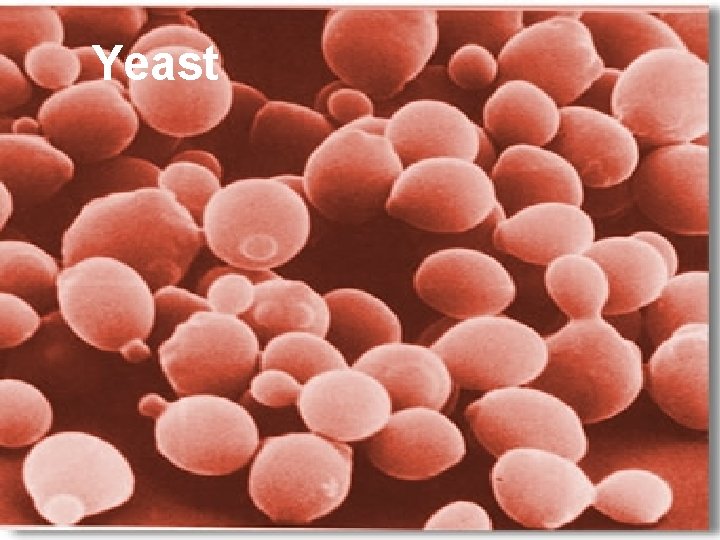
Yeast
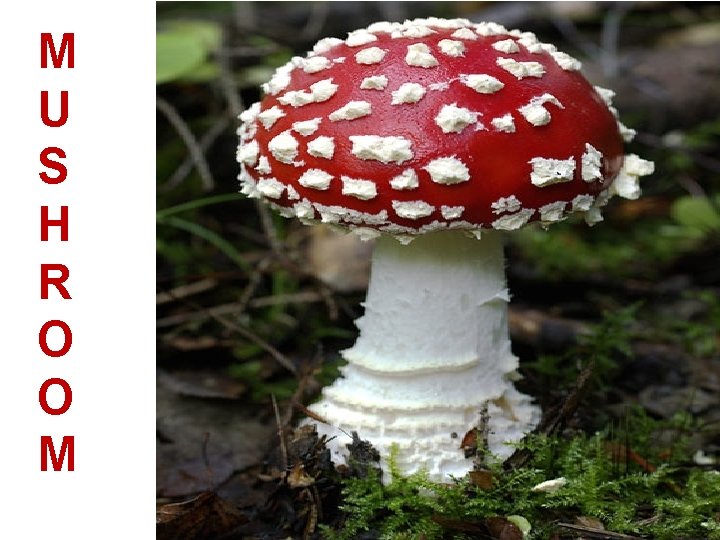
M U S H R O O M
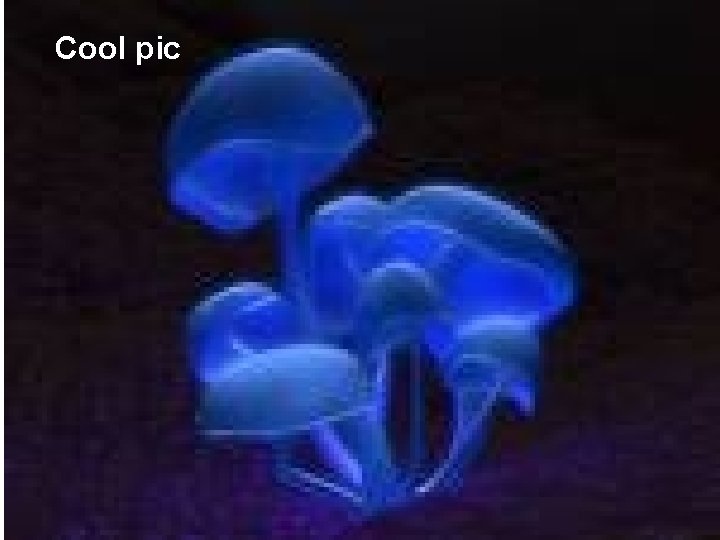
Cool pic
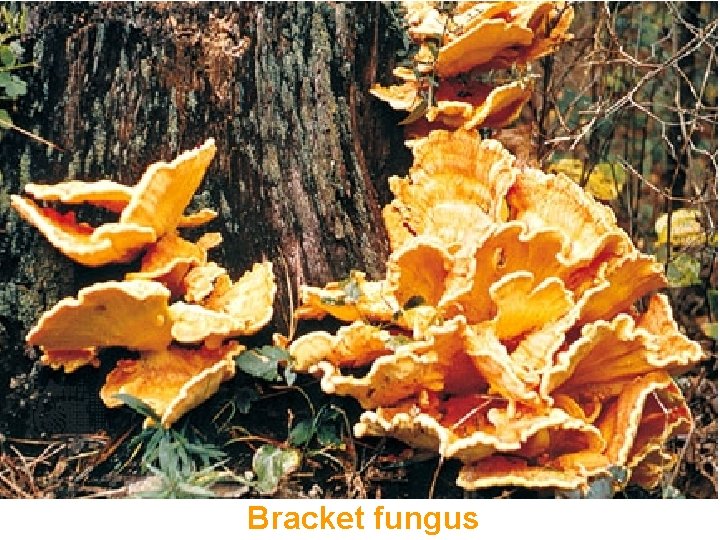
Bracket fungus
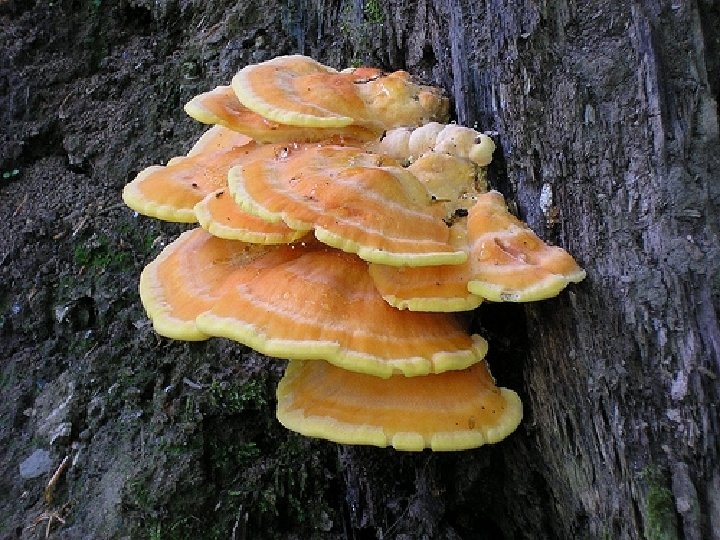
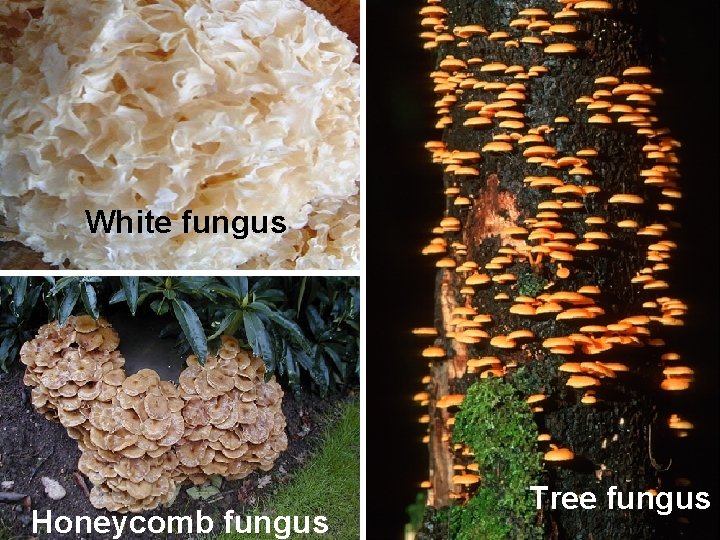
White fungus Honeycomb fungus Tree fungus
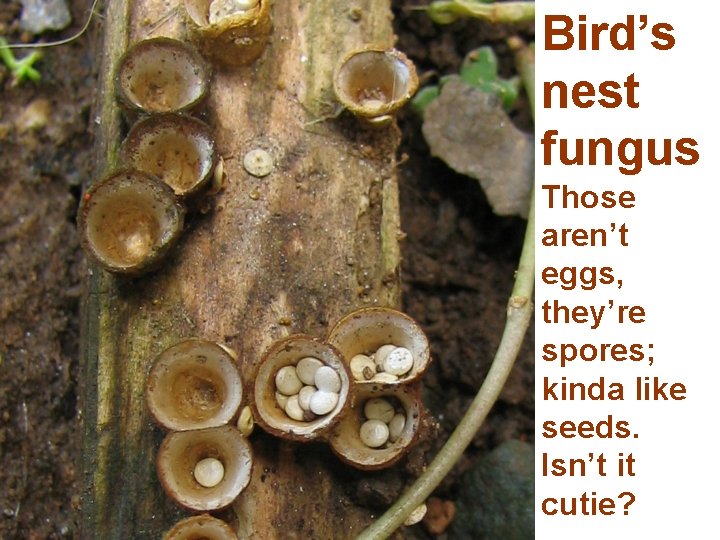
Bird’s nest fungus Those aren’t eggs, they’re spores; kinda like seeds. Isn’t it cutie?
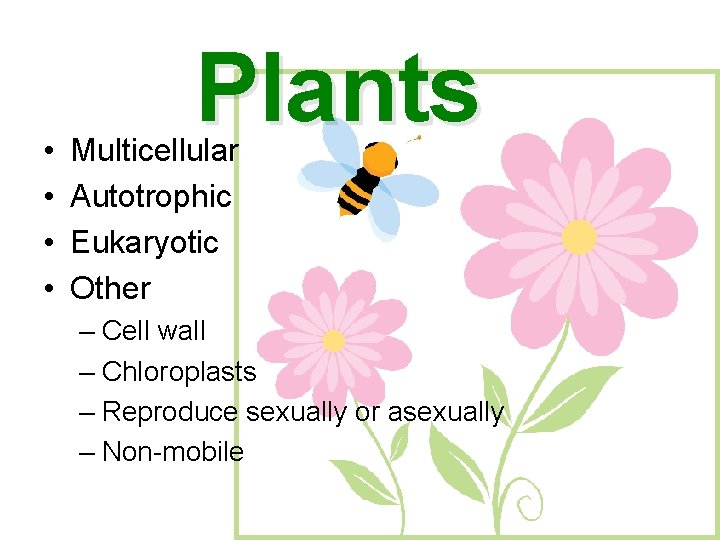
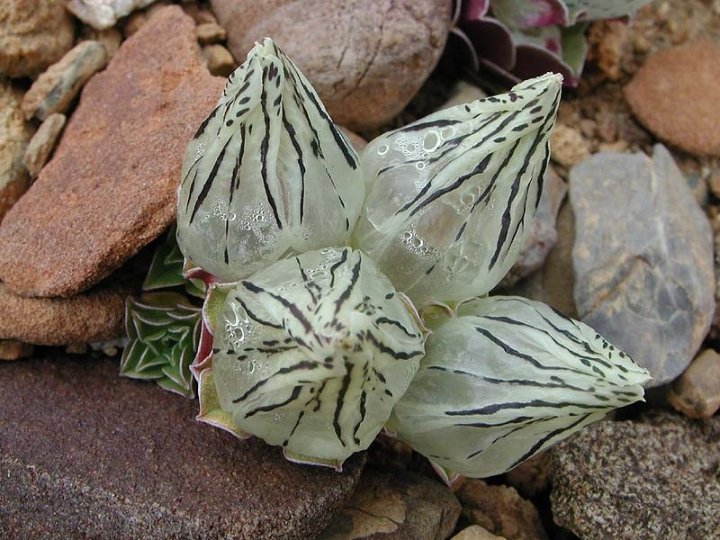
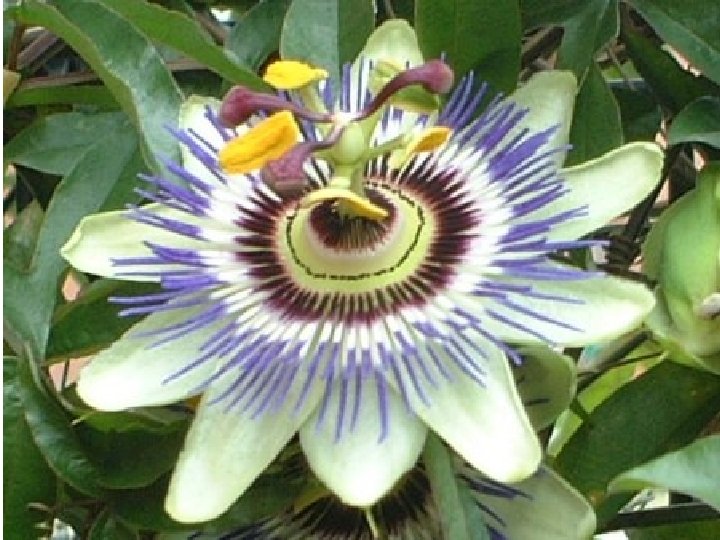
• • Plants Multicellular Autotrophic Eukaryotic Other – Cell wall – Chloroplasts – Reproduce sexually or asexually – Non-mobile
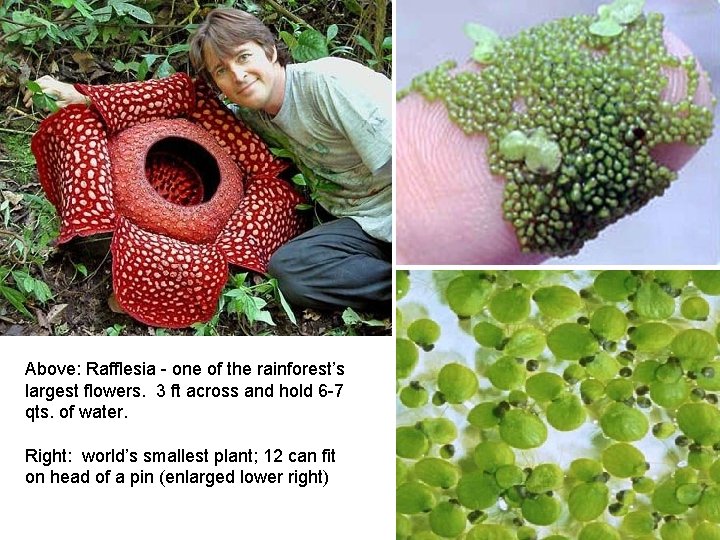
Above: Rafflesia - one of the rainforest’s largest flowers. 3 ft across and hold 6 -7 qts. of water. Right: world’s smallest plant; 12 can fit on head of a pin (enlarged lower right)
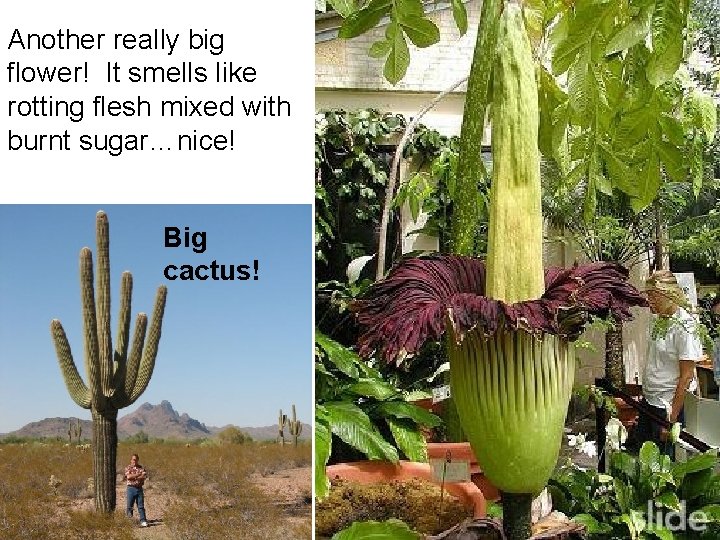
Another really big flower! It smells like rotting flesh mixed with burnt sugar…nice! Big cactus!
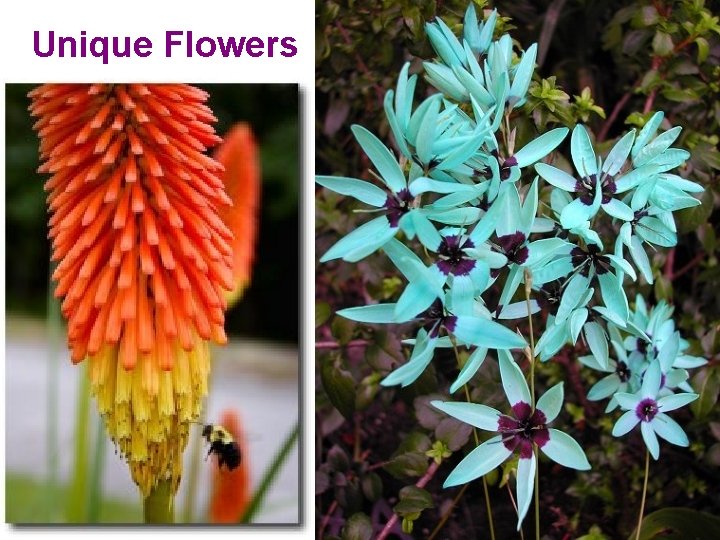
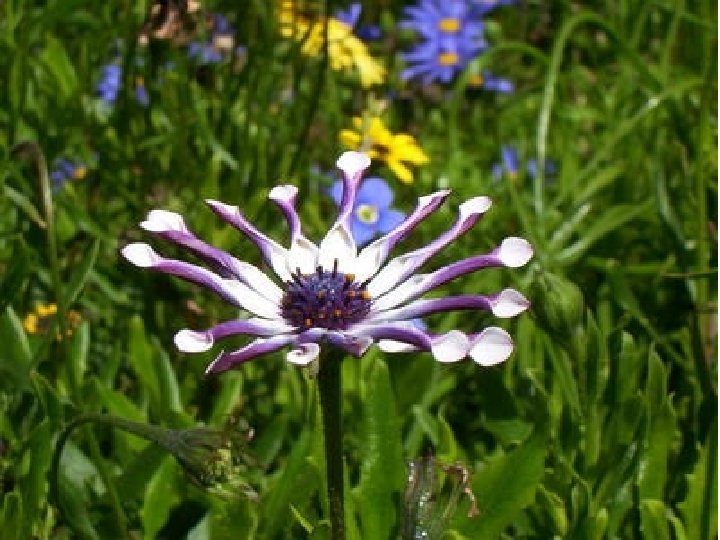
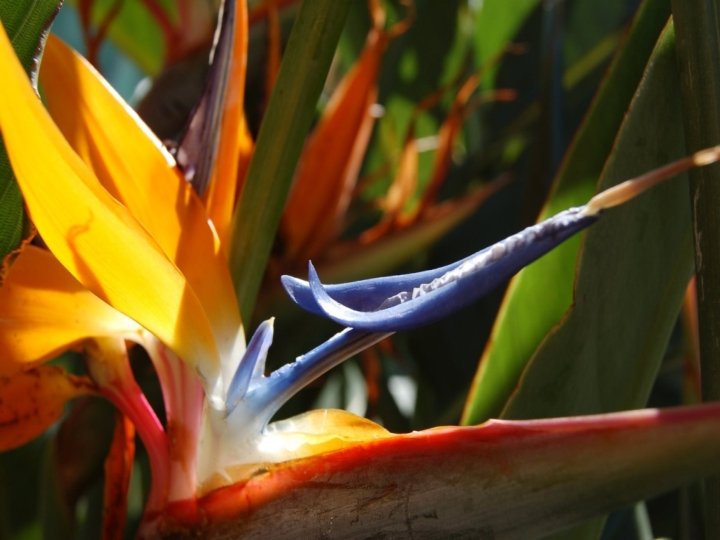
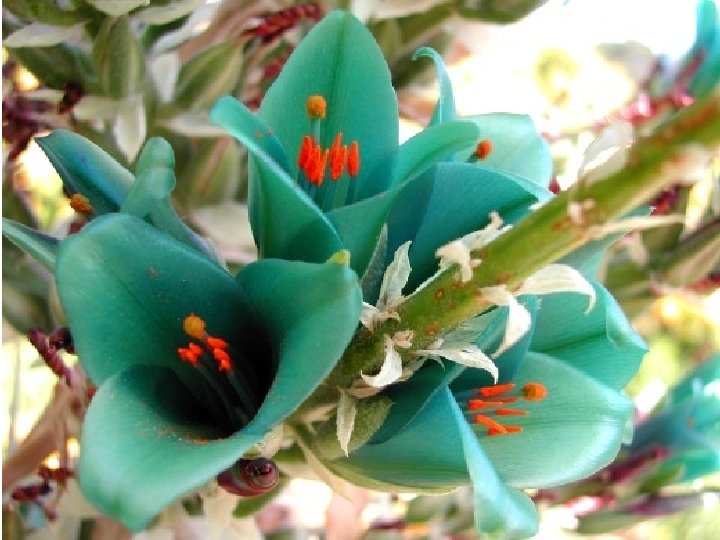
Unique Flowers
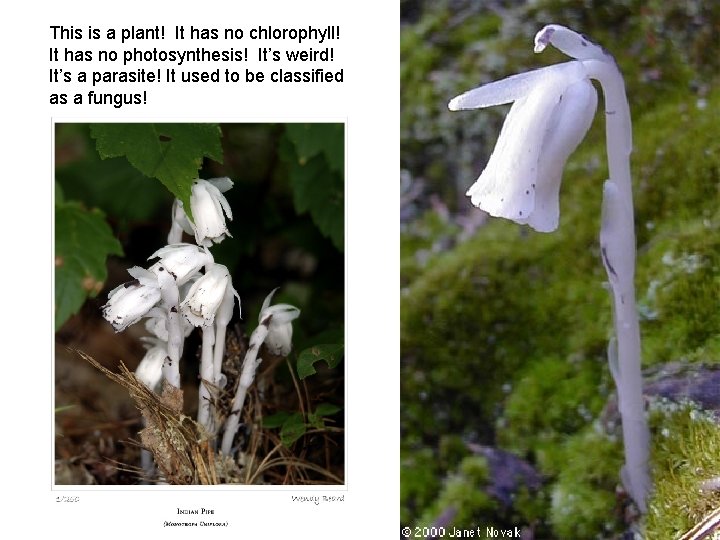
This is a plant! It has no chlorophyll! It has no photosynthesis! It’s weird! It’s a parasite! It used to be classified as a fungus!
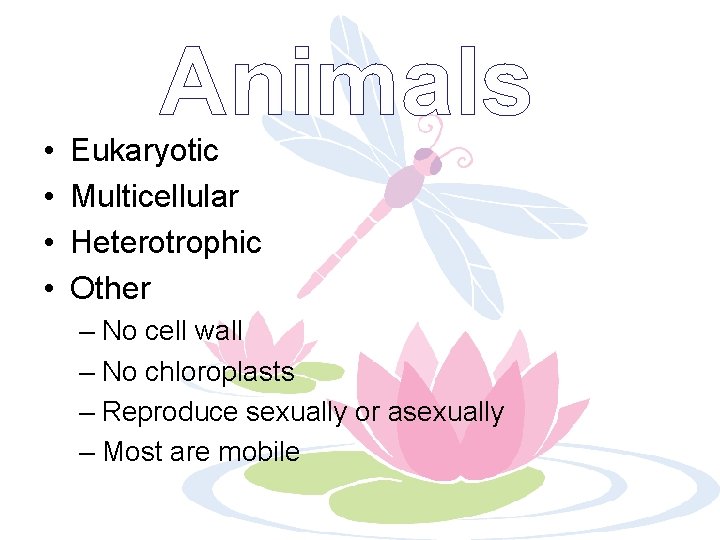
• • Animals Eukaryotic Multicellular Heterotrophic Other – No cell wall – No chloroplasts – Reproduce sexually or asexually – Most are mobile
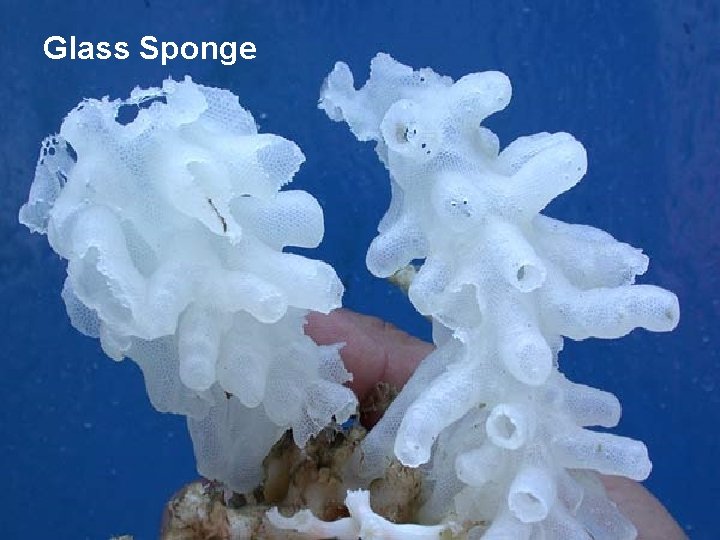
Glass Sponge
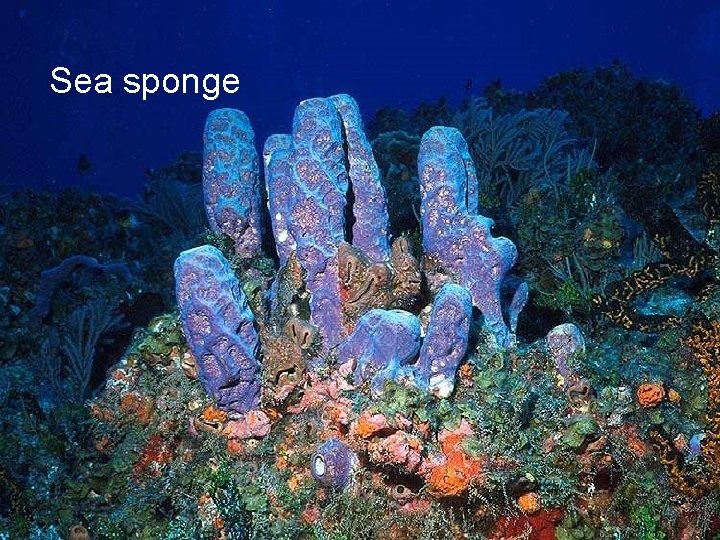
Sea sponge
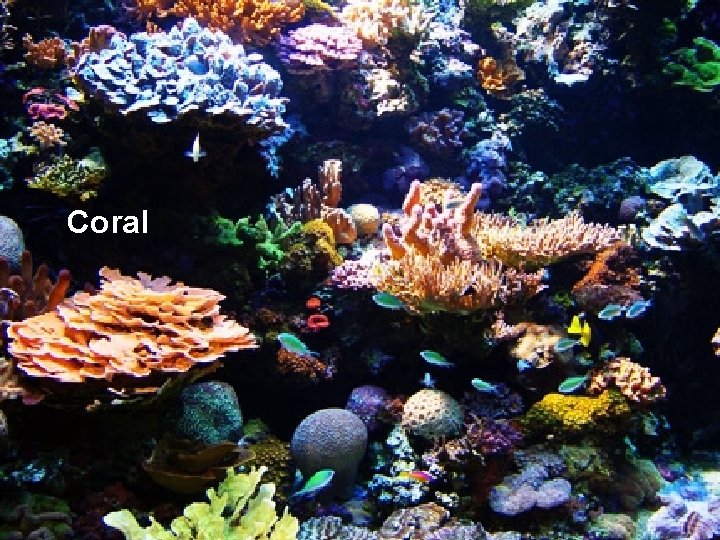
Coral
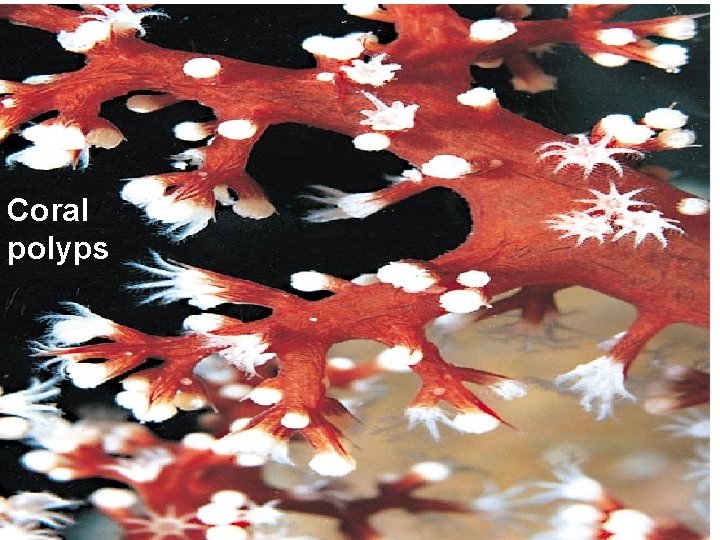
Coral polyps
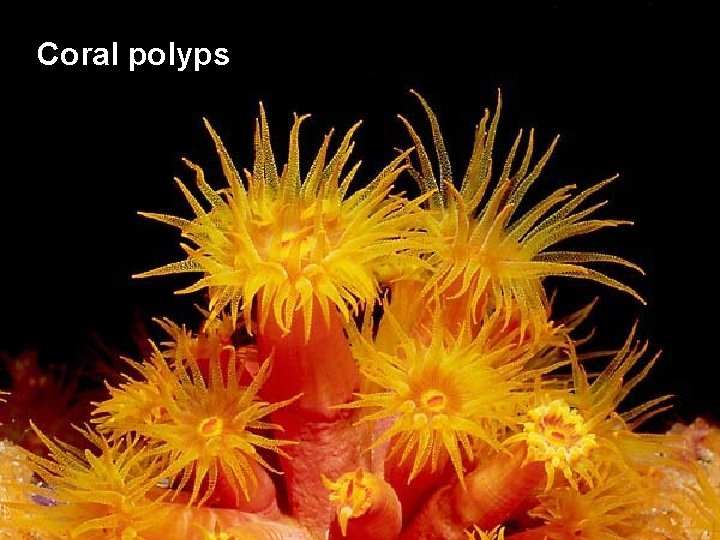
Coral polyps
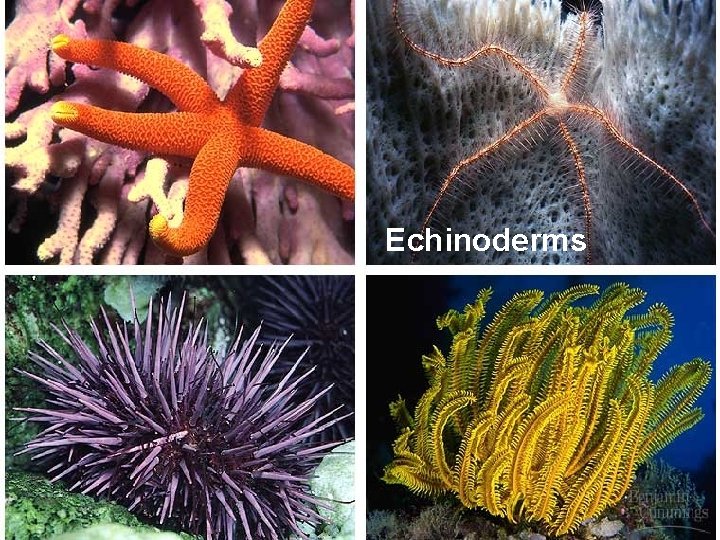
Echinoderms
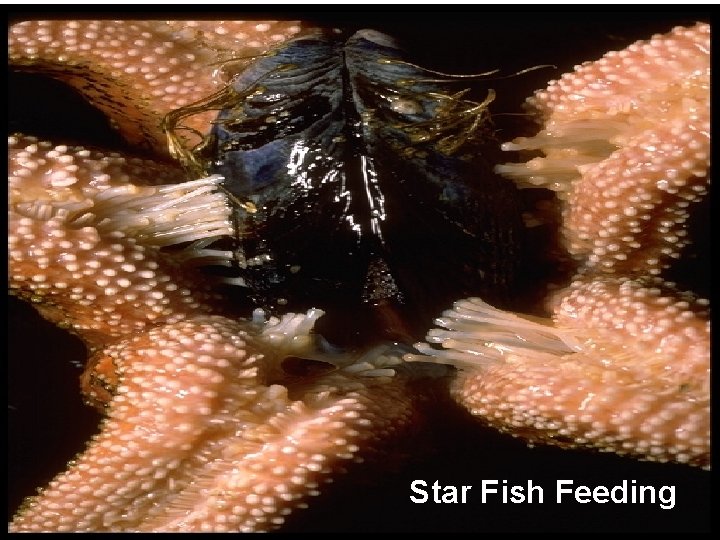
Star Fish Feeding
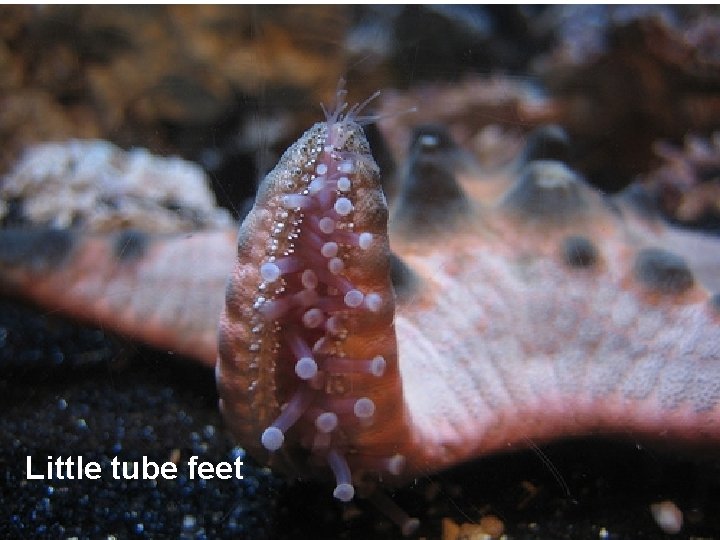
Little tube feet
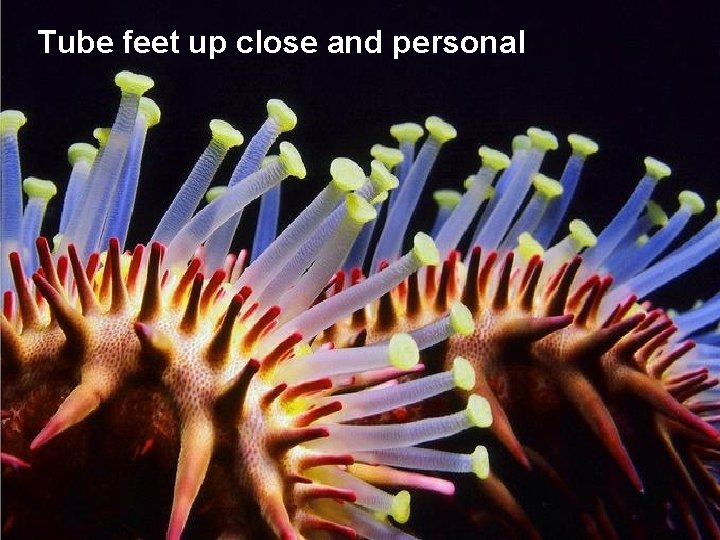
Tube feet up close and personal
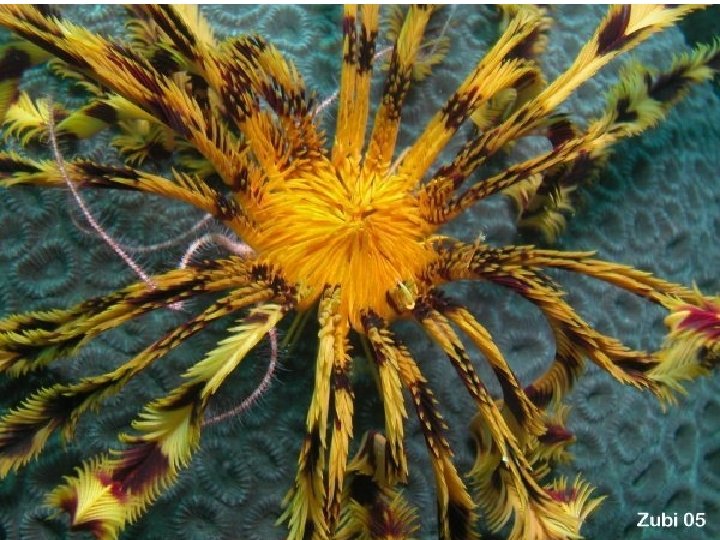
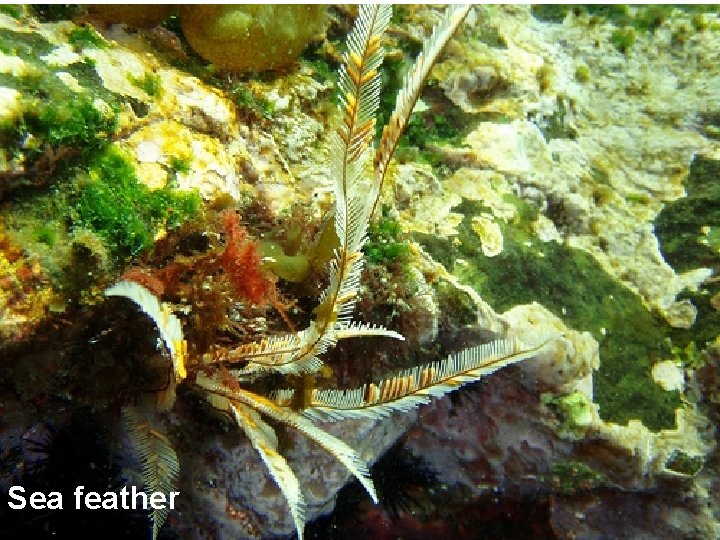
Sea feather
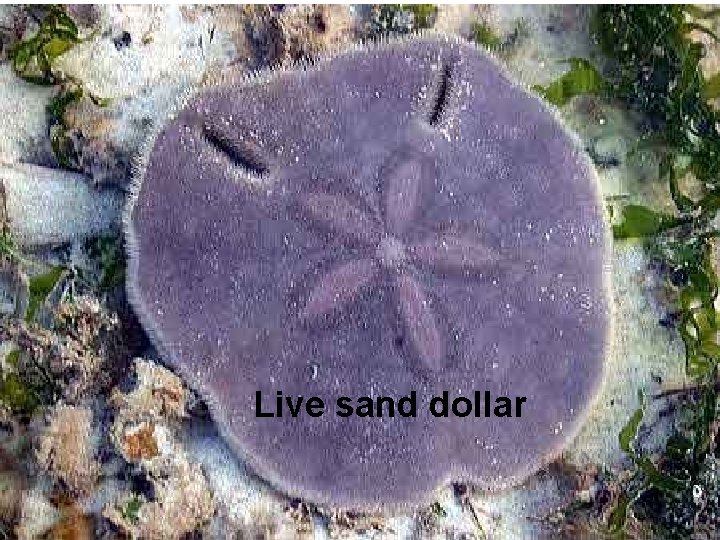
Live sand dollar
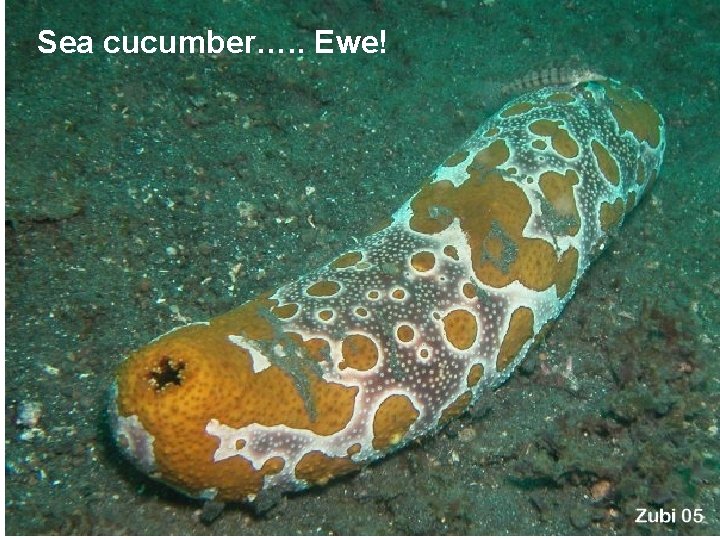
Sea cucumber…. . Ewe!
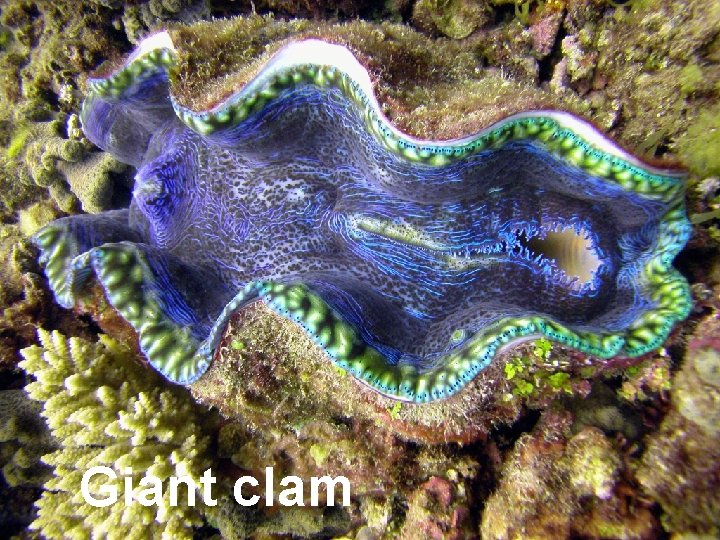
Giant clam
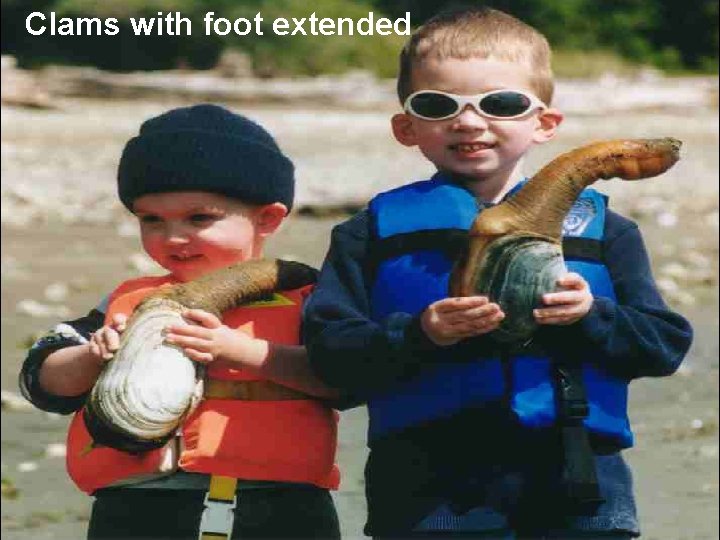
Clams with foot extended
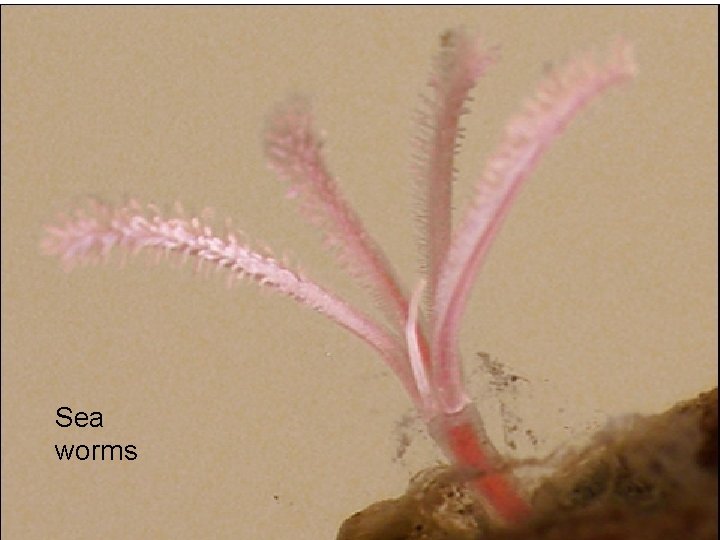
Sea worms
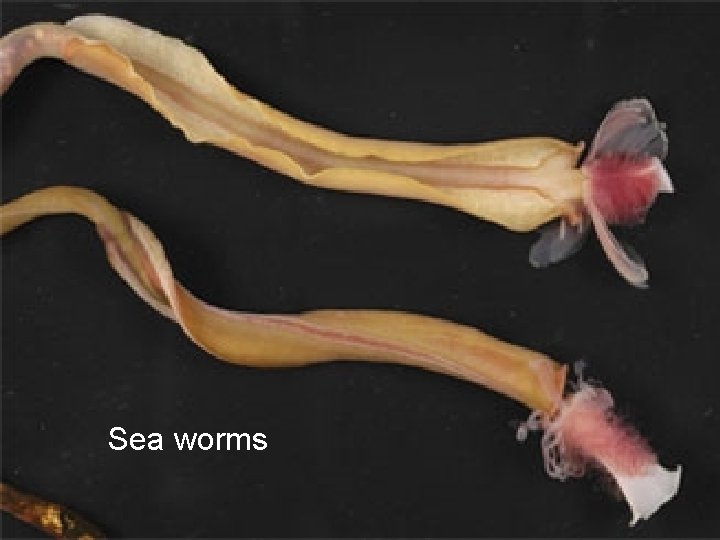
Sea worms
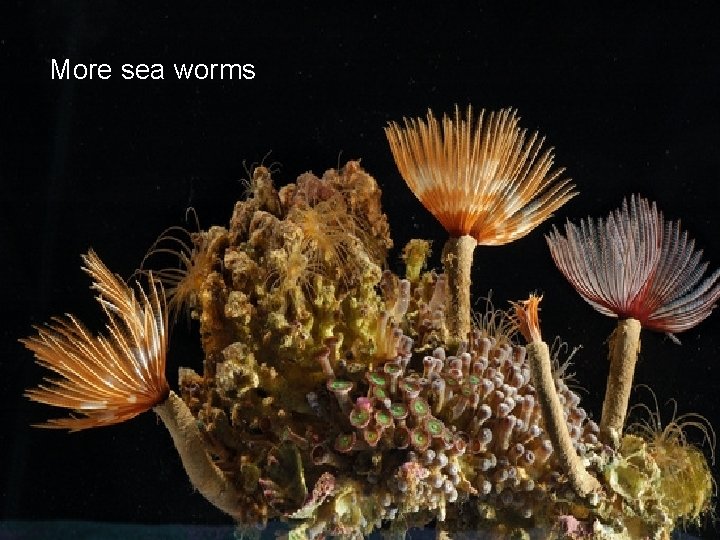
More sea worms
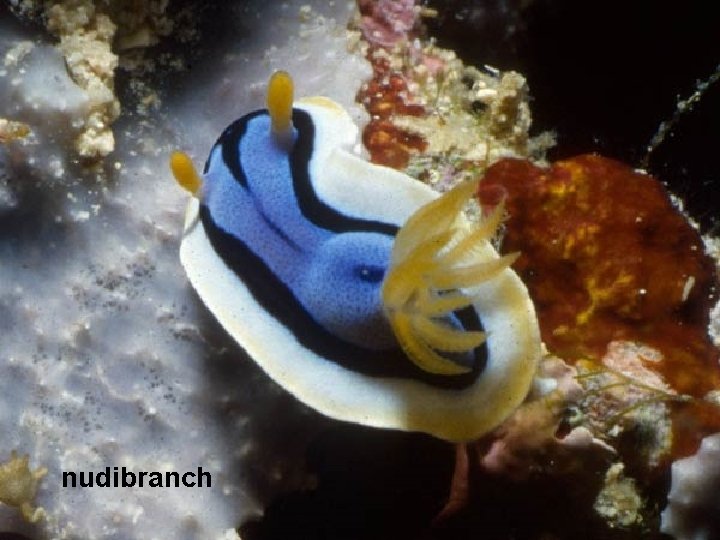
nudibranch
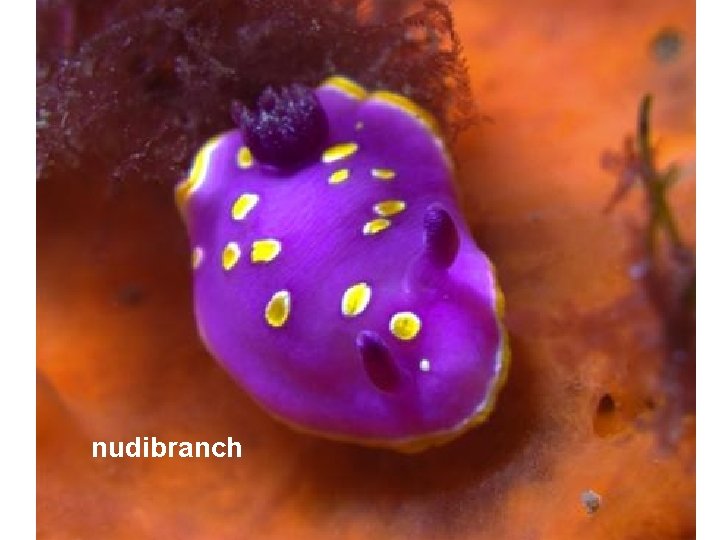
nudibranch
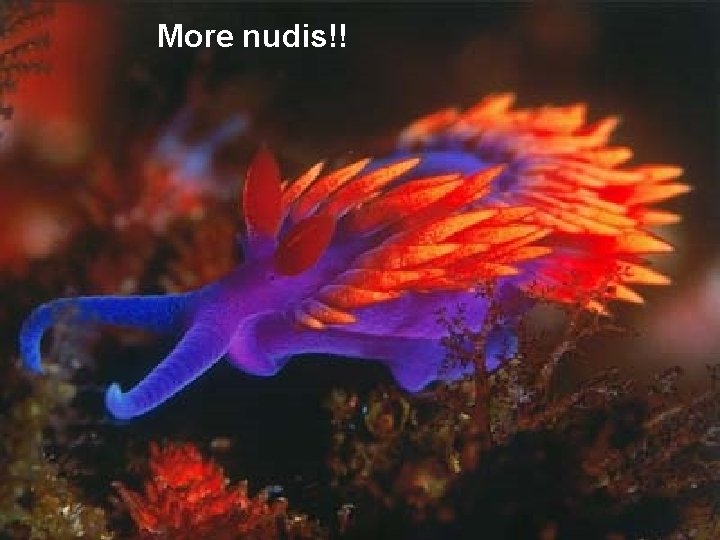
More nudis!!
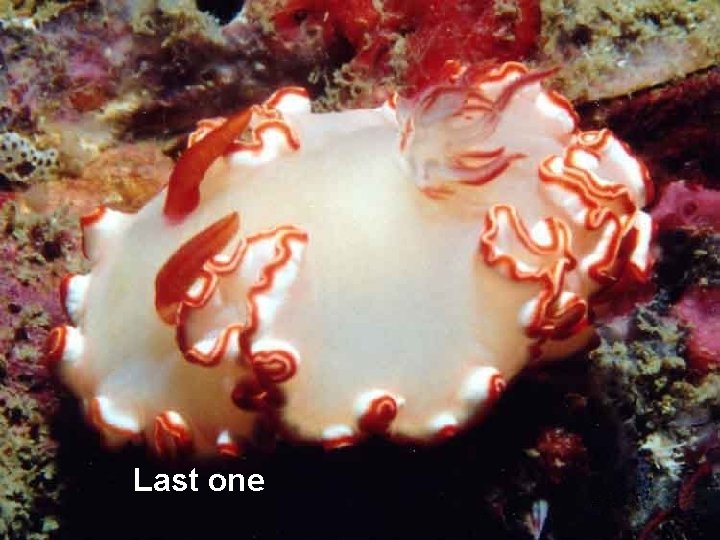
Last one
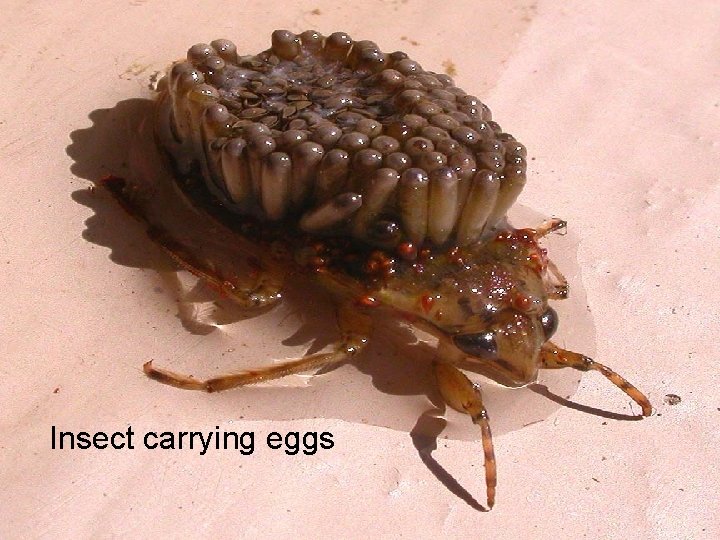
Insect carrying eggs
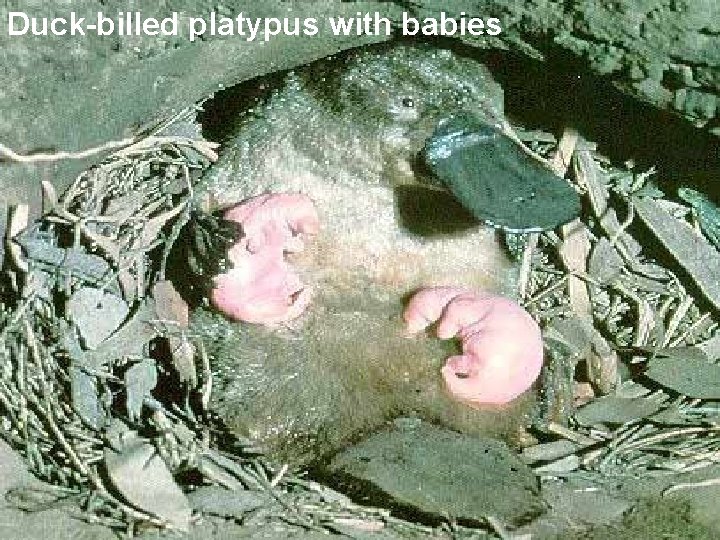
Duck-billed platypus with babies
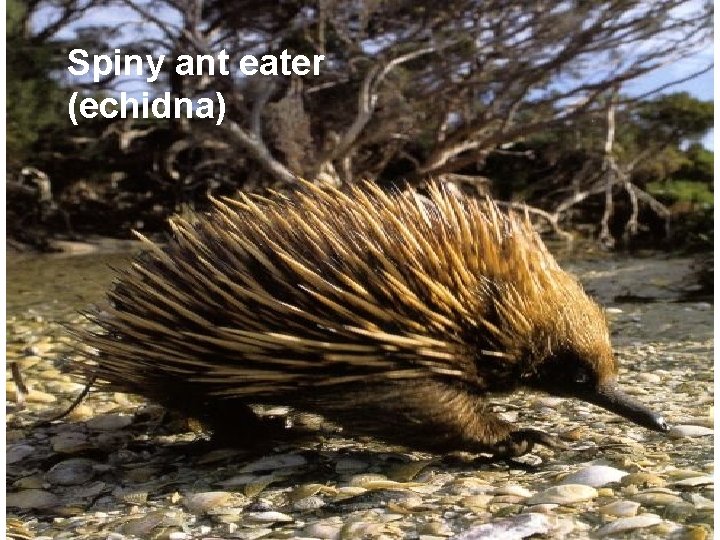
Spiny ant eater (echidna)
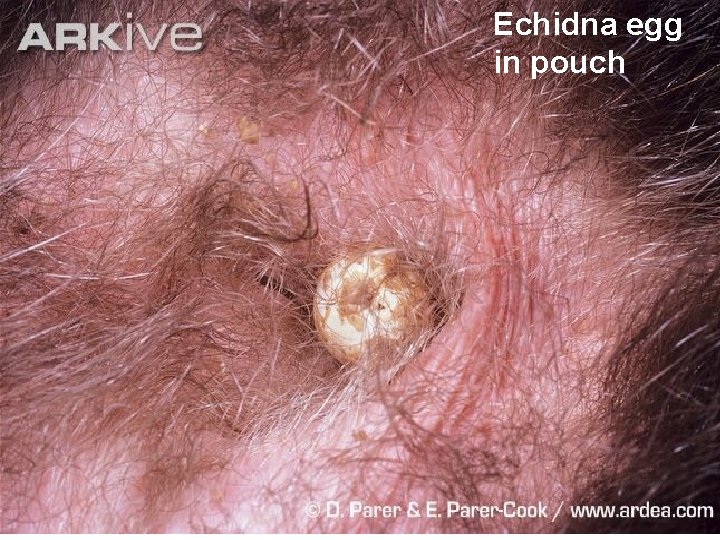
Echidna egg in pouch
Vocabulary Assignment 1. 2. 3. 4. 5. 6. 7. 8. Classification Taxonomy Domain Kingdom Species Bacteria Protist Autotroph 9. Flagella 10. Cilia 11. Heterotroph 12. Amoeba