
Classification What is taxidermy What is taxonomy How






- Slides: 37
Classification!
What is taxidermy? What is taxonomy? How do you know if 2 creatures are the same species?
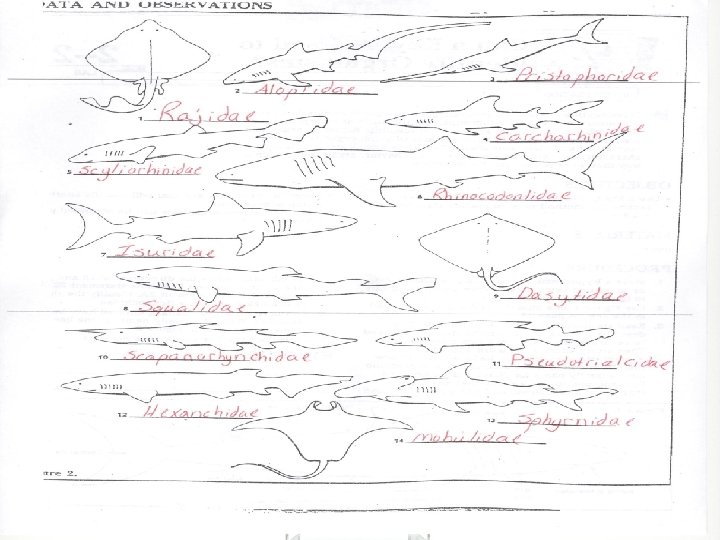
The Joy of Classification! Taxonomy: The branch of biology that deals with classifying and naming living things
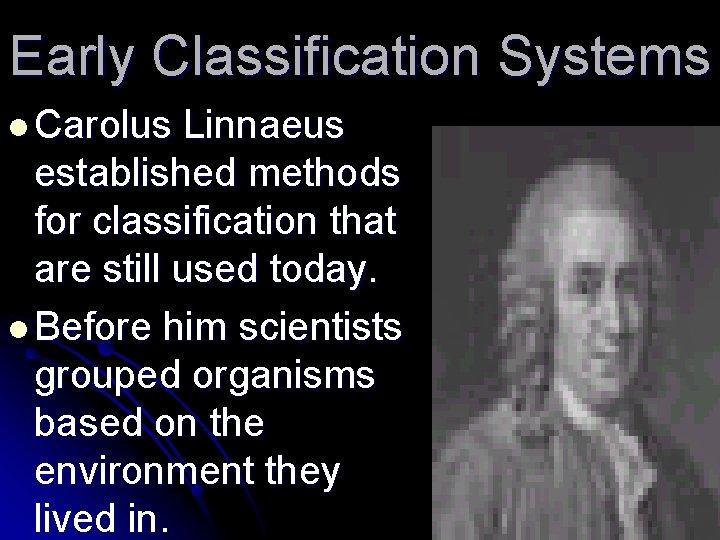
Early Classification Systems l Carolus Linnaeus established methods for classification that are still used today. l Before him scientists grouped organisms based on the environment they lived in.
Classification Categories l Kingdom l Phylum l Class l Order l Family l Genus l Species: smallest category, group of organisms that are structurally similar and pass their traits on to offspring. Off spring must be fertile!
Hybrids – Two separate species creating an infertile offspring l http: //en. wikipedia. org/wiki/List_of_ge netic_hybrids https: //www. youtube. com/watch? v=1 z. OWY j 59 BXI https: //www. youtube. com/watch? v=_NYtdb b. En 6 w
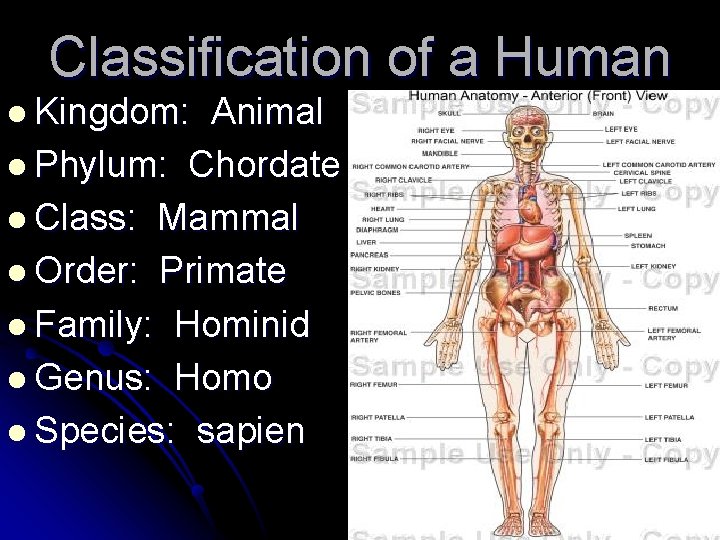
Classification of a Human l Kingdom: Animal l Phylum: Chordate l Class: Mammal l Order: Primate l Family: Hominid l Genus: Homo l Species: sapien
l If you are in the same category as another organism, everything in the categories above are also the same! l BUT the categories below may be different! l Example: Humans and cows are both in the class of mammals so we are in the same kingdom, phylum, and class.
Good Way to Remember This… l. King Phillip Came Over For Great Spaghetti
The 5 Kingdoms l. Monera (Archaebacteria & Eubacteria) l. Protists l. Fungi l. Plants l. Animals l https: //www. youtube. com/watch? v=b. Ek-3 fvut. Mc
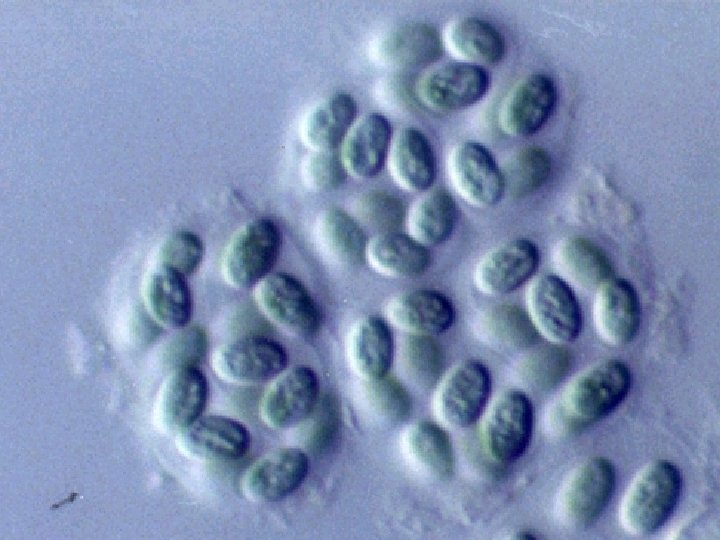
Kingdom Monera l. Bacteria = prokaryotic and unicellular l. Archaebacteria: do not need oxygen and were first cells on earth l. Eubacteria: disease causing bacteria that need oxygen to live
Kingdom Protista l Unicellular in most cases and eukaryotic l Protozoa = animal like protists that are mobile and feed on organic matter l Algae = plant like protists that carry on photosynthesis and live in water
Kingdom Fungi l Includes molds, yeasts, mushrooms, rust. l Live as parasites or as decomposers l Multicellular and eukaryotic l Contain no chlorophyll and cannot make their own food so they are not plants l They secrete enzymes to break down
Kingdom Plantae l. Include mosses, liverworts, ferns, and seed plants. l. Cells have cell walls. l. Immobile l. Cells contain chloroplasts that carry on photosynthesis
Kingdom Animalia l Biggest kingdom l Multicellular, eukaryotic, have organ systems l Mobile and must get food from environment. l Invertebrates = no backbone = sponges, worms, insects l Vertebrates = backbones = fish, snakes, humans
Naming Organisms l. Binomial Nomenclature: system for naming using 2 words in Latin. Always in italics, first word is always capitalized.
Scientific Name l. The 2 word Latin name for an organism. First word is the genus, second word is the species = Homo sapien
Common Name l. Most plants & animals have one but can be misleading. A starfish is not a fish, prairie dog is not a dog.
Modern Classification is based on… l. Structural similarities & differences l. Biochemistry (DNA) l. Cell structure l. Embryology: how organisms develop in utero
l. Behavior similarities & differences l. The fossil record
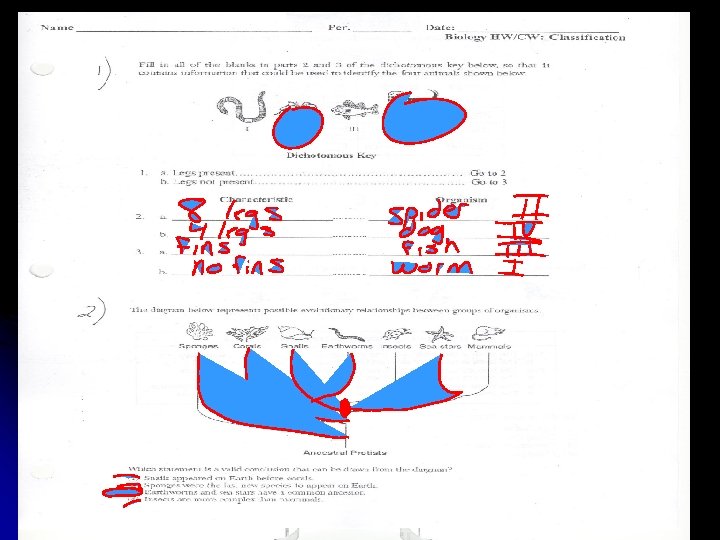
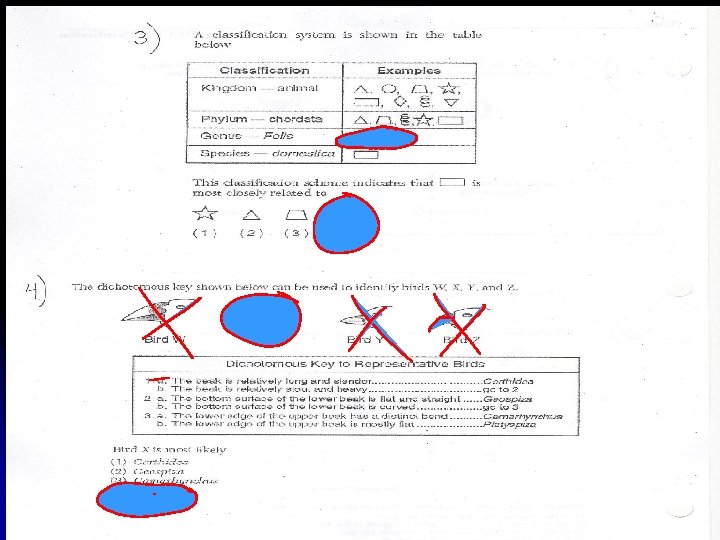
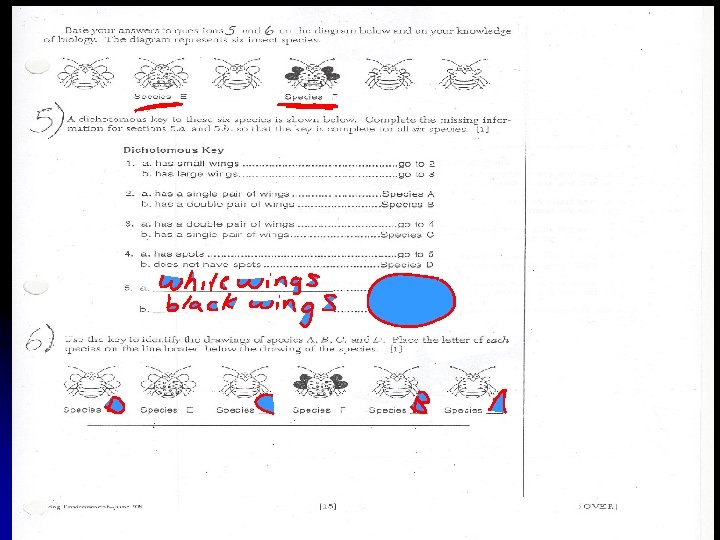
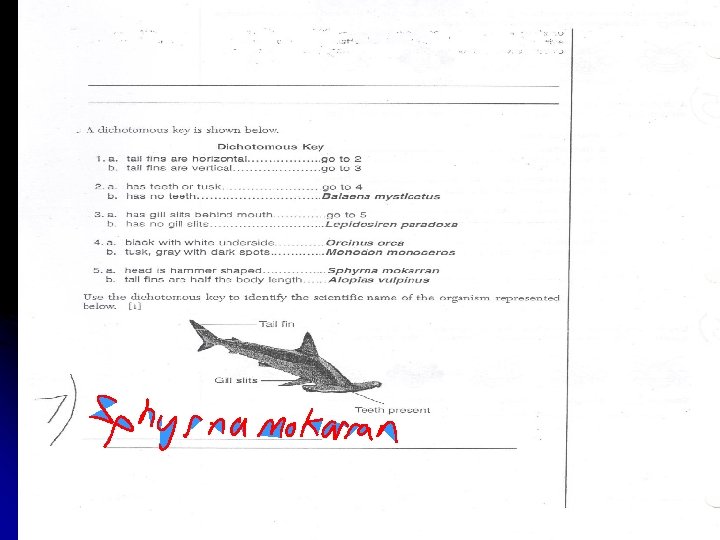
Reading Taxonomic Keys l A tool used by biologists to identify organisms. l Dichotomous keys - pairs of statements that describe presence or absence of features l Move through key until an organism that fits is found
Key for Mammals l 1 A. Spinal column absent, invertebrate l 1 B. Spinal Column present, go to 2 l 2 A. Fins & gill present, fish l 2 B. Fins & gill absent, go to 3
l 3 A. Scales present, reptile 3 B. Scales absent, go to 4 l 4 A. Hair or fur present, mammal l 4 B. Hair or fur absent, amphibian
Make a Key!
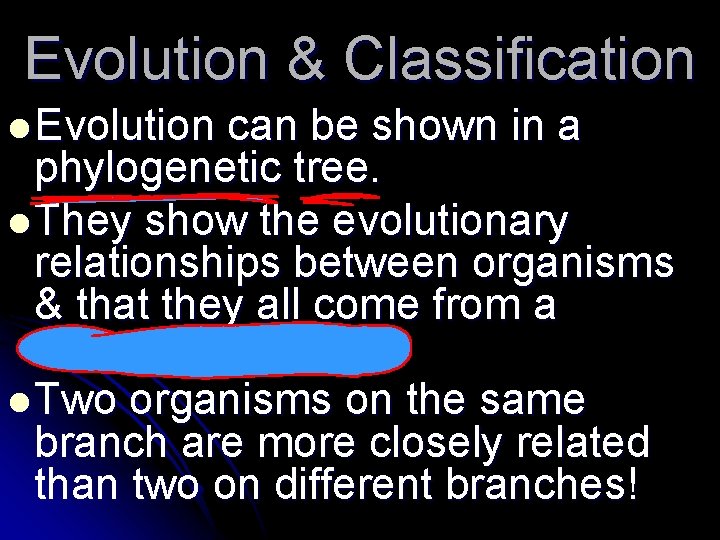
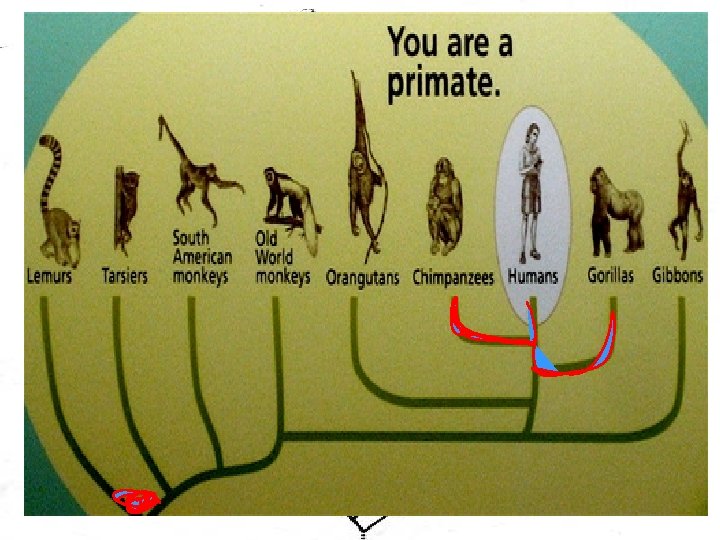
Evolution & Classification l Evolution can be shown in a phylogenetic tree. l They show the evolutionary relationships between organisms & that they all come from a common ancestor. l Two organisms on the same branch are more closely related than two on different branches!
Crash Course Taxonomy l https: //www. youtube. com/watch? v=F 38 Bm g. Pc. Z_I