
Classification Using Genetic Programming Patrick Kellogg General Assembly
Classification Using Genetic Programming Patrick Kellogg General Assembly Data Science Course (8/23/15 - 11/12/15)
Iris Data Set
Iris Data Set
Iris Data Set
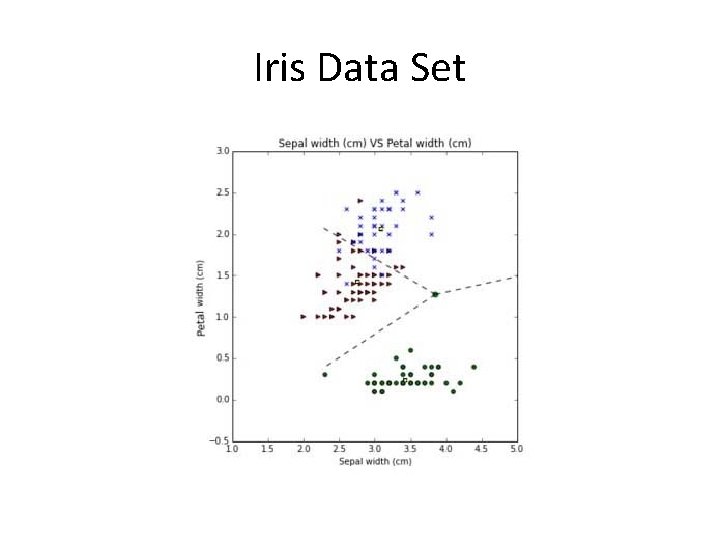
Iris Data Set
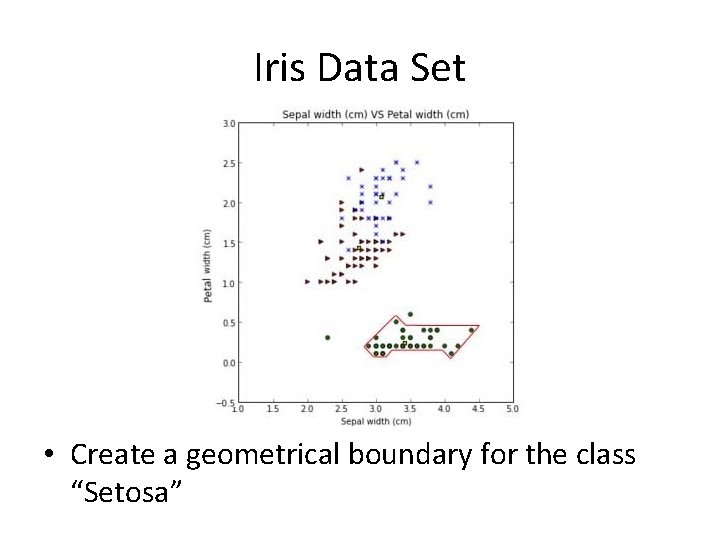
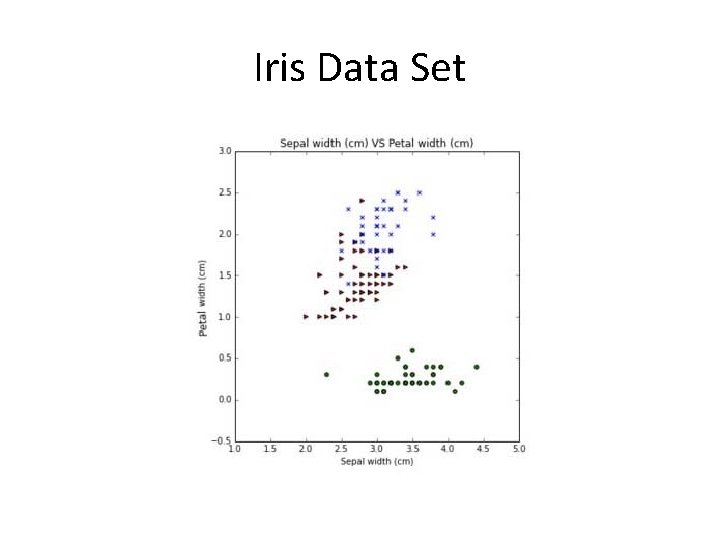
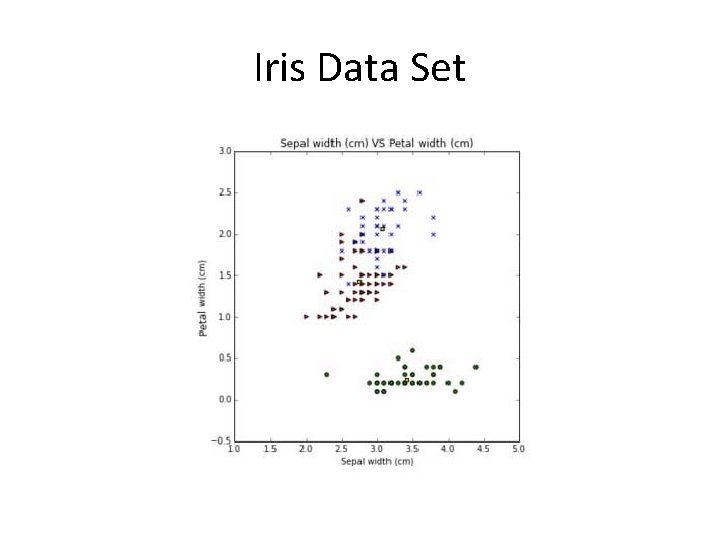
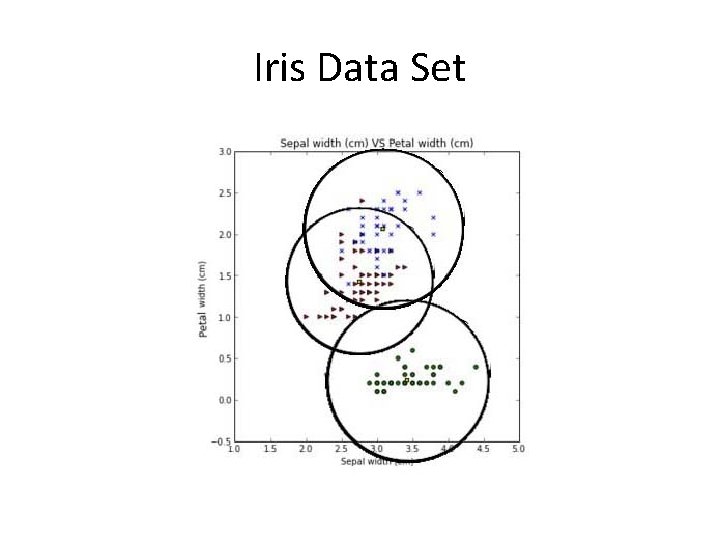
Iris Data Set • Create a geometrical boundary for the class “Setosa”
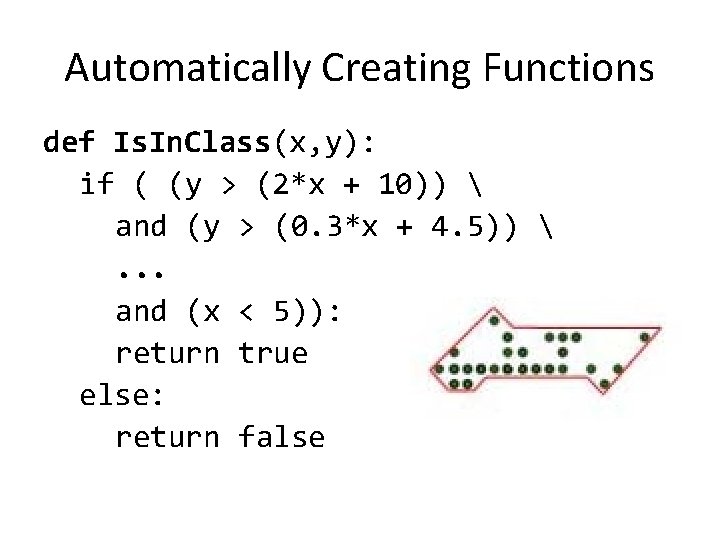
Automatically Creating Functions def Is. In. Class(x, y): if ( (y > (2*x + 10)) and (y > (0. 3*x + 4. 5)) . . . and (x < 5)): return true else: return false
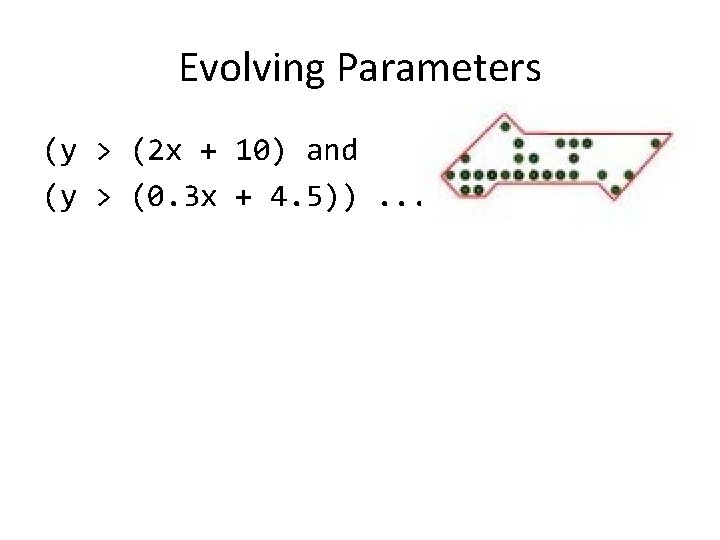
Evolving Parameters (y > (2 x + 10) and (y > (0. 3 x + 4. 5)). . .
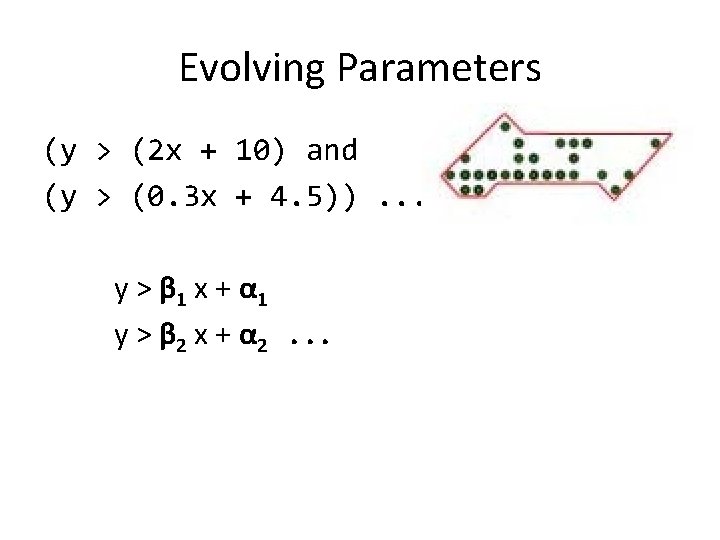
Evolving Parameters (y > (2 x + 10) and (y > (0. 3 x + 4. 5)). . . y > β 1 x + α 1 y > β 2 x + α 2. . .
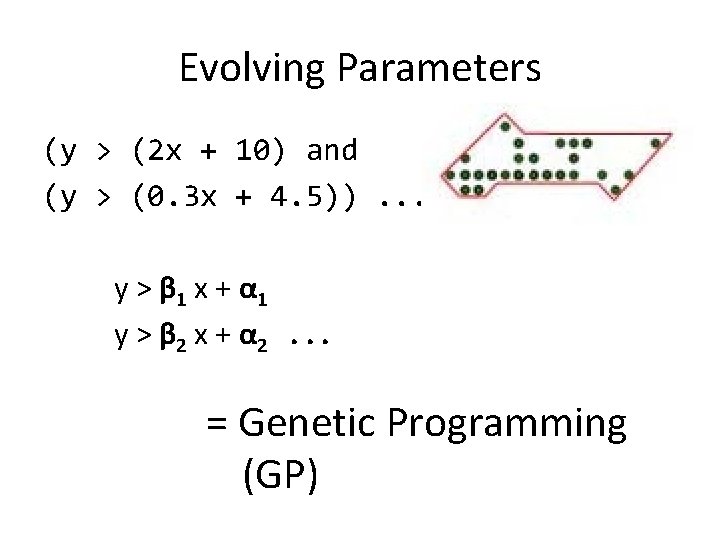
Evolving Parameters (y > (2 x + 10) and (y > (0. 3 x + 4. 5)). . . y > β 1 x + α 1 y > β 2 x + α 2. . . = Genetic Programming (GP)
Two-slide Introduction to Genetic Algorithms (Part 1)
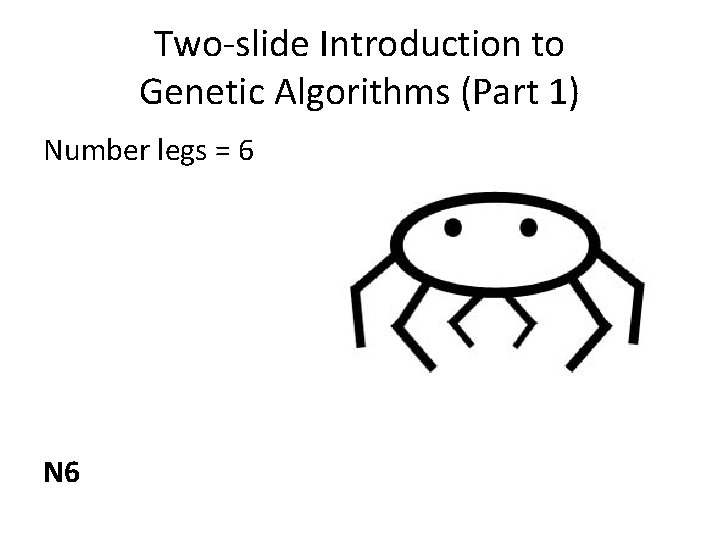
Two-slide Introduction to Genetic Algorithms (Part 1) Number legs = 6 N 6
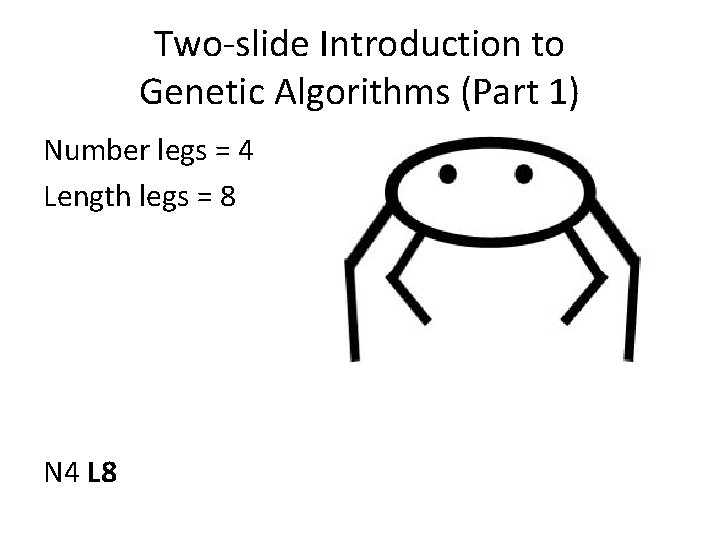
Two-slide Introduction to Genetic Algorithms (Part 1) Number legs = 4 Length legs = 8 N 4 L 8
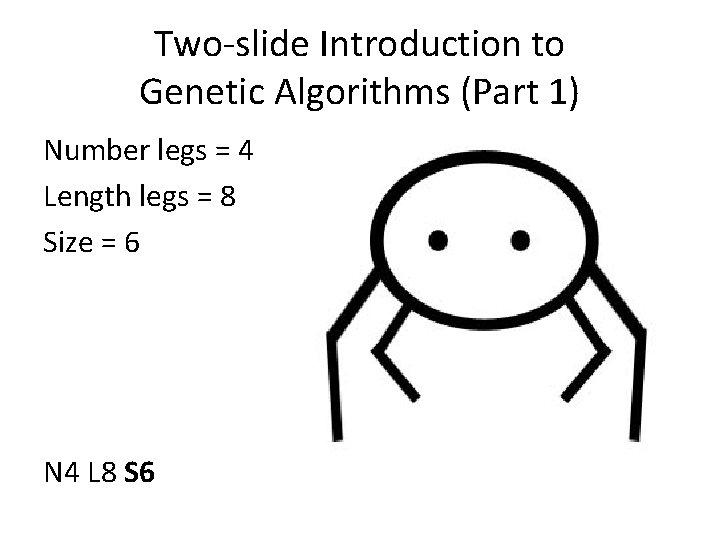
Two-slide Introduction to Genetic Algorithms (Part 1) Number legs = 4 Length legs = 8 Size = 6 N 4 L 8 S 6
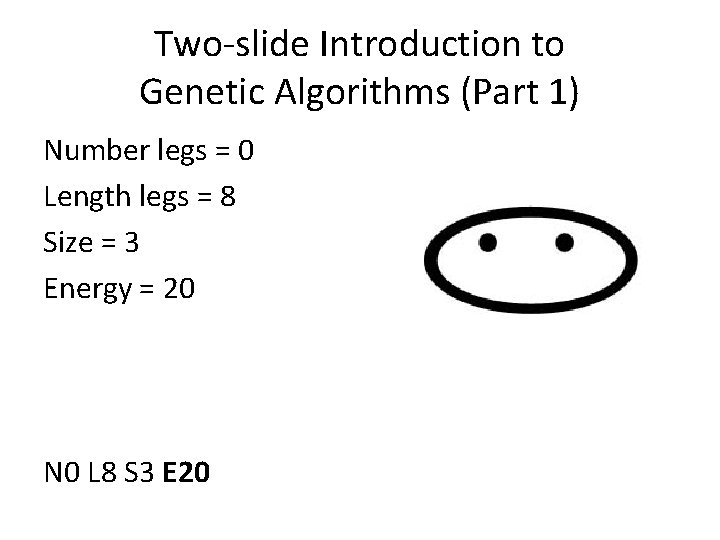
Two-slide Introduction to Genetic Algorithms (Part 1) Number legs = 0 Length legs = 8 Size = 3 Energy = 20 N 0 L 8 S 3 E 20
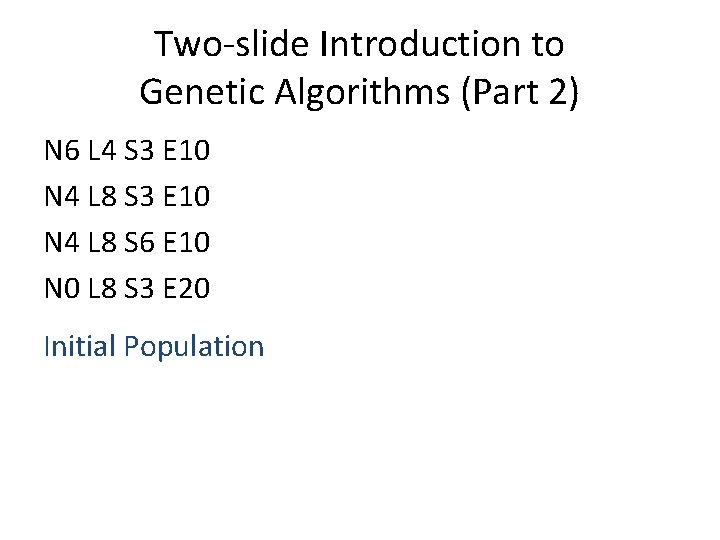
Two-slide Introduction to Genetic Algorithms (Part 2) N 6 L 4 S 3 E 10 N 4 L 8 S 6 E 10 N 0 L 8 S 3 E 20 Initial Population
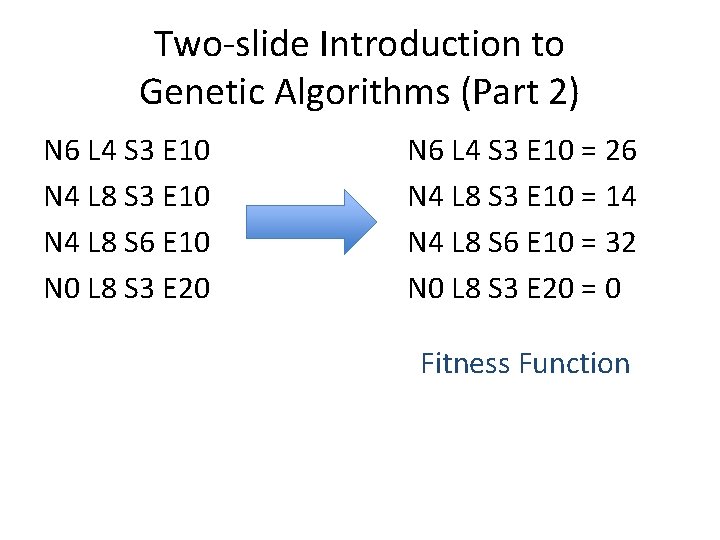
Two-slide Introduction to Genetic Algorithms (Part 2) N 6 L 4 S 3 E 10 N 4 L 8 S 6 E 10 N 0 L 8 S 3 E 20 N 6 L 4 S 3 E 10 = 26 N 4 L 8 S 3 E 10 = 14 N 4 L 8 S 6 E 10 = 32 N 0 L 8 S 3 E 20 = 0 Fitness Function
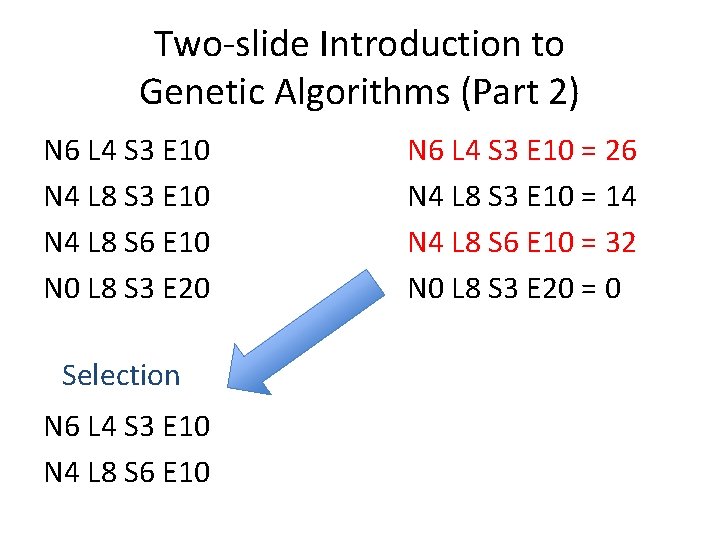
Two-slide Introduction to Genetic Algorithms (Part 2) N 6 L 4 S 3 E 10 N 4 L 8 S 6 E 10 N 0 L 8 S 3 E 20 Selection N 6 L 4 S 3 E 10 N 4 L 8 S 6 E 10 N 6 L 4 S 3 E 10 = 26 N 4 L 8 S 3 E 10 = 14 N 4 L 8 S 6 E 10 = 32 N 0 L 8 S 3 E 20 = 0
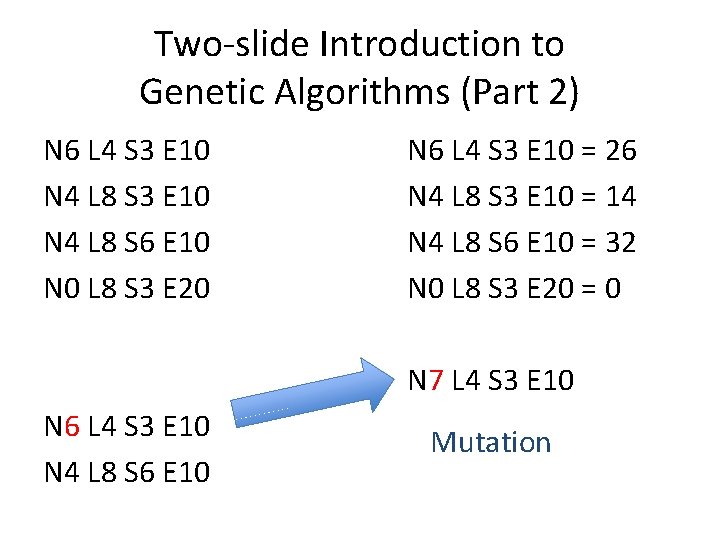
Two-slide Introduction to Genetic Algorithms (Part 2) N 6 L 4 S 3 E 10 N 4 L 8 S 6 E 10 N 0 L 8 S 3 E 20 N 6 L 4 S 3 E 10 = 26 N 4 L 8 S 3 E 10 = 14 N 4 L 8 S 6 E 10 = 32 N 0 L 8 S 3 E 20 = 0 N 7 L 4 S 3 E 10 N 6 L 4 S 3 E 10 N 4 L 8 S 6 E 10 Mutation
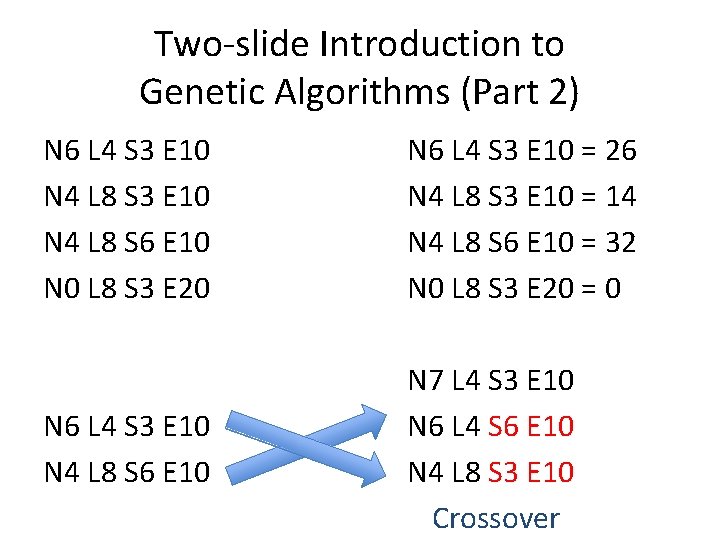
Two-slide Introduction to Genetic Algorithms (Part 2) N 6 L 4 S 3 E 10 N 4 L 8 S 6 E 10 N 0 L 8 S 3 E 20 N 6 L 4 S 3 E 10 = 26 N 4 L 8 S 3 E 10 = 14 N 4 L 8 S 6 E 10 = 32 N 0 L 8 S 3 E 20 = 0 N 6 L 4 S 3 E 10 N 4 L 8 S 6 E 10 N 7 L 4 S 3 E 10 N 6 L 4 S 6 E 10 N 4 L 8 S 3 E 10 Crossover
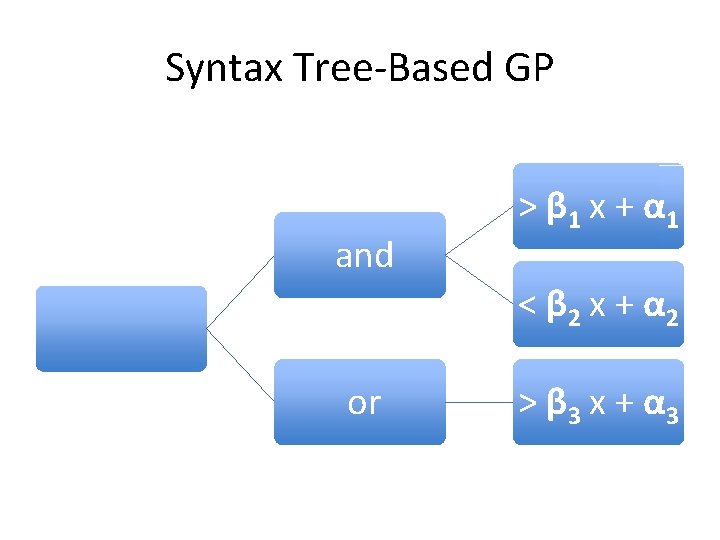
Syntax Tree-Based GP and > β 1 x + α 1 < β 2 x + α 2 or > β 3 x + α 3
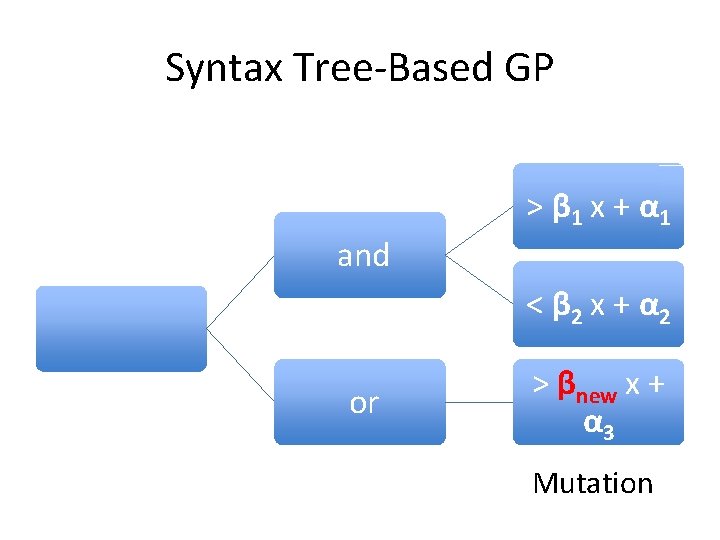
Syntax Tree-Based GP > β 1 x + α 1 and < β 2 x + α 2 or > βnew x + α 3 Mutation
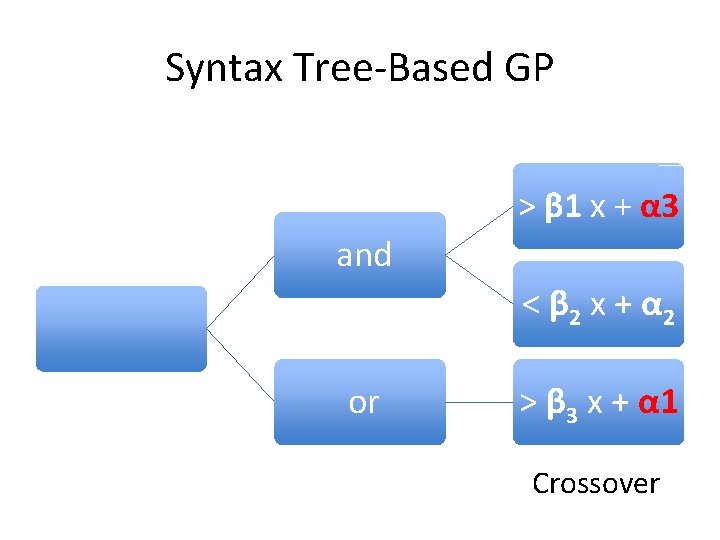
Syntax Tree-Based GP > β 1 x + α 3 and < β 2 x + α 2 or > β 3 x + α 1 Crossover
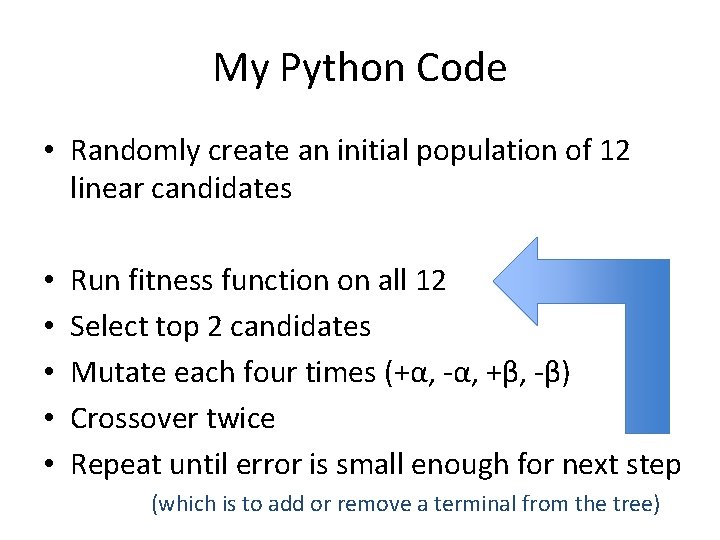
My Python Code • Randomly create an initial population of 12 linear candidates • • • Run fitness function on all 12 Select top 2 candidates Mutate each four times (+α, -α, +β, -β) Crossover twice Repeat until error is small enough for next step (which is to add or remove a terminal from the tree)
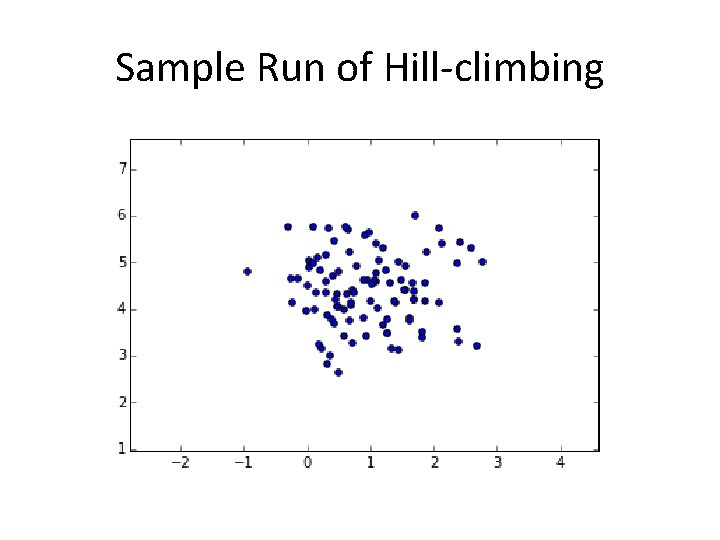
Sample Run of Hill-climbing
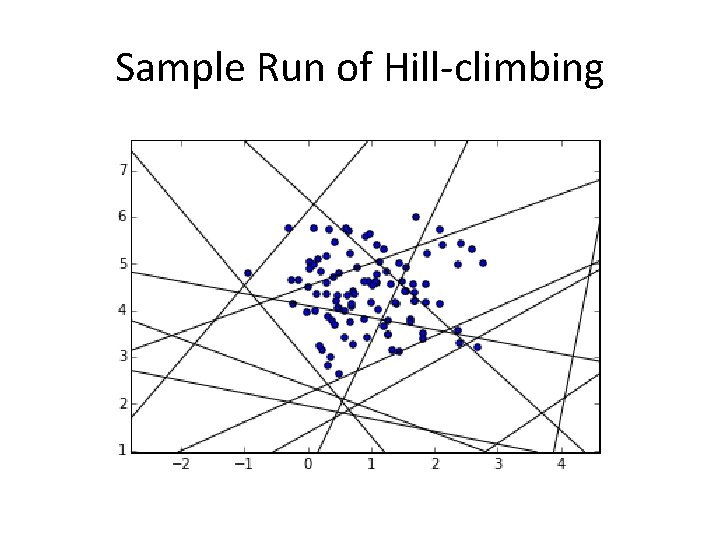
Sample Run of Hill-climbing
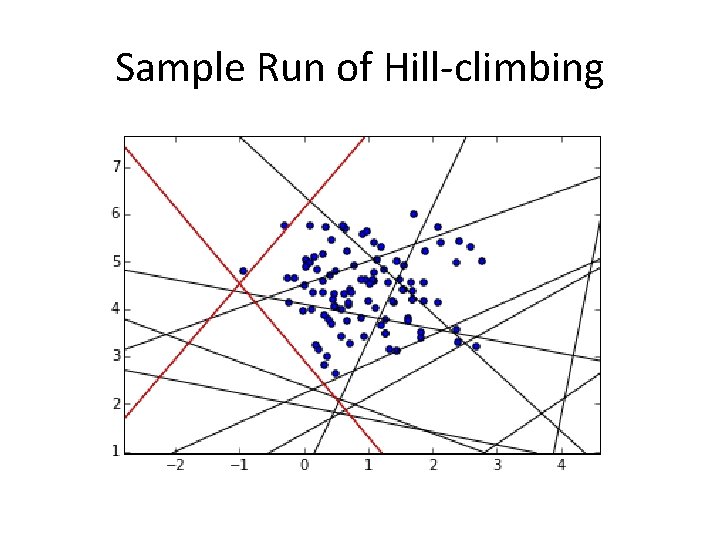
Sample Run of Hill-climbing
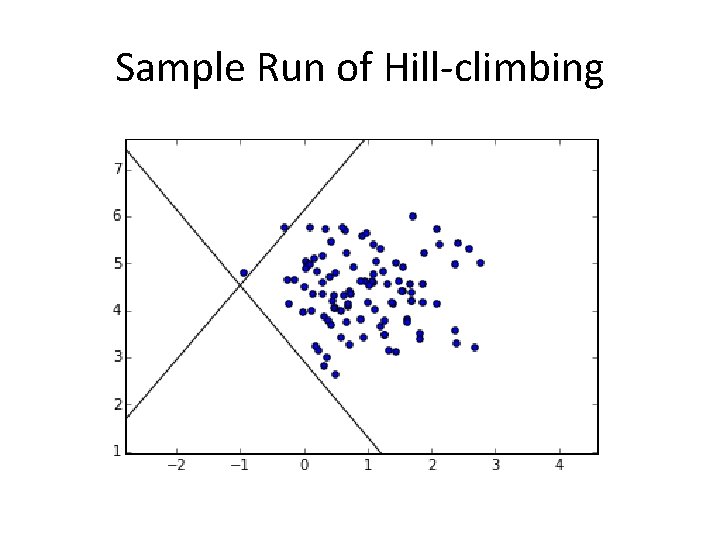
Sample Run of Hill-climbing
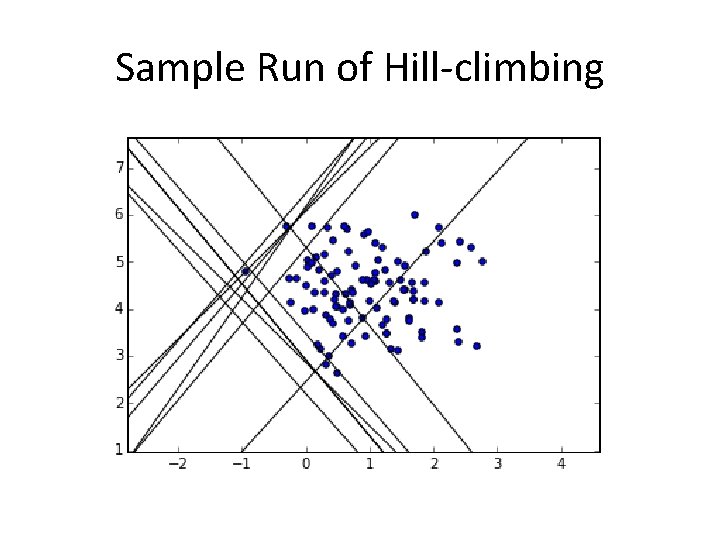
Sample Run of Hill-climbing
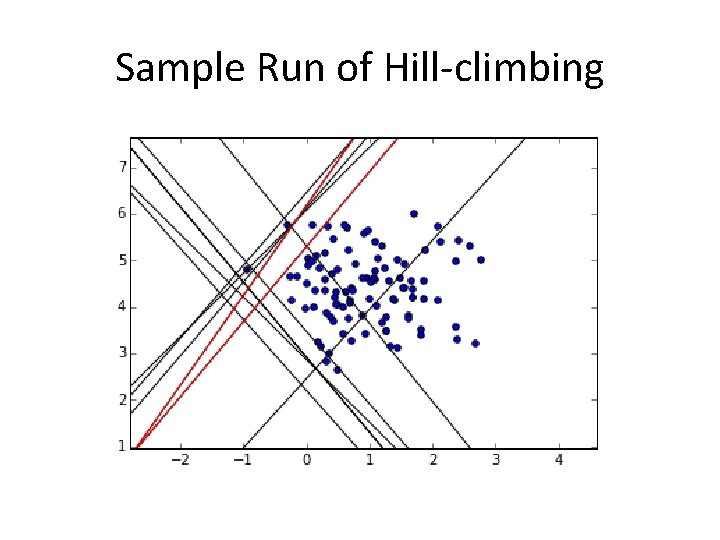
Sample Run of Hill-climbing
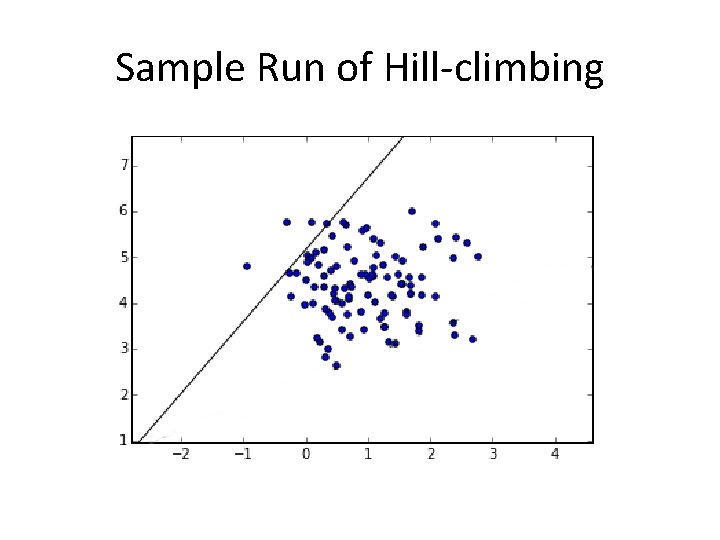
Sample Run of Hill-climbing
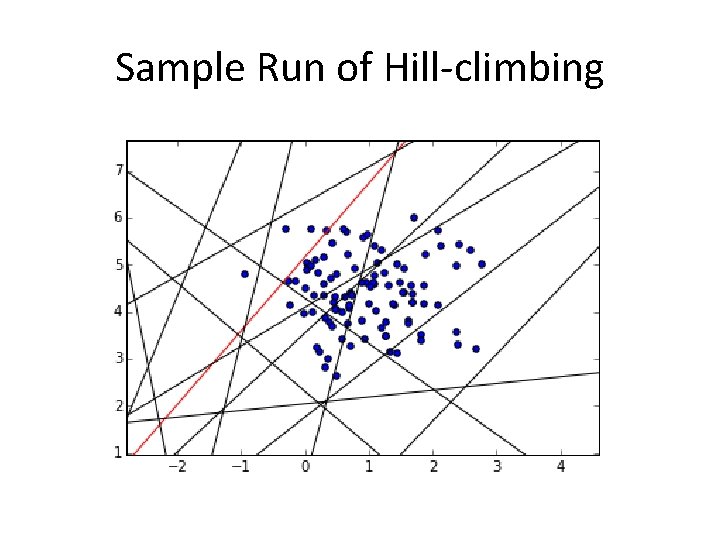
Sample Run of Hill-climbing
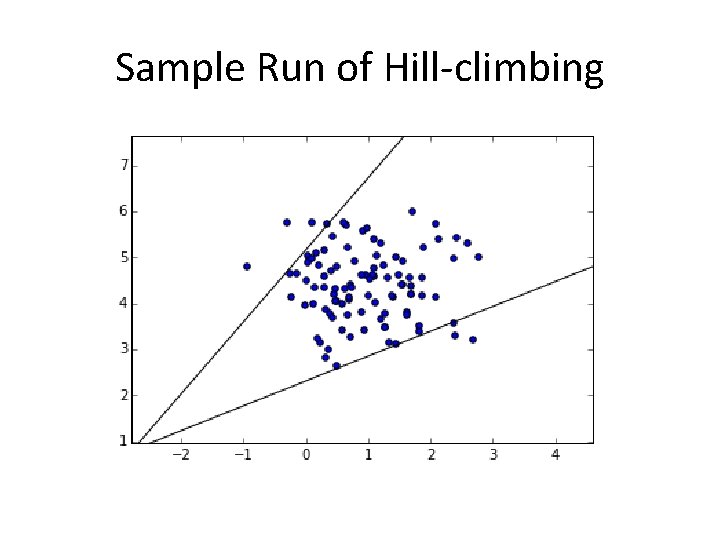
Sample Run of Hill-climbing
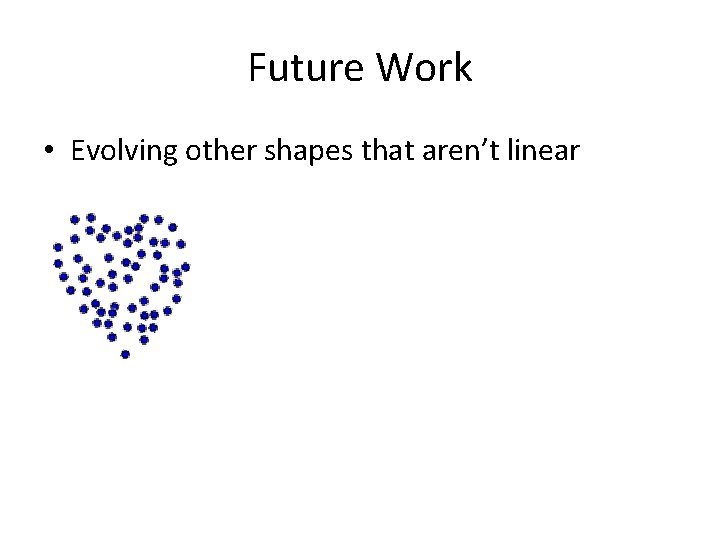
Future Work • Evolving other shapes that aren’t linear
Future Work • Evolving other shapes that aren’t linear
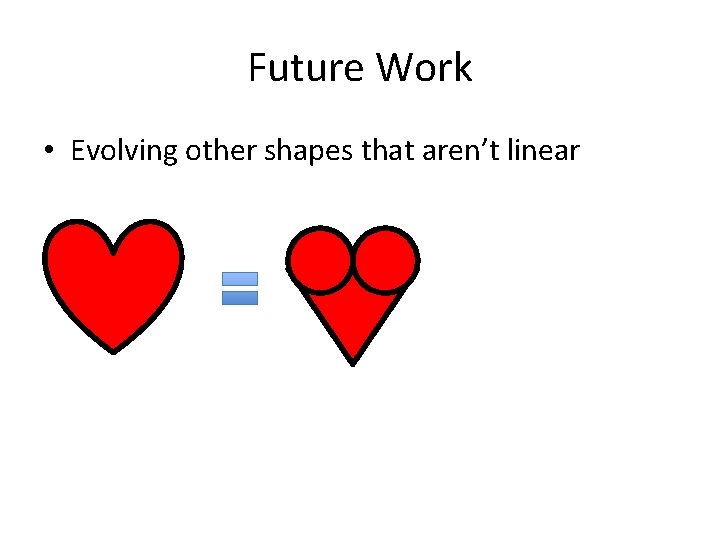
Future Work • Evolving other shapes that aren’t linear
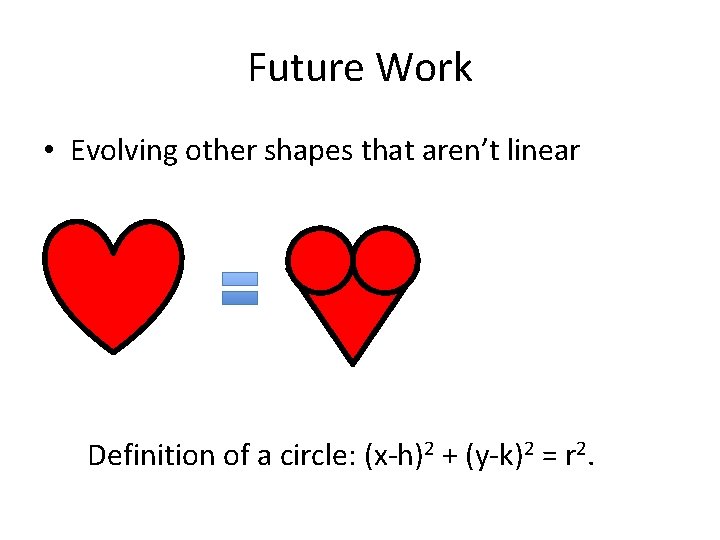
Future Work • Evolving other shapes that aren’t linear Definition of a circle: (x-h)2 + (y-k)2 = r 2.
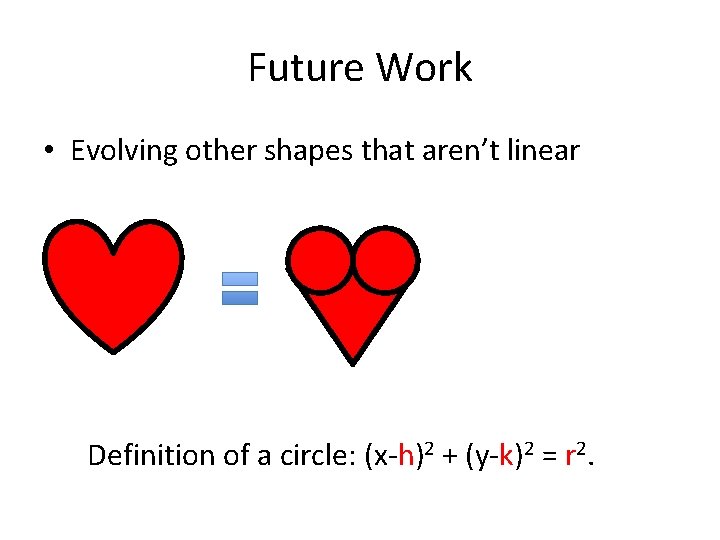
Future Work • Evolving other shapes that aren’t linear Definition of a circle: (x-h)2 + (y-k)2 = r 2.
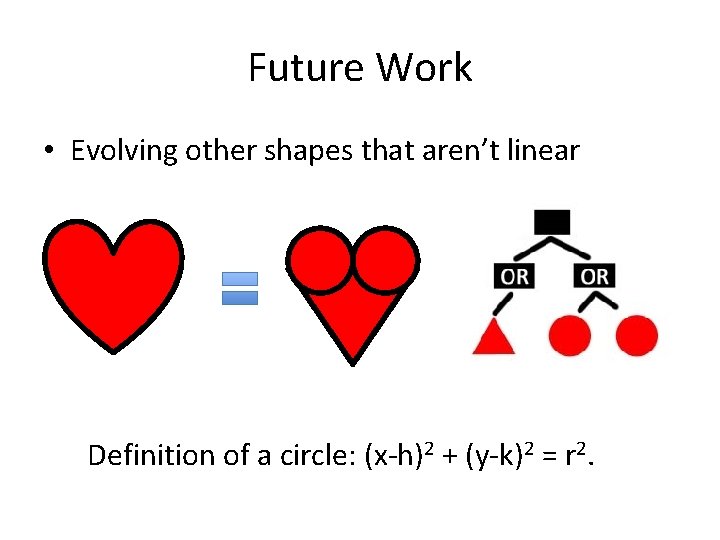
Future Work • Evolving other shapes that aren’t linear Definition of a circle: (x-h)2 + (y-k)2 = r 2.
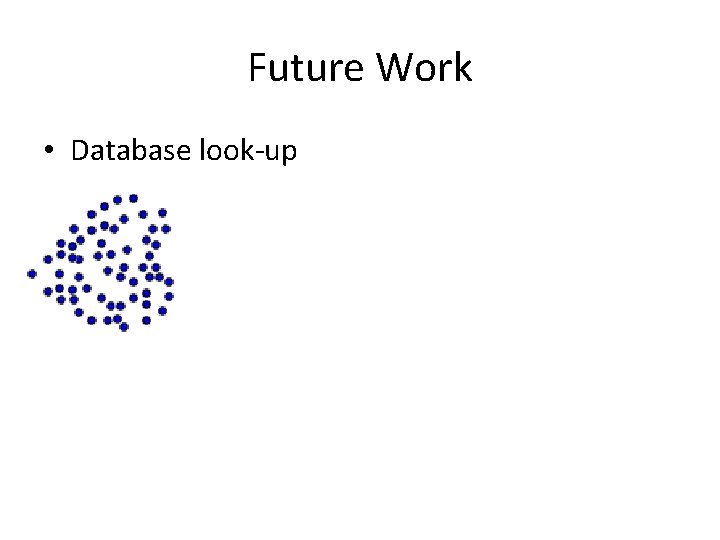
Future Work • Database look-up
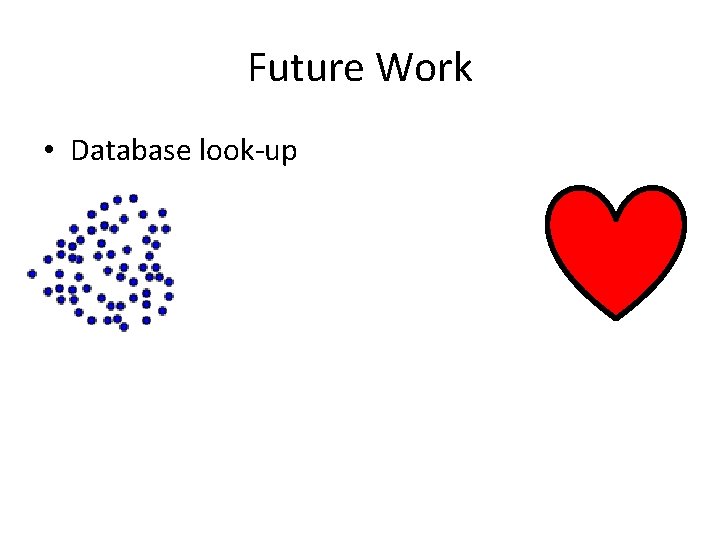
Future Work • Database look-up
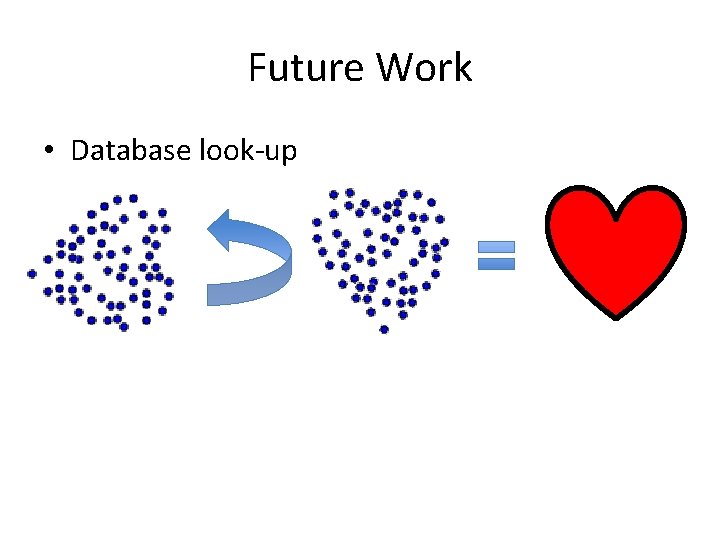
Future Work • Database look-up
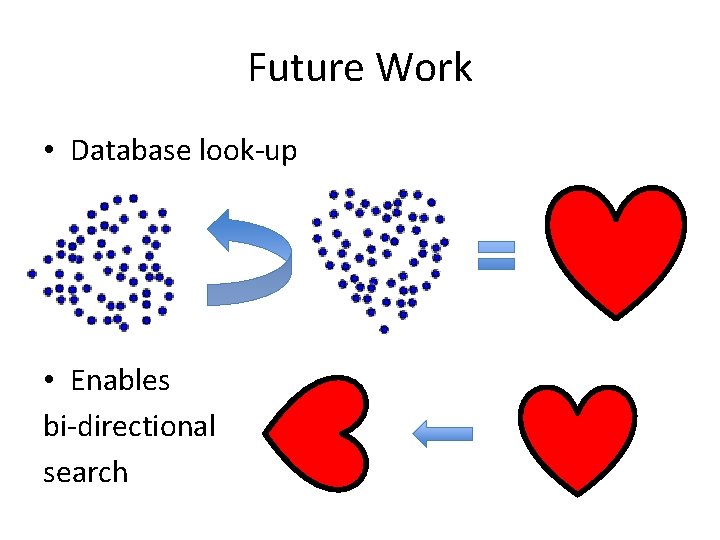
Future Work • Database look-up • Enables bi-directional search
Future Work • • • Automatically turn results into python function Recode for multi-dimensional data Mutate parameters based on error delta Speed up search (aka smash into centroid) Concave shapes (“or” as well as “and”) Study initial population size, distribution Play with function size reward Density Look at Specificity vs. Sensitivity vs. size trade-off – A “three-legged stool” and difficult to tune
Backup Slides
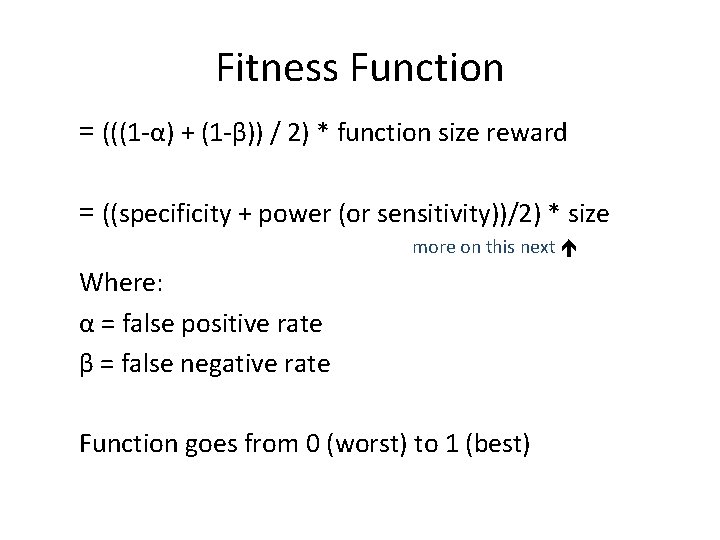
Fitness Function = (((1 -α) + (1 -β)) / 2) * function size reward = ((specificity + power (or sensitivity))/2) * size more on this next Where: α = false positive rate β = false negative rate Function goes from 0 (worst) to 1 (best)
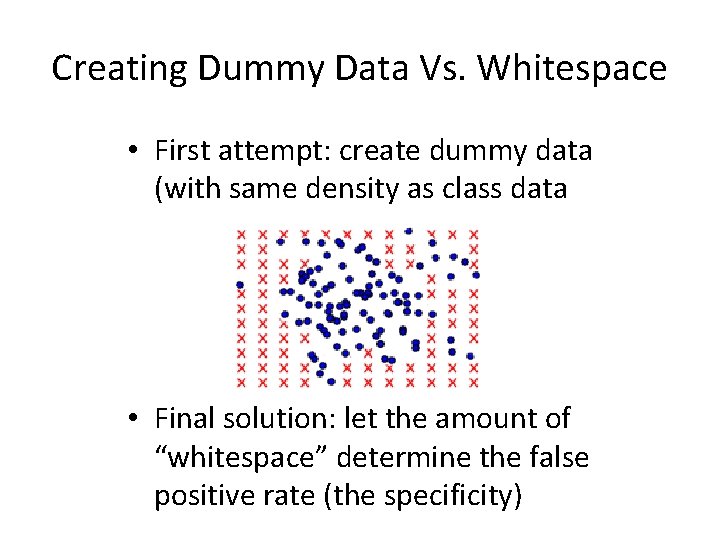
Creating Dummy Data Vs. Whitespace • First attempt: create dummy data (with same density as class data • Final solution: let the amount of “whitespace” determine the false positive rate (the specificity)
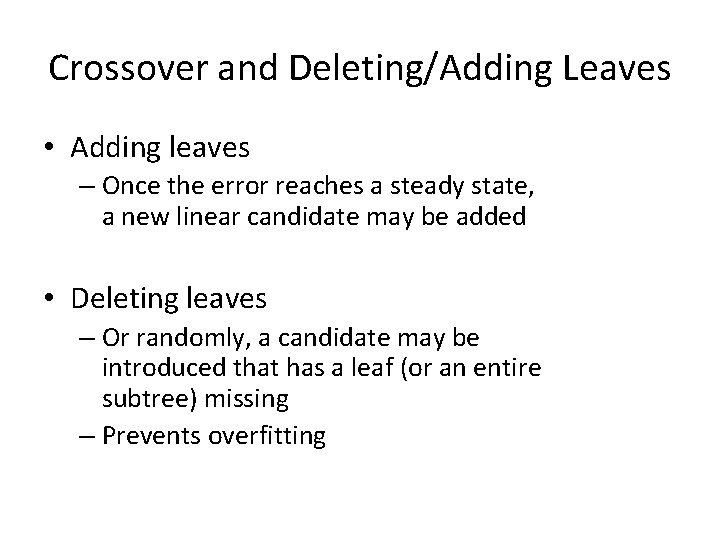
Crossover and Deleting/Adding Leaves • Adding leaves – Once the error reaches a steady state, a new linear candidate may be added • Deleting leaves – Or randomly, a candidate may be introduced that has a leaf (or an entire subtree) missing – Prevents overfitting
Mutation and Error Rate • Save the previous fitness value to calculate a good “next mutation” • Another good idea is to “smash” the line towards the centroid of the class until it hits the edge of the data
- Slides: 49