
Classification Trees for Privacy in Sample Surveys Rolando
- Slides: 26
Classification Trees for Privacy in Sample Surveys Rolando A. Rodríguez Michael H. Freiman Jerome P. Reiter Amy D. Lauger Symposium for Data Science and Statistics May 18, 2018 Any views expressed are those of the author and not necessarily those of the U. S. Census Bureau.
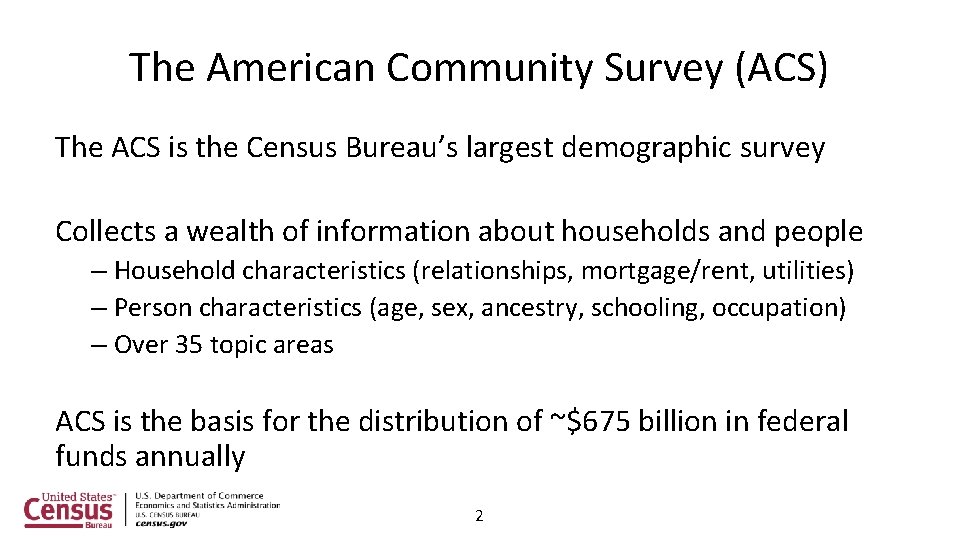
The American Community Survey (ACS) The ACS is the Census Bureau’s largest demographic survey Collects a wealth of information about households and people – Household characteristics (relationships, mortgage/rent, utilities) – Person characteristics (age, sex, ancestry, schooling, occupation) – Over 35 topic areas ACS is the basis for the distribution of ~$675 billion in federal funds annually 2
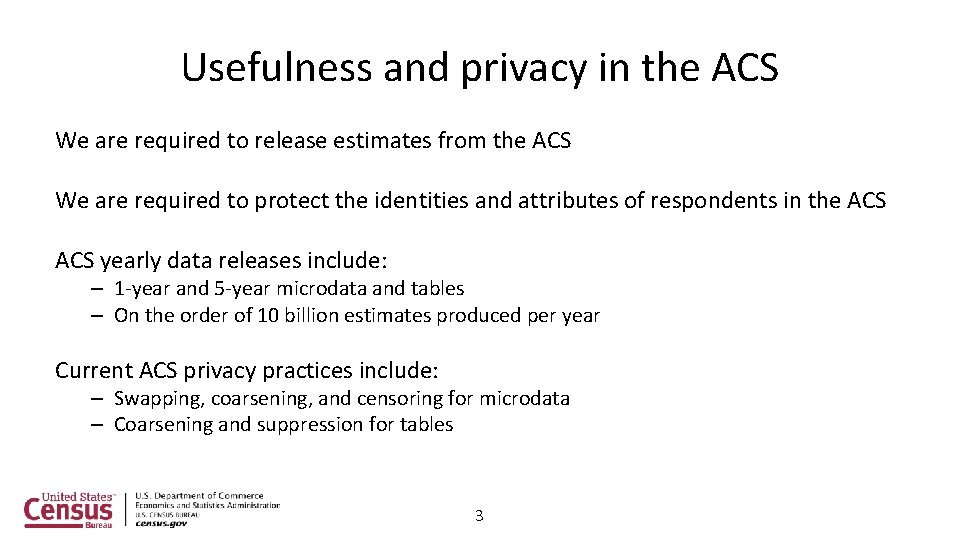
Usefulness and privacy in the ACS We are required to release estimates from the ACS We are required to protect the identities and attributes of respondents in the ACS yearly data releases include: – 1 -year and 5 -year microdata and tables – On the order of 10 billion estimates produced per year Current ACS privacy practices include: – Swapping, coarsening, and censoring for microdata – Coarsening and suppression for tables 3
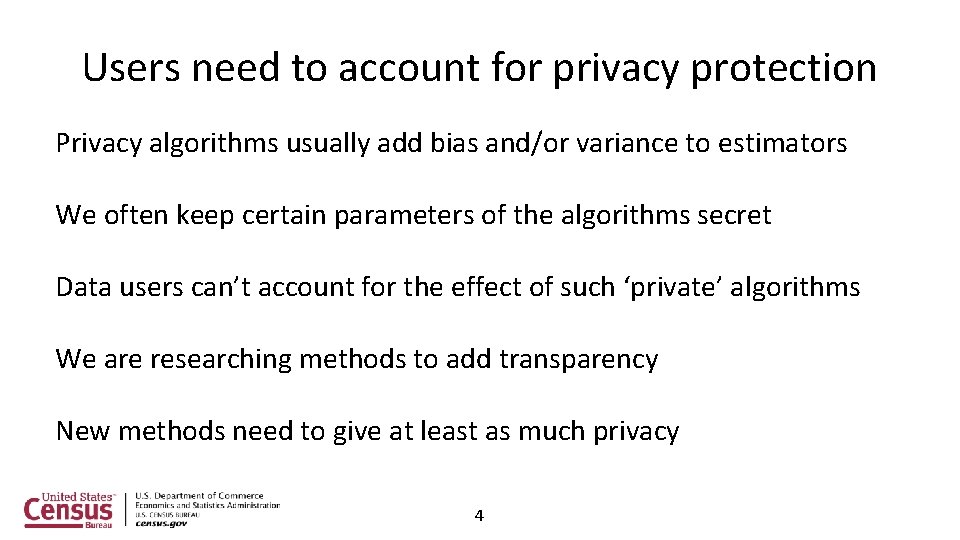
Users need to account for privacy protection Privacy algorithms usually add bias and/or variance to estimators We often keep certain parameters of the algorithms secret Data users can’t account for the effect of such ‘private’ algorithms We are researching methods to add transparency New methods need to give at least as much privacy 4
Enter synthetic data We use distributional draws to generate new ACS records The theory accounts for added variance via multiple-imputation Models can augment survey data with administrative records 5
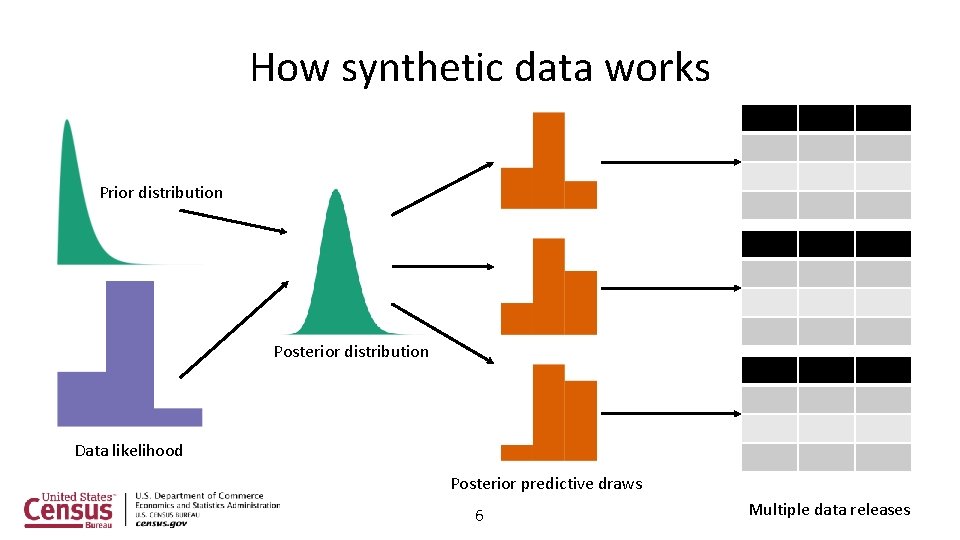
How synthetic data works Prior distribution Posterior distribution Data likelihood Posterior predictive draws 6 Multiple data releases
Choosing models for the ACS We want to generate new values for all records and all variables – Majority of variables in ACS are categorical – We have dimensionality woes, so conditional models helpful Stakeholders prefer models that they can understand The models must reasonably work within synthetic data framework – ‘Proper’ posterior draws can be hard to obtain – Other methods can be useful with adaptations to fit the framework 7
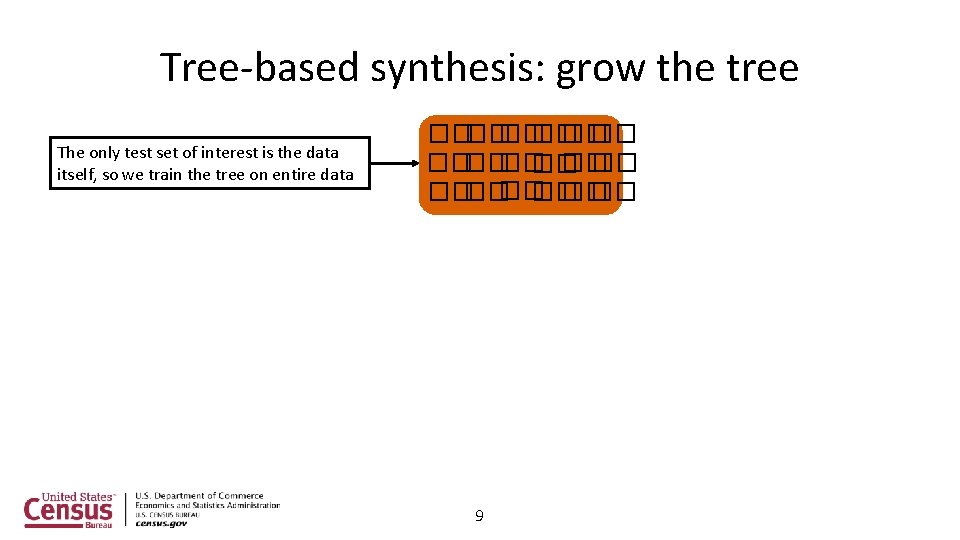
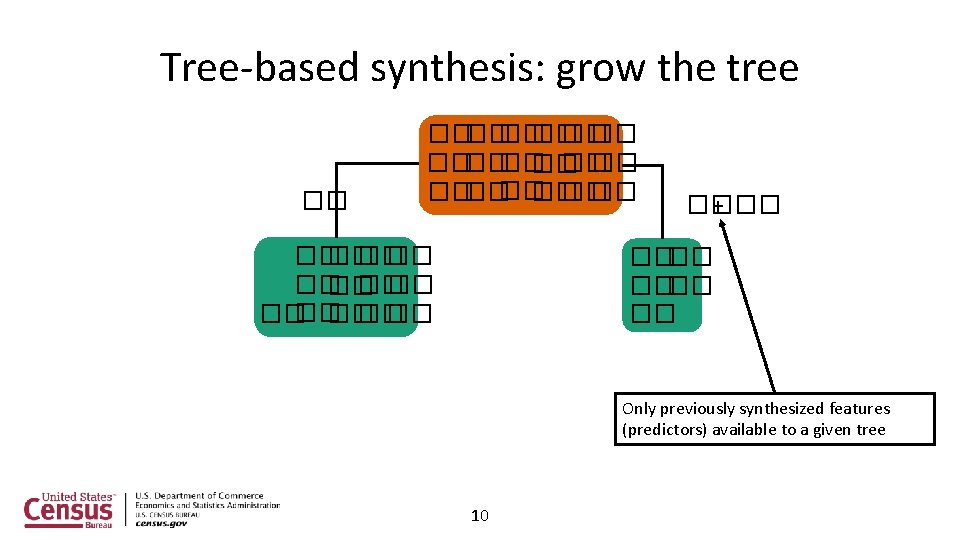
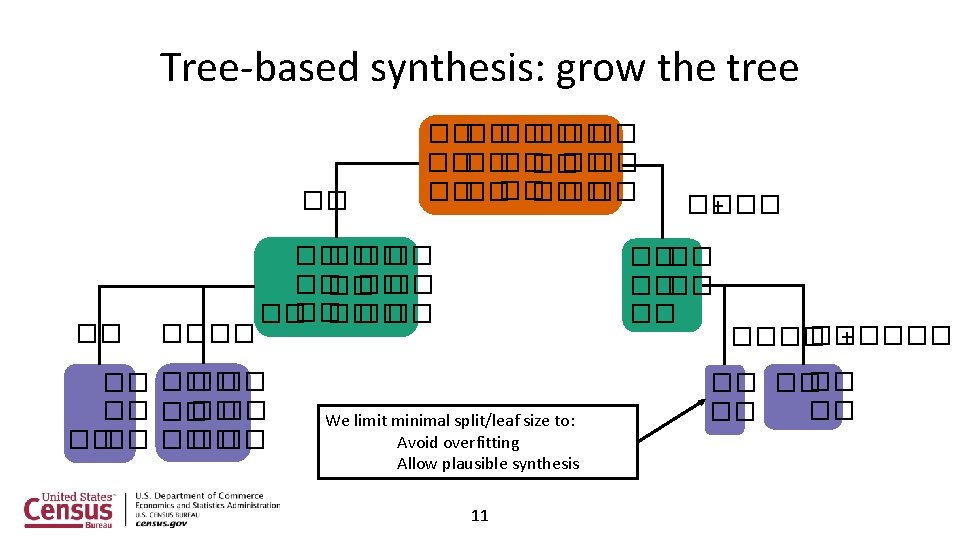
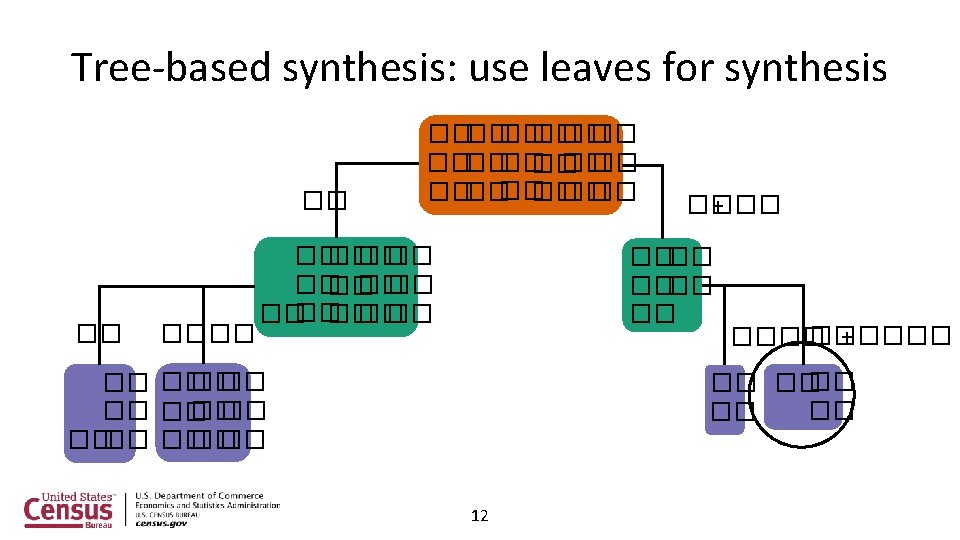
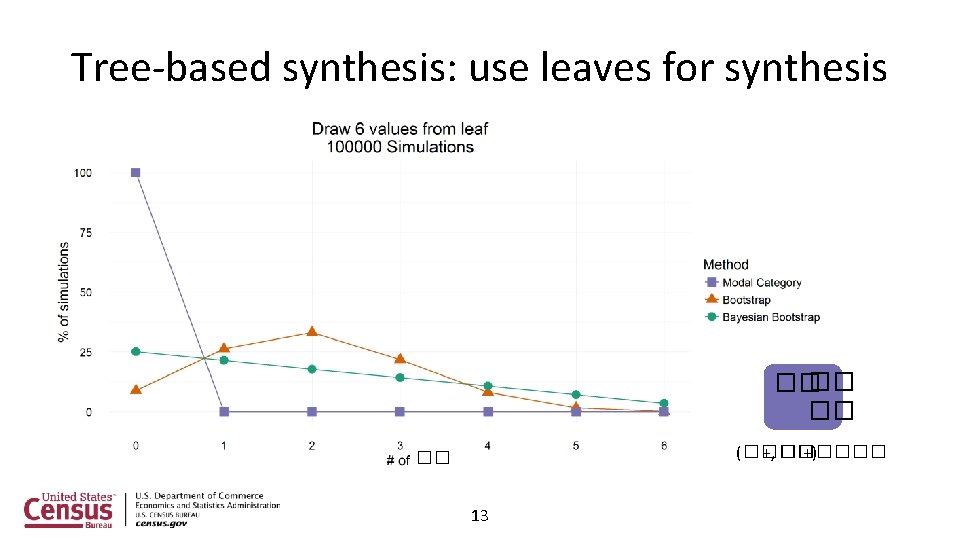
Classification trees are good models to try Trees can identify important relationships automatically We can easily fit trees conditionally on previous trees The logical flow of a tree is easy to visualize We can use bootstrapping on the trees leaves for synthetic data 8
Tree-based synthesis: grow the tree The only test set of interest is the data itself, so we train the tree on entire data ���� �� �� �� �� 9
Tree-based synthesis: grow the tree �� ���� �� �� �� �� �� �� ���� + ���� �� Only previously synthesized features (predictors) available to a given tree 10
Tree-based synthesis: grow the tree �� �� ���� �� �� �� �� �� �� �� �� ���� + ���� �� We limit minimal split/leaf size to: Avoid overfitting Allow plausible synthesis 11 ������ + ���� �� ��
Tree-based synthesis: use leaves for synthesis �� �� �� (���� +, ������ +) �� 13
Current results for ACS tabulations are promising We assess a variety of estimates on several metrics – Internal microdata cross-tabulations – Unweighted production tables – Common analyses such as regressions Results are generally good, but certain metrics highlight potential issues Problems in tree fits are relatively tractable – Trees may not always split in ways that support the tables – Limitations in tree depth can cause issues 14
What about privacy? We can analyze risk against specific external databases – How certain are links between records? – How much do statistics change? How can we protect against attacks in general? Need to define privacy in a computable way 15
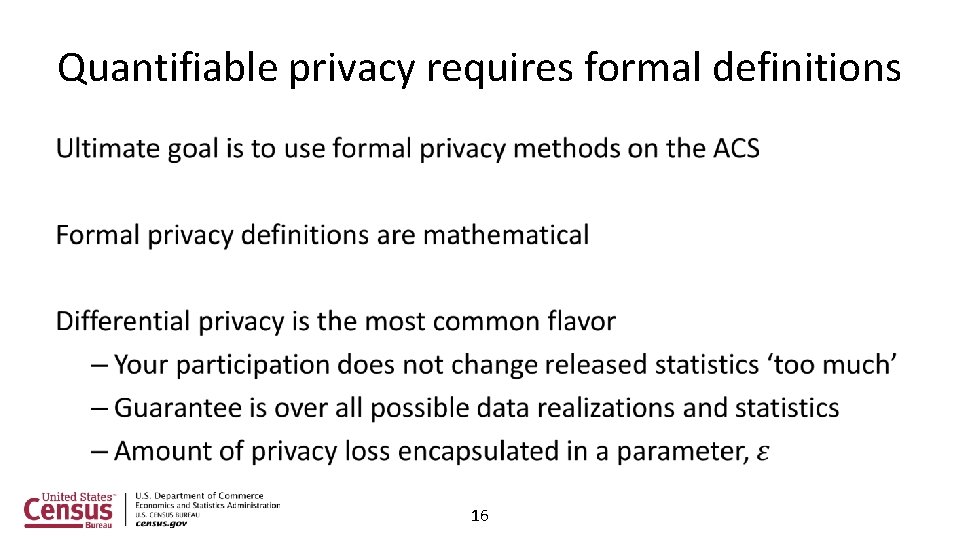
Quantifiable privacy requires formal definitions • 16
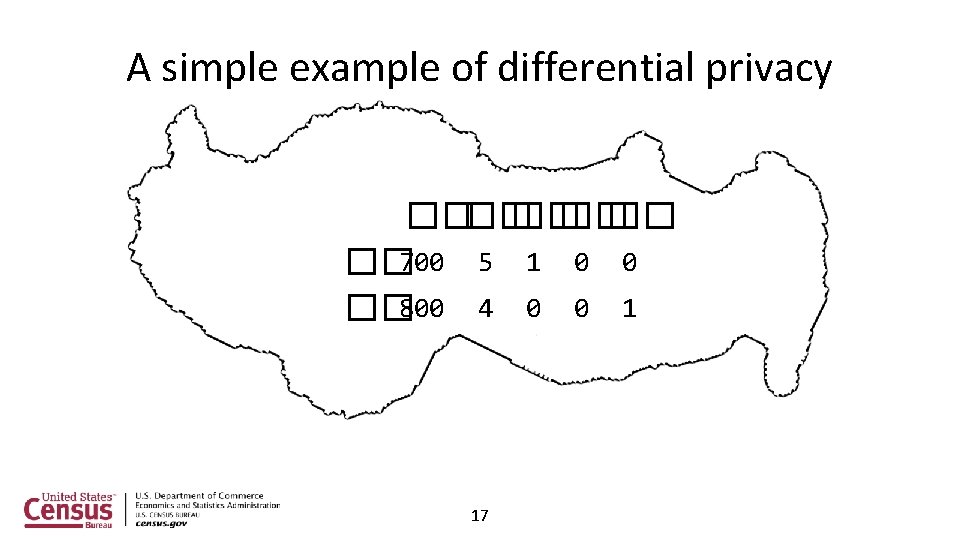
A simple example of differential privacy ���� �� �� 700 5 1 0 0 �� 800 4 0 0 1 17
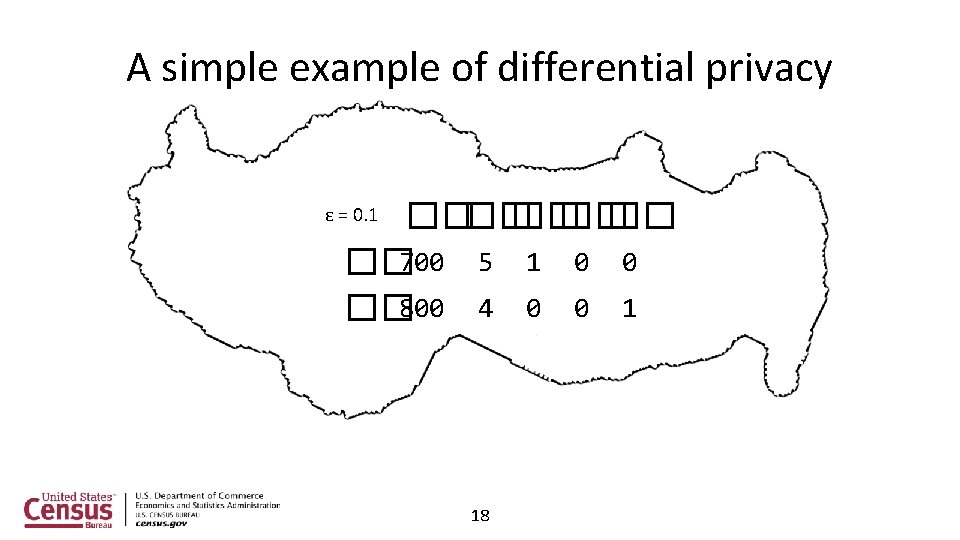
A simple example of differential privacy ���� �� �� 700 5 1 0 0 �� 800 4 0 0 1 ε = 0. 1 18
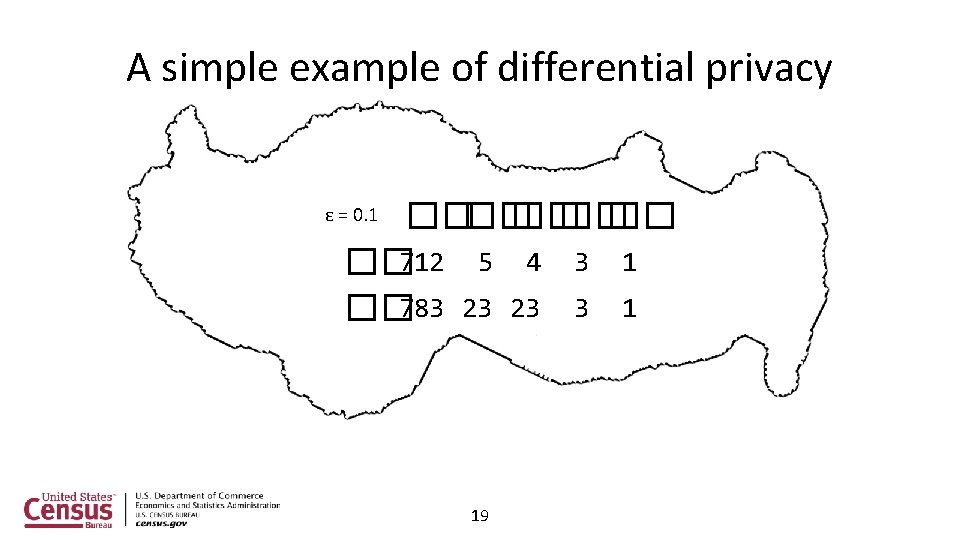
A simple example of differential privacy ���� �� �� 712 5 4 3 1 �� 783 23 23 3 1 ε = 0. 1 19
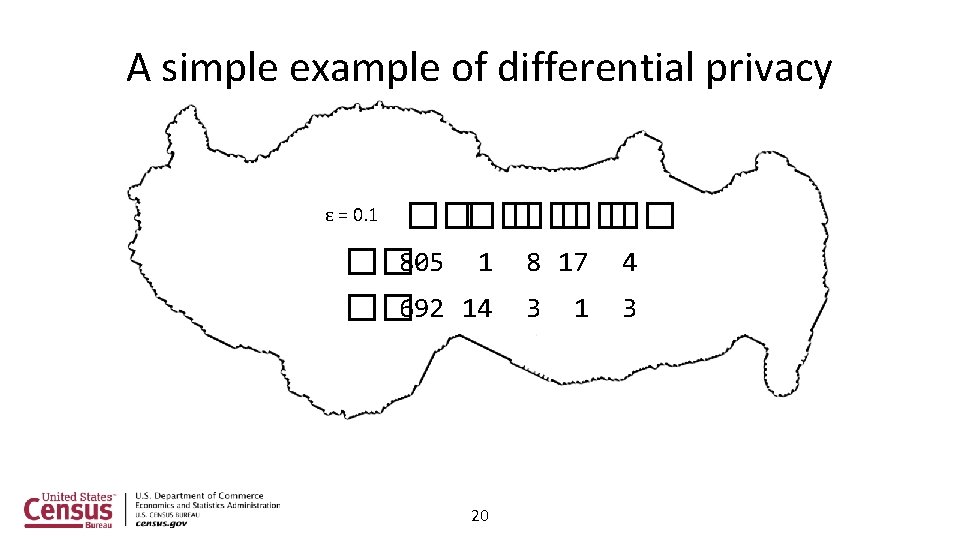
A simple example of differential privacy ���� �� �� 805 1 8 17 4 �� 692 14 3 1 3 ε = 0. 1 20
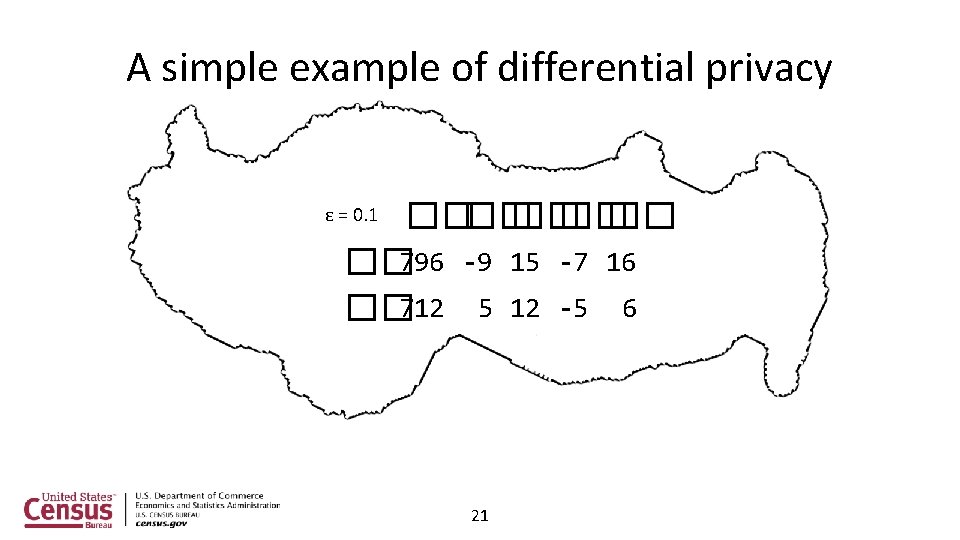
A simple example of differential privacy ���� �� �� 796 -9 15 -7 16 �� 712 5 12 -5 6 ε = 0. 1 21
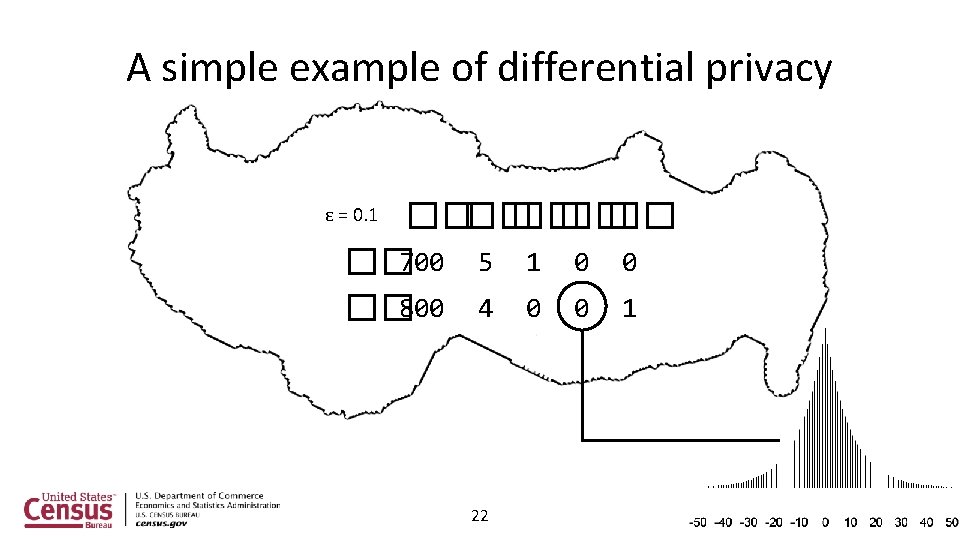
A simple example of differential privacy ���� �� �� 700 5 1 0 0 �� 800 4 0 0 1 ε = 0. 1 22
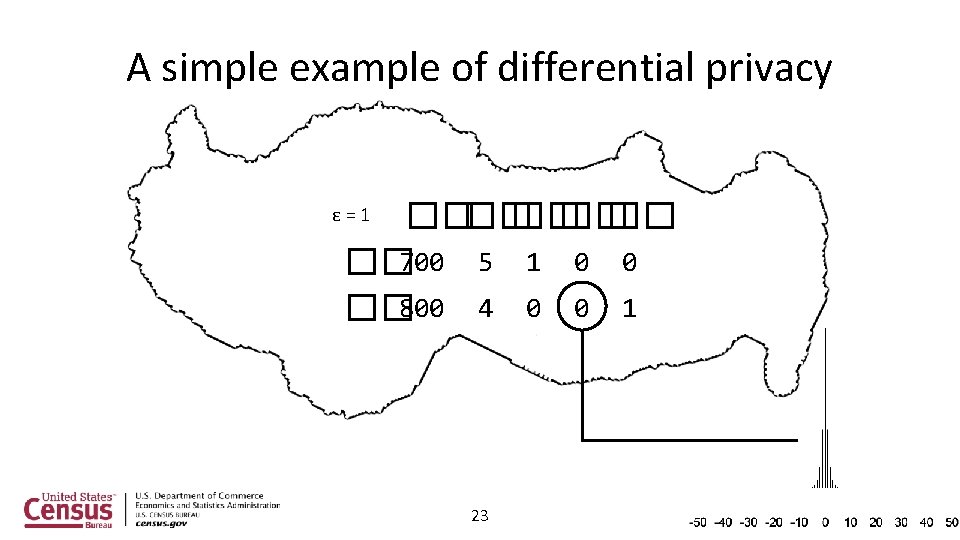
A simple example of differential privacy ���� �� �� 700 5 1 0 0 �� 800 4 0 0 1 ε=1 23
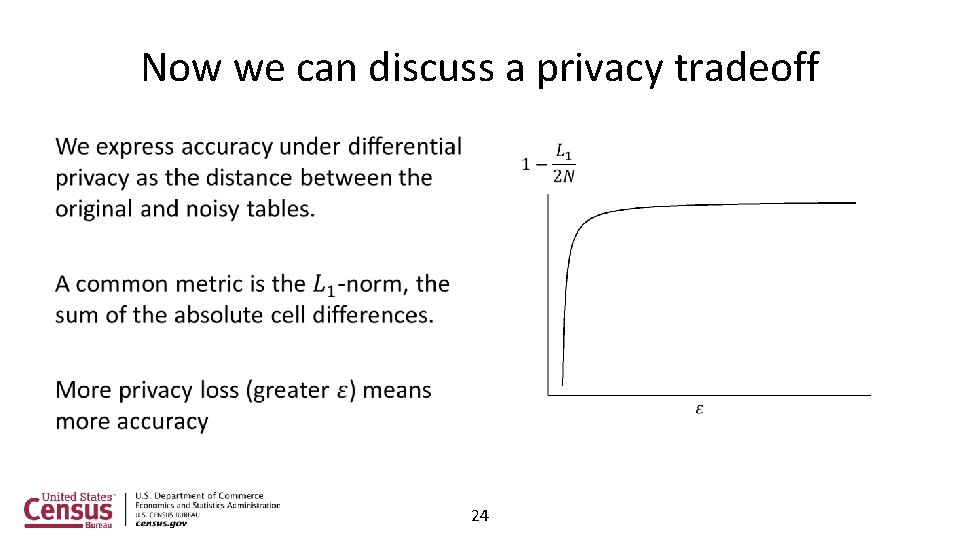
Now we can discuss a privacy tradeoff • 24
Formal privacy can be hard for sample surveys Detailed surveys are blessed (cursed) by dimensionality – – – Total # of cells increases exponentially with # of variables Tables of small populations will tend to be sparse Rounding negative counts can lead to large marginal bias Data releases can contain summaries that are ‘harder’ to protect – – How many people live with a person with property P? What is the median age of said persons? Surveys are weighted – – How do we define ‘your participation’? How do we report accurate standard errors? 25
The path forward Continue to improve synthetic data methods for the ACS Research ways in which formal privacy might be viable for ACS Use administrative records where possible Thank you! rolando. a. rodriguez@census. gov 26