
CLASSIFICATION The Linnaean classification system has limitations Linnaeus






- Slides: 19
CLASSIFICATION
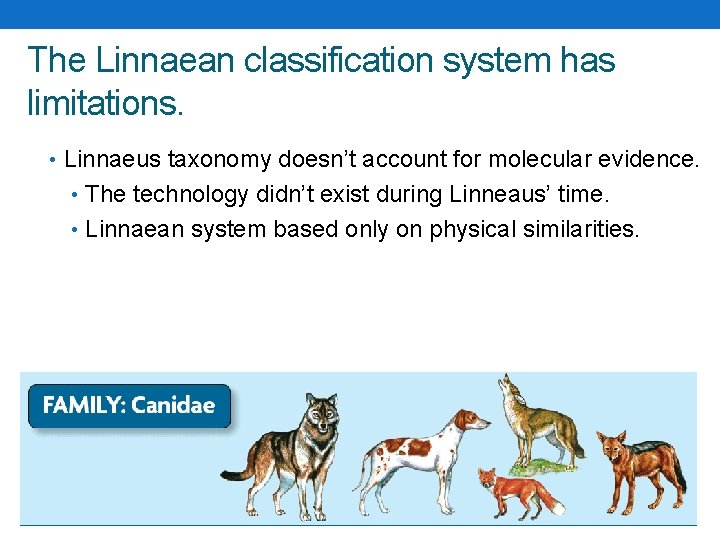
The Linnaean classification system has limitations. • Linnaeus taxonomy doesn’t account for molecular evidence. • The technology didn’t exist during Linneaus’ time. • Linnaean system based only on physical similarities.
Cladistics is classification based on common ancestry. • Phylogeny is the evolutionary history for a group of species. • evidence from living species, fossil record, and molecular data • shown with branching tree diagrams
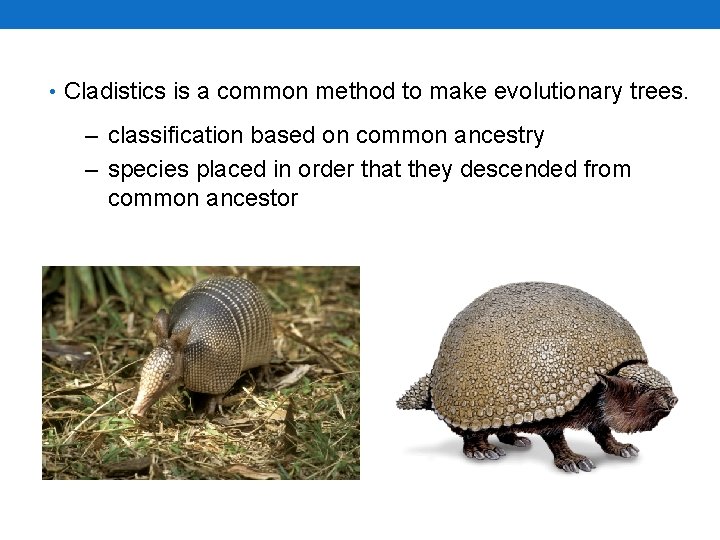
• Cladistics is a common method to make evolutionary trees. – classification based on common ancestry – species placed in order that they descended from common ancestor
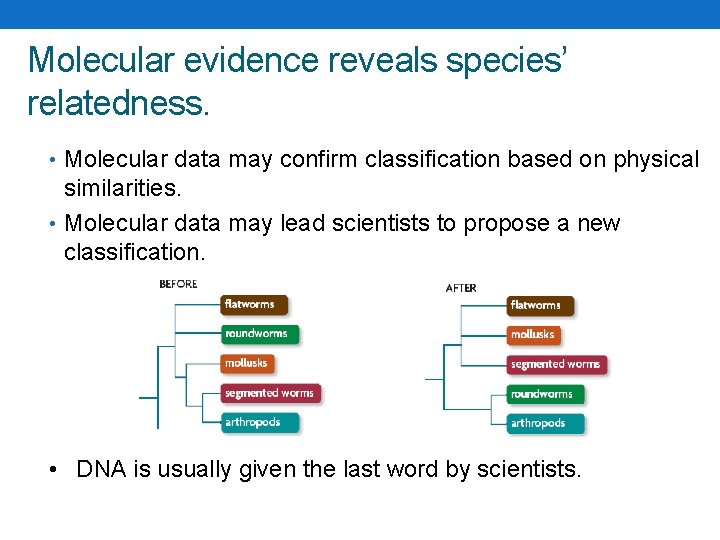
Molecular evidence reveals species’ relatedness. • Molecular data may confirm classification based on physical similarities. • Molecular data may lead scientists to propose a new classification. • DNA is usually given the last word by scientists.
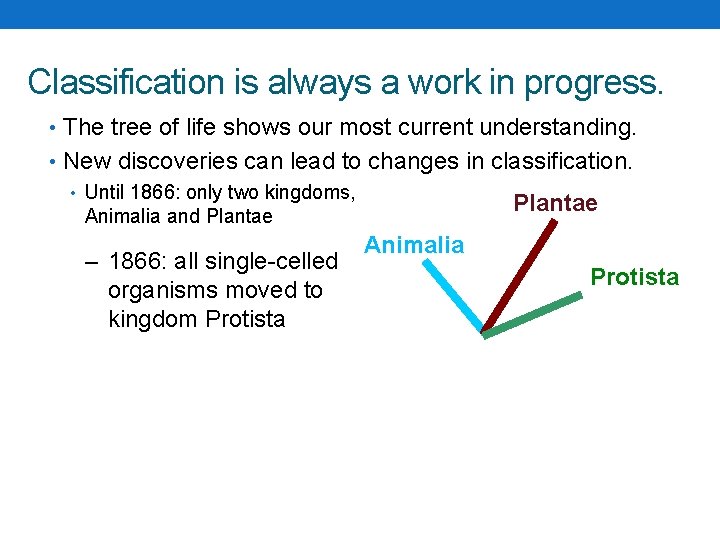
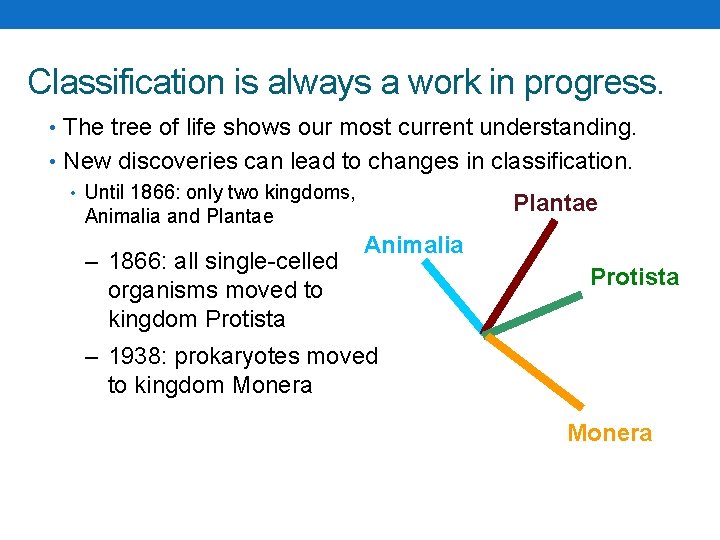
Classification is always a work in progress. • The tree of life shows our most current understanding. • New discoveries can lead to changes in classification. • Until 1866: only two kingdoms, Plantae Animalia and Plantae Animalia
Classification is always a work in progress. • The tree of life shows our most current understanding. • New discoveries can lead to changes in classification. • Until 1866: only two kingdoms, Plantae Animalia and Plantae – 1866: all single-celled organisms moved to kingdom Protista Animalia Protista
Classification is always a work in progress. • The tree of life shows our most current understanding. • New discoveries can lead to changes in classification. • Until 1866: only two kingdoms, Plantae Animalia and Plantae – 1866: all single-celled organisms moved to kingdom Protista Animalia Protista – 1938: prokaryotes moved to kingdom Monera
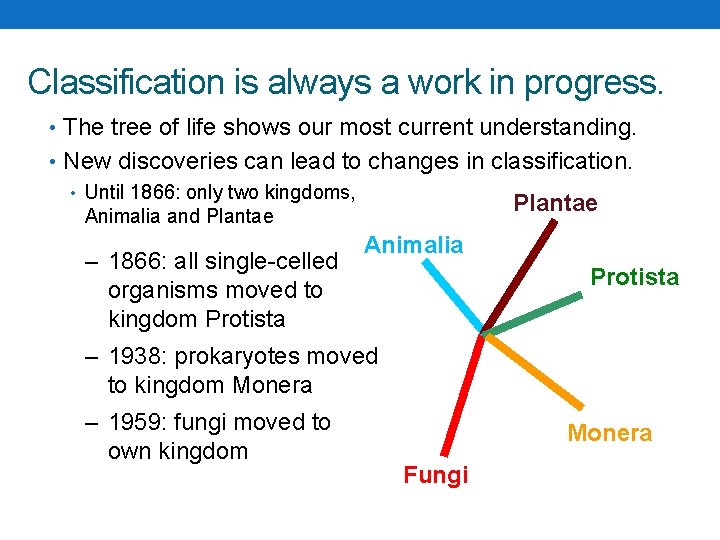
Classification is always a work in progress. • The tree of life shows our most current understanding. • New discoveries can lead to changes in classification. • Until 1866: only two kingdoms, Plantae Animalia and Plantae – 1866: all single-celled organisms moved to kingdom Protista Animalia Protista – 1938: prokaryotes moved to kingdom Monera – 1959: fungi moved to own kingdom Monera Fungi
Classification is always a work in progress. • The tree of life shows our most current understanding. • New discoveries can lead to changes in classification. • Until 1866: only two kingdoms, Plantae Animalia and Plantae – 1866: all single-celled organisms moved to kingdom Protista Animalia Protista – 1938: prokaryotes moved to kingdom Monera – 1959: fungi moved to own kingdom Archea Fungi Bacteria – 1977: kingdom Monera split into kingdoms Bacteria and Archaea
The three domains in the tree of life are Bacteria, Archaea, and Eukarya. • Domains are above the kingdom level. • proposed by Carl Woese based on r. RNA studies of prokaryotes • domain model more clearly shows prokaryotic diversity
• Domain Bacteria includes prokaryotes in the kingdom Bacteria. – one of largest groups on Earth – classified by shape, need for oxygen, and diseases caused
• Domain Archaea includes prokaryotes in the kingdom Archaea. – cell walls chemically different from bacteria – differences discovered by studying RNA – known for living in extreme environments
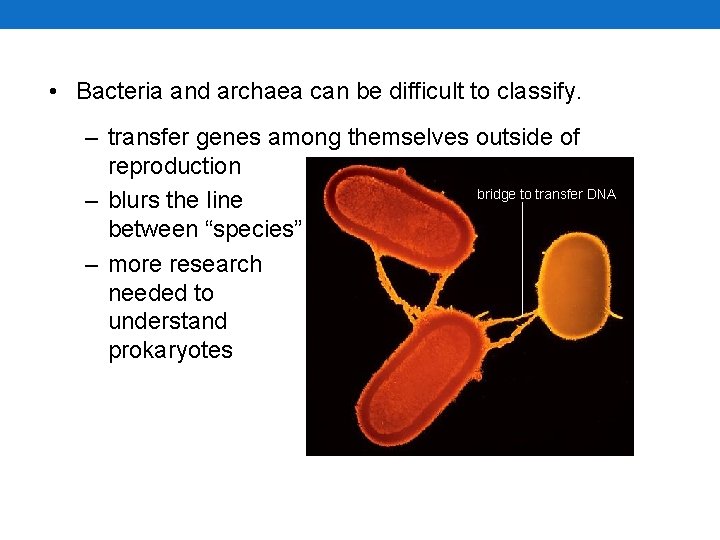
• Bacteria and archaea can be difficult to classify. – transfer genes among themselves outside of reproduction bridge to transfer DNA – blurs the line between “species” – more research needed to understand prokaryotes
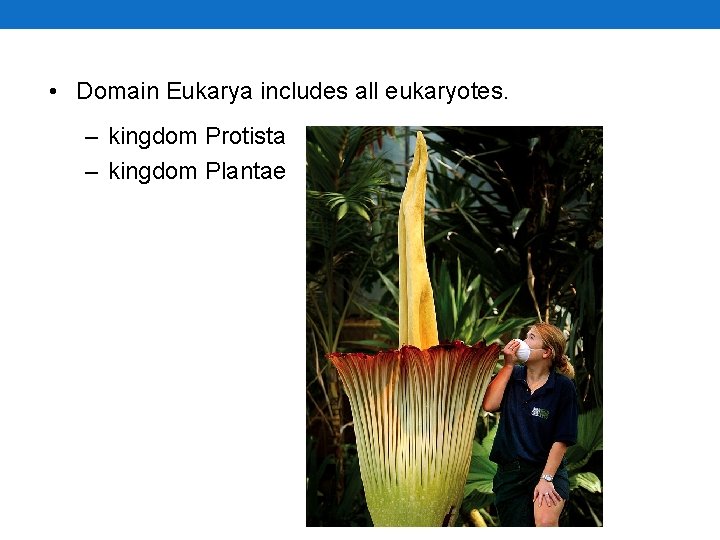
• Domain Eukarya includes all eukaryotes. – kingdom Protista
• Domain Eukarya includes all eukaryotes. – kingdom Protista – kingdom Plantae
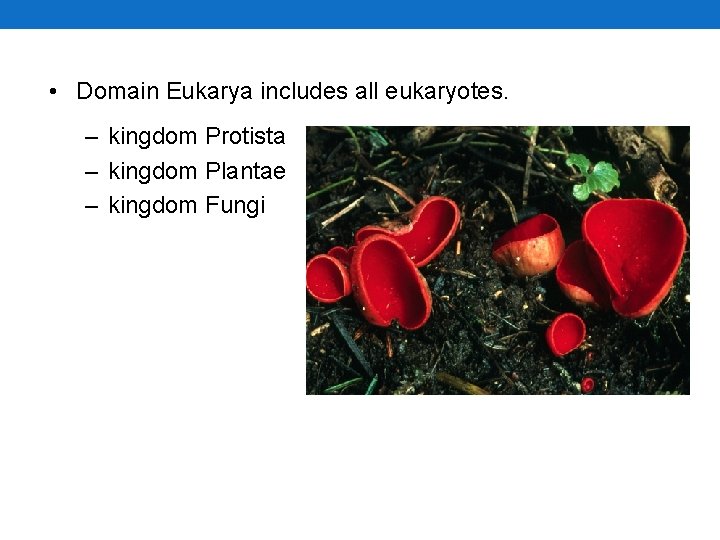
• Domain Eukarya includes all eukaryotes. – kingdom Protista – kingdom Plantae – kingdom Fungi
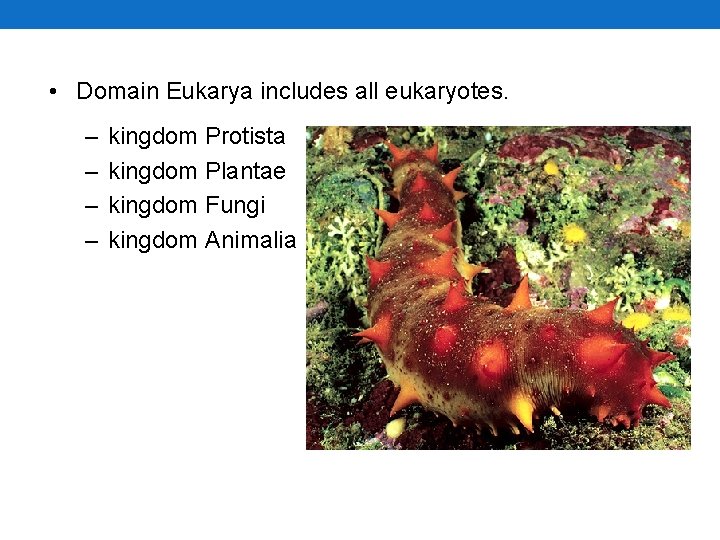
• Domain Eukarya includes all eukaryotes. – – kingdom Protista kingdom Plantae kingdom Fungi kingdom Animalia
The 6 Kingdom System • Kingdom Archaebacteria- ancient bacteria, prokaryotic • Kingdom Eubacteria-modern bacteria, prokaryotic • Kingdom Protista- single cell, eukaryotic, junk drawer • Kingdom Fungi- fungus, eukaryotic, heterotroph • Kingdom Plantae- plants, eukaryotic, autotroph • Kingdom Animalia- animals, eukaryotic, heterotroph