
Classification TAXONOMY System to organize all living creatures
- Slides: 14
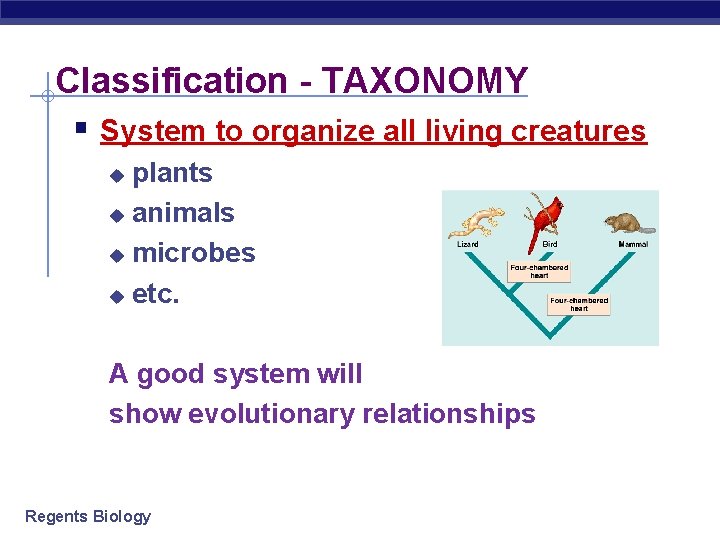
Classification - TAXONOMY § System to organize all living creatures plants u animals u microbes u etc. u A good system will show evolutionary relationships Regents Biology
Carolus Linnaeus § The Linnean system proposed in 1700 s u binomial nomenclature - each species has a 2 part name u § Genus (genera) § species – group of similar organisms that can interbreed AND produce fertile offspring Ex: female horse and male donkey = mules CANNOT breed => sterile Therefore horses and donkeys are different species Homo sapiens Regents Biology Can also be written H. sapiens
Latin - binomial nomenclature § 2 part scientific name u Genus — larger group to which organism belongs § always capitalized u species — specific name for that organism § always lowercase u Written either italicized OR underlined Regents Biology example: Linnaeus named humans Homo sapiens § means “wise man” — perhaps in a show of hope & optimism
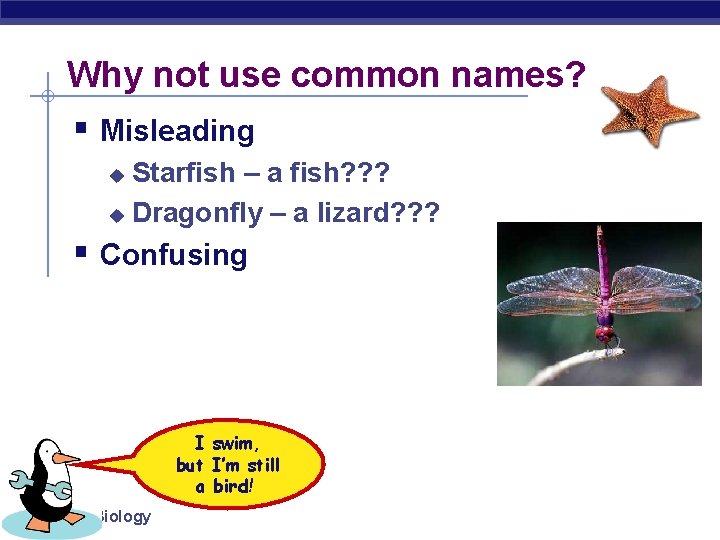
Why not use common names? § Misleading Starfish – a fish? ? ? u Dragonfly – a lizard? ? ? u § Confusing I swim, but I’m still a bird! Regents Biology
What kind of names do viruses have? § Example – H 1 N 1 § Is that a scientific name? § NO Genus – NO species § WHY? ? § Viruses are NOT _____! Regents Biology
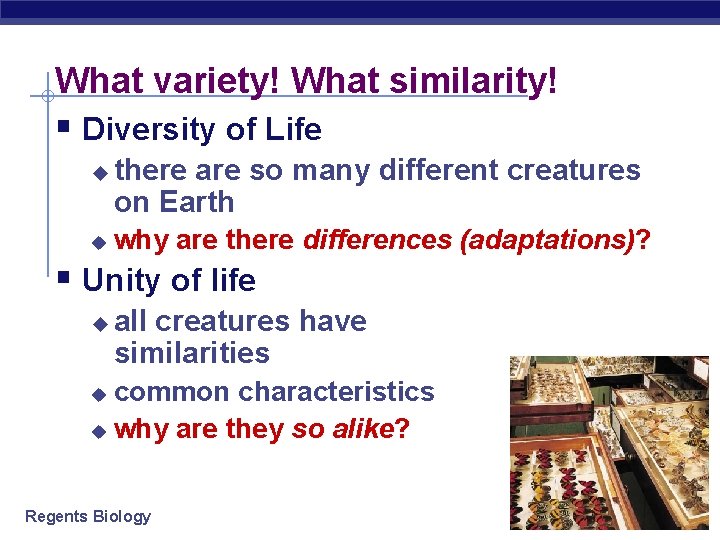
What variety! What similarity! § Diversity of Life u u there are so many different creatures on Earth why are there differences (adaptations)? § Unity of life u all creatures have similarities common characteristics u why are they so alike? u Regents Biology
Regents Biology
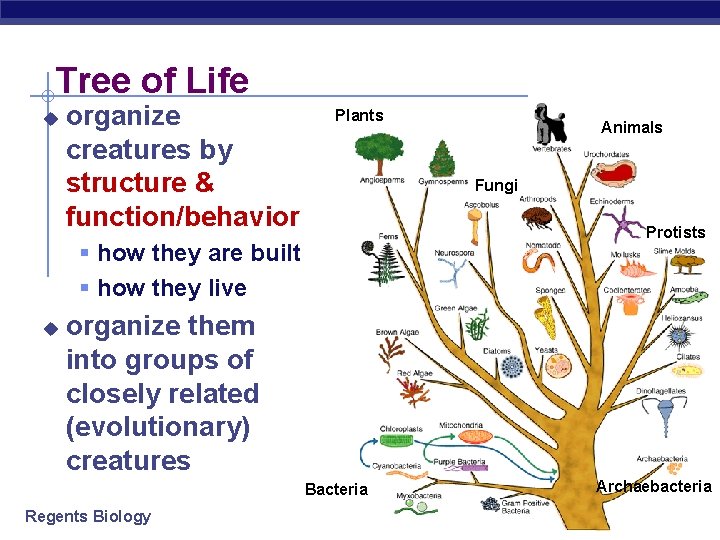
Tree of Life u organize creatures by structure & function/behavior Plants Fungi Protists § how they are built § how they live u Animals organize them into groups of closely related (evolutionary) creatures Bacteria Regents Biology Archaebacteria
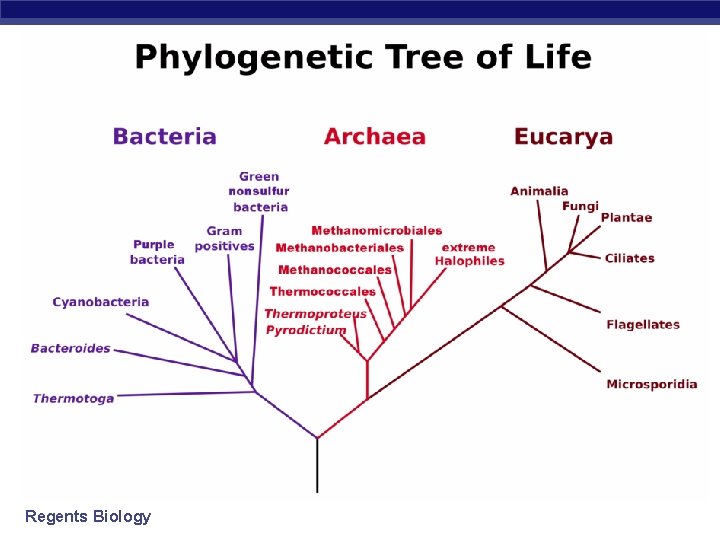
How did we get here? Began with 3 groups – Bacteria, Archaea, Eukarya Next – 2 groups – plants and animals Plants – usually green; don’t move Animals – not usually green; move Invention of microscope – saw cell structures Invention of electron microscope – saw within cell structures had to come up with a new system – is still changing Regents Biology
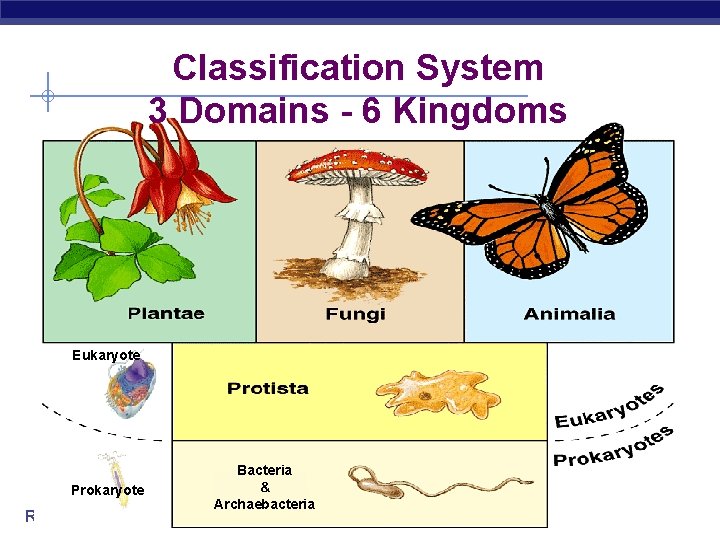
Classification System 3 Domains - 6 Kingdoms Eukaryote Prokaryote Regents Biology Bacteria & Archaebacteria
3 Domain/6 Kingdom system 1. Archaebacteria – ALL Prokaryotes Prokaryote § Kingdom Archae w Unicellular, cell wall w Auto AND hetertrophic w Live in harsh conditions – example high temp, high salt, low oxygen, extreme p. H w Oldest life forms in the fossil record 2. Eubacteria - ALL Prokaryotes § Kingdom Bacteria w Unicellular, cell wall w Auto AND heterotrophic w Some harmful – cause disease – ex. Strep throat, E. coli w Some helpful/beneficial – make vitamin K (in large int), yogurt Regents Biology
3 Domain - 6 Kingdom system 3. Eukaryota - separate organelles in their cells § Protists w Mostly unicellular; No cell wall w Auto AND heterotrophic w Are mobile (can move from place to place) w Ex: ameba, paramecium, algae, euglena § Fungi w Mostly multicellular; cell wall (chitin) Eukaryote w Heterotrophic – decomposers w Sessile – remain in on place w Ex: yeast, mushrooms, mold Regents Biology
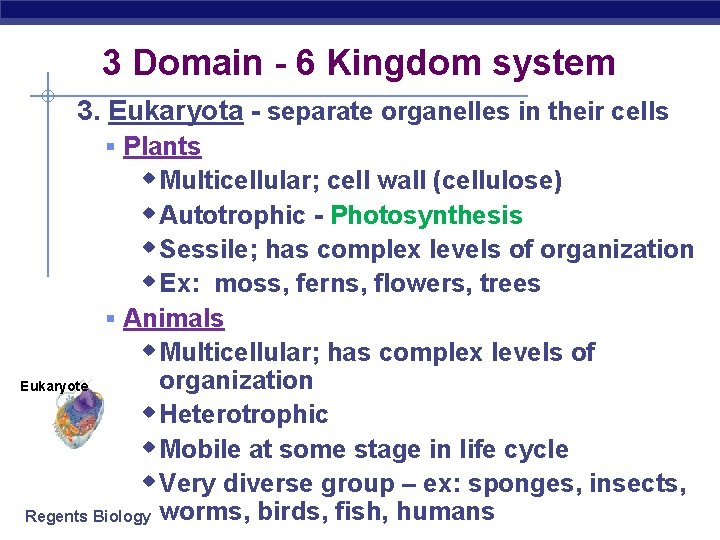
3 Domain - 6 Kingdom system 3. Eukaryota - separate organelles in their cells § Plants w Multicellular; cell wall (cellulose) w Autotrophic - Photosynthesis w Sessile; has complex levels of organization w Ex: moss, ferns, flowers, trees § Animals w Multicellular; has complex levels of organization Eukaryote w Heterotrophic w Mobile at some stage in life cycle w Very diverse group – ex: sponges, insects, Regents Biology worms, birds, fish, humans
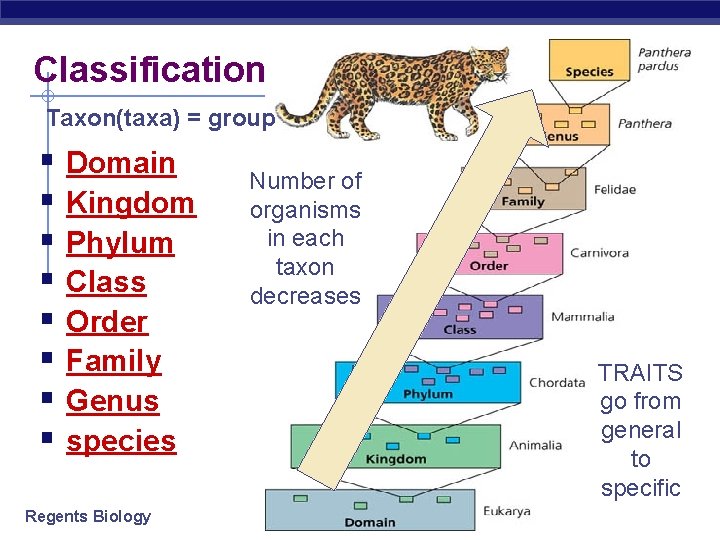
Classification Taxon(taxa) = group § Domain § Kingdom § Phylum § Class § Order § Family § Genus § species Regents Biology Number of organisms in each taxon decreases TRAITS go from general to specific