
Classification Regents Biology Classification System to organize all
Classification Regents Biology
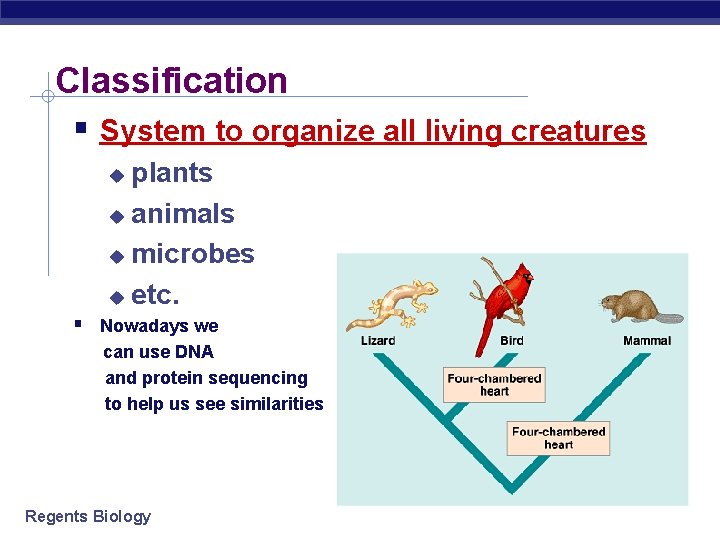
Classification System to organize all living creatures plants animals microbes etc. Nowadays we can use DNA and protein sequencing to help us see similarities Regents Biology
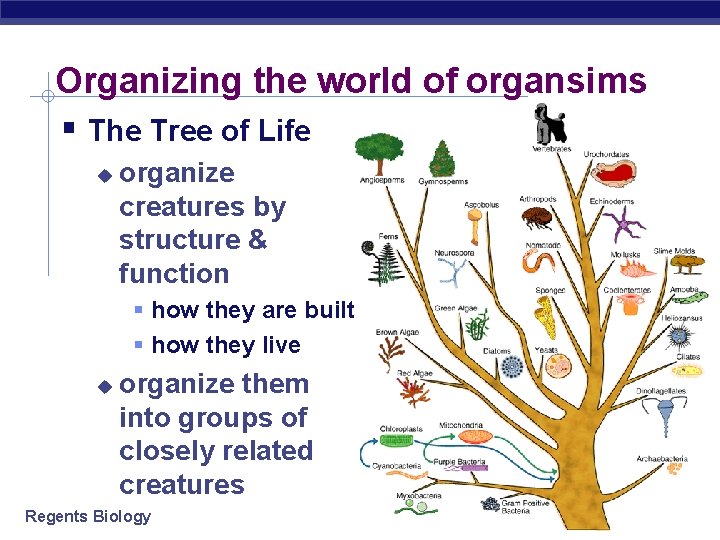
Organizing the world of organsims The Tree of Life organize creatures by structure & function how they are built how they live organize them into groups of closely related creatures Regents Biology
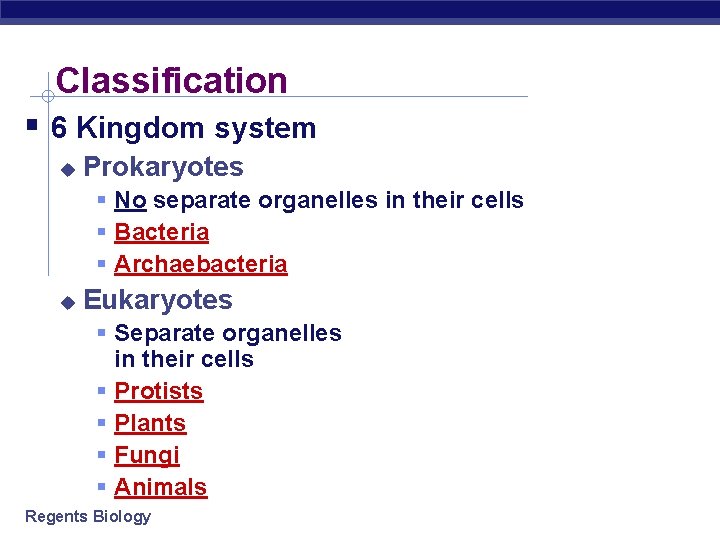
Classification 6 Kingdom system Prokaryotes No separate organelles in their cells Bacteria Archaebacteria Eukaryotes Separate organelles in their cells Protists Plants Fungi Animals Regents Biology
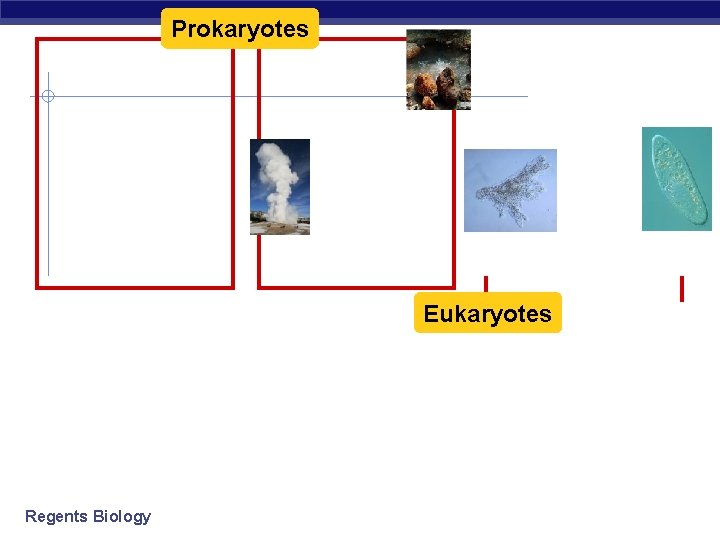
Prokaryotes Eukaryotes Regents Biology
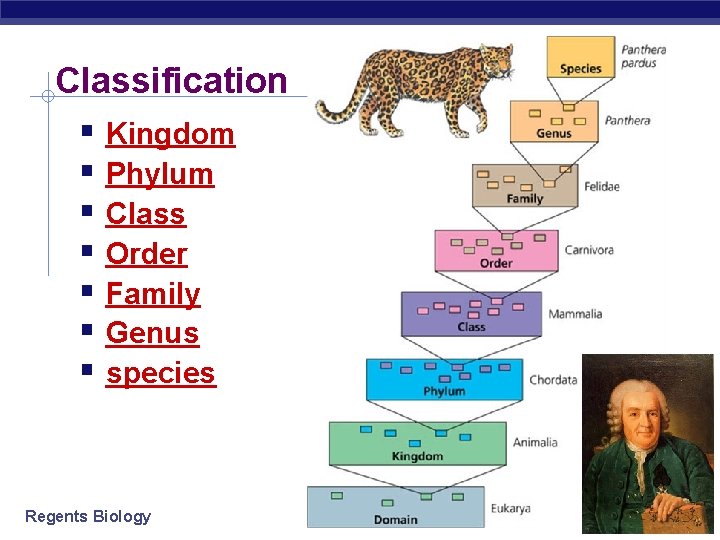
Classification Kingdom Phylum Class Order Family Genus species Regents Biology
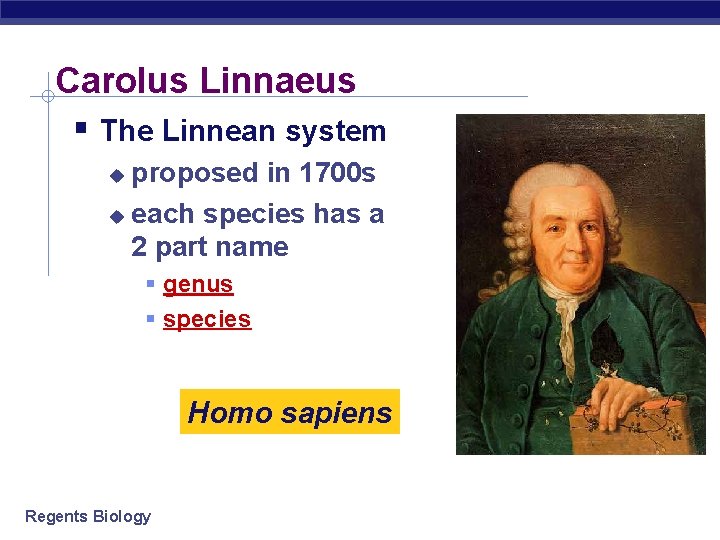
Carolus Linnaeus The Linnean system proposed in 1700 s each species has a 2 part name genus species Homo sapiens Regents Biology
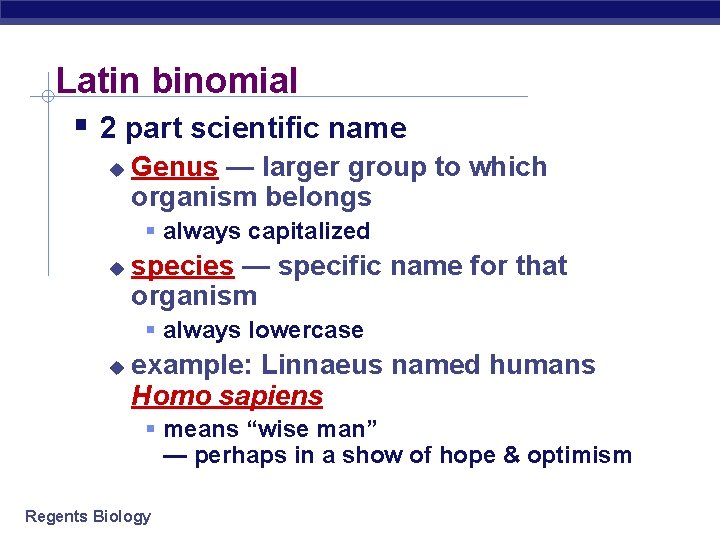
Latin binomial 2 part scientific name Genus — larger group to which organism belongs always capitalized species — specific name for that organism always lowercase example: Linnaeus named humans Homo sapiens means “wise man” — perhaps in a show of hope & optimism Regents Biology
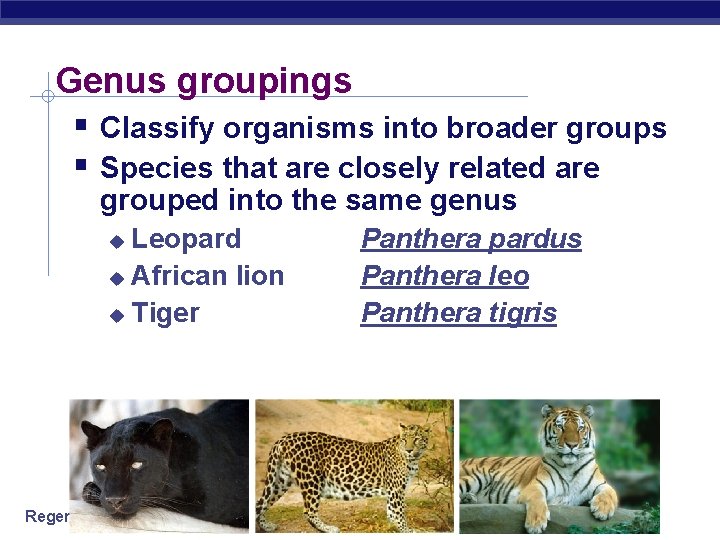
Genus groupings Classify organisms into broader groups Species that are closely related are grouped into the same genus Leopard African lion Tiger Regents Biology Panthera pardus Panthera leo Panthera tigris
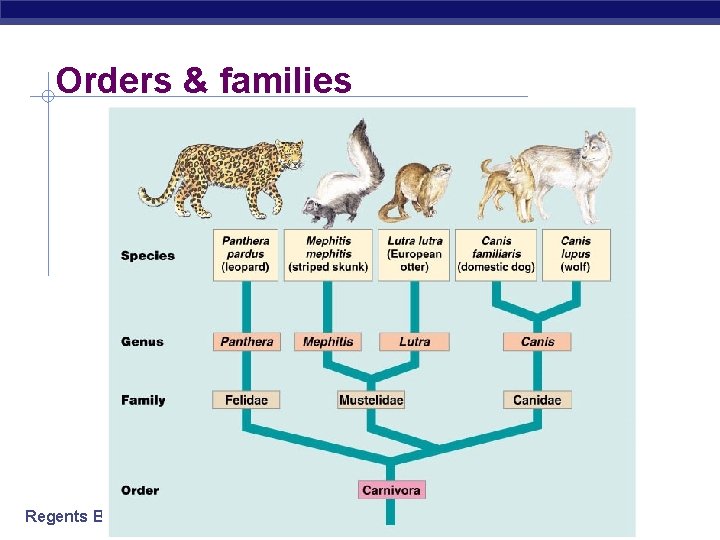
Orders & families Regents Biology
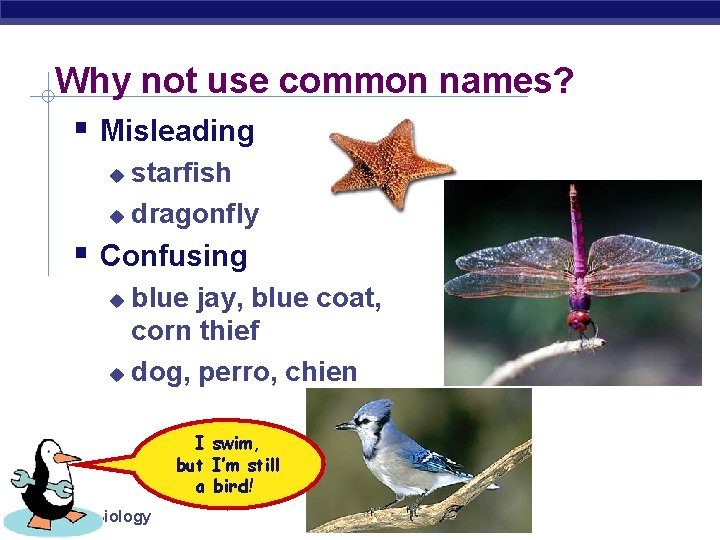
Why not use common names? Misleading starfish dragonfly Confusing blue jay, blue coat, corn thief dog, perro, chien I swim, but I’m still a bird! Regents Biology
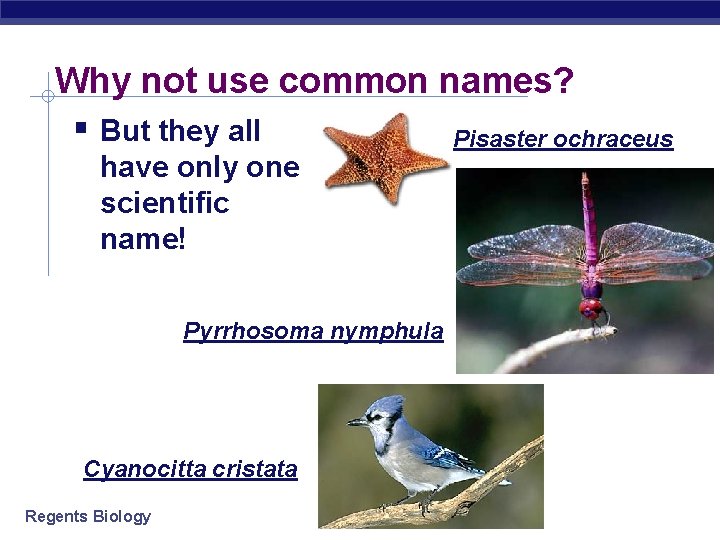
Why not use common names? But they all Pisaster ochraceus have only one scientific name! Pyrrhosoma nymphula Cyanocitta cristata Regents Biology
Any Questions? Regents Biology
- Slides: 13