
Classification Presentation Introduction Basic Information Platyhelminthes Rotifera Nematoda

Classification Presentation
Introduction Basic Information Platyhelminthes Rotifera Nematoda Morphological Characteristics Nutrition Reproduction Nemertea Example Cool Facts
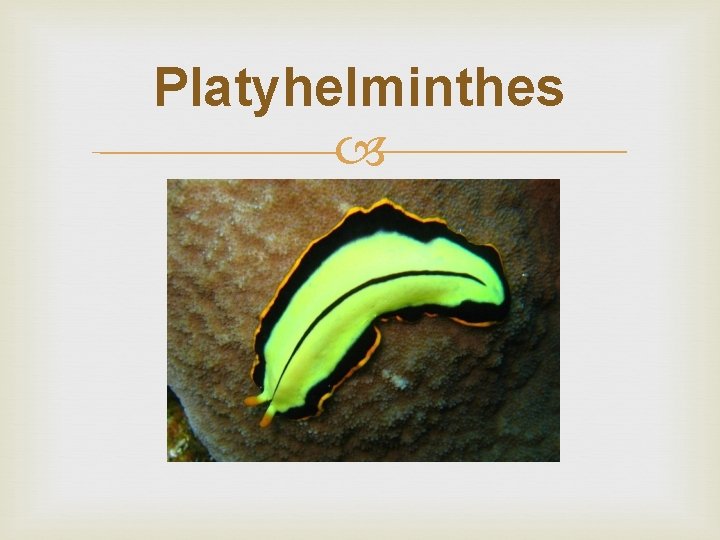
Platyhelminthes
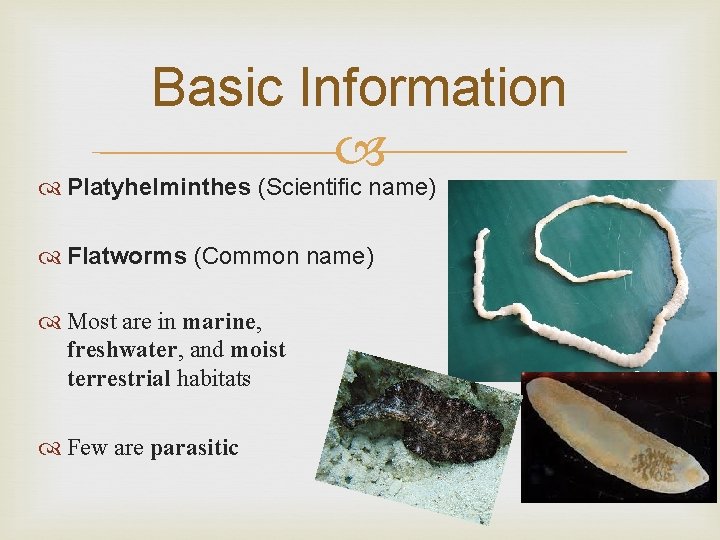
Basic Information Platyhelminthes (Scientific name) Flatworms (Common name) Most are in marine, freshwater, and moist terrestrial habitats Few are parasitic
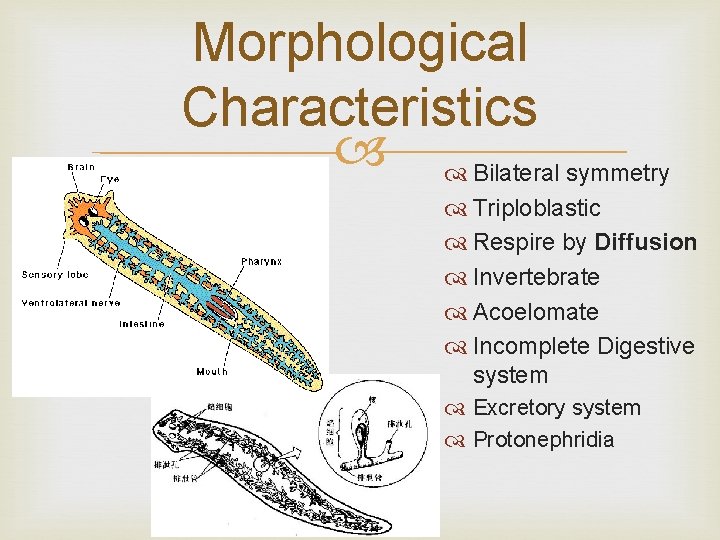
Morphological Characteristics Bilateral symmetry Triploblastic Respire by Diffusion Invertebrate Acoelomate Incomplete Digestive system Excretory system Protonephridia
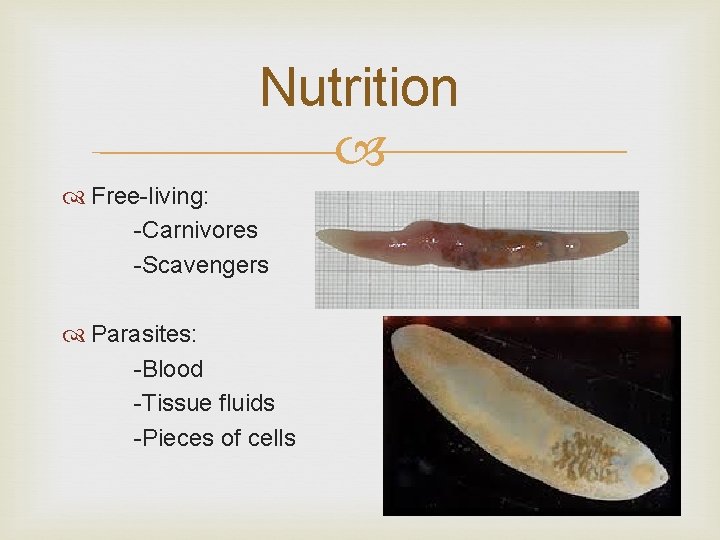
Nutrition Free-living: -Carnivores -Scavengers Parasites: -Blood -Tissue fluids -Pieces of cells
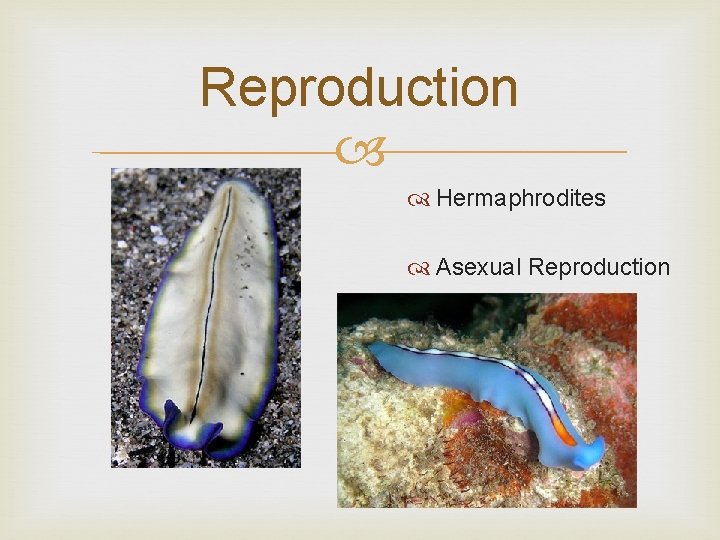
Reproduction Hermaphrodites Asexual Reproduction
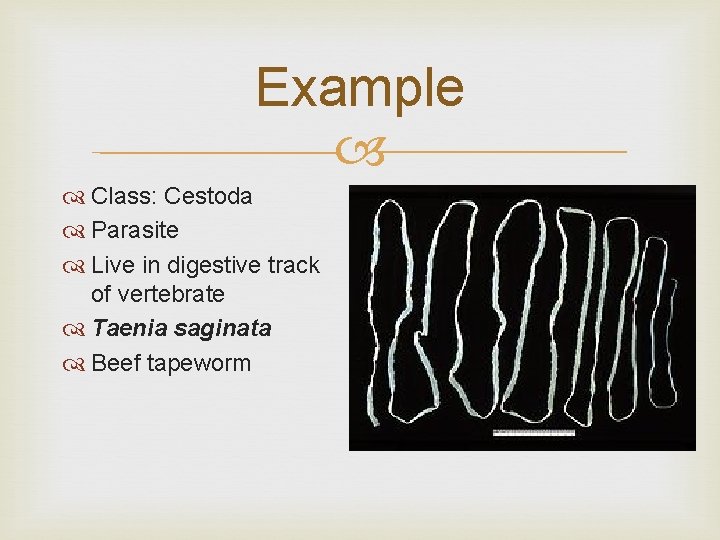
Example Class: Cestoda Parasite Live in digestive track of vertebrate Taenia saginata Beef tapeworm
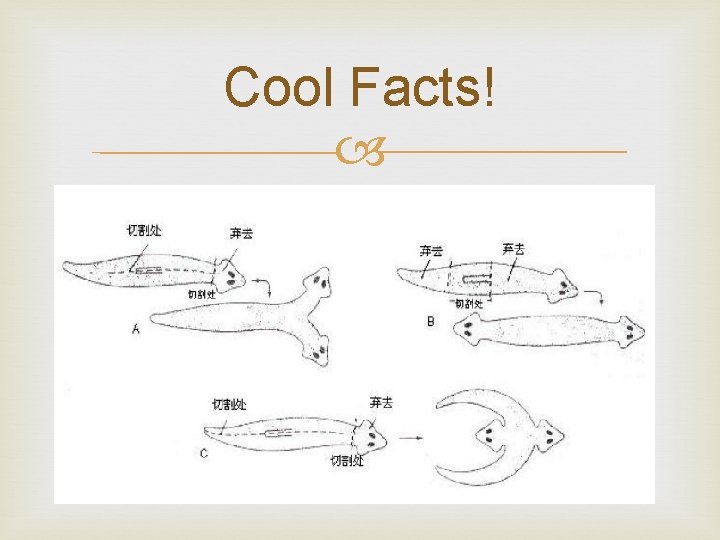
Cool Facts!

Rotifera
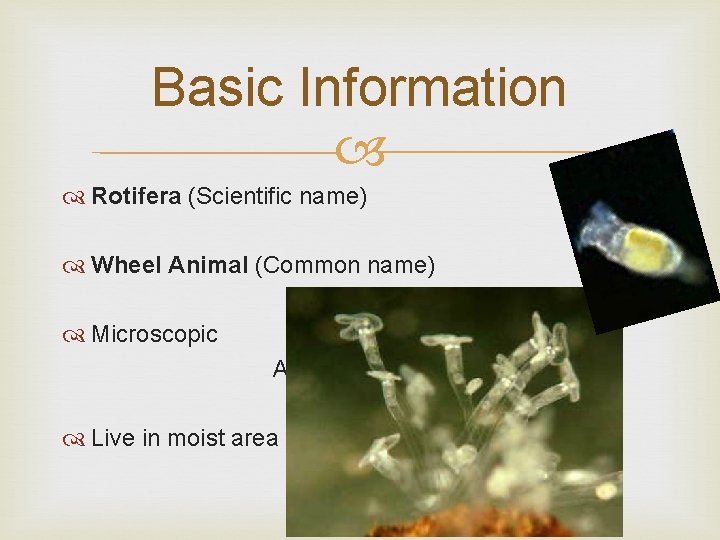
Basic Information Rotifera (Scientific name) Wheel Animal (Common name) Microscopic Animal Live in moist area
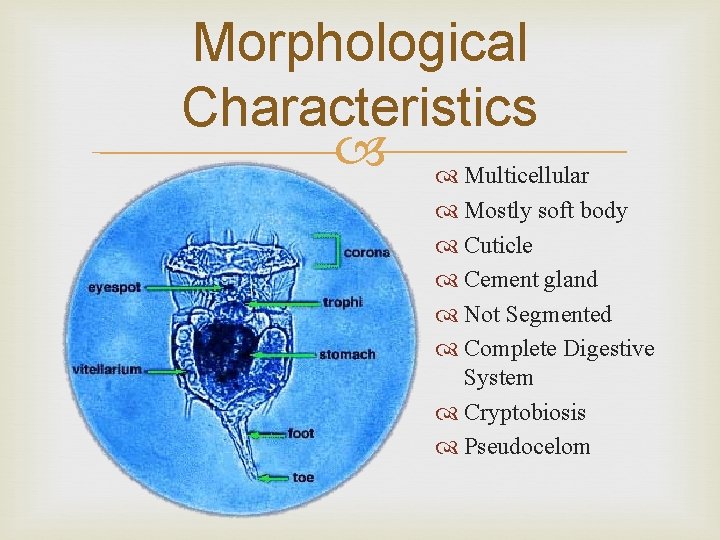
Morphological Characteristics Multicellular Mostly soft body Cuticle Cement gland Not Segmented Complete Digestive System Cryptobiosis Pseudocelom
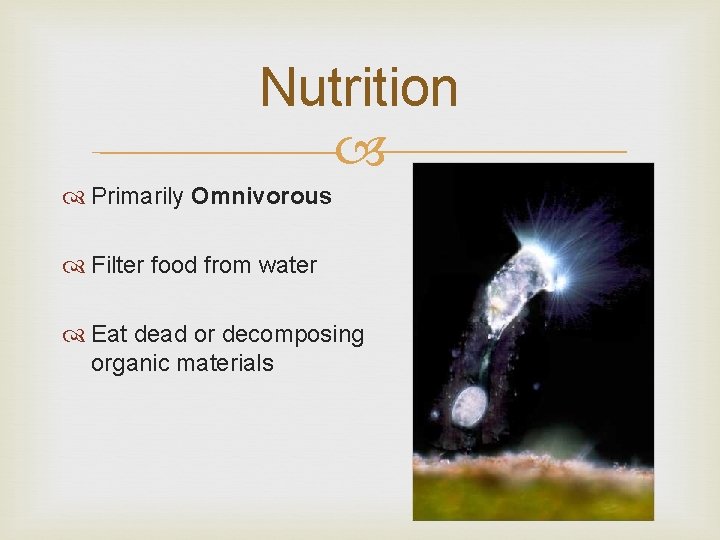
Nutrition Primarily Omnivorous Filter food from water Eat dead or decomposing organic materials
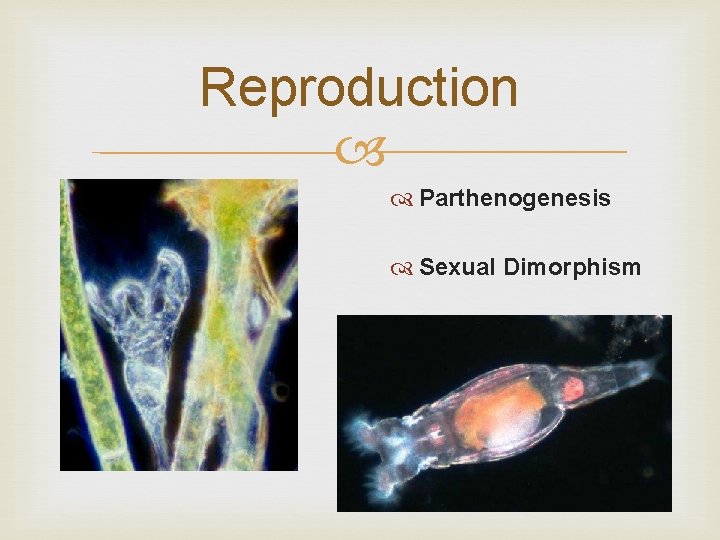
Reproduction Parthenogenesis Sexual Dimorphism
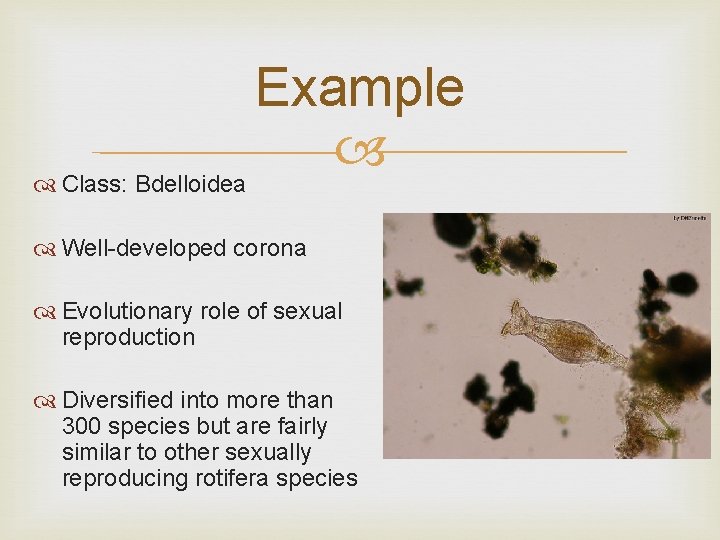
Example Class: Bdelloidea Well-developed corona Evolutionary role of sexual reproduction Diversified into more than 300 species but are fairly similar to other sexually reproducing rotifera species
Cool Facts!
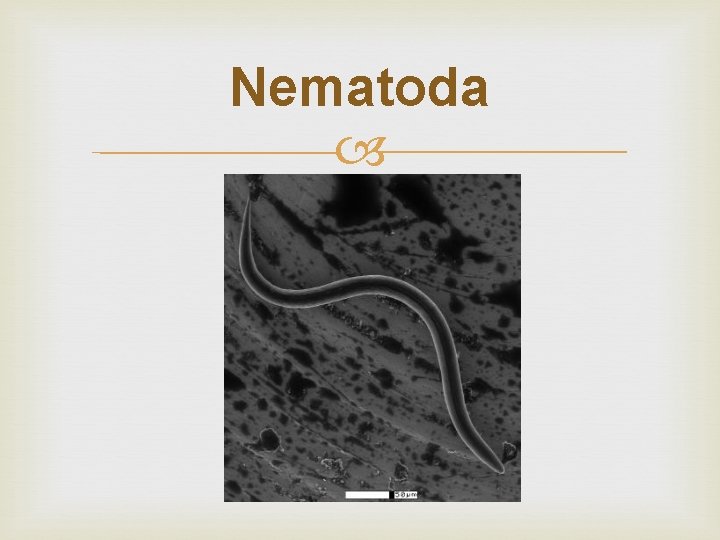
Nematoda
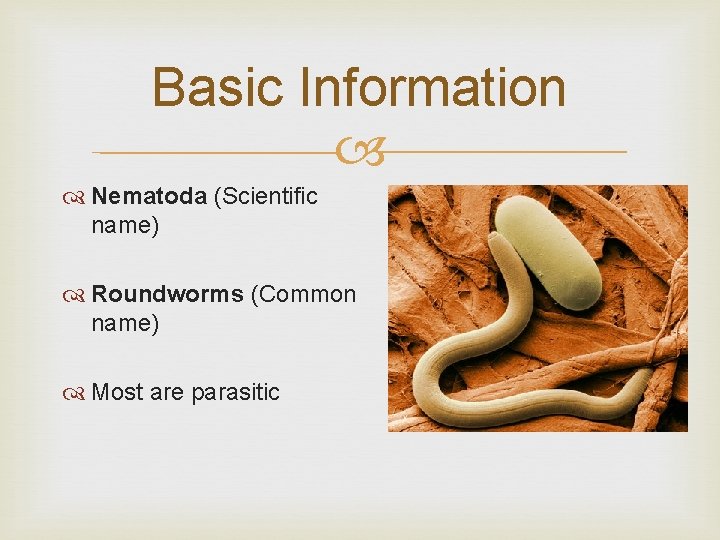
Basic Information Nematoda (Scientific name) Roundworms (Common name) Most are parasitic
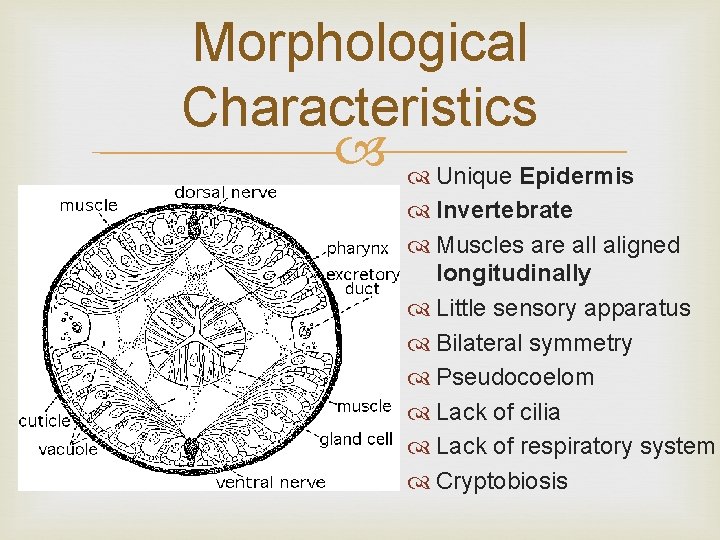
Morphological Characteristics Unique Epidermis Invertebrate Muscles are all aligned longitudinally Little sensory apparatus Bilateral symmetry Pseudocoelom Lack of cilia Lack of respiratory system Cryptobiosis
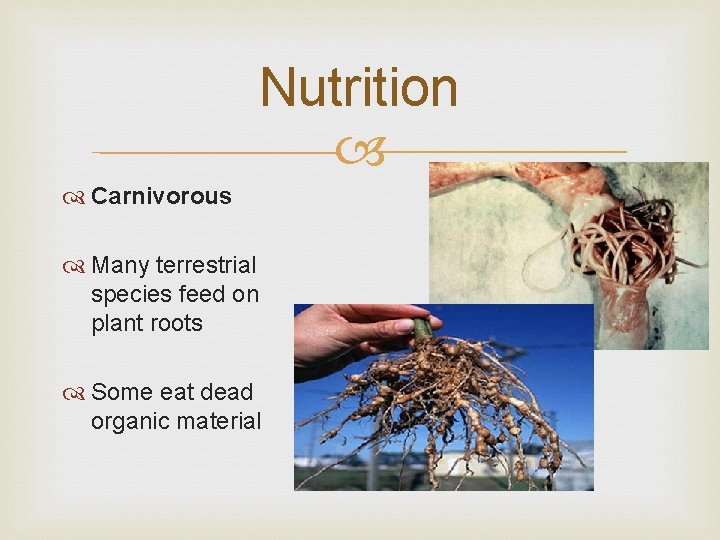
Nutrition Carnivorous Many terrestrial species feed on plant roots Some eat dead organic material
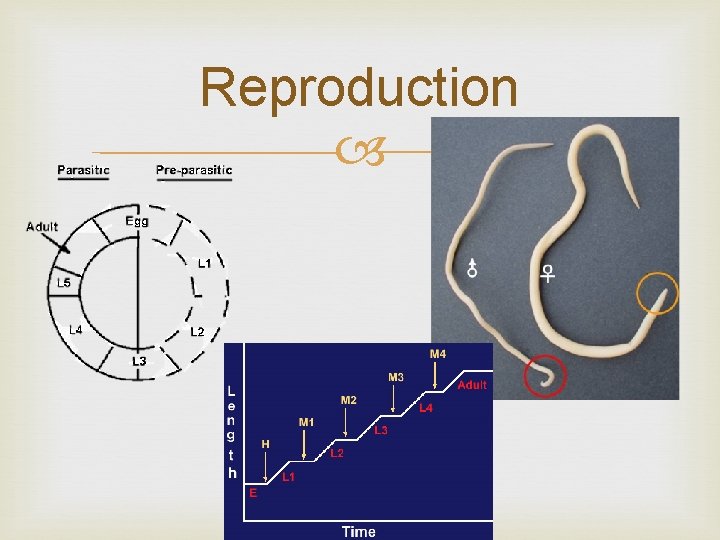
Reproduction
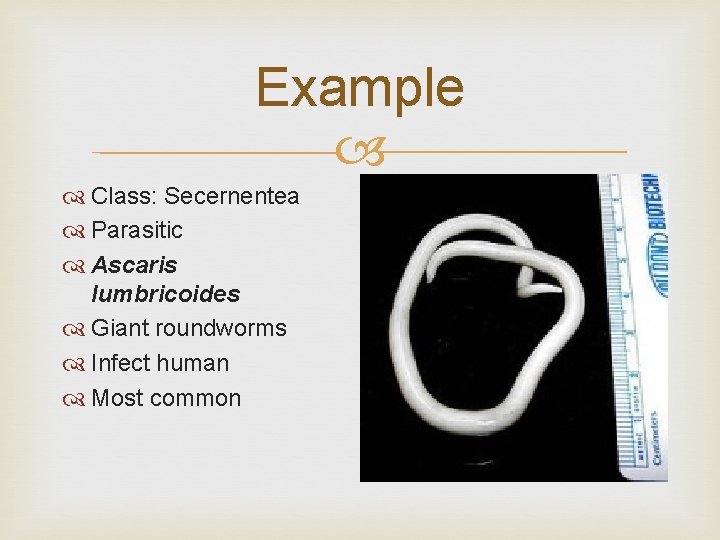
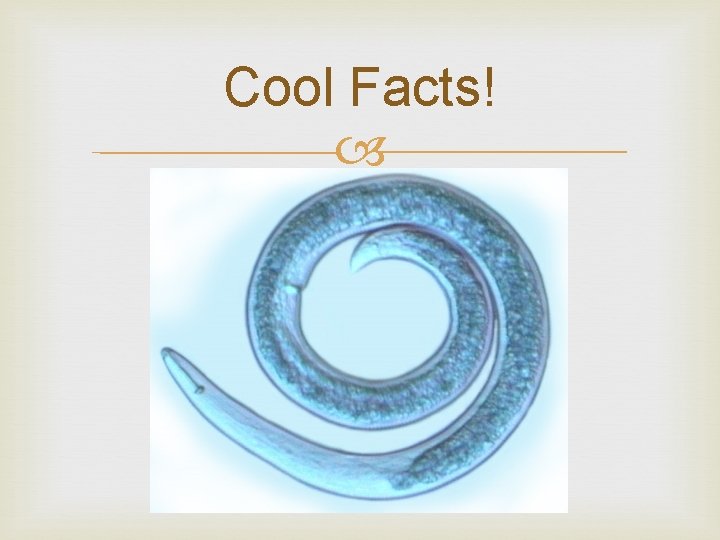
Example Class: Secernentea Parasitic Ascaris lumbricoides Giant roundworms Infect human Most common
Cool Facts!

Nemertea
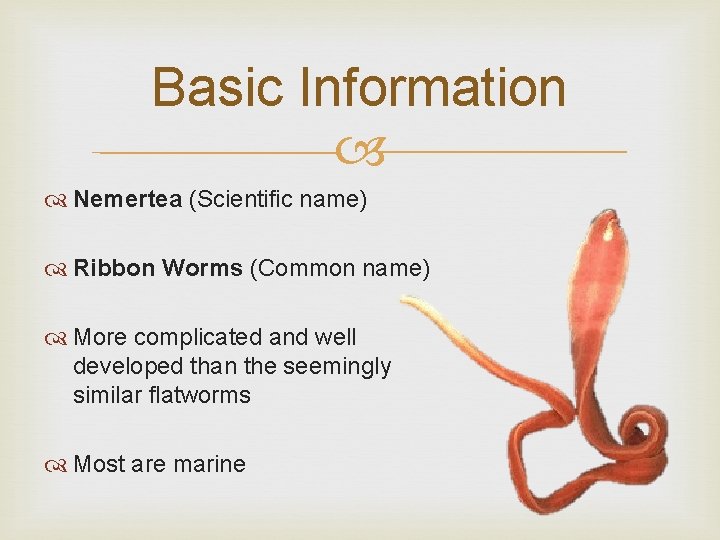
Basic Information Nemertea (Scientific name) Ribbon Worms (Common name) More complicated and well developed than the seemingly similar flatworms Most are marine
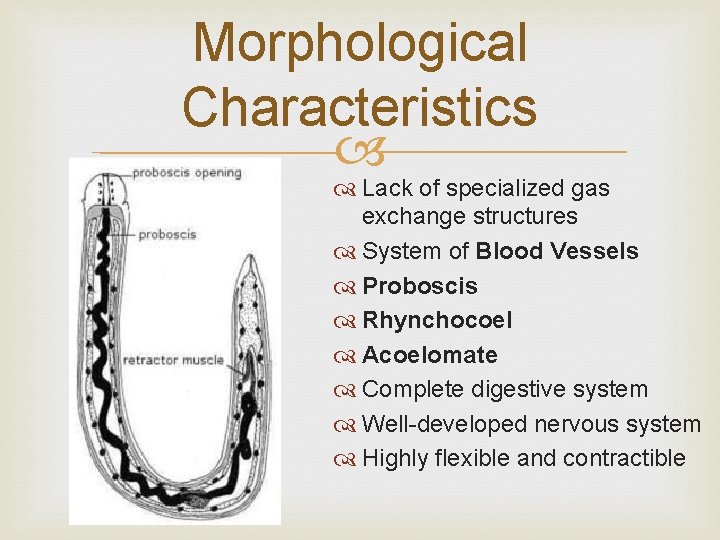
Morphological Characteristics Lack of specialized gas exchange structures System of Blood Vessels Proboscis Rhynchocoel Acoelomate Complete digestive system Well-developed nervous system Highly flexible and contractible
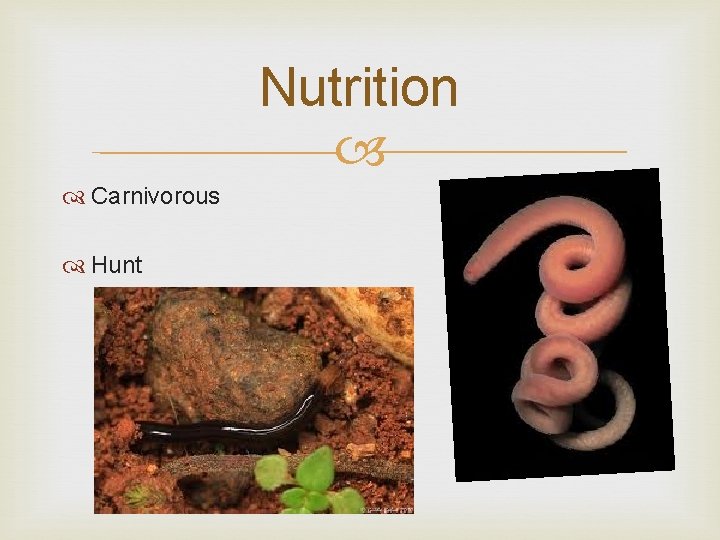
Nutrition Carnivorous Hunt
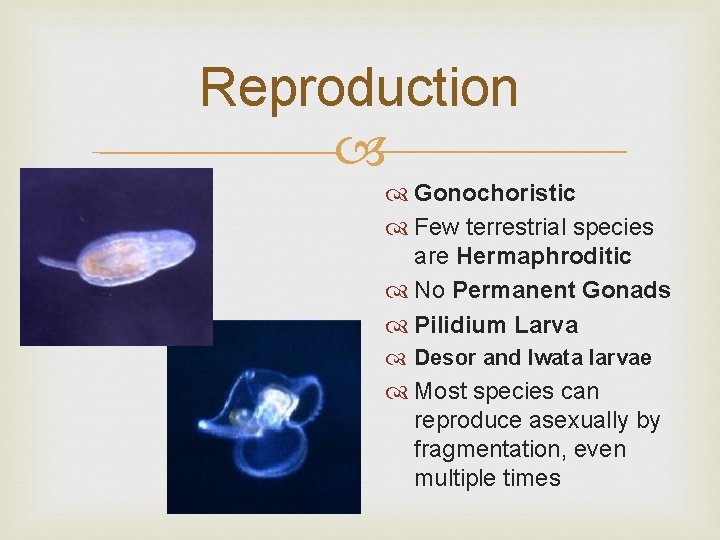
Reproduction Gonochoristic Few terrestrial species are Hermaphroditic No Permanent Gonads Pilidium Larva Desor and Iwata larvae Most species can reproduce asexually by fragmentation, even multiple times
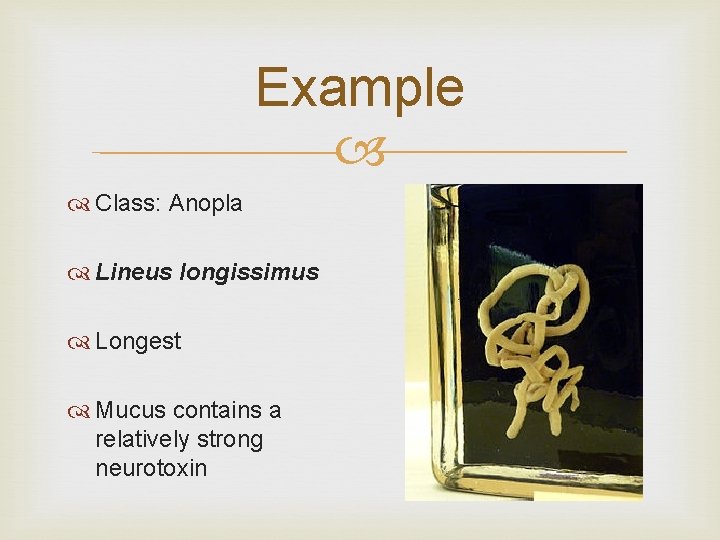
Example Class: Anopla Lineus longissimus Longest Mucus contains a relatively strong neurotoxin
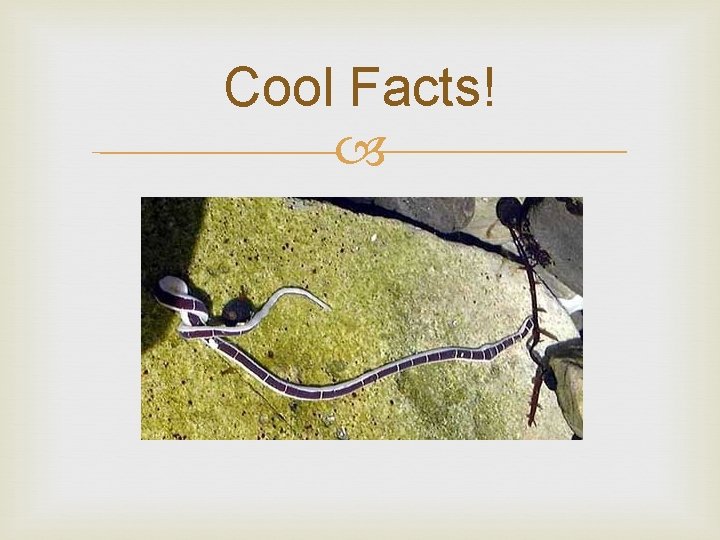
Cool Facts!
- Slides: 30