
Classification of Tumors of Hematopoietic and Lymphoid Tissues
- Slides: 35
Classification of Tumors of Hematopoietic and Lymphoid Tissues 경희의대 종양혈액내과 조 경 삼
Why classify? • Classification is the language of medicine – Diseases must be described, defined and named before they can be diagnosed, treated and studied. – A classification should contain diseases that are clearly defined, clinically distinctive, non-overlapping (mutually exclusive) and that together comprise all known entities (collectively exhaustive).
Classification • Classification should serve as a basis for future investigation, and should be able to incorporate new information as it becomes available • Classification has two aspects – Class discovery : identifying categories of diseases – Class prediction : determining category of individual case
Hematologic Neoplasms • Uncontrolled proliferation of hematologic cells : Stem cells or progenitor cells • Lymphoid, plasma cell • Non-lymphocytic (Myeloid) – – Erythroid Granulocytic Monocytic, macrophage Megakaryocytic • Mixed
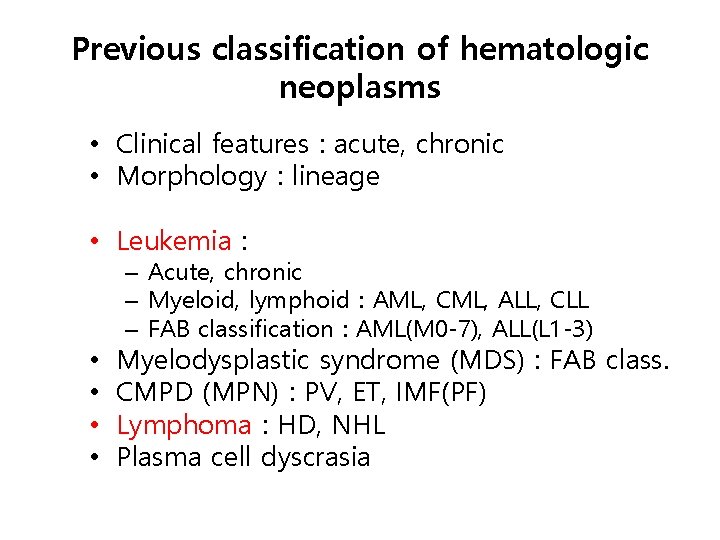
Previous classification of hematologic neoplasms • Clinical features : acute, chronic • Morphology : lineage • Leukemia : – Acute, chronic – Myeloid, lymphoid : AML, CML, ALL, CLL – FAB classification : AML(M 0 -7), ALL(L 1 -3) • • Myelodysplastic syndrome (MDS) : FAB class. CMPD (MPN) : PV, ET, IMF(PF) Lymphoma : HD, NHL Plasma cell dyscrasia
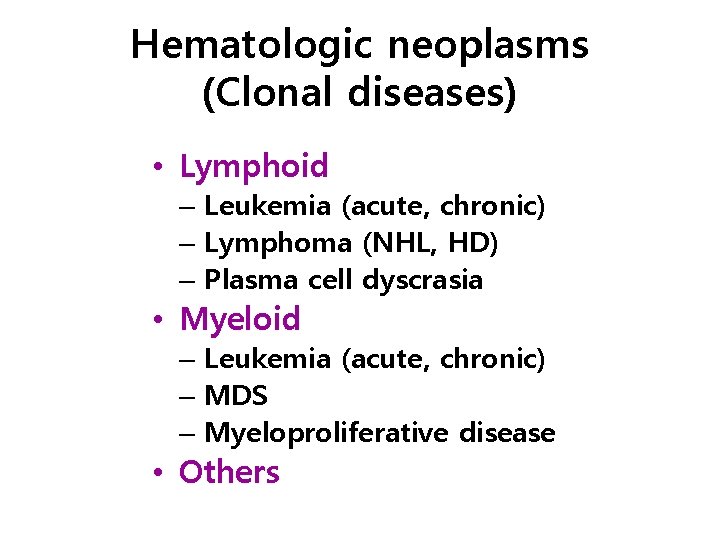
Hematologic neoplasms (Clonal diseases) • Lymphoid – Leukemia (acute, chronic) – Lymphoma (NHL, HD) – Plasma cell dyscrasia • Myeloid – Leukemia (acute, chronic) – MDS – Myeloproliferative disease • Others
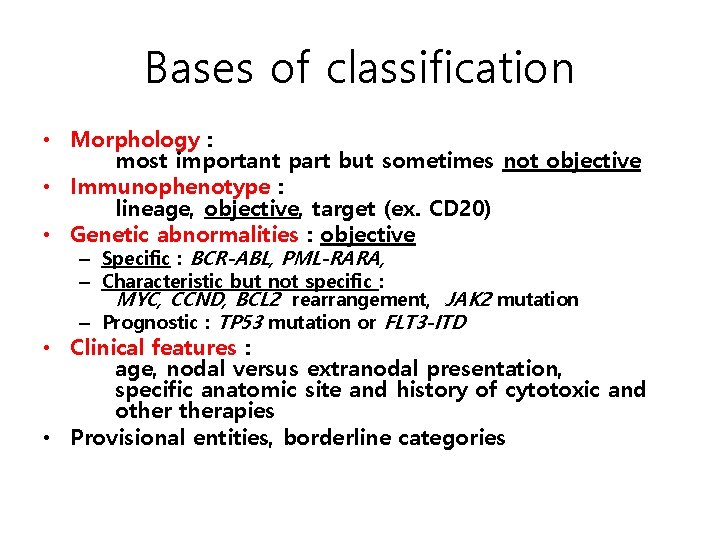
Bases of classification • Morphology : most important part but sometimes not objective • Immunophenotype : lineage, objective, target (ex. CD 20) • Genetic abnormalities : objective – Specific : BCR-ABL, PML-RARA, – Characteristic but not specific : MYC, CCND, BCL 2 rearrangement, JAK 2 mutation – Prognostic : TP 53 mutation or FLT 3 -ITD • Clinical features : age, nodal versus extranodal presentation, specific anatomic site and history of cytotoxic and otherapies • Provisional entities, borderline categories
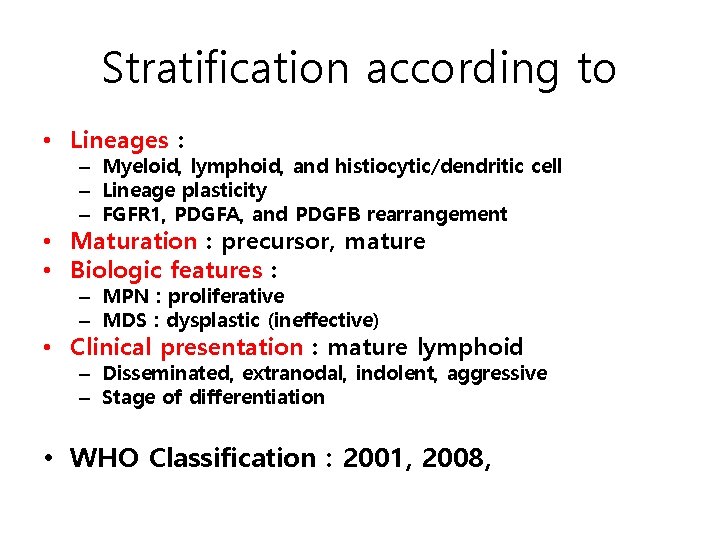
Stratification according to • Lineages : – Myeloid, lymphoid, and histiocytic/dendritic cell – Lineage plasticity – FGFR 1, PDGFA, and PDGFB rearrangement • Maturation : precursor, mature • Biologic features : – MPN : proliferative – MDS : dysplastic (ineffective) • Clinical presentation : mature lymphoid – Disseminated, extranodal, indolent, aggressive – Stage of differentiation • WHO Classification : 2001, 2008,
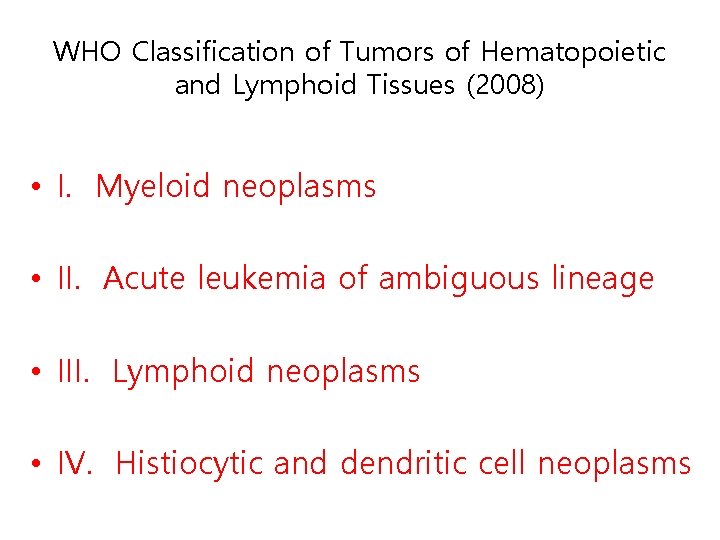
WHO Classification of Tumors of Hematopoietic and Lymphoid Tissues (2008) • I. Myeloid neoplasms • II. Acute leukemia of ambiguous lineage • III. Lymphoid neoplasms • IV. Histiocytic and dendritic cell neoplasms
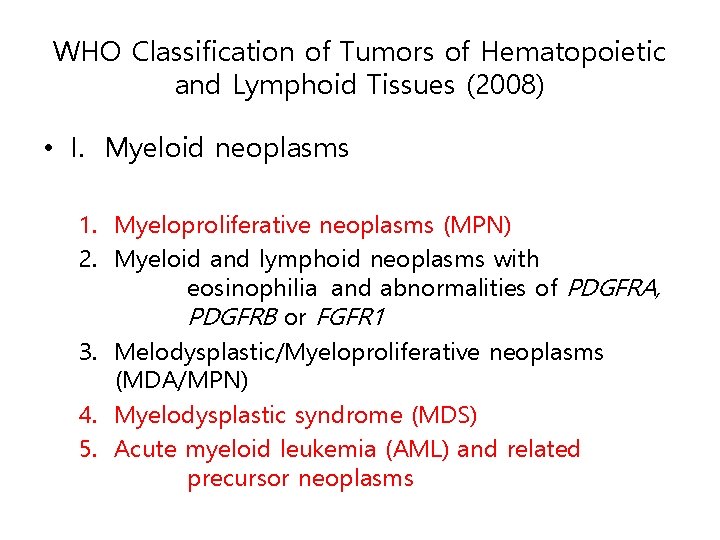
WHO Classification of Tumors of Hematopoietic and Lymphoid Tissues (2008) • I. Myeloid neoplasms 1. Myeloproliferative neoplasms (MPN) 2. Myeloid and lymphoid neoplasms with eosinophilia and abnormalities of PDGFRA, PDGFRB or FGFR 1 3. Melodysplastic/Myeloproliferative neoplasms (MDA/MPN) 4. Myelodysplastic syndrome (MDS) 5. Acute myeloid leukemia (AML) and related precursor neoplasms
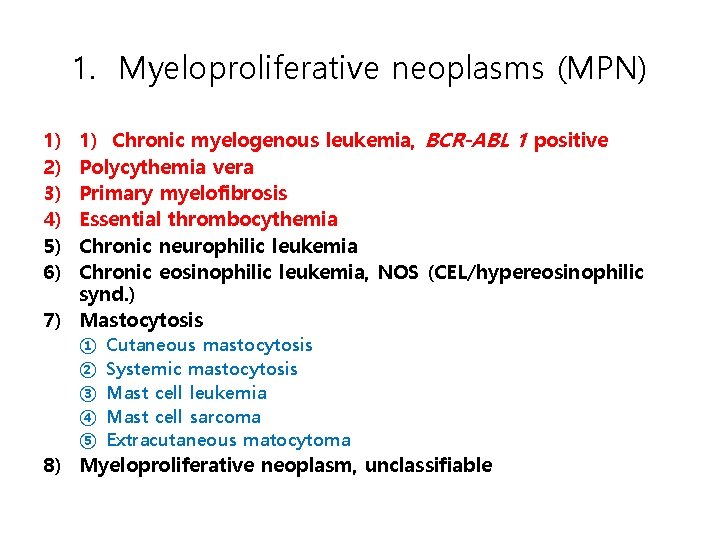
1. Myeloproliferative neoplasms (MPN) 1) Chronic myelogenous leukemia, BCR-ABL 1 positive Polycythemia vera Primary myelofibrosis Essential thrombocythemia Chronic neurophilic leukemia Chronic eosinophilic leukemia, NOS (CEL/hypereosinophilic synd. ) 7) Mastocytosis 1) 2) 3) 4) 5) 6) ① ② ③ ④ ⑤ Cutaneous mastocytosis Systemic mastocytosis Mast cell leukemia Mast cell sarcoma Extracutaneous matocytoma 8) Myeloproliferative neoplasm, unclassifiable
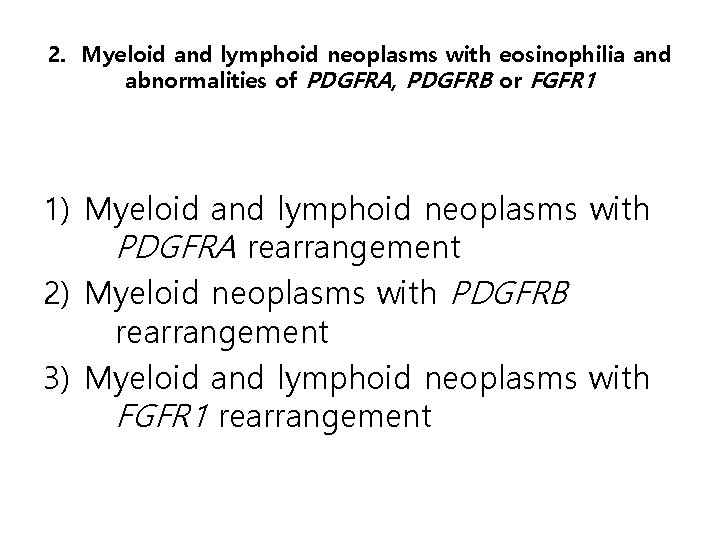
2. Myeloid and lymphoid neoplasms with eosinophilia and abnormalities of PDGFRA, PDGFRB or FGFR 1 1) Myeloid and lymphoid neoplasms with PDGFRA rearrangement 2) Myeloid neoplasms with PDGFRB rearrangement 3) Myeloid and lymphoid neoplasms with FGFR 1 rearrangement
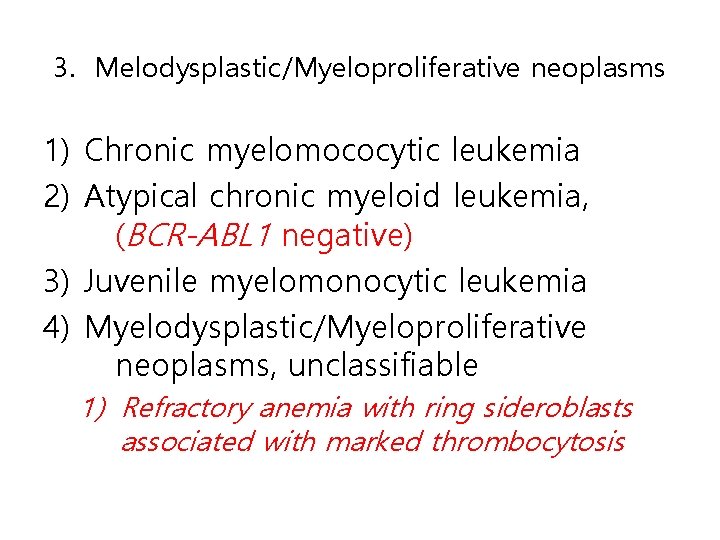
3. Melodysplastic/Myeloproliferative neoplasms 1) Chronic myelomococytic leukemia 2) Atypical chronic myeloid leukemia, (BCR-ABL 1 negative) 3) Juvenile myelomonocytic leukemia 4) Myelodysplastic/Myeloproliferative neoplasms, unclassifiable 1) Refractory anemia with ring sideroblasts associated with marked thrombocytosis
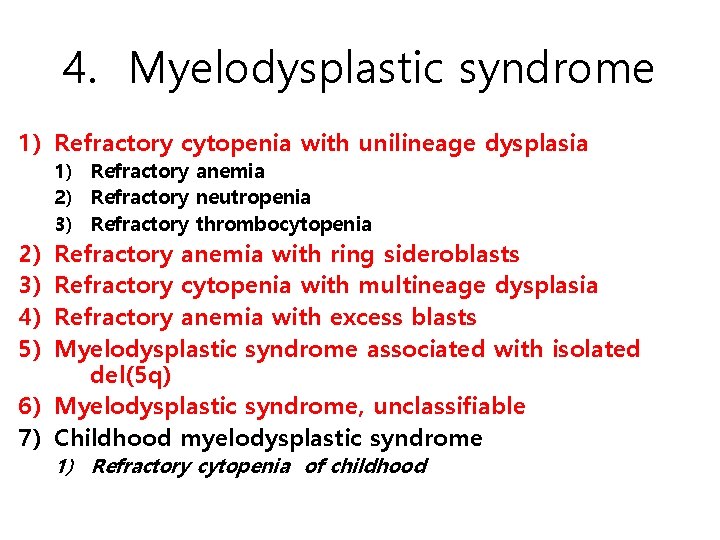
4. Myelodysplastic syndrome 1) Refractory cytopenia with unilineage dysplasia 2) 3) 4) 5) 1) Refractory anemia 2) Refractory neutropenia 3) Refractory thrombocytopenia Refractory anemia with ring sideroblasts Refractory cytopenia with multineage dysplasia Refractory anemia with excess blasts Myelodysplastic syndrome associated with isolated del(5 q) 6) Myelodysplastic syndrome, unclassifiable 7) Childhood myelodysplastic syndrome 1) Refractory cytopenia of childhood
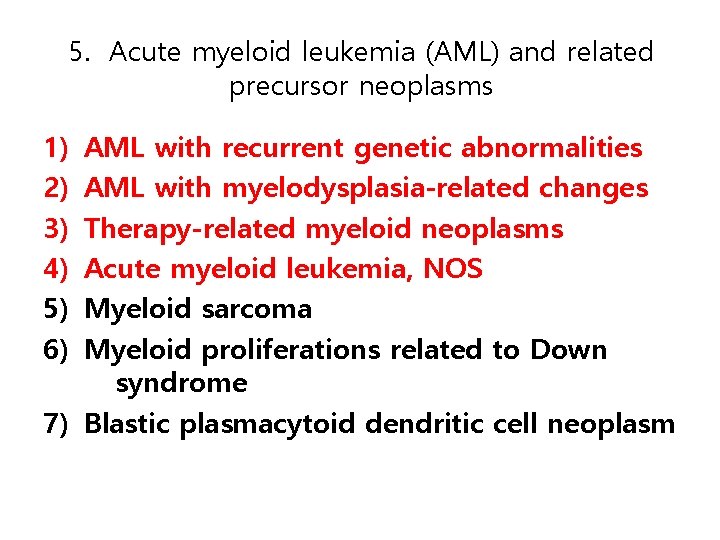
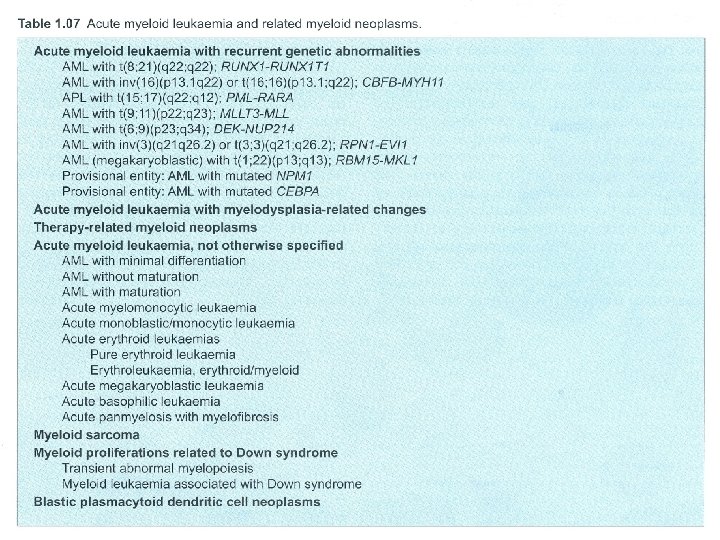
5. Acute myeloid leukemia (AML) and related precursor neoplasms 1) 2) 3) 4) 5) 6) AML with recurrent genetic abnormalities AML with myelodysplasia-related changes Therapy-related myeloid neoplasms Acute myeloid leukemia, NOS Myeloid sarcoma Myeloid proliferations related to Down syndrome 7) Blastic plasmacytoid dendritic cell neoplasm
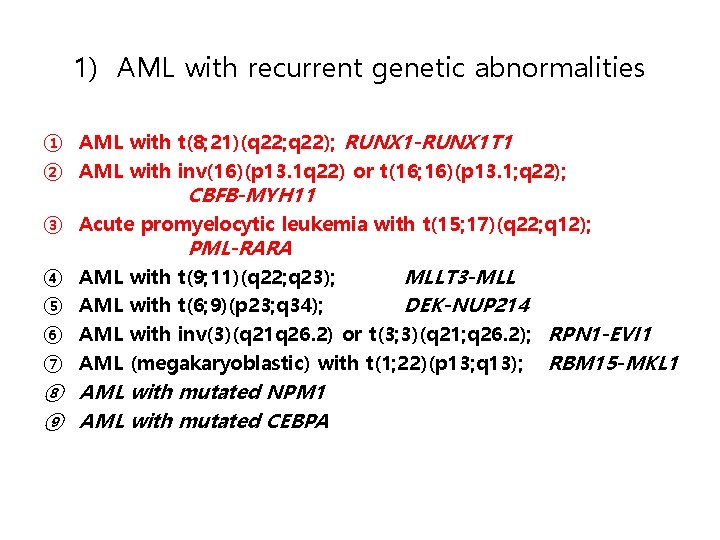
1) AML with recurrent genetic abnormalities ① AML with t(8; 21)(q 22; q 22); RUNX 1 -RUNX 1 T 1 ② AML with inv(16)(p 13. 1 q 22) or t(16; 16)(p 13. 1; q 22); CBFB-MYH 11 ③ Acute promyelocytic leukemia with t(15; 17)(q 22; q 12); PML-RARA ④ AML with t(9; 11)(q 22; q 23); MLLT 3 -MLL ⑤ AML with t(6; 9)(p 23; q 34); DEK-NUP 214 ⑥ AML with inv(3)(q 21 q 26. 2) or t(3; 3)(q 21; q 26. 2); RPN 1 -EVI 1 ⑦ AML (megakaryoblastic) with t(1; 22)(p 13; q 13); RBM 15 -MKL 1 ⑧ AML with mutated NPM 1 ⑨ AML with mutated CEBPA
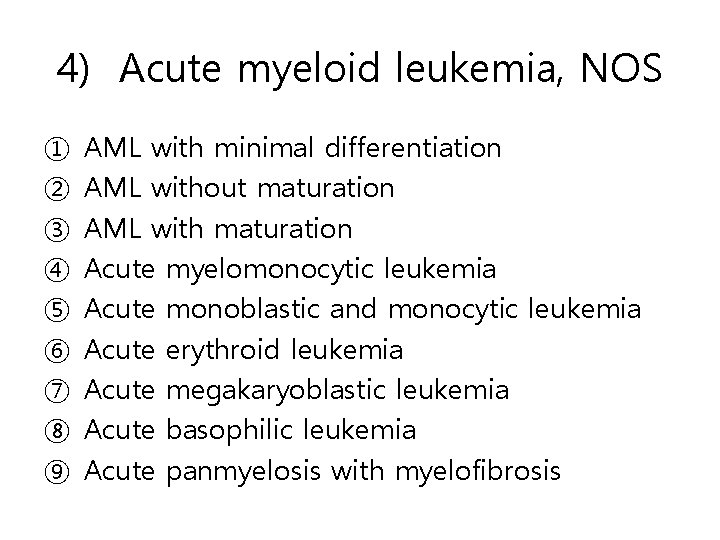
4) Acute myeloid leukemia, NOS ① ② ③ ④ ⑤ ⑥ ⑦ ⑧ ⑨ AML with minimal differentiation AML without maturation AML with maturation Acute myelomonocytic leukemia Acute monoblastic and monocytic leukemia Acute erythroid leukemia Acute megakaryoblastic leukemia Acute basophilic leukemia Acute panmyelosis with myelofibrosis
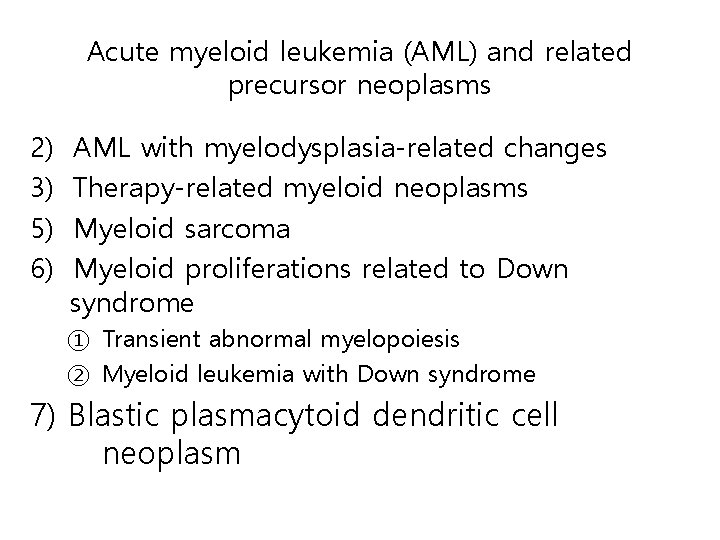
Acute myeloid leukemia (AML) and related precursor neoplasms 2) 3) 5) 6) AML with myelodysplasia-related changes Therapy-related myeloid neoplasms Myeloid sarcoma Myeloid proliferations related to Down syndrome ① Transient abnormal myelopoiesis ② Myeloid leukemia with Down syndrome 7) Blastic plasmacytoid dendritic cell neoplasm
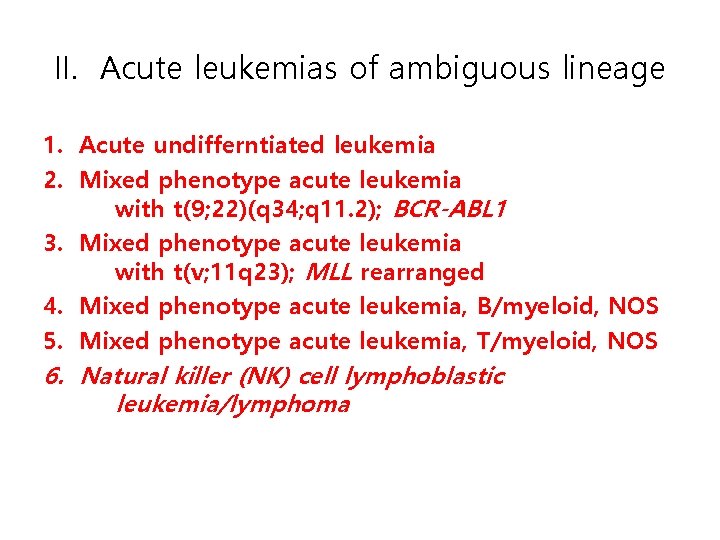
II. Acute leukemias of ambiguous lineage 1. Acute undifferntiated leukemia 2. Mixed phenotype acute leukemia with t(9; 22)(q 34; q 11. 2); BCR-ABL 1 3. Mixed phenotype acute leukemia with t(v; 11 q 23); MLL rearranged 4. Mixed phenotype acute leukemia, B/myeloid, NOS 5. Mixed phenotype acute leukemia, T/myeloid, NOS 6. Natural killer (NK) cell lymphoblastic leukemia/lymphoma
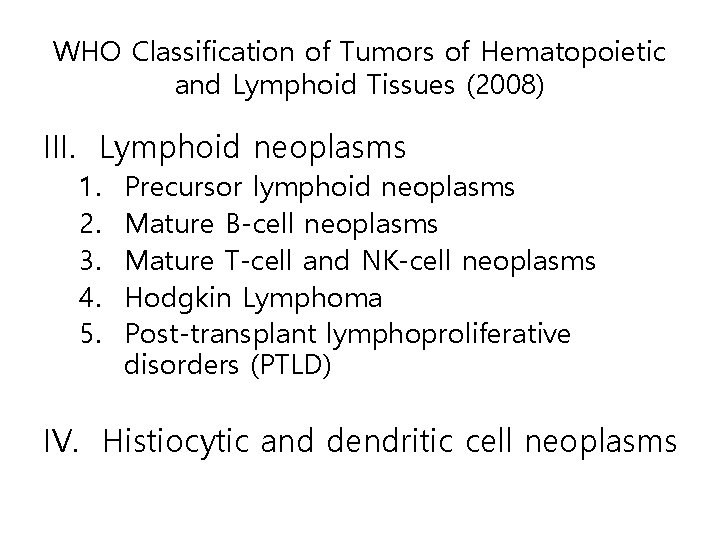
WHO Classification of Tumors of Hematopoietic and Lymphoid Tissues (2008) III. Lymphoid neoplasms 1. 2. 3. 4. 5. Precursor lymphoid neoplasms Mature B-cell neoplasms Mature T-cell and NK-cell neoplasms Hodgkin Lymphoma Post-transplant lymphoproliferative disorders (PTLD) IV. Histiocytic and dendritic cell neoplasms
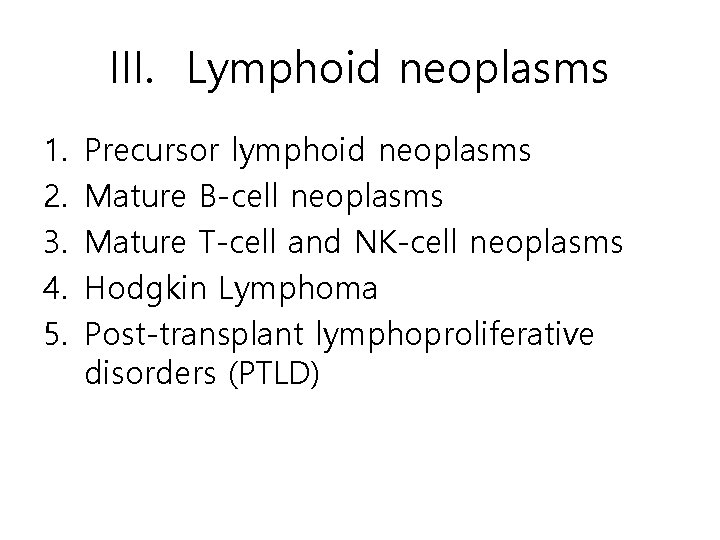
III. Lymphoid neoplasms 1. 2. 3. 4. 5. Precursor lymphoid neoplasms Mature B-cell neoplasms Mature T-cell and NK-cell neoplasms Hodgkin Lymphoma Post-transplant lymphoproliferative disorders (PTLD)
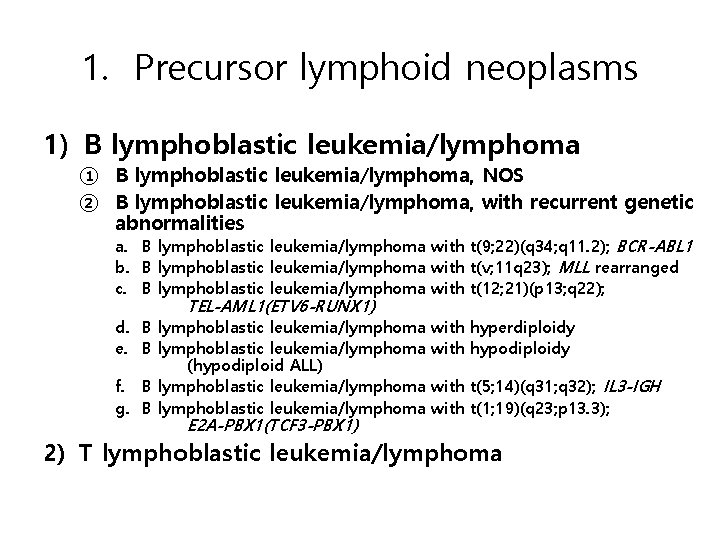
1. Precursor lymphoid neoplasms 1) B lymphoblastic leukemia/lymphoma ① B lymphoblastic leukemia/lymphoma, NOS ② B lymphoblastic leukemia/lymphoma, with recurrent genetic abnormalities a. B lymphoblastic leukemia/lymphoma b. B lymphoblastic leukemia/lymphoma c. B lymphoblastic leukemia/lymphoma TEL-AML 1(ETV 6 -RUNX 1) d. B lymphoblastic leukemia/lymphoma e. B lymphoblastic leukemia/lymphoma (hypodiploid ALL) f. B lymphoblastic leukemia/lymphoma g. B lymphoblastic leukemia/lymphoma E 2 A-PBX 1(TCF 3 -PBX 1) with t(9; 22)(q 34; q 11. 2); BCR-ABL 1 with t(v; 11 q 23); MLL rearranged with t(12; 21)(p 13; q 22); with hyperdiploidy with hypodiploidy with t(5; 14)(q 31; q 32); IL 3 -IGH with t(1; 19)(q 23; p 13. 3); 2) T lymphoblastic leukemia/lymphoma
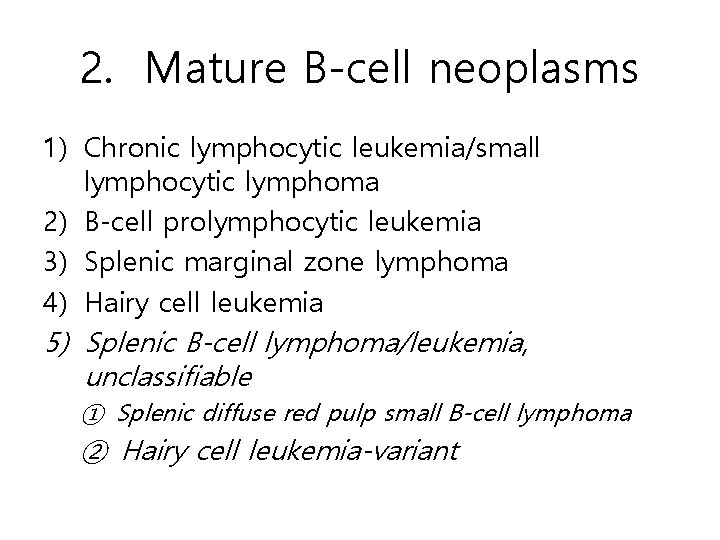
2. Mature B-cell neoplasms 1) Chronic lymphocytic leukemia/small lymphocytic lymphoma 2) B-cell prolymphocytic leukemia 3) Splenic marginal zone lymphoma 4) Hairy cell leukemia 5) Splenic B-cell lymphoma/leukemia, unclassifiable ① Splenic diffuse red pulp small B-cell lymphoma ② Hairy cell leukemia-variant
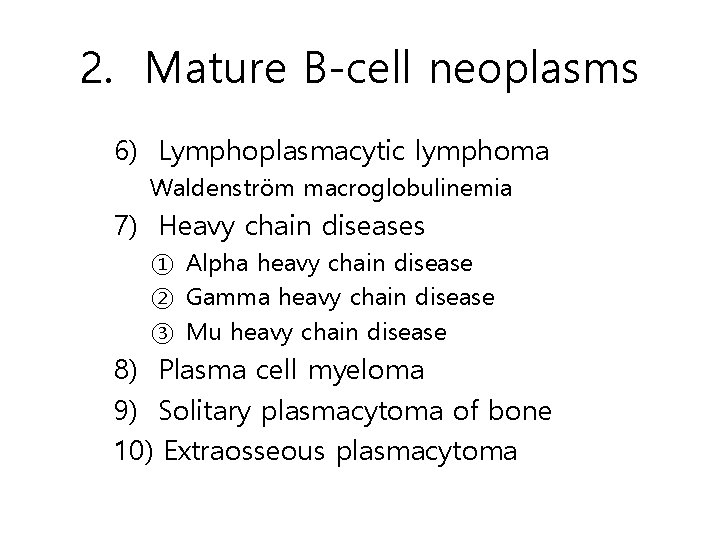
2. Mature B-cell neoplasms 6) Lymphoplasmacytic lymphoma Waldenström macroglobulinemia 7) Heavy chain diseases ① Alpha heavy chain disease ② Gamma heavy chain disease ③ Mu heavy chain disease 8) Plasma cell myeloma 9) Solitary plasmacytoma of bone 10) Extraosseous plasmacytoma
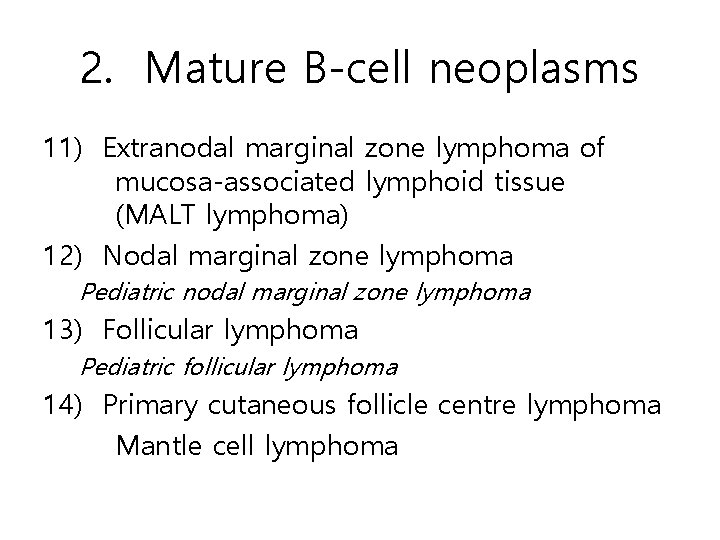
2. Mature B-cell neoplasms 11) Extranodal marginal zone lymphoma of mucosa-associated lymphoid tissue (MALT lymphoma) 12) Nodal marginal zone lymphoma Pediatric nodal marginal zone lymphoma 13) Follicular lymphoma Pediatric follicular lymphoma 14) Primary cutaneous follicle centre lymphoma Mantle cell lymphoma
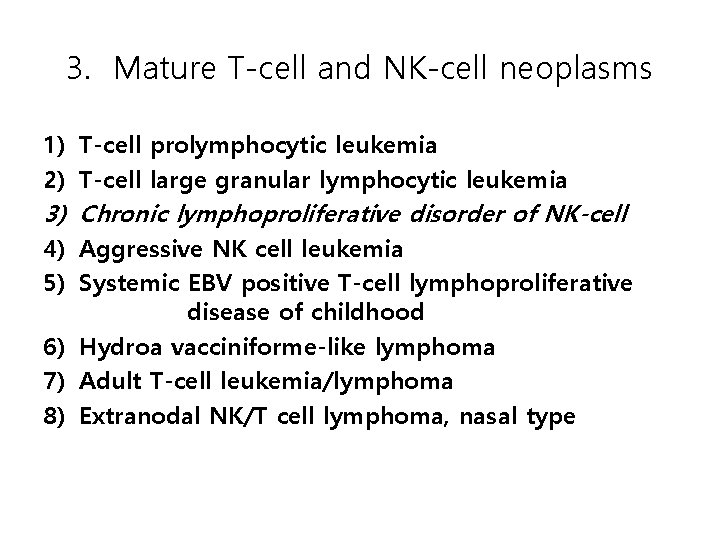
3. Mature T-cell and NK-cell neoplasms 1) T-cell prolymphocytic leukemia 2) T-cell large granular lymphocytic leukemia 3) Chronic lymphoproliferative disorder of NK-cell 4) Aggressive NK cell leukemia 5) Systemic EBV positive T-cell lymphoproliferative disease of childhood 6) Hydroa vacciniforme-like lymphoma 7) Adult T-cell leukemia/lymphoma 8) Extranodal NK/T cell lymphoma, nasal type
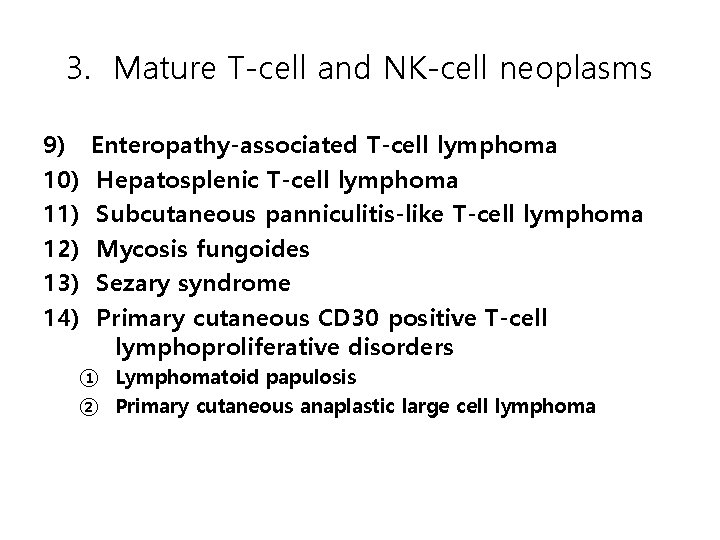
3. Mature T-cell and NK-cell neoplasms 9) 10) 11) 12) 13) 14) Enteropathy-associated T-cell lymphoma Hepatosplenic T-cell lymphoma Subcutaneous panniculitis-like T-cell lymphoma Mycosis fungoides Sezary syndrome Primary cutaneous CD 30 positive T-cell lymphoproliferative disorders ① Lymphomatoid papulosis ② Primary cutaneous anaplastic large cell lymphoma
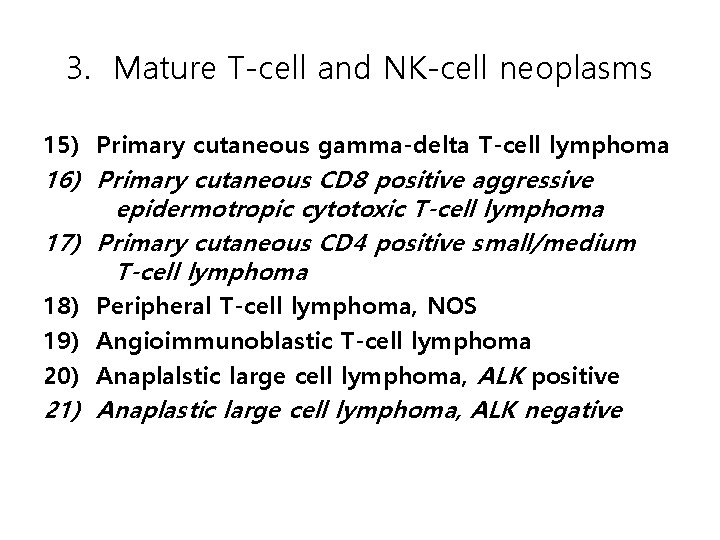
3. Mature T-cell and NK-cell neoplasms 15) Primary cutaneous gamma-delta T-cell lymphoma 16) Primary cutaneous CD 8 positive aggressive epidermotropic cytotoxic T-cell lymphoma 17) Primary cutaneous CD 4 positive small/medium T-cell lymphoma 18) Peripheral T-cell lymphoma, NOS 19) Angioimmunoblastic T-cell lymphoma 20) Anaplalstic large cell lymphoma, ALK positive 21) Anaplastic large cell lymphoma, ALK negative
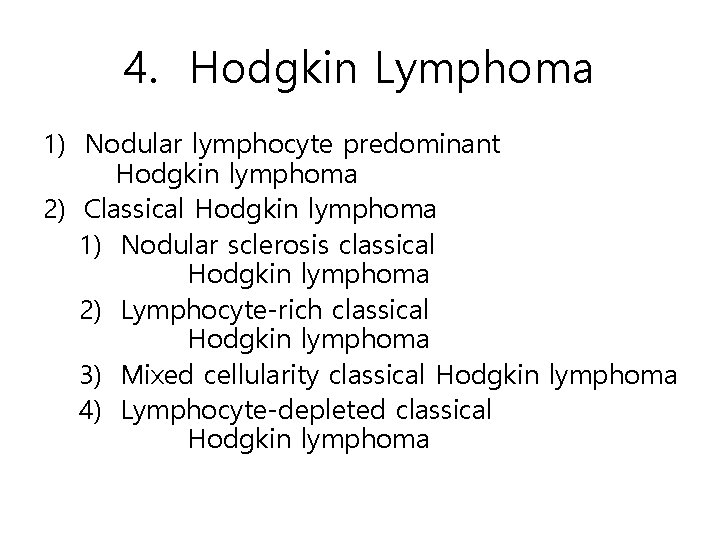
4. Hodgkin Lymphoma 1) Nodular lymphocyte predominant Hodgkin lymphoma 2) Classical Hodgkin lymphoma 1) Nodular sclerosis classical Hodgkin lymphoma 2) Lymphocyte-rich classical Hodgkin lymphoma 3) Mixed cellularity classical Hodgkin lymphoma 4) Lymphocyte-depleted classical Hodgkin lymphoma
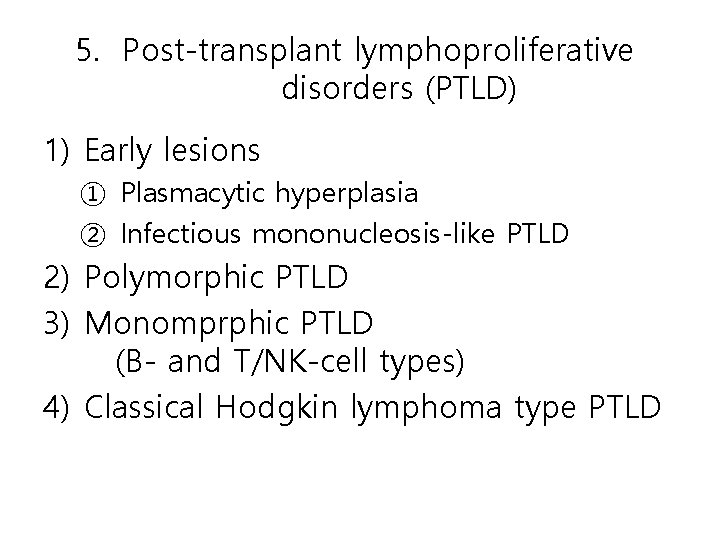
5. Post-transplant lymphoproliferative disorders (PTLD) 1) Early lesions ① Plasmacytic hyperplasia ② Infectious mononucleosis-like PTLD 2) Polymorphic PTLD 3) Monomprphic PTLD (B- and T/NK-cell types) 4) Classical Hodgkin lymphoma type PTLD
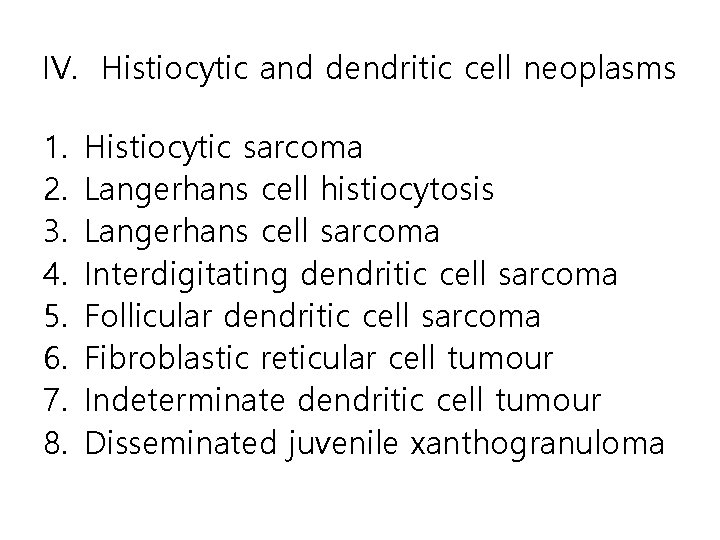
IV. Histiocytic and dendritic cell neoplasms 1. 2. 3. 4. 5. 6. 7. 8. Histiocytic sarcoma Langerhans cell histiocytosis Langerhans cell sarcoma Interdigitating dendritic cell sarcoma Follicular dendritic cell sarcoma Fibroblastic reticular cell tumour Indeterminate dendritic cell tumour Disseminated juvenile xanthogranuloma
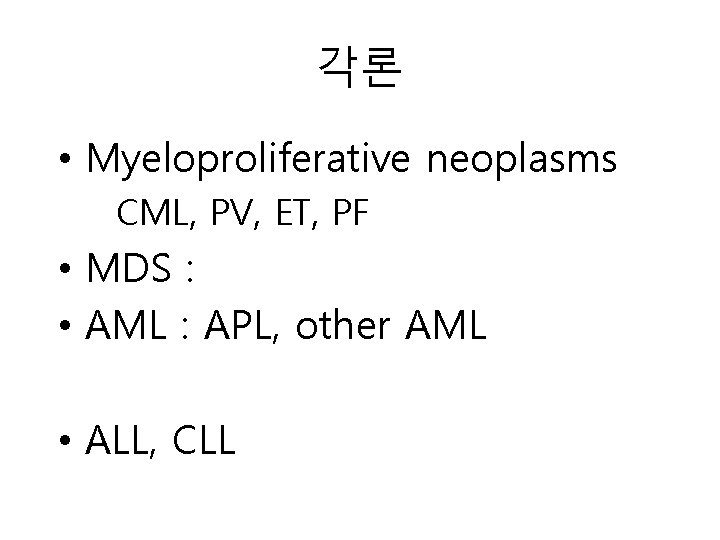
각론 • Myeloproliferative neoplasms CML, PV, ET, PF • MDS : • AML : APL, other AML • ALL, CLL