
CLASSIFICATION OF SPECIES 1 CLASSIFICATION OF SPECIES What
- Slides: 21
CLASSIFICATION OF SPECIES 1
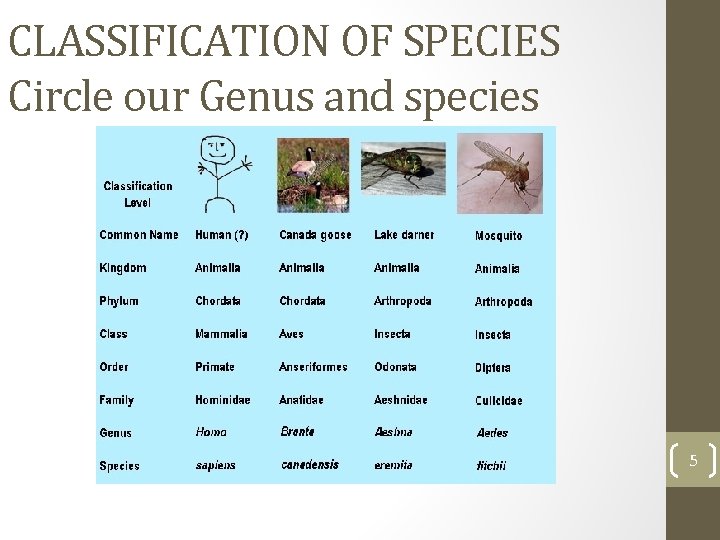
CLASSIFICATION OF SPECIES • What is taxonomy? • Who developed the system? • How does the system work? • What are these groups called? • The scientific system of classifying living organisms • Carolus Linneaus • Organisms are grouped based on similarities between them • Taxa (singular-taxon) 2
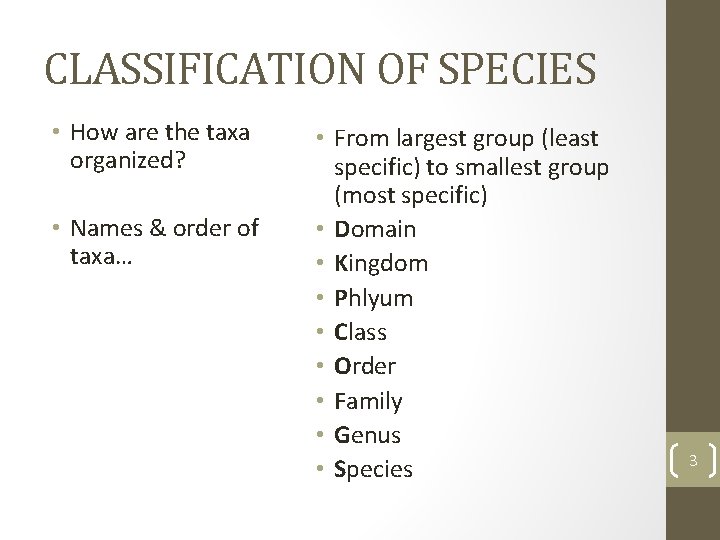
CLASSIFICATION OF SPECIES • How are the taxa organized? • Names & order of taxa… • From largest group (least specific) to smallest group (most specific) • Domain • Kingdom • Phlyum • Class • Order • Family • Genus • Species 3
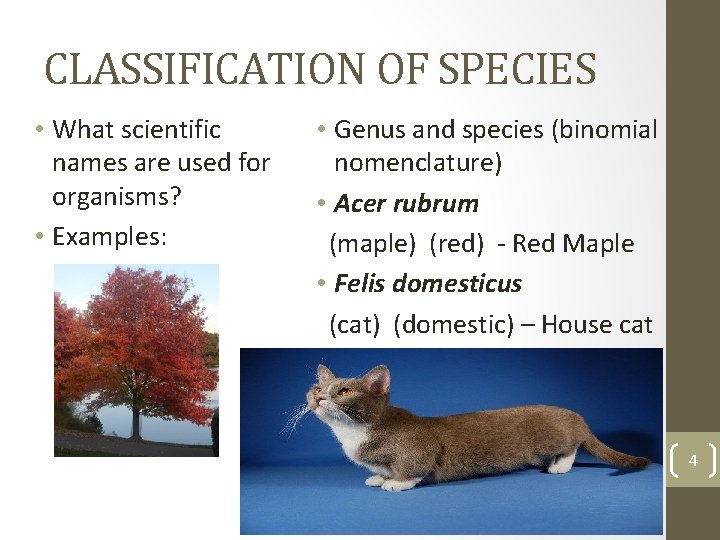
CLASSIFICATION OF SPECIES • What scientific names are used for organisms? • Examples: • Genus and species (binomial nomenclature) • Acer rubrum (maple) (red) - Red Maple • Felis domesticus (cat) (domestic) – House cat 4
CLASSIFICATION OF SPECIES Circle our Genus and species 5
6
Review Vocabulary before we get started • • • Autotrophic Heterotrophic Decomposer Multicellular Unicellular Aerobic environment Anaerobic environment Absorptive Heterotroph Ingestive Heterotroph Producer Consumer
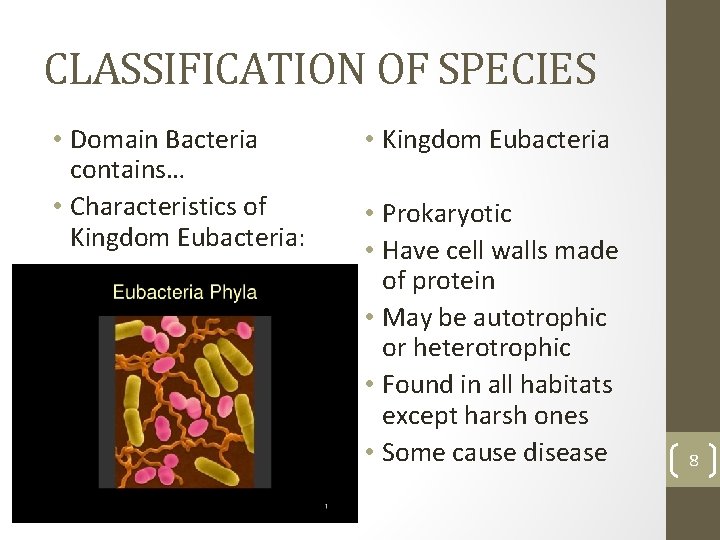
CLASSIFICATION OF SPECIES • Domain Bacteria contains… • Characteristics of Kingdom Eubacteria: • Kingdom Eubacteria • Prokaryotic • Have cell walls made of protein • May be autotrophic or heterotrophic • Found in all habitats except harsh ones • Some cause disease 8
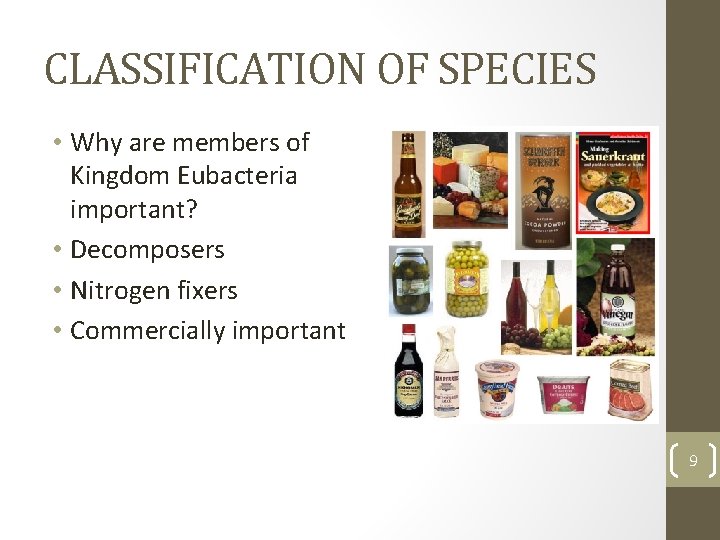
CLASSIFICATION OF SPECIES • Why are members of Kingdom Eubacteria important? • Decomposers • Nitrogen fixers • Commercially important 9
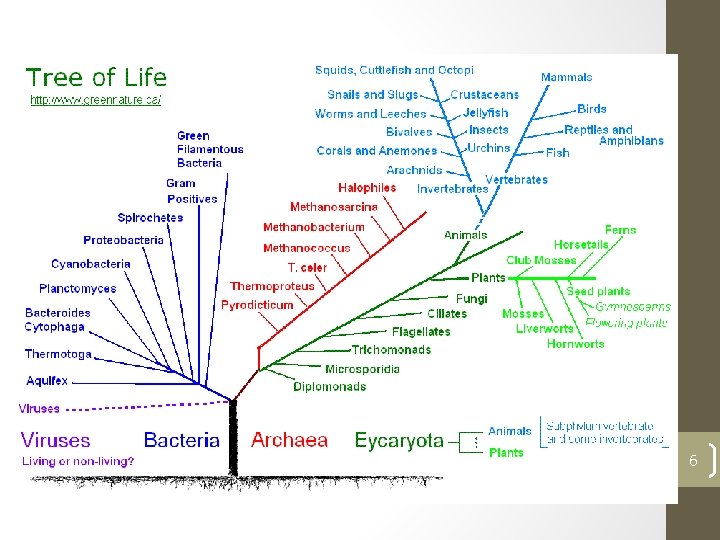
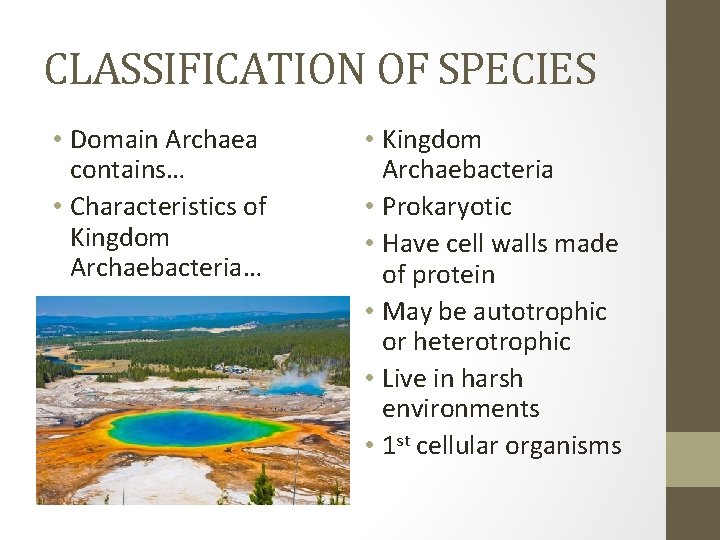
CLASSIFICATION OF SPECIES • Domain Archaea contains… • Characteristics of Kingdom Archaebacteria… • Kingdom Archaebacteria • Prokaryotic • Have cell walls made of protein • May be autotrophic or heterotrophic • Live in harsh environments • 1 st cellular organisms
CLASSIFICATION OF SPECIES • Kingdom Archaebacteria members are found in… • Sewage treatment plants • Volcanic vents or hot springs • Long-frozen ice • Scientists believe that Archaebacteria are … • More related to the members of Domain Eukarya than Domain Bacteria
• What evidence did scientists use to determine the archaebacteria is most similar to eukaryotes?
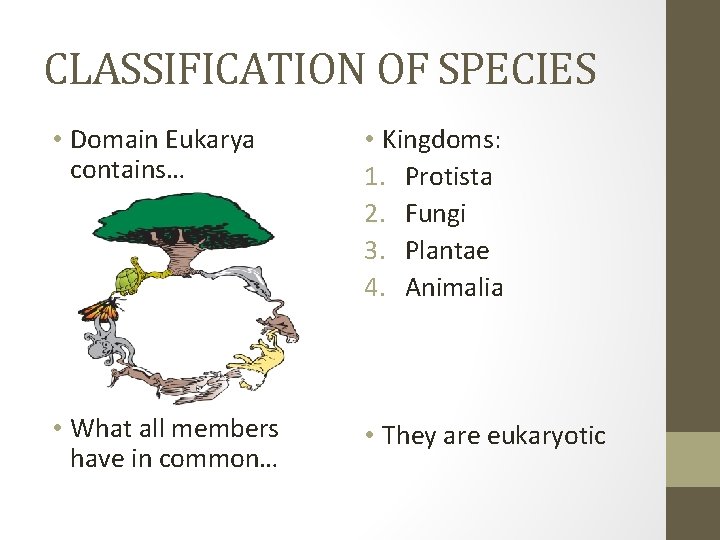
CLASSIFICATION OF SPECIES • Domain Eukarya contains… • Kingdoms: 1. Protista 2. Fungi 3. Plantae 4. Animalia • What all members have in common… • They are eukaryotic
• What does Eukaryote mean? • How will you recognize it on your test? • What structure are you looking for?
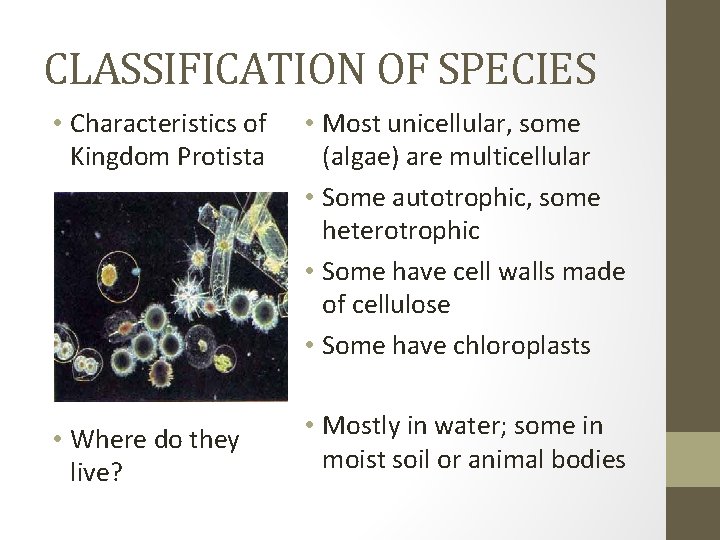
CLASSIFICATION OF SPECIES • Characteristics of Kingdom Protista • Most unicellular, some (algae) are multicellular • Some autotrophic, some heterotrophic • Some have cell walls made of cellulose • Some have chloroplasts • Where do they live? • Mostly in water; some in moist soil or animal bodies
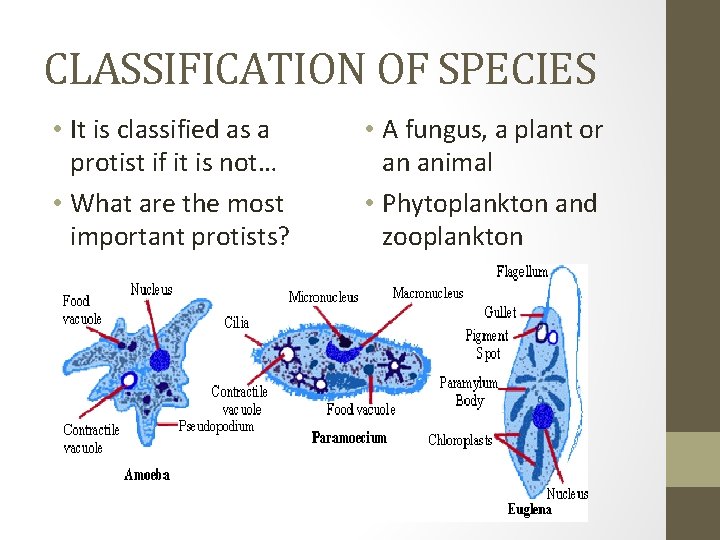
CLASSIFICATION OF SPECIES • It is classified as a protist if it is not… • What are the most important protists? • A fungus, a plant or an animal • Phytoplankton and zooplankton
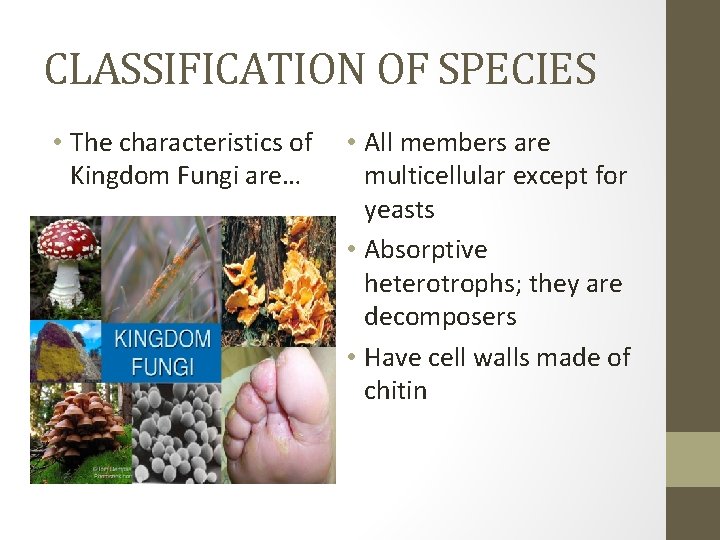
CLASSIFICATION OF SPECIES • The characteristics of Kingdom Fungi are… • All members are multicellular except for yeasts • Absorptive heterotrophs; they are decomposers • Have cell walls made of chitin
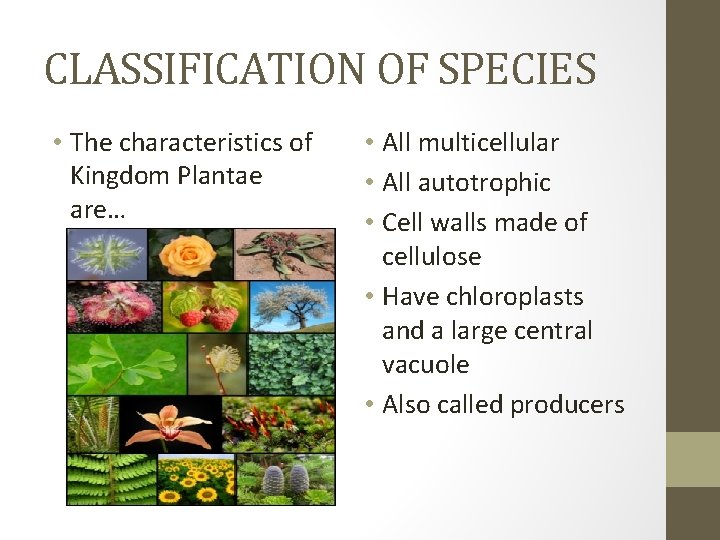
CLASSIFICATION OF SPECIES • The characteristics of Kingdom Plantae are… • All multicellular • All autotrophic • Cell walls made of cellulose • Have chloroplasts and a large central vacuole • Also called producers
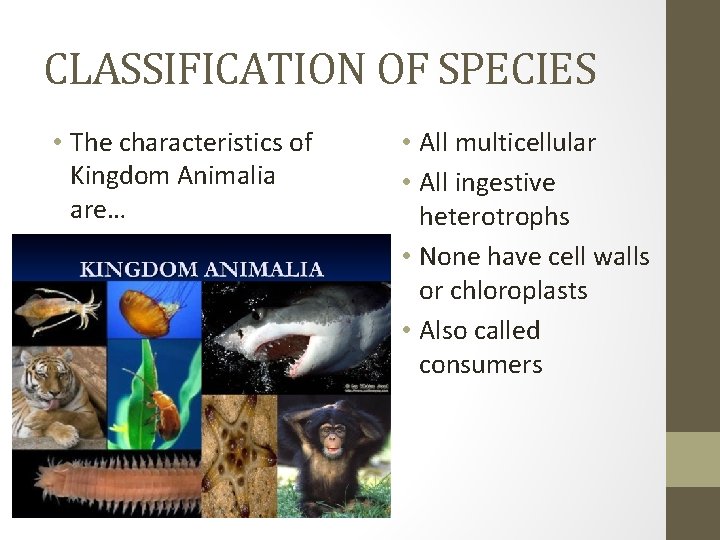
CLASSIFICATION OF SPECIES • The characteristics of Kingdom Animalia are… • All multicellular • All ingestive heterotrophs • None have cell walls or chloroplasts • Also called consumers
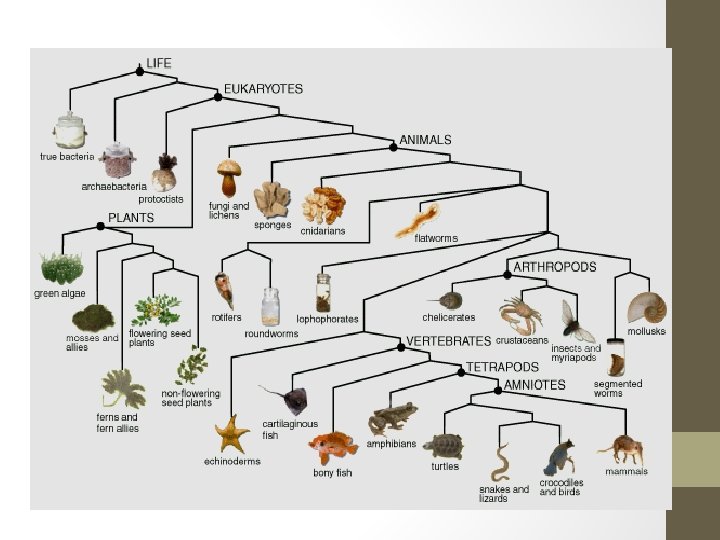
CLASSIFICATION OF SPECIES • How were organisms first classified? • How are organisms classified now? • Grouped according to similarities in structure and environment they lived in • Similarities in DNA