
CLASSIFICATION OF SKILLS Content 2 1 1 Classification
- Slides: 13
CLASSIFICATION OF SKILLS Content 2. 1. 1 Classification of a range of sports skills using the open–closed, basic (simple) – complex, and low organisation–high organisation continua 2. 1. 2 Practice structures: massed; distributed; fixed and variable 2. 1. 3 Application of knowledge of practice and skill classification to select the most relevant practice to develop a range of skills
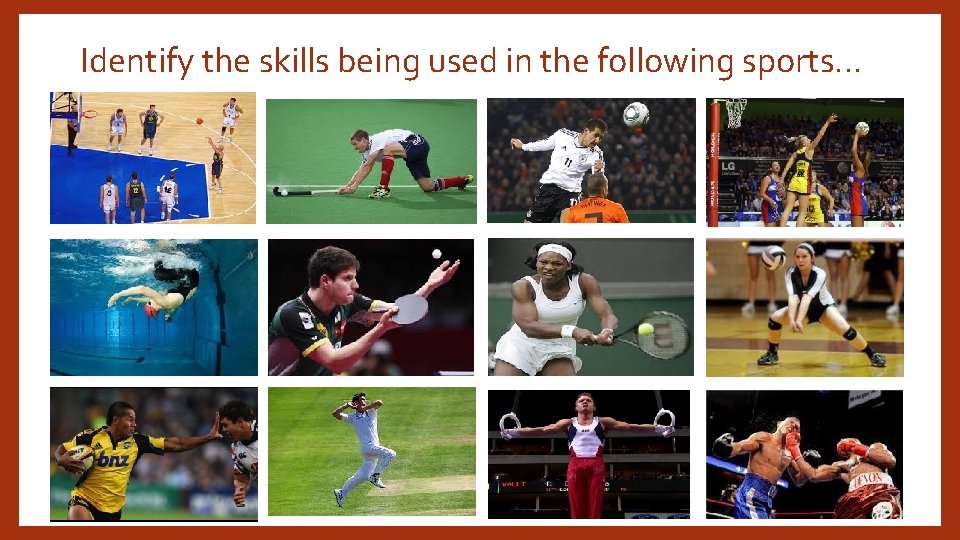
Identify the skills being used in the following sports…
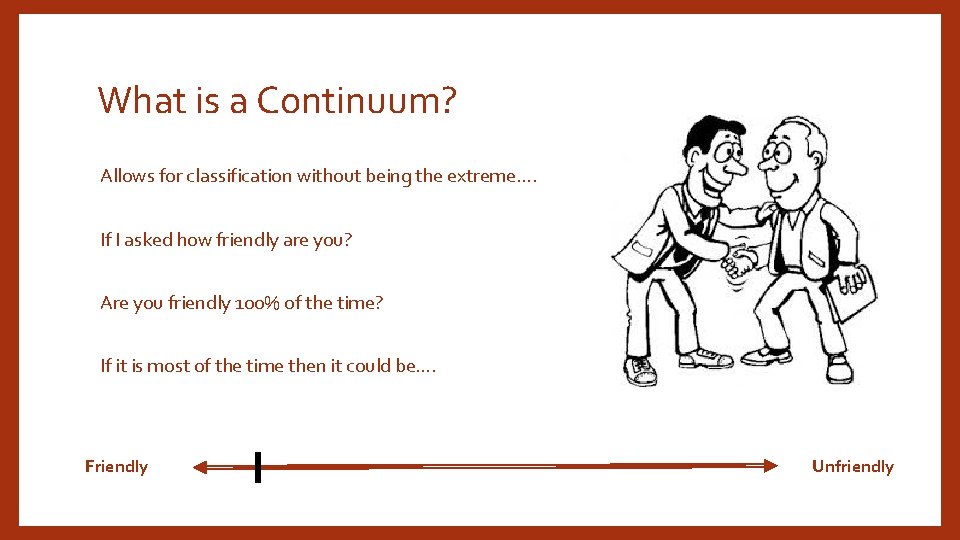
What is a Continuum? Allows for classification without being the extreme…. If I asked how friendly are you? Are you friendly 100% of the time? If it is most of the time then it could be…. Friendly Unfriendly
Task For your favourite sport, write down all of the skills you regularly use….
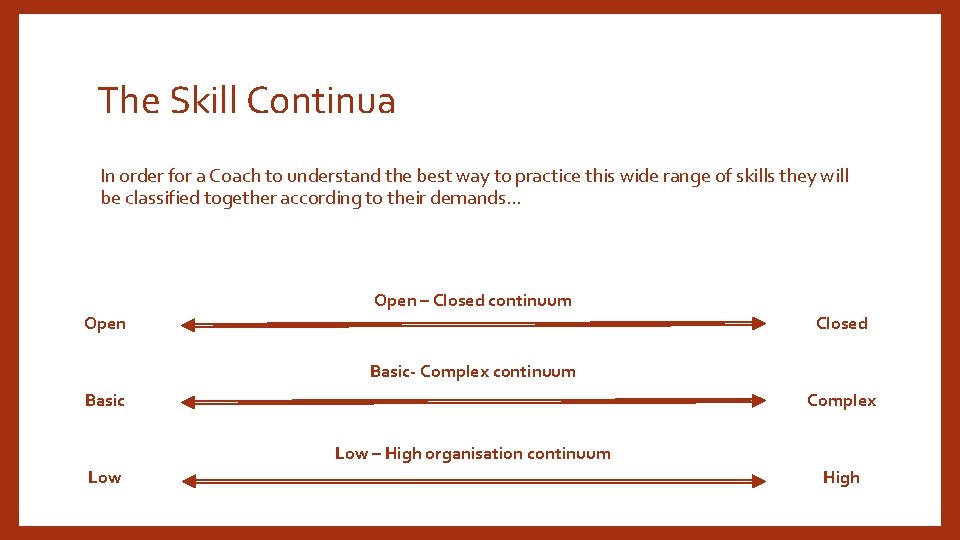
The Skill Continua In order for a Coach to understand the best way to practice this wide range of skills they will be classified together according to their demands… Open – Closed continuum Open Closed Basic- Complex continuum Basic Complex Low – High organisation continuum Low High
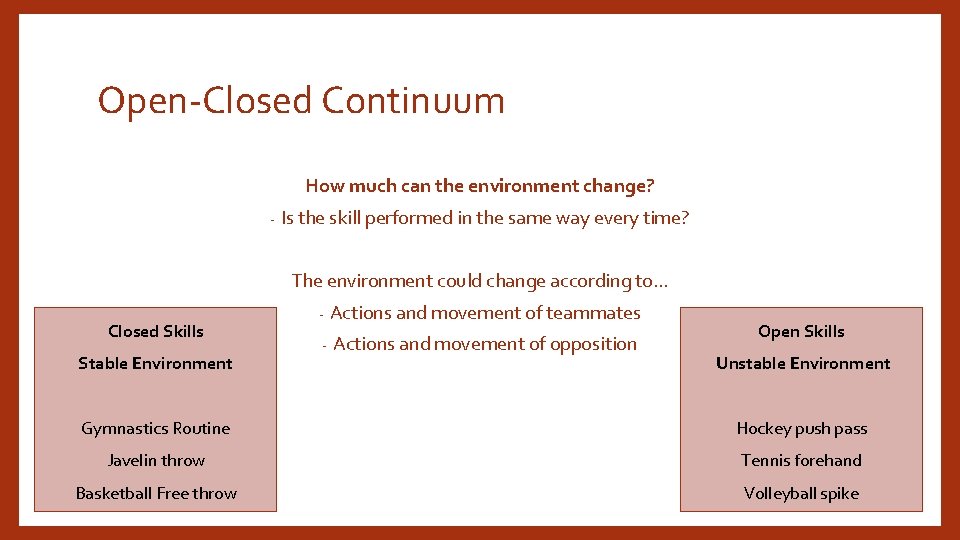
Open-Closed Continuum How much can the environment change? - Is the skill performed in the same way every time? The environment could change according to… Closed Skills Stable Environment - Actions and movement of teammates - Actions and movement of opposition Open Skills Unstable Environment Gymnastics Routine Hockey push pass Javelin throw Tennis forehand Basketball Free throw Volleyball spike
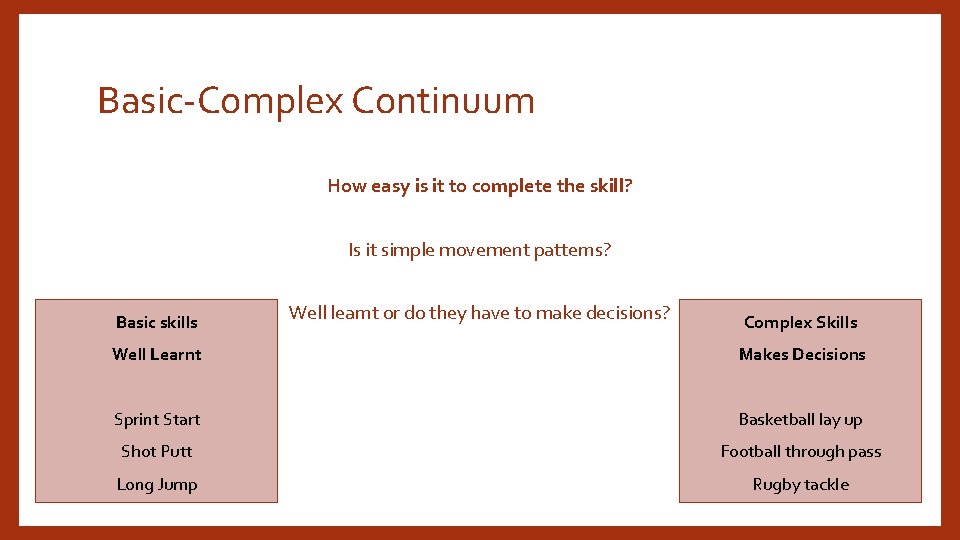
Basic-Complex Continuum How easy is it to complete the skill? Is it simple movement patterns? Basic skills Well learnt or do they have to make decisions? Complex Skills Well Learnt Makes Decisions Sprint Start Basketball lay up Shot Putt Football through pass Long Jump Rugby tackle
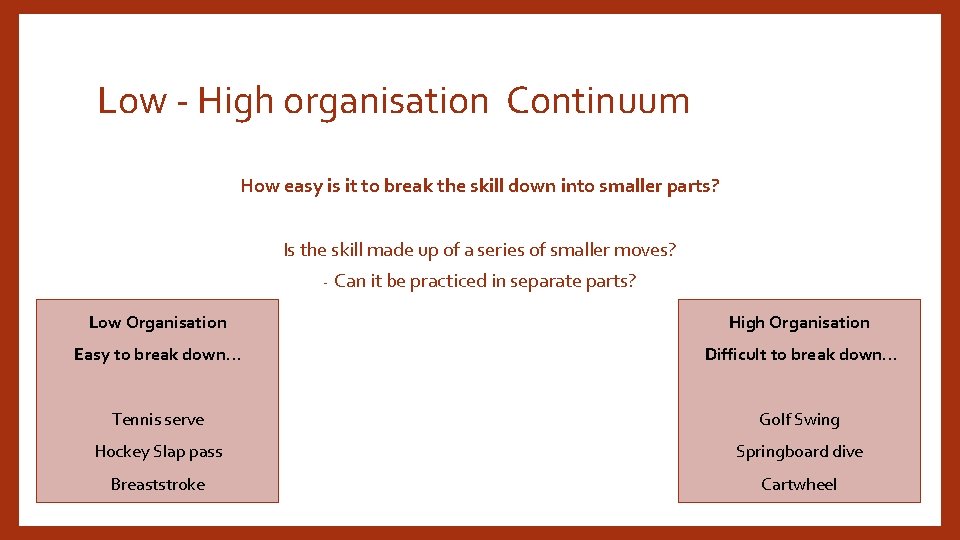
Low - High organisation Continuum How easy is it to break the skill down into smaller parts? Is the skill made up of a series of smaller moves? - Can it be practiced in separate parts? Low Organisation High Organisation Easy to break down… Difficult to break down… Tennis serve Golf Swing Hockey Slap pass Springboard dive Breaststroke Cartwheel
Task Classify 3 of the skills identified at the start of the lesson according to the 3 continua… Open- Closed Basic – Complex Low Organisation –High organisation
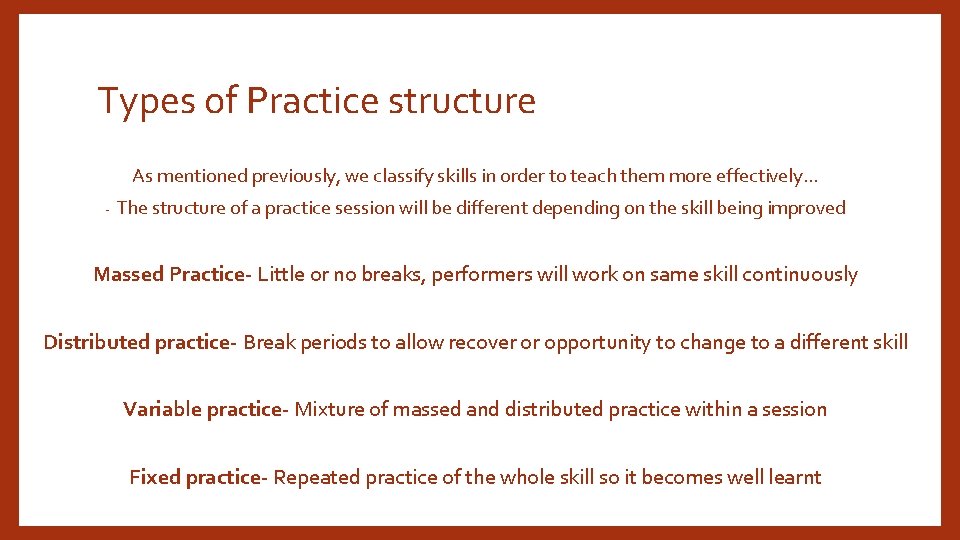
Types of Practice structure As mentioned previously, we classify skills in order to teach them more effectively… - The structure of a practice session will be different depending on the skill being improved Massed Practice- Little or no breaks, performers will work on same skill continuously Distributed practice- Break periods to allow recover or opportunity to change to a different skill Variable practice- Mixture of massed and distributed practice within a session Fixed practice- Repeated practice of the whole skill so it becomes well learnt
Task How might a training session be structured differently for an open skill rather than a closed skill?
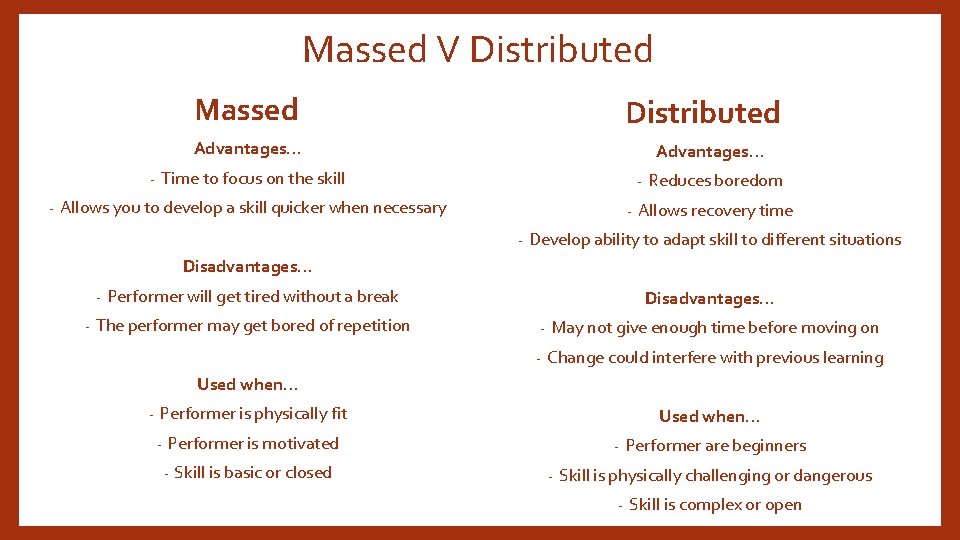
Massed V Distributed Massed Distributed Advantages… - Advantages… Time to focus on the skill - Allows you to develop a skill quicker when necessary - Reduces boredom Allows recovery time Develop ability to adapt skill to different situations Disadvantages… - Performer will get tired without a break The performer may get bored of repetition Disadvantages… - May not give enough time before moving on - Change could interfere with previous learning Used when… - Performer is physically fit - Used when… Performer is motivated - Skill is basic or closed - Performer are beginners Skill is physically challenging or dangerous - Skill is complex or open
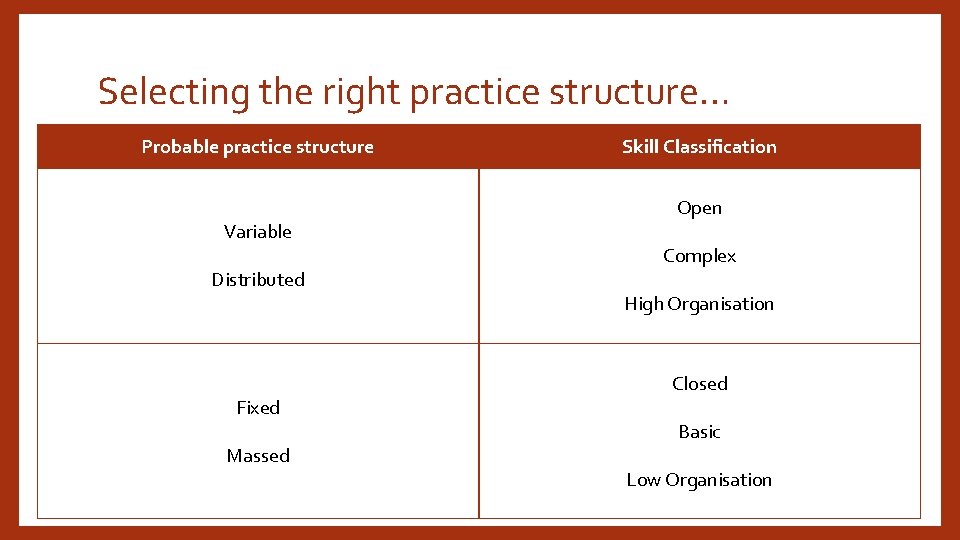
Selecting the right practice structure… Probable practice structure Variable Distributed Fixed Massed Skill Classification Open Complex High Organisation Closed Basic Low Organisation