
CLASSIFICATION OF RNA VIRUSES CLASSIFICATION OF VIRUSES RNA
- Slides: 28
CLASSIFICATION OF RNA VIRUSES
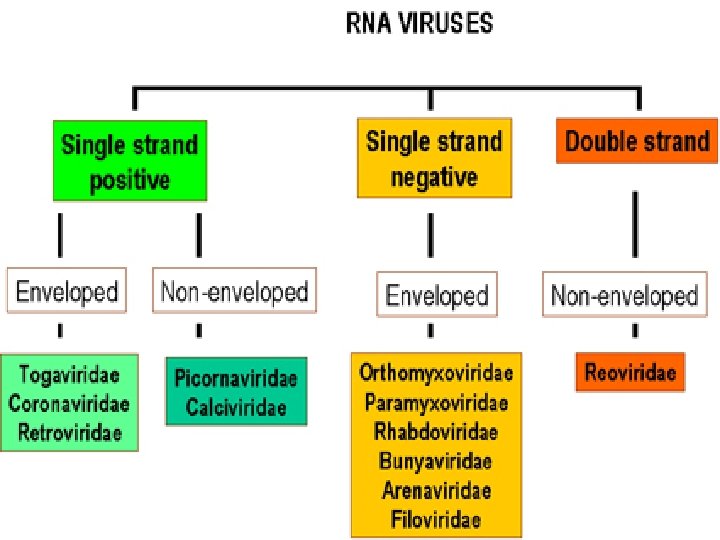
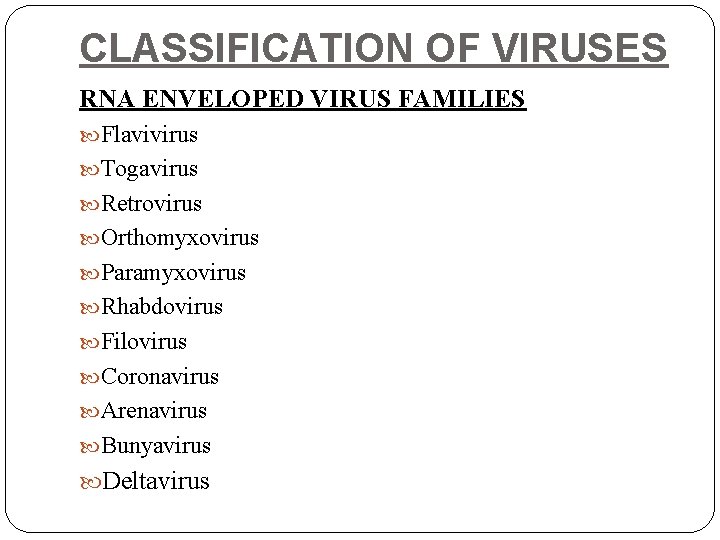
CLASSIFICATION OF VIRUSES RNA ENVELOPED VIRUS FAMILIES Flavivirus Togavirus Retrovirus Orthomyxovirus Paramyxovirus Rhabdovirus Filovirus Coronavirus Arenavirus Bunyavirus Deltavirus
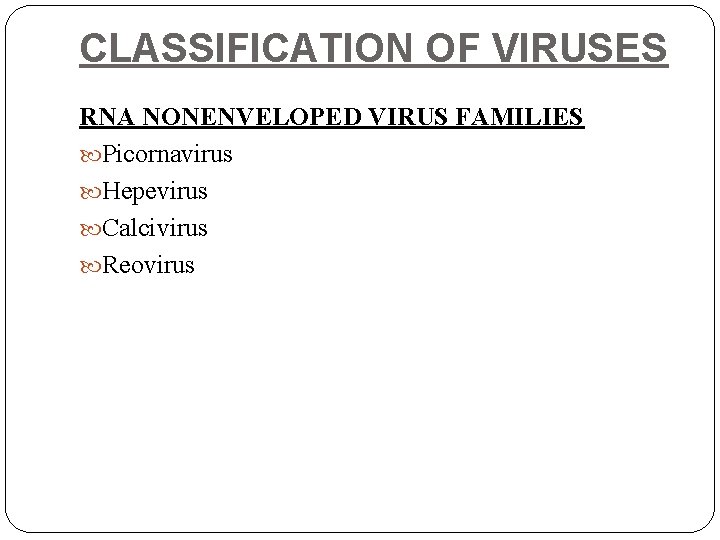
CLASSIFICATION OF VIRUSES RNA NONENVELOPED VIRUS FAMILIES Picornavirus Hepevirus Calcivirus Reovirus
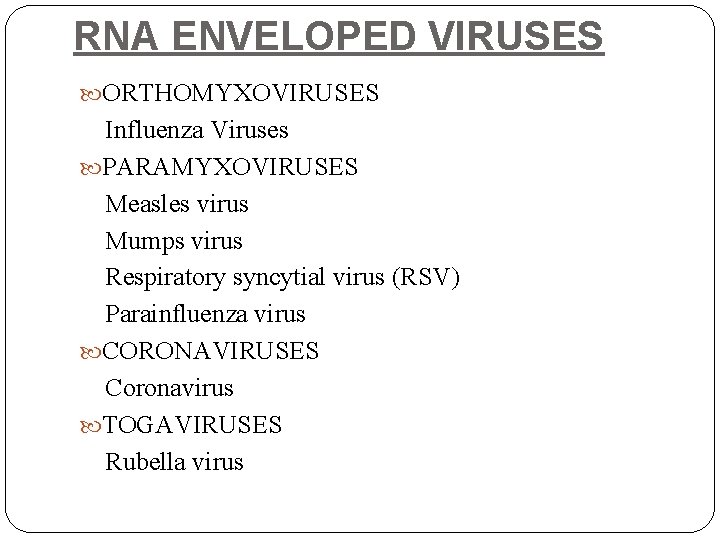
RNA ENVELOPED VIRUSES ORTHOMYXOVIRUSES Influenza Viruses PARAMYXOVIRUSES Measles virus Mumps virus Respiratory syncytial virus (RSV) Parainfluenza virus CORONAVIRUSES Coronavirus TOGAVIRUSES Rubella virus
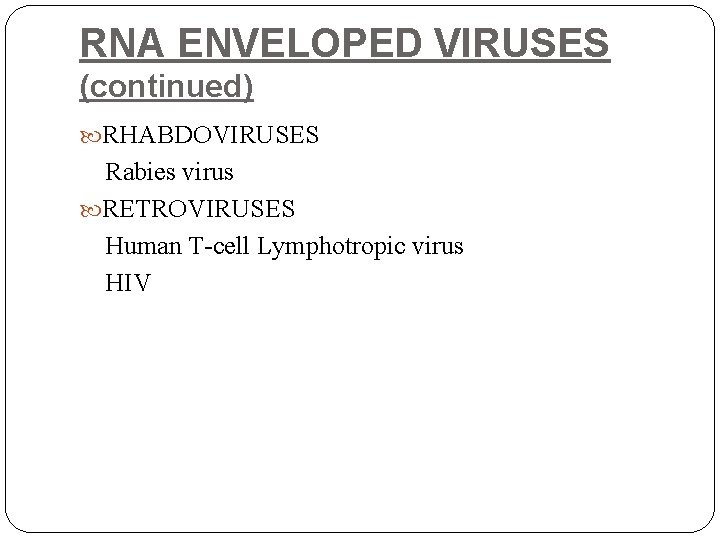
RNA ENVELOPED VIRUSES (continued) RHABDOVIRUSES Rabies virus RETROVIRUSES Human T-cell Lymphotropic virus HIV
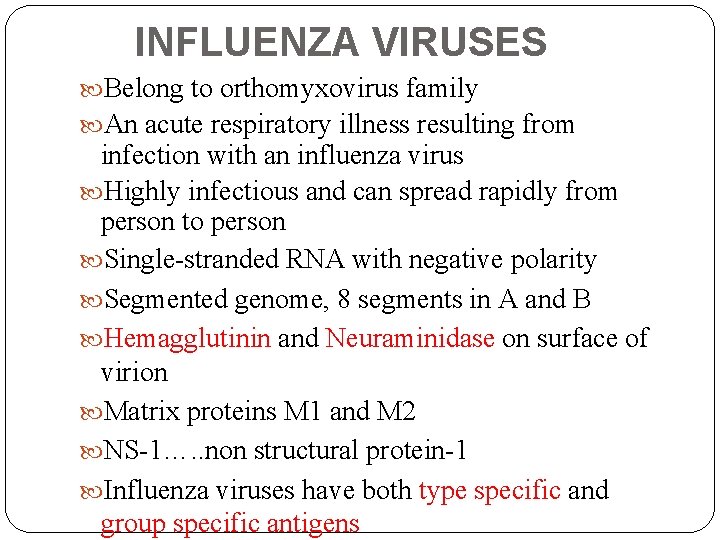
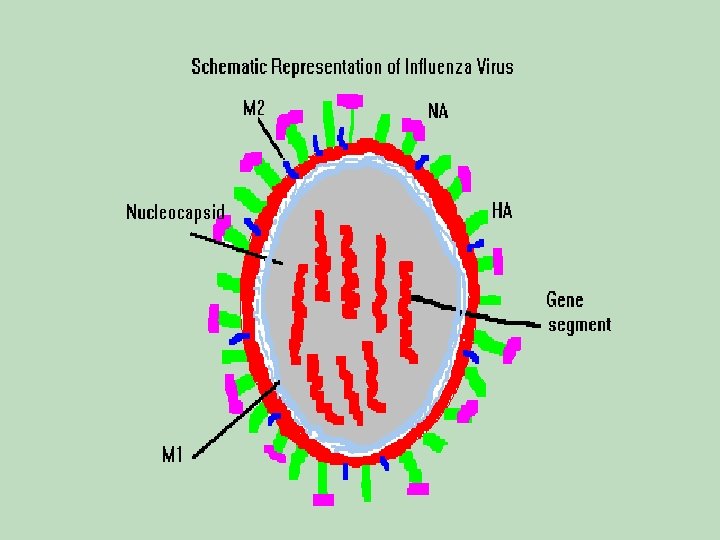
INFLUENZA VIRUSES Belong to orthomyxovirus family An acute respiratory illness resulting from infection with an influenza virus Highly infectious and can spread rapidly from person to person Single-stranded RNA with negative polarity Segmented genome, 8 segments in A and B Hemagglutinin and Neuraminidase on surface of virion Matrix proteins M 1 and M 2 NS-1…. . non structural protein-1 Influenza viruses have both type specific and group specific antigens
Types of influenza viruses Influenza viruses are divided into three main types: influenza A, B and C A viruses – infect birds and other animals, as well as humans. It is source of seasonal influenza epidemics and all pandemics B virus – causes major outbreaks but less frequently. Infect humans only and do not cause pandemics C virus –Infect humans only and do not cause pandemics
Antigenic Variation Influenza viruses tend to undergo changes from time to time. There are two types of changes: (1) antigenic shift (2) antigenic drift. These changes in the antigenic characteristics of influenza viruses determine the extent and severity of influenza epidemics
Antigenic Shift This term denotes MAJOR changes in hemagglutinin and neuraminidase resulting from re-assortment of gene segments involving two different influenza viruses. When this occurs, worldwide epidemics may be the consequence since the entire population is susceptible to the virus.
Antigenic Drift This term denotes MINOR changes in hemagglutinin and neuraminidase of influenza virus. This results from mutation in the RNA segments coding for either the HA or NA This involves no change in serotype; there is merely an alteration in amino acid sequence of HA or NA leading to change in antigenicity.
Importance of Influenza One of the most important Emerging and Re-emerging infectious diseases Causes high morbidity and mortality in communities (epidemic) and worldwide (pandemic) Epidemics are associated with excess mortality
Pandemic Influenza Viruses
Reservoirs of Influenza Viruses Aquatic birds Pigs Humans
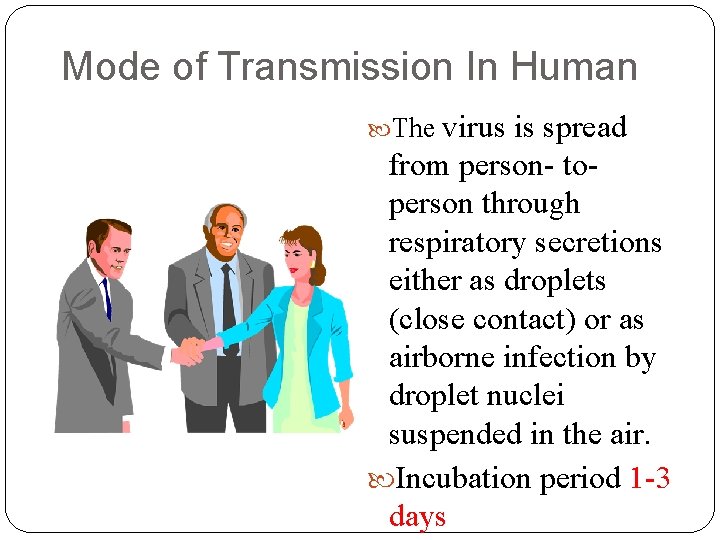
Mode of Transmission In Human The virus is spread from person- toperson through respiratory secretions either as droplets (close contact) or as airborne infection by droplet nuclei suspended in the air. Incubation period 1 -3 days
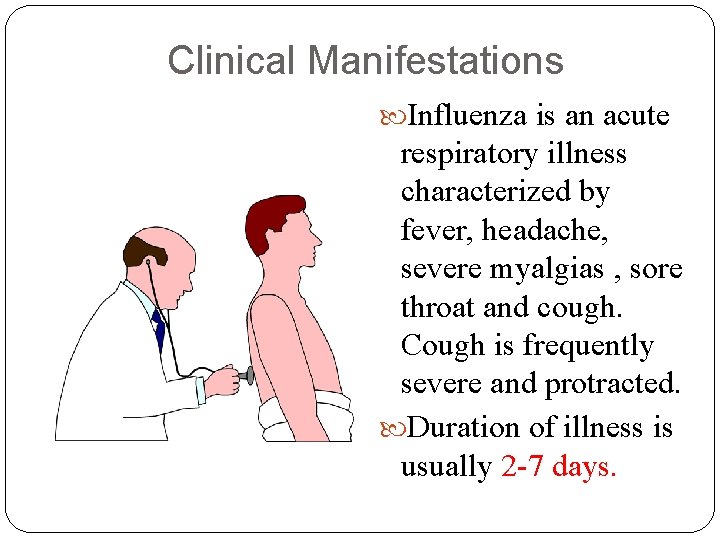
Clinical Manifestations Influenza is an acute respiratory illness characterized by fever, headache, severe myalgias , sore throat and cough. Cough is frequently severe and protracted. Duration of illness is usually 2 -7 days.
Clinical Diagnosis The clinical picture of influenza is nonspecific. Influenza-like illness can be caused by many microbial agents other than influenza virus, such as adenovirus, parainfluenza viruses, coronavirus, Mycoplasma pneumoniae, Chlamydia pneumoniae, beta-hemolytic streptococcus.
Laboratory Diagnosis Since the clinical picture of influenza is nonspecific, its specific diagnosis must be confirmed by laboratory tests. This is usually made by identification of specific antigens or antibody rise.
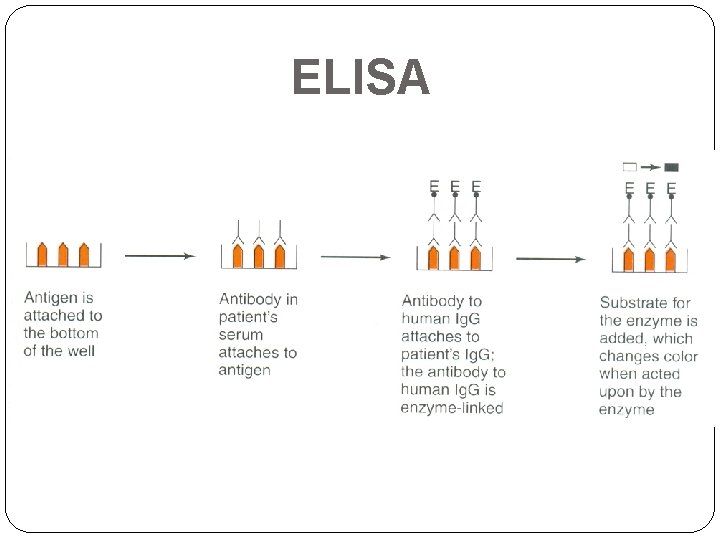
Laboratory Diagnosis q PCR based test detects RNA of influenza virus q. ELISA done on respiratory secretions such as nasal or throat washings q. Quick/rapid ELISA test FLU OIA Quick. Vue Influenza Test Zstat. Flu q. ANTIBODIES IN PATIENT’S SERUM Complement fixation and hemagglutination inhibition tests
ELISA
Control Measures Immunoprophylaxis with vaccine Chemoprophylaxis
Antiviral Drugs Amantadine, rimantadine. Effective for prevention and treatment of influenza A only. Zanamivir, oseltamivir are approved for treatment of uncomplicated influenza A & B; oseltamivir also approved for prophylaxis. Prophylaxis must be continued throughout the epidemic; treatment must begin within 24 hrs of onset of illness.
Types of Vaccine Inactivated, consisting purified PROTEIN SUBUNITS (surface antigen), I/M……I/D Live, attenuated containing temperature sensitive mutants A and B Most of the vaccines are made in chicken eggs. So anyone allergic to egg should not receive these vaccines.
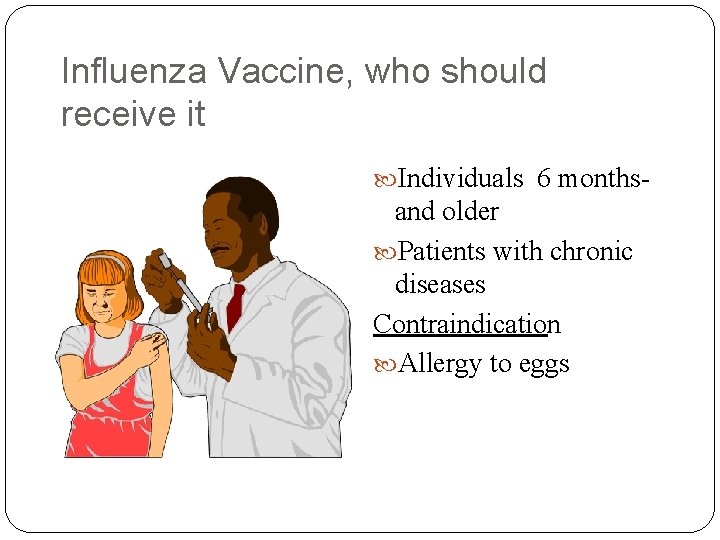
Influenza Vaccine, who should receive it Individuals 6 months- and older Patients with chronic diseases Contraindication Allergy to eggs
In humans, 3 types of hemagglutinin (H 1, H 2, H 3) and 2 types of neuraminidase (N 1, N 2) predominate Avian influenza virus…. . causing infection in humans H 5 N 1, H 7 N 9 Swine influenza virus……causing infection in humans S-OIV…. . Strain H 1 NI
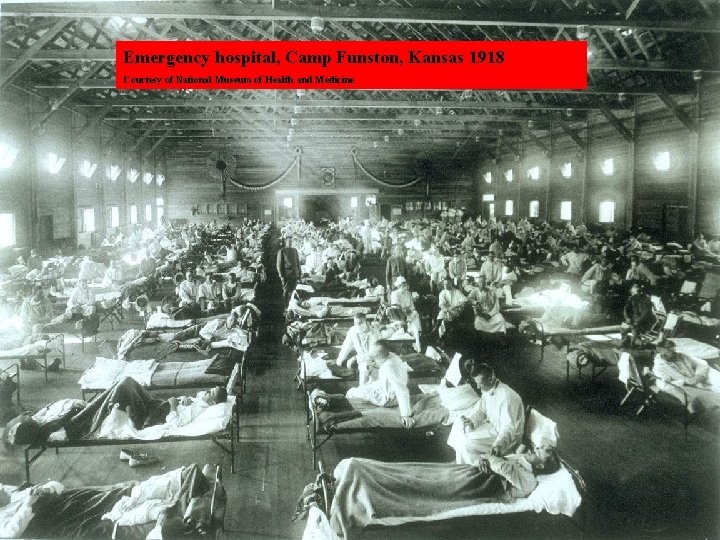
Emergency hospital, Camp Funston, Kansas 1918 Courtesy of National Museum of Health and Medicine