
CLASSIFICATION OF PROTEINS Functions impotance of Proteins Type
- Slides: 13
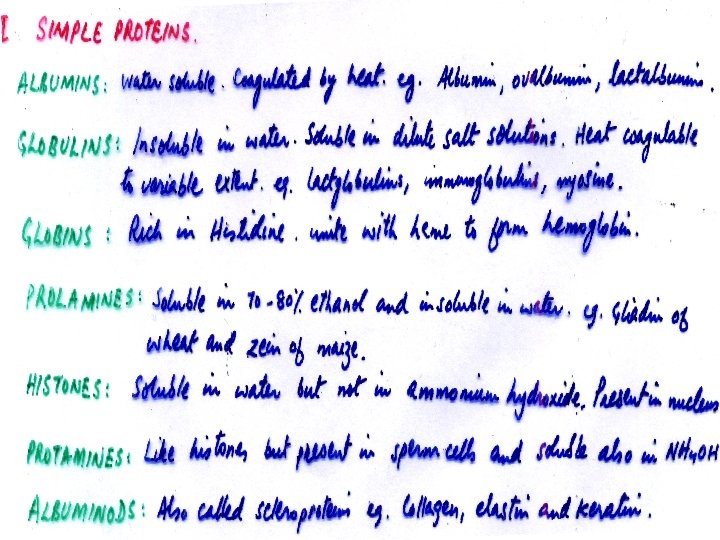
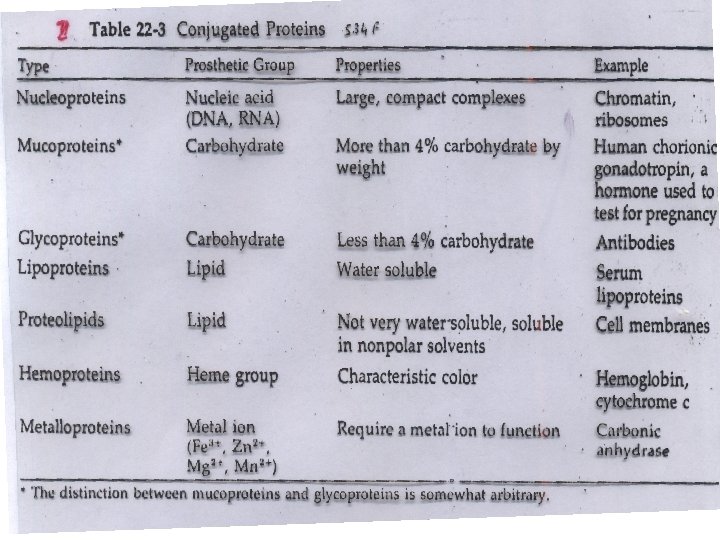
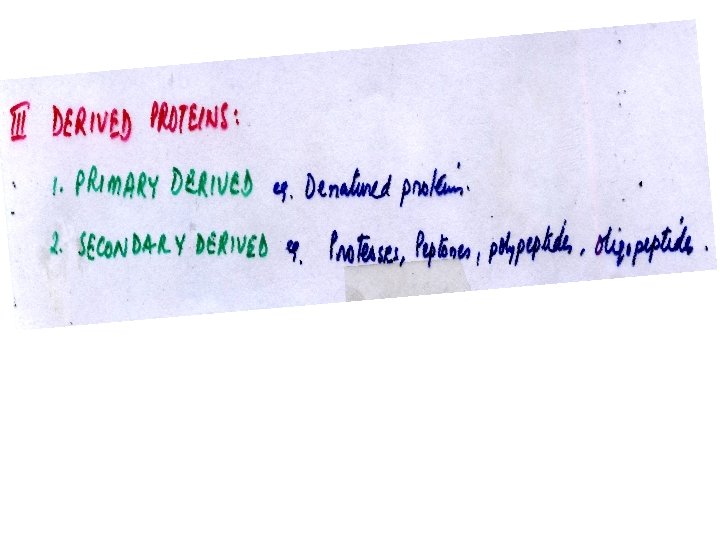
CLASSIFICATION OF PROTEINS
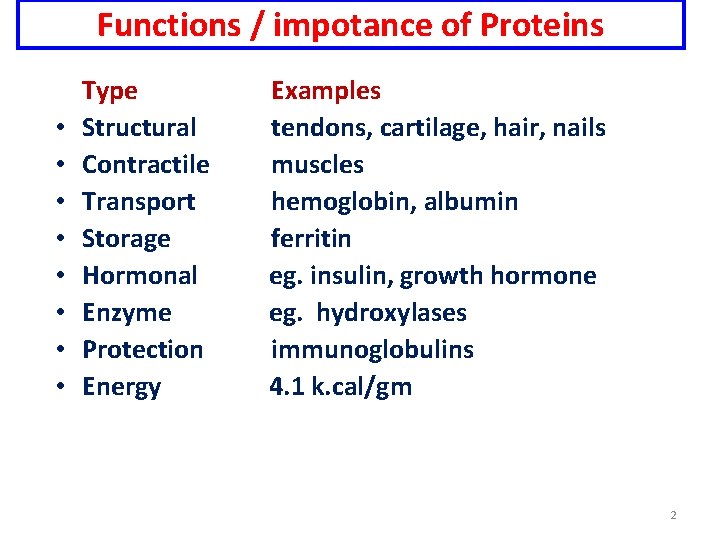
Functions / impotance of Proteins • • Type Structural Contractile Transport Storage Hormonal Enzyme Protection Energy Examples tendons, cartilage, hair, nails muscles hemoglobin, albumin ferritin eg. insulin, growth hormone eg. hydroxylases immunoglobulins 4. 1 k. cal/gm 2
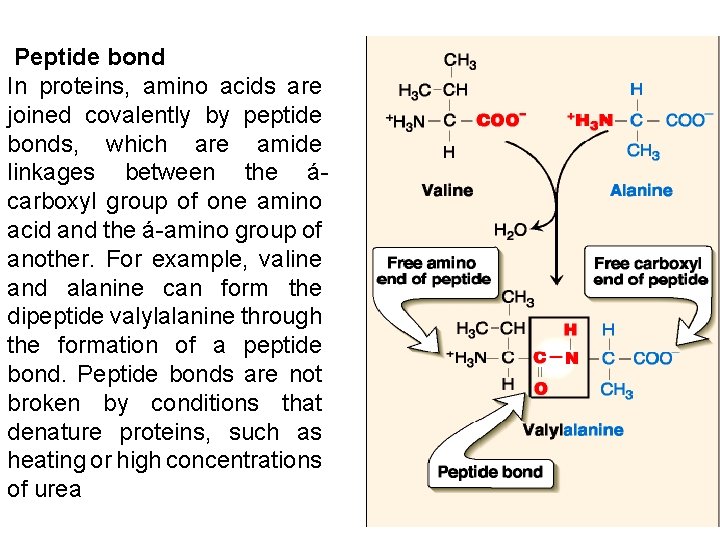
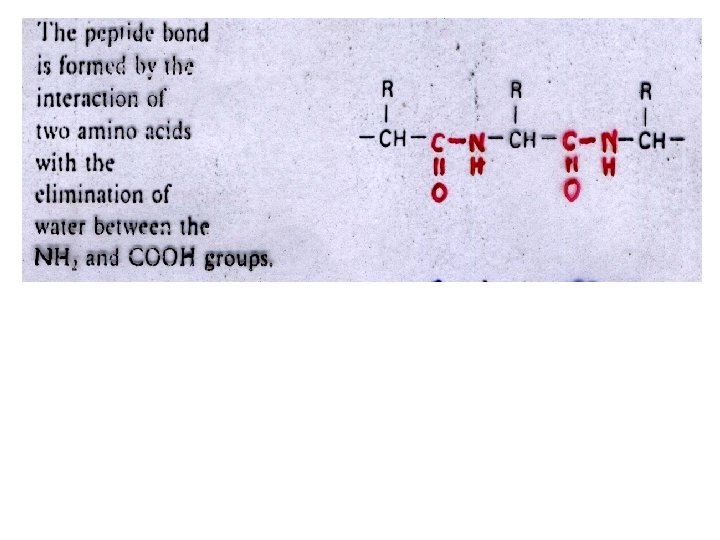
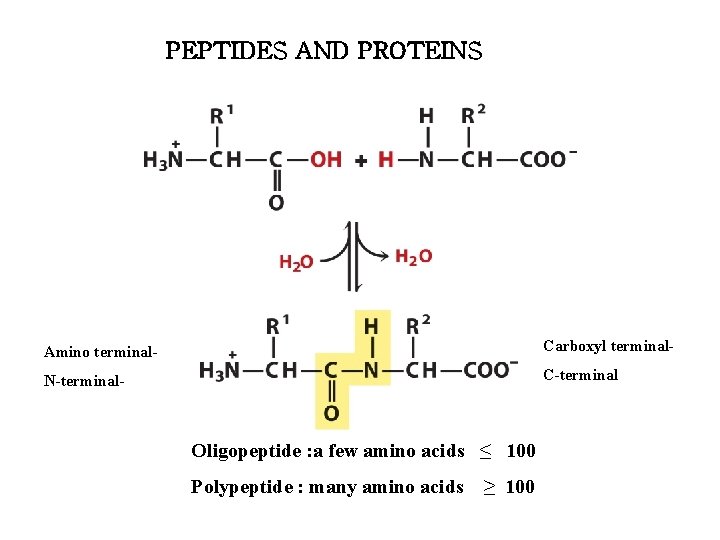
Peptide bond In proteins, amino acids are joined covalently by peptide bonds, which are amide linkages between the ácarboxyl group of one amino acid and the á-amino group of another. For example, valine and alanine can form the dipeptide valylalanine through the formation of a peptide bond. Peptide bonds are not broken by conditions that denature proteins, such as heating or high concentrations of urea
PEPTIDES AND PROTEINS Amino terminal- Carboxyl terminal- N-terminal- C-terminal Oligopeptide : a few amino acids ≤ 100 Polypeptide : many amino acids ≥ 100
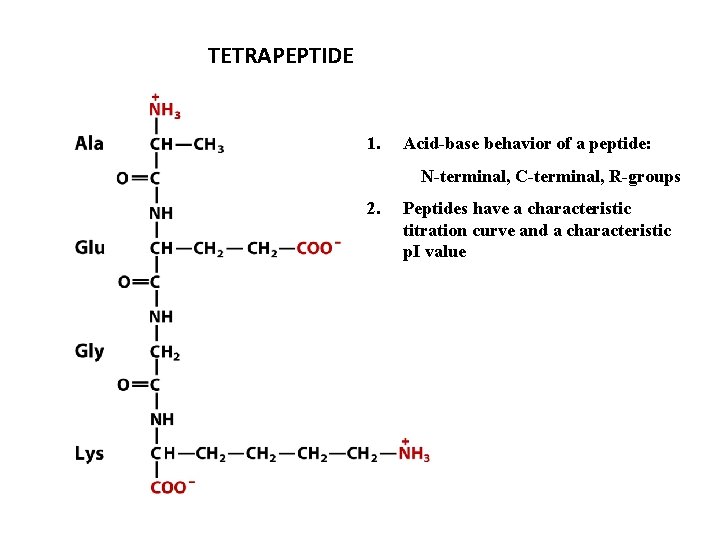
TETRAPEPTIDE 1. Acid-base behavior of a peptide: N-terminal, C-terminal, R-groups 2. Peptides have a characteristic titration curve and a characteristic p. I value
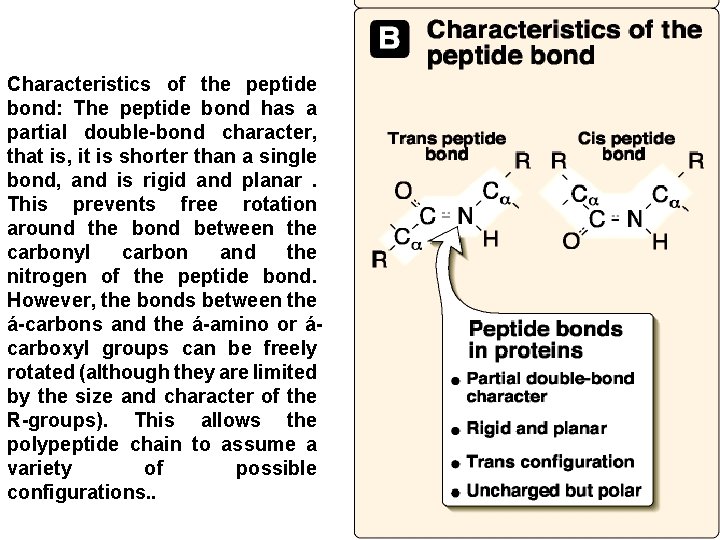
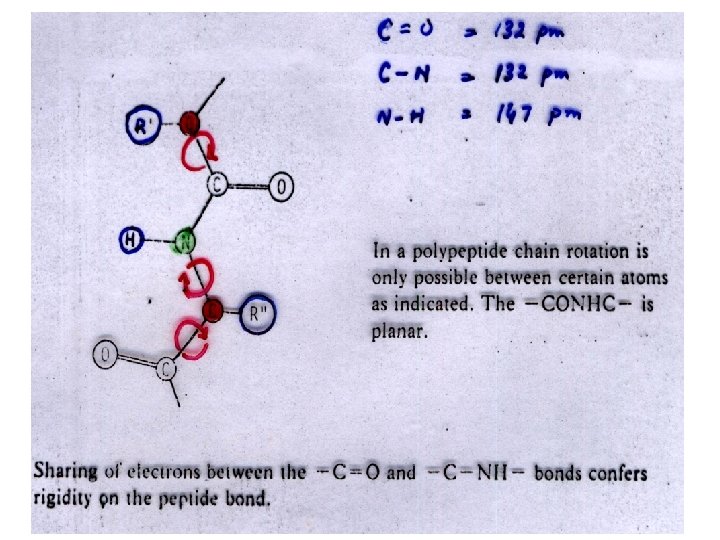
Characteristics of the peptide bond: The peptide bond has a partial double-bond character, that is, it is shorter than a single bond, and is rigid and planar. This prevents free rotation around the bond between the carbonyl carbon and the nitrogen of the peptide bond. However, the bonds between the á-carbons and the á-amino or ácarboxyl groups can be freely rotated (although they are limited by the size and character of the R-groups). This allows the polypeptide chain to assume a variety of possible configurations. .