
Classification of Plants The Plant Life Cycle A

- Slides: 41
Classification of Plants
The Plant Life Cycle • A plant alternates between 2 adult phases during its lifetime. The SPOROPHYTE or diploid phase (2 n) is usually larger and is what you see when you look at most plants.
• Diploid = full number of chromosomes • In humans, our diploid number is. . • 46
The Plant Life Cycle • The GAMETOPHYTE or haploid phase (n) is the dominant phase in mosses. In most other plants it is very small and is actually part of the sporophyte plant.
• Haploid = half the normal number of chromosomes • In humans, our haploid number is. . . • 23.
Sporophyte Gametophyte
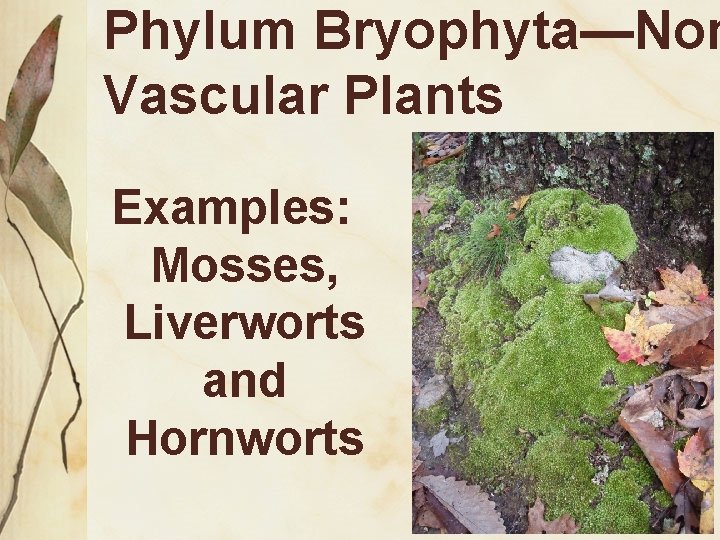
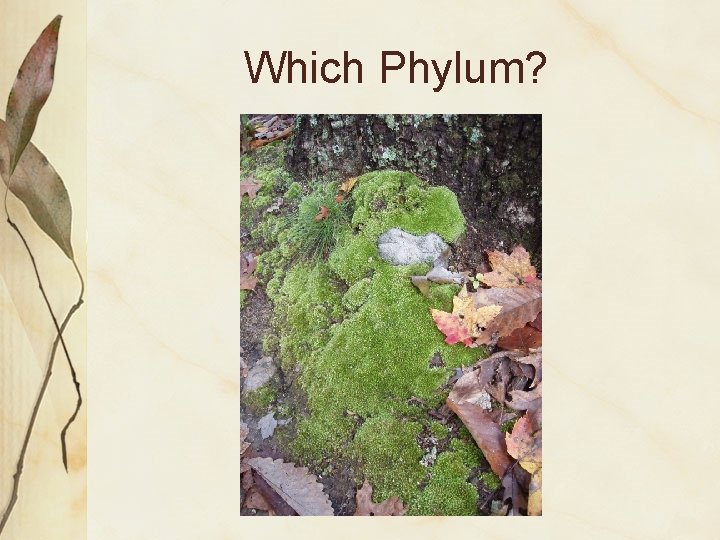
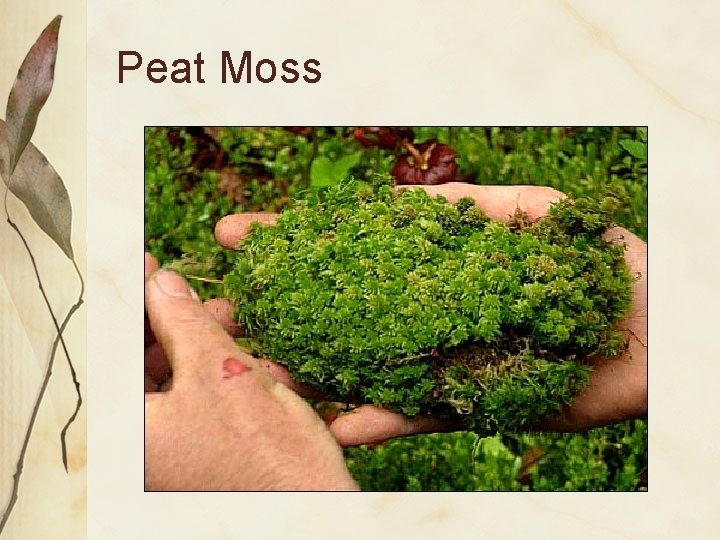
Phylum Bryophyta—Non Vascular Plants Examples: Mosses, Liverworts and Hornworts
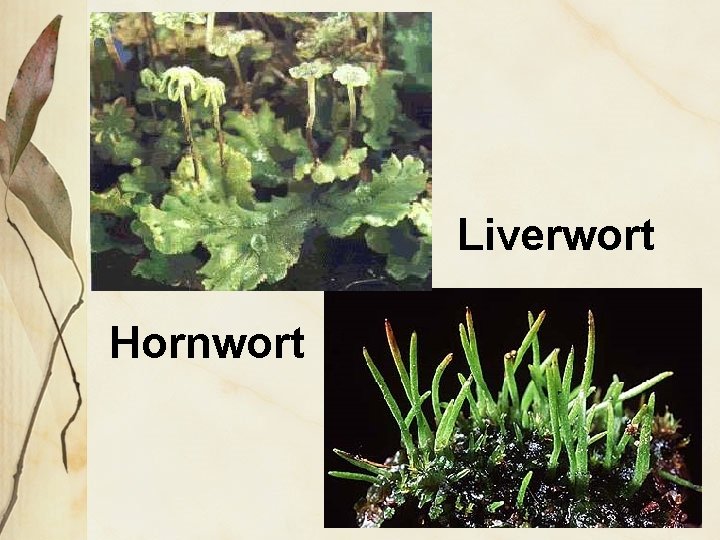
Liverwort Hornwort
Phylum Bryophyta • 1. Life Cycle: GAMETOPHYTE is the dominant form • 2. Reproduction occurs in WATER; must live in WET environments
Phylum Bryophyta • 3. No vascular tissue (transport system for water and nutrients); no true ROOTS, STEMS or LEAVES. Obtain water through OSMOSIS • 4. Less than a few CM tall.
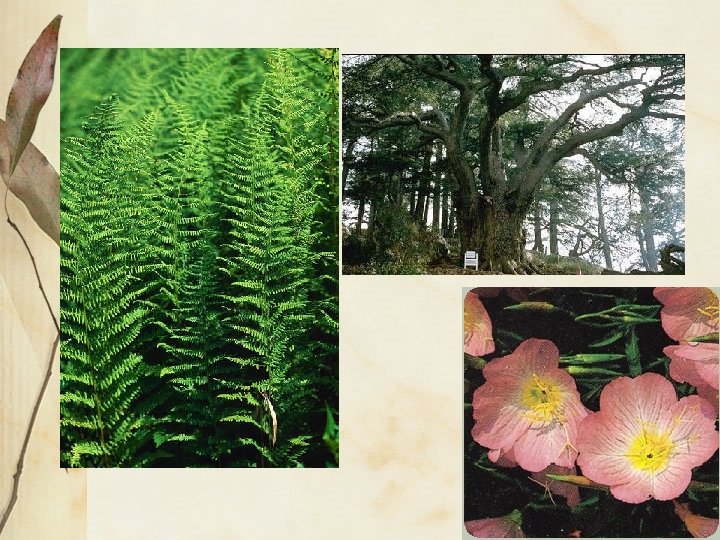
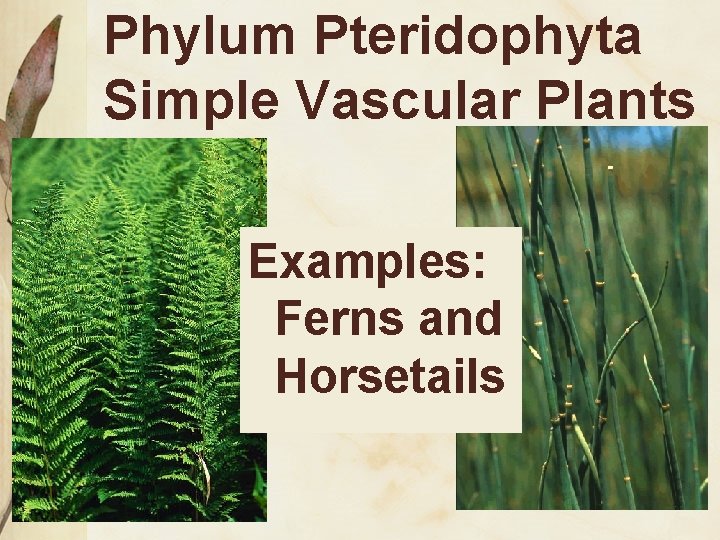
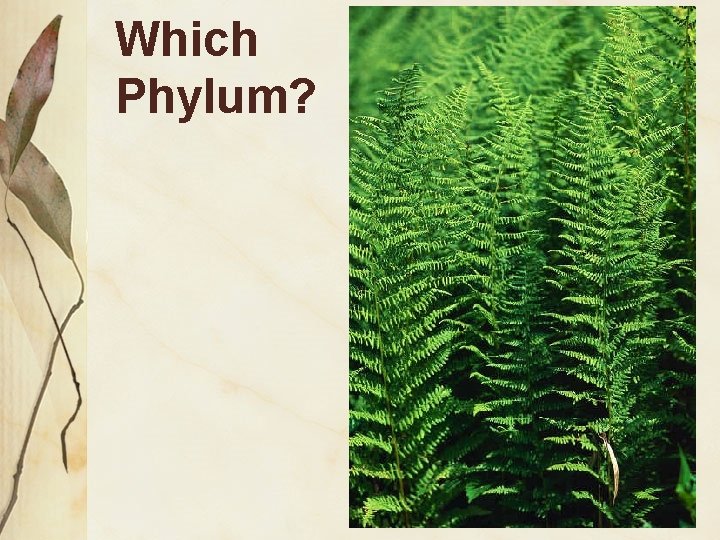
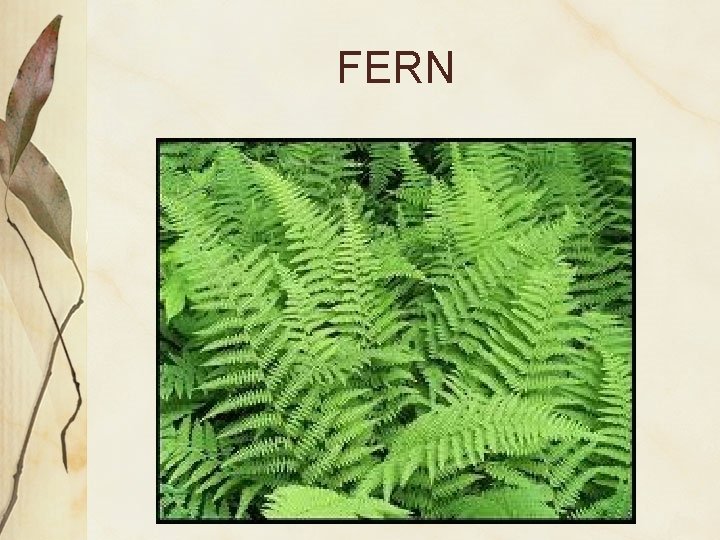
Phylum Pteridophyta Simple Vascular Plants Examples: Ferns and Horsetails
Phylum Pteridophyta • 1. Life Cycle: SPOROPHYTE is the dominant form • 2. Contain VASCULAR tissue—plants can become LARGER and more complex
Phylum Pteridophyta • 3. True ROOTS, STEMS and LEAVES • 4. Sexual reproduction requires water for the SPERM to swim to the EGG
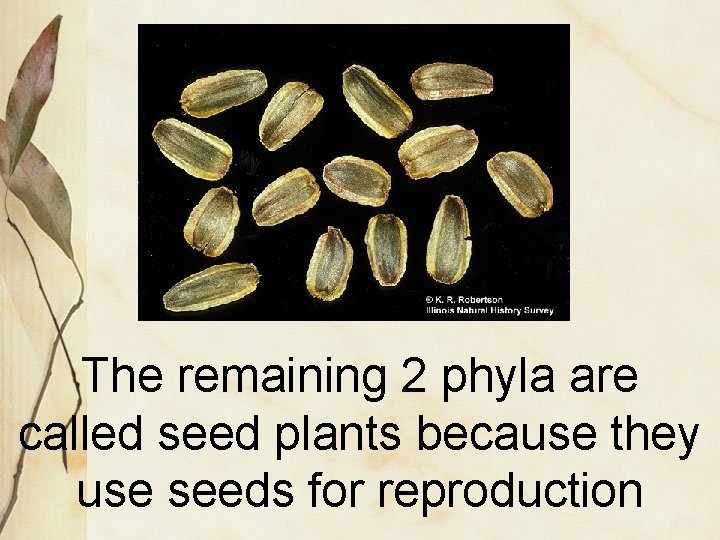
The remaining 2 phyla are called seed plants because they use seeds for reproduction
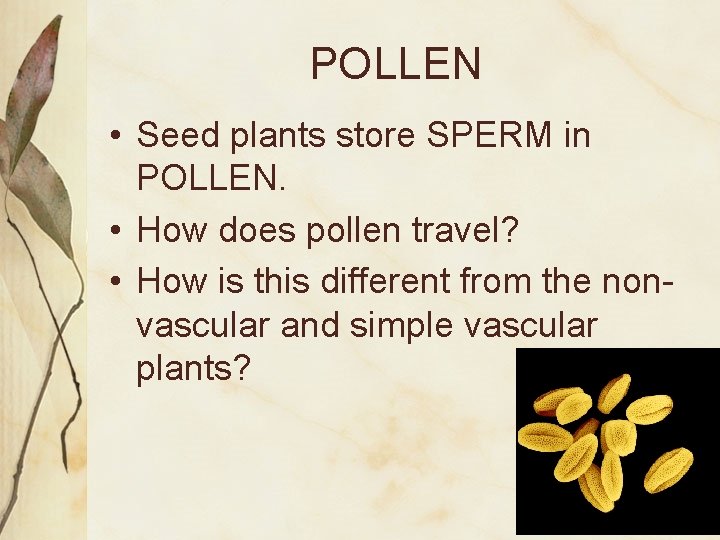
POLLEN • Seed plants store SPERM in POLLEN. • How does pollen travel? • How is this different from the nonvascular and simple vascular plants?
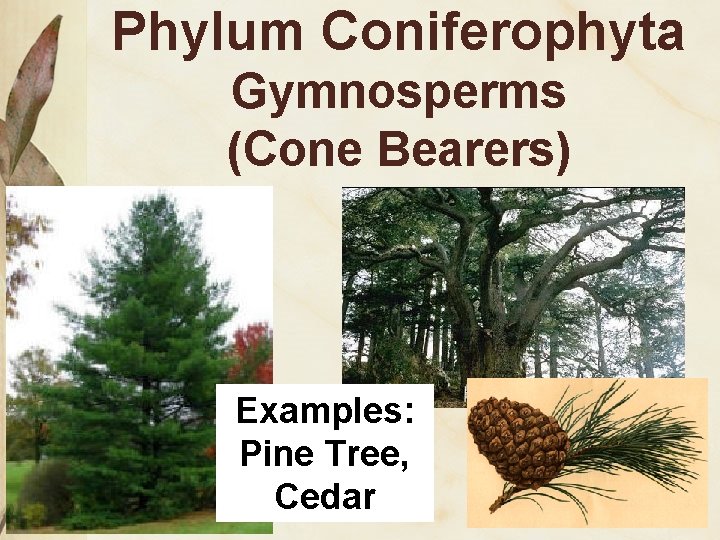
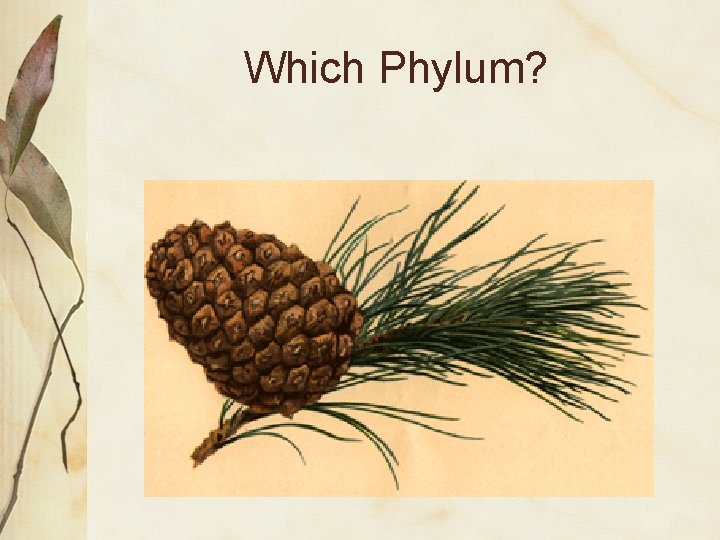
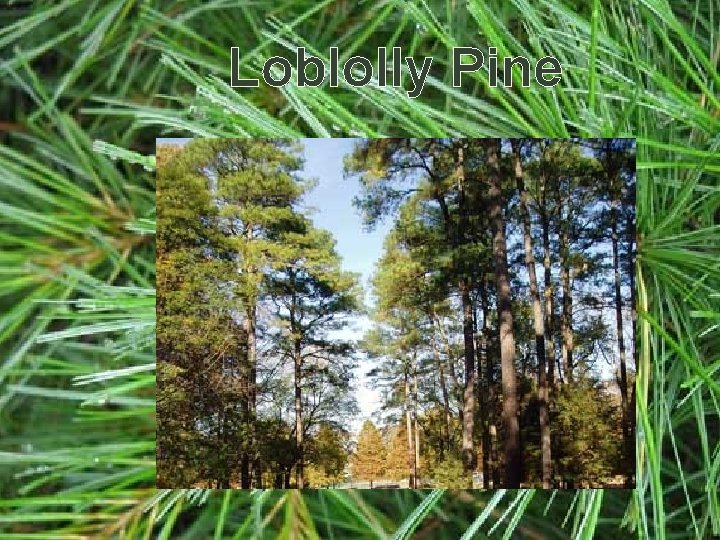
Phylum Coniferophyta Gymnosperms (Cone Bearers) Examples: Pine Tree, Cedar
Phylum Coniferophyta • 1. Life Cycle: SPOROPHYTE is the dominant form • 2. Contain VASCULAR tissue
Phylum Coniferophyta • 3. Reproduction depends on SEEDS that are stored in CONES. • 4. Leaves are NEEDLE LIKE
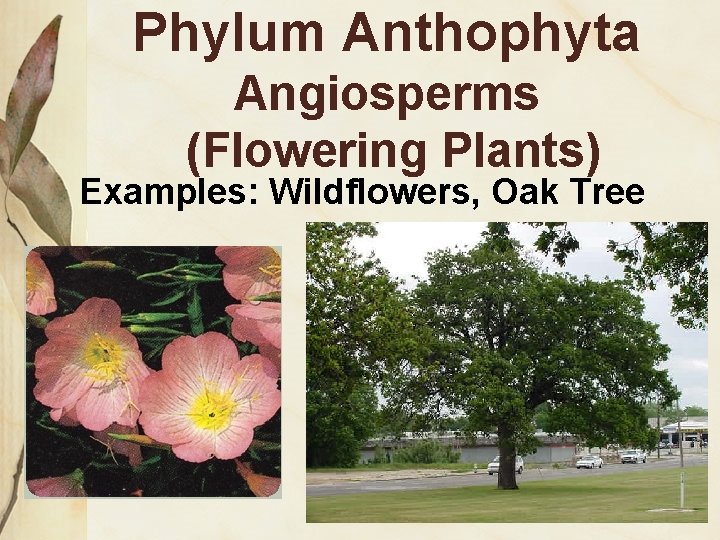
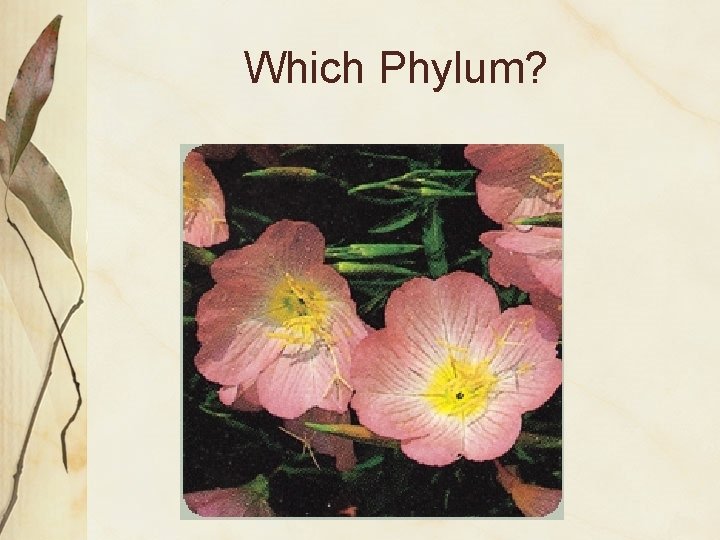
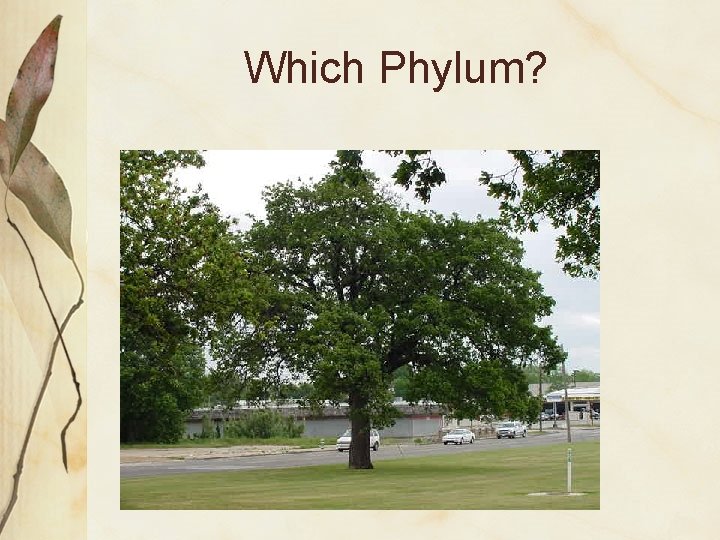
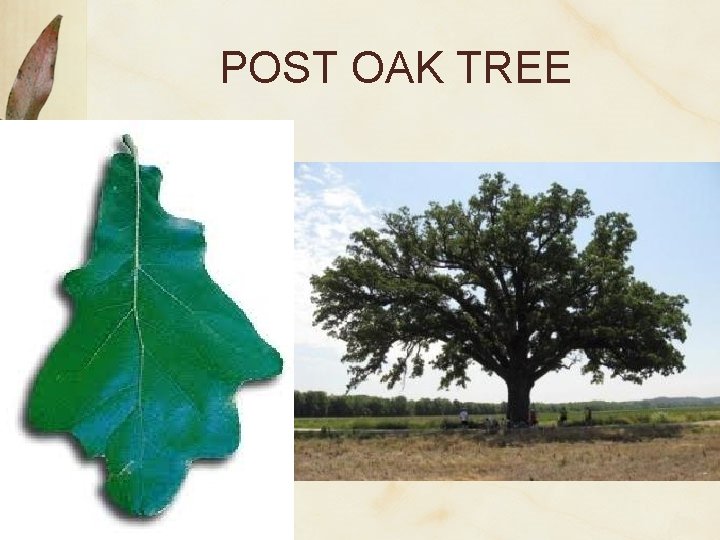
Phylum Anthophyta Angiosperms (Flowering Plants) Examples: Wildflowers, Oak Tree
Phylum Anthophyta • 1. Life Cycle: SPOROPHYTE is the dominant form • 2. Contain VASCULAR tissue
Phylum Anthophyta • 3. Have FLOWERS that aid in reproduction and have allowed them to spread to almost every BIOME • 4. Leaves are BROAD and FLAT
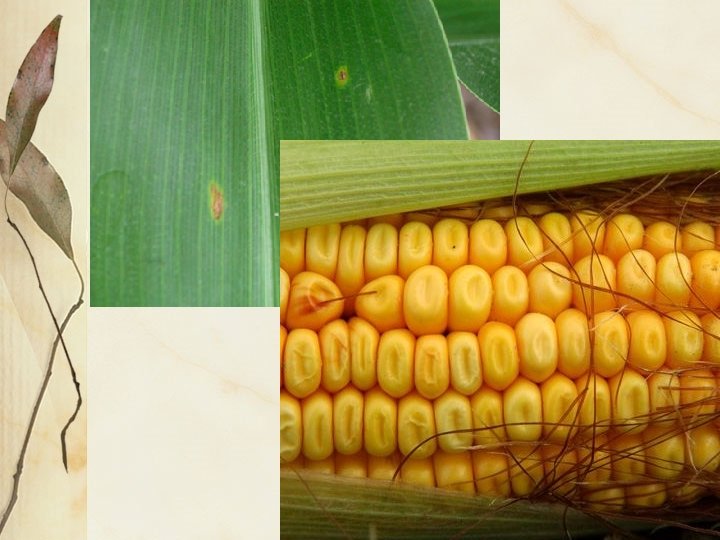
Phylum Anthophyta • 5. There are 2 groups: MONOCOTS and DICOTS. • Monocot = 1 seed leaf • Dicot = 2 seed leaves
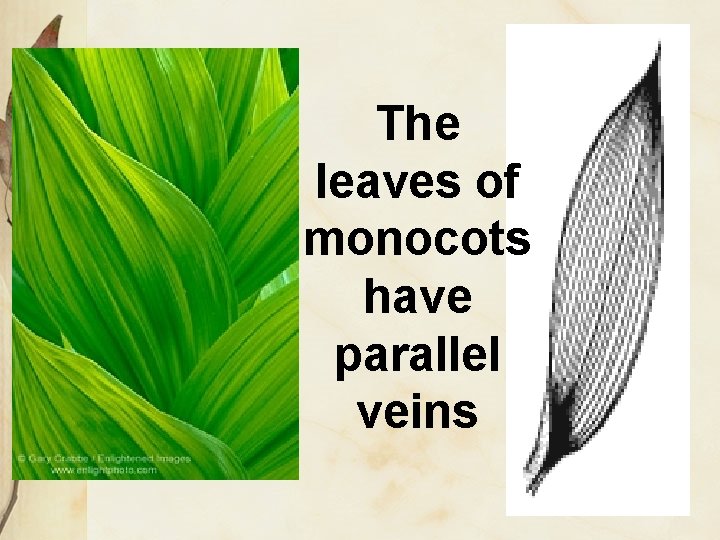
The leaves of monocots have parallel veins
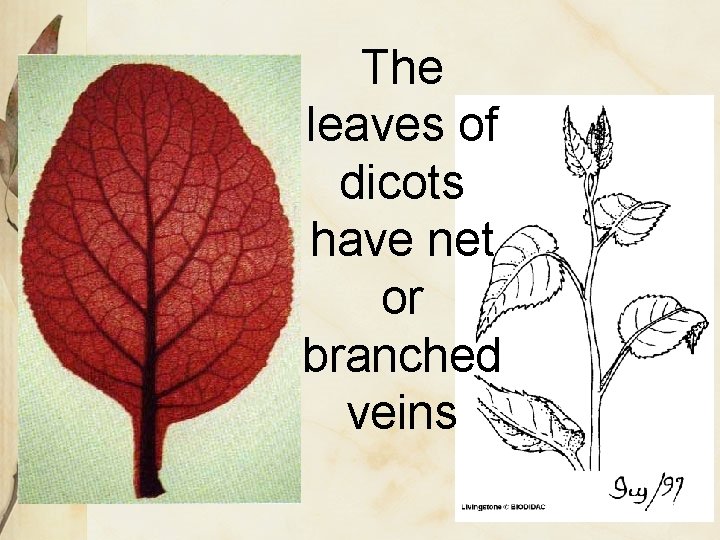
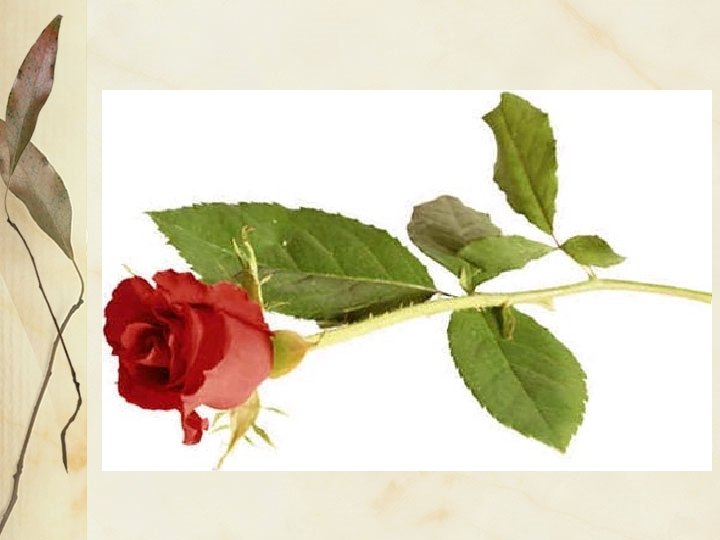
The leaves of dicots have net or branched veins
Which Phylum?
Which Phylum?
Which Phylum?
Which Phylum?
Which Phylum?
NAME THAT PLANT • Identify each of the following as a: – Non-Vascular Plant – Simple Vascular Plant – Gymnosperm – Angiosperm • If it is an angiosperm, also identify it as a monocot or dicot.
Peat Moss
Loblolly Pine
FERN
POST OAK TREE
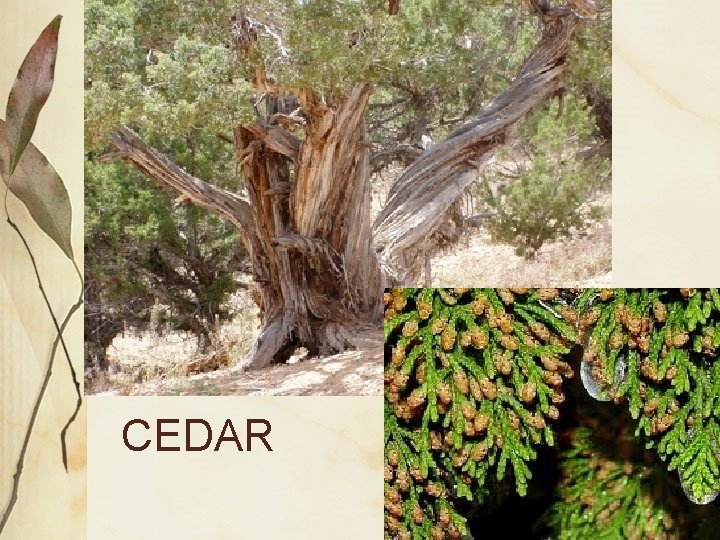
CEDAR
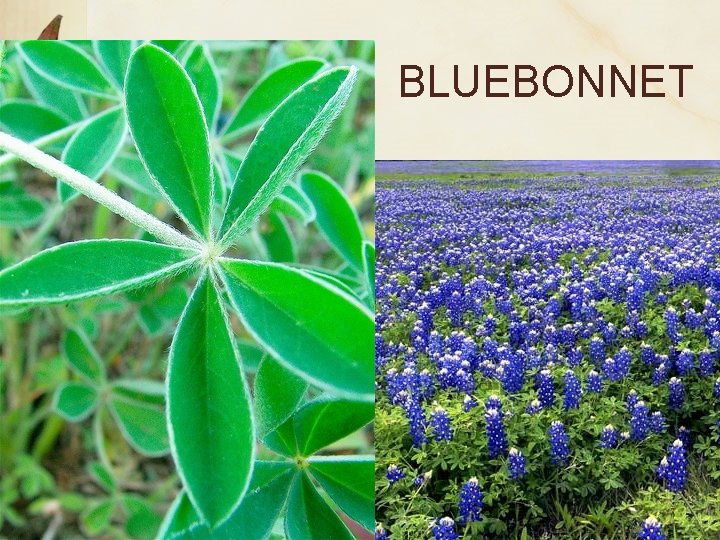
BLUEBONNET
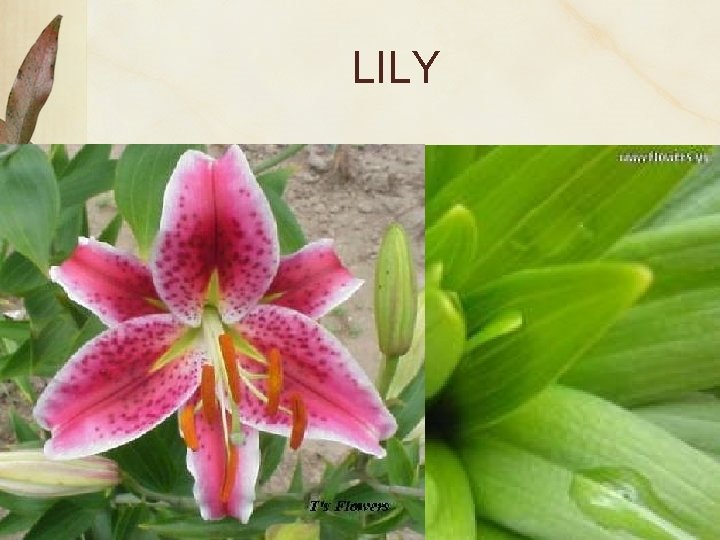
LILY
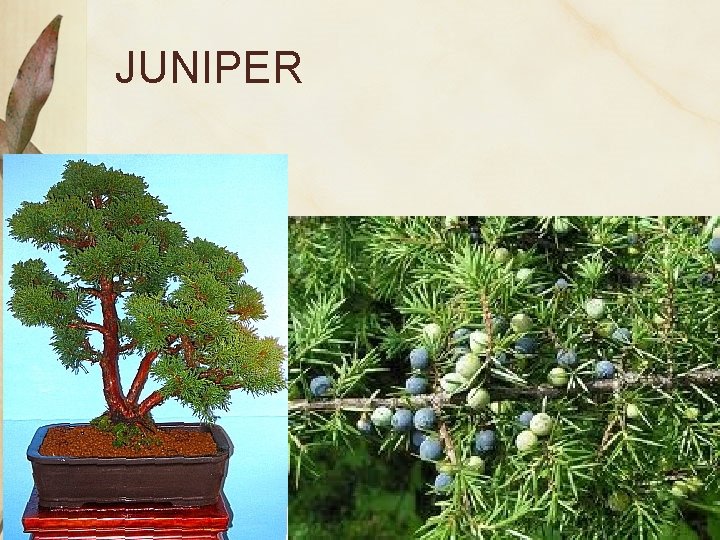
JUNIPER