
Classification of Organisms Taxonomy n Branch of biology
Classification of Organisms
Taxonomy n Branch of biology that names and groups organisms according to their characteristics and evolutionary history (phylogeny)
Taxonomy time line n Aristotle ¨ First to classify over 2000 years ago ¨ grouped plants and animals according to their structural similarities Greeks and Romans – grouped into basic categories, used Genus n Middle ages – used Latin n
Carolus Linnaeus Swedish biologist n Binomial nomenclature – 2 word name (Latin), Universal n Hierarchical categories n
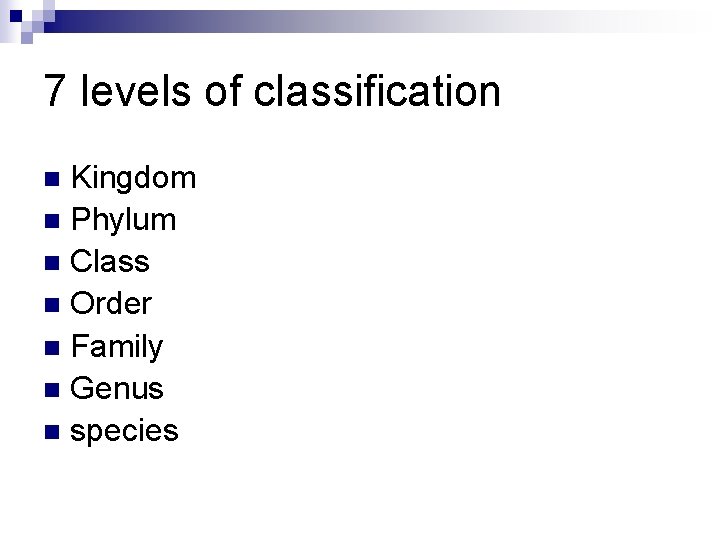
7 levels of classification Kingdom n Phylum n Class n Order n Family n Genus n species n

Rules to writing a scientific name Genus is capital n Species is lower case n Always italics or underlines n Species name is Latinized. n
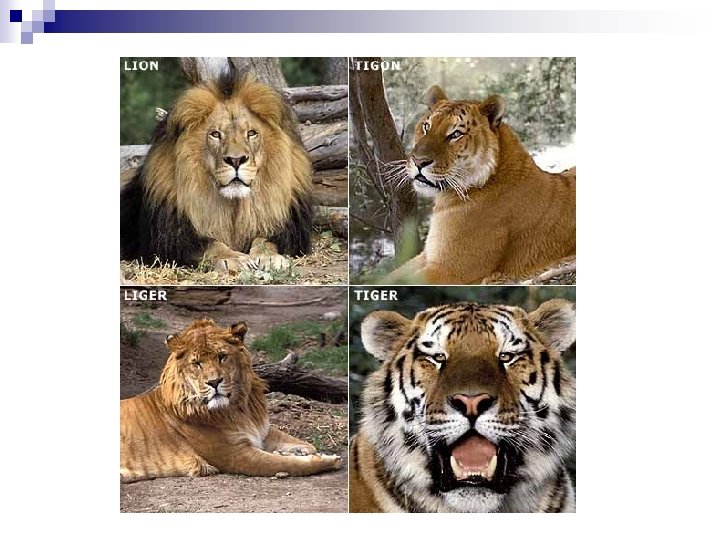
Biological species concept n n n Species: a group of actually or potentially interbreeding natural populations that are reproductively isolated from other such groups. This definition works well for most animal species but not all… Some individuals from different species can interbreed and produce fertile/infertile hybrids.
Modern Evolutionary Classification n Phylogeny: evolutionary history of a species
Cladistics n System of taxonomy that builds phylogenies based on similarities. ¨ Uses derived character – trait that arose in the common ancestor of a particular lineage and passed to descendants ¨ Cladogram – diagram showing evolutionary relationships among groups of organisms. ¨ Objective is its strength, downfall is it ignores too much information.
Evolutionary Systematics n Subjective analysis of evolutionary relationships ¨ Includes observations and biases of scientist ¨ Preferred approach if a great deal of information is available. ¨ If little information is available, cladistics is better choice.
- Slides: 11