
Classification of Organisms Dichotomous Key A dichotomous key



- Slides: 33
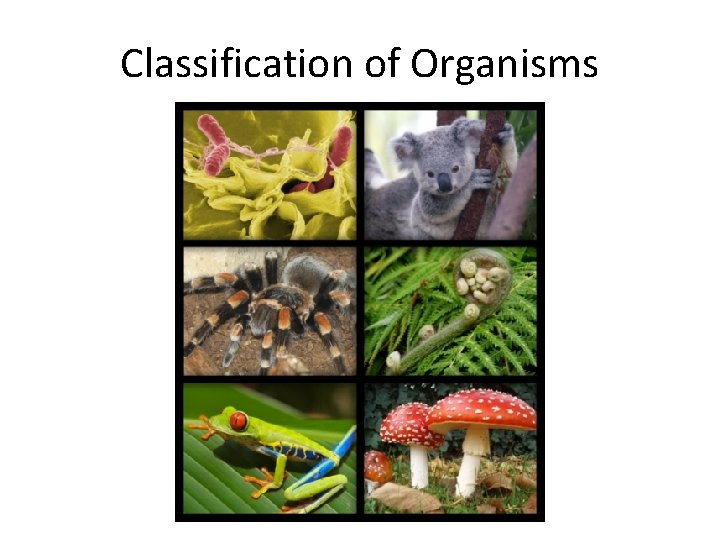
Classification of Organisms
Dichotomous Key • A dichotomous key is a method for determining the identity of something by going through a series of choices that leads the user to the correct name of the item • At each step of the process of using the key, the user is given two choices; each alternative leads to another question until the item is identified. (It's like playing 20 questions. )
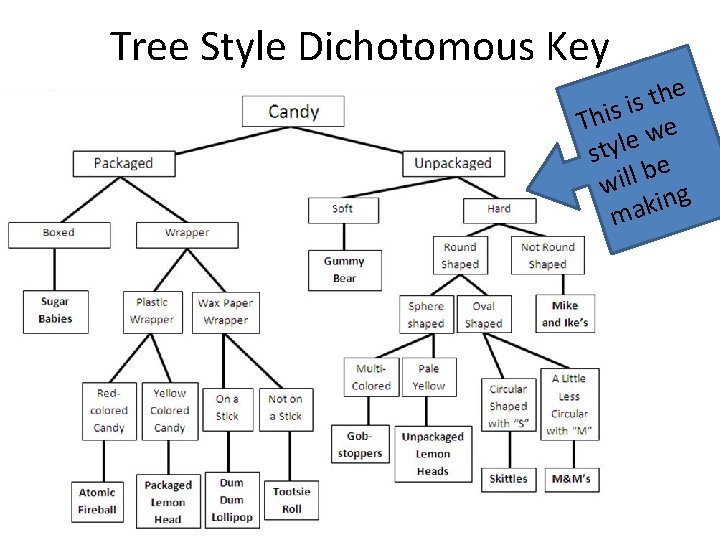
Tree Style Dichotomous Key e h t is s i h T e w e styl e b l l i w g n i k ma
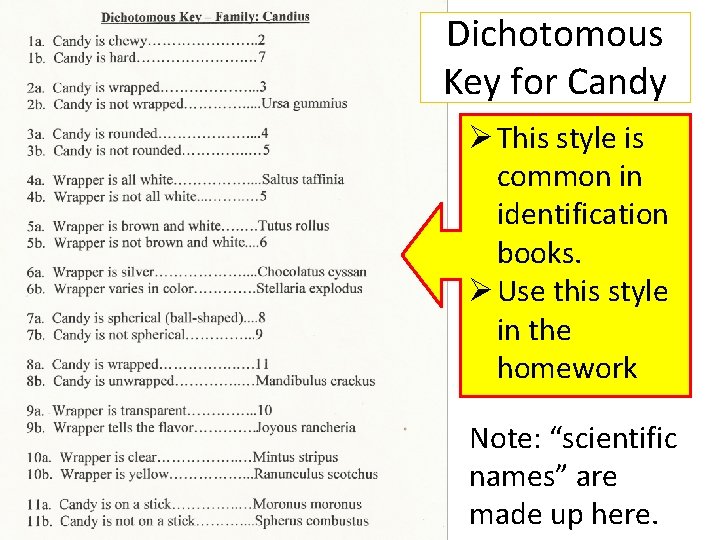
Dichotomous Key for Candy Ø This style is common in identification books. Ø Use this style in the homework Note: “scientific names” are made up here.
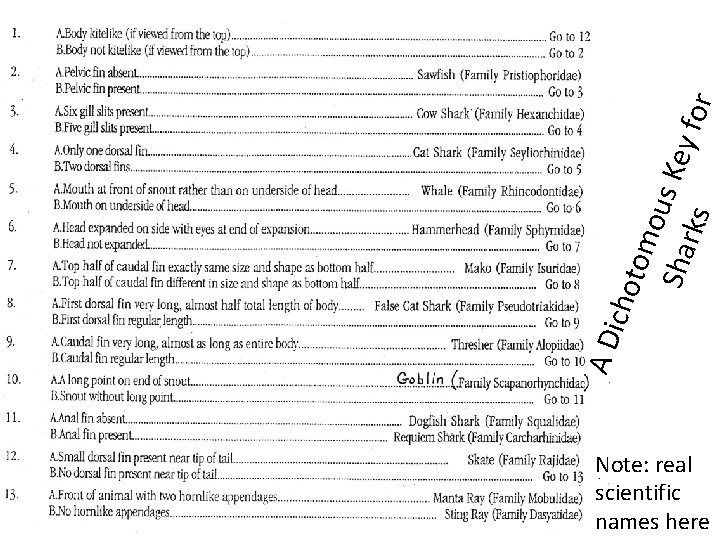
tom ous Key Sha rks for icho AD Note: real scientific names here
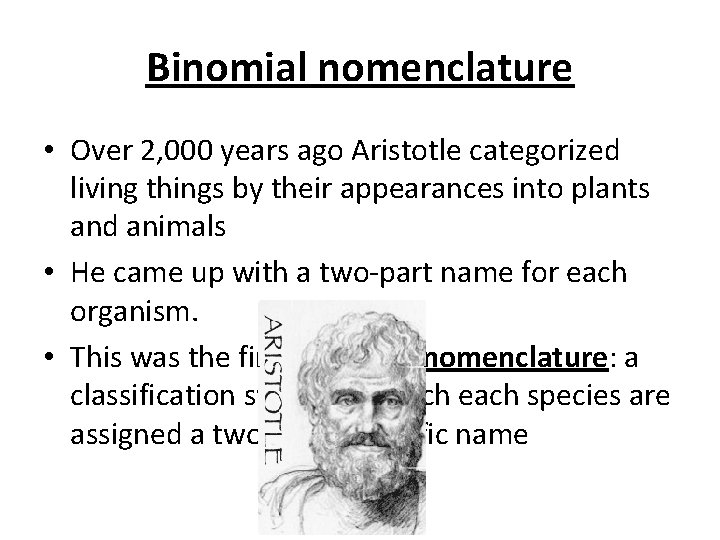
Binomial nomenclature • Over 2, 000 years ago Aristotle categorized living things by their appearances into plants and animals • He came up with a two-part name for each organism. • This was the first Binomial nomenclature: a classification system in which each species are assigned a two-part scientific name
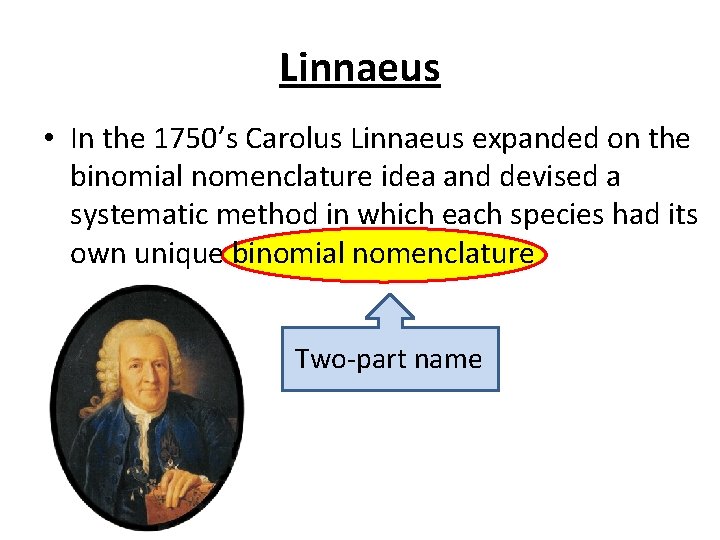
Linnaeus • In the 1750’s Carolus Linnaeus expanded on the binomial nomenclature idea and devised a systematic method in which each species had its own unique binomial nomenclature Two-part name
Linnaean Classification • Linnaeus knew that the names needed to be universal • He used Latin because it is a dead language. • This means that it is not used as ordinary spoken languages for everyday communication and therefore does not change.
Who invented the first classification system based on a two part name? Aristotle What is this two-part style classification system called? Binomial nomenclature Who refined this by creating a systematic method in which each species had its own unique binomial nomenclature? Linnaeus
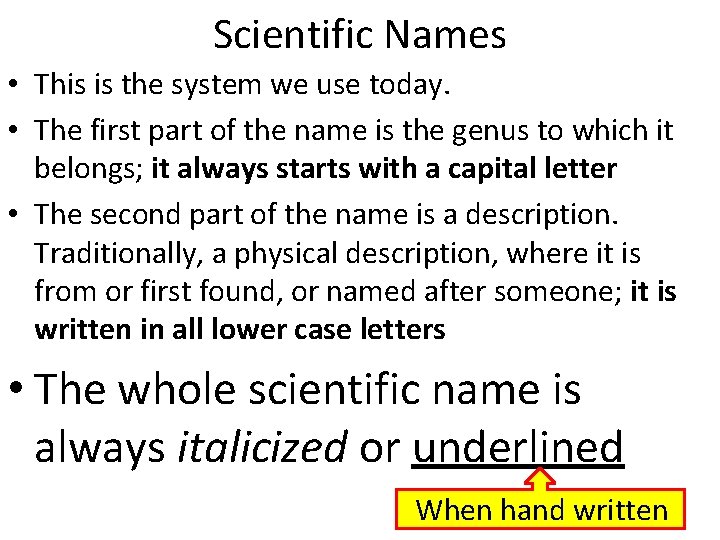
Scientific Names • This is the system we use today. • The first part of the name is the genus to which it belongs; it always starts with a capital letter • The second part of the name is a description. Traditionally, a physical description, where it is from or first found, or named after someone; it is written in all lower case letters • The whole scientific name is always italicized or underlined When hand written
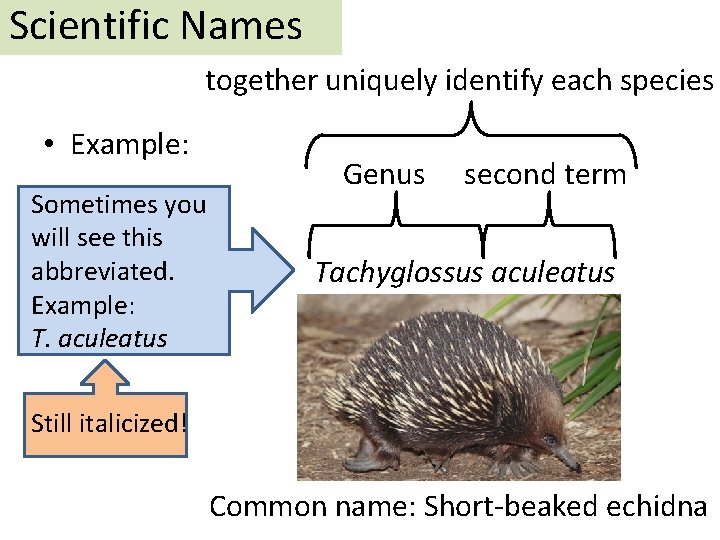
Scientific Names together uniquely identify each species • Example: Sometimes you will see this abbreviated. Example: T. aculeatus Genus second term Tachyglossus aculeatus Still italicized! Common name: Short-beaked echidna
What is the first part of the scientific name? the genus to which it belongs The scientific name of this animal is written incorrectly. How would you make it correct? puma concolor Puma concolor When hand written Common names: mountain lion, puma, panther, painter, mountain cat, or catamount
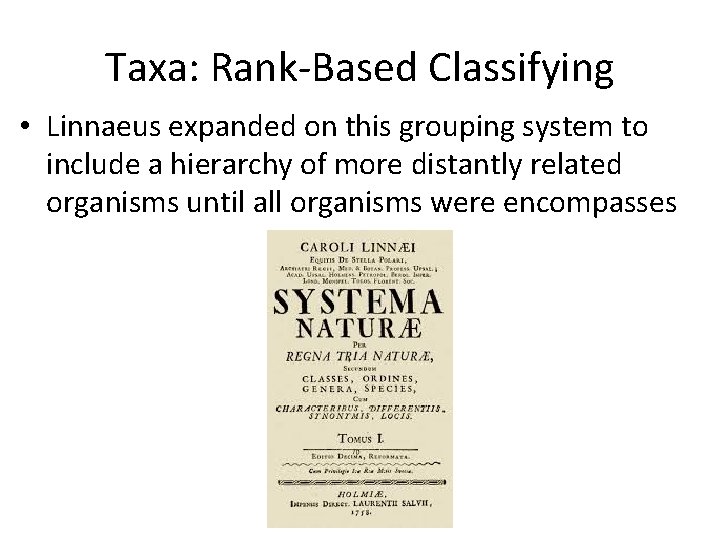
Taxa: Rank-Based Classifying • Linnaeus expanded on this grouping system to include a hierarchy of more distantly related organisms until all organisms were encompasses
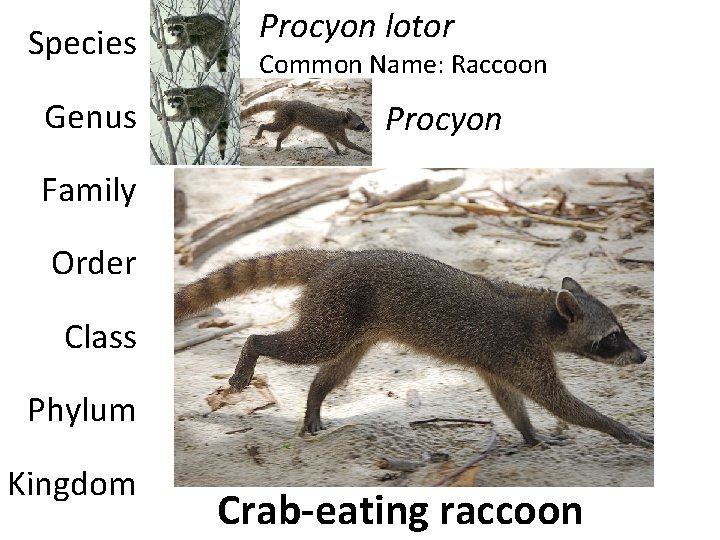
Taxa: Rank-Based Classifying • Eventually there were seven hierarchical levels to which we call taxa (plural) or taxon (singular) • Let’s follow an example through the various levels…
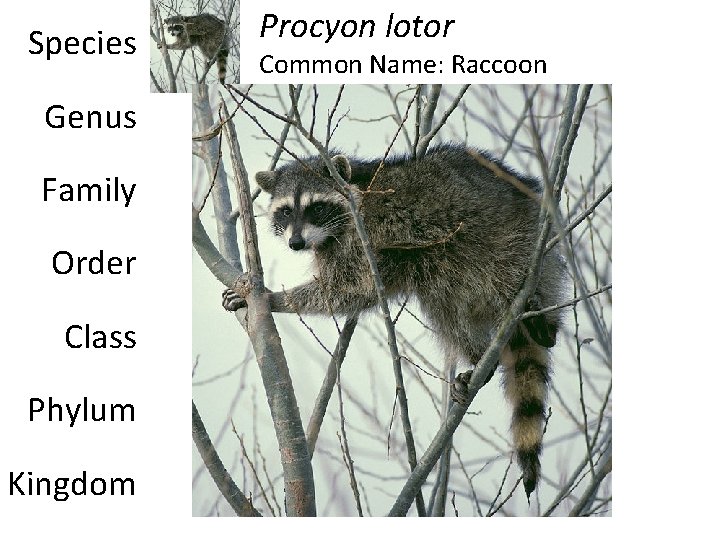
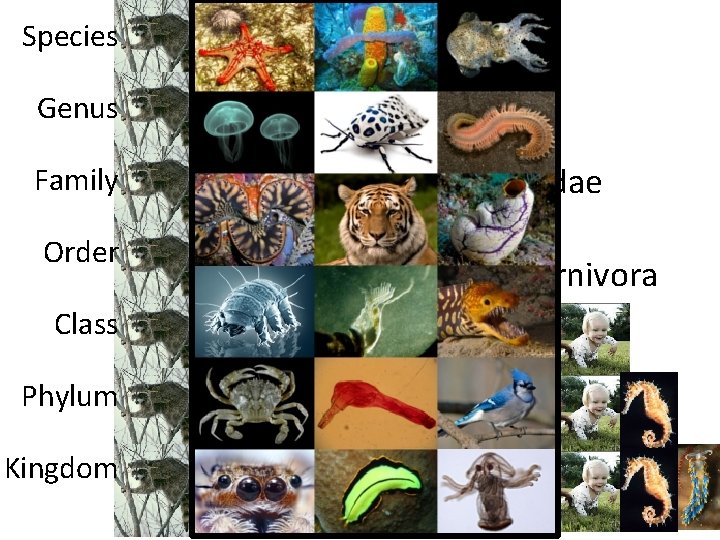
Species Genus Family Order Class Phylum Kingdom Procyon lotor Common Name: Raccoon
Species Genus Procyon lotor Common Name: Raccoon Procyon Family Order Class Phylum Kingdom Crab-eating raccoon
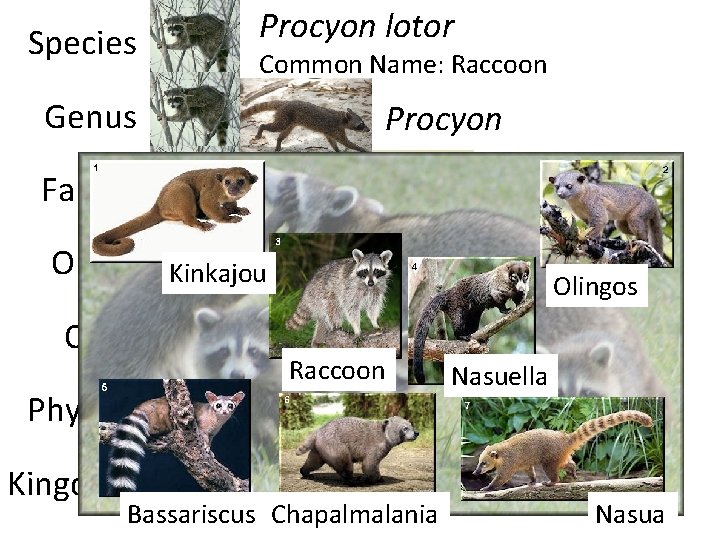
Species Procyon lotor Common Name: Raccoon Genus Procyonidae Family Order Class Kinkajou Olingos Raccoon Phylum Kingdom Bassariscus Chapalmalania Nasuella Nasua
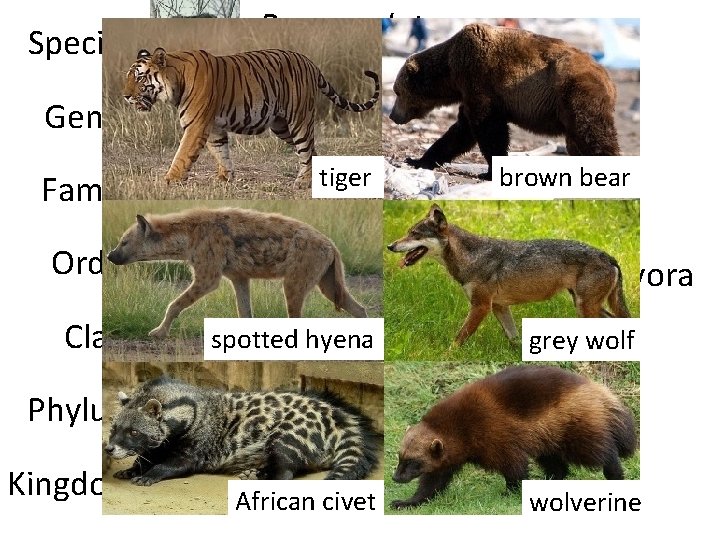
Species Procyon lotor Common Name: Raccoon Genus Family Procyon tiger Order Class brown bear Procyonidae Carnivora spotted hyena grey wolf African civet wolverine Phylum Kingdom
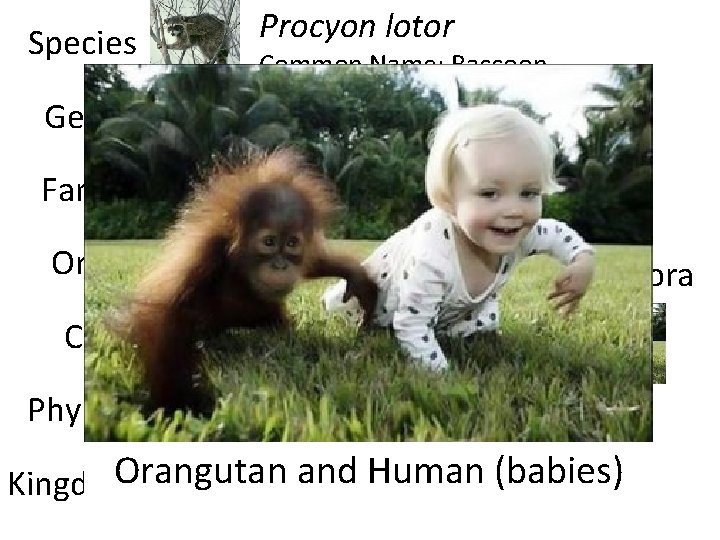
Species Genus Family Procyon lotor Common Name: Raccoon Procyonidae Order Carnivora Class Phylum Mammalia Orangutan and Human (babies) Kingdom
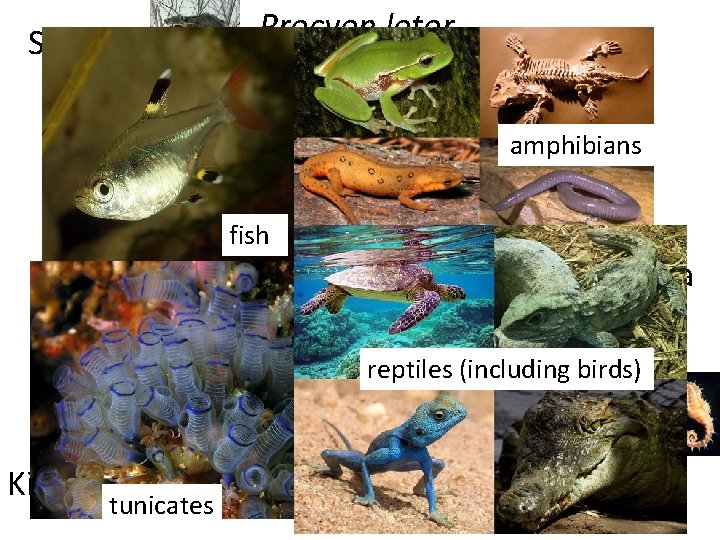
Species Procyon lotor Common Name: Raccoon Genus Procyonidae Family Order Class Phylum Kingdom tunicates amphibians fish Carnivora Mammalia reptiles (including birds) Chordate
Species Genus Procyon lotor Common Name: Raccoon Procyonidae Family Order Class Phylum Kingdom Carnivora Mammalia Chordate Animalia
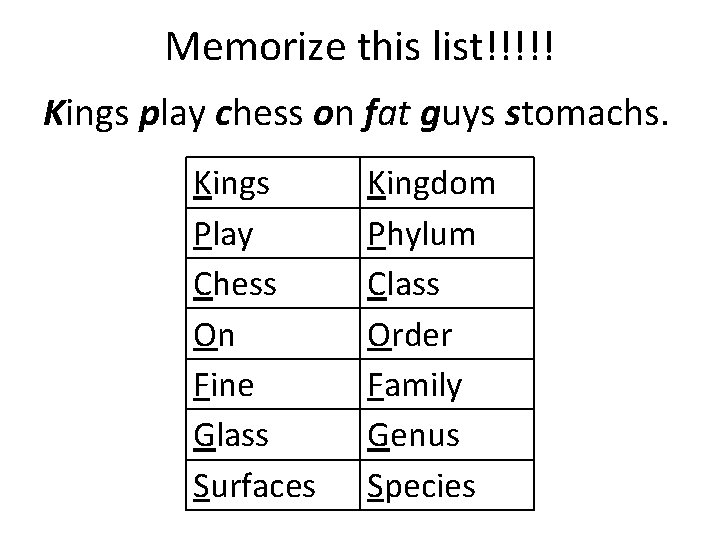
Memorize this list!!!!! Kings play chess on fat guys stomachs. Kings Play Chess On Fine Glass Surfaces Kingdom Phylum Class Order Family Genus Species
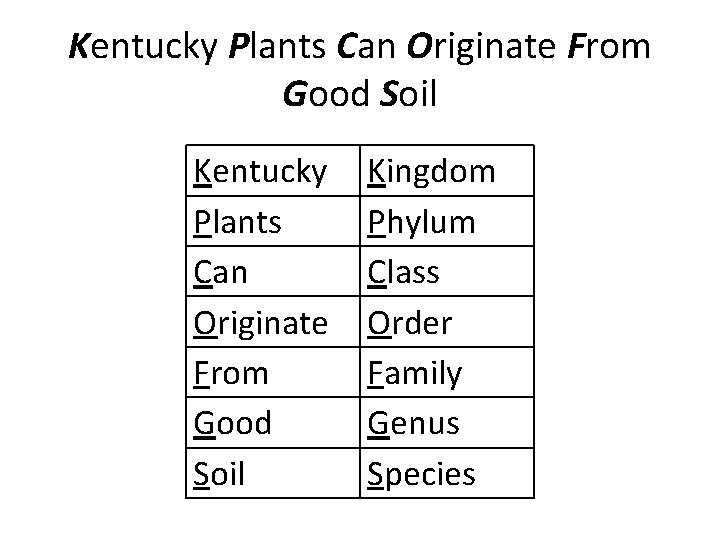
Kentucky Plants Can Originate From Good Soil Kingdom Phylum Class Order Family Genus Species
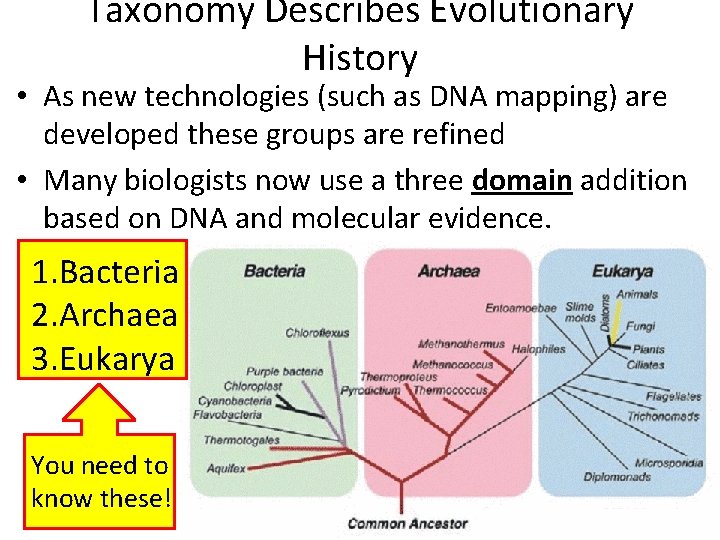
Taxonomy Describes Evolutionary History • As new technologies (such as DNA mapping) are developed these groups are refined • Many biologists now use a three domain addition based on DNA and molecular evidence. 1. Bacteria 2. Archaea 3. Eukarya You need to know these!
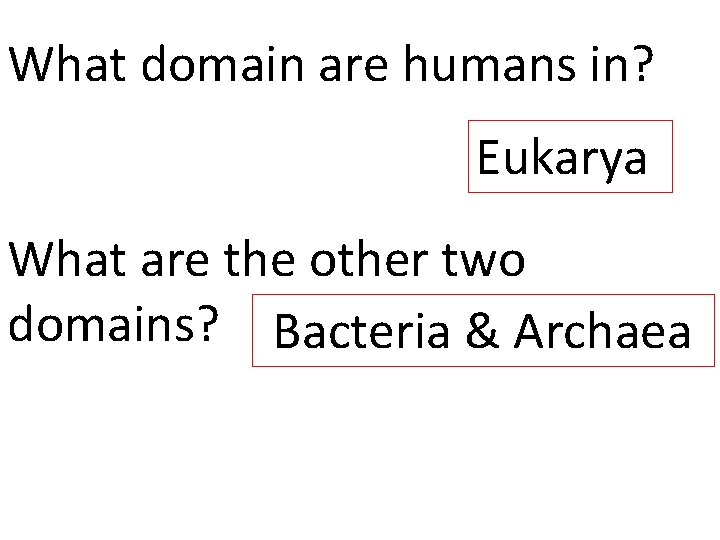
What domain are humans in? Eukarya What are the other two domains? Bacteria & Archaea
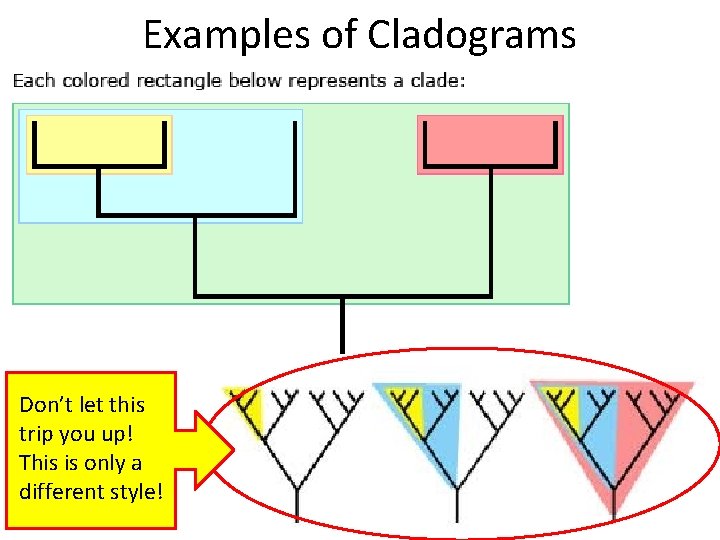
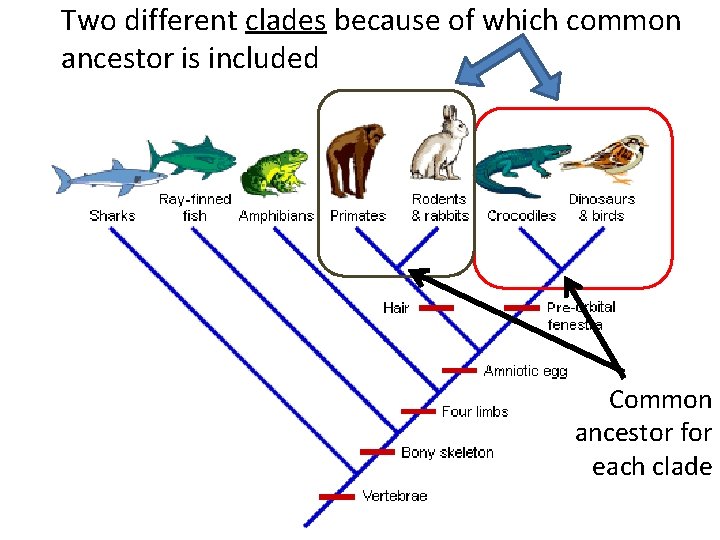
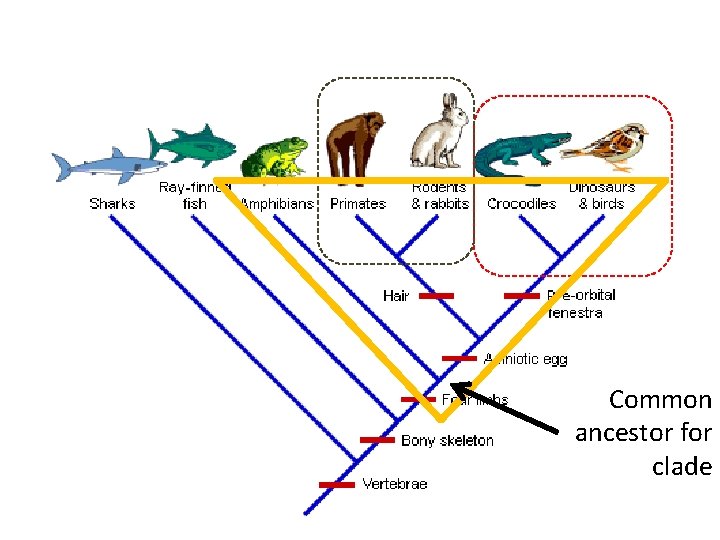
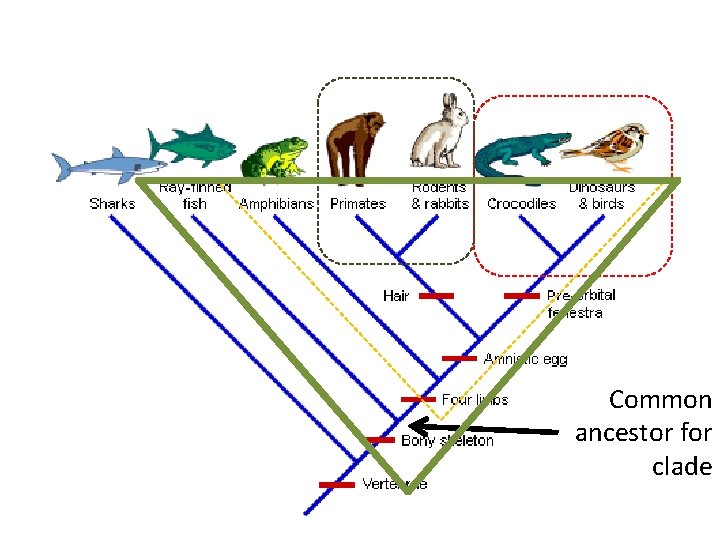
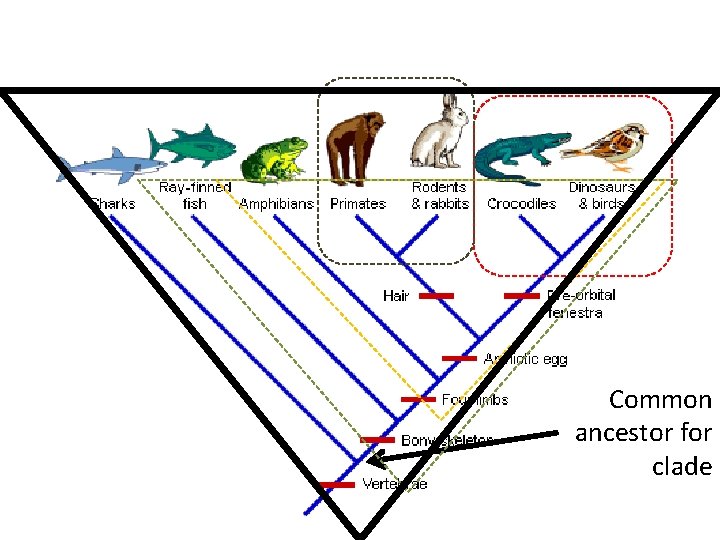
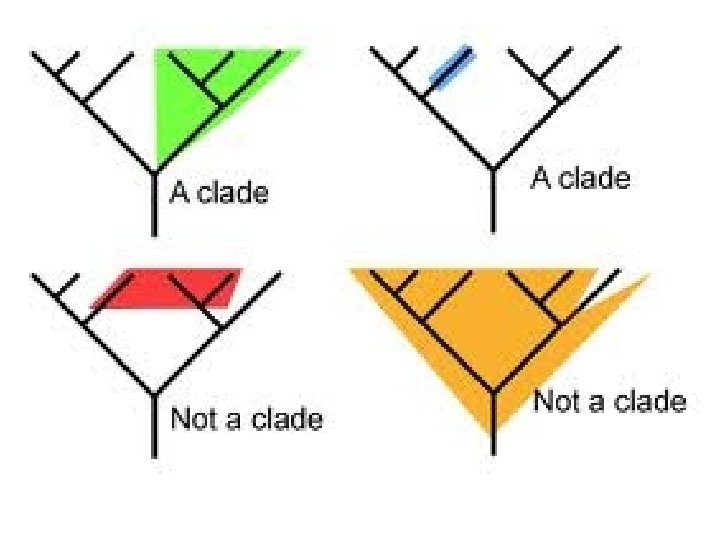
Phylogeny • Phylogeny: the study of how living and extinct organism are related to each other • Clade: A group of species that includes their single common ancestor and all descendents of that ancestor. • Scientists use Cladistics to build phylogenies
Examples of Cladograms Don’t let this trip you up! This is only a different style!
Two different clades because of which common ancestor is included Common ancestor for each clade
Common ancestor for clade
Common ancestor for clade
Common ancestor for clade
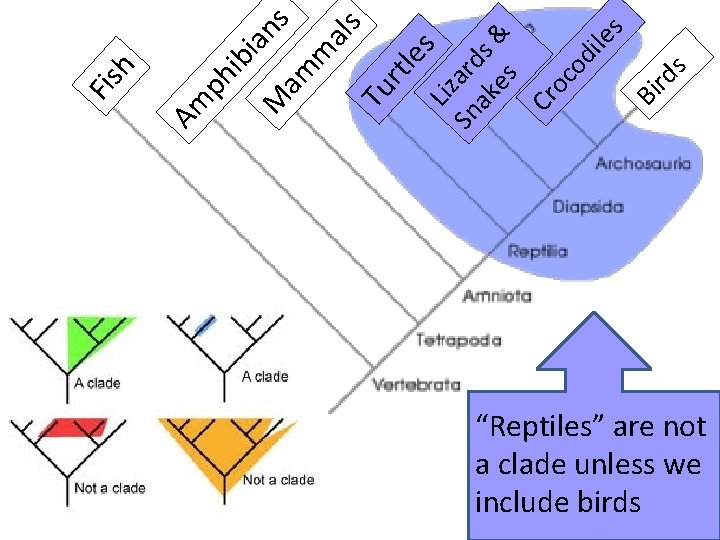
an s Liz Sn ard ak s es & Cr oc od ile s es als m Tu rtl am M ib i ph Am h Fis B s d ir “Reptiles” are not a clade unless we include birds