
Classification of Offences Three different classes of Criminal
- Slides: 9
Classification of Offences
Three different classes of Criminal Offence: • Summary offences – minor offences – can only be tried in Magistrates’ Court – e. g. assault • Either way offences – may be tried in either Magistrates’ Court or Crown Court – e. g. theft • Indictable offences – serious offences that can only be tried in a Crown Court – e. g. murder
Magistrates’ Court • Case heard by: – (District Judge); or – 3 Magistrates assisted by a legal advisor • Deals with summary or either way offences
Either way Offences • All cases start in the Magistrates’ Court • If D pleads guilty: – Magistrates can sentence in Magistrates’ Court or send to Crown Court for sentence • If D pleads not-guilty, – Magistrates decide if they can deal with the case – If they decide they can’t it gets sent to the Crown Court – If they decide they can, D then chooses which court they want to be tried in • If Magistrates decide they don’t have jurisdiction, case is sent to CC for trial • If D chooses CC, case is sent to CC for trial • If both Magistrates and D choose to have case heard in Magistrate’s court, it is heard like a summary offence
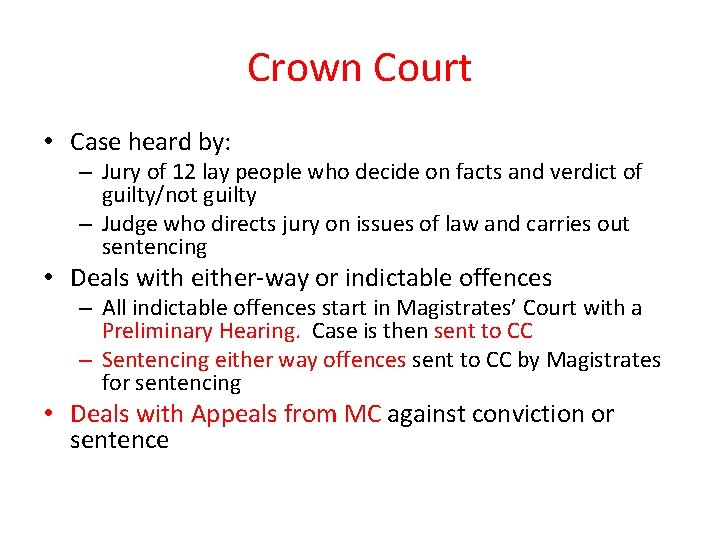
Crown Court • Case heard by: – Jury of 12 lay people who decide on facts and verdict of guilty/not guilty – Judge who directs jury on issues of law and carries out sentencing • Deals with either-way or indictable offences – All indictable offences start in Magistrates’ Court with a Preliminary Hearing. Case is then sent to CC – Sentencing either way offences sent to CC by Magistrates for sentencing • Deals with Appeals from MC against conviction or sentence
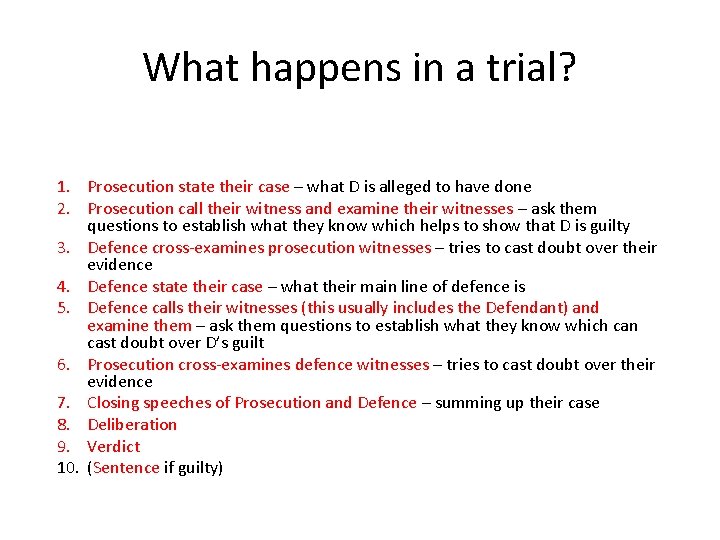
What happens in a trial? 1. Prosecution state their case – what D is alleged to have done 2. Prosecution call their witness and examine their witnesses – ask them questions to establish what they know which helps to show that D is guilty 3. Defence cross-examines prosecution witnesses – tries to cast doubt over their evidence 4. Defence state their case – what their main line of defence is 5. Defence calls their witnesses (this usually includes the Defendant) and examine them – ask them questions to establish what they know which can cast doubt over D’s guilt 6. Prosecution cross-examines defence witnesses – tries to cast doubt over their evidence 7. Closing speeches of Prosecution and Defence – summing up their case 8. Deliberation 9. Verdict 10. (Sentence if guilty)
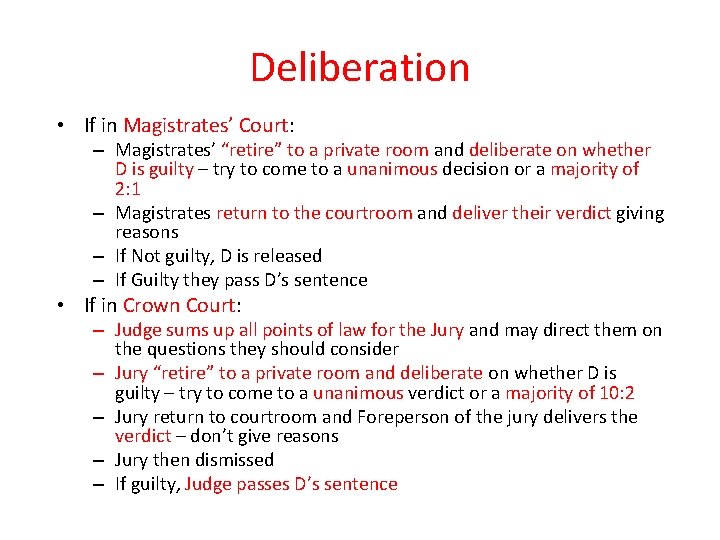
Deliberation • If in Magistrates’ Court: – Magistrates’ “retire” to a private room and deliberate on whether D is guilty – try to come to a unanimous decision or a majority of 2: 1 – Magistrates return to the courtroom and deliver their verdict giving reasons – If Not guilty, D is released – If Guilty they pass D’s sentence • If in Crown Court: – Judge sums up all points of law for the Jury and may direct them on the questions they should consider – Jury “retire” to a private room and deliberate on whether D is guilty – try to come to a unanimous verdict or a majority of 10: 2 – Jury return to courtroom and Foreperson of the jury delivers the verdict – don’t give reasons – Jury then dismissed – If guilty, Judge passes D’s sentence
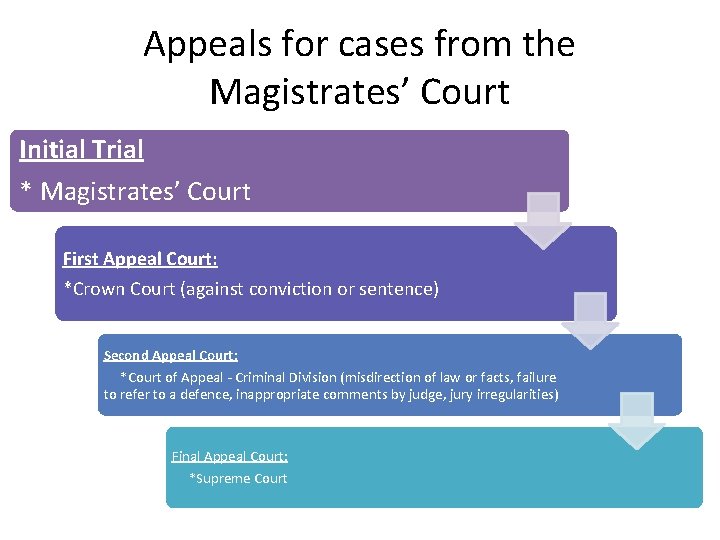
Appeals for cases from the Magistrates’ Court Initial Trial * Magistrates’ Court First Appeal Court: *Crown Court (against conviction or sentence) Second Appeal Court: *Court of Appeal - Criminal Division (misdirection of law or facts, failure to refer to a defence, inappropriate comments by judge, jury irregularities) Final Appeal Court: *Supreme Court
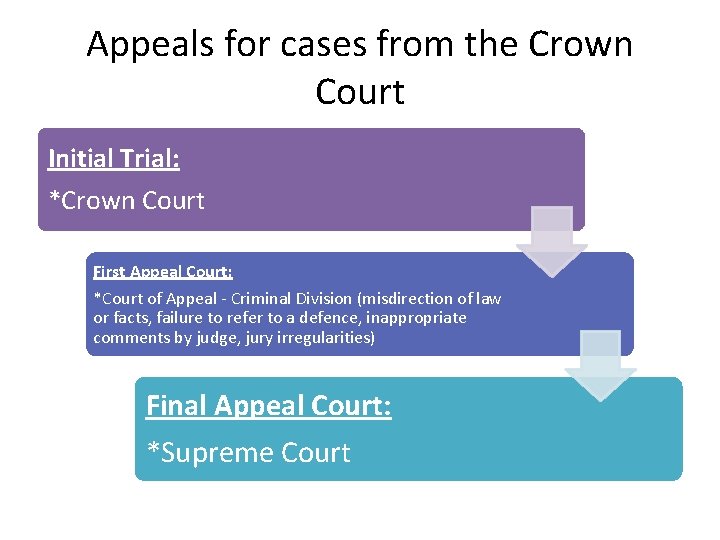
Appeals for cases from the Crown Court Initial Trial: *Crown Court First Appeal Court: *Court of Appeal - Criminal Division (misdirection of law or facts, failure to refer to a defence, inappropriate comments by judge, jury irregularities) Final Appeal Court: *Supreme Court