
Classification of Matter Chemical Structure and Composition Elements

- Slides: 19
Classification of Matter Chemical Structure and Composition
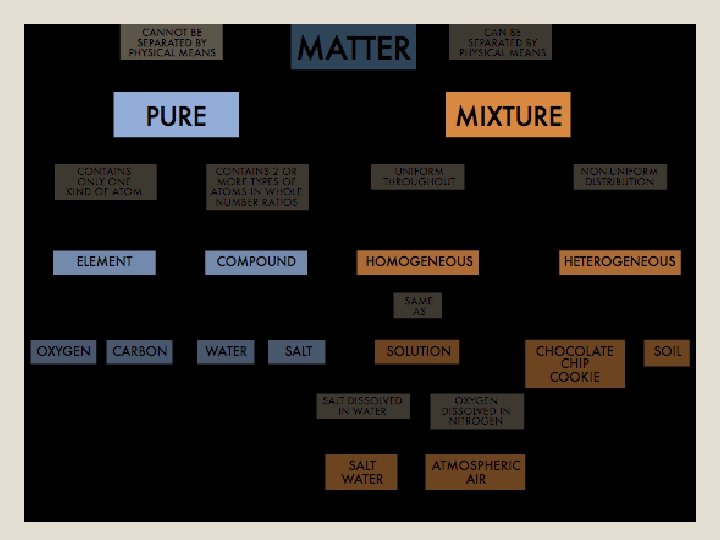
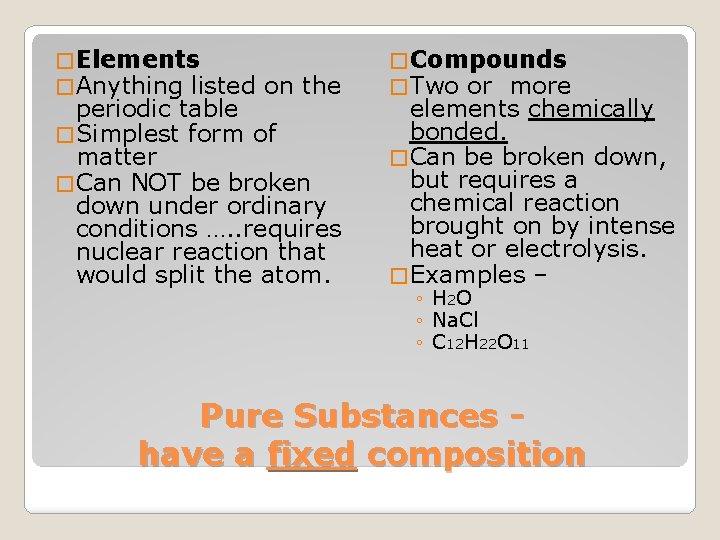
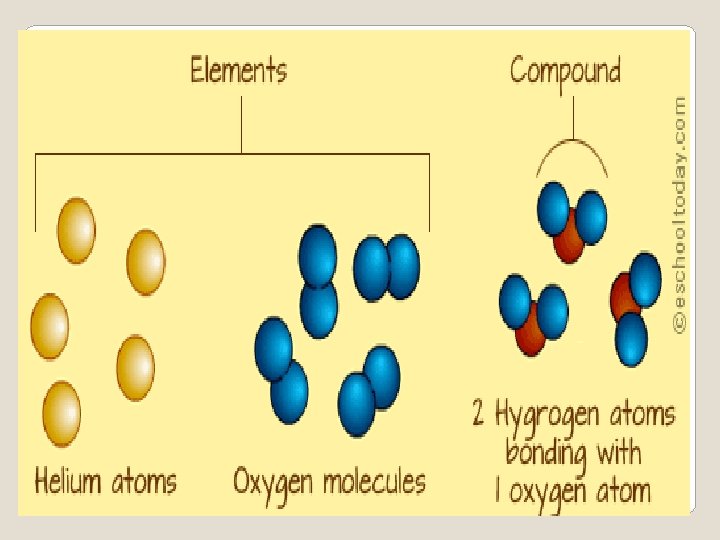
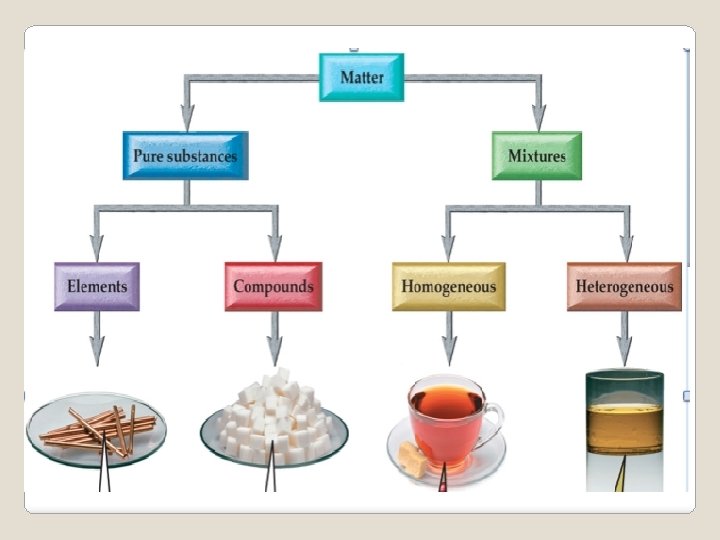
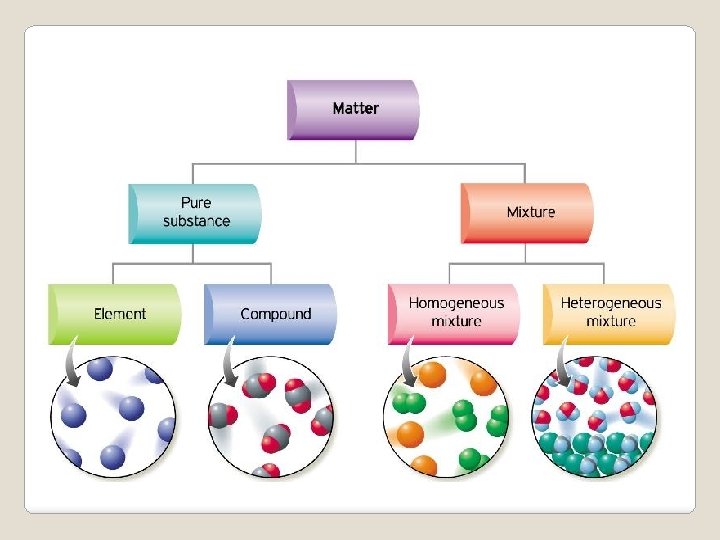
� Elements � Anything listed on the periodic table � Simplest form of matter � Can NOT be broken down under ordinary conditions …. . requires nuclear reaction that would split the atom. � Compounds � Two or more elements chemically bonded. � Can be broken down, but requires a chemical reaction brought on by intense heat or electrolysis. � Examples – ◦ H 2 O ◦ Na. Cl ◦ C 12 H 22 O 11 Pure Substances have a fixed composition
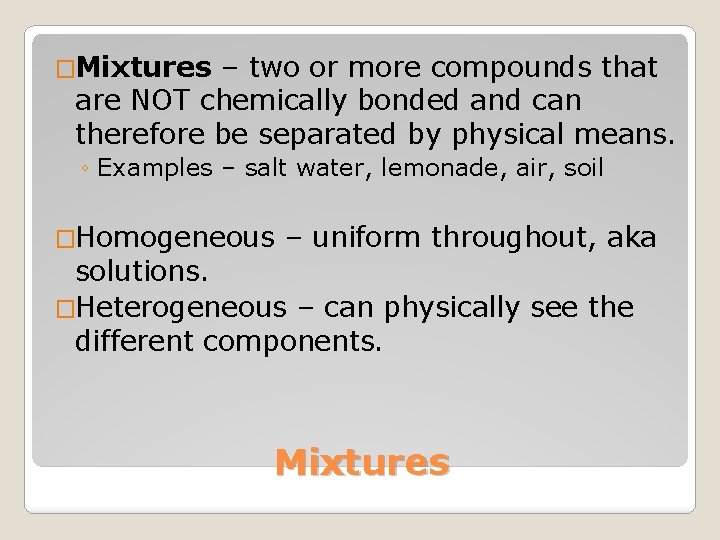
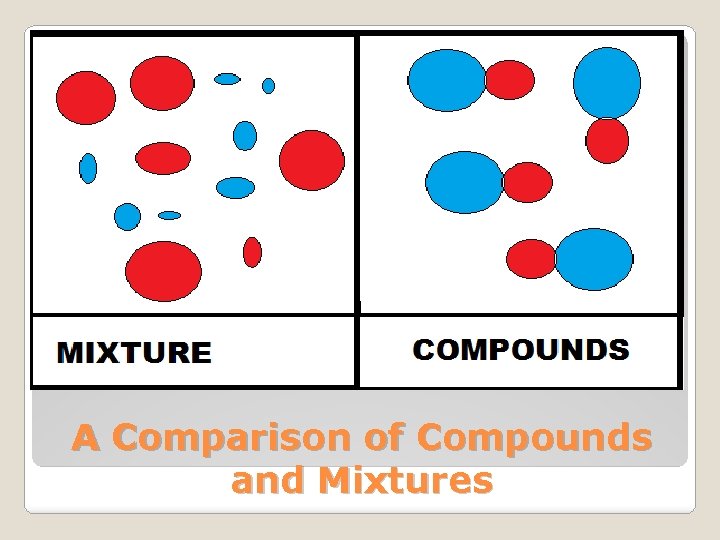
�Mixtures – two or more compounds that are NOT chemically bonded and can therefore be separated by physical means. ◦ Examples – salt water, lemonade, air, soil �Homogeneous – uniform throughout, aka solutions. �Heterogeneous – can physically see the different components. Mixtures
A Comparison of Compounds and Mixtures
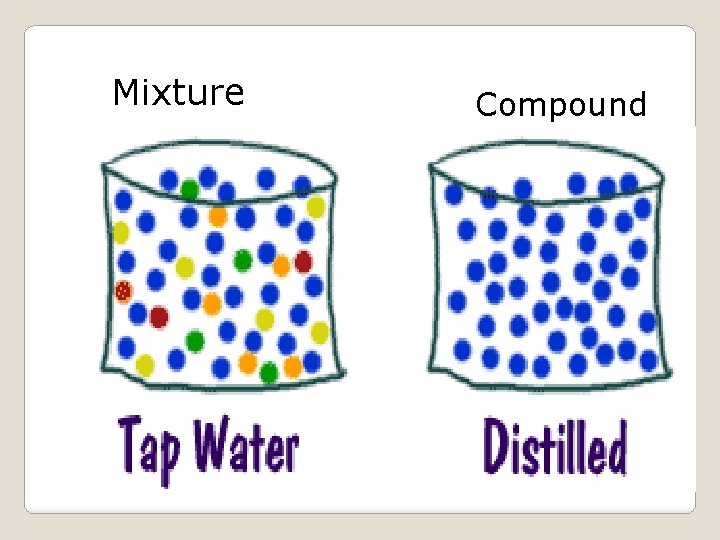
Mixture Compound
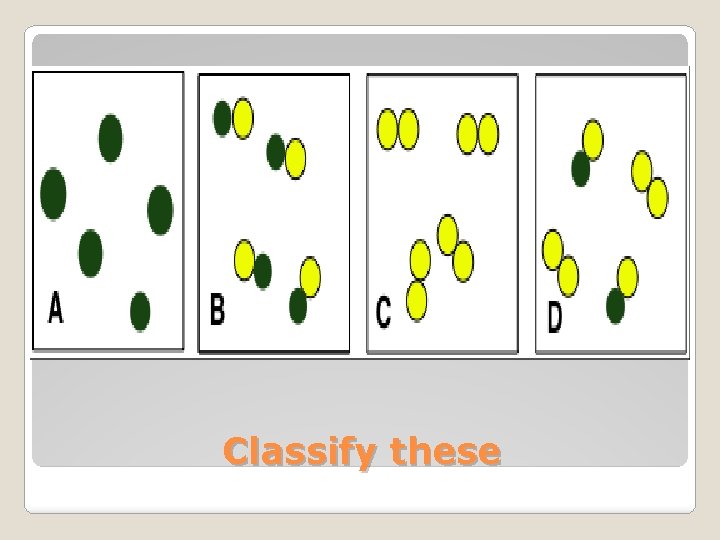
Classify these
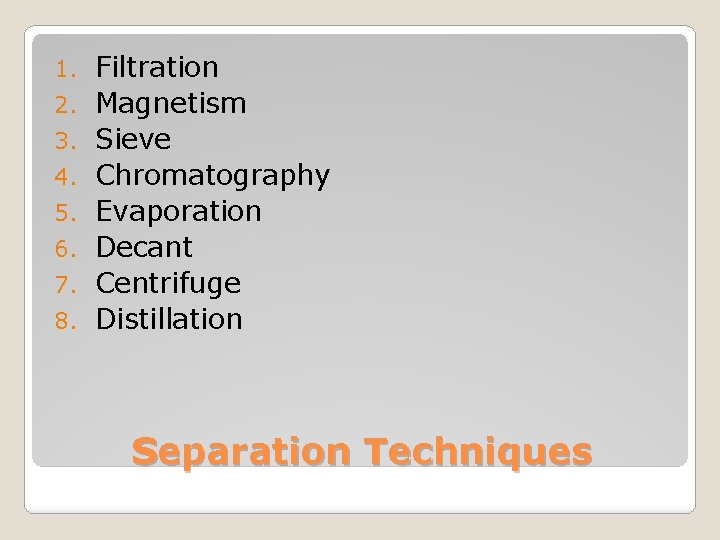
1. 2. 3. 4. 5. 6. 7. 8. Filtration Magnetism Sieve Chromatography Evaporation Decant Centrifuge Distillation Separation Techniques
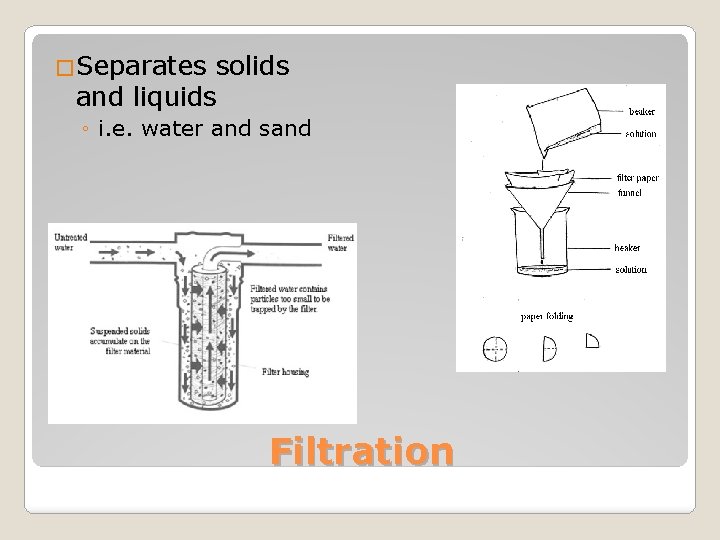
�Separates solids and liquids ◦ i. e. water and sand Filtration
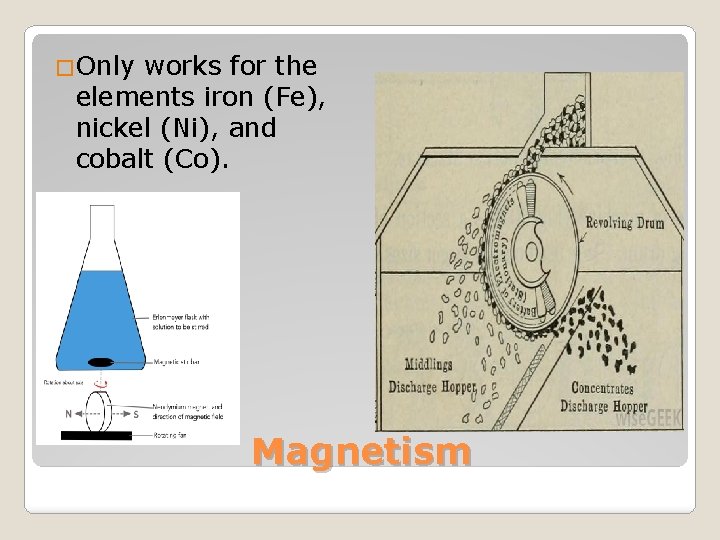
�Only works for the elements iron (Fe), nickel (Ni), and cobalt (Co). Magnetism
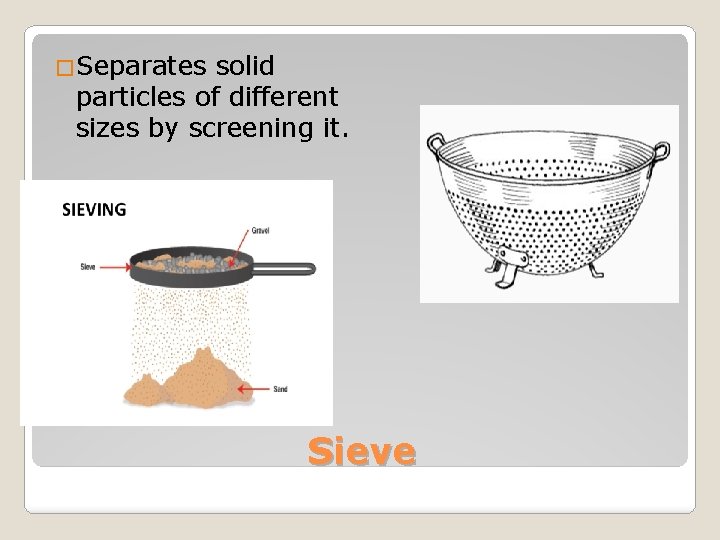
�Separates solid particles of different sizes by screening it. Sieve
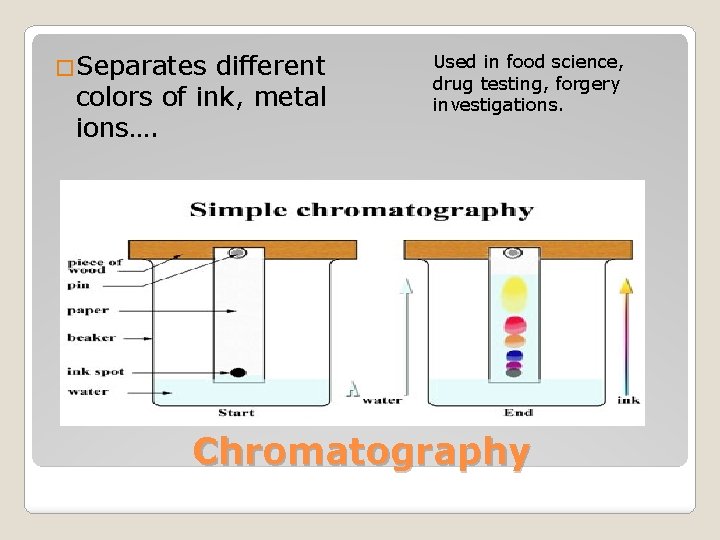
�Separates different colors of ink, metal ions…. Used in food science, drug testing, forgery investigations. Chromatography
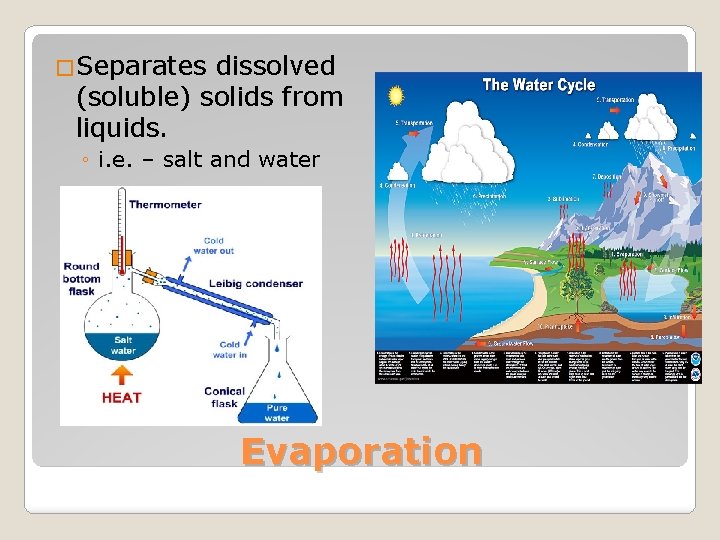
�Separates dissolved (soluble) solids from liquids. ◦ i. e. – salt and water Evaporation
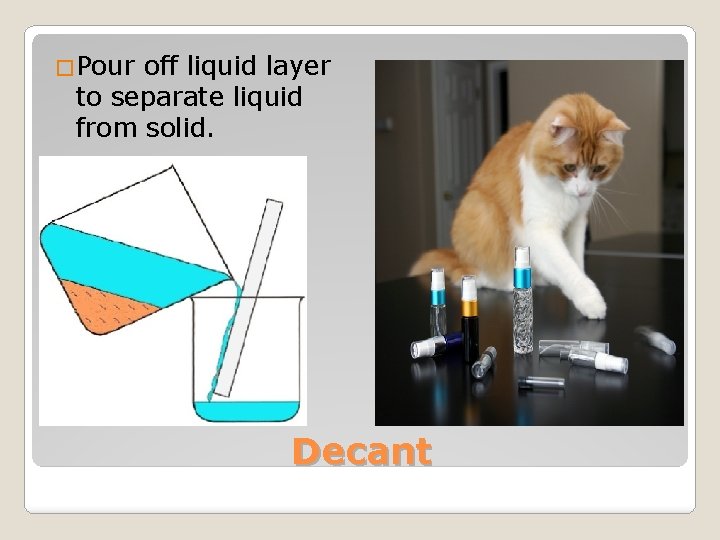
�Pour off liquid layer to separate liquid from solid. Decant
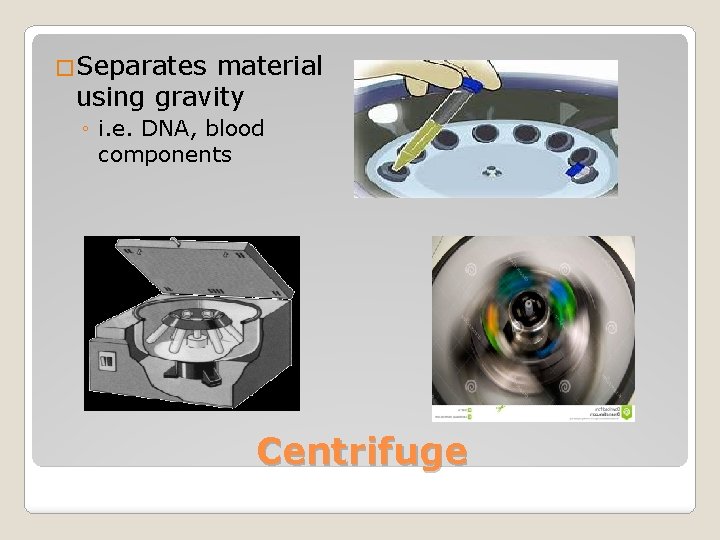
�Separates material using gravity ◦ i. e. DNA, blood components Centrifuge
� Separates liquids according to boiling points. � Chemistry behind the alcoholic beverage industry. Distillation