
Classification of Living Things Scientists estimate that there
- Slides: 28
Classification of Living Things Scientists estimate that there are between 3 million and 100 million species of organisms on Earth. Taxonomists--biologists who specialize in Taxonomists identifying and classifying life on our planet--have named approximately 1. 7 million species so far. Each year, about 13, 000 new species are added to 13, 000 the list of known organisms. So, how do scientists classify (organize) all these millions of species?
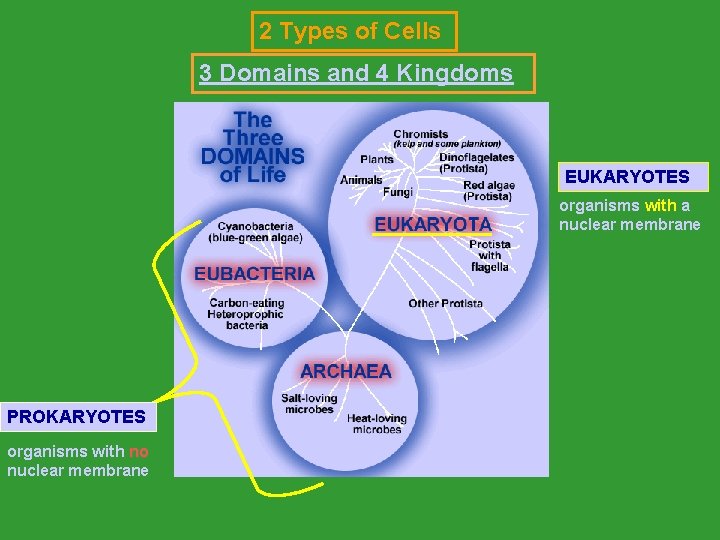
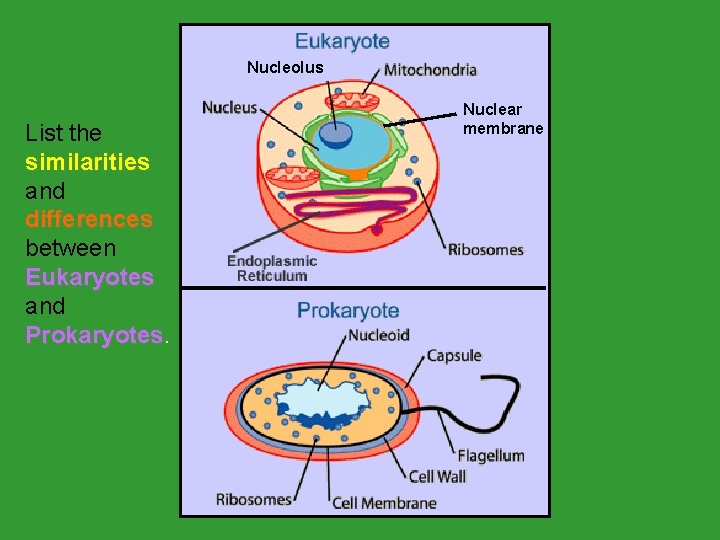
2 Types of Cells 3 Domains and 4 Kingdoms EUKARYOTES organisms with a with nuclear membrane PROKARYOTES organisms with no nuclear membrane
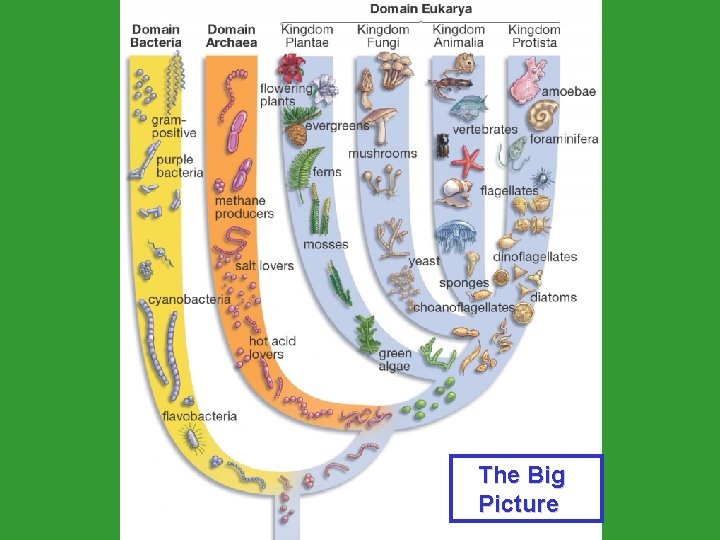
The Big Picture
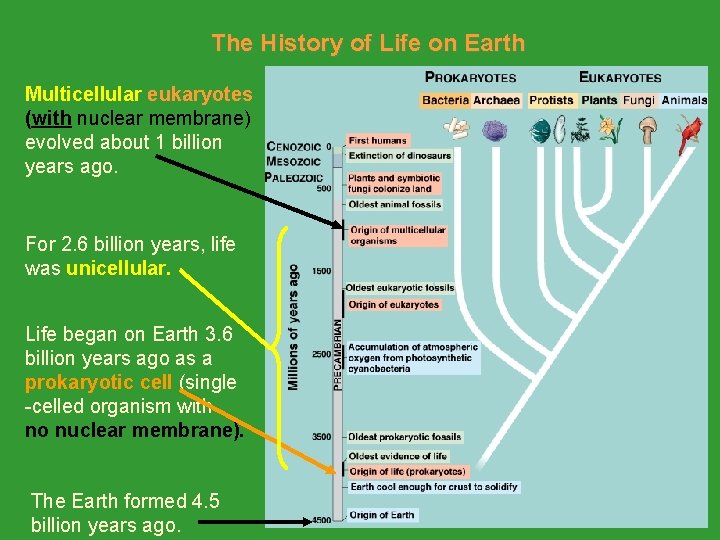
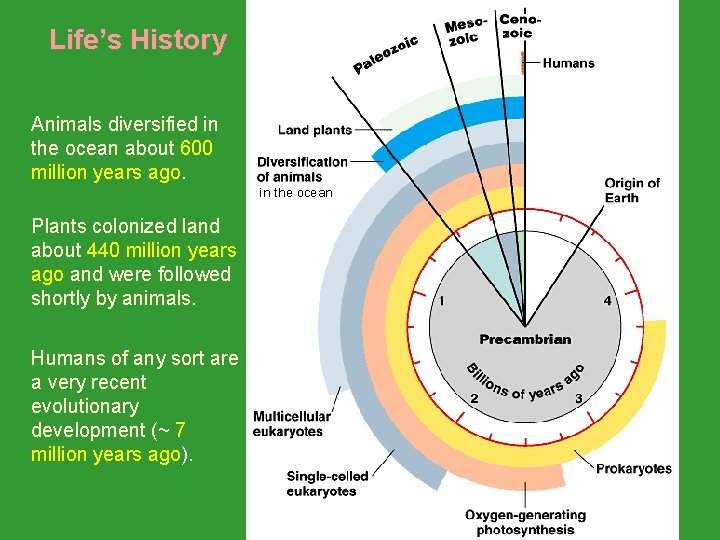
The History of Life on Earth Multicellular eukaryotes (with nuclear membrane) evolved about 1 billion years ago. For 2. 6 billion years, life was unicellular. Life began on Earth 3. 6 billion years ago as a prokaryotic cell (single -celled organism with no nuclear membrane). The Earth formed 4. 5 billion years ago.
Nucleolus List the similarities and differences between Eukaryotes and Prokaryotes Nuclear membrane
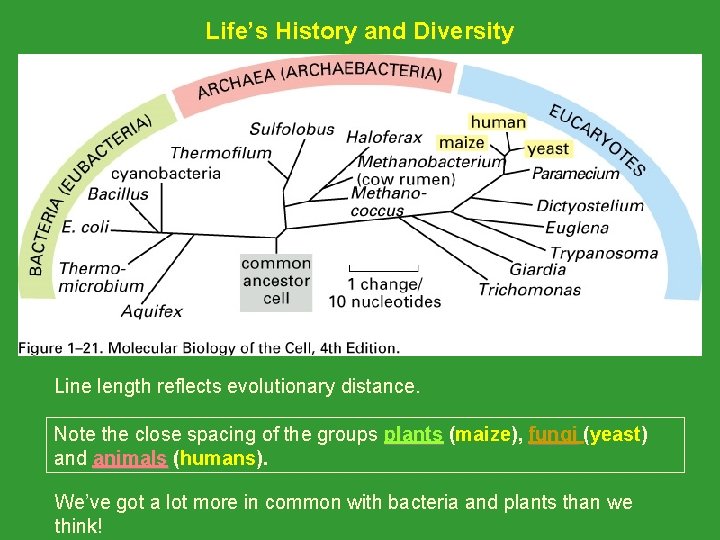
Life’s History and Diversity Line length reflects evolutionary distance. Note the close spacing of the groups plants (maize), fungi (yeast) plants fungi and animals (humans). animals We’ve got a lot more in common with bacteria and plants than we think!
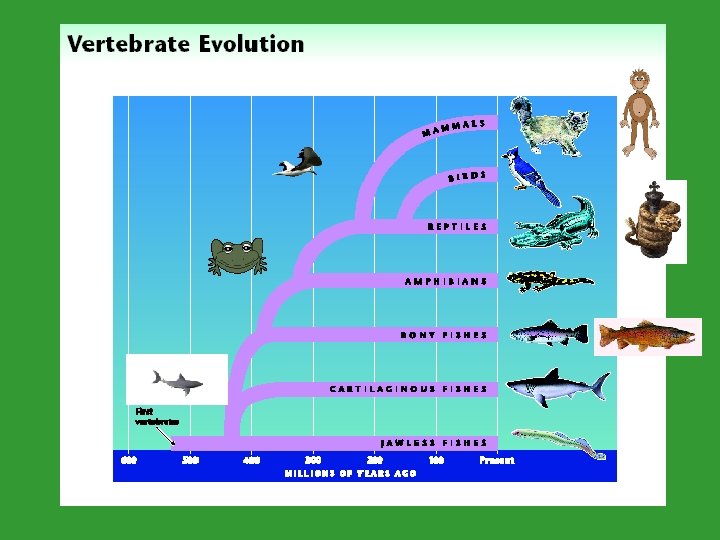
Life’s History Animals diversified in the ocean about 600 million years ago. in the ocean Plants colonized land about 440 million years ago and were followed shortly by animals. Humans of any sort are a very recent evolutionary development (~ 7 million years ago).
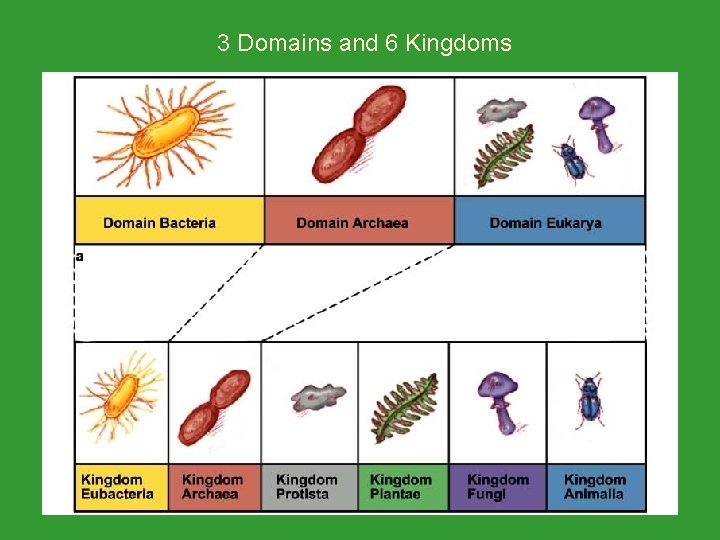
3 Domains and 6 Kingdoms
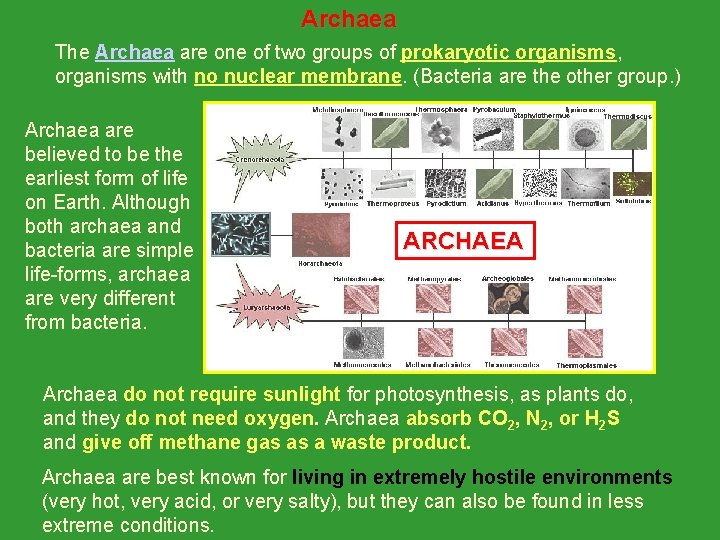
Archaea The Archaea are one of two groups of prokaryotic organisms, organisms with no nuclear membrane. (Bacteria are the other group. ) Archaea are believed to be the earliest form of life on Earth. Although both archaea and bacteria are simple life-forms, archaea are very different from bacteria. ARCHAEA Archaea do not require sunlight for photosynthesis, as plants do, and they do not need oxygen. Archaea absorb CO 2, N 2, or H 2 S and give off methane gas as a waste product. Archaea are best known for living in extremely hostile environments (very hot, very acid, or very salty), but they can also be found in less extreme conditions.
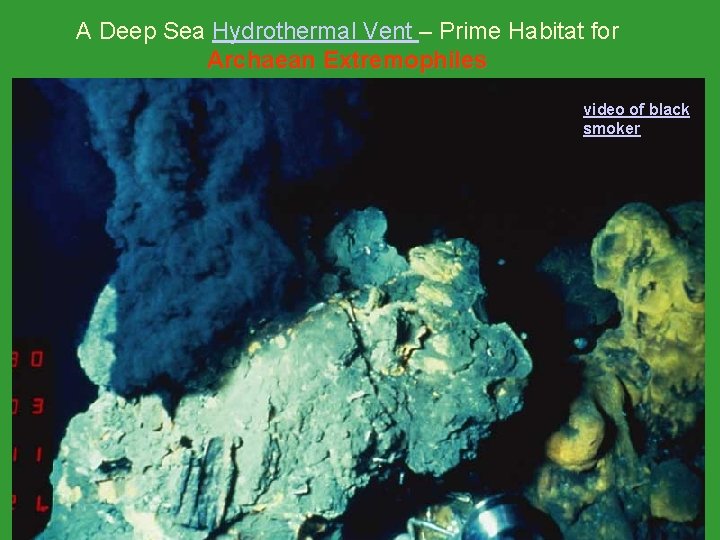
A Deep Sea Hydrothermal Vent – Prime Habitat for Archaean Extremophiles video of black smoker
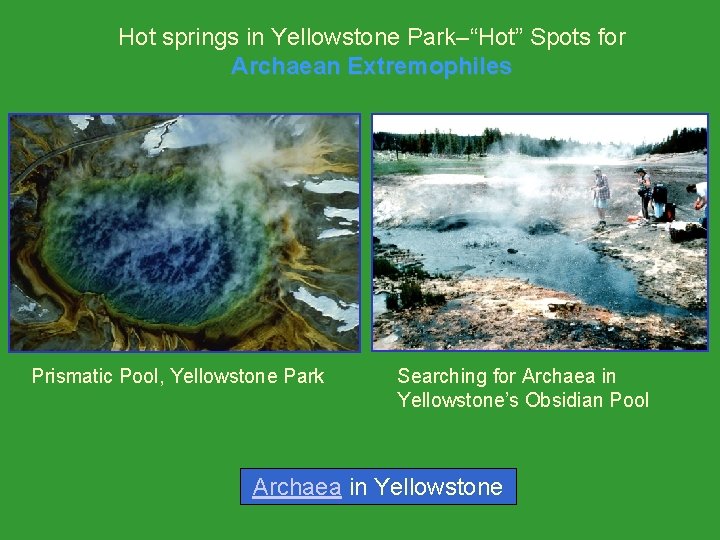
Hot springs in Yellowstone Park–“Hot” Spots for Archaean Extremophiles Prismatic Pool, Yellowstone Park Searching for Archaea in Yellowstone’s Obsidian Pool Archaea in Yellowstone
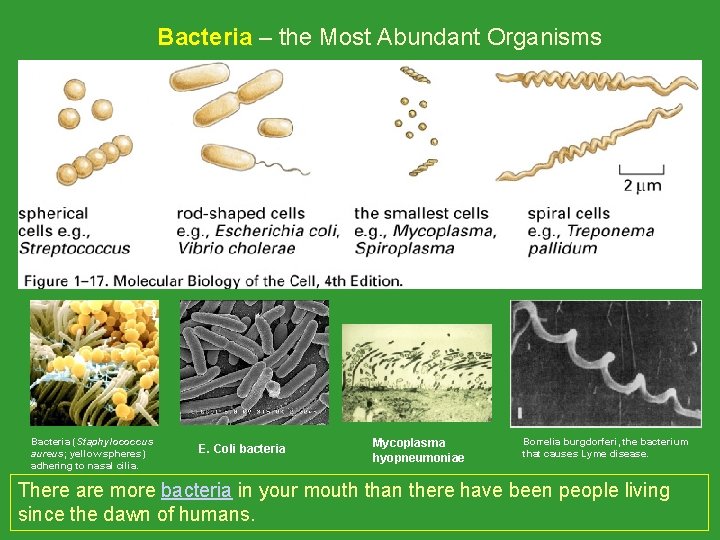
Bacteria – the Most Abundant Organisms Bacteria (Staphylococcus aureus; yellow spheres) adhering to nasal cilia. E. Coli bacteria Mycoplasma hyopneumoniae Borrelia burgdorferi, the bacterium that causes Lyme disease. There are more bacteria in your mouth than there have been people living since the dawn of humans.
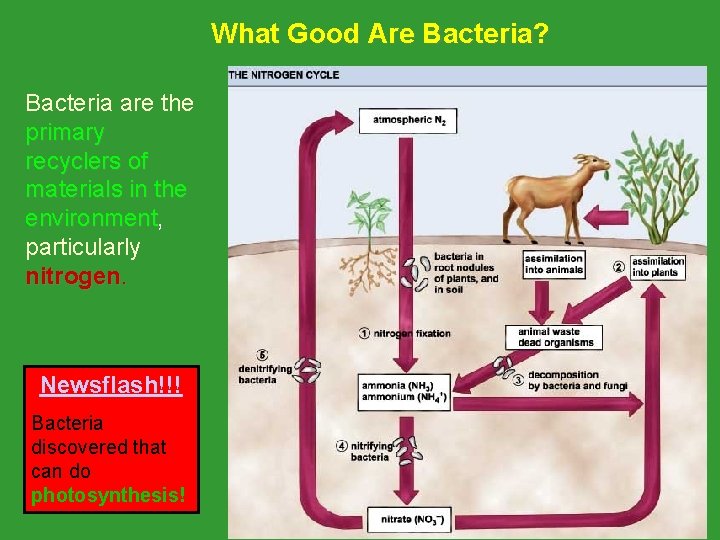
What Good Are Bacteria? Bacteria are the primary recyclers of materials in the environment, environment particularly nitrogen. Newsflash!!! Bacteria discovered that can do photosynthesis!
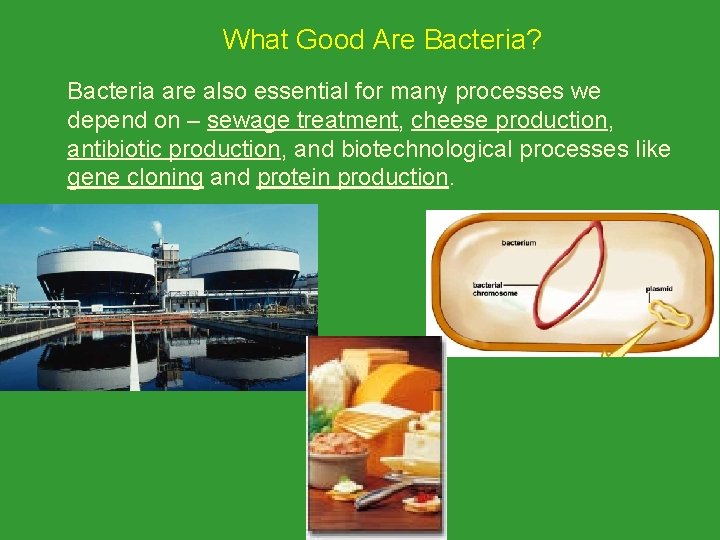
What Good Are Bacteria? Bacteria are also essential for many processes we depend on – sewage treatment, cheese production, antibiotic production, and biotechnological processes like gene cloning and protein production.
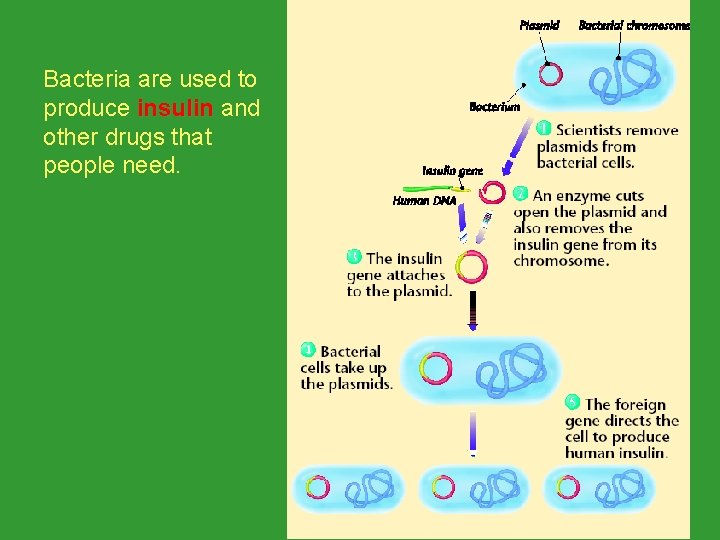
Bacteria are used to produce insulin and insulin other drugs that people need.
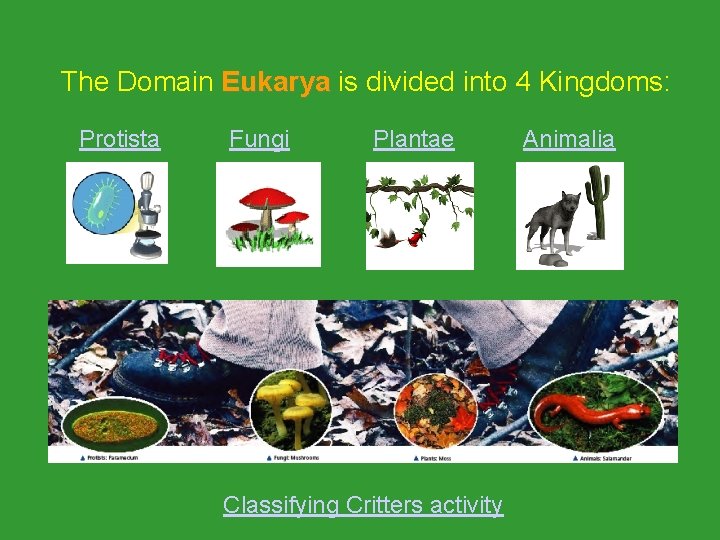
The Domain Eukarya is divided into 4 Kingdoms: Eukarya Protista Fungi Plantae Classifying Critters activity Animalia
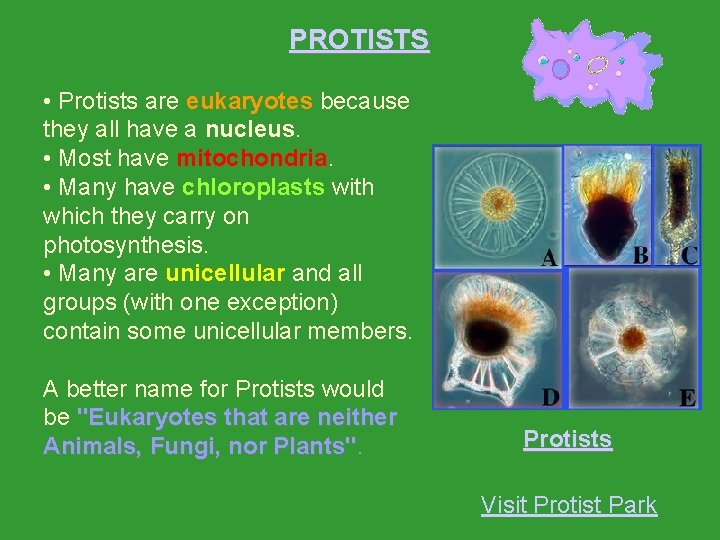
PROTISTS • Protists are eukaryotes because they all have a nucleus. • Most have mitochondria. • Many have chloroplasts with which they carry on photosynthesis. • Many are unicellular and all groups (with one exception) contain some unicellular members. A better name for Protists would be "Eukaryotes that are neither Animals, Fungi, nor Plants". Protists Visit Protist Park
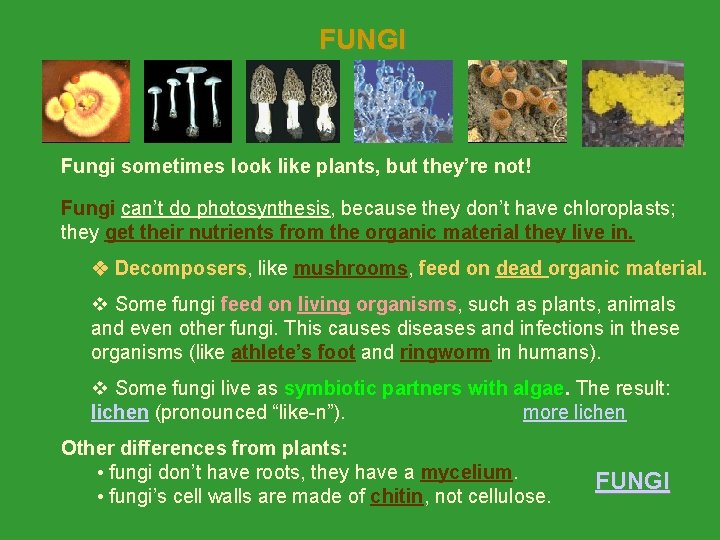
FUNGI Fungi sometimes look like plants, but they’re not! Fungi can’t do photosynthesis, because they don’t have chloroplasts; they get their nutrients from the organic material they live in. Decomposers, like mushrooms, feed on dead organic material. Some fungi feed on living organisms, such as plants, animals and even other fungi. This causes diseases and infections in these organisms (like athlete’s foot and ringworm in humans). Some fungi live as symbiotic partners with algae. The result: lichen (pronounced “like-n”). more lichen Other differences from plants: • fungi don’t have roots, they have a mycelium. • fungi’s cell walls are made of chitin, not cellulose. FUNGI
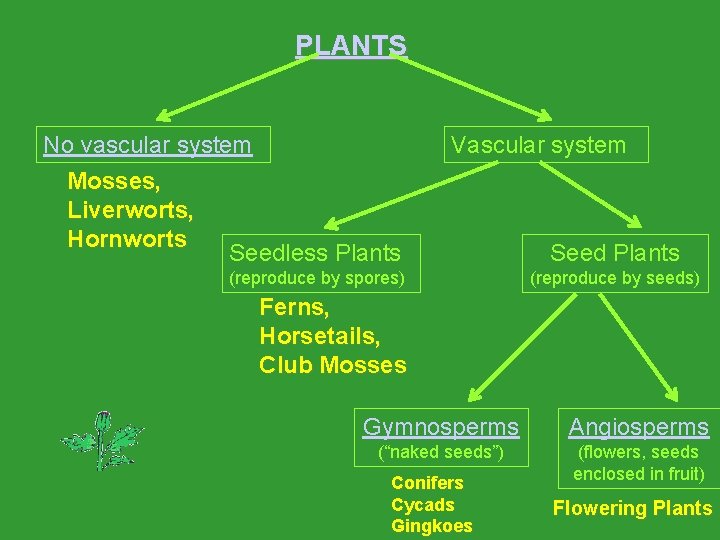
PLANTS No vascular system Mosses, Liverworts, Hornworts Seedless Plants Vascular system (reproduce by spores) Seed Plants (reproduce by seeds) Ferns, Horsetails, Club Mosses Gymnosperms Angiosperms (“naked seeds”) (flowers, seeds enclosed in fruit) Conifers Cycads Gingkoes Flowering Plants
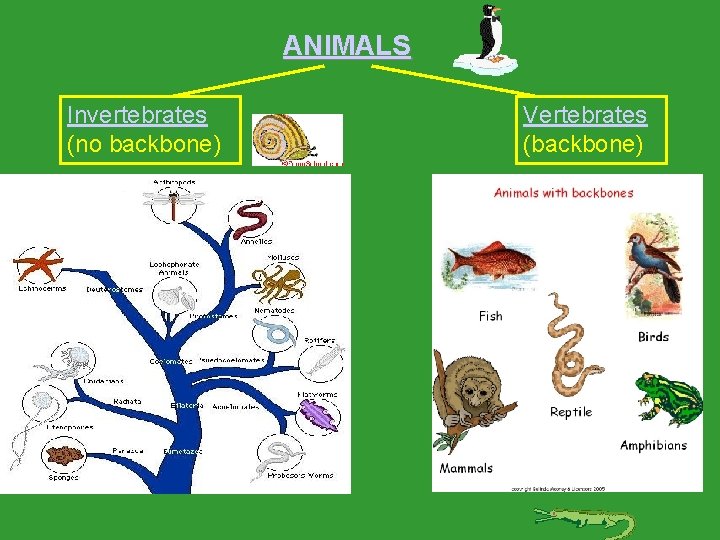
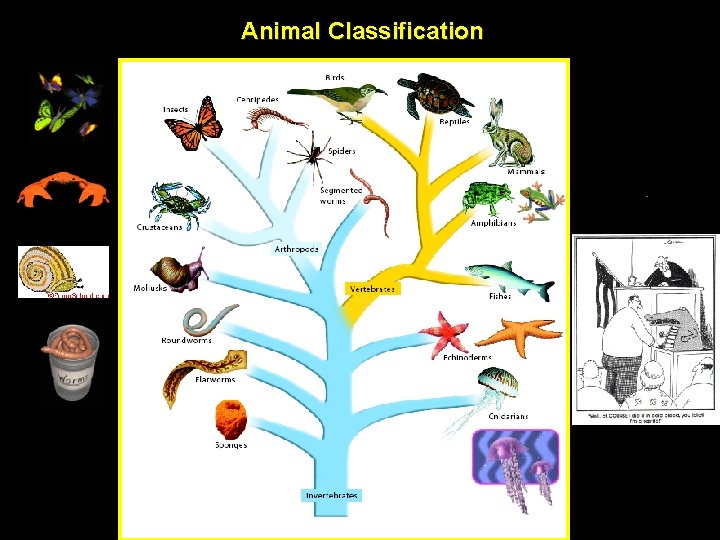
ANIMALS Invertebrates (no backbone) Vertebrates (backbone)
Animal Classification
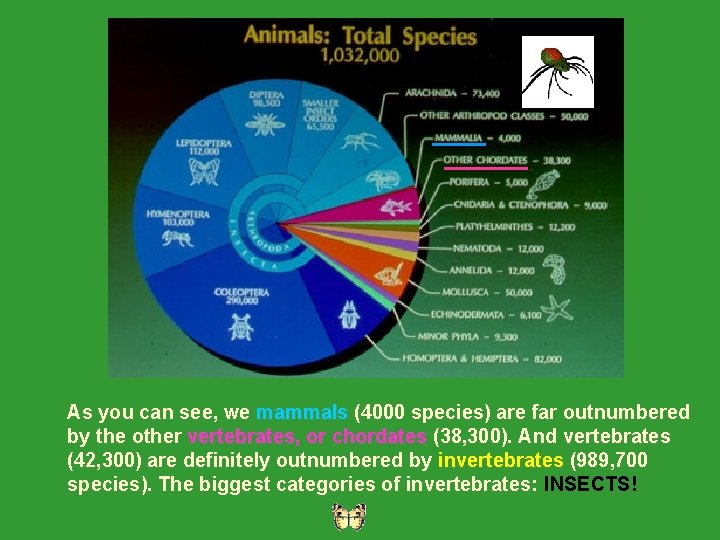
As you can see, we mammals (4000 species) are far outnumbered mammals by the other vertebrates, or chordates (38, 300). And vertebrates, or chordates vertebrates (42, 300) are definitely outnumbered by invertebrates (989, 700 invertebrates species). The biggest categories of invertebrates: INSECTS!
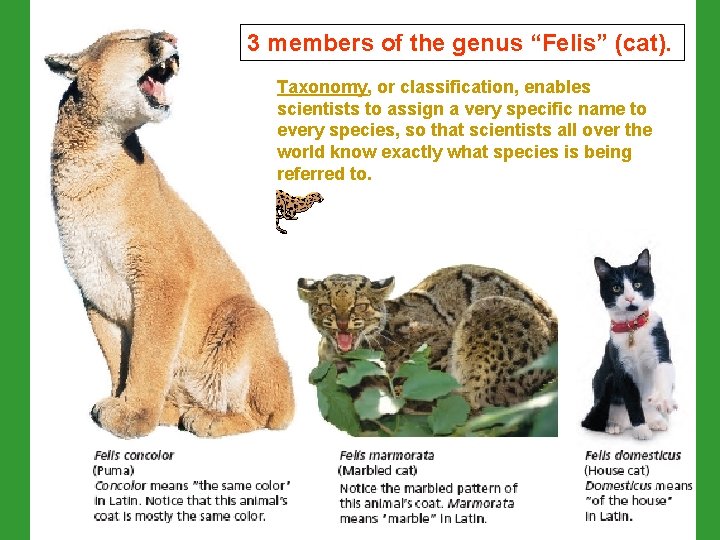
3 members of the genus “Felis” (cat). Taxonomy, or classification, enables scientists to assign a very specific name to every species, so that scientists all over the world know exactly what species is being referred to.
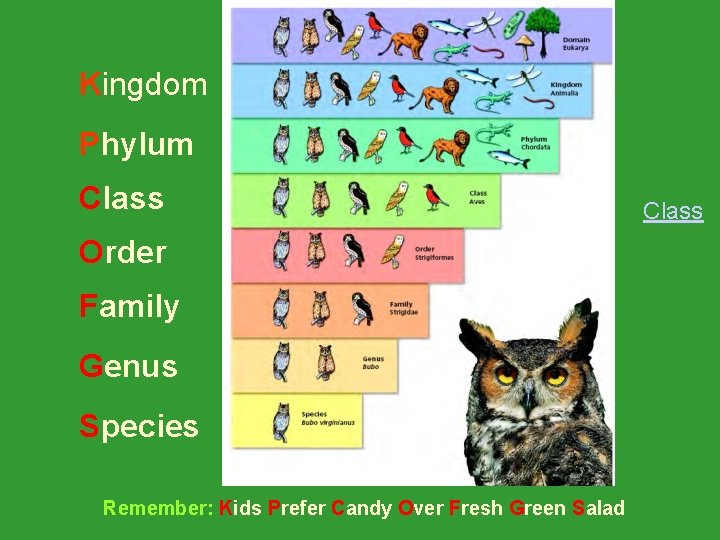
Kingdom Phylum Class Order Family Genus Species Remember: Kids Prefer Candy Over Fresh Green Salad Class
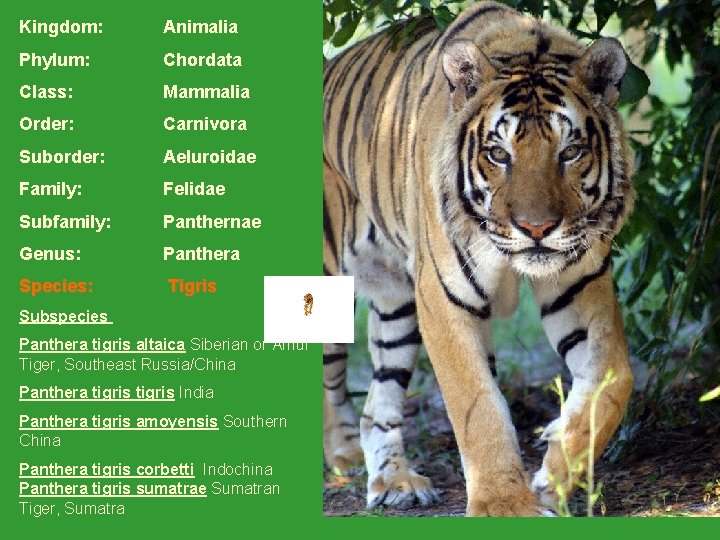
Kingdom: Animalia Phylum: Chordata Class: Mammalia Order: Carnivora Suborder: Aeluroidae Family: Felidae Subfamily: Panthernae Genus: Panthera Species: Tigris Species: Tigris Subspecies Panthera tigris altaica Siberian or Amur Tiger, Southeast Russia/China Panthera tigris India Panthera tigris amoyensis Southern China Panthera tigris corbetti Indochina Panthera tigris sumatrae Sumatran Tiger, Sumatra
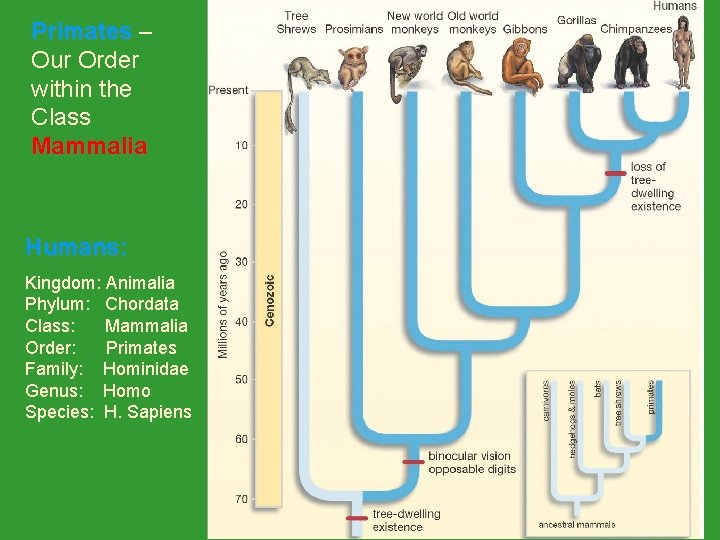
Primates – Primates Our Order within the Class Mammalia Humans: Kingdom: Animalia Phylum: Chordata Class: Mammalia Order: Primates Family: Hominidae Genus: Homo Species: H. Sapiens
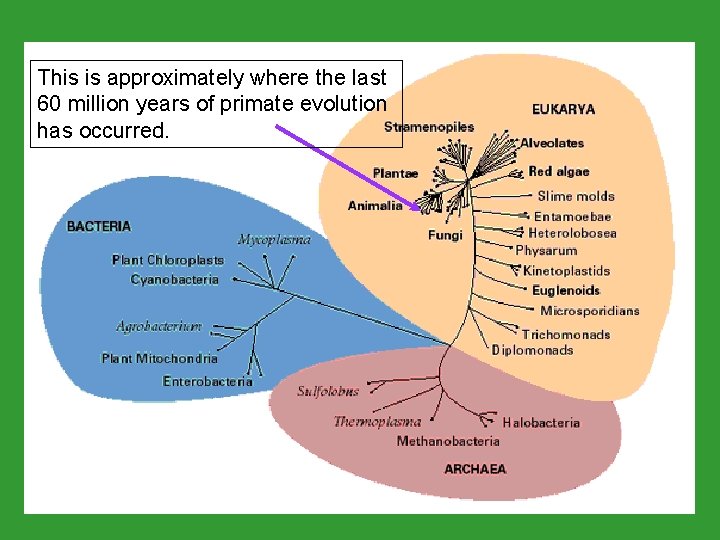
This is approximately where the last 60 million years of primate evolution has occurred.