
Classification of Living Things Review REMEMBER BIODIVERSITY all
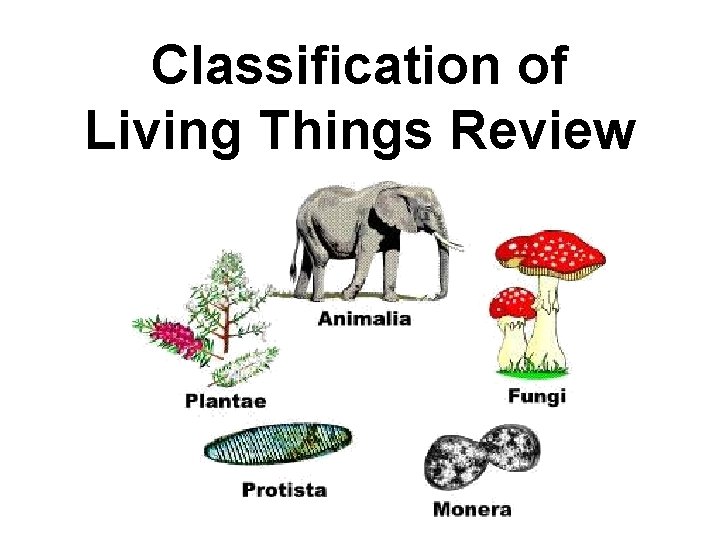
Classification of Living Things Review
REMEMBER BIODIVERSITY _______ all the living things in an total of ________ ecosystem SPECIES ______ population of organisms that share similar ______ can breed characteristics ______ and ____ with each other
Biologists have identified and named 2 million species over__________ so far. 2 -100 million Estimates = between _______ species yet be discovered
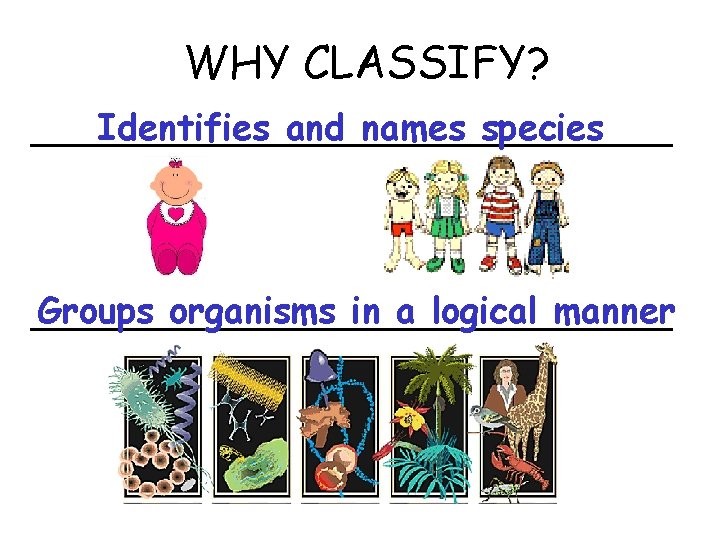
WHY CLASSIFY? Identifies and names species ________________ Groups organisms in a logical manner ________________
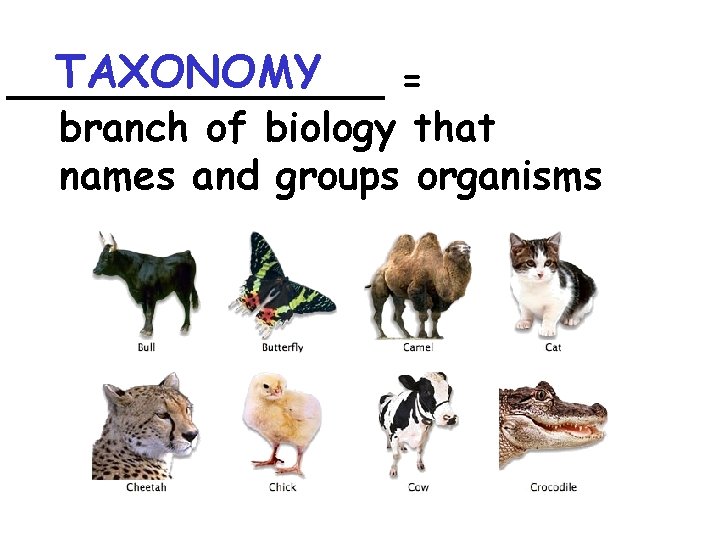
TAXONOMY ________ = branch of biology that names and groups organisms
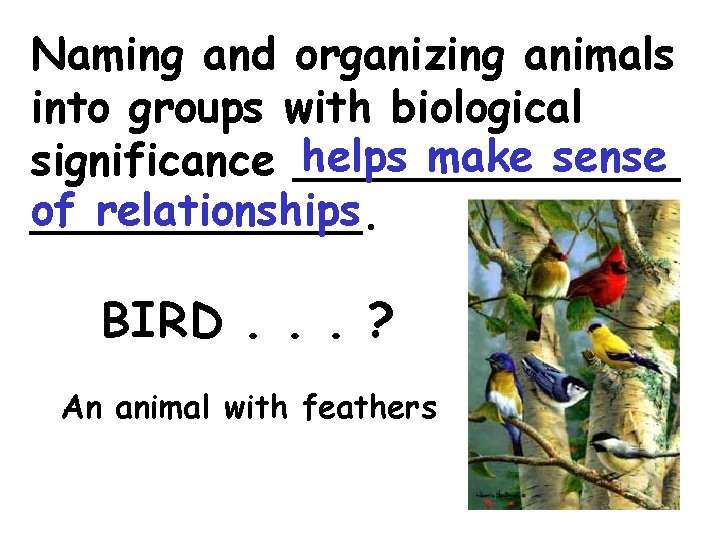
Naming and organizing animals into groups with biological helps make sense significance _______ of relationships ______. BIRD. . . ? An animal with feathers
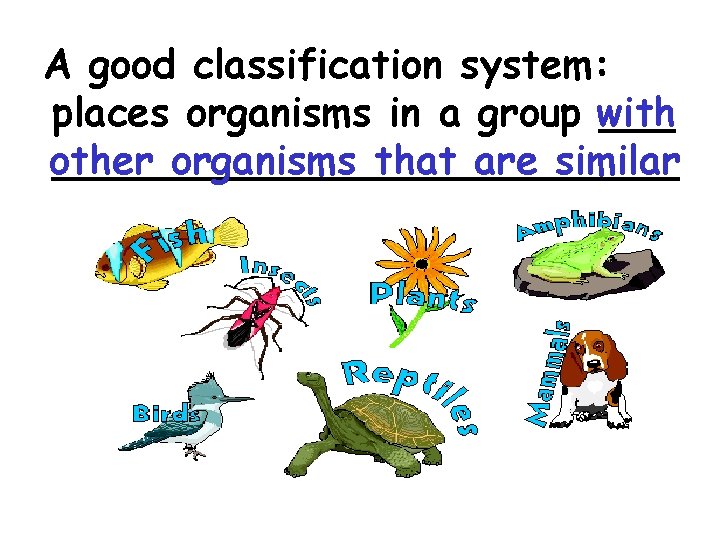
A good classification system: places organisms in a group with ______________ other organisms that are similar
A good classification system: Uses names that are UNIQUE ______ CHANGE as new data is discovered Can ______ RELATIONSHIPS of organisms Shows _______
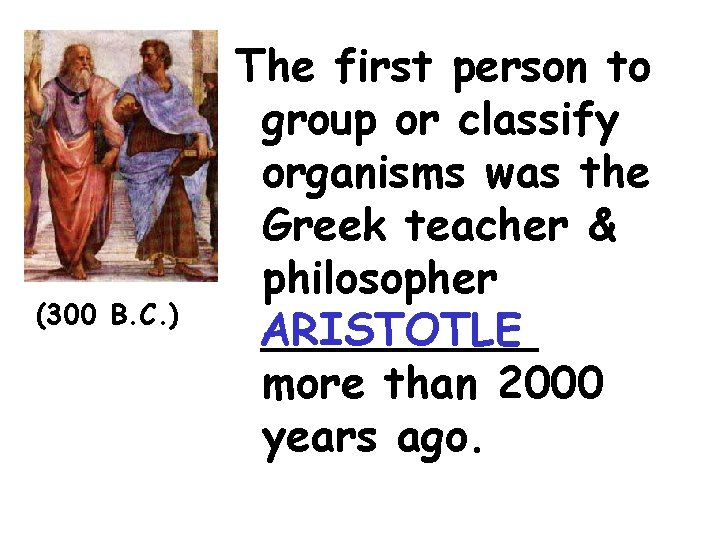
(300 B. C. ) The first person to group or classify organisms was the Greek teacher & philosopher _____ ARISTOTLE more than 2000 years ago.
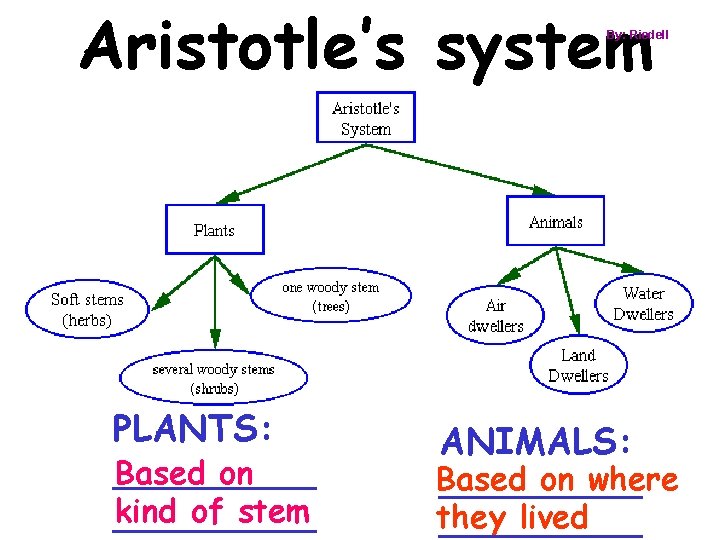
Aristotle’s system By: Riedell PLANTS: _____ Based on kind of stem _____ ANIMALS: Based on where _____ they lived _____
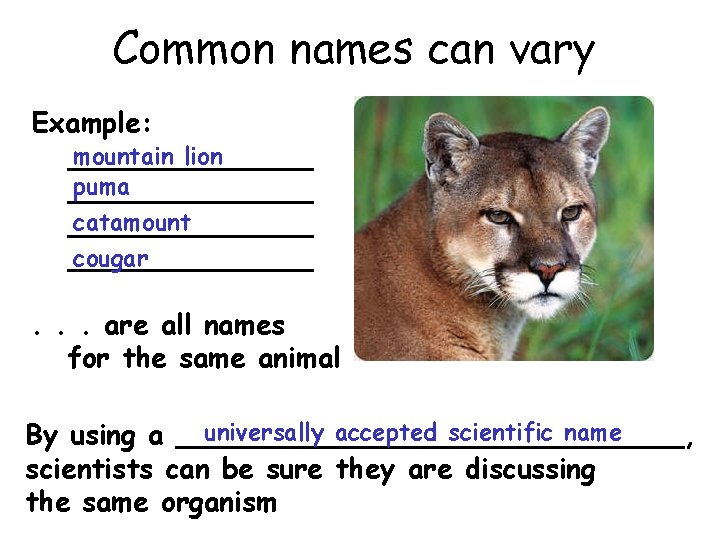
Common names can vary Example: mountain lion _______ puma _______ catamount _______ cougar _______. . . are all names for the same animal universally accepted scientific name By using a _______________, scientists can be sure they are discussing the same organism
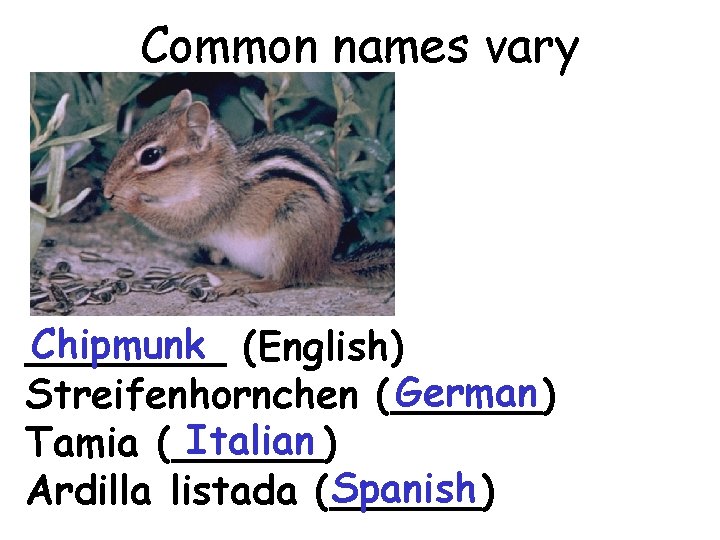
Common names vary Chipmunk (English) ____ German Streifenhornchen (______) Italian Tamia (______) Spanish Ardilla listada (______)
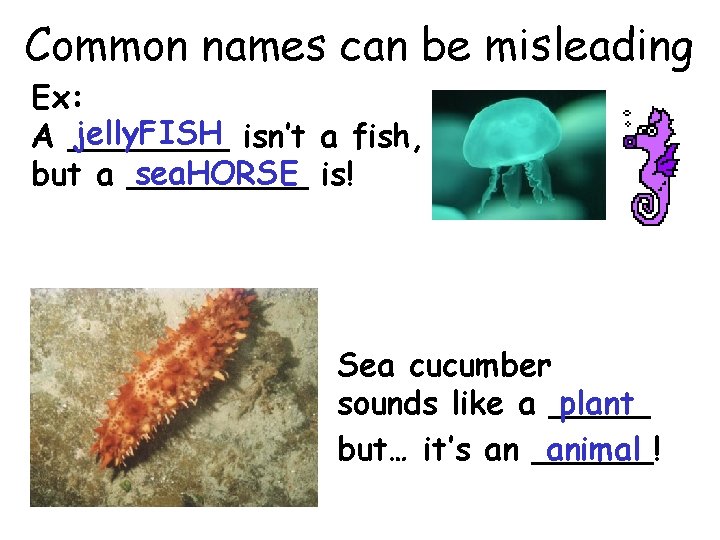
Common names can be misleading Ex: jelly. FISH isn’t a fish, A ____ sea. HORSE is! but a _____ Sea cucumber plant sounds like a _____ animal but… it’s an ______!
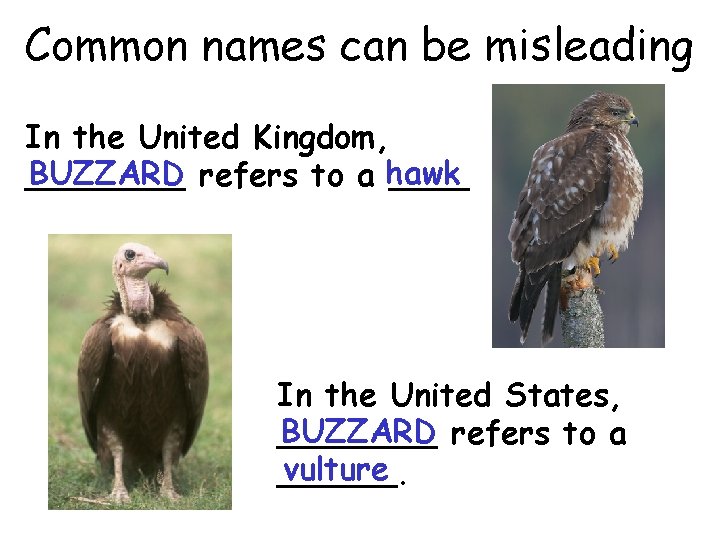
Common names can be misleading In the United Kingdom, BUZZARD refers to a hawk ____ In the United States, BUZZARD refers to a ____ vulture ______.
th 19 By mid century, scientists recognized that using common names was confusing. Scientists agreed to use Latin and Greek to give a ______ single name to each species.
EXAMPLE: RED OAK Quercus foliis obtuse-sinuatis setaceo-mucronatis “oak with deeply divided leaves with deep blunt lobes bearing hair-like bristles” PROBLEMS: Names too hard and long to remember! Different scientists described different characteristics.
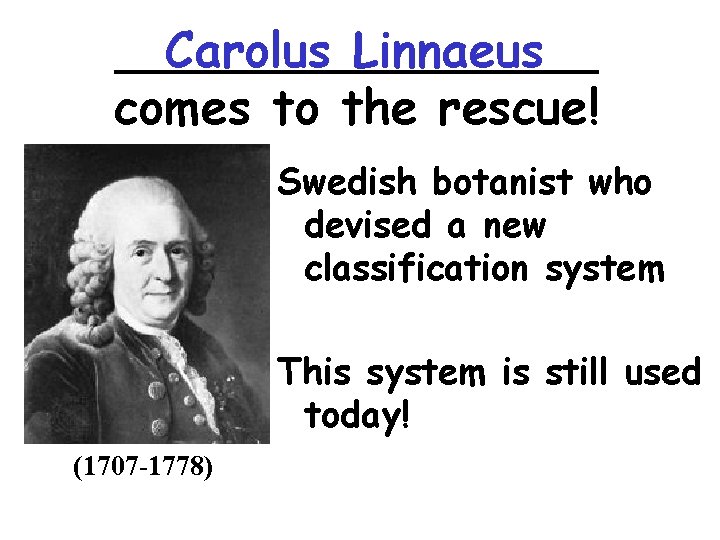
________ Carolus Linnaeus comes to the rescue! Swedish botanist who devised a new classification system This system is still used today! (1707 -1778)
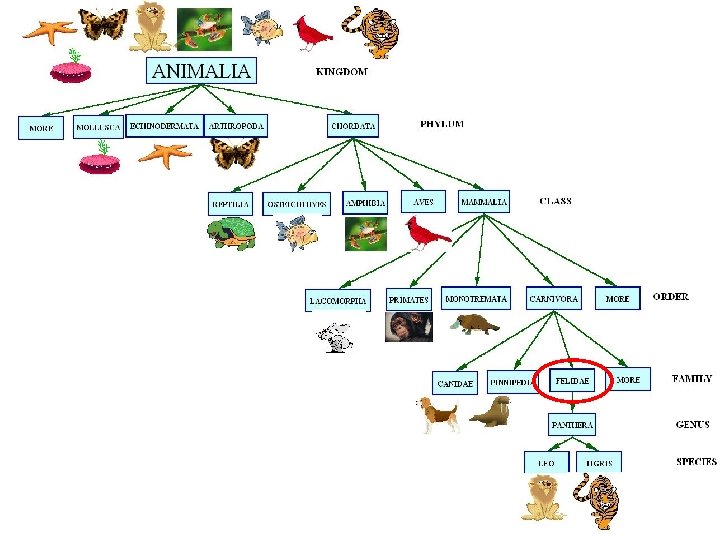
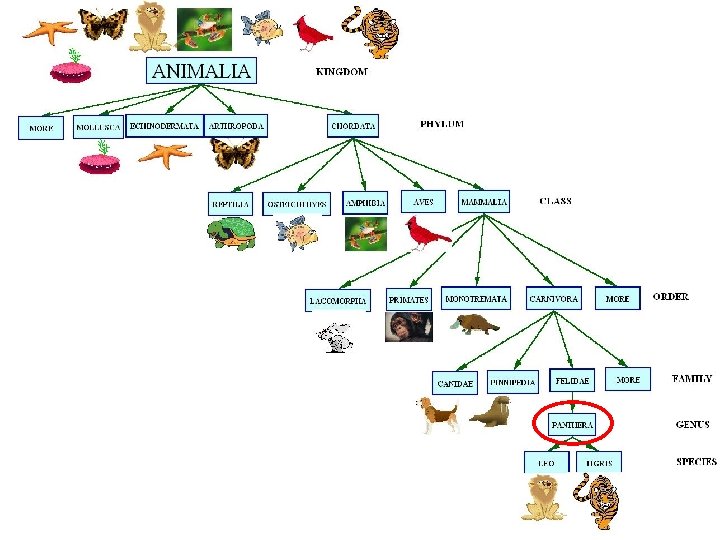
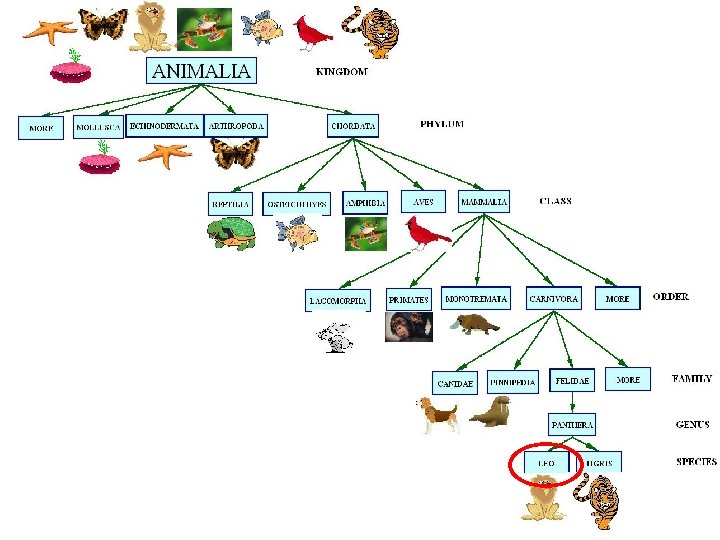
Linnaeus’s System Organisms are grouped in a hierarchy of 7 different taxonomic levels TAXONS OR _____ The practice of assigning each organism a two part scientific name = BINOMIAL NOMENCLATURE _______________
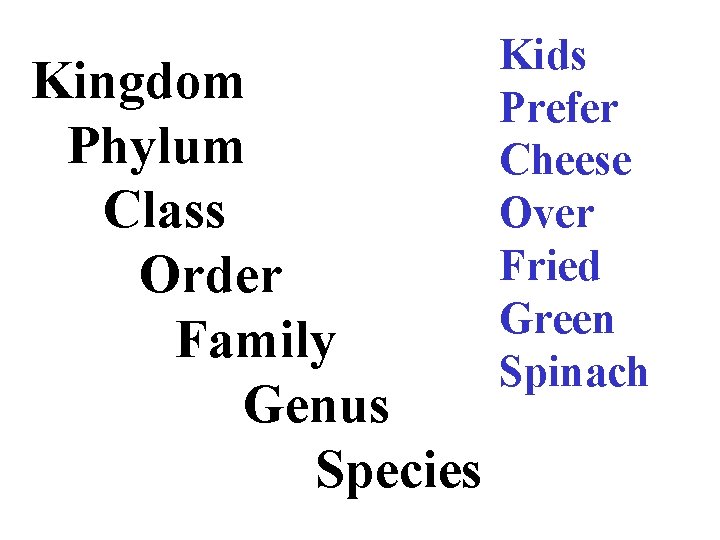
Kingdom Phylum Class Order Family Genus Species Kids Prefer Cheese Over Fried Green Spinach
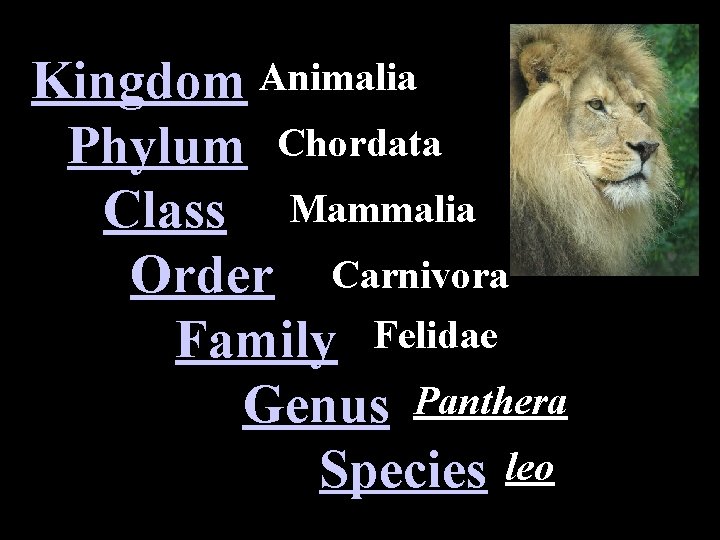
Kingdom Animalia Phylum Chordata Class Mammalia Order Carnivora Family Felidae Genus Panthera Species leo
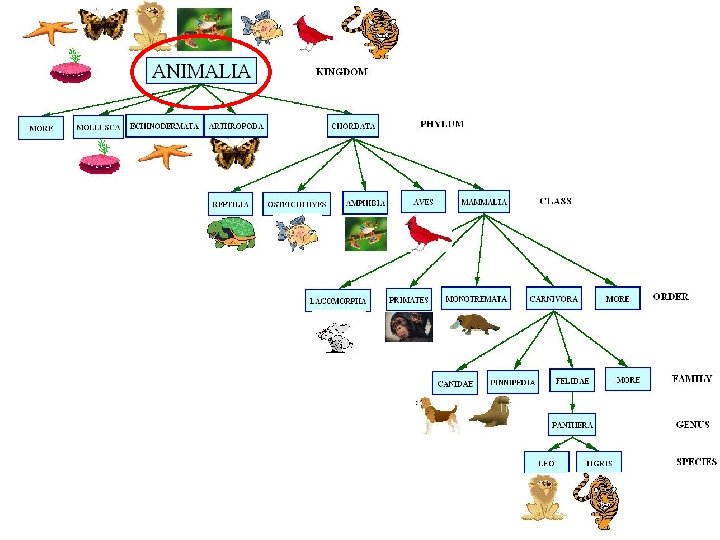
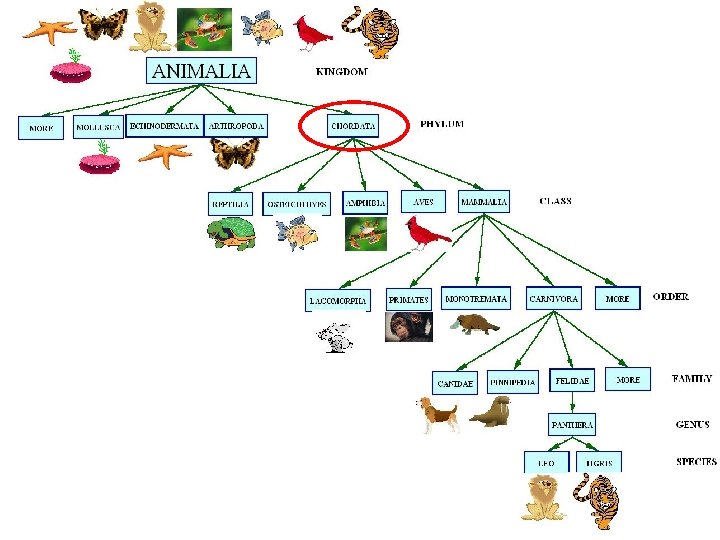
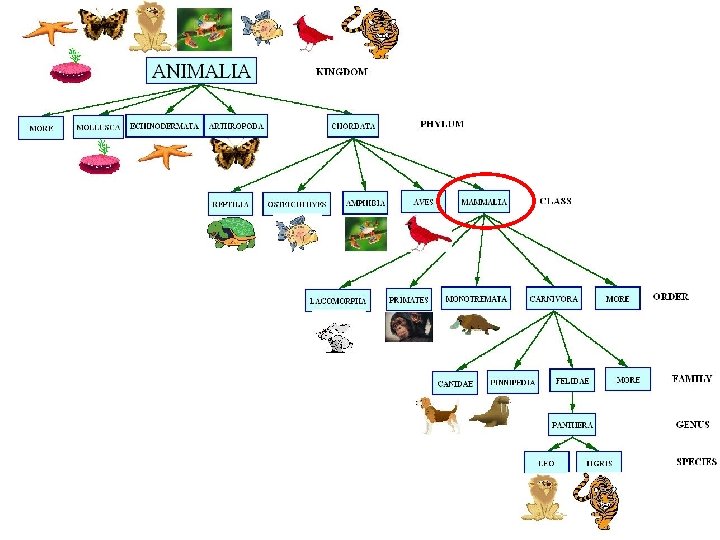
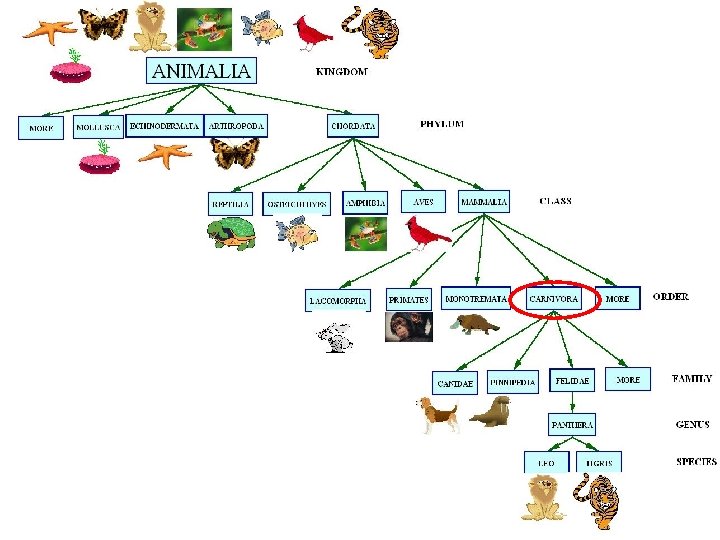
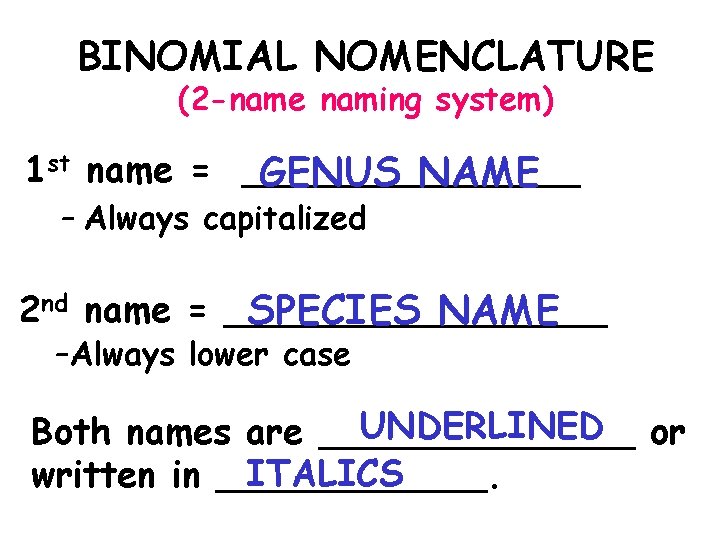
BINOMIAL NOMENCLATURE (2 -name naming system) 1 st name = ________ GENUS NAME – Always capitalized 2 nd name = _________ SPECIES NAME –Always lower case UNDERLINED or Both names are _______ ITALICS written in ______.

GENUS = group of closely related species GENUS = _____ Ursus (Includes many kinds of bears) Ursus arctos Ursus maritimus Ursus americanis unique to each kind of bear SPECIES = ___________
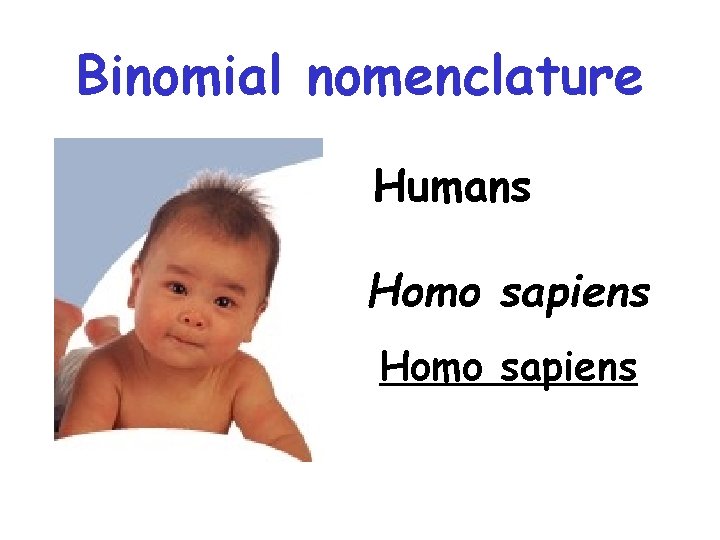
Binomial nomenclature Humans Homo sapiens
In a way, organisms determine who belongs to their species by choosing with whom they MATE will ______! Taxonomic groups are “invented” by scientists to group organisms with similar characteristics ______.
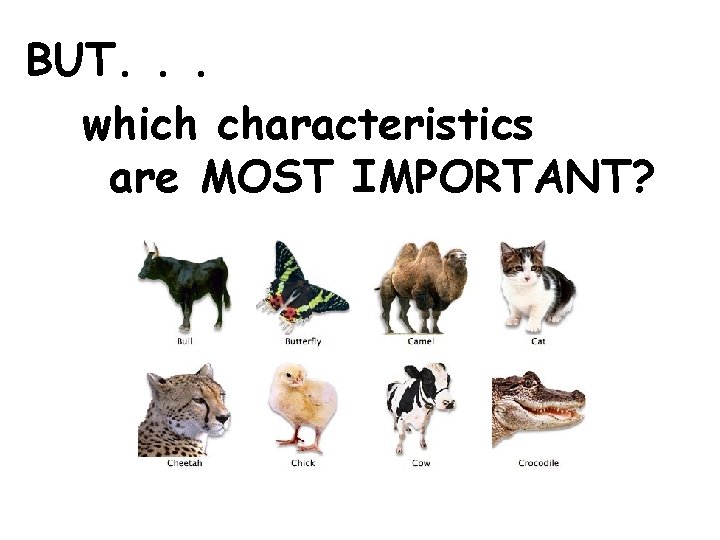
BUT. . . which characteristics are MOST IMPORTANT?
dolphin be grouped Should a ______ fish because it ___ has with ____ fins and lives in water _________? mammals because it OR with _______ breathes air and makes milk ____________ for its young?
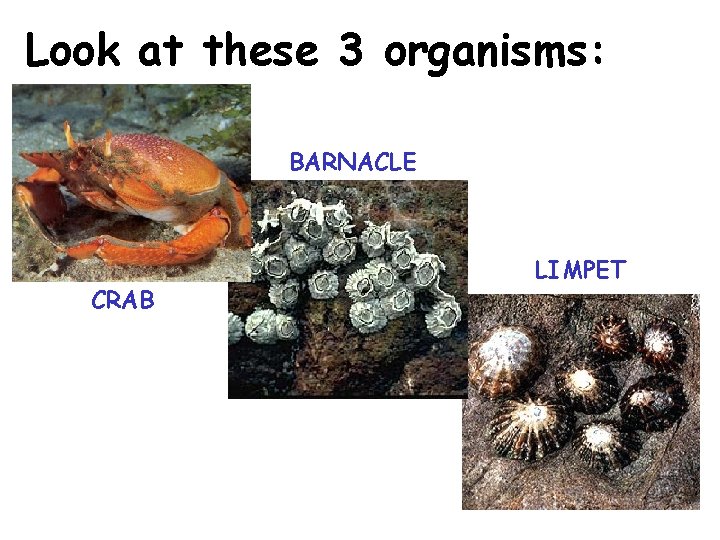
Look at these 3 organisms: BARNACLE CRAB LIMPET
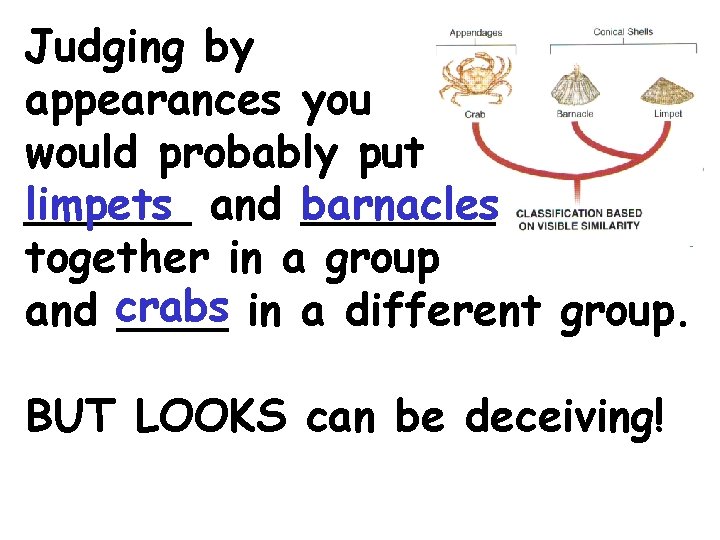
Judging by appearances you would probably put limpets ______ and barnacles _______ together in a group and crabs ____ in a different group. BUT LOOKS can be deceiving!
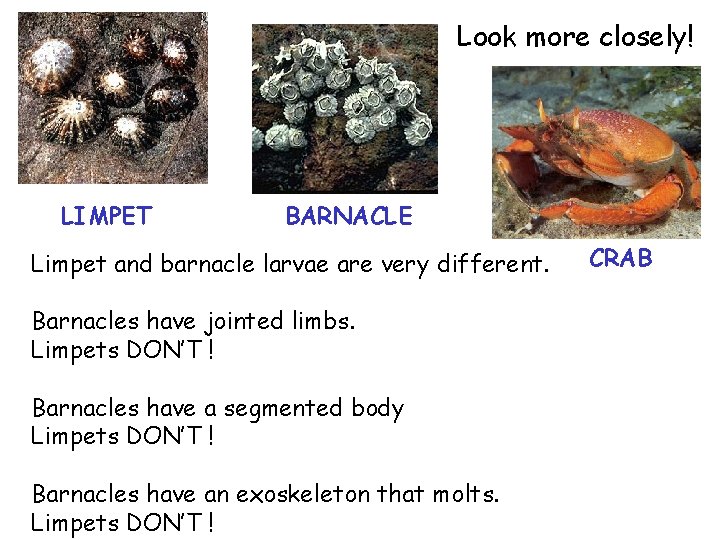
Look more closely! LIMPET BARNACLE Limpet and barnacle larvae are very different. Barnacles have jointed limbs. Limpets DON’T ! Barnacles have a segmented body Limpets DON’T ! Barnacles have an exoskeleton that molts. Limpets DON’T ! CRAB
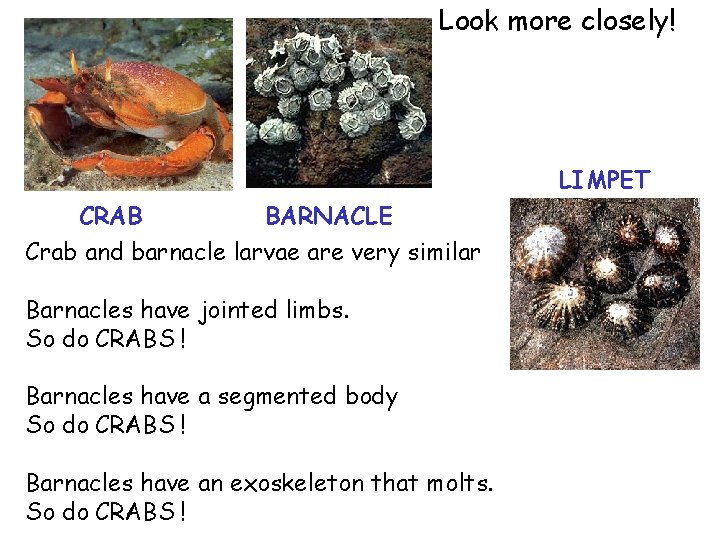
Look more closely! LIMPET CRAB BARNACLE Crab and barnacle larvae are very similar Barnacles have jointed limbs. So do CRABS ! Barnacles have a segmented body So do CRABS ! Barnacles have an exoskeleton that molts. So do CRABS !

LIMPET SNAIL Limpets have an internal anatomy more like MOLLUSKS snails, which are ____. Because of these characteristics, scientists have concluded that barnacles are more closely related to crabs than to ____ MOLLUSKS
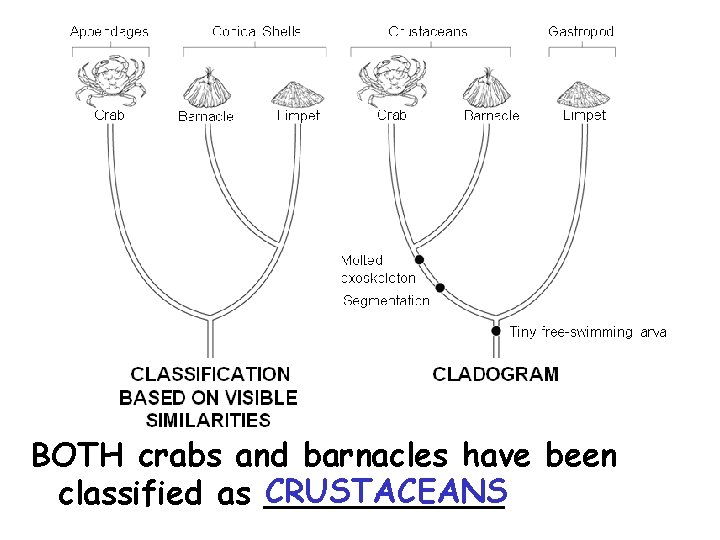
BOTH crabs and barnacles have been CRUSTACEANS classified as ______
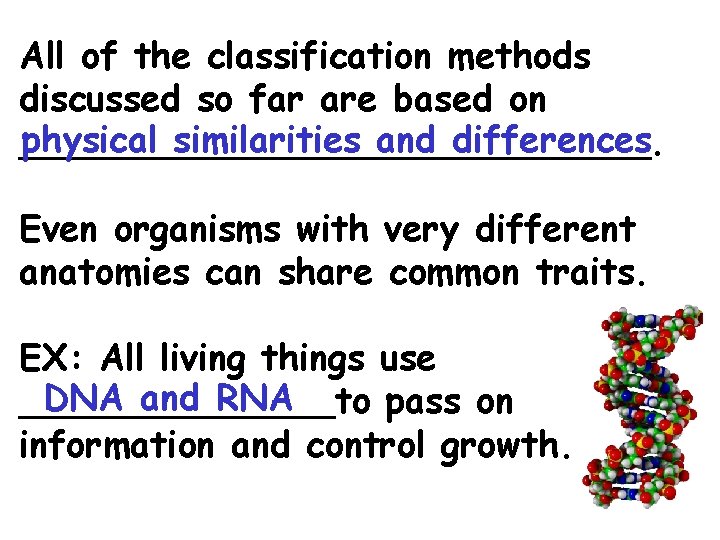
All of the classification methods discussed so far are based on physical similarities and differences ______________. Even organisms with very different anatomies can share common traits. EX: All living things use DNA and RNA _______to pass on information and control growth.
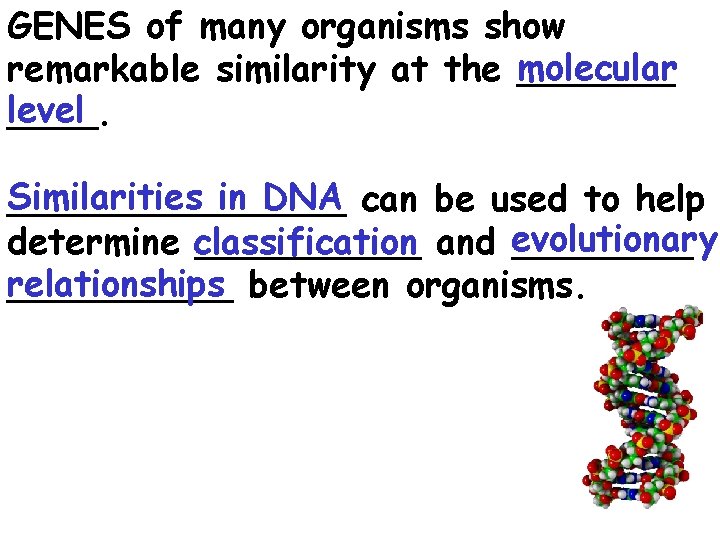
GENES of many organisms show remarkable similarity at the molecular _______ level ____. Similarities in DNA can be used to help ________ determine classification _____ and evolutionary ____ relationships _____ between organisms.
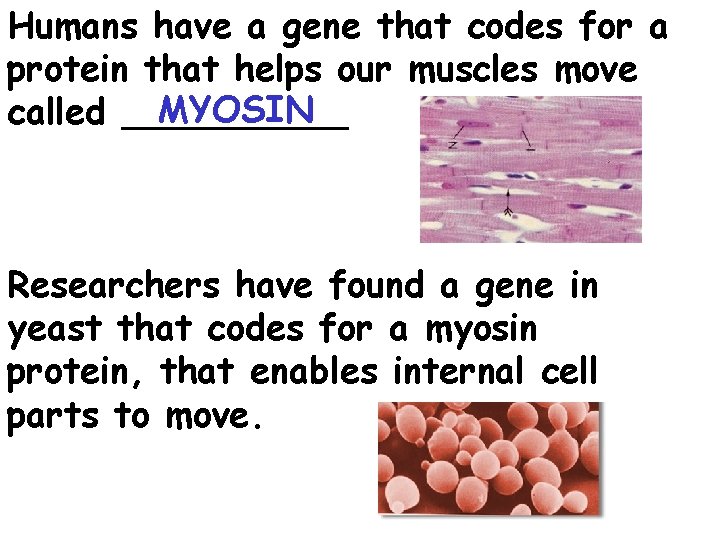
Humans have a gene that codes for a protein that helps our muscles move MYOSIN called _____ Researchers have found a gene in yeast that codes for a myosin protein, that enables internal cell parts to move.

Most closely-related to humans Most distantly-related to humans
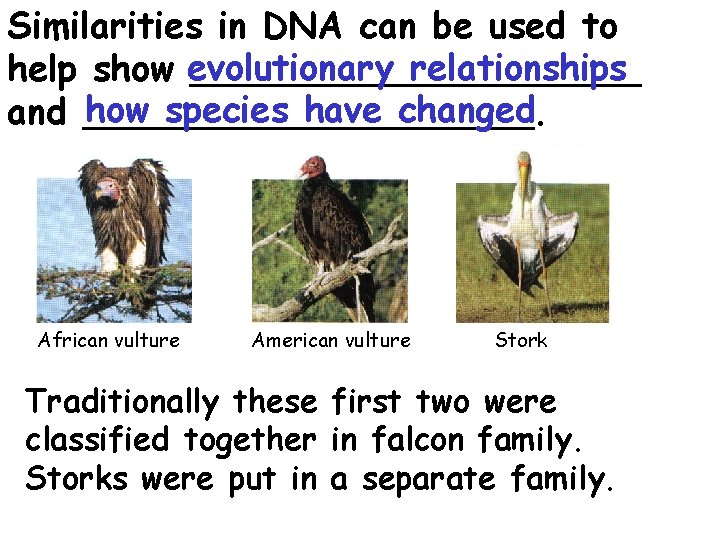
Similarities in DNA can be used to relationships help show evolutionary __________ how species have changed and __________. African vulture American vulture Stork Traditionally these first two were classified together in falcon family. Storks were put in a separate family.
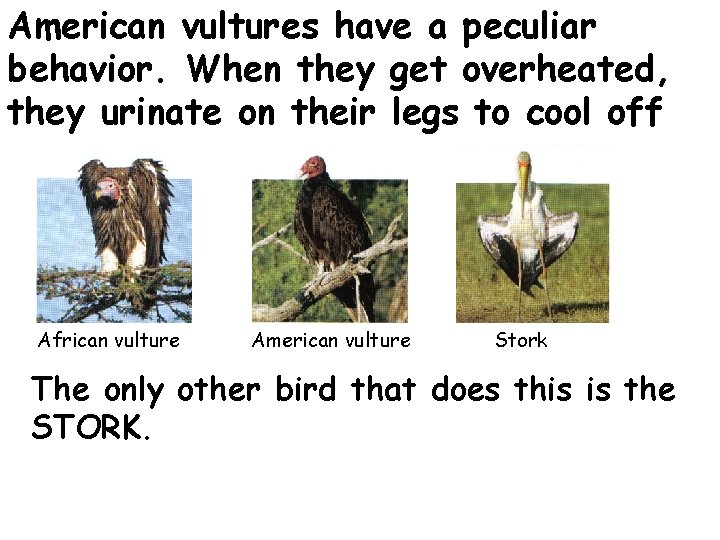
American vultures have a peculiar behavior. When they get overheated, they urinate on their legs to cool off African vulture American vulture Stork The only other bird that does this is the STORK.

DNA comparisons showed more similarities between American vulture and stork DNA than DNA from the two kinds of vultures suggesting a recent common ancestor more ___________ between storks and American vultures African vulture American vulture Stork
- Slides: 46