
Classification of Living Things branch of biology that
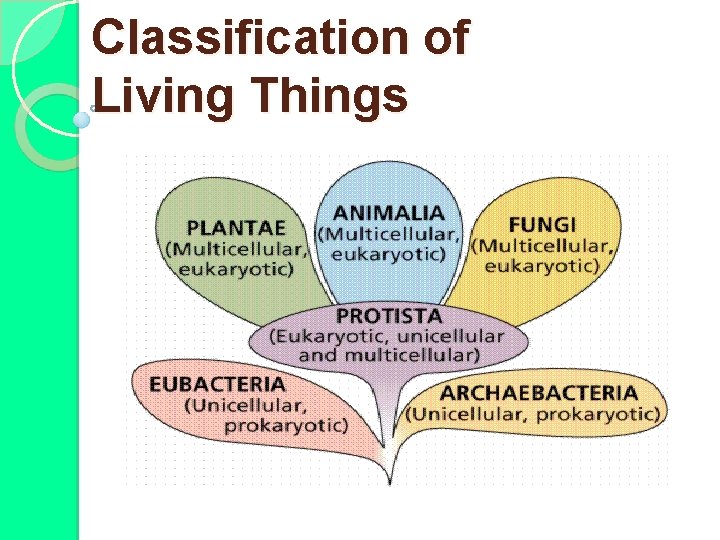
Classification of Living Things
branch of biology that names TAXONOMY and groups organisms according to their ____________ __ CHARACTERISTICS Does it have a backbone? Feathers? Gills? Flippers? ____________ EVOLUTIONARY HISTORY ___ How has organism changed in fossil
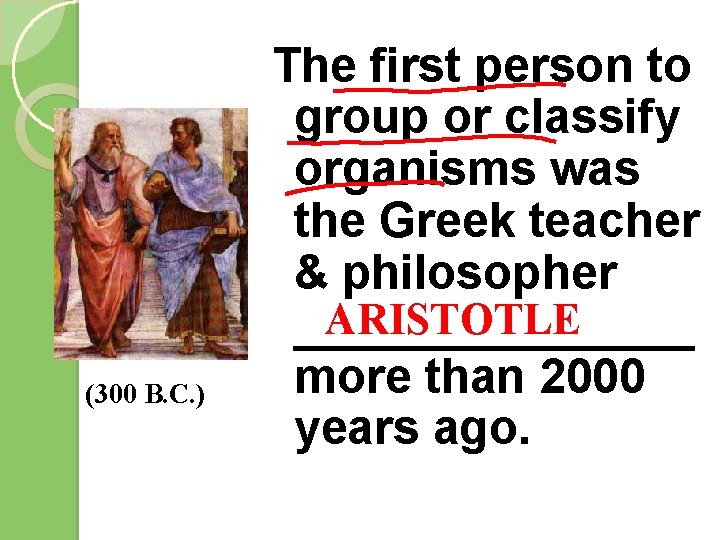
(300 B. C. ) The first person to group or classify organisms was the Greek teacher & philosopher ARISTOTLE ________ more than 2000 years ago.
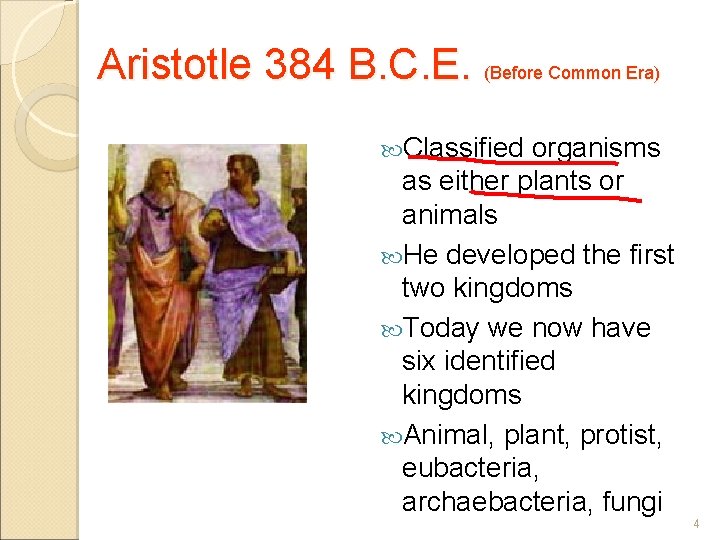
Aristotle 384 B. C. E. (Before Common Era) Classified organisms as either plants or animals He developed the first two kingdoms Today we now have six identified kingdoms Animal, plant, protist, eubacteria, archaebacteria, fungi 4
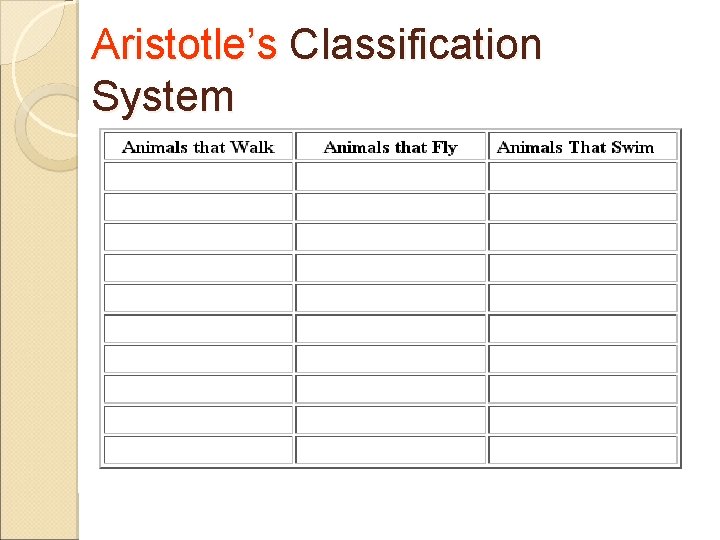
Aristotle’s Classification System
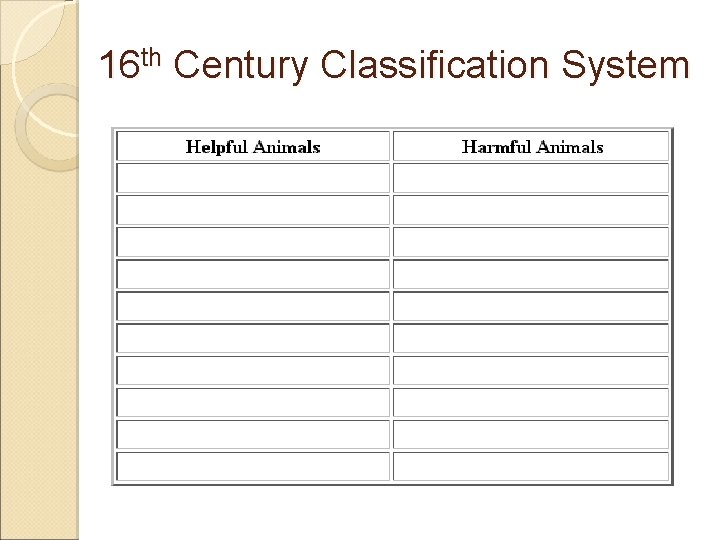
16 th Century Classification System
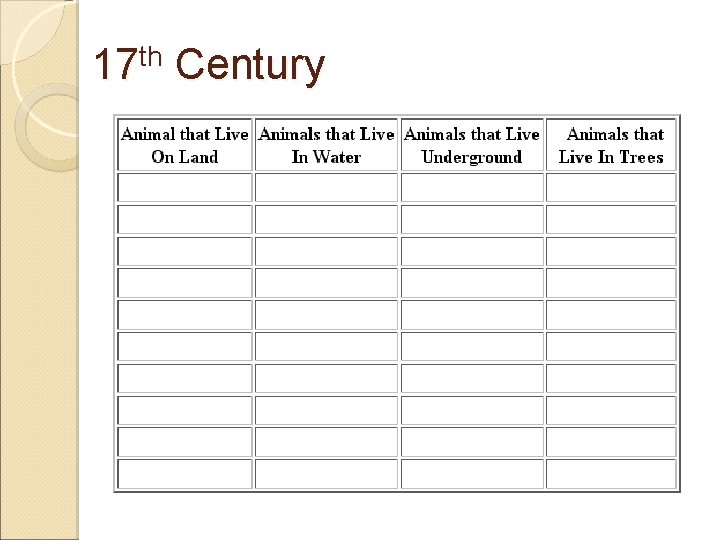
17 th Century
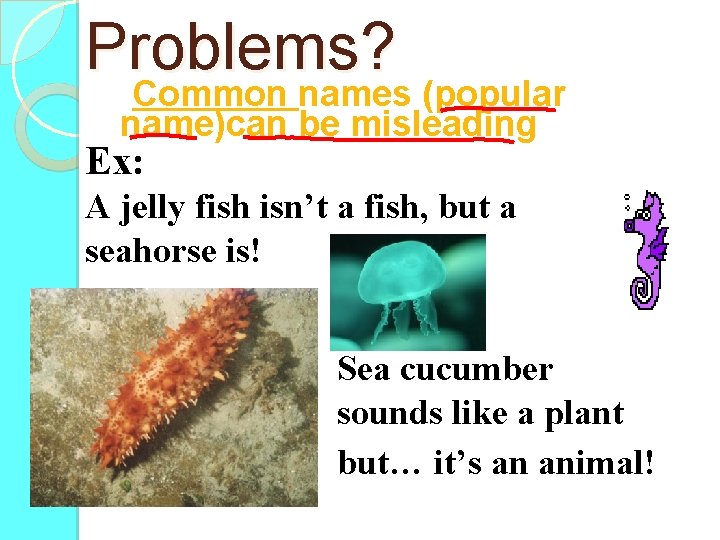
Problems? Common names (popular name)can be misleading Ex: A jelly fish isn’t a fish, but a seahorse is! Sea cucumber sounds like a plant but… it’s an animal!
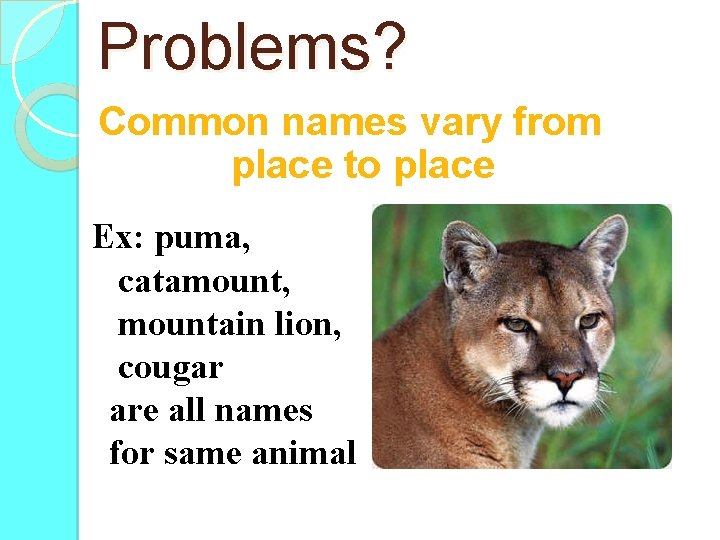
Problems? Common names vary from place to place Ex: puma, catamount, mountain lion, cougar are all names for same animal
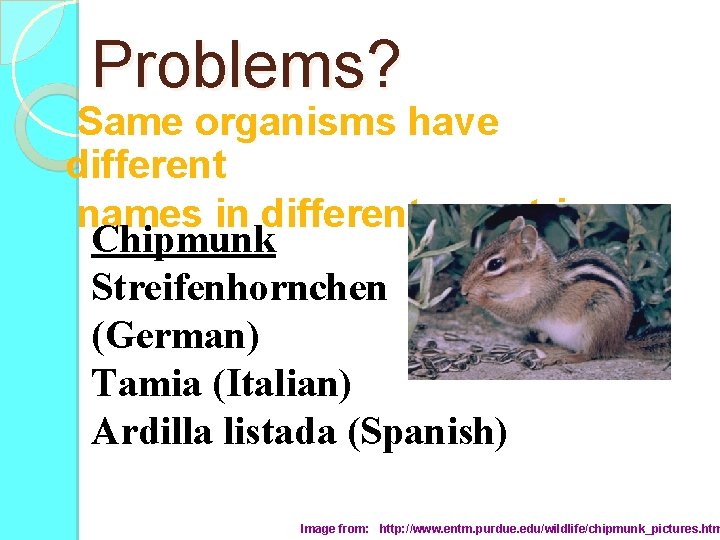
Problems? Same organisms have different names in different countries. Chipmunk Streifenhornchen (German) Tamia (Italian) Ardilla listada (Spanish) Image from: http: //www. entm. purdue. edu/wildlife/chipmunk_pictures. htm
Solution? Some early scientists devised scientific names using long descriptions in LATIN. RED OAK Quercus foliis obtuse-sinuatis setaceo-mucronatis
RED OAK Quercus foliis obtuse-sinuatis setaceo-mucronatis “oak with leaves with deep blunt lobes bearing hair like bristles” PROBLEMS? Names too hard and long to remember! Names don’t show relationships between different animals
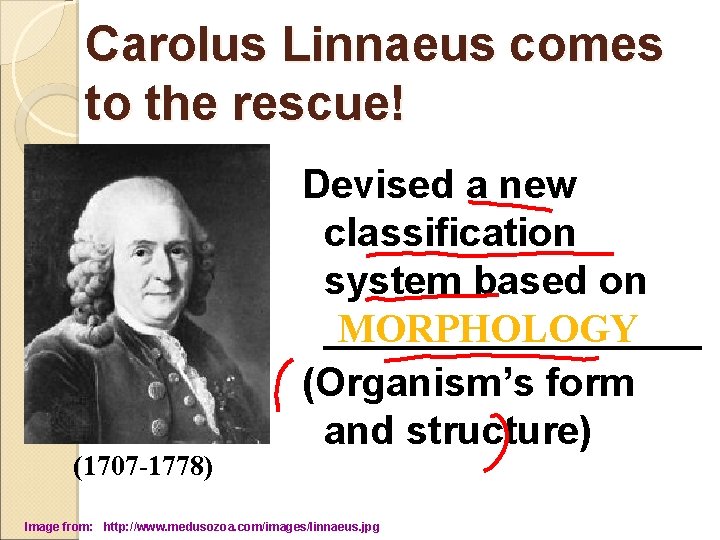
Carolus Linnaeus comes to the rescue! (1707 -1778) Devised a new classification system based on MORPHOLOGY _________ (Organism’s form and structure) Image from: http: //www. medusozoa. com/images/linnaeus. jpg
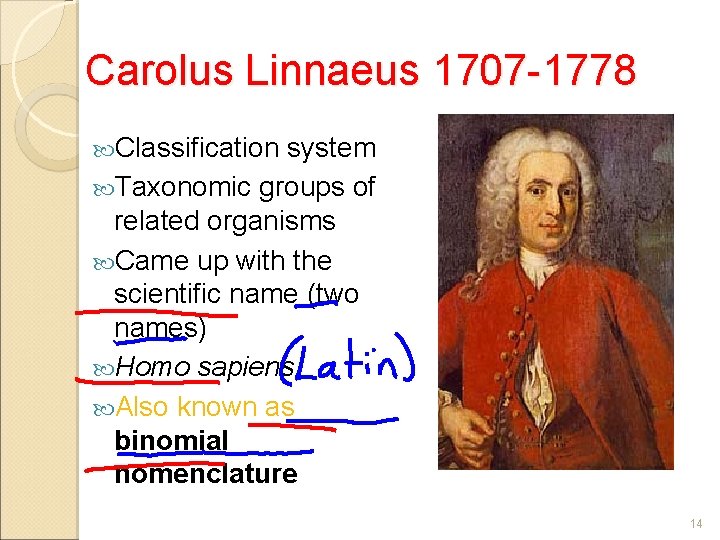
Carolus Linnaeus 1707 -1778 Classification system Taxonomic groups of related organisms Came up with the scientific name (two names) Homo sapiens Also known as binomial nomenclature 14
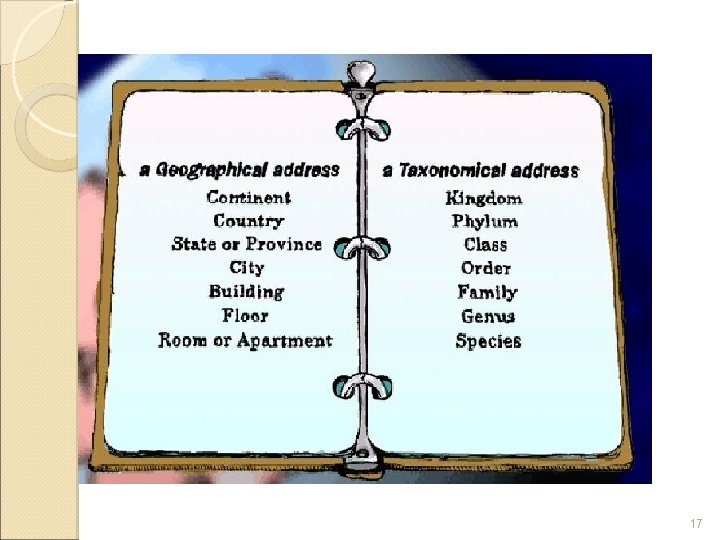
Linnaeus’s System HIERARCHY Grouped in a _______ of 7 different levels Each organism has a two SCIENTIFIC part LATIN NAME _________
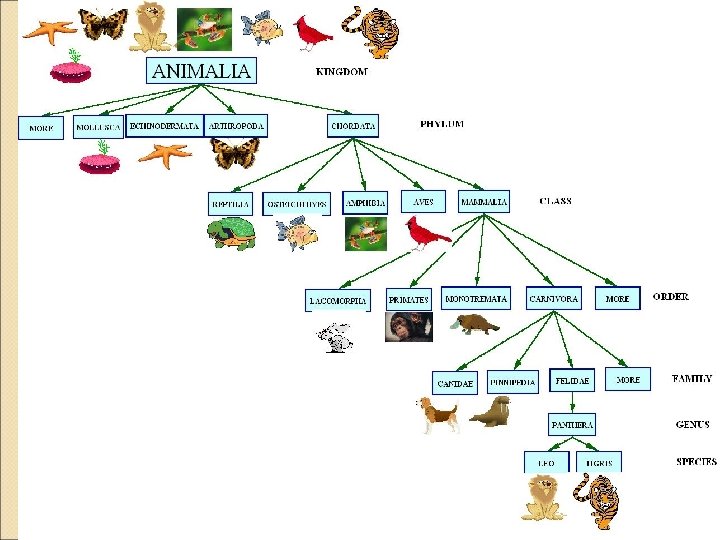
17
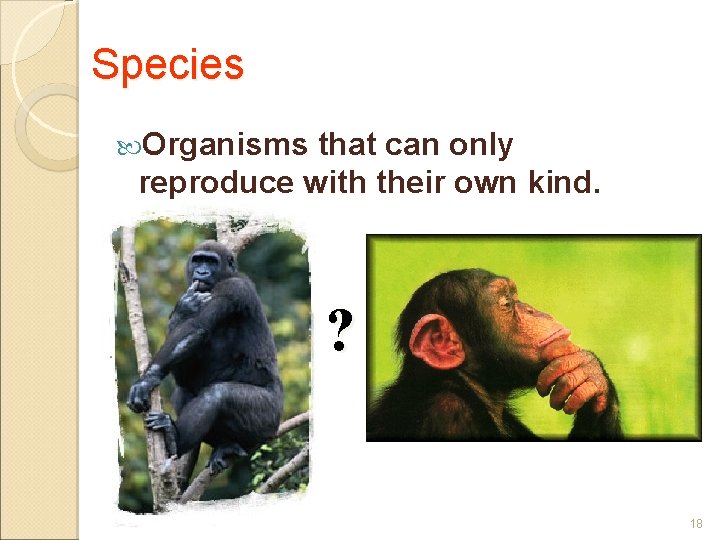
Species Organisms that can only reproduce with their own kind. ? 18
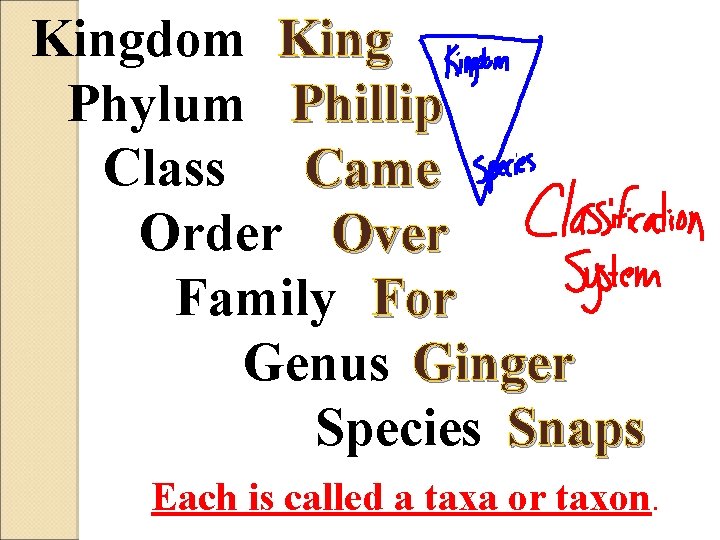
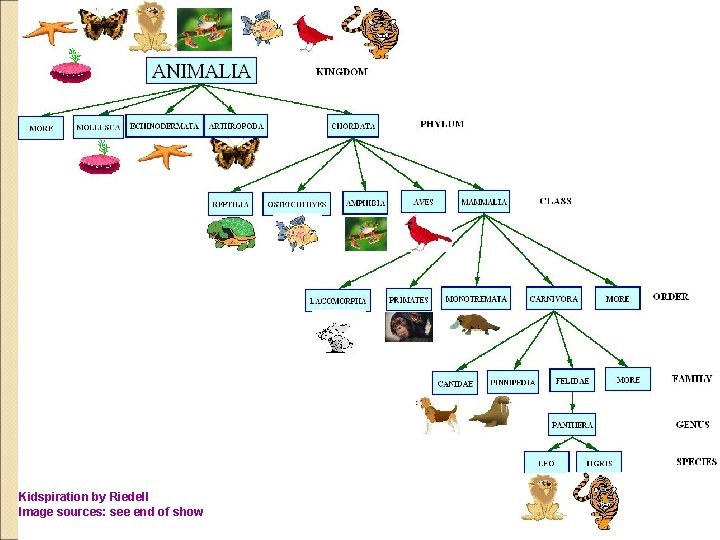
Kingdom King Phylum Phillip Class Came Order Over Family For Genus Ginger Species Snaps Each is called a taxa or taxon.
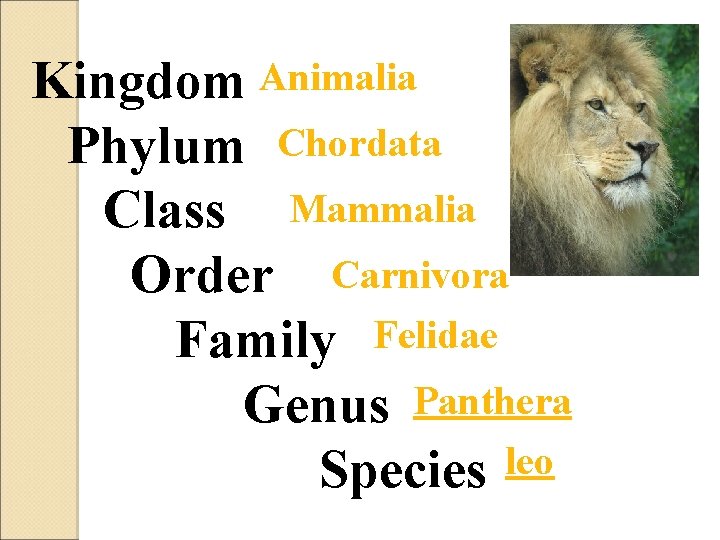
Kingdom Animalia Phylum Chordata Class Mammalia Order Carnivora Family Felidae Genus Panthera Species leo
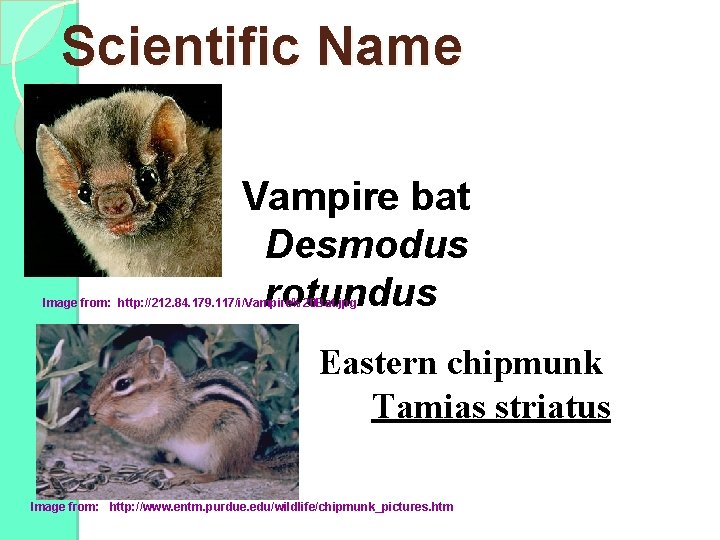
Scientific Name Vampire bat Desmodus rotundus Image from: http: //212. 84. 179. 117/i/Vampire%20 Bat. jpg Eastern chipmunk Tamias striatus Image from: http: //www. entm. purdue. edu/wildlife/chipmunk_pictures. htm
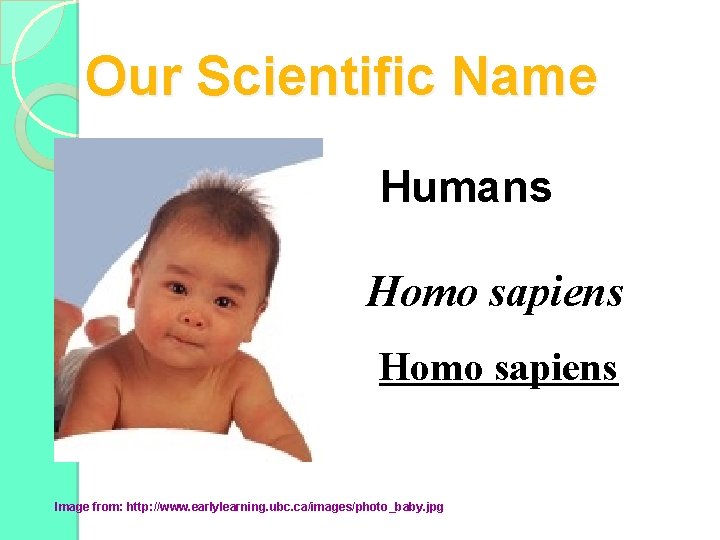
Our Scientific Name Humans Homo sapiens Image from: http: //www. earlylearning. ubc. ca/images/photo_baby. jpg
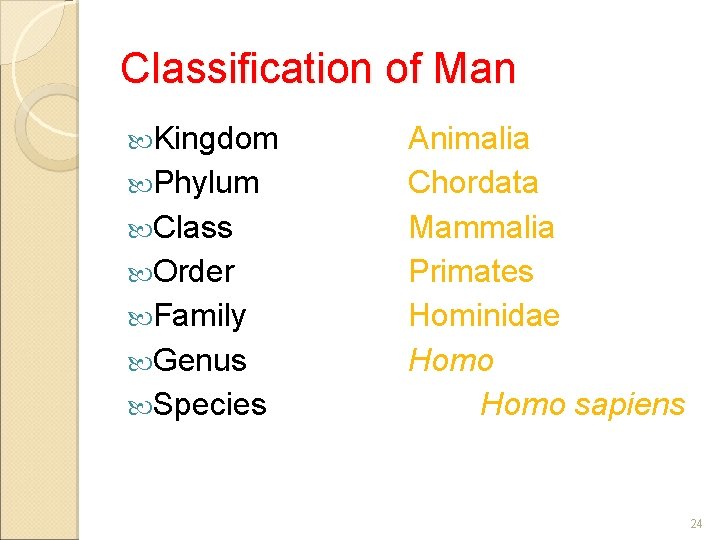
Classification of Man Kingdom Phylum Class Order Family Genus Species Animalia Chordata Mammalia Primates Hominidae Homo sapiens 24
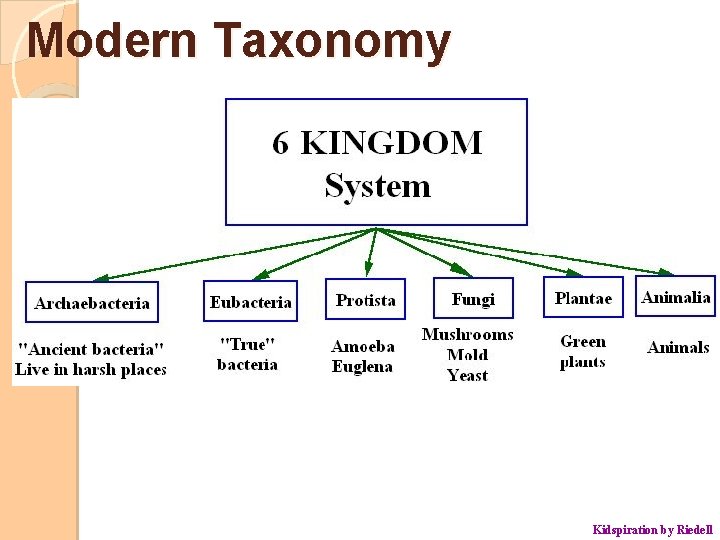
Modern Taxonomy Kidspiration by Riedell
Hint for 6 Kingdoms: Aunt = Archaebacteria Patty = Protist Eats= Eubacteria Pizza = Plant And = Animal Fruit = Fungi
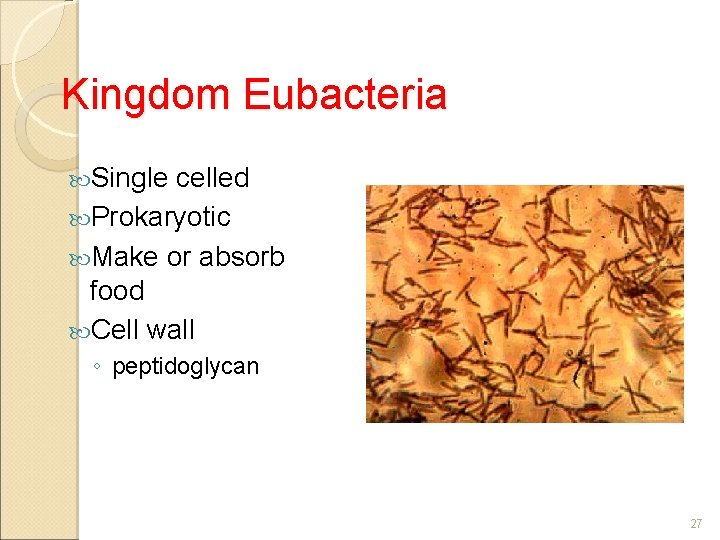
Kingdom Eubacteria Single celled Prokaryotic Make or absorb food Cell wall ◦ peptidoglycan 27
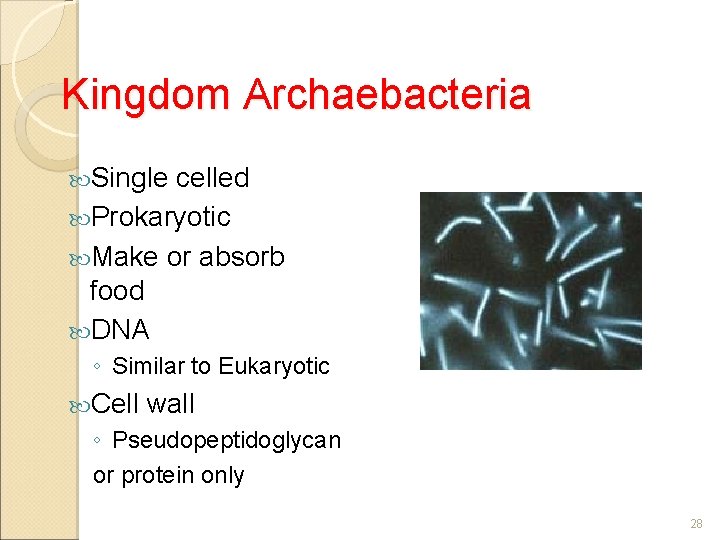
Kingdom Archaebacteria Single celled Prokaryotic Make or absorb food DNA ◦ Similar to Eukaryotic Cell wall ◦ Pseudopeptidoglycan or protein only 28
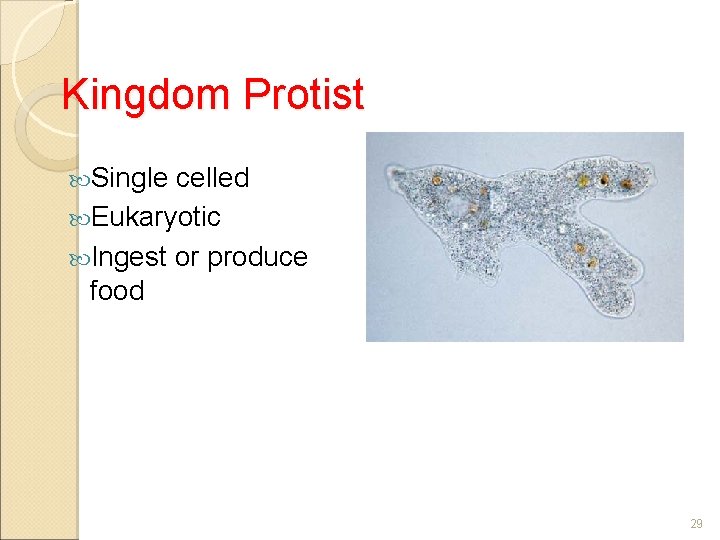
Kingdom Protist Single celled Eukaryotic Ingest or produce food 29
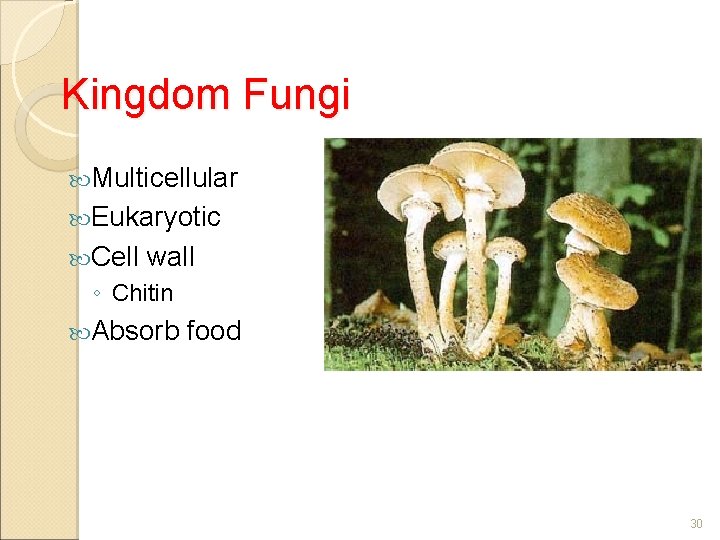
Kingdom Fungi Multicellular Eukaryotic Cell wall ◦ Chitin Absorb food 30
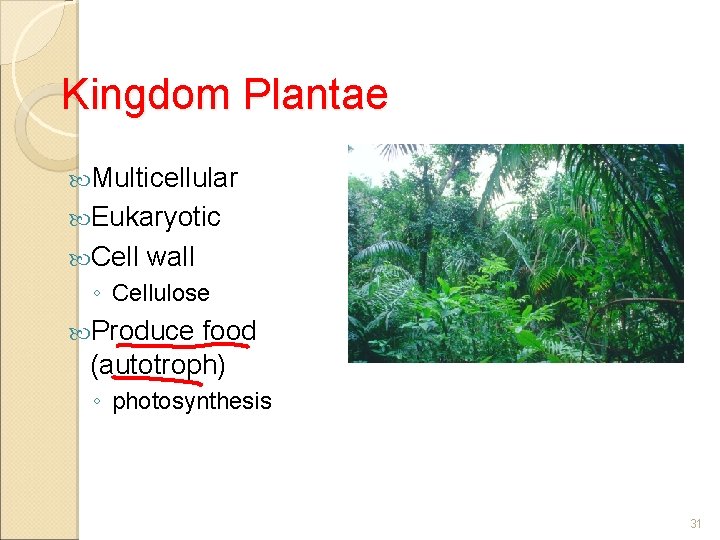
Kingdom Plantae Multicellular Eukaryotic Cell wall ◦ Cellulose Produce food (autotroph) ◦ photosynthesis 31
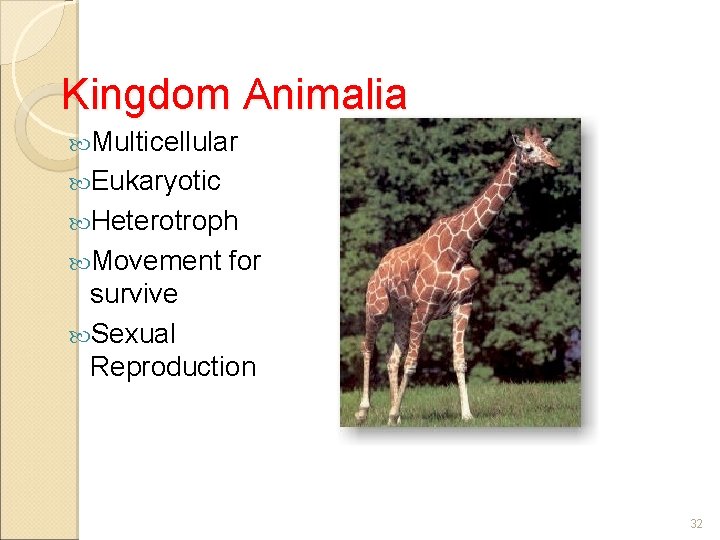
Kingdom Animalia Multicellular Eukaryotic Heterotroph Movement for survive Sexual Reproduction 32
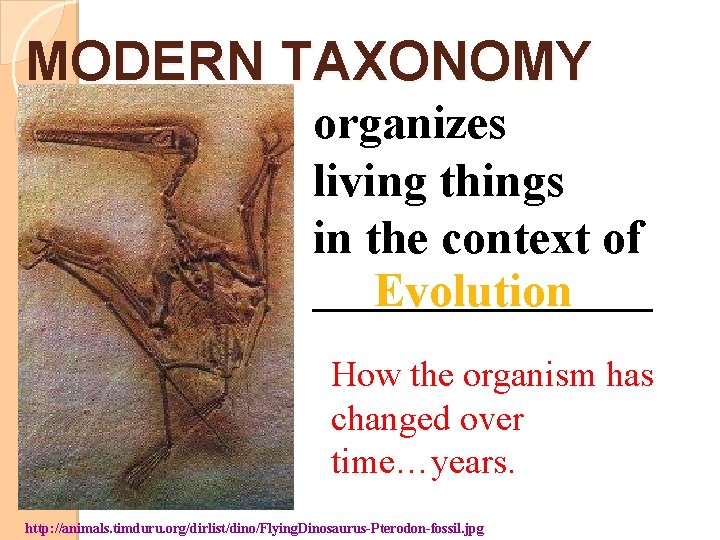
MODERN TAXONOMY organizes living things in the context of _________ Evolution How the organism has changed over time…years. http: //animals. timduru. org/dirlist/dino/Flying. Dinosaurus-Pterodon-fossil. jpg
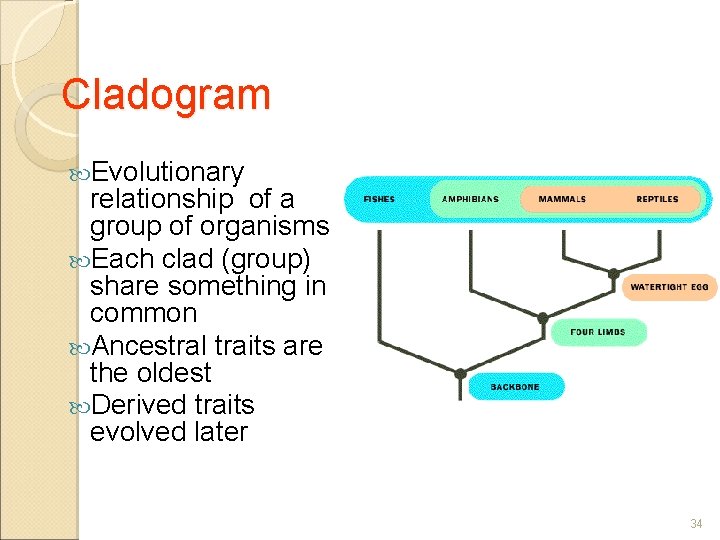
Cladogram Evolutionary relationship of a group of organisms Each clad (group) share something in common Ancestral traits are the oldest Derived traits evolved later 34
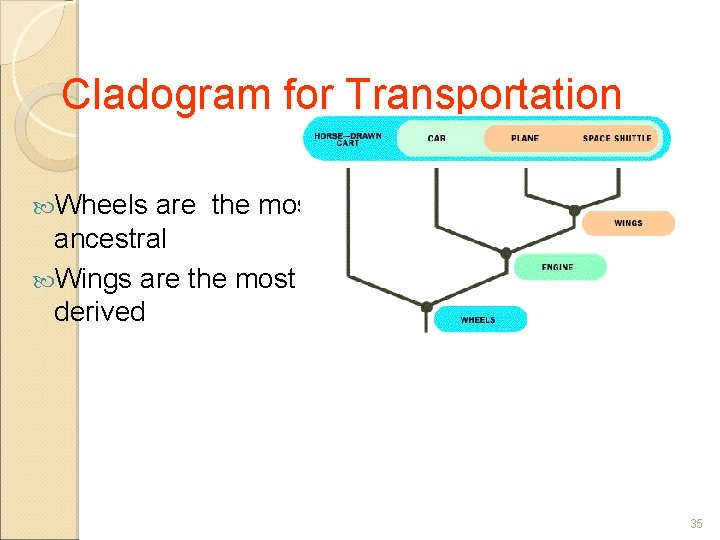
Cladogram for Transportation Wheels are the most ancestral Wings are the most derived 35
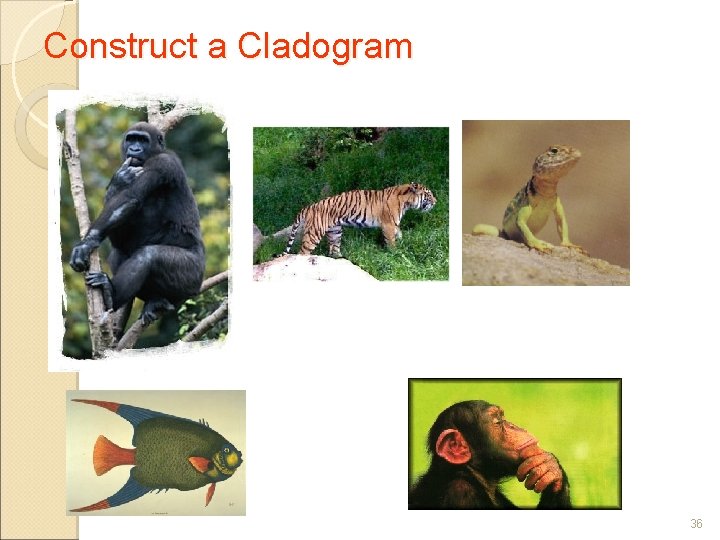
Construct a Cladogram 36
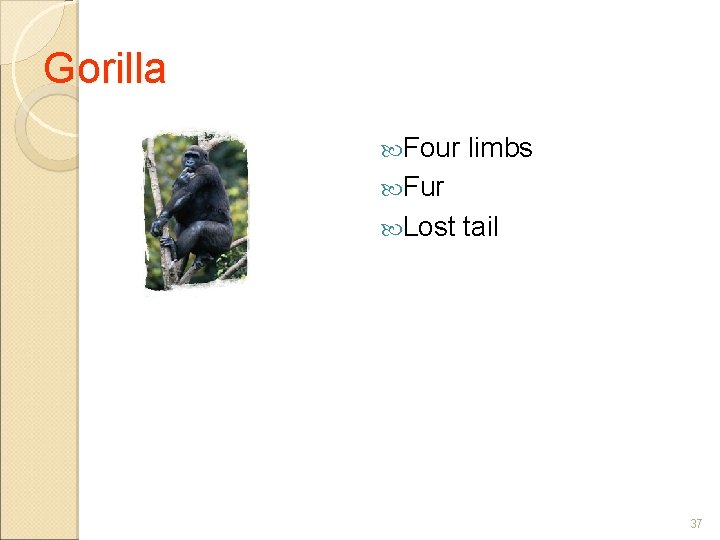
Gorilla Four limbs Fur Lost tail 37
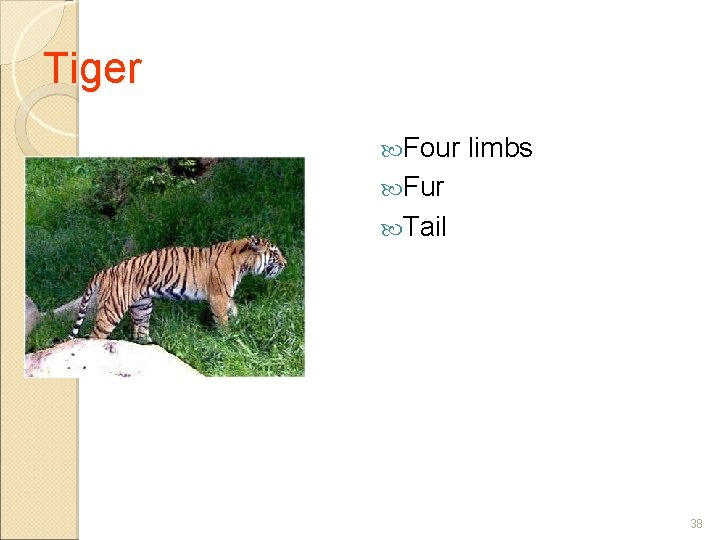
Tiger Four limbs Fur Tail 38
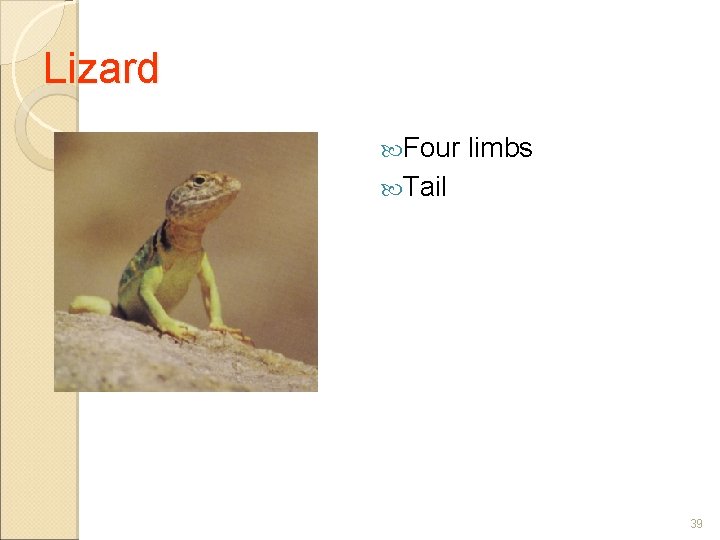
Lizard Four limbs Tail 39
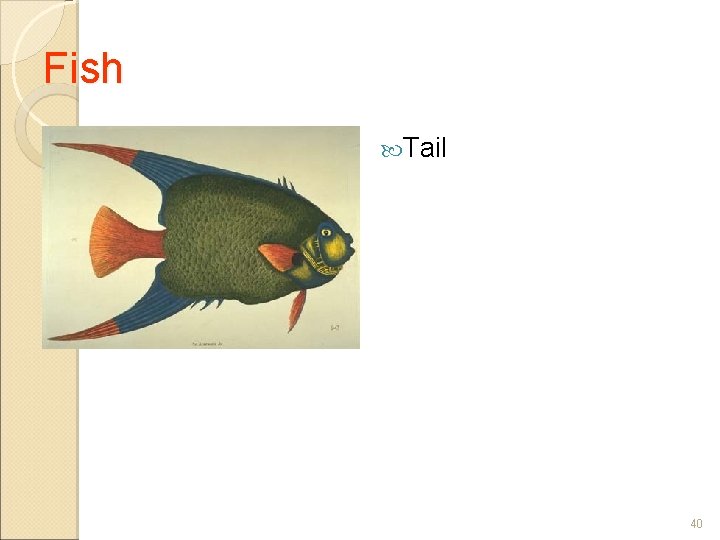
Fish Tail 40
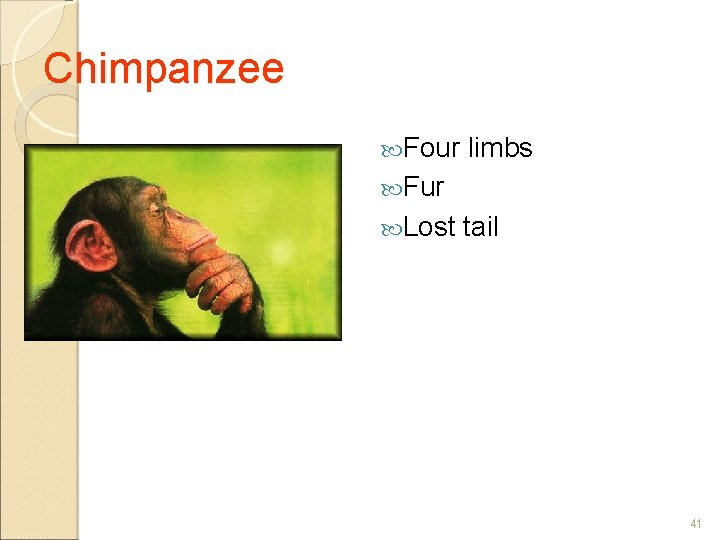
Chimpanzee Four limbs Fur Lost tail 41
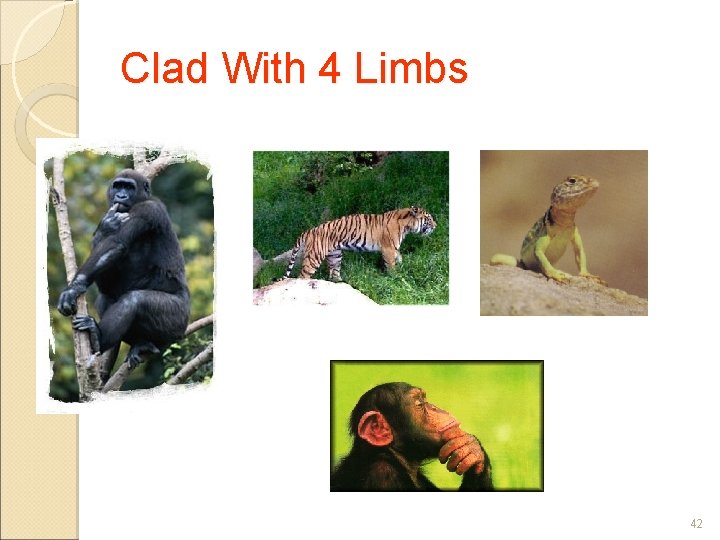
Clad With 4 Limbs 42
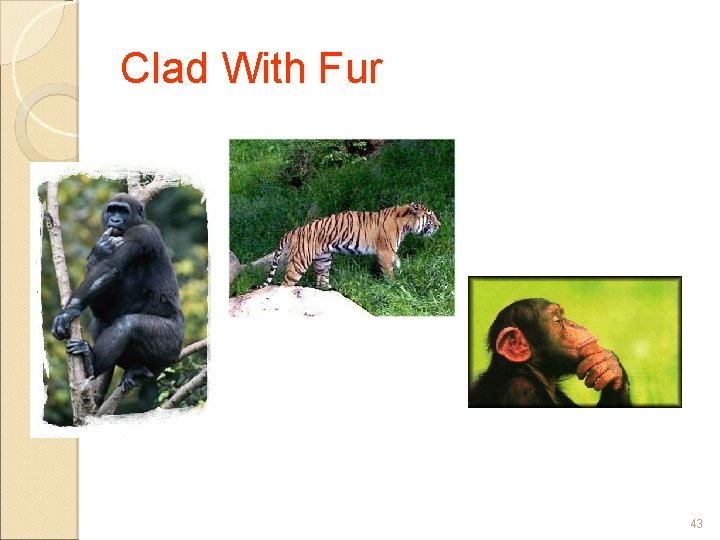
Clad With Fur 43
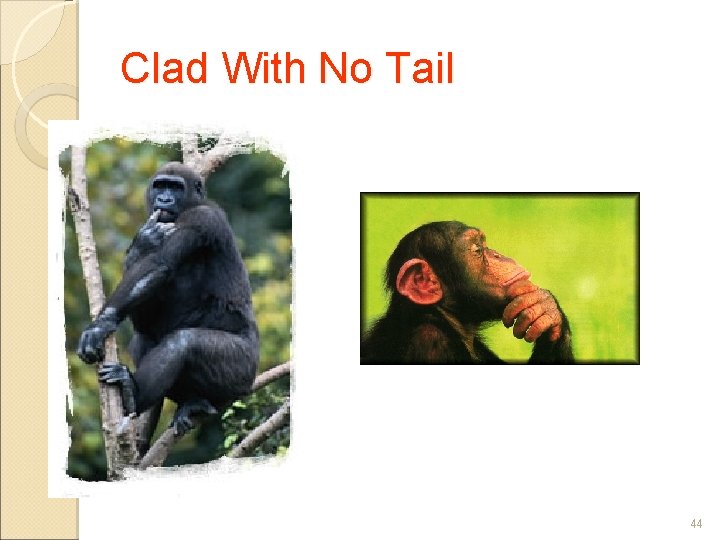
Clad With No Tail 44
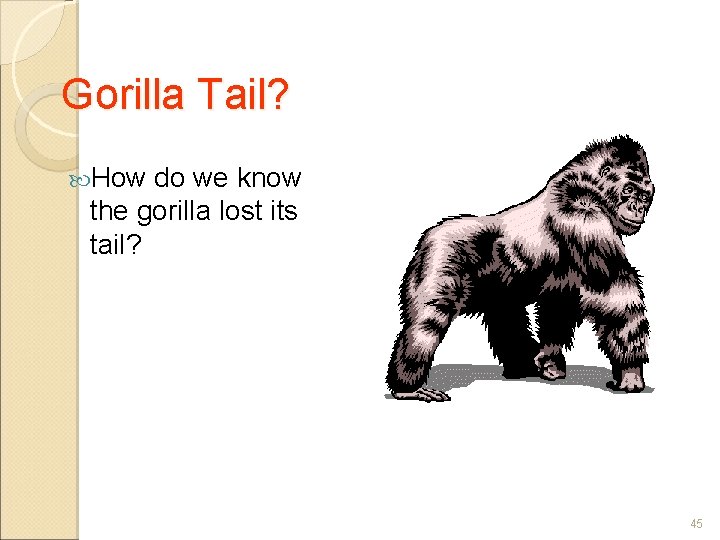
Gorilla Tail? How do we know the gorilla lost its tail? 45
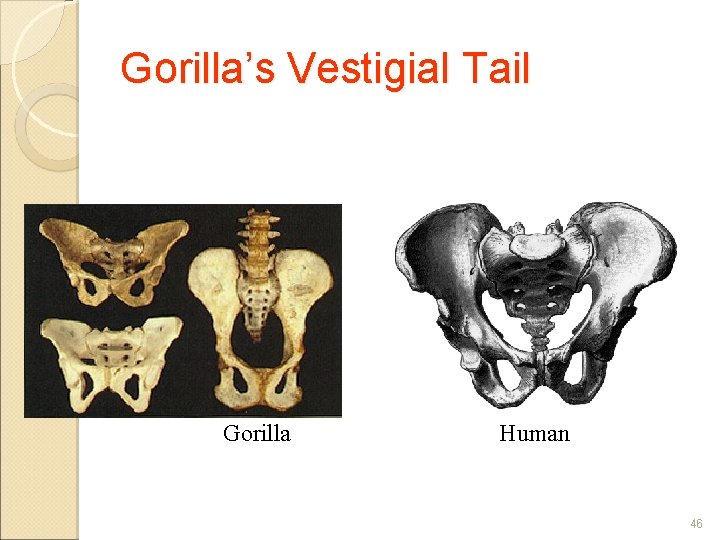
Gorilla’s Vestigial Tail Gorilla Human 46
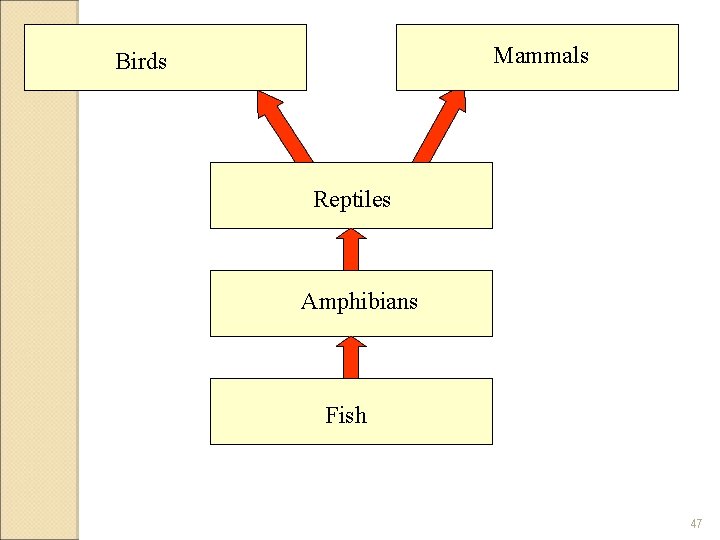
Mammals Birds Reptiles Amphibians Fish 47
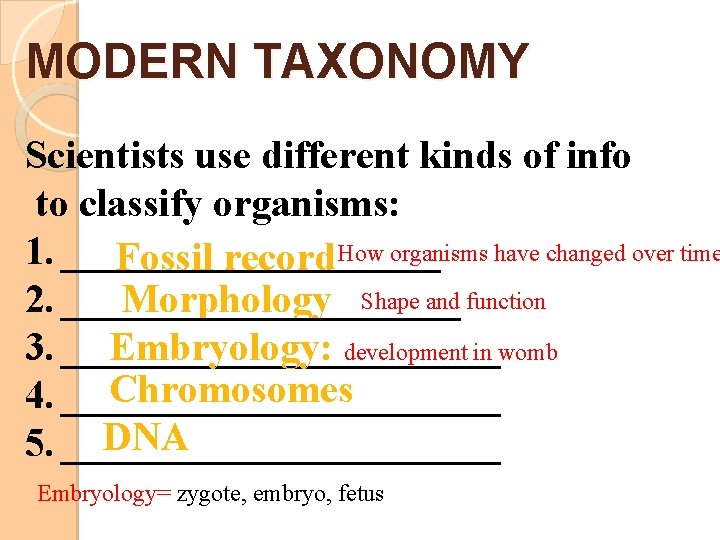
MODERN TAXONOMY Scientists use different kinds of info to classify organisms: 1. __________ Fossil record How organisms have changed over time 2. __________ Morphology Shape and function 3. ___________ Embryology: development in womb Chromosomes 4. ___________ DNA 5. ___________ Embryology= zygote, embryo, fetus
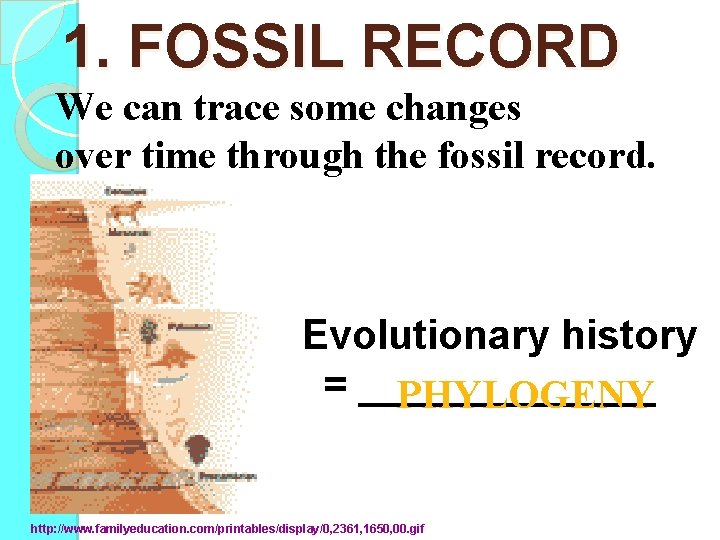
1. FOSSIL RECORD We can trace some changes over time through the fossil record. Evolutionary history = _______ PHYLOGENY http: //www. familyeducation. com/printables/display/0, 2361, 1650, 00. gif
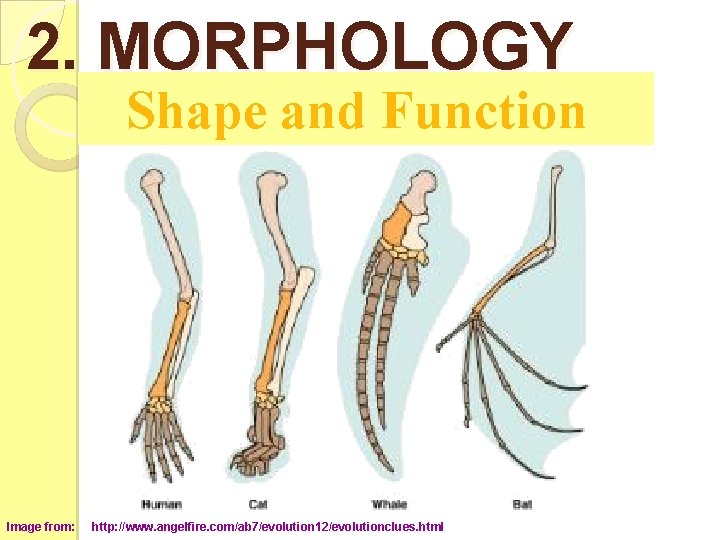
2. MORPHOLOGY Shape and Function Image from: http: //www. angelfire. com/ab 7/evolution 12/evolutionclues. html
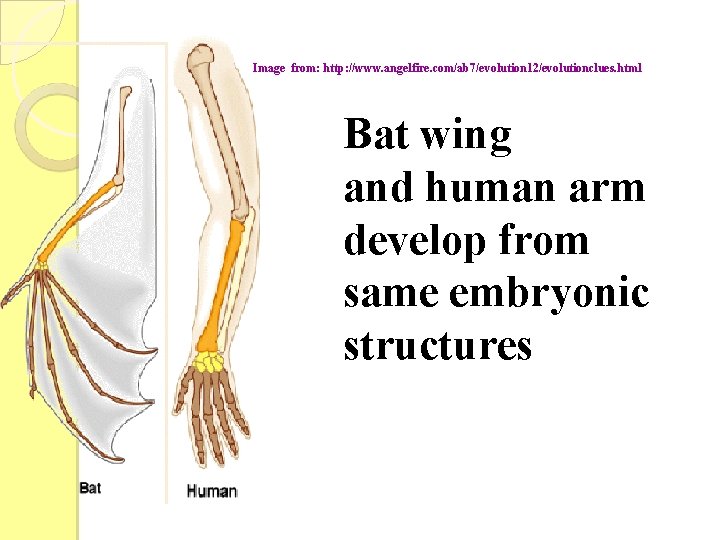
Image from: http: //www. angelfire. com/ab 7/evolution 12/evolutionclues. html Bat wing and human arm develop from same embryonic structures
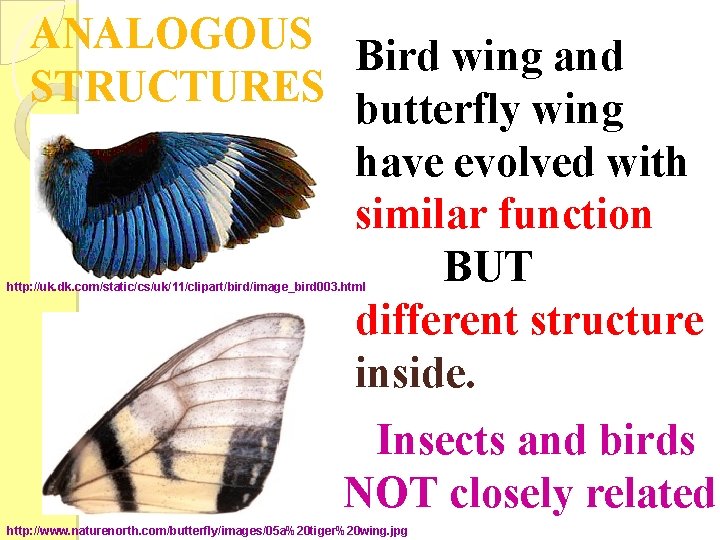
ANALOGOUS Bird wing and STRUCTURES butterfly wing have evolved with similar function BUT different structure inside. http: //uk. dk. com/static/cs/uk/11/clipart/bird/image_bird 003. html Insects and birds NOT closely related! http: //www. naturenorth. com/butterfly/images/05 a%20 tiger%20 wing. jpg
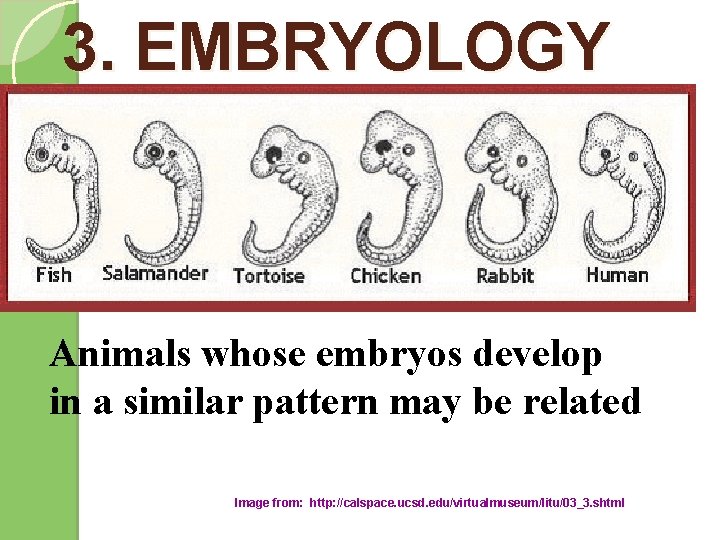
3. EMBRYOLOGY Animals whose embryos develop in a similar pattern may be related Image from: http: //calspace. ucsd. edu/virtualmuseum/litu/03_3. shtml
Kidspiration by Riedell Image sources: see end of show

Image Sources http: //www. geocities. com/The. Tropics/2428/directory. html http: //www. gifs. net http: //people. eku. edu/ritchisong/homepage. htm http: //www. seattleschools. org/schools/blaine/ http: //www. kidskonnect. com/Lions/lion. gif
http: //www. chm. bris. ac. uk/motm/trimethylamine/fish. gif http: //www. ca 4 h. org/4 hresource/clipart/animals/pics/dog. gif http: //www. madlantern. com/clipart/cindexw. htm http: //www. drtoy. com/news/ http: //anthro. palomar. edu/animal/images/platypus. gif

http: //www. gifs. net http: //www. dallas-zoo. org/featured. asp? page=wc http: //www. animationlibrary. com http: //www. dynamicearth. co. uk/education/images/tree_frog. jpg
- Slides: 57