
Classification of Living Things 7 th Diversity of


- Slides: 16
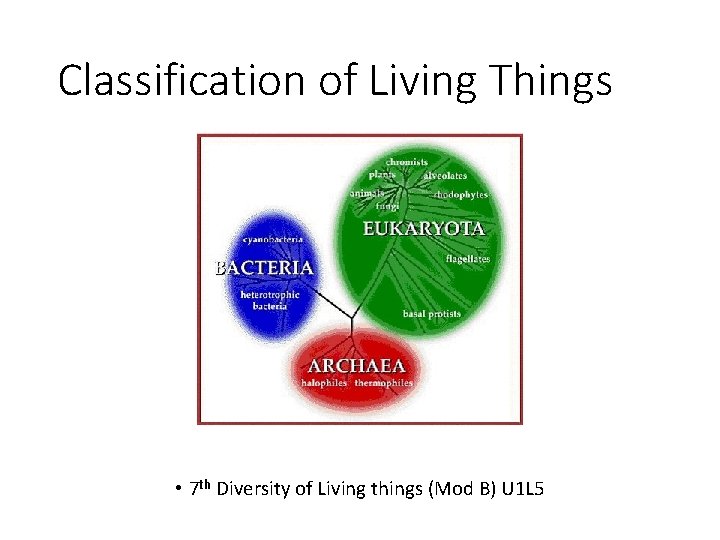
Classification of Living Things • 7 th Diversity of Living things (Mod B) U 1 L 5
History of Classifying: 1. daily life Aristotle (over 2000 years ago) * classified organisms as animal or plant Where lived? Size? * too many exceptions 2. Carolus Linnaeus ( late 18 th century) * grouped organisms with similar structures. * used 2 -word system to name species (binomial nomenclature)
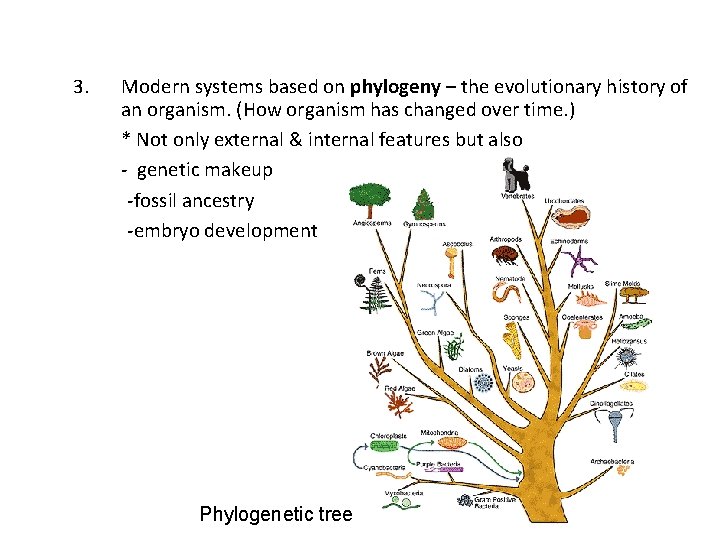
3. Modern systems based on phylogeny – the evolutionary history of an organism. (How organism has changed over time. ) * Not only external & internal features but also - genetic makeup -fossil ancestry -embryo development Phylogenetic tree
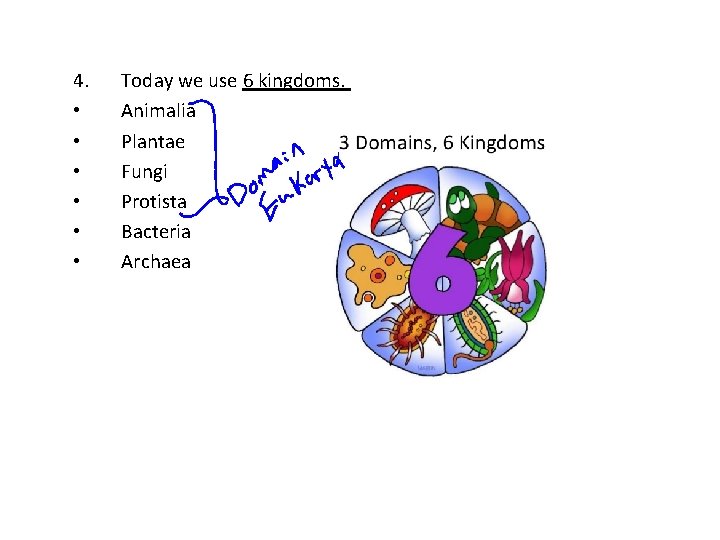
4. There are three domains used in classification today. • Domain Eukarya • Includes Kingdom Animalia, Kingdom Plantae, Kingdom Fungi and Kingdom Protista • Domain Bacteria • Includes Kingdom Bacteria • Domain Archaea • Includes Kingdom Archaea There are six Kingdoms!
4. • • • Today we use 6 kingdoms. Animalia Plantae Fungi Protista Bacteria Archaea
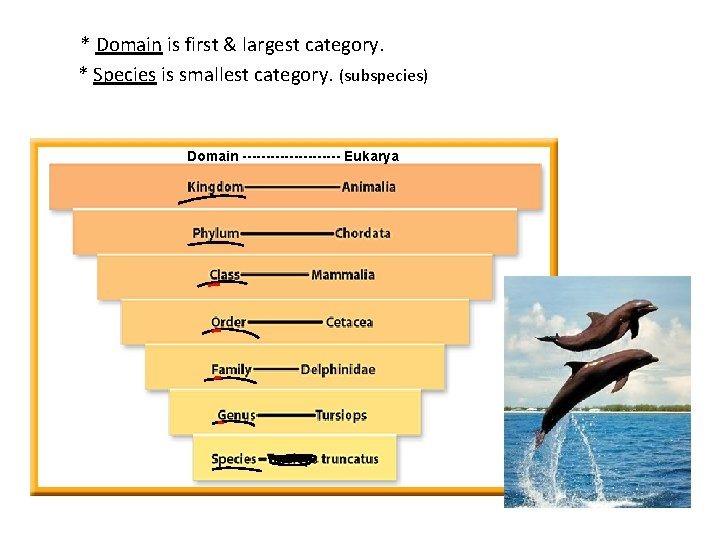
* Domain is first & largest category. * Species is smallest category. (subspecies) Domain ----------- Eukarya
Daring King Phillip Came Over For Good Spaghetti
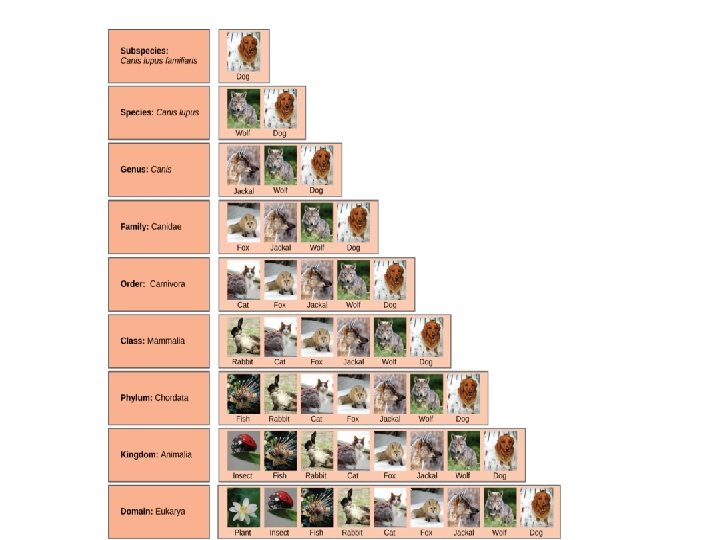
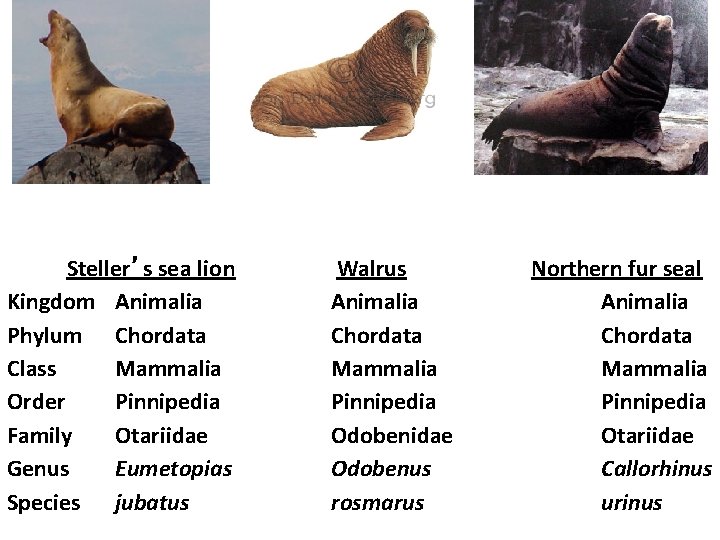
-Organisms in the same species can mate & produce fertile offspring. (Today we use DNA to determine species. ) -The more classification groups organisms share, the more closely related they are. (see next slide for an example!)
Steller’s sea lion Kingdom Animalia Phylum Chordata Class Mammalia Order Pinnipedia Family Otariidae Genus Eumetopias Species jubatus Walrus Animalia Chordata Mammalia Pinnipedia Odobenidae Odobenus rosmarus Northern fur seal Animalia Chordata Mammalia Pinnipedia Otariidae Callorhinus urinus
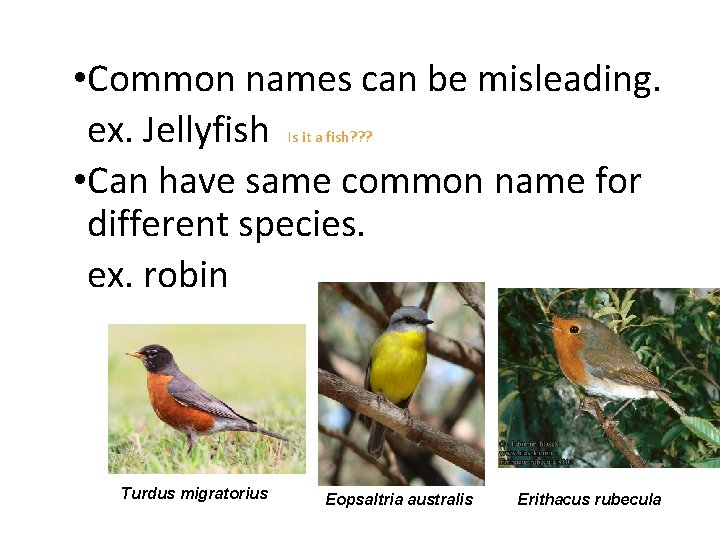
• Common names can be misleading. ex. Jellyfish • Can have same common name for different species. ex. robin Is it a fish? ? ? Turdus migratorius Eopsaltria australis Erithacus rubecula
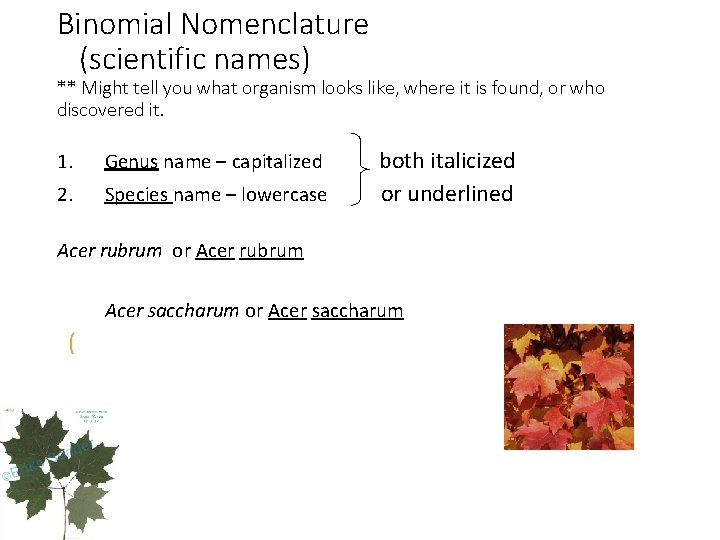
Binomial Nomenclature (scientific names) ** Might tell you what organism looks like, where it is found, or who discovered it. 1. Genus name – capitalized 2. Species name – lowercase both italicized or underlined Acer rubrum or Acer rubrum Acer saccharum or Acer saccharum (
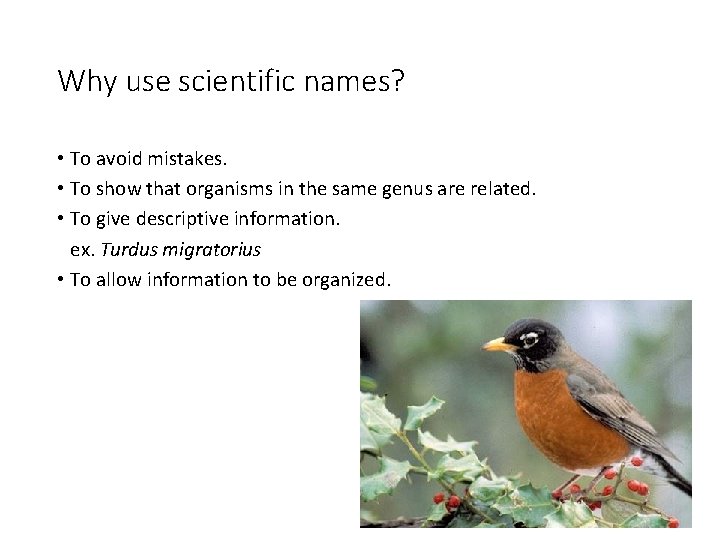
Why use scientific names? • To avoid mistakes. • To show that organisms in the same genus are related. • To give descriptive information. ex. Turdus migratorius • To allow information to be organized.
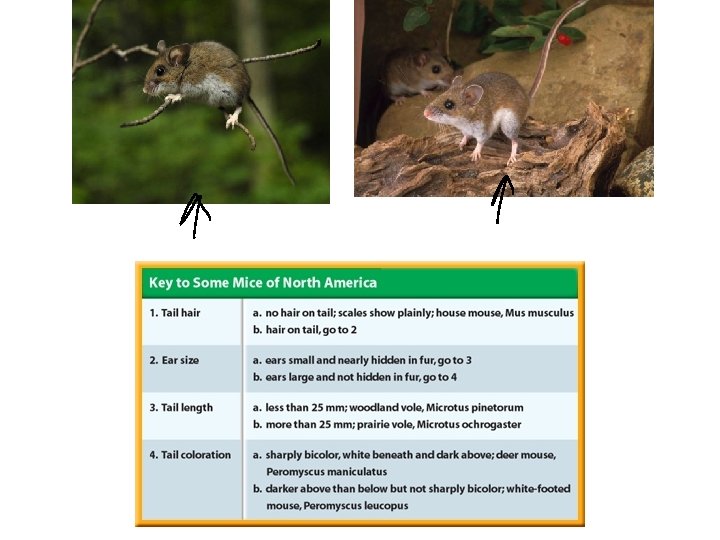
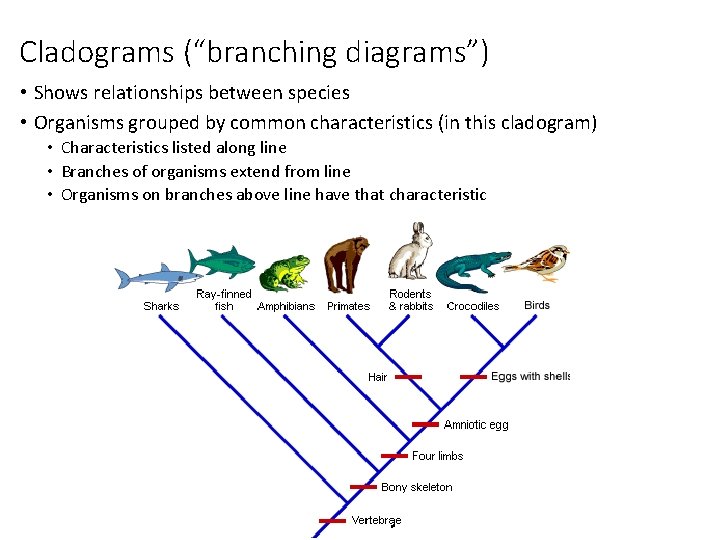
Tools for Identifying Organisms: 1. 2. Field guides – pictures & descriptions of organisms. Dichotomous Keys * Detailed lists of identifying characteristics that include scientific names. 3. Cladograms
Cladograms (“branching diagrams”) • Shows relationships between species • Organisms grouped by common characteristics (in this cladogram) • Characteristics listed along line • Branches of organisms extend from line • Organisms on branches above line have that characteristic