
Classification of ligneous vegetation into Plant Functional Types
- Slides: 3
Classification of ligneous vegetation into Plant Functional Types for a dynamic reconstitution of Neolithic vegetation cover in Occitania Mediterranean seashores Mehdi SAQALLI Julien AZUARA Marianne CAHIERRE Nathalie COMBOURIEU-NEBOUT Laurent LESPEZ Odile PEYRON Marie Alexandrine SICRE
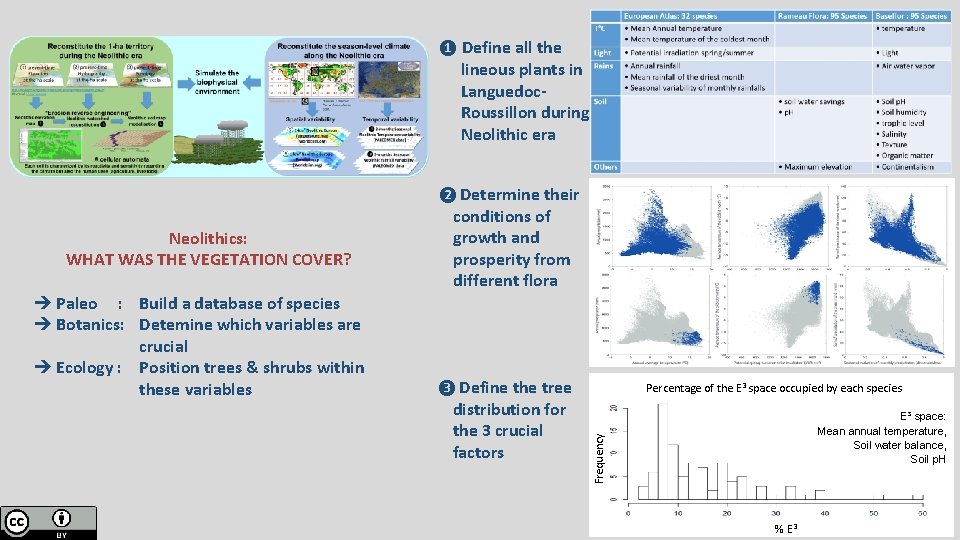
❶ Define all the lineous plants in Languedoc. Roussillon during Neolithic era ❷ Determine their è Paleo : Build a database of species è Botanics: Detemine which variables are crucial è Ecology : Position trees & shrubs within these variables ❸ Define the tree distribution for the 3 crucial factors Percentage of the E 3 space occupied by each species E³ space: Mean annual temperature, Soil water balance, Soil p. H Frequency Neolithics: WHAT WAS THE VEGETATION COVER? conditions of growth and prosperity from different flora % E 3
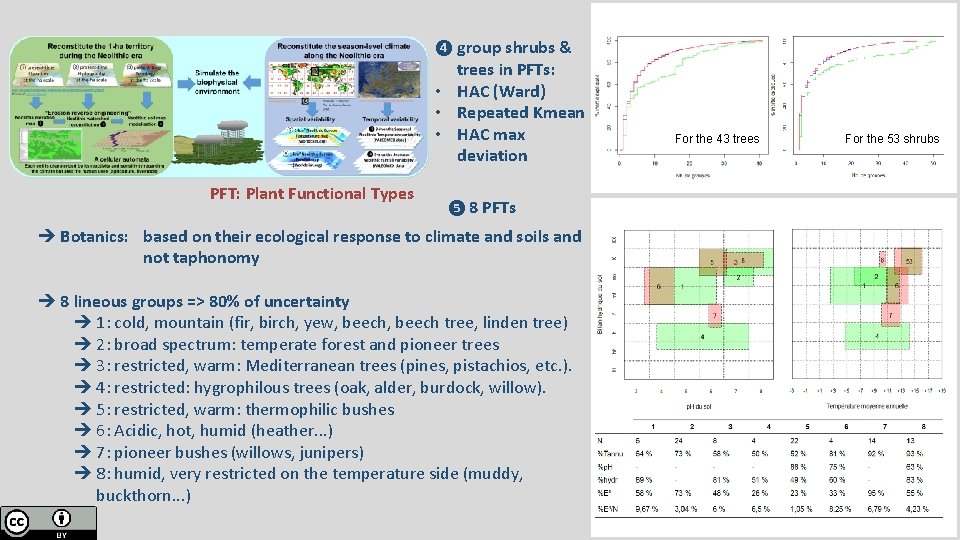
❹ group shrubs & trees in PFTs: • HAC (Ward) • Repeated Kmean • HAC max deviation PFT: Plant Functional Types ❺ 8 PFTs è Botanics: based on their ecological response to climate and soils and not taphonomy è 8 lineous groups => 80% of uncertainty è 1: cold, mountain (fir, birch, yew, beech tree, linden tree) è 2: broad spectrum: temperate forest and pioneer trees è 3: restricted, warm: Mediterranean trees (pines, pistachios, etc. ). è 4: restricted: hygrophilous trees (oak, alder, burdock, willow). è 5: restricted, warm: thermophilic bushes è 6: Acidic, hot, humid (heather. . . ) è 7: pioneer bushes (willows, junipers) è 8: humid, very restricted on the temperature side (muddy, buckthorn. . . ) For the 43 trees For the 53 shrubs