
Classification of Life Why do we need to
![History of the Kingdom Classification System Linnaeus 1735[1] Haeckel 1866 Chatton 1925[26][27] Copeland 1938[28][29]](https://slidetodoc.com/presentation_image_h/b13f3326ab077f51b01cdaad1e323161/image-7.jpg "History of the Kingdom Classification System Linnaeus 1735[1] Haeckel 1866 Chatton 1925[26][27] Copeland 1938[28][29]")
- Slides: 8
Classification of Life
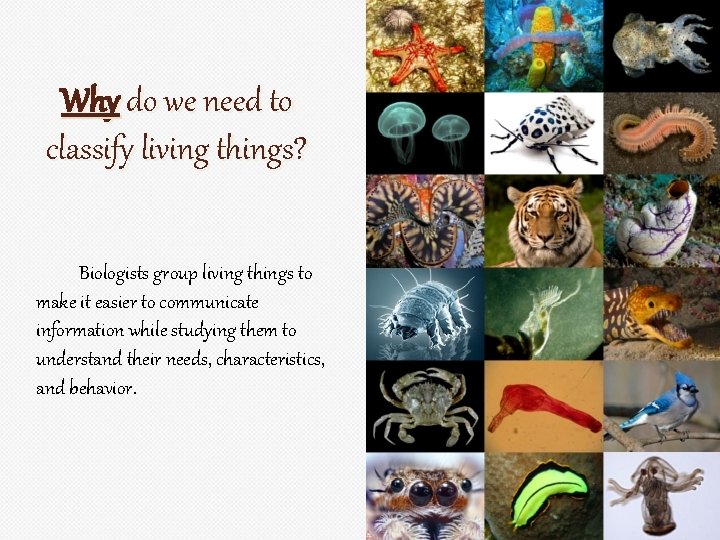
Why do we need to classify living things? Biologists group living things to make it easier to communicate information while studying them to understand their needs, characteristics, and behavior.
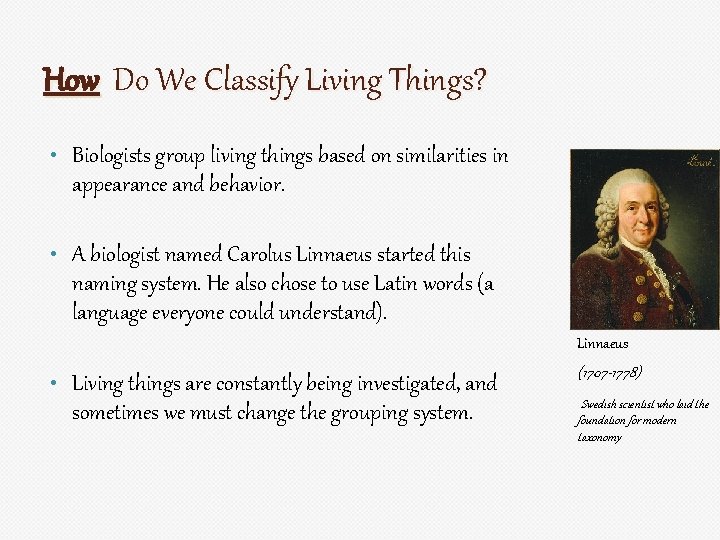
How Do We Classify Living Things? • Biologists group living things based on similarities in appearance and behavior. • A biologist named Carolus Linnaeus started this naming system. He also chose to use Latin words (a language everyone could understand). Linnaeus • Living things are constantly being investigated, and sometimes we must change the grouping system. (1707 -1778) Swedish scientist who laid the foundation for modern taxonomy
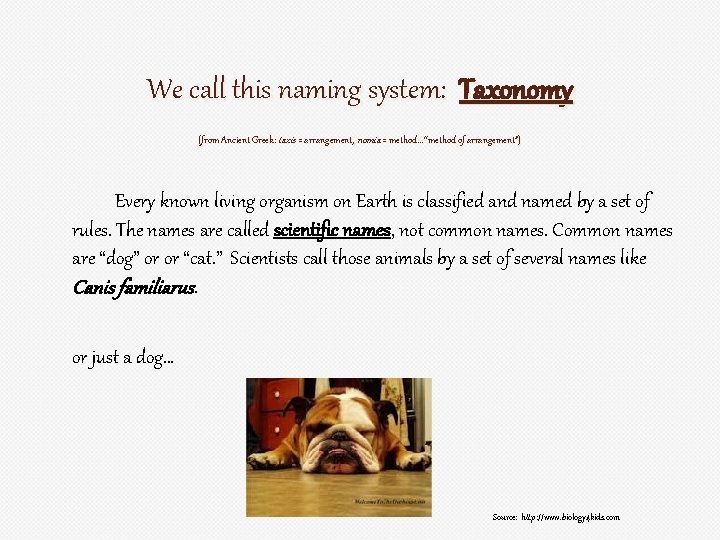
We call this naming system: Taxonomy (from Ancient Greek: taxis = arrangement, nomia = method… “method of arrangement”) Every known living organism on Earth is classified and named by a set of rules. The names are called scientific names, not common names. Common names are “dog” or or “cat. ” Scientists call those animals by a set of several names like Canis familiarus. or just a dog… Source: http: //www. biology 4 kids. com
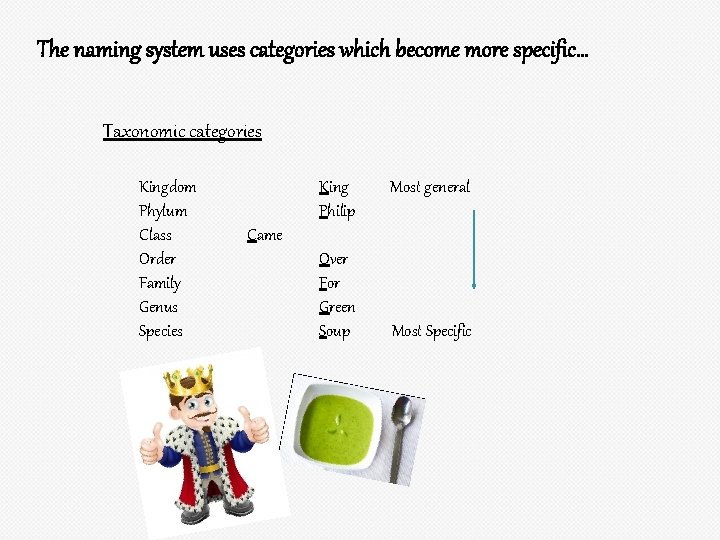
The naming system uses categories which become more specific… Taxonomic categories Kingdom Phylum Class Order Family Genus Species King Philip Most general Came Over For Green Soup Most Specific
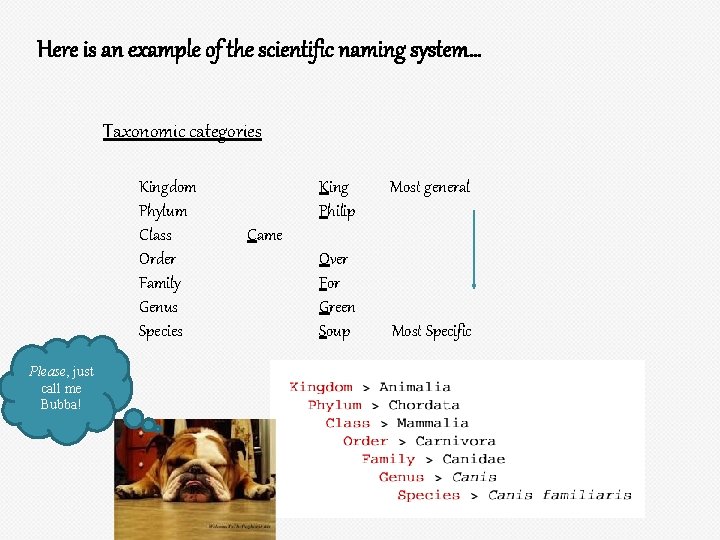
Here is an example of the scientific naming system… Taxonomic categories Kingdom Phylum Class Order Family Genus Species Please, just call me Bubba! King Philip Most general Came Over For Green Soup Most Specific
History of the Kingdom Classification System Linnaeus 1735[1] Haeckel 1866 Chatton 1925[26][27] Copeland 1938[28][29] Whittaker 1969[7] Finally, … (or is it? ) 2 kingdoms 3 kingdoms 2 empires 4 kingdoms 5 kingdoms 6 kingdoms Prokaryota (no nucleus) (not treated) Monera Bacteria Protista (singlecell) Protozoa Protoctista Protista Chromista Eukaryota (nucleus) Vegetabilia Animalia Plantae Animalia http: //en. wikipedia. org/wiki/Kingdom_(biology) Plantae Animalia Plantae Fungi Animalia
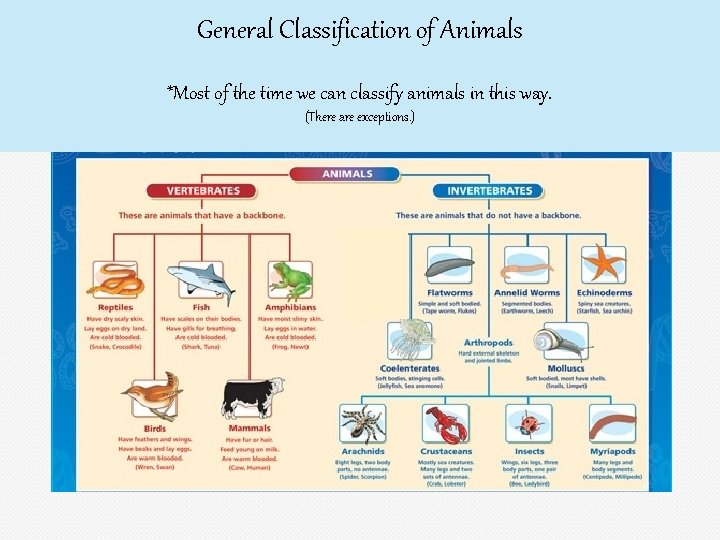
General Classification of Animals *Most of the time we can classify animals in this way. (There are exceptions. )