
Classification of Life Review Three Domains of Life
- Slides: 30
Classification of Life Review
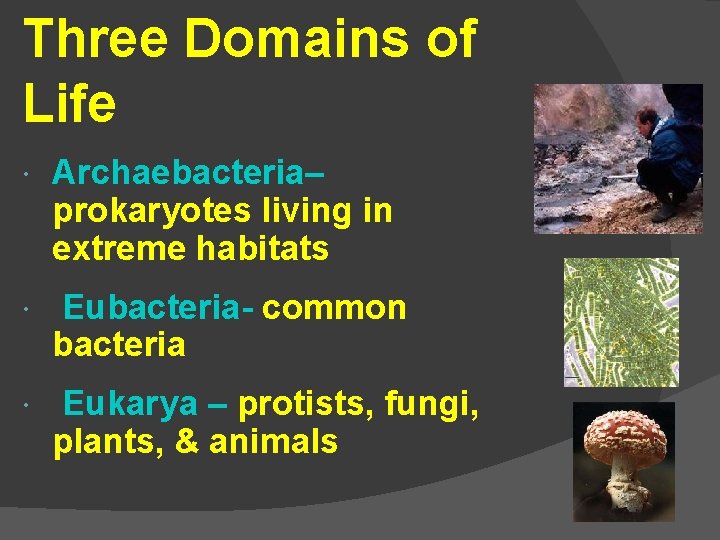
Three Domains of Life Archaebacteria– prokaryotes living in extreme habitats Eubacteria- common bacteria Eukarya – protists, fungi, plants, & animals
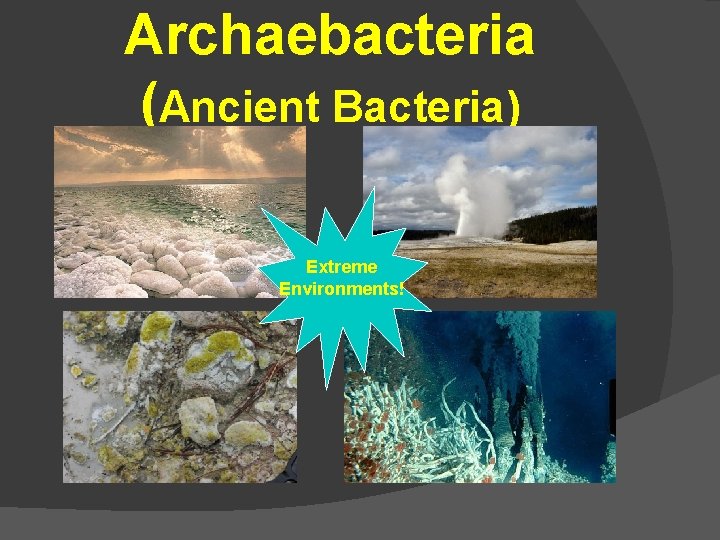
Archaebacteria (Ancient Bacteria) Extreme Environments!
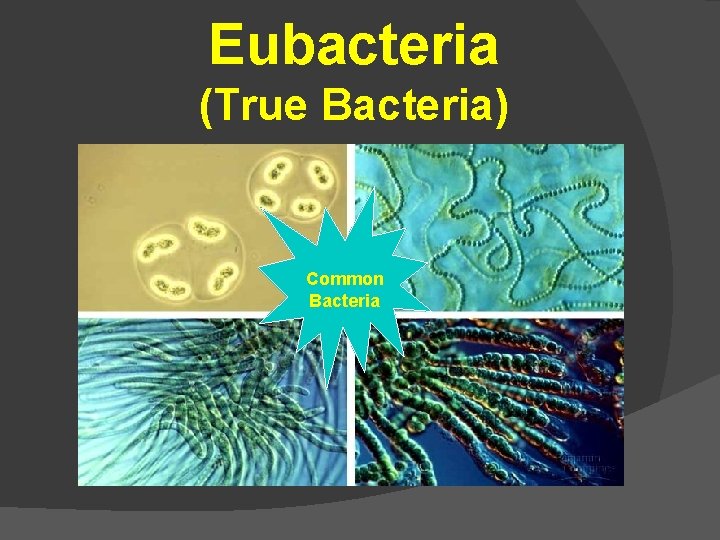
Eubacteria (True Bacteria) Common Bacteria
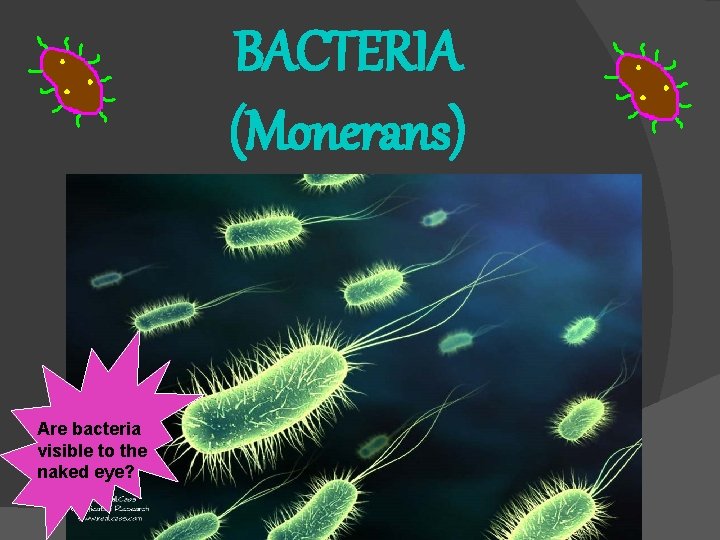
BACTERIA (Monerans) Are bacteria visible to the naked eye?
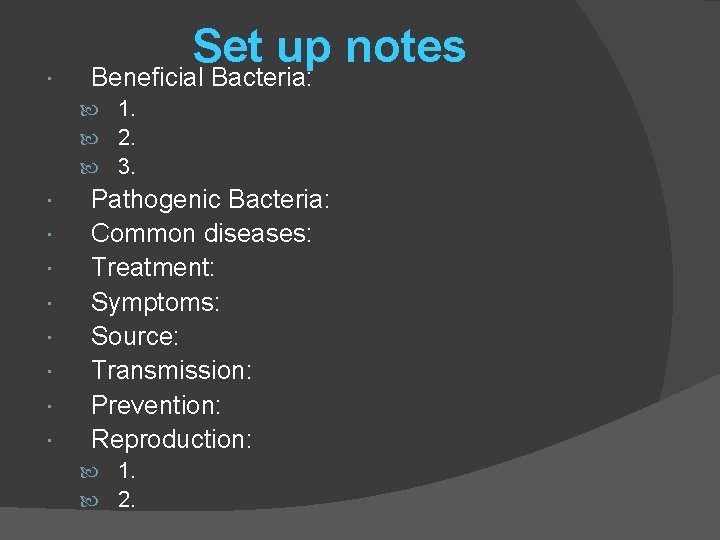
Set up notes Beneficial Bacteria: 1. 2. 3. Pathogenic Bacteria: Common diseases: Treatment: Symptoms: Source: Transmission: Prevention: Reproduction: 1. 2.
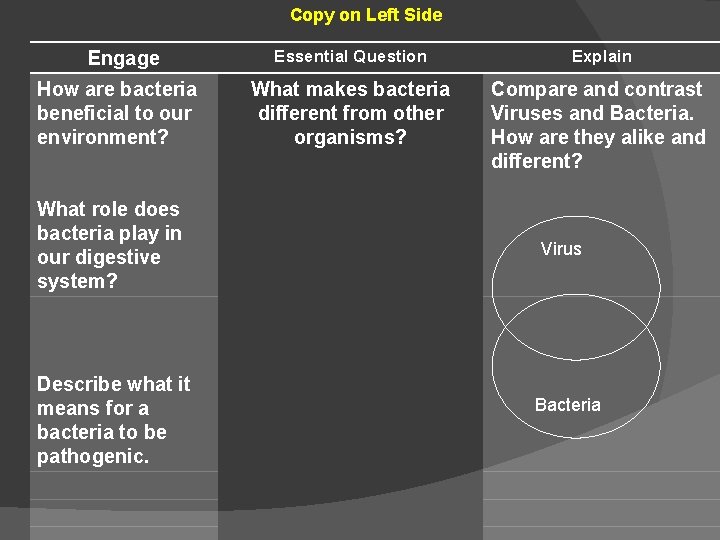
Copy on Left Side Engage How are bacteria beneficial to our environment? What role does bacteria play in our digestive system? Describe what it means for a bacteria to be pathogenic. Essential Question Explain What makes bacteria different from other organisms? Compare and contrast Viruses and Bacteria. How are they alike and different? Virus Bacteria
Let’s start with Brain. POP! www. brainpop. com - Bacteria
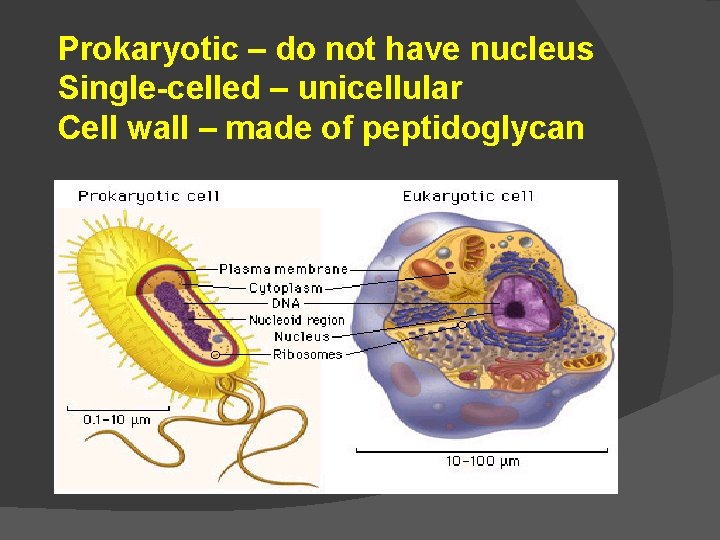
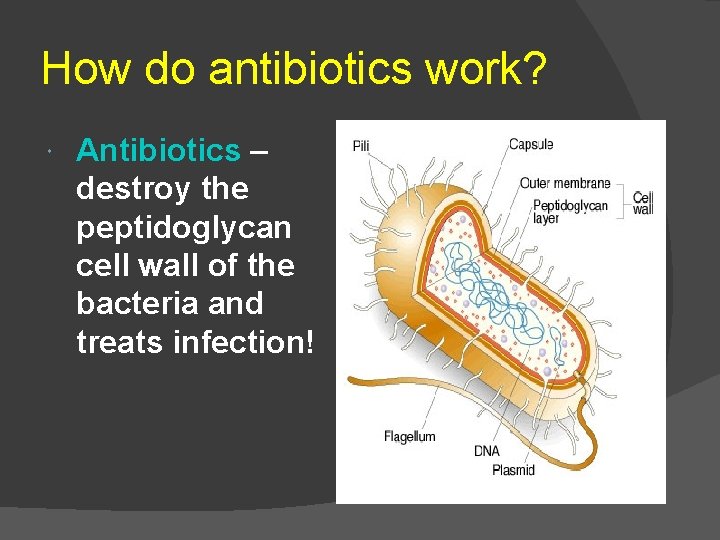
Prokaryotic – do not have nucleus Single-celled – unicellular Cell wall – made of peptidoglycan
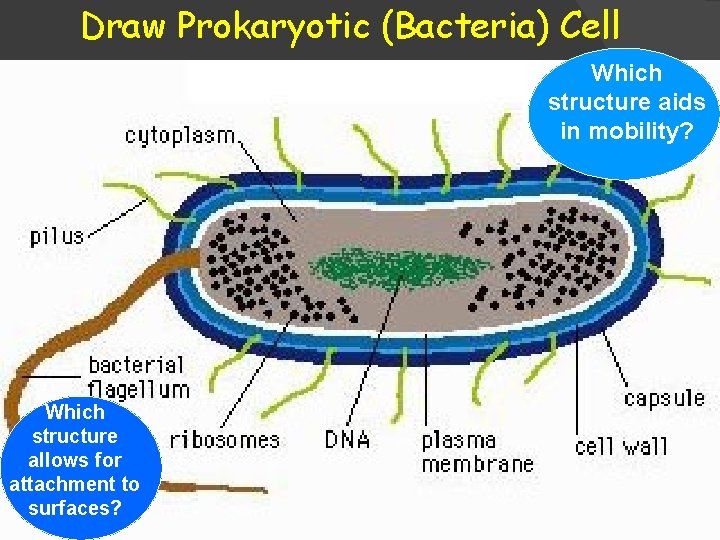
Draw Prokaryotic (Bacteria) Cell Which structure aids in mobility? Which structure allows for attachment to surfaces?
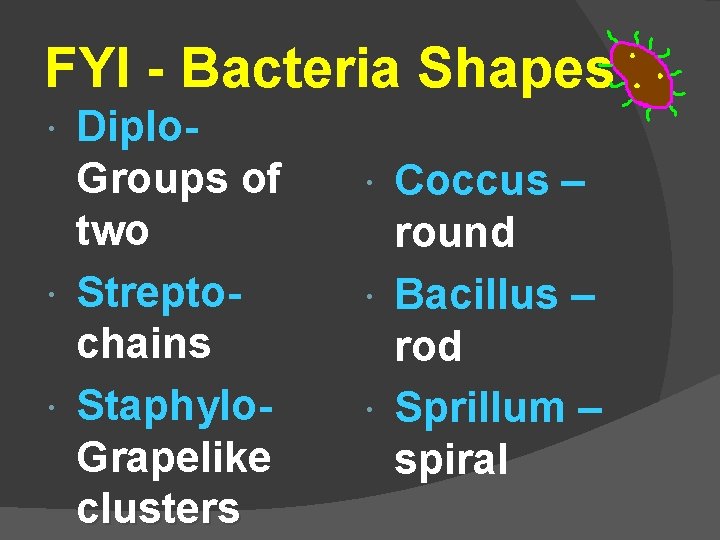
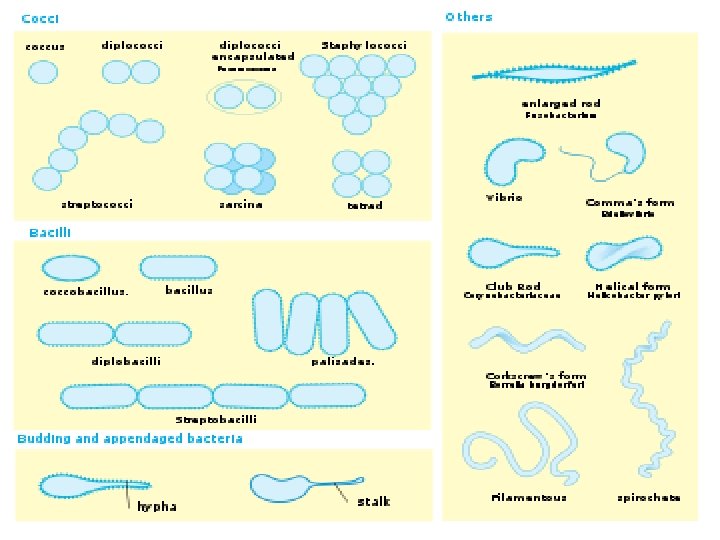
FYI - Bacteria Shapes Diplo. Groups of two Streptochains Staphylo. Grapelike clusters Coccus – round Bacillus – rod Sprillum – spiral
Beneficial Bacteria are beneficial to our environment by acting as: Decomposers - recycle of nutrients to atmosphere 2. Nitrogen fixators - convert nitrogen into a form plants can use 1.
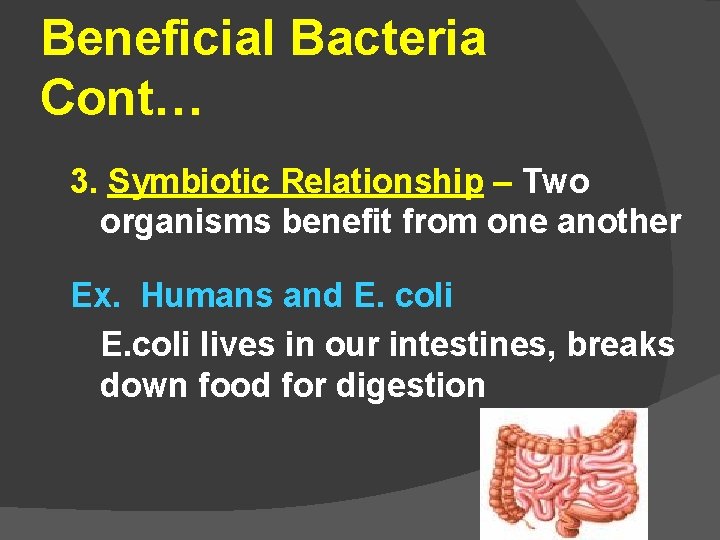
Beneficial Bacteria Cont… 3. Symbiotic Relationship – Two organisms benefit from one another Ex. Humans and E. coli lives in our intestines, breaks down food for digestion
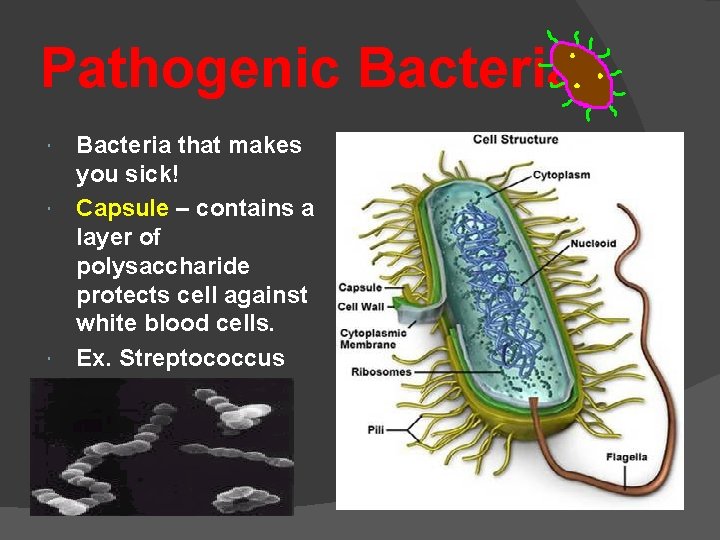
Pathogenic Bacteria that makes you sick! Capsule – contains a layer of polysaccharide protects cell against white blood cells. Ex. Streptococcus .
Infectious (Pathogenic) Disease Videos Watch a number of videos and identify which infectious diseases are caused by bacteria! http: //www. medicalnewstoday. com/secti ons/infectious_diseases/videos. php
Common Diseases Strep Throat Tuberculosis Pneumonia Meningitis Anthrax
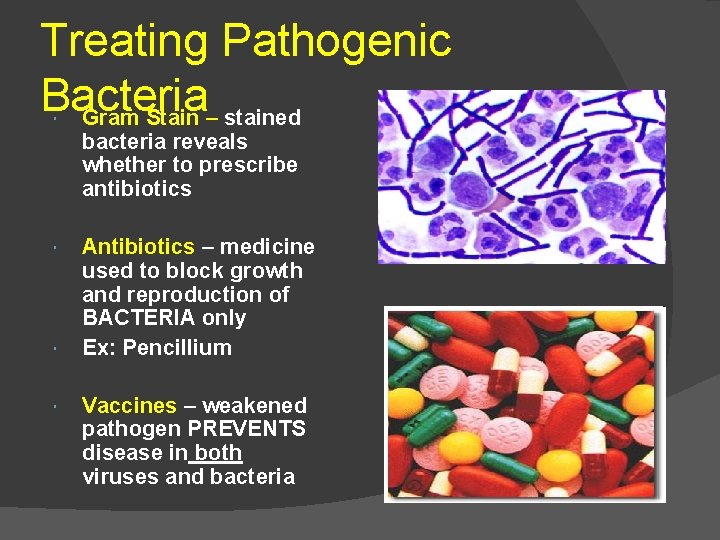
Treating Pathogenic Bacteria Gram Stain – stained bacteria reveals whether to prescribe antibiotics Antibiotics – medicine used to block growth and reproduction of BACTERIA only Ex: Pencillium Vaccines – weakened pathogen PREVENTS disease in both viruses and bacteria
How do antibiotics work? Antibiotics – destroy the peptidoglycan cell wall of the bacteria and treats infection!
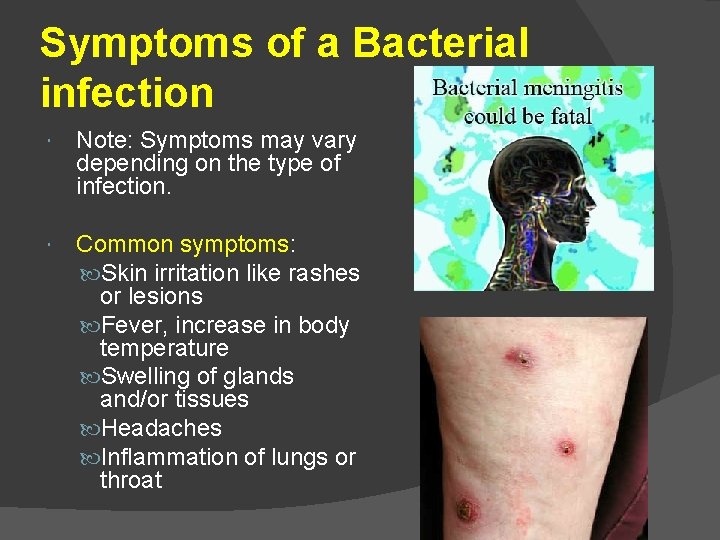
Symptoms of a Bacterial infection Note: Symptoms may vary depending on the type of infection. Common symptoms: Skin irritation like rashes or lesions Fever, increase in body temperature Swelling of glands and/or tissues Headaches Inflammation of lungs or throat
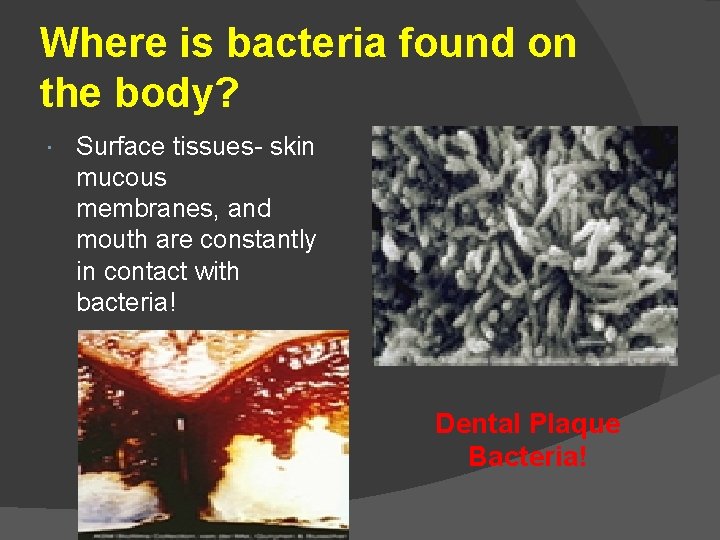
Where is bacteria found on the body? Surface tissues- skin mucous membranes, and mouth are constantly in contact with bacteria! Dental Plaque Bacteria!
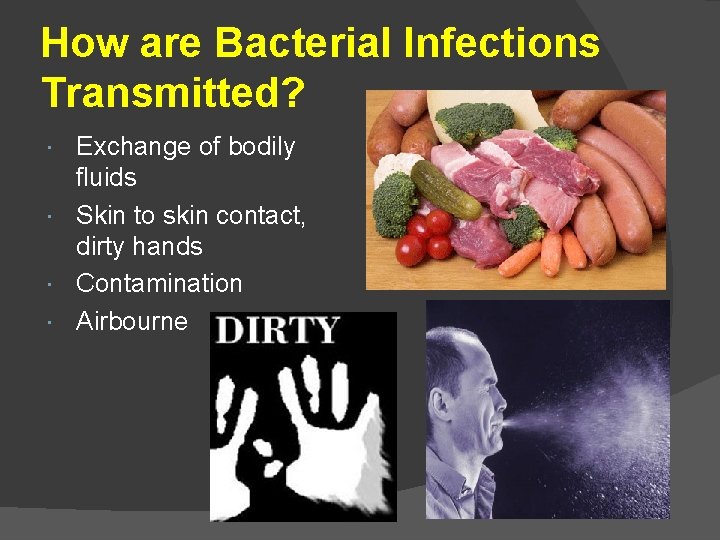
How are Bacterial Infections Transmitted? Exchange of bodily fluids Skin to skin contact, dirty hands Contamination Airbourne
Preventing Bacterial Growth Heat – inc in temp 2. Disinfection – using chemicals 3. Refrigeration – slows down bacterial growth 4. Light – slows down bacterial growth 1.
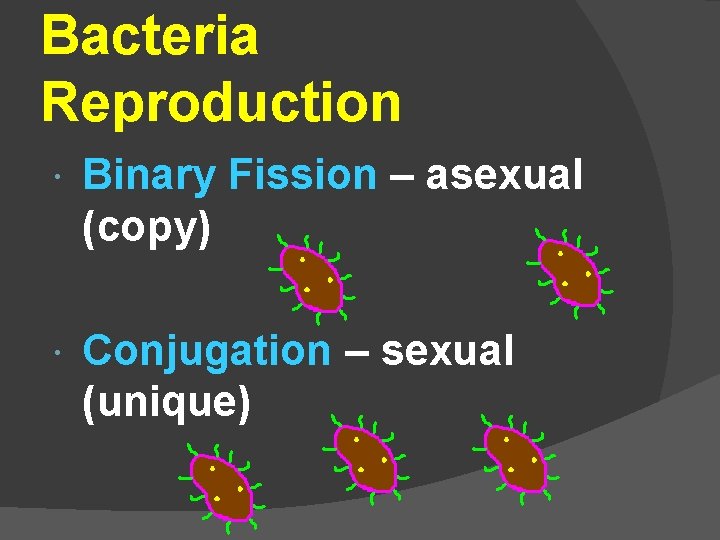
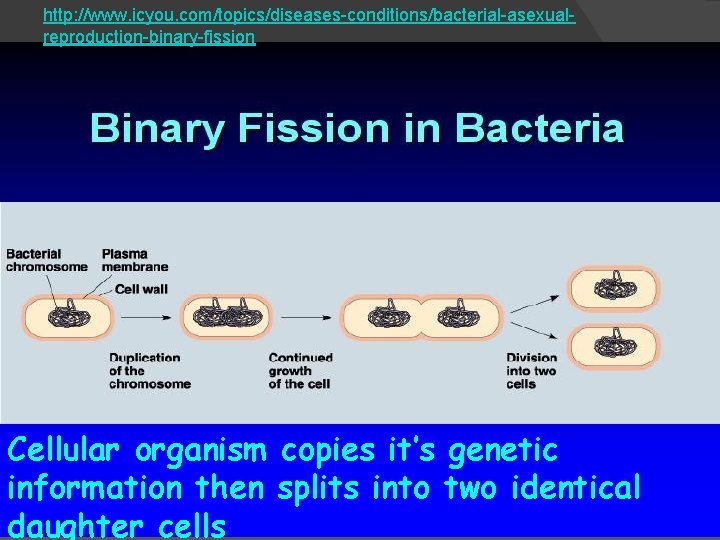
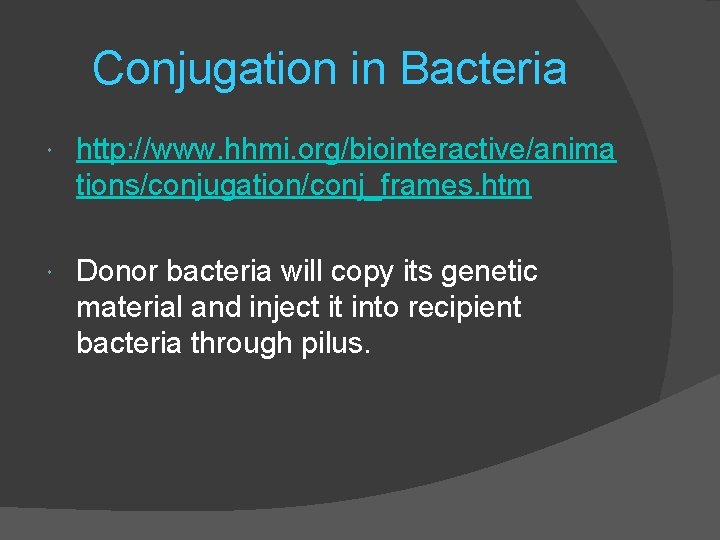
Bacteria Reproduction Binary Fission – asexual (copy) Conjugation – sexual (unique)
http: //www. icyou. com/topics/diseases-conditions/bacterial-asexualreproduction-binary-fission Cellular organism copies it’s genetic information then splits into two identical daughter cells
Conjugation in Bacteria http: //www. hhmi. org/biointeractive/anima tions/conjugation/conj_frames. htm Donor bacteria will copy its genetic material and inject it into recipient bacteria through pilus.
Draw on left side of INB or separate sheet of paper Virus Bacteria
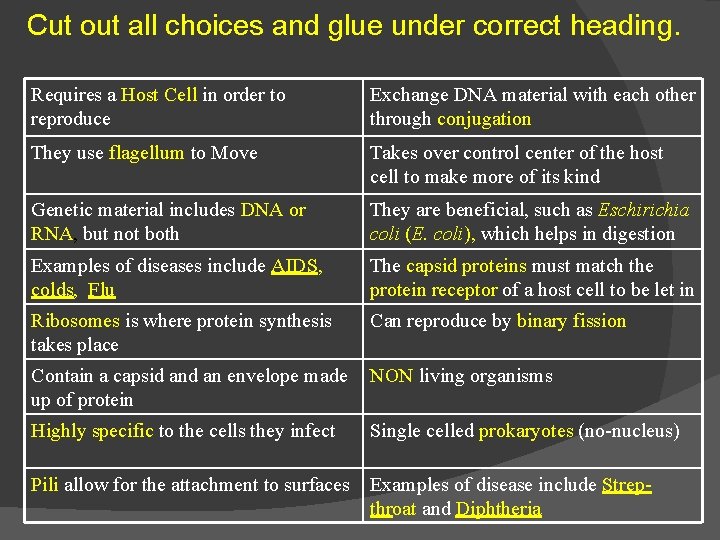
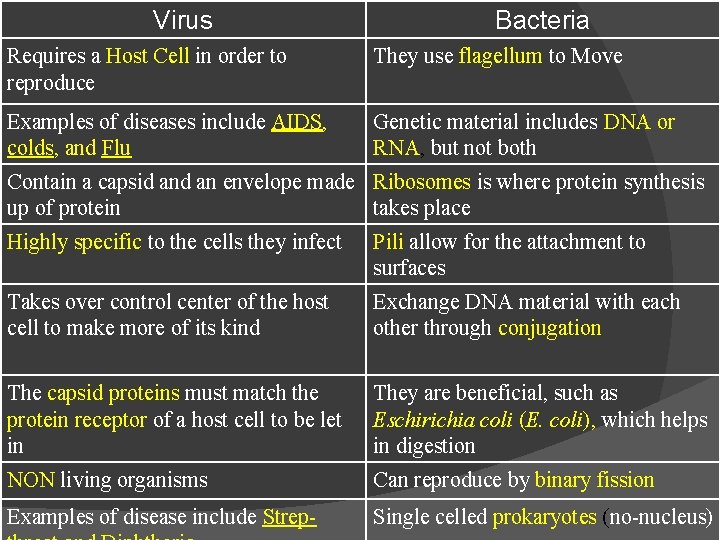
Cut out all choices and glue under correct heading. Requires a Host Cell in order to reproduce Exchange DNA material with each other through conjugation They use flagellum to Move Takes over control center of the host cell to make more of its kind Genetic material includes DNA or RNA, but not both They are beneficial, such as Eschirichia coli (E. coli), which helps in digestion Examples of diseases include AIDS, colds, Flu The capsid proteins must match the protein receptor of a host cell to be let in Ribosomes is where protein synthesis takes place Can reproduce by binary fission Contain a capsid an envelope made up of protein NON living organisms Highly specific to the cells they infect Single celled prokaryotes (no-nucleus) Pili allow for the attachment to surfaces Examples of disease include Strepthroat and Diphtheria
Virus Bacteria Requires a Host Cell in order to reproduce They use flagellum to Move Examples of diseases include AIDS, colds, and Flu Genetic material includes DNA or RNA, but not both Contain a capsid an envelope made Ribosomes is where protein synthesis up of protein takes place Highly specific to the cells they infect Pili allow for the attachment to surfaces Takes over control center of the host cell to make more of its kind Exchange DNA material with each other through conjugation The capsid proteins must match the protein receptor of a host cell to be let in They are beneficial, such as Eschirichia coli (E. coli), which helps in digestion NON living organisms Can reproduce by binary fission Examples of disease include Strep- Single celled prokaryotes (no-nucleus)
Possible Activities… “Caught Red-handed Lab” “Most Wanted” Poster Holocaust Bacteria Biotine