
Classification of Growth Friendly Spine Implants David L


- Slides: 27
Classification of Growth Friendly Spine Implants David L. Skaggs, Behrooz Akbarnia, John Flynn, Karen Myung, Paul Sponsellar, Michael Vitale Approved by: Chest wall and Spine Deformity Study Group Growing Spine Study Group POSNA SRS Growing Spine Study Committee
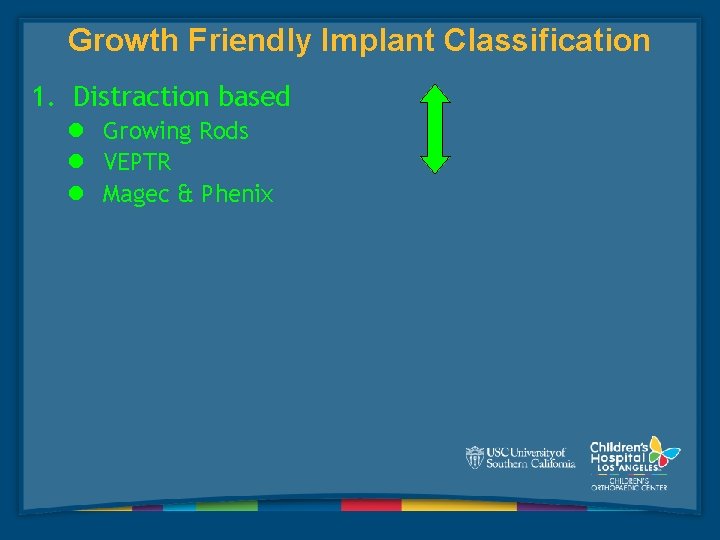
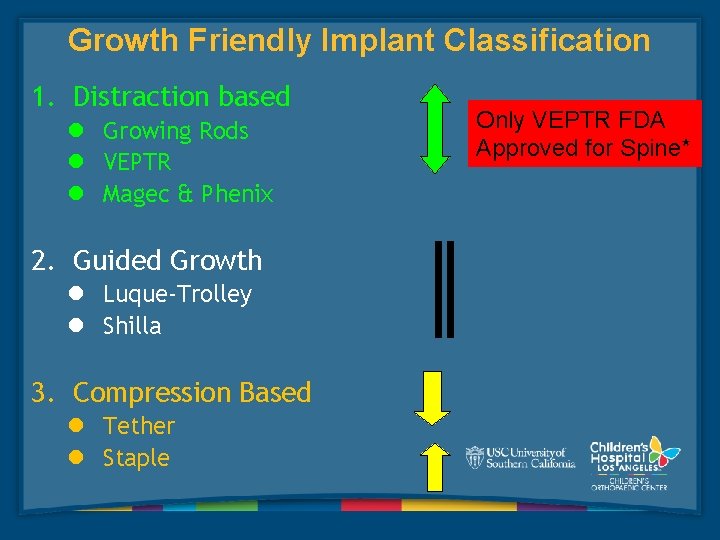
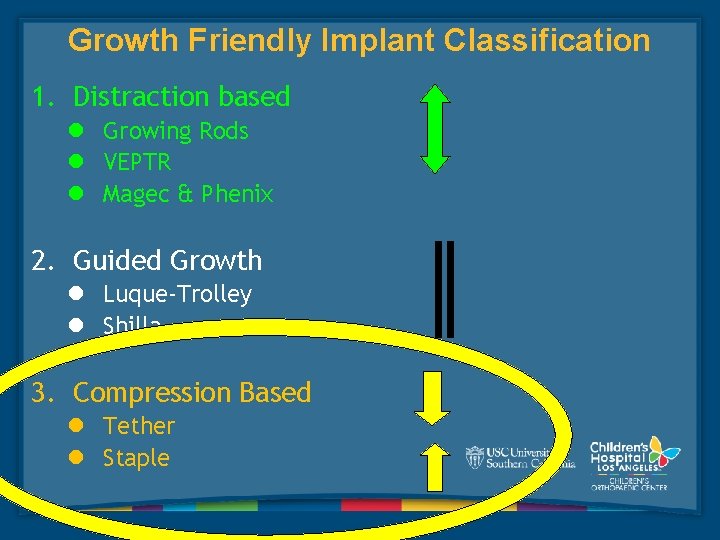
Growth Friendly Implant Classification 1. Distraction based l Growing Rods l VEPTR l Magec & Phenix
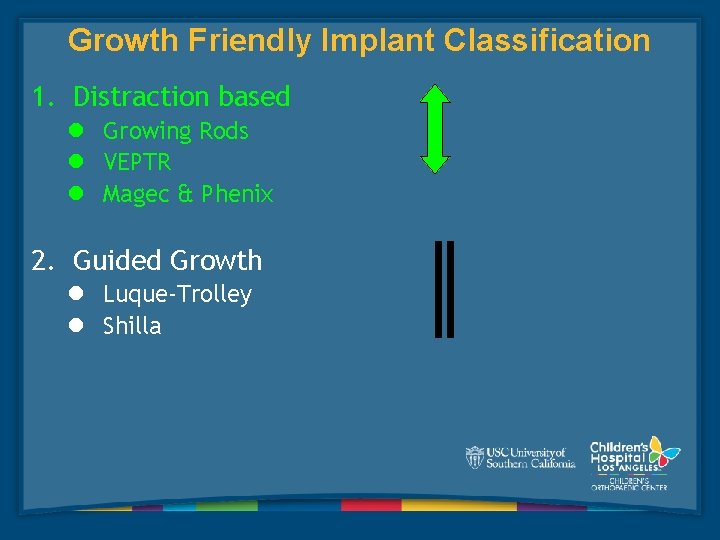
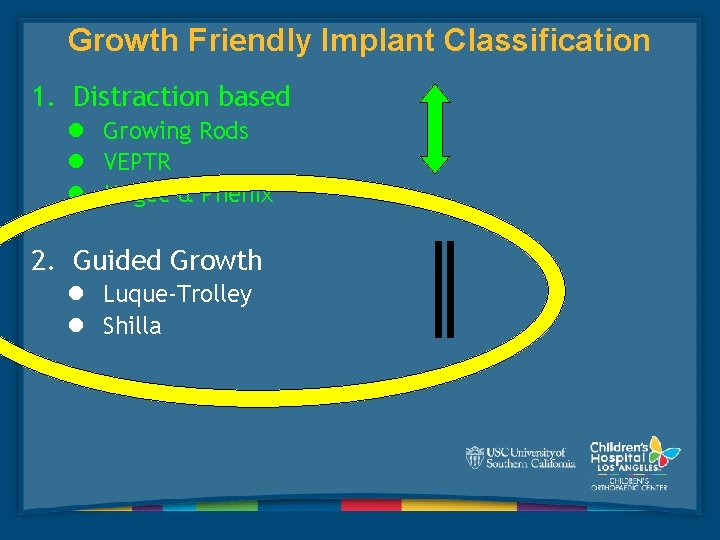
Growth Friendly Implant Classification 1. Distraction based l Growing Rods l VEPTR l Magec & Phenix 2. Guided Growth l Luque-Trolley l Shilla
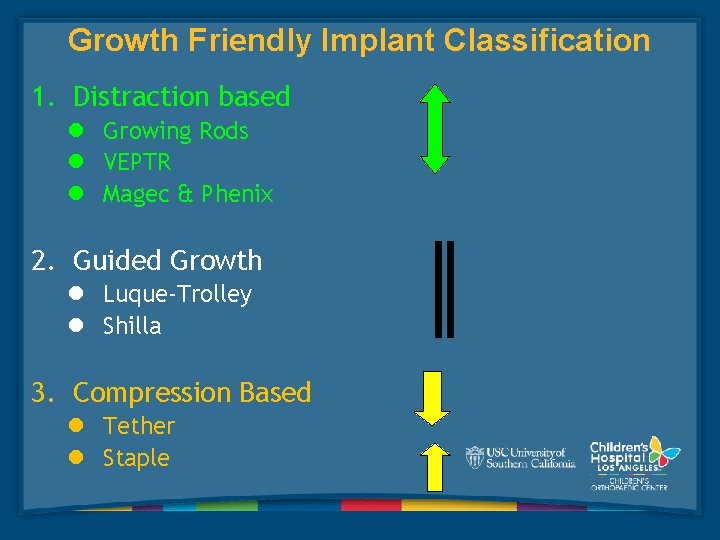
Growth Friendly Implant Classification 1. Distraction based l Growing Rods l VEPTR l Magec & Phenix 2. Guided Growth l Luque-Trolley l Shilla 3. Compression Based l Tether l Staple
Growth Friendly Implant Classification 1. Distraction based l Growing Rods l VEPTR l Magec & Phenix 2. Guided Growth l Luque-Trolley l Shilla 3. Compression Based l Tether l Staple Only VEPTR FDA Approved for Spine*
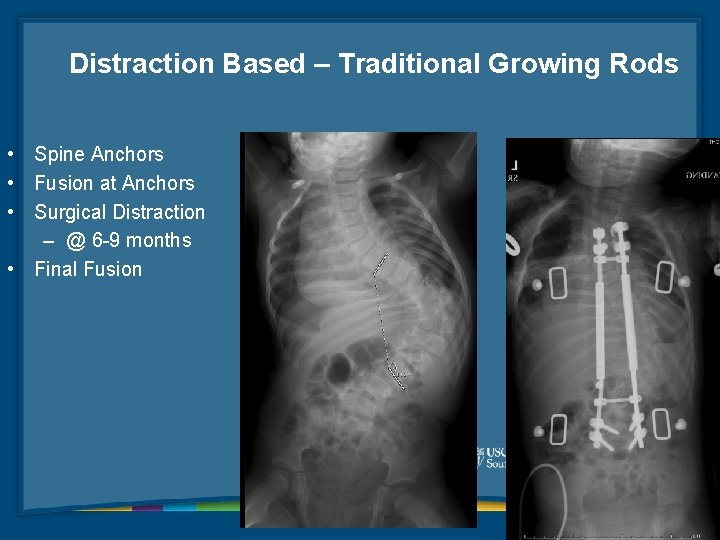
Distraction Based – Traditional Growing Rods • Spine Anchors • Fusion at Anchors • Surgical Distraction – @ 6 -9 months • Final Fusion
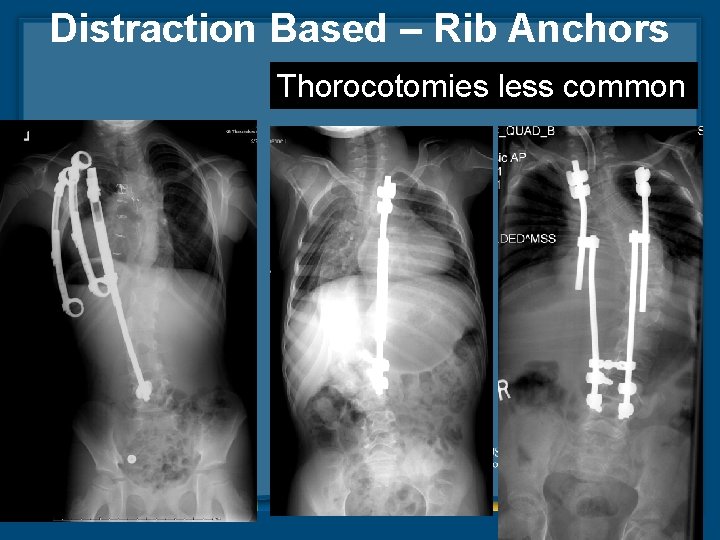
Distraction Based – Rib Anchors Thorocotomies less common
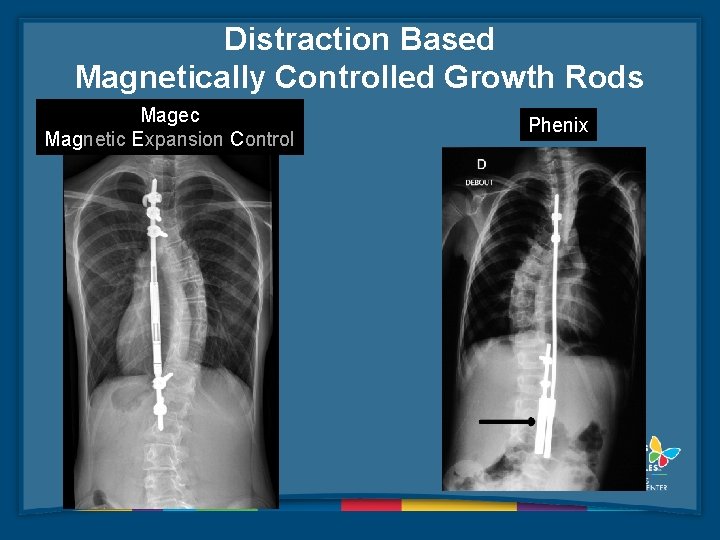
Distraction Based Magnetically Controlled Growth Rods Magec Magnetic Expansion Control Phenix
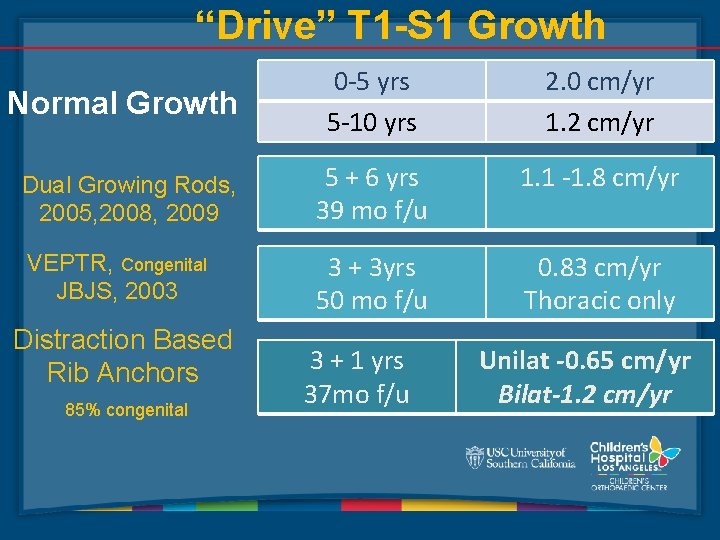
“Drive” T 1 -S 1 Growth Normal Growth 0 -5 yrs 5 -10 yrs 2. 0 cm/yr 1. 2 cm/yr Dual Growing Rods, 2005, 2008, 2009 5 + 6 yrs 39 mo f/u 1. 1 -1. 8 cm/yr VEPTR, Congenital JBJS, 2003 3 + 3 yrs 50 mo f/u 0. 83 cm/yr Thoracic only Distraction Based Rib Anchors 85% congenital 3 + 1 yrs 37 mo f/u Unilat -0. 65 cm/yr Bilat-1. 2 cm/yr
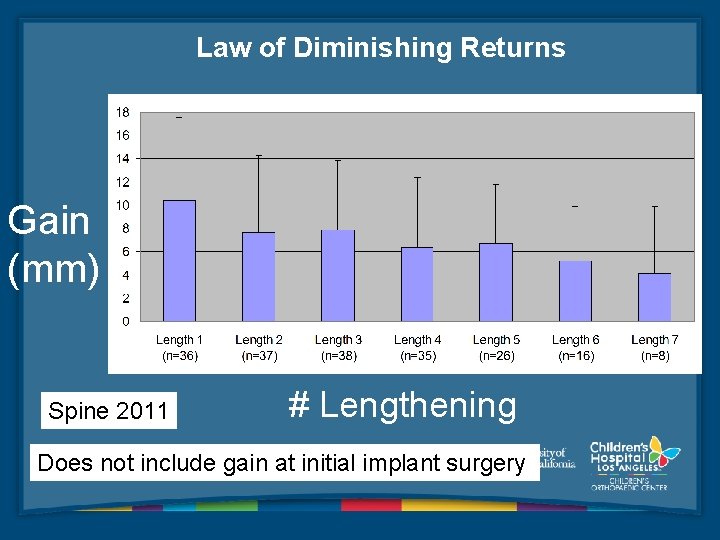
Law of Diminishing Returns Gain (mm) Spine 2011 # Lengthening Does not include gain at initial implant surgery
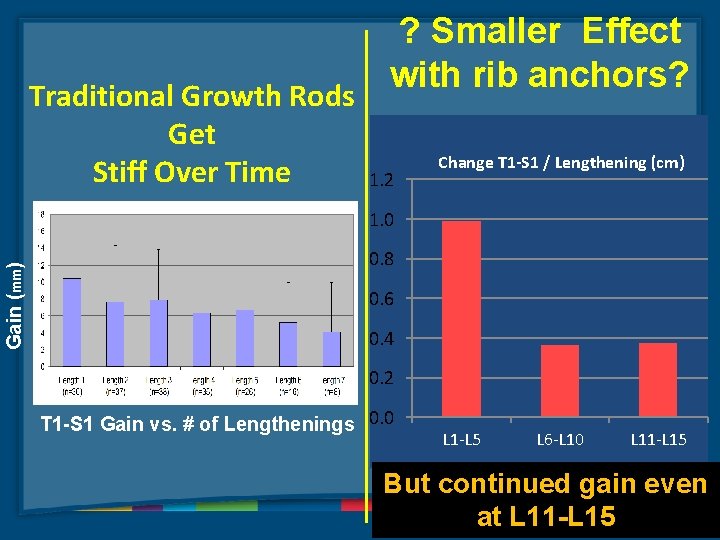
Traditional Growth Rods Get Stiff Over Time ? Smaller Effect with rib anchors? 1. 2 Change T 1 -S 1 / Lengthening (cm) Gain (mm) 1. 0 0. 8 0. 6 0. 4 0. 2 T 1 -S 1 Gain vs. # of Lengthenings 0. 0 L 1 -L 5 L 6 -L 10 L 11 -L 15 But continued gain even at L 11 -L 15
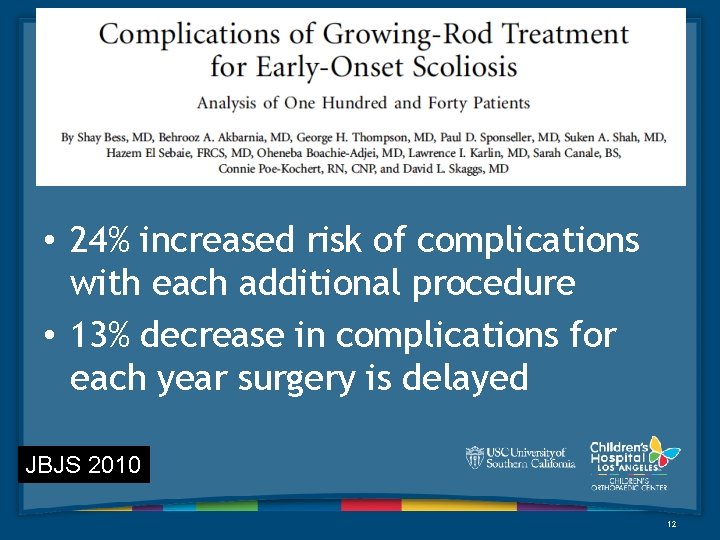
• 24% increased risk of complications with each additional procedure • 13% decrease in complications for each year surgery is delayed JBJS 2010 12
Outcome of Distraction Based Implants (rib and spine based) • Decreased Cobb Angle • Increased Spine length • Increase weight gain • Unproven Pulmonary Effects Skaggs - Tips and Tricks
Growth Friendly Implant Classification 1. Distraction based l Growing Rods l VEPTR l Magec & Phenix 2. Guided Growth l Luque-Trolley l Shilla
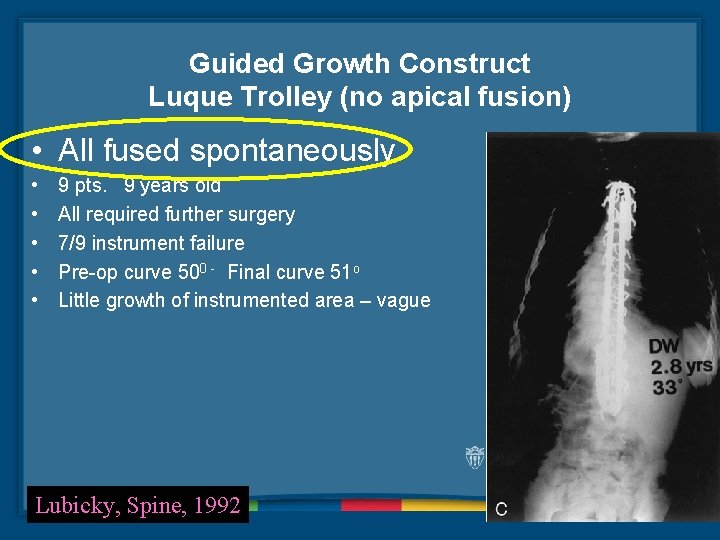
Guided Growth Construct Luque Trolley (no apical fusion) • All fused spontaneously • • • 9 pts. 9 years old All required further surgery 7/9 instrument failure Pre-op curve 500 - Final curve 51 o Little growth of instrumented area – vague Lubicky, Spine, 1992
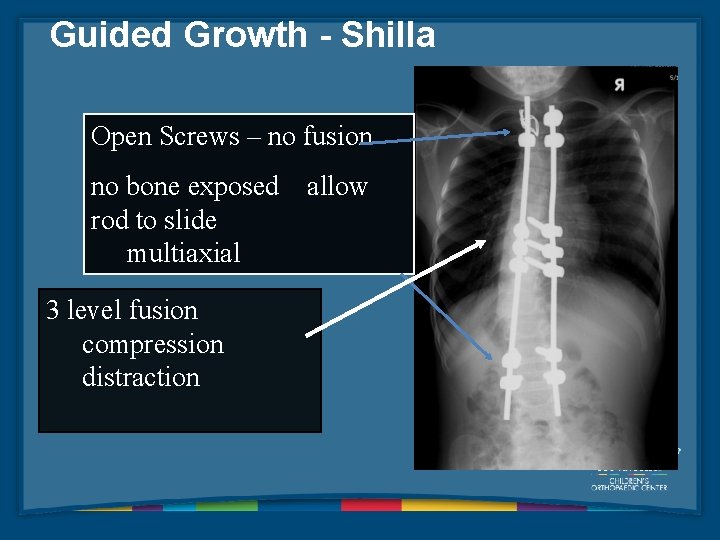
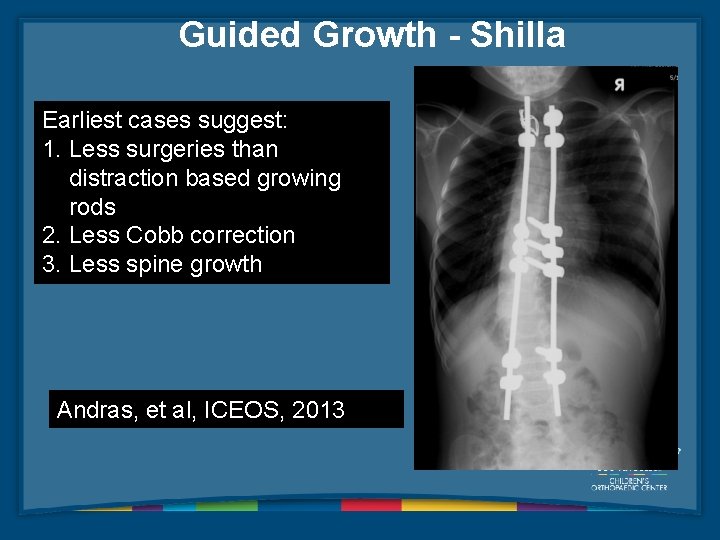
Guided Growth - Shilla Open Screws – no fusion no bone exposed allow rod to slide multiaxial 3 level fusion compression distraction
Guided Growth - Shilla Earliest cases suggest: 1. Less surgeries than distraction based growing rods 2. Less Cobb correction 3. Less spine growth Andras, et al, ICEOS, 2013
Growth Friendly Implant Classification 1. Distraction based l Growing Rods l VEPTR l Magec & Phenix 2. Guided Growth l Luque-Trolley l Shilla 3. Compression Based l Tether l Staple
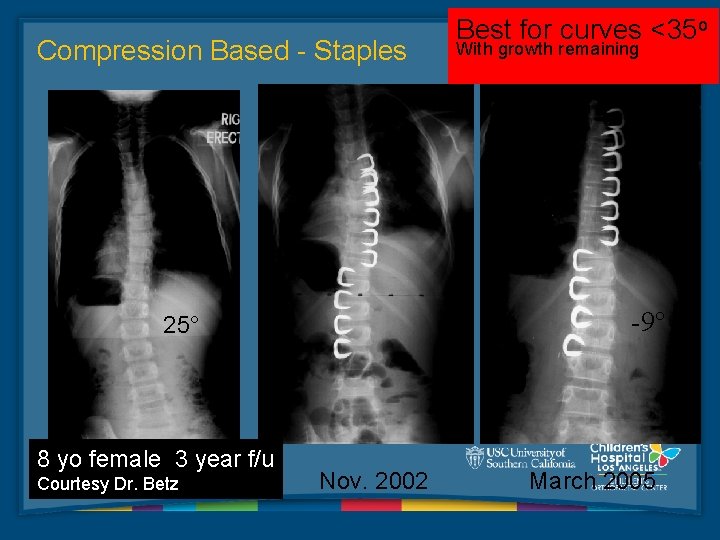
Compression Based - Staples Best for curves <35 o With growth remaining 5° 25° -9° 25° 8 yo female 3 year f/u Courtesy Dr. Betz Nov. 2002 March 2005
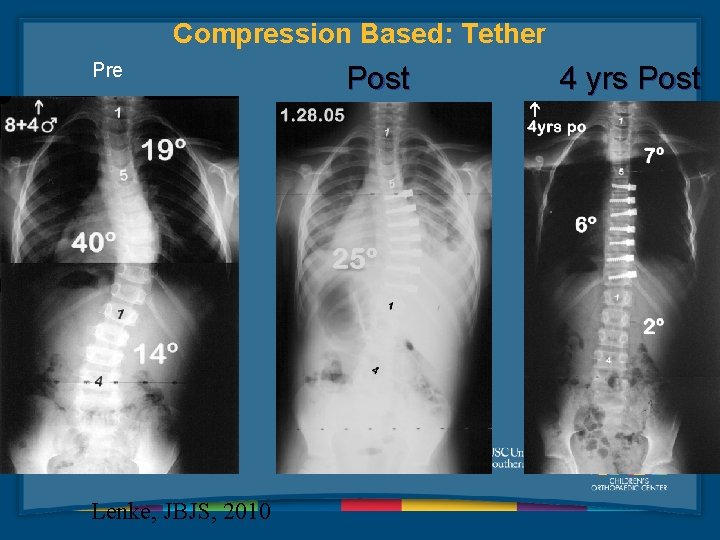
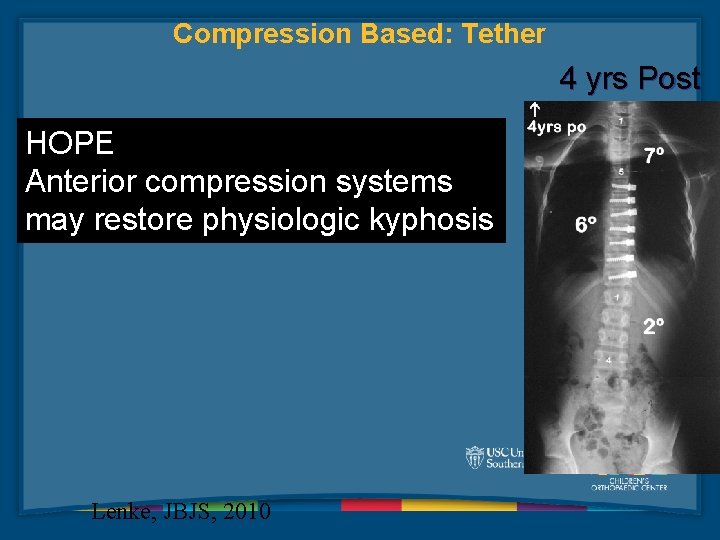
Compression Based: Tether Pre Lenke, JBJS, 2010 Post 4 yrs Post
Compression Based: Tether 4 yrs Post HOPE Anterior compression systems may restore physiologic kyphosis Lenke, JBJS, 2010
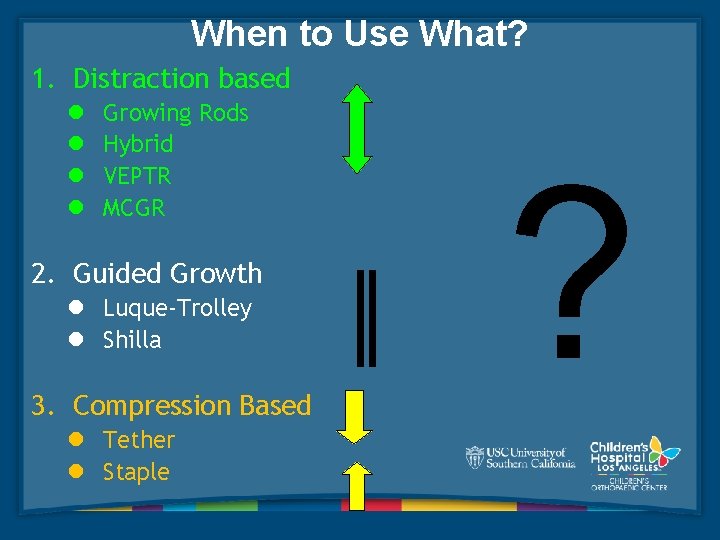
When to Use What? 1. Distraction based l l Growing Rods Hybrid VEPTR MCGR 2. Guided Growth l Luque-Trolley l Shilla 3. Compression Based l Tether l Staple ?
Thank You
Thank You! 24
Thank You
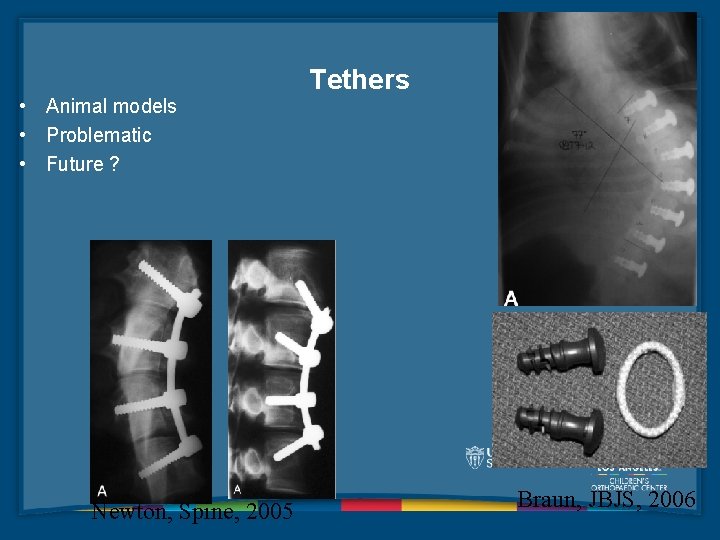
• Animal models • Problematic • Future ? Newton, Spine, 2005 Tethers Braun, JBJS, 2006
Backpain: When to Worry David L. Skaggs, MD Professor and Chief Children’s Hospital Los Angeles University of Southern California Children’s Hospital Los Angeles