
CLASSIFICATION OF FRACTIRE DR MITHILESH KUMAR ASSISTANT PROFESSOR
- Slides: 11
CLASSIFICATION OF FRACTIRE DR. MITHILESH KUMAR ASSISTANT PROFESSOR CUM JR. SCIENTIST VETERINARY SURGERY AND RADIOLOGY BIHAR VETERINARY COLLEGE, PATNA
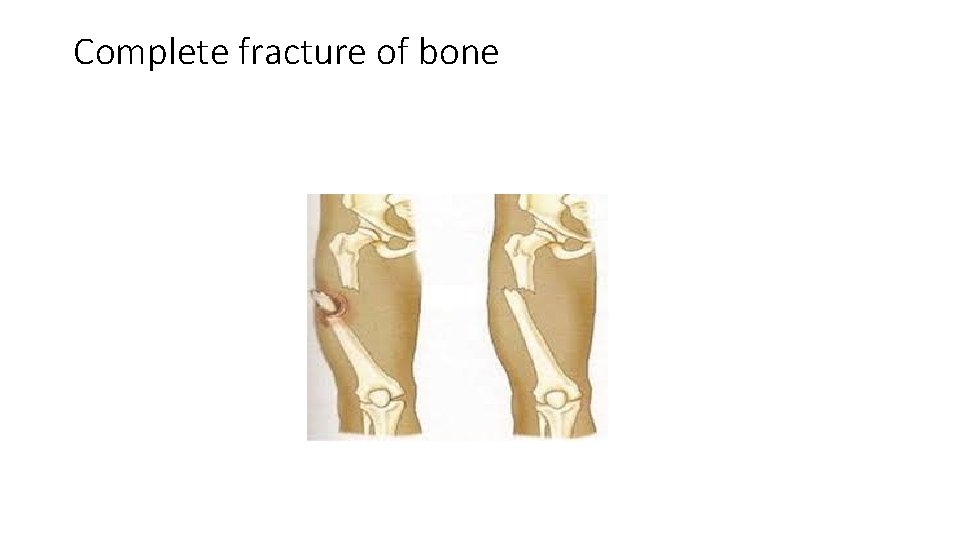
• Fracture – Break continuity of bone and cartilage. • EXTENT OF BONE DAMAGE • 1. Complete fracture: - Completely broken in two fragments • 2. Incomplete fracture: - Partial loss of continuity observed in young dog.
Complete fracture of bone
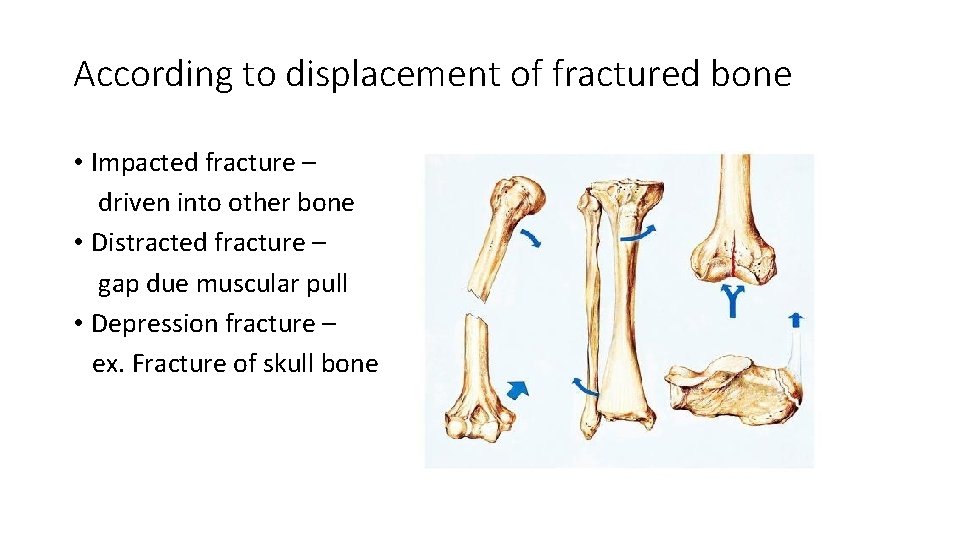
According to displacement of fractured bone • Impacted fracture – driven into other bone • Distracted fracture – gap due muscular pull • Depression fracture – ex. Fracture of skull bone
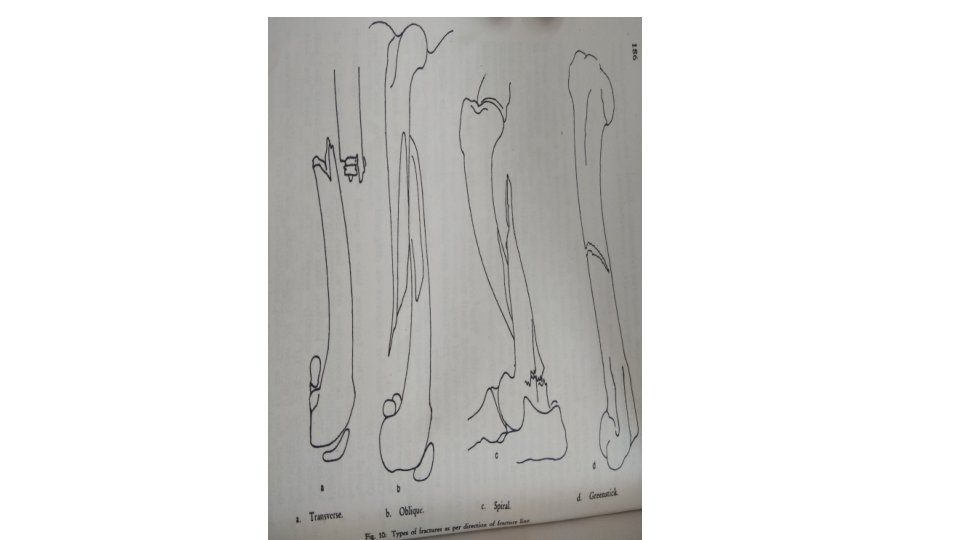
According to severity of fracture • Simple fracture: - does not communicate with exterior of body. • Compound fracture or open: Fracture sites communicates with the exterior of body. • ACCORDING TO DIRECTION OF FRACTURE • 1. Transverse fracture: Right angle to the long axis of bone. • 2. Oblique : diagonal to the long axis of bone.
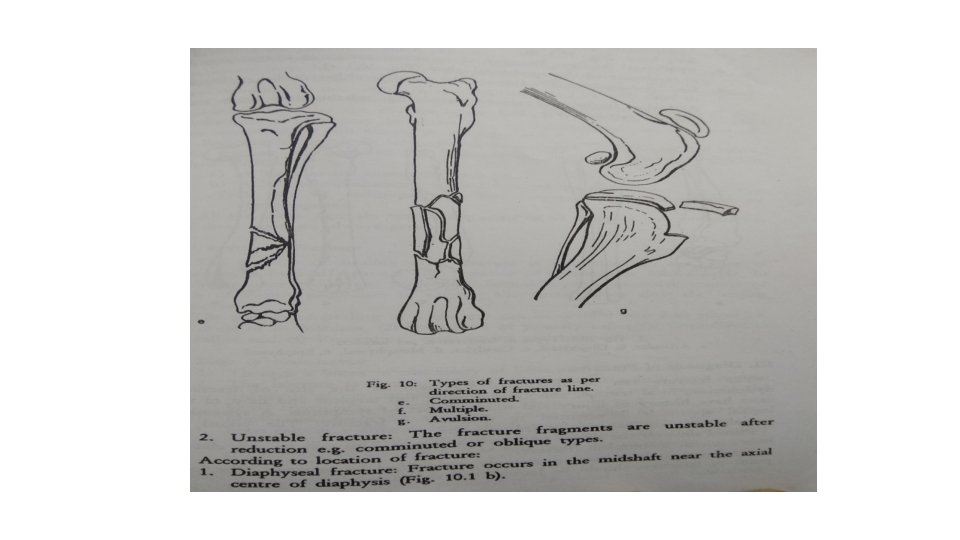
• 3. Spiral fracture- Spiral along the long axis of bone. • 4. Comminuted – at least three fracture lines meet at common point. • 5. Multiple – Three or more fragments do not communicate at a point. • 6. Avulsion: Fragment of bone detached due to forceful muscular pull.
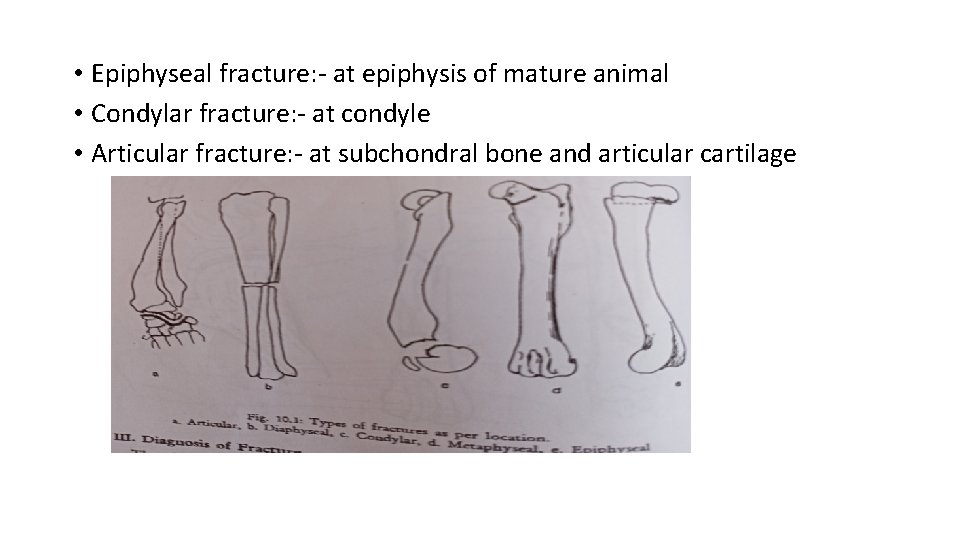
According to stability of fractured fragments • Stable fracture: - Interlock after reduction maintain their length. • Unstable fracture: - unstable after reduction e. g. comminuted fracture • ACCORDING TO LOCATION OF FRACTURE: • 1. Diaphyseal fracture: - at mid shaft. • 2. Metaphyseal fracture: - at metaphysis of long bone
• Epiphyseal fracture: - at epiphysis of mature animal • Condylar fracture: - at condyle • Articular fracture: - at subchondral bone and articular cartilage
DIAGNOSIS OF FRACTURE • Pain • Dysfunction • Local trauma • Abnormal posture • Crepitus • Radiographic signs